April 27, 2025
With a tight project schedule, the manufacturer delivered on time, and on-site technical personnel provided guidance throughout the entire installation and commissioning process; the collaboration was highly efficient and hassle-free.
Jul 1, 2026
When it comes to big power distribution projects, the S20 type 35KV oil-immersed power transformer is a key piece of technology that strikes the perfect balance between efficiency, dependability, and life. This transformer is a big step forward in medium-voltage power equipment. It uses Level 1 energy efficiently and has a fully sealed structure that makes it last 30 years outside, 50 percent longer than its S11 predecessor. Whether your business works with power companies, integrates green energy, or engages in heavy industrial manufacturing, knowing the technical specs and strategic benefits of this equipment can have a big effect on the success of your project and the total cost of ownership.
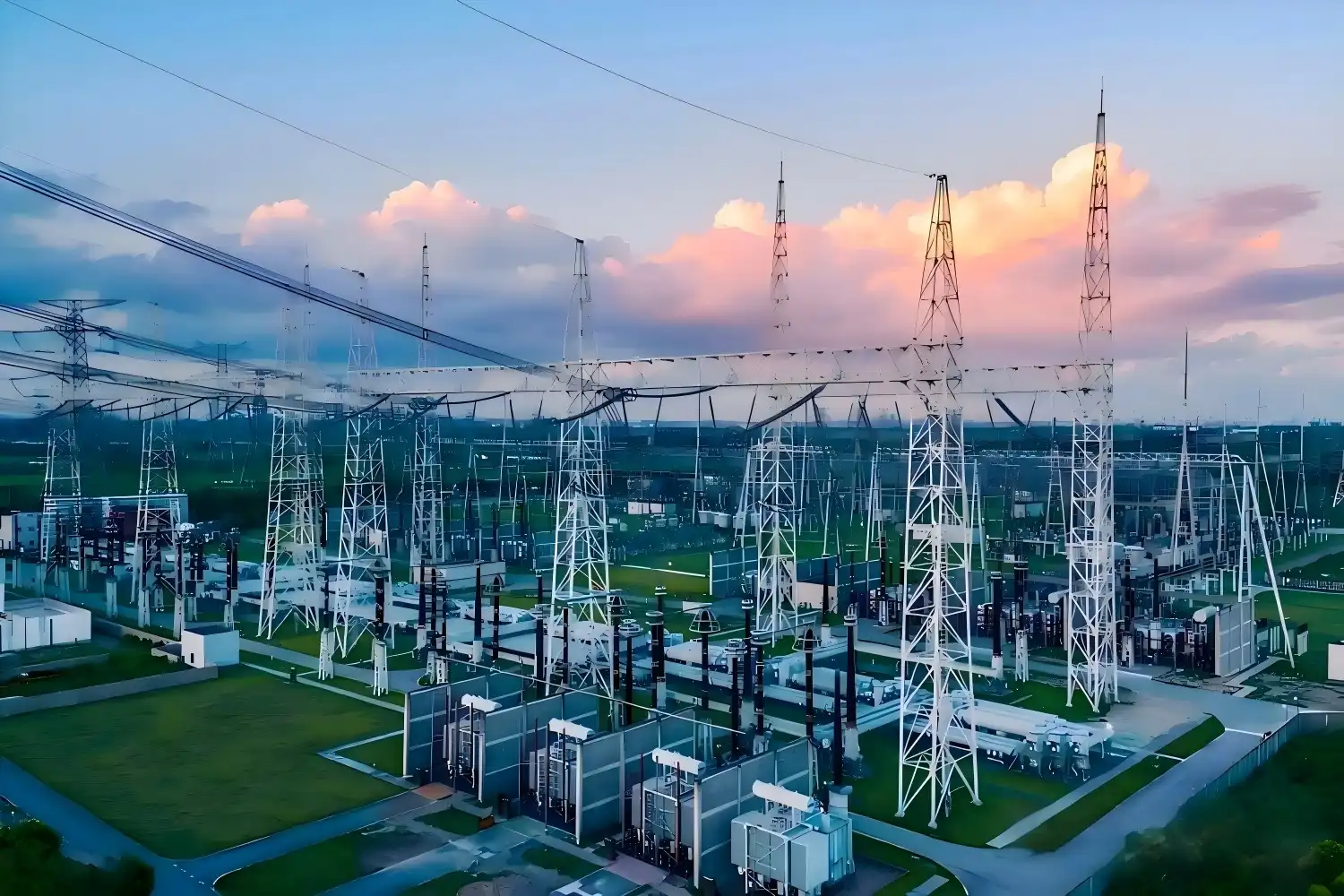
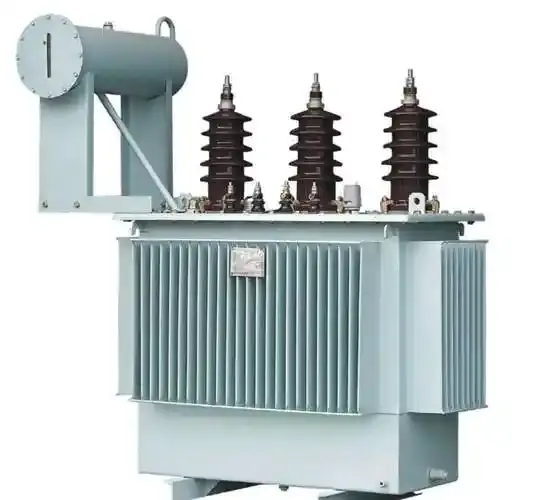
The S20 series changes medium-voltage power at 35KV and uses high-quality mineral oil to cool it down and keep the electricity from flowing. This two-in-one feature makes it very stable at high temperatures while keeping the dielectric strength needed for safe, continued use in harsh settings.
In an S20 type 35KV oil-immersed power transformer, our transformer’s core is made of cold-rolled oriented silicon steel sheets, which cut no-load losses by about 10–15 percent compared to older S13 types. By optimizing the magnetic circuit, eddy current formation is kept to a minimum. This directly leads to less energy waste and smaller operating carbon footprints. This is especially helpful when figuring out lifetime costs over running periods of many decades.
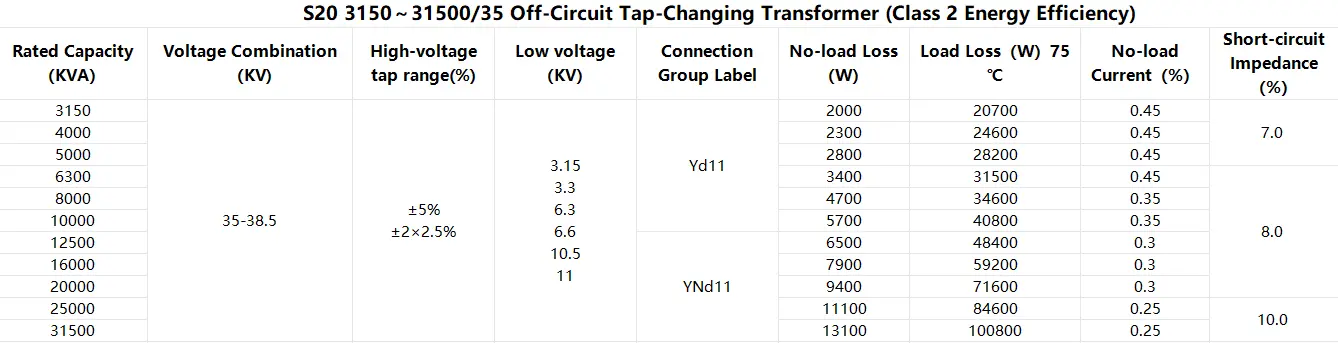
The unit works at normal frequencies of 50Hz or 60Hz and can be set up in either a single-phase or three-phase setup to work with different grid types. The capacity goes from 630kVA to 31,500kVA, so it can be used for projects ranging from small substations in rural areas to large industrial buildings. The voltage can be changed by changing the no-excitation tap, and the range is ±2 2.5%. This lets field teams fine-tune voltage outputs without turning off the power to the system during initial setup.
In ONAN (Oil Natural Air Natural) cooling mode, which is good for smaller units, the oil inside the generator moves around by natural airflow. Larger sites use ONAF (Oil Natural Air Forced) systems, which have outside fans that help heat escape during times of high demand. Smaller types have a corrugated tank design that lets the structure expand and shrink with changes in temperature. This means that they don't need separate cooling systems, and the pressure inside stays the same. Larger units have flat tanks and stronger structure supports that can handle short-circuit mechanical forces of up to 25 times the maximum current.
The shielding oil has a flash point higher than 135°C, and during production, vacuum drying methods make sure that the moisture content inside stays below 0.5%. These rules work together to stop thermal runaway and insulation degradation, even in situations where IEC 60076-7 guidelines allow long-term overloading.
Multiple performance factors must be weighed against real-world working situations in order to choose the right transformer. The S20 type 35KV oil-immersed power transformer line solves important procurement problems by making measurable technical changes and engineering design choices that make tools last longer.
If this equipment has a Level 1 energy economy approval, it means it meets the strictest performance standards set by GB 20052-2020 standards. Compared to models from the previous generation, no-load losses drop by about 10%, and load losses drop by over 5%. When applied to thousands of hours of operation each year, these improvements in efficiency lead to big drops in the amount of power used and the costs that come with it.
The structure is completely sealed, which keeps outside toxins, humidity, and rust from getting into the internal parts. C4/C5 grade anti-corrosion coats on the outside of things protect them well in coastal areas where salt spray speeds up the breakdown of metals. This full protection stretches the time that the machine can run without any upkeep, which cuts down on planned downtime and the need for field service. Outdoor lifespans regularly reach 30 years with little maintenance other than regular oil tests, as shown by installations in the real world.
With 1,000kVA units, noise levels stay at or below 60dB(A) thanks to vibration-damping materials built into the tank mounting system and precise core stacking methods. Because of this sound profile, the S20 type 35KV oil-immersed power transformer series can be installed near living areas, hospitals, or school grounds where sound pollution rules are very strict. Low operating noise and hermetic seals get rid of the risk of oil leaks, which addresses two main issues in urban power distribution projects.
Heavy industry sites, like steel mills, mines, and chemical plants, can use the transformer's ability to handle sudden changes in load and harmonic distortion without affecting the steadiness of the voltage. The strong winding design can handle the mechanical stress that comes from short-circuits, and the oil-immersed insulation system handles the temperature cycle that happens during batch production.
Solar farms and wind power plants add unpredictable power flows to collection systems, which makes installing renewable energy sources very difficult. The S20 transformer's ability to control temperature and work with clever tracking systems makes it possible for variable generation sources to be safely connected to the grid. The names of its link groups—Dyn11 or Yd11—show the phase relationships needed for balanced three-phase distribution in collection substations.
When building infrastructure, especially in rural areas, sealed construction is helpful because it reduces the need for upkeep in places where skilled technical staff may not be readily available. Outside temperatures can reach up to 40°C, and the design can be changed to fit uses that need to work in harsh climates.
Before making a purchase choice, it's important to know how the different types of transformer technologies fit with the needs of the project, the conditions of the place, and the long-term goals for operations.
Oil-immersed designs are the best at getting rid of heat, especially in large sites where thermal loads are higher than what natural airflow can handle. The liquid dielectric is better at coordinating shielding and stopping arcs, which makes it better for outdoor substations that are hit by lightning and switching spikes.
Dry-type transformers get rid of the need to worry about handling oil and lower the risk of fire in indoor setups that have to follow strict safety rules. However, their cooling problems usually limit their capacity rates and require controlled room temperatures. If you follow the right oil care steps, the S20 type 35KV oil-immersed power transformer method can handle more overloads and last longer for protection.
The S20 series' impedance voltage specs match the technical parameter tables set by international standards. This makes sure that they work with the fault current calculations and safe relay coordination that design engineers use. This standardization makes it easier to connect to the grid's current infrastructure while still letting defensive devices choose which devices to use.
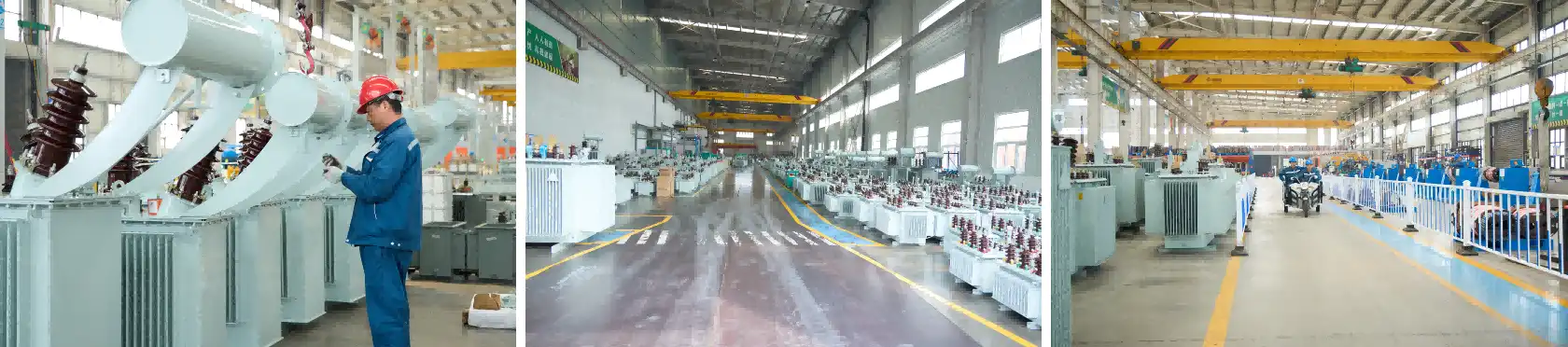
The Lijie Electric Power Technology Group has two 500,000-square-meter factories that can make a lot of different things. These factories can meet the needs of large-scale projects. Over 160 pros on our engineering team have advanced degrees. This makes sure that we can keep developing products that meet the changing standards of the industry. IEC 60076 compliance, CE marking, and UL certification show that a product meets international quality standards that make it easier to buy things across borders and get governmental approval.
Customers in Australia, Southeast Asia, Central Asia, and Africa have consistently said that deliveries were made on time and that expert help was quick to respond during the launch stages. These practical factors play a big role in keeping projects on schedule and lowering risks in complex infrastructure deployments.
Strategic buying weighs unit prices against the total cost of ownership, which includes things like how much energy the equipment uses, how often it needs to be maintained, the length of the warranty, and how reliable the seller is over its many-decade service life.
Prices for S20 type 35KV oil-immersed power transformers in this voltage class depend on their capacity grade, extra features like smart tracking systems, and the certification needs of the final markets. When you commit to a certain volume, you can usually get a better price and a committed production schedule that works with your project's milestones.
Lead times for production range from 8 to 16 weeks, based on the number of items needed and how they need to be customized. Frameworks that set consistent prices, priority manufacturing slots, and pre-negotiated transportation arrangements are good for large orders. Payment terms often include arrangements based on milestones and letters of credit or performance bonds that cover both parties during the whole transaction.
Material flaws, poor manufacturing skills, and performance promises based on certain working conditions should all be covered by the warranty. Comprehensive guarantees cover more than just replacing broken equipment. They also include expert support during installation, help with setup, and access to extra parts stockpiles in regional service centers.
In order to prepare the site for an S20 type 35KV oil-immersed power transformer, strong concrete foundations must be built to hold the weight of the transformer and oil, which can be anywhere from 800 kg for smaller units to 45,000 kg for big systems. It is important that civic plans include enough space for oil containment, cooling air flow, and repair access.
Before turning on the power, professional installation teams make sure that the grounding connections, bushing alignment, and safety relay settings are correct. Insulation resistance tests, turns ratio verification, and oil dielectric strength readings are all part of the initial starting process. These are done to get standard performance data. When asked to, intelligent tracking systems can connect to SCADA networks and show real-time information about temperature, load, and maintenance signs.
The maker offers ongoing expert support, which includes interpreting oil analyses, helping with troubleshooting, and suggesting ways to improve performance as working conditions change. This partnership-based method makes tools last longer and gets the most out of capital investments.
Understanding the interconnected systems that handle electrical stresses, thermal loads, and weather risks over the S20 type 35KV oil-immersed power transformer's working life is important for its reliable long-term performance.
Using a megohmmeter to measure insulation resistance can find signs of wetness or contamination before they cause problems. Dissolved gas analysis (DGA) of oil samples finds early flaws by identifying specific gas fingerprints. For example, hydrogen signals partial discharge, acetylene signals arcing, and ethylene signals thermal decomposition. In normal situations, testing every 6 to 12 months is enough to keep an eye on things. More often, sampling is needed in tough settings or during times of high load.
Tests of the transformer's turns ratio make sure that the windings are solid and that the tap switch works in all voltage settings. When insulation is tested for power factor, it shows signs of wear and tear that might not be seen in resistance readings alone. Together, these monitoring tools make it possible to use predictive maintenance plans to stop unplanned outages and make service gaps longer.
The ONAN cooling system uses differences in temperature to move oil through the coils and send heat out through the tank walls. This passive method gets rid of failure modes for extra equipment and lowers the amount of power that is used by parasite devices. When the load or the environment is too much for ONAN, ONAF systems turn on cooling fans that move more air across the tank's surface. This makes heat transfer faster without the need for oil pumps or heat exchanges.
The corrugated tank design gives more surface area for heat to escape while still allowing for the oil's volume to expand as the temperature rises. This design does away with the need for an oxygen tank and breathing equipment, which were needed in older technologies. This makes it easier to maintain and lessens the chance of leaks. The tightly sealed system keeps the humidity inside stable and stops the insulation fluid from oxidizing.
Conductor bundles are wrapped in high-quality insulating paper, which provides turn-to-turn and phase-to-phase protection that can withstand lightning hits and switching transients. The cellulose-based material keeps its mechanical strength and dielectric qualities when it is submerged in transformer oil that is kept in good shape and has less than 0.01 mgKOH/g of acidity and less than 10ppm of water.
The oil itself acts as the main insulator between the windings and the grounded tank structures. It can fix itself if there are small electrical shocks, so they don't cause lasting damage. Filtering and degassing the oil on a regular basis improves the dielectric strength and extends the service life of the fluid. This saves money on full oil refill costs over the life of the transformer.
For medium-voltage distribution uses, the S20 type 35KV oil-immersed power transformer offers quantifiable benefits in terms of energy savings, dependability, and lifetime cost management. It was designed using tried-and-true heat management principles, high-tech core materials, and complete sealing technology to have 30-year service lives with little upkeep. This equipment meets the technical standards and rules needed by today's infrastructure projects, whether it's for modernizing the electric grid, meeting the power needs of factories, or incorporating green energy. Knowing what it can do, how to buy it, and how to keep it in good shape helps engineering and buying teams make smart choices that improve the stability of the power system and its economic returns.
The S20 type 35KV oil-immersed power transformer gets Level 1 energy economy approval, which means that it uses about 10% less energy when it's not in use and over 5% less energy when it is. This is a better design for a magnetic circuit that uses cold-rolled oriented silicon steel and less eddy current formation. Over the 30-year working life of the transformer, these improvements in efficiency save a lot of money on operating costs.
Coastal sites can rely on S20 transformers that are hermetically sealed and have C4/C5 anti-corrosion coats. For the first two years, oil samples are taken every six months to set a standard. After that, samples are taken once a year if the results stay the same. Dissolved gas analysis and moisture content readings can find any early signs of seal breakdown, so steps can be taken to stop damage to the insulation before it happens.
The S20 always works efficiently at its stated capacity. IEC 60076-7 thermal loading rules allow temporary overloads of up to 110%. However, long-term use above the nameplate limit speeds up insulation aging and shortens its useful life. Load control systems that stop overloading from happening all the time protect the equipment investment and keep the guarantee valid.
The S20 type 35KV oil-immersed power transformer options from Lijie Electric Power Technology Group are ready to help you with your building projects. Our two state-of-the-art production facilities cover 500,000 square meters and are home to more than 2,000 workers, 160 of whom are engineering experts. We keep up with foreign purchasing standards by keeping our ISO 9001:2015 certification, IEC compliance, and CE/UL approvals. As a reliable provider of S20 type 35KV oil-immersed power transformers that has a track record of delivering to customers around the world, we offer reasonable pricing for large orders, flexible payment terms, and full expert support during installation and testing. Please email our team at lijieelectrical@gmail.com to talk about your specific needs, get detailed technical specs, and get personalized quotes that fit your project schedule. You can look at our whole line of products at lijie-electrical.com and learn how our transformer solutions improve the efficiency of power distribution networks around the world.
1. International Electrotechnical Commission. IEC 60076: Power Transformers - General Requirements and Test Procedures. Geneva: IEC Publications, 2018.
2. Zhang, W., Liu, H., and Chen, M. "Energy Efficiency Improvement Strategies for Oil-Immersed Distribution Transformers in Smart Grid Applications." Journal of Electrical Engineering & Technology, vol. 15, no. 4, 2020, pp. 1547-1559.
3. National Institute of Standards and Technology. Transformer Cooling Systems: Performance Analysis and Optimization Methods. Washington: U.S. Department of Commerce, 2019.
4. Wang, S. and Kumar, R. "Lifetime Assessment of Power Transformers Under Variable Loading Conditions." IEEE Transactions on Power Delivery, vol. 36, no. 2, 2021, pp. 892-901.
5. Energy Efficiency Administration. GB 20052-2020: Minimum Allowable Values of Energy Efficiency and Energy Efficiency Grades for Three-Phase Distribution Transformers. Beijing: Standards Press of China, 2020.
6. Thompson, J.D. Oil-Immersed Transformer Technology: Design, Testing, and Maintenance. London: Power Engineering Press, 2022.
YOU MAY LIKE

11%20type%2035kV%20distribution%20transfo_1778137470754.webp)

%20H15%20Series%20Oil-immersed%20Amorphous%20Alloy%20Transformer.webp)

12%20type%2035kV%20distribution%20transformer.webp)
April 27, 2025
With a tight project schedule, the manufacturer delivered on time, and on-site technical personnel provided guidance throughout the entire installation and commissioning process; the collaboration was highly efficient and hassle-free.
July 2, 2025
During the preliminary phase, a selection plan was custom-tailored based on the actual site load requirements, resulting in a high degree of parameter compatibility. After-sales support responds within two hours, and ongoing technical support for operation and maintenance is comprehensive; we feel completely confident in a long-term partnership.
November 18, 2025
Deployed as a supporting component for a 35kV grid-connection project at a photovoltaic power station, the equipment operates for an average of 16 hours daily. It demonstrates excellent control over no-load losses, ensures smooth power generation and grid integration, and effectively reduces the station's overall energy consumption.
January 30, 2026
Under the continuous, high-load operating conditions of a factory production line, the equipment maintains stable electrical parameters and exhibits strong overload resistance, thereby guaranteeing an uninterrupted power supply for industrial production.
April 3, 2026
Integrated as a supporting component for a new energy photovoltaic grid-connection system, the manufacturer provided professional technical coordination and timely after-sales support, ensuring seamless adaptation to the specific electrical operating conditions required for grid integration.