April 27, 2025
With a tight project schedule, the manufacturer delivered on time, and on-site technical personnel provided guidance throughout the entire installation and commissioning process; the collaboration was highly efficient and hassle-free.
Jun 19, 2026
A Three-phase overhead distribution transformer is an electrical device that is placed on a pole and changes high-voltage primary power (usually between 8kV and 35kV) into smaller secondary voltages that can be used in homes, businesses, and light factories. Unlike single-phase units, these transformers have three sets of windings that work together to provide balanced, efficient power across all phases. This makes them essential in places where loads are spread out, like country areas, suburban developments, and rail lines. Their small, raised form keeps their ground-level size as small as possible, lowers the cost of installation, and makes sure that voltage regulation works well even in tough conditions.
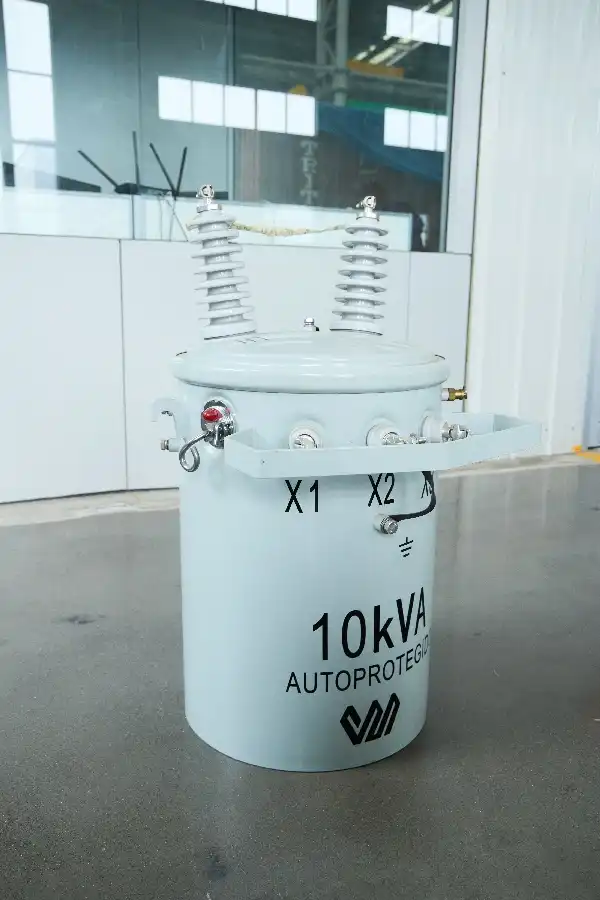
The Three-phase overhead distribution transformer is an excellent solution for power distribution issues faced by utilities and industrial firms that balance cost, reliability, and convenience of use. High-voltage electricity is converted to 400V or 220V by these transformers, the main connection between medium-voltage distribution networks and end customers. Installing atop poles provides installers with additional choices and safeguards equipment from floods, vandalism, and ground-level contact.
Every three-phase overhead distribution transformer includes durable, well-made components. The core, commonly cold-rolled silicon steel sheets or sophisticated amorphous metal alloys, decreases magnetic losses and boosts energy conversion. These materials have far lower no-load losses than earlier transformers. This lowers lifetime operational expenses, which procurement managers must consider when calculating the total cost of ownership.
The winding system uses precisely twisted high-voltage and low-voltage coils for maximum electromagnetic induction and minimum resistance loss. Project requirements determine whether high-purity copper or aluminum wires are used. Aluminum is cheaper and lighter than copper, which conducts better. Oil tank and generator oil prevent electricity and remove heat. Curved fin tanks naturally remove heat from the core and windings using mineral oil or biodegradable ester fluids. This maintains acceptable operating temperatures even with constant loads.
Electromagnetic induction creates a voltage in the secondary winding when the alternating current in the primary winding changes. Three-phase designs provide electricity over three wires simultaneously. This distributes the load uniformly and prevents neutral current imbalances that cause overheating and inefficiency. This design is ideal for companies that require consistent, balanced three-phase power for motor drives, HVAC systems, and large machinery.
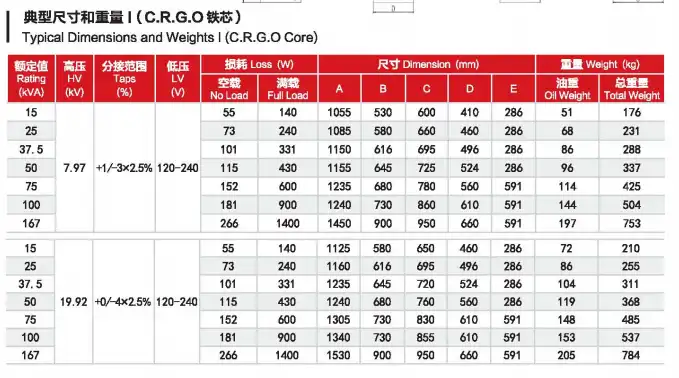
Non-excitation tap changers allow utilities to adjust output voltage by ±2.5% in 1% increments over a range of tap settings, often +1/-3 or +0/-4. This function compensates for voltage loss throughout lengthy distribution lines so end consumers receive the same voltage regardless of distance from the center. This flexibility tackles a key challenge in rural power projects: transmission lengths vary, and equipment needs steady voltage.
Many companies often employ three-phase overhead distribution transformers. Rural energy projects use these units to power remote mountainous regions and rural communities where underground cable installation would be difficult or costly. Pole-mounted transformers may be readily installed in urban-rural border regions with modest load levels and less space constraints than city centers. This is because they need less civic work.
Railway companies utilize these transformers to power stops, signaling systems, and building repairs on electrified lines. Flexible scalability helps industrial parks with dispersed loads flourish as new customers arrive. Real estate developers enjoy that it costs less upfront than pad-mounted or substation choices, while regional utilities prefer that taller installations are simpler to maintain.
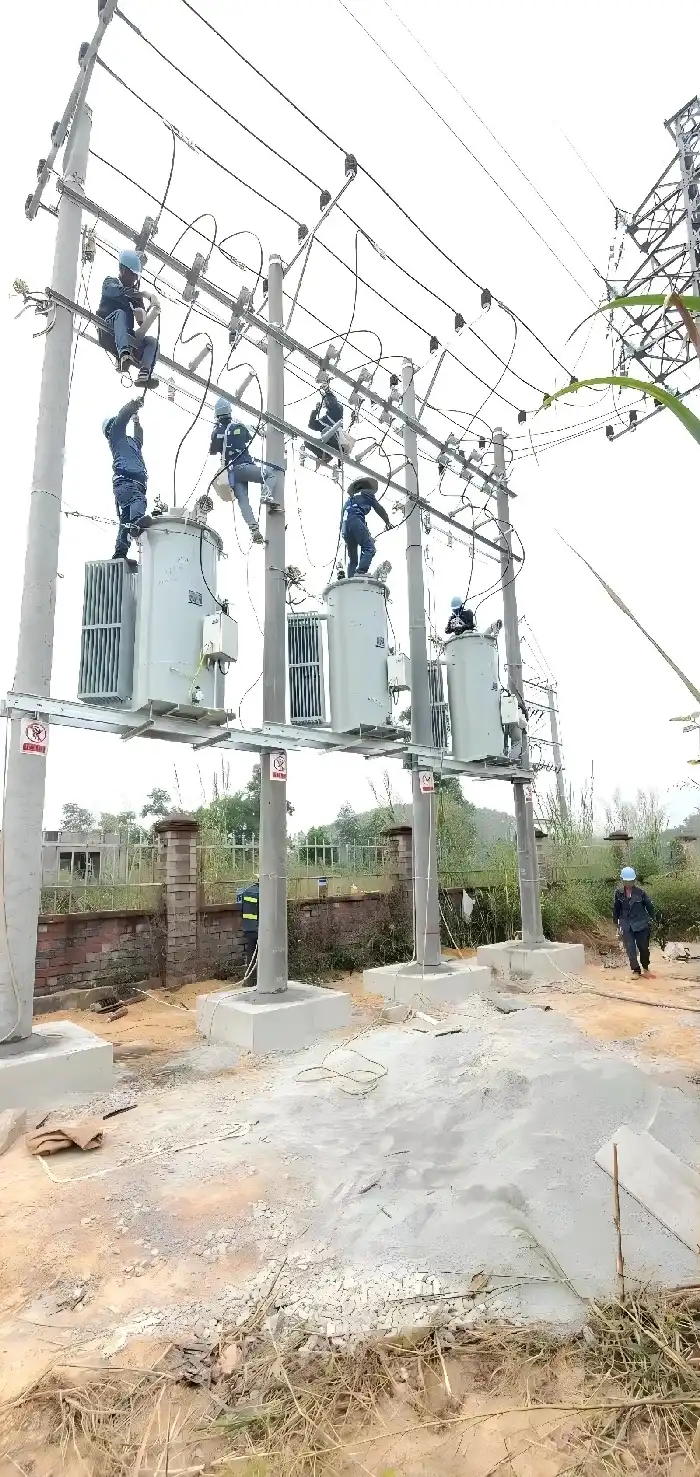
In order to choose the right Three-phase overhead distribution transformer type, you need to know how the different designs are built and how they work. Each design variation takes into account different performance needs, environmental factors, and upkeep tastes. This lets procurement professionals match the skills of the tools with the needs of the project.
Core transformers feature windings around the magnetic core's vertical legs. This basic, affordable construction removes heat well. Due to its ease of manufacture, insulation, and repair, this type is most typical for distribution. Natural oil flows more freely on open surfaces, making ONAN (Oil Natural Air Natural) systems cooler.
Shell transformers can tolerate short-circuits and have better mechanical strength since the windings are encased in the magnetic core. Shell-type units aren't utilized much in overhead distribution since they're harder to produce and weigh more, but they're occasionally required for fault- and earthquake-resistant circumstances. Knowing these structural changes helps engineers assess costs, durability, and maintenance when writing technical standards.
Most overhead distribution employs oil-immersed transformers because they are more dependable, cooler, and cheaper than dry-type ones. Mineral or ester oil has more electrical strength, tiny, powerful designs suit. Self-cooling oil circulation (ONAN technique) eliminates active cooling. This improves unmanned site reliability and reduces maintenance. In environmentally sensitive areas, oil-filled units require frequent oil quality checks and aren't necessarily healthy for the environment.
The air or cast plastic insulation of dry-type transformers eliminates oil-related fire and pollution issues. These units may be utilized inside, in areas with tight fire laws, or near water sources where oil spills might damage the environment. Despite greater initial expenditures and larger sizes, institutions that prioritize safety and environmental sustainability favor dry-type architecture. Due to their weight and inability to withstand harsh weather, overhead applications seldom utilize dry-type units. Knowing the difference makes buying integrated substation project components simpler.
Three-phase overhead distribution transformers operate from 8kV to 20kV, meeting North American and international distribution network requirements. Three-phase pole-mounted systems typically have power ratings of 30kVA, 50kVA, 75kVA, 100kVA, and 167kVA. These basic sizes can handle light commercial and modest residential loads.
Customization goes beyond grades to satisfy employment demands. Lijie Electric can create systems with 50Hz or 60Hz frequencies, network safety impedance voltages, and improved insulation for dusty or high-elevation areas. EPC professionals managing overseas projects with various norms and circumstances need this versatility.
In addition to basic type classifications, winding configurations and cooling methods have a big impact on how well and efficiently a Three-phase overhead distribution transformer works and whether it is right for a certain purpose. Teams in charge of buying things have to look at these design factors to make sure they work with current systems and meet the needs of future operations.
Voltage, grounding, and harmonic behavior depend on winding connections. Delta designs eliminate neutral points and restrict third-harmonic currents by linking windings in a closed loop. This setup works well for industrial loads with minimal single-phase imbalance, although grounding is harder. Wye (Y) connections share neutrality. For developments containing residences and businesses, four-wire distribution systems may service three-phase and single-phase loads simultaneously.
In Three-phase overhead distribution transformer systems with irregular loads or excessive harmonics, zigzag windings are beneficial. Zigzag designs change winding segment phases to decrease neutral current distortion and increase voltage stability when loads are unequal. Although rare in overhead applications, this approach handles renewable energy integration and non-linear load management issues. It emphasizes the need for winding structure-load matching.
ONAN cooling involves passive heat transfer. Natural air convection cools warm oil as it rises through the core and windings to vents or tank sidewalls. This approach is the most frequent overhead sharing method since it's simple, requires little electricity, and has no moving parts. Many utility purchase standards require ONAN systems to perform reliably at temperatures up to 40°C.
In ONAF cooling, fan-driven airflow across radiators is added to natural oil movement. This improves heat removal and load rates in the same area. ONAF systems are ideal for sites with fluctuating demand or limited space and no capacity for larger ONAN units, despite their complexity and maintenance. Knowing these cooling variations helps project managers balance capital costs with routine flexibility when sizing transformers for future load increase.
Cities and localities are facing more noise pollution, while following strict noise regulations helps people tolerate it. Load current vibrations and magnetostriction, which cause core laminations to alter size with magnetic flux, create most transformer noise. Modern designs employ high-grade silicon steel and better core clamping technologies to reduce rated load noise to 50dB. This fulfills domestic zoning regulations in many regions.
Meeting IEEE C57.12.20, IEC 60076, and ANSI standards ensures market-standard sound quality. To minimize issues during commissioning, the purchase specifications should include the maximum sound levels permitted at conventional distances, generally 1 meter from the tank surface. Acoustic testing is routine for Lijie Electric's engineering staff during plant acceptance trials. Written evidence of compliance and specialized noise reduction solutions for projects with extremely low emission profiles is available.
To find the best Three-phase overhead distribution transformer setup, you need to carefully look at scientific, financial, and operational factors. Structured comparison frameworks help procurement professionals see the pros and cons of different choices and make sure that equipment requirements match project goals.
Three-phase overhead distribution transformers function best when they can be installed quickly, without construction work, and easily connected to pole infrastructure. Their high installation protects equipment from floods, garbage accumulation, and tampering, and makes damage inspection and maintenance easy. Installation is cheaper than pad-mounted solutions, which need concrete bases and planting, or subterranean vaults, which must be dug out and waterproofed.
Pad-mounted transformers are suitable for urban projects that care about appearance, subterranean distribution networks, and places where overhead lines are restricted by law or appearance. These apartments are more expensive and take longer to create, but they protect against automobile collisions and weather. Business districts benefit from underground transformers, but they are hard to reach and need constant maintenance. Knowing these installation types helps project managers pick settings that fit the site's demands, budget, and long-term operations.
Use the right load estimation to design the transformer. Engineers must consider peak demand patterns, load growth estimates, and diversity variables to avoid undersizing (which may cause overloading and early failure) or oversizing (which would increase capital costs and no-load losses). Most spread load scenarios can be handled with 30kVA to 167kVA three-phase overhead distribution transformers. Estimates of simultaneous demand determine capacity, and safety margins are normally 20%–30%.
Transformer lifespan and performance depend on the environment. Devices must be derated or cooled more above 1000 meters due to less dense air. Tank coatings that don't rust and sealed bushing designs prevent insulation breakdown in salty coastal environments. Fans or cooling systems must be upgraded when temperatures exceed 40°C. Lijie Electric's application engineering assistance advised purchasers on configuration adjustments that increase dependability in various operating conditions without compromising product lifetime value.
Long-term outcomes are better when buying decisions for a Three-phase overhead distribution transformer involve more than price. Capital, installation, energy losses during the transformer's 20–30-year service life, maintenance, and shutdown expenses make up the overall cost of ownership. Amorphous alloy cores or optimized silicon steel minimize no-load losses by 20–40%, saving utilities with thousands of transformers over broad networks.
Project success relies on supplier reliability. This is evidenced by predictable wait times, consistent production quality, and fast expert advice. Lijie Electric's ISO 9001:2015, CE, UL, and IEC certifications and 500,000-square-meter manufacturing base in Xuzhou and Nantong reassure buying managers about delivery and product quality. Because our engineering staff works with design schools, we can ensure bespoke solutions fulfill tight standards. Meanwhile, our reliable supply chain can handle large infrastructure project orders without delay.
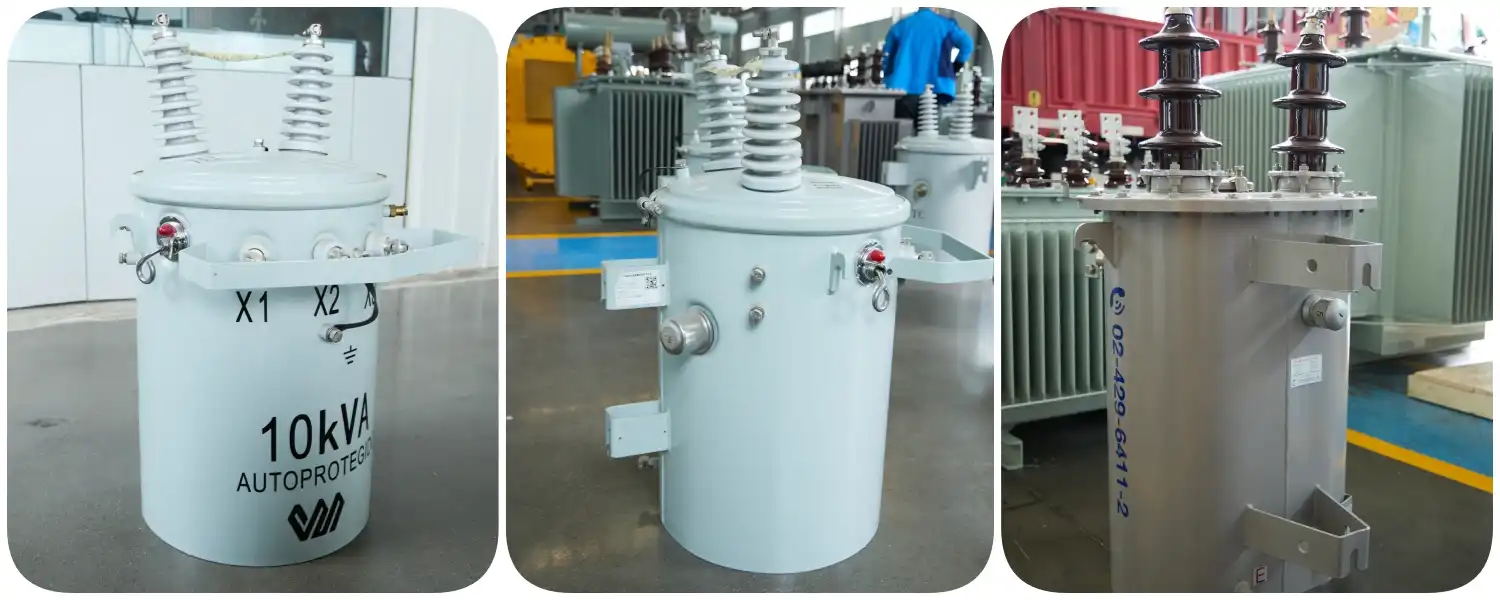
To get the most value out of your transformer assets, you need to use preventative repair methods to find problems before they become major problems. Understanding how common Three-phase overhead distribution transformer faults happen and using predictive maintenance techniques can make devices last longer and reduce unplanned downtime.
Overheating from too much load power, insufficient cooling, or worn insulation is the most prevalent failure. Regular thermal imaging may detect hot patches that indicate winding issues or restricted oil flow channels before insulation failure. Checking oil temperature gauges and winding resistance regularly may help identify issues early so they can be rectified during scheduled downtime.
Insulation might fail due to water, chemicals, or heat. A yearly transformer oil dissolved gas analysis (DGA) may detect fault gases, including hydrogen, methane, ethylene, and acetylene, that burn, arc, or partially discharge. Over time, DGA data illustrate wear and tear patterns, helping define maintenance and replacement targets. Testing the oil's dielectric strength reveals that the insulation is good; values below 30kV indicate contamination and need filtering or replacement.
Well-designed maintenance plans balance inspections with resources. They prioritize high-impact jobs that maintain reliability without much attention. Every three months, the hardware, oil levels, and bushing seals are checked for leaks or physical damage. Infrared thermography investigations detect thermal anomalies every year amid heavy demand. These include weak connections, uneven phase currents, and cooling system obstructions.
Predictive maintenance uses diagnostic data to determine action timing. Oil quality trends like moisture content, acidity, and dielectric strength indicate service life and when to recondition before critical levels are reached. Acoustic sensors or ultra-high-frequency detectors for partial discharge monitoring identify insulation weakness early, enabling focused adjustments that ensure equipment lasts decades longer than run-to-failure approaches. Customers get full repair instructions and diagnostics training from Lijie Electric. This maximizes asset use by their specialist teams.
Retrofits that reduce energy waste and make loads simpler to manage are frequently worth the investment since they improve efficiency. ONAF fan kits may increase the ONAN cooling system constant rate by 15–25% without replacing the transformer. This reduces capital expenses and increases load. High-temperature ester fluids boost thermal limitations compared to mineral oil. This allows the system to manage short-term overloads under high demand without accelerating insulation deterioration.
Optimization of voltage control reduces network distribution losses. Fine-tuning tap settings based on actual load profiles and annual changes reduces voltage drop, saving energy and improving power quality. Smart tracking systems that provide real-time load, temperature, and oil status data allow utilities to operate transformers closer to their rated capacity while maintaining reliability. This enables them to maximize their assets and delay purchasing new ones.
Three-phase overhead distribution transformers are still important parts of infrastructure for power companies, industry developers, and renewable energy integrators who need to change voltages in a dependable and cost-effective way. When purchasing, professionals know the differences between core and shell types, oil-immersed and dry designs, and different winding setups, and they can choose equipment that is perfectly suited to their needs. Total cost of ownership, supplier skills, and maintenance plans must all be looked at to make sure that assets maintain their value over time and meet high performance standards. With ISO 9001, CE, UL, and IEC certifications to back up its wide range of products, Lijie Electric offers standard and unique transformer options for a wide range of uses in markets around the world.
Oil-immersed Three-phase overhead distribution transformers will work reliably for 25 to 30 years if they are used normally and get regular repair. Lifespan relies on how it is used, how it is maintained, and the surroundings it is exposed to. Regularly checking the oil, keeping an eye on the temperature, and fixing things when they break greatly extend the useful life. Some well-kept units last longer than 40 years. When diagnostic signs show that insulation degradation is getting close to critical levels or when load growth requires capacity upgrades, utilities should plan to replace the insulation.
Three-phase overhead distribution transformer sizing begins with a thorough load review that includes peak demand, load diversity factors, and growth forecasts. Find the total linked load, use the right diversity factors (usually between 0.6 and 0.8 for mixed household and business loads), and then add 20 to 30 percent as a safety cushion. Think about lowering the ambient temperature for harsh areas and fixing the level above 1000 meters. Talk to application engineers. They can look at load patterns and suggest the best capacity designs that balance the cost of capital with the flexibility of operations.
A lot of Three-phase overhead distribution transformers can be upgraded with new cooling systems that make them more powerful without having to be completely replaced. By adding external radiators or ONAF fan kits to existing systems, the continuous rate can be raised by 15 to 25 percent. This delays the need for capital spending and supports load growth. Upgrades must, however, stay within the limits of the original design; the core and winding temperature values cannot be surpassed. A professional assessment looks at the state of the transformer, how long it still has to work, and how much it would cost to buy new equipment to see if the upgrade is possible.
As a specialized Three-phase overhead distribution transformer supplier, Lijie Electric blends advanced production skills with a wealth of application knowledge to provide you with reliable power distribution equipment that is specifically designed to meet the needs of your project. Our Xuzhou and Nantong factories, which are each 500,000 square meters and have more than 2,000 employees, follow strict quality standards that are approved to meet ISO 9001:2015, IEC 60076, CE, and UL standards. Our engineering team can help you with any project that involves voltage, capacity, or environmental issues. This includes projects that bring electricity to distant areas, industrial park developments, or the use of green energy. Get in touch with lijieelectrical@gmail.com right away to talk about buying in bulk, get technical specs, or set up factory acceptance testing that shows how committed we are to making excellence and customer success.

1. IEEE Standard C57.12.20-2011, "IEEE Standard for Overhead-Type Distribution Transformers, 500 kVA and Smaller: High Voltage, 34 500 V and Below; Low Voltage, 7970/13 800Y V and Below," Institute of Electrical and Electronics Engineers, 2011.
2. International Electrotechnical Commission, "IEC 60076-1:2011 Power Transformers - Part 1: General," IEC Standards, Geneva, Switzerland, 2011.
3. American National Standards Institute, "ANSI C57.12.00-2015: General Requirements for Liquid-Immersed Distribution, Power, and Regulating Transformers," ANSI Standards, Washington, DC, 2015.
4. Bean, R.L., Chackan, N., Moore, H.R., and Wentz, E.C., "Transformers for the Electric Power Industry," McGraw-Hill Professional Publishing, New York, 1959.
5. Harlow, J.H., "Electric Power Transformer Engineering, Third Edition," CRC Press, Boca Raton, Florida, 2012.
6. Kulkarni, S.V. and Khaparde, S.A., "Transformer Engineering: Design, Technology, and Diagnostics, Second Edition," CRC Press, Boca Raton, Florida, 2013.
YOU MAY LIKE



April 27, 2025
With a tight project schedule, the manufacturer delivered on time, and on-site technical personnel provided guidance throughout the entire installation and commissioning process; the collaboration was highly efficient and hassle-free.
July 2, 2025
During the preliminary phase, a selection plan was custom-tailored based on the actual site load requirements, resulting in a high degree of parameter compatibility. After-sales support responds within two hours, and ongoing technical support for operation and maintenance is comprehensive; we feel completely confident in a long-term partnership.
November 18, 2025
Deployed as a supporting component for a 35kV grid-connection project at a photovoltaic power station, the equipment operates for an average of 16 hours daily. It demonstrates excellent control over no-load losses, ensures smooth power generation and grid integration, and effectively reduces the station's overall energy consumption.
January 30, 2026
Under the continuous, high-load operating conditions of a factory production line, the equipment maintains stable electrical parameters and exhibits strong overload resistance, thereby guaranteeing an uninterrupted power supply for industrial production.
April 3, 2026
Integrated as a supporting component for a new energy photovoltaic grid-connection system, the manufacturer provided professional technical coordination and timely after-sales support, ensuring seamless adaptation to the specific electrical operating conditions required for grid integration.