April 27, 2025
With a tight project schedule, the manufacturer delivered on time, and on-site technical personnel provided guidance throughout the entire installation and commissioning process; the collaboration was highly efficient and hassle-free.
Jun 19, 2026
Due to its fully sealed, curved tank construction and low-loss electromagnetic design, the S11 type oil-immersed distribution transformer advances power distribution technology. This transformer was made for today's electricity grid. It features 30% fewer no-load losses and superior insulation integrity than prior S9 variants during its lifetime. Its oxygen-free copper windings, grain-oriented silicon steel core, and maintenance-free construction make it ideal for utility companies, manufacturers, and green energy projects that demand decades-long performance.
US business and economic growth depend on power infrastructure. This vital network relies on oil-immersed distribution transformers to reliably transmit voltage levels to end customers. Today's market benchmark for long-term dependability and operational economy is the S11 series.
Purchasing managers, electrical specialists, and project leaders face increasingly difficult transformer selection decisions for large projects. Performance must be balanced with budget, and IEC and UL requirements must be followed. The S11 model overcomes these issues with proven engineering methods and design enhancements that minimize ownership costs.
This document discusses S11 type oil-immersed distribution transformer technical characteristics, performance measures, and applications. We compare these devices to other technologies and provide B2B purchasers in utility-scale installations, industrial power systems, and green energy projects with meaningful information.
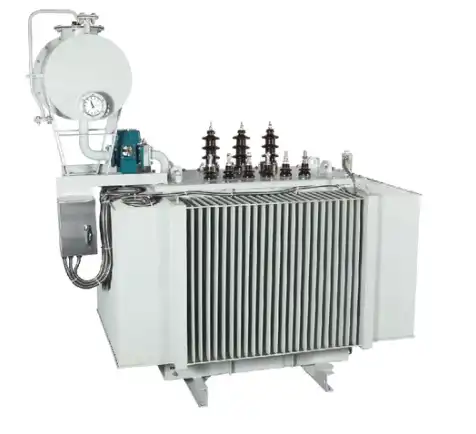
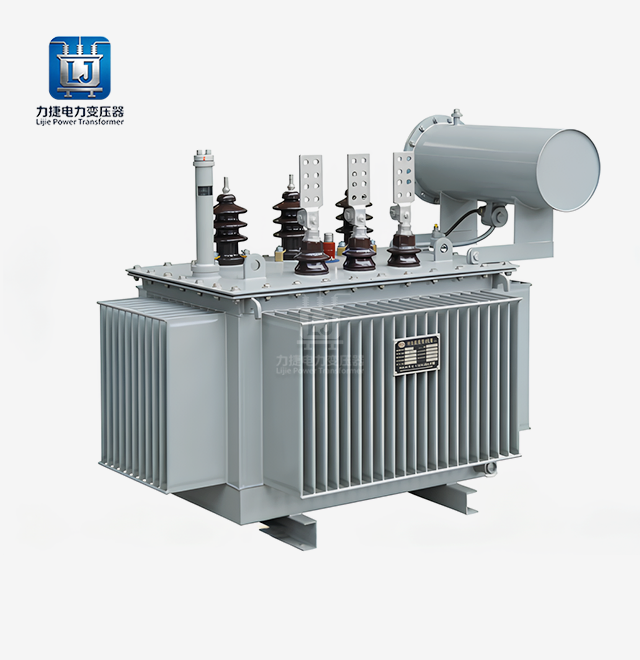
In oil-immersed transformers, mineral oil cools and prevents high-voltage components from contacting. Its totally sealed rectangular tank design makes the S11 design different from oil-saving designs. This novel construction method enables corrugated sides to expand and contract with temperature. This adjusts oil volume without exposing dielectric fluid to air or moisture.
Cold-rolled grain-oriented silicon steel with lap joints forms the electromagnetic core. This material minimises hysteresis losses during magnetisation cycles, giving the model exceptional efficiency. Copper wires without oxygen are wound cylindrically. High-voltage parts employ multi-layer cylindrical designs, whereas low-voltage sections use double-layer spiral designs. Longitudinal oil lines between wrapping layers reduce heat and strengthen insulation.
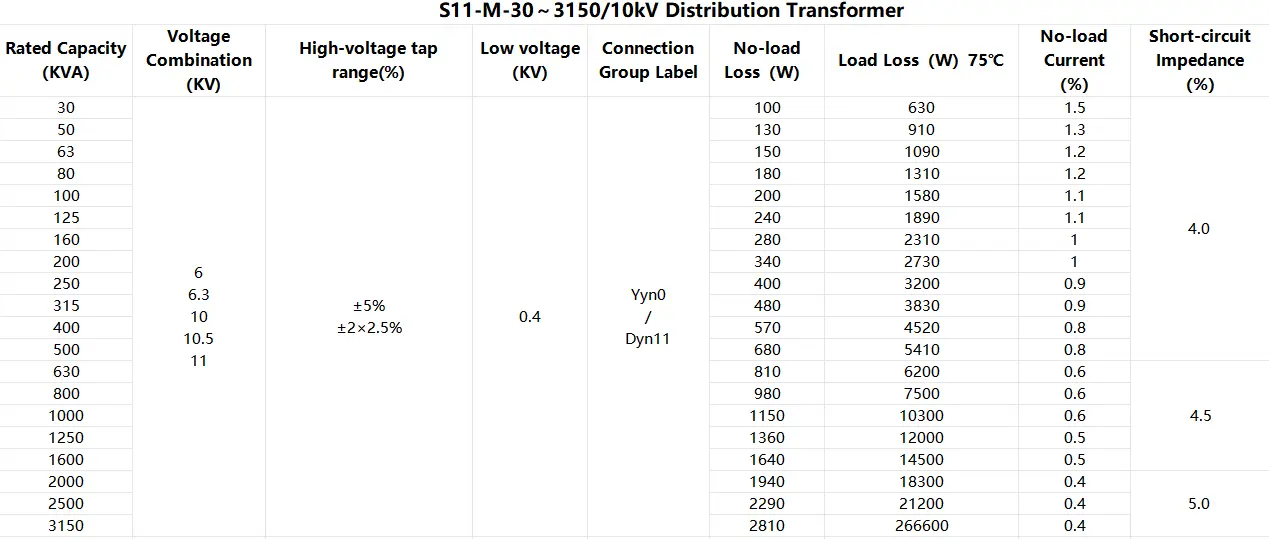
S11 units work with single-phase and three-phase systems and have capacities from 30 to 3,150 kVA. Primary voltages are 6 kV and 12 kV, and secondary voltages may be adjusted for each distribution system. A non-excitation voltage control system with tap ranges of ±5% or ±2 2.5% allows for field adjustments to accommodate supply fluctuations without the requirement for switching gear.
These transformers may be utilized worldwide since they support 50 Hz and 60 Hz networks. To support grid systems, connection group names utilize standard Yyn0 or Dyn11 setups. ONAN employs natural airflow within the tank and sunshine outside to chill it. Not requiring forced-air cooling systems, which are harder to maintain.
Insulation meets severe testing, such as 35 kV AC power frequency and 75 kV shock withstand voltages. These criteria ensure that equipment functions securely during utility network switching transients and lightning strikes. The sealed construction allows installation outside at temperatures up to 40°C, and tougher circumstances may be specified.
The S11 type oil-immersed distribution transformer fits into transformer history. Early S9 vehicles featured larger no-load losses and more oil repairs due to breather-equipped conservator tanks. Protected design and improved core materials help the S11 avoid these issues. Although more expensive, later S13 versions enhance efficiency even further.
Dry-type transformers cool with air or plastic insulation instead of oil. Oil-free units function at lower voltages and can't manage overloads as well as oil-immersed ones. The S11 is an excellent medium-voltage distribution compromise for buyers who value tested technology and cost-effectiveness.
S11 type oil-immersed distribution transformer no-load losses are largely caused by core magnetization. By using silicon steel and optimizing core shape, manufacturers have reduced these steady losses significantly. The average 1,000 kVA S11 unit loses 1,300 watts when not in operation, while equivalent S9 units lose 1,900. This 600-watt differential will save a lot over 25 years on electricity.
Load losses are largely resistive warmth and rely on current via the windings. Copper wires without oxygen and optimum cross-sectional areas reduce these losses. A well-designed S11 transformer loses less than 2% of energy as heat at full capacity, staying over 98% efficient. This efficiency is stable between 25% and 100% loads, a common delivery network range.
How much the secondary voltage lowers from no-load to full capacity depends on the voltage regulator. S11 designs have 4-6% control at unity power factor. Lagging power factors, prevalent in industrial buildings, reach 8–10%. The tap switch device enables field workers to modify the turns ratio to address frequent voltage issues without replacing the transformer.
Curved tanks have 15-20% more surface area than flat-sided tanks, improving natural airflow cooling. Windings radiate heat into the oil, which rises to the top of the tank and reflects outside. This passive cooling system is quiet and requires no electricity, reducing operating costs and potential issues.
Thermal stability under shifting load circumstances is crucial for buying teams. S11 transformers can usually withstand 120% of their full capacity for brief durations without overheating. You have several alternatives when there is heavy demand or when adjacent units are down for repair, since you can manage too much traffic. Insulation lasts longer with proper thermal management; thus, transformers can last 30 years or more.
Hotspot temperatures remain safe even when the system is fully loaded, according to IEC 60076 temperature increase tests. The oil's natural flow pattern and precisely constructed cooling channels prevent overheating, which might harm power winding insulation.
Protection alters how much maintenance is needed compared to conservatories. Because oil breaks down in the air, traditional transformers need oil samples, moisture checks, and filtering or replacement. By eliminating pollution at its source, S11 units eliminate these processes. Since the corrugated tank can tolerate temperature rise without air, oil quality remains excellent throughout its service life.
Most yearly tests focus on the exterior, including bushing soundness, oil leakage, and load tap changer operation. Internal repair is only needed for major electrical issues or when the equipment is reaching its end of life. By eliminating scheduled outages, this maintenance paradigm reduces system costs and improves reliability.
Energy loss, maintenance, replacement parts, and disposal must be included when calculating the total cost of ownership. Despite their higher initial cost, S11 transformers usually outperform earlier technology in buying teams' economic assessments.
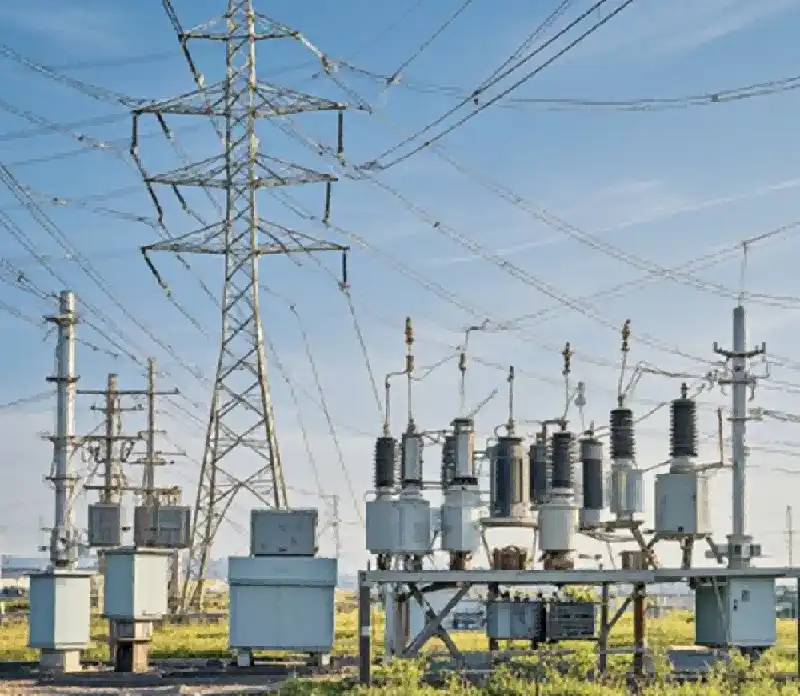
Many urban and rural utility projects employ S11 type oil-immersed distribution transformer units to deliver power. These transformers service residential neighborhoods in cities from tiny substations or pad-mounted units. The protective design provides individuals peace of mind where oil spills would damage groundwater and cause costly cleaning and legal issues.
Rural group utilities enjoy that remote units, where personnel can't reach them, require less maintenance. An S11 transformer can run for years without inspection if correctly indicated. The service is more dependable for farmers and homeowners. Generator hum can create complaints in communities, although the low acoustic profile helps.
High harmonic content from variable frequency drives, frequent load changes from motor starters, and high process area temperatures make heavy industries difficult to work in. S11 transformers perform reliably in these situations due to their short-circuit withstand and temperature cushion. A failure or motor inrush current pushes electromagnetic forces against manually reinforced windings.
Steel mills, miners, and chemical industries generally require many parallel units to maintain production. Standardized grades and performance features simplify spare part tracking and technician training. Knowing that a new unit will fit with the old one simplifies and decreases project engineering costs.
Solar farms and wind farms need step-up transformers to link generating equipment to transmission lines. These activities are usually done with specialized generator transformers, but S11 distribution units power control buildings, provide station service power, and supply energy to other systems. The reliability and efficiency of S11 designs match the expenses of operations that fund green projects.
Energy storage locations have comparable demands since battery charge and release cycles modify transformer loads. S11 units are thermally stable and can endure overloading, thus they can handle changing working patterns without affecting their lifespan.
The next efficiency increase is S13 transformers, which have 20–25% lower no-load losses than the S11 type oil-immersed distribution transformer. Improved core materials and electromagnetic design provide this benefit. For large utility operations or persistent near-capacity operation, the efficiency benefit can offset the 15–20% higher purchase cost than equivalent S11 units.
Business and industrial transformers are generally partially loaded, reducing the efficiency difference. The S11 fits most energy regulations' economy requirements, so it's legal without paying extra for cutting-edge technology. Procurement teams should calculate payback timelines using predicted loading profiles, not theoretical maximum efficiency estimates.
Compared with the S11 type oil-immersed distribution transformer, indoor hospitals and high-rise structures need dry-type transformers since they don't utilize oil. They also avoid the containment regulations that make open oil-filled installations more costly. However, dry-type units with the same power and capacity cost 40–60% more than oil-immersed units.
Compared to prior conservator models, the S11 sealed design reduces oil leakage. Dry-type construction's safety advantage is less obvious. Outdoor utility substations and industrial switchyards with less fire risk are cheaper with oil-immersed designs. The S11 handles high loads and stays cooler, making it beneficial under intermittent loads.
Voltage level typically determines technology choice. Dry-type transformers are costly and large above 15 kV, although oil-immersed ones function well. S11 units at 12 kV address medium-voltage distribution demands that dry-type technology cannot.
Quality checks begin with manufacturer authorization. ISO 9001 quality control systems provide consistent production procedures, while IEC 60076 and UL certifications demonstrate compliance with US installation requirements. Independent lab tests prove performance guarantees concerning losses, temperature increase, and short-circuit resistance.
The warranty conditions demonstrate the company's confidence in product durability. The average warranty lasts 18–24 months following installation. Top vendors provide longer guarantees because transformers should last decades. The warranty should state who is liable for shipping damage, fitting errors, and product malfunctions.
After-sales infrastructure is as crucial as product quality. Suppliers with service networks may deploy professionals for setup, troubleshooting, and emergencies. The quality of technical documentation, including installation instructions, repair techniques, and spare part catalogs, affects asset utilization during their lifespan.
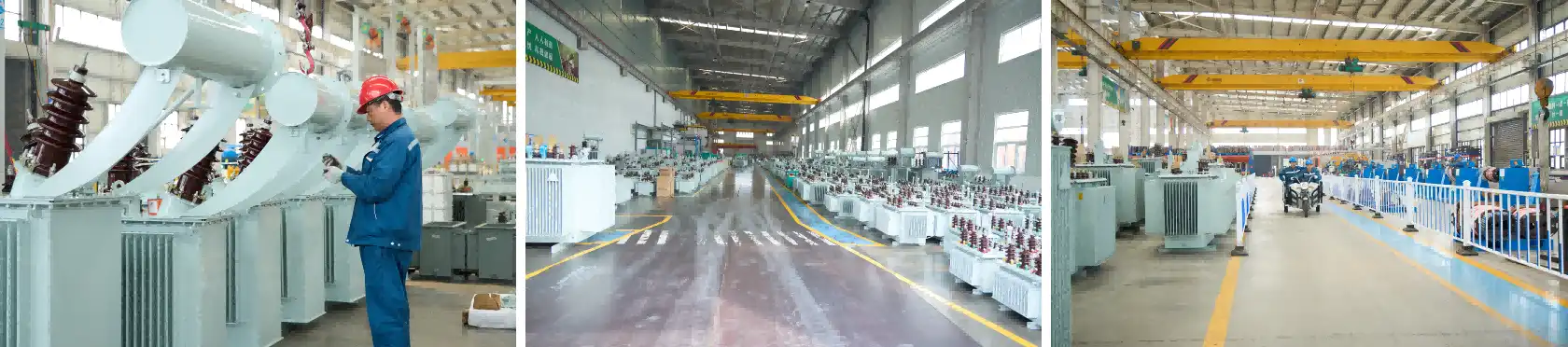
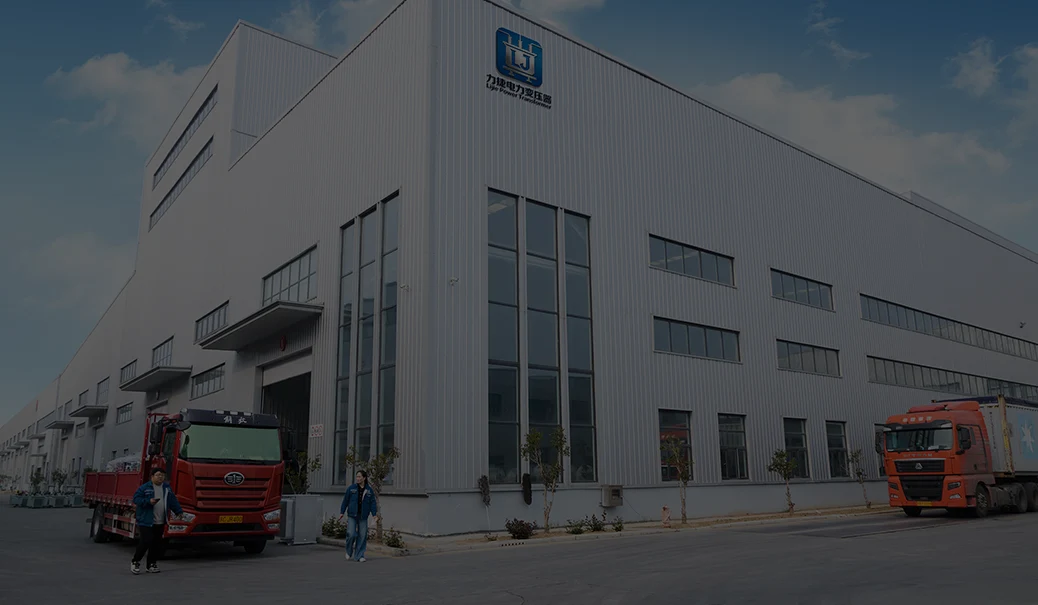
The Lijie Electric Power Technology Group has two 500,000-square-meter facilities in China that produce over 5 billion RMB in items annually. The firm has almost 2,000 employees, 160 of them are advanced-degree engineers. They get technical skills to develop innovative transformers and aid with application engineering.
Manufacturing talents span the S11 type oil-immersed distribution transformer product line, from 30 kVA single-phase to 3,150 kVA three-phase. The company's accredited laboratories regularly test all goods, while national testing facilities do type tests and other specific investigations. This test ensures Chinese GB and international IEC compliance.
Certifications include ISO 9001:2015 quality systems, CE marking for European conformance, and UL for U.S. markets. North American power businesses and industrial users receive products routinely. Long-term logistical ties provide reliable delivery strategies. To do overseas commissioning and warranty work, the organization updates its technical service expertise.
When buying several distribution transformers, you must pay particular attention to the shipment timetable and order details. Voltage ratios, capacity classes, tap settings, and specific characteristics like seismic approval or coastal corrosion protection should be included by project teams. Custom standards take two to four weeks longer than conventional manufacturing, but they ensure the proper equipment is utilized.
S11 transformer wait periods range from 8 to 16 weeks, depending on order quantity and capacity. Bigger projects may need framework arrangements that guarantee output and lock-in rates for years. Buyers and sellers benefit from these agreements because they simplify production planning and supply tracking.
Shipping large electrical tools is difficult for several reasons. Moving and handling transformers above 1,000 kVA requires specific gear. Procurement teams don't have to worry about shipping, customs paperwork, and project site transport since reliable vendors handle everything. Full insurance protects against shipment damage that delays projects.
In conclusion, the S11 type oil-immersed distribution transformer performs well in utility networks, manufacturing, and green energy installations. Its sealed corrugated tank design eliminates oil maintenance and extends its lifespan. Efficiency gains over prior generations save energy, especially in busy applications. Most distribution apps should use the S11 because of its speed, dependability, and lifecycle costs. Newer S13 models have minor enhancements. Technical needs, supplier expertise, and total cost of ownership must be considered for a successful purchase. Working with well-known producers with robust quality processes and service networks ensures project success from initial specs to decades of use.
Sealed corrugated tanks require less maintenance than conservatories. Visual checks for oil leaks, worn bushings, and exterior deterioration once a year typically work. No internal oil sampling is needed since the enclosed system keeps moisture and air out. The manufacturer recommends annual performance checks for load tap changers. Measure winding resistance and insulation during anticipated power outages to ensure electricity works. S11 type oil-immersed distribution transformer units typically last 20–30 years before needing substantial repairs or replacement.
Both systems are 98% or higher efficient at full capacity. S11 type oil-immersed distribution transformer designs can take higher weights and maintain efficiency across a broader load range. Partial loads accelerate dry-type transformer performance loss. Oil cooling also stabilizes temperature when circumstances vary rapidly. Dry-type units don't contaminate the environment, but S11 sealed construction reduces leaks and improves economic performance for most medium-voltage distribution needs.
Ensure the firm has ISO 9001 quality certification and local product approvals. In the US, items must be UL or CSA-listed. Request independent lab tests to validate loss and short-circuit resistance. Check the warranty and system for post-sale support, such as replacement parts and field service specialists. Examine delivery history and major equipment transportation ability. Finally, discuss the program's needs and customization choices to assess the engineering help.
For S11 type oil-immersed distribution transformer needs, contact Lijie Electric. Since they have been making transformers for decades, Lijie Electric can aid with power distribution projects. All of our S11 series transformers are IEC, CE, and UL-certified, meeting stringent North American requirements. With two modern facilities covering over 500,000 square meters of production area, we can dependably satisfy large orders and adapt to particular demands. If you're a utility operator expanding the grid or an industrial plant manager searching for reliable power equipment, our engineering staff can provide technical guidance and low bids. Contact us at lijieelectrical@gmail.com to discuss your transformer needs with a reputable manufacturer and vendor committed to long-term relationships. Lijie-electrical.com has detailed product specs and case studies. These demonstrate our effectiveness in many applications.
1. Institute of Electrical and Electronics Engineers (2011). IEEE Standard for General Requirements for Liquid-Immersed Distribution, Power, and Regulating Transformers. IEEE Std C57.12.00-2010.
2. International Electrotechnical Commission (2018). Power Transformers – Part 1: General Requirements. IEC 60076-1:2011+AMD1:2018.
3. McLyman, W.T. (2017). Transformer and Inductor Design Handbook, Fourth Edition. CRC Press, Boca Raton, Florida.
4. Harlow, J.H. (2012). Electric Power Transformer Engineering, Third Edition. CRC Press, Boca Raton, Florida.
5. U.S. Department of Energy (2016). Energy Conservation Program: Energy Conservation Standards for Distribution Transformers. Federal Register, Vol. 81, No. 88.
6. Kulkarni, S.V. and Khaparde, S.A. (2013). Transformer Engineering: Design, Technology, and Diagnostics, Second Edition. CRC Press, Boca Raton, Florida.
YOU MAY LIKE


H15%20Amorphous%20Alloy%20Distribution%20Transformer.webp)

April 27, 2025
With a tight project schedule, the manufacturer delivered on time, and on-site technical personnel provided guidance throughout the entire installation and commissioning process; the collaboration was highly efficient and hassle-free.
July 2, 2025
During the preliminary phase, a selection plan was custom-tailored based on the actual site load requirements, resulting in a high degree of parameter compatibility. After-sales support responds within two hours, and ongoing technical support for operation and maintenance is comprehensive; we feel completely confident in a long-term partnership.
November 18, 2025
Deployed as a supporting component for a 35kV grid-connection project at a photovoltaic power station, the equipment operates for an average of 16 hours daily. It demonstrates excellent control over no-load losses, ensures smooth power generation and grid integration, and effectively reduces the station's overall energy consumption.
January 30, 2026
Under the continuous, high-load operating conditions of a factory production line, the equipment maintains stable electrical parameters and exhibits strong overload resistance, thereby guaranteeing an uninterrupted power supply for industrial production.
April 3, 2026
Integrated as a supporting component for a new energy photovoltaic grid-connection system, the manufacturer provided professional technical coordination and timely after-sales support, ensuring seamless adaptation to the specific electrical operating conditions required for grid integration.