April 27, 2025
With a tight project schedule, the manufacturer delivered on time, and on-site technical personnel provided guidance throughout the entire installation and commissioning process; the collaboration was highly efficient and hassle-free.
Jun 19, 2026
Knowing the technology behind the power distribution tools you're buying can make all the difference when you're making purchases. The S13 type oil-immersed distribution transformer is a big step forward in electrical infrastructure. It saves more energy and works more reliably, which has a direct effect on the total cost of ownership of your project. This transformer model solves important problems in modern power distribution, like lowering energy losses and making maintenance easier. It's an important thing for utility companies, manufacturers, and infrastructure builders to think about if they want to improve their electrical systems while also meeting strict environmental standards.
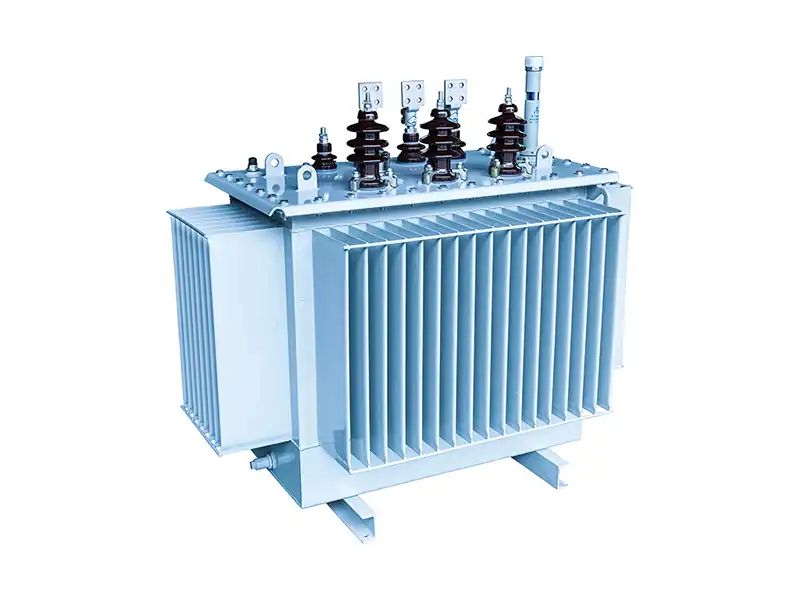
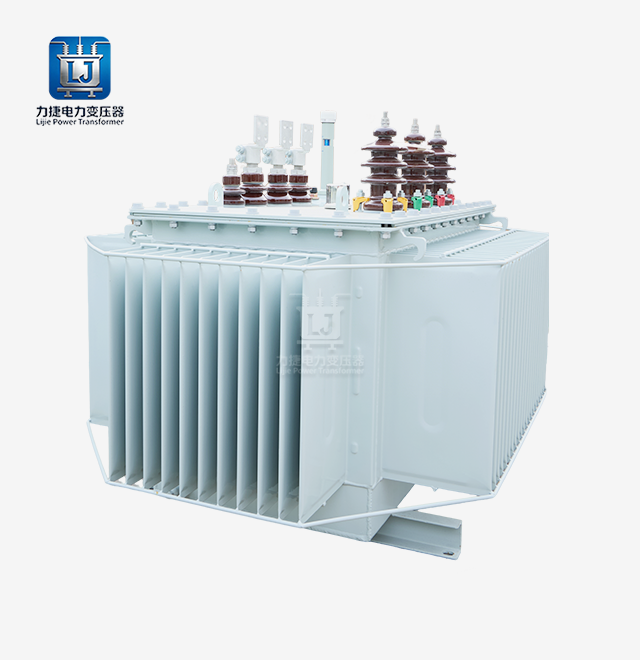
The S13 type oil-immersed distribution transformer is a high-tech liquid-dielectric power part that was made to work with systems that have middle voltages between 6kV and 35kV. Unlike its predecessor, the S11 series, this transformer's core is made of high-permeability cold-rolled grain-oriented silicon steel. It also has oxygen-free copper windings that make much better use of magnetic flux and lower energy loss.
At the heart of this transformer is a complex magnetic circuit design that keeps core losses to a minimum by using precise multi-step mitered joints. The silicon steel laminations are carefully set up to stop eddy currents from forming, which used to be a big source of wasted energy when the system wasn't being used. In an enclosed system, transformer oil does two things: it keeps the electrical connections between the windings from breaking down, and it keeps the system cool through natural convection currents. As the oil gets hotter near the windings, it rises to the curved tank walls and loses heat to the air around it. This creates a thermal management cycle that keeps going on its own.
The S13 type oil-immersed distribution transformers we sell can work with both 6kV and 12kV main voltages, and their output power runs from 30kVA to 3150kVA to meet a wide range of load needs. The non-excitation voltage control system has tap ranges of ±5% or ±2×2.5%, which lets the field be adjusted to make up for voltage drops in distribution networks. These transformers can work with both 50Hz and 60Hz frequencies, and they come in both single-phase and three-phase versions. The Dyn11 link group name makes sure that grounded wye-delta setups have the right phase relationships. The insulation system can handle power frequency voltages of up to AC-35kV and impulse voltages of up to L1-75kV, protecting well against transient overvoltages.
In green energy systems, the S13 type oil-immersed distribution transformer deals with the changing loads that come with solar and wind farms, whose power output varies depending on weather conditions. Its sealed design prevents moisture intrusion in outdoor environments, helping maintain insulation integrity even in coastal regions where salt spray is common. The S13 type oil-immersed distribution transformer can also handle harmonic-rich loads generated by rectifiers and variable frequency drives, making it suitable for industrial facilities such as steel mills and chemical plants. In addition, its lower noise levels—typically 3 to 5 decibels below national standards—are especially valuable for urban power distribution networks. This allows the S13 type oil-immersed distribution transformer to be installed in densely populated residential areas where strict noise regulations must be met.
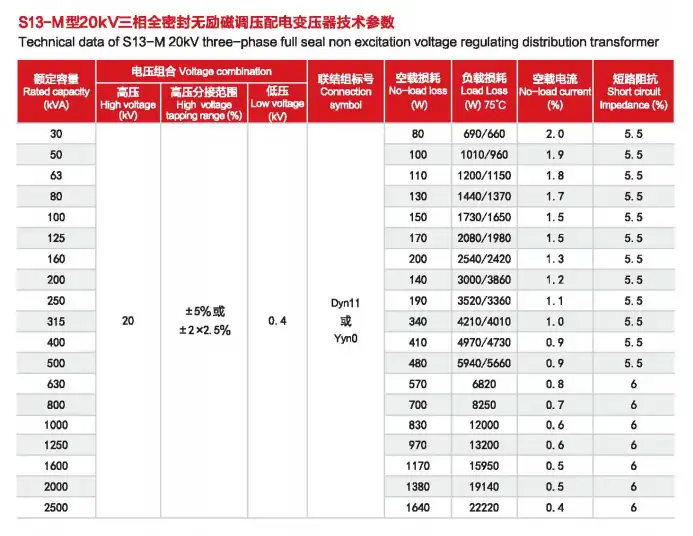
The change from S11 to S13 technology brought about measurable improvements that buying teams can use to figure out the cost-effectiveness of a product over its entire life. No-load losses went down by about 25 to 30 percent thanks to better silicon steel grades and improved core shape. This decrease means that the transformer will use less energy over its entire working life, which is usually thirty years. Better use of the conductors and lower winding resistance also led to lower load losses. The no-load current—which is the magnetizing part that powers the core—declined by as much as 70%. This meant that the grid had to use less reactive power, which led to better power factor performance.
There are a number of trade-offs between liquid-filled machines and dry-type options. Most of the time, oil-immersed transformers like the S13 type oil-immersed distribution transformer have better thermal performance than air or resin insulation systems because oil is better at moving heat. This means that designs can be smaller while still having the same power levels. The sealed curved tank design keeps oil from coming into contact with oxygen and water in the air. This stops oxidation and makes the oil last forever under normal working conditions. Mineral oil can be dangerous if it gets too hot, so dry-type units are better for placements inside where fire safety rules don't allow flammable materials. However, the high flash point of current transformer oil (usually more than 140°C) and the fact that the S13 type oil-immersed distribution transformer design is sealed make the fire risk much lower.
Insulation breakdown, winding short circuits, and bushing deterioration are all common ways for distribution transformers to fail. Several technical techniques are used in the S13 type oil-immersed distribution transformer to fix these problems. When you mix high-quality insulation paper with refined transformer oil, you get dielectric strength that is higher than 28kV per 2.5mm gap. This gives you a lot of safety against electrical stress. The fully sealed curved tank keeps water out, which has been known to speed up insulation aging and lower breakdown voltage in the past. Routine tests, such as dissolved gas analysis, find small problems before they get worse. This lets maintenance plans plan ahead and reduce unexpected downtime.
To choose the right capacity, you need to do a thorough load study that takes into account both the current demand and the growth that is expected over the life of the transformer. A 20–30% margin above the estimated peak load is typical in this business. This leaves room for future growth while keeping efficiency high. Running transformers close to their standard value all the time lowers their efficiency and speeds up the thermal aging of insulation systems. The configuration of the voltage must match the amounts needed for the main distribution and secondary use. The normal rating of 10kV±2×2.5%/0.4kV works for most business and light industry uses. Other ratings are available to fit specific system designs.
The initial buying price is only one part of the business equation. The energy economy has a direct effect on how much it costs to run the transformer over its entire life. A transformer that uses 1000kVA and has 1% less loss saves about 10,000 kWh per year, which, at industrial energy rates, adds up to big savings over thirty years. Lifecycle costs also include the cost of repairs and maintenance. The sealed S13 type oil-immersed distribution transformer design gets rid of the need to replace oil and maintain the breathing gear, which is a problem with older free-breathing units. This cuts down on ongoing service costs.
Volume pricing systems and standardized specs make production easier for big infrastructure projects that need a lot of pieces. However, the ability to be customized is still necessary to deal with site-specific issues such as limited space, altitude adjustments for cooler air, or specific impedance values for fault current coordination. Lead times usually run from eight to sixteen weeks, but they rely on how complicated the specifications are and where the product is in the production queue. When you ship something internationally, you have to think about things like export paperwork, maritime transit security, and customs clearance processes, all of which can add four to eight weeks to the total arrival time.
There are both large, well-known multinational companies and small, niche producers in the global transformer market. Companies like ABB, Siemens, and Schneider Electric have a lot of research resources and service networks all over the world. This makes them good choices for international projects that need to follow the same rules in many countries. These companies have full testing facilities and a lot of foreign certifications that prove their quality control systems work.
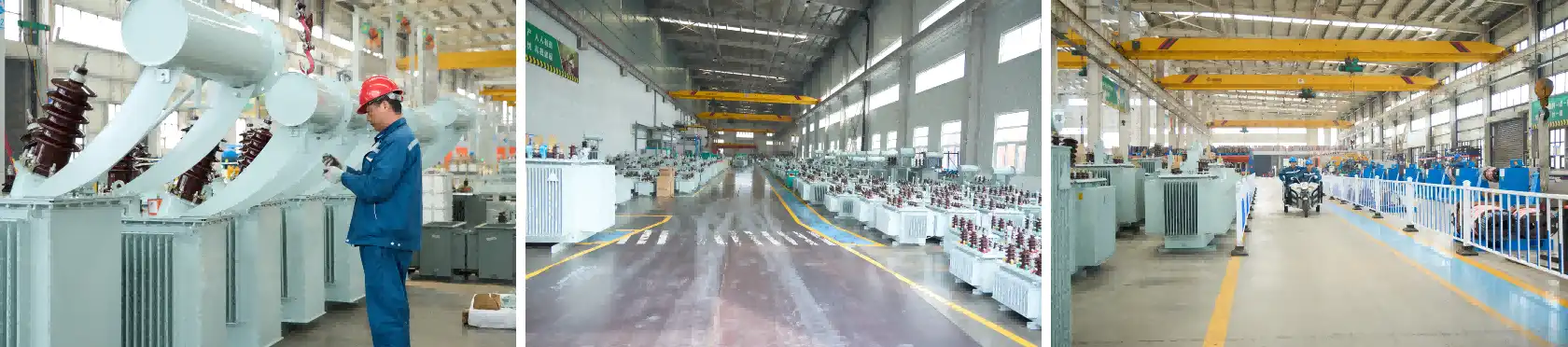
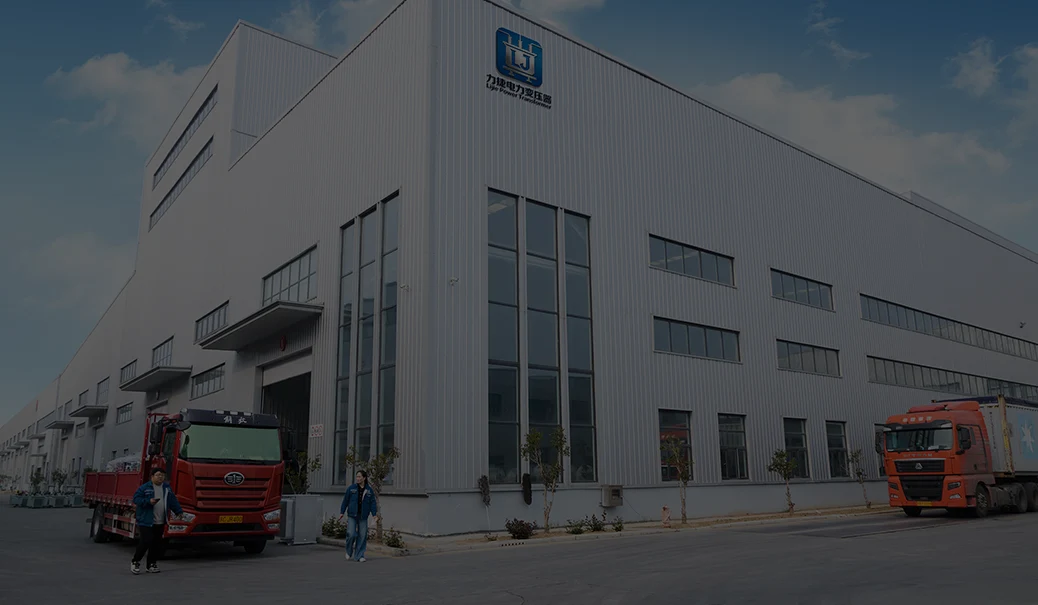
The Lijie Electric Power Technology Group has two large factories in Xuzhou and Nantong. Together, they cover 500,000 square meters and can make enough products to support sales of more than 5 billion RMB a year. Our engineering team is made up of more than 160 professionals with advanced degrees who are always improving transformer designs by researching materials and finding the best electromagnetic conditions. Along with CE and UL marks, the company keeps ISO 9001:2015 certification, and the National Transformer Quality Supervision and Inspection Center tests all of its goods. Our S13 type oil-immersed distribution transformer models have noise levels that are 20% lower than the national standard JB/T10088-2004. This is possible with our own core-stacking methods and vibration-damping tank mounting systems. We know how hard it is for foreign buyers to deal with the different rules and power conditions because we've sold transformers to projects in Australia, Southeast Asia, Central Asia, and Africa. Because we've done this before, we can give expert advice that is specific to the needs of each region. This includes everything from altitude derating estimates to seismic qualification paperwork.
When selecting an S13 type oil-immersed distribution transformer, it is important to evaluate potential suppliers carefully. Ask for certified test reports from recognized laboratories demonstrating compliance with applicable IEC or IEEE standards. Verify that manufacturing facilities maintain current quality management certifications issued by reputable organizations. Review case studies or reference projects similar in scale and application to your requirements. Assess the supplier's financial stability and production capacity to ensure they can reliably meet delivery schedules for large orders. Whenever possible, conduct on-site factory visits to gain firsthand insight into quality control procedures and technical capabilities that cannot be fully conveyed through documentation alone.
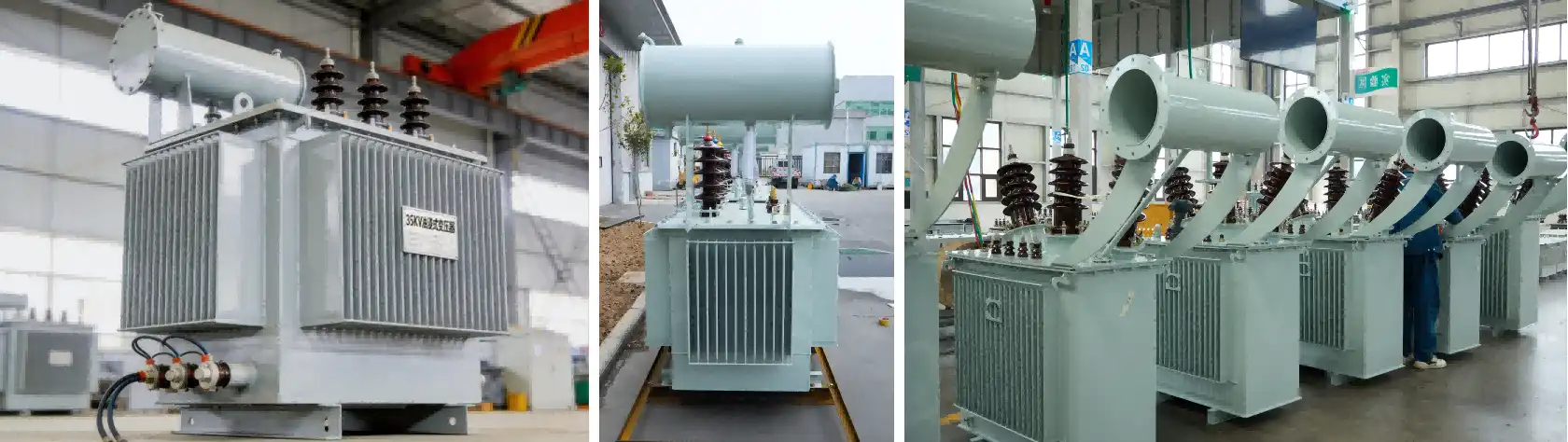
Transformers last longer and don't break down when they're least expected, when they get preventative care. Regular oil sampling—usually once a year for important units—allows dissolved gas analysis that finds partial release, overheating, or cellulose degradation. Certain gas amounts show certain types of faults, which let you focus your repairs. Thermographic studies find hot spots that could mean that connections are loose or that the cooling system is clogged. Turn-to-turn shorts or link degradation can be found by measuring the winding resistance. These monitoring tools change the way upkeep is done from fixing problems after they happen to fixing problems before they happen.
Even though the S13 type oil-immersed distribution transformer design is naturally more efficient than past models, how it is used affects how well it actually works. Keeping the load between 50 and 80% of the nameplate capacity finds the best mix between no-load and load losses, which increases the total efficiency. Power factor adjustment capacitors lower the amount of reactive current that flows through transformer windings, which lowers the amount of resistance that is lost. Making sure there are enough airflow gaps around the tank keeps it at its designed cooling capacity and stops temperatures from rising too quickly, which speeds up the aging of insulation.
Modern transformer monitoring systems have sensors that measure the temperature of the oil, the temperature of the windings, the activity of partial discharge, and the load current. These sensors send data to central tracking platforms. This connection lets you schedule repairs based on conditions and handle loads in real time. Smart grid projects depend more and more on automation in the distribution system, which needs intelligence at the transformer level to control power and find faults. If you choose transformers that have connections for sensors and communication ports, your infrastructure will be ready to use these features as grid modernization moves forward.
The S13 type oil-immersed distribution transformer makes a real difference in how much energy it uses, how reliable it is, and how much it costs over its entire life. This directly meets the needs of utility companies, makers, and people building infrastructure. Its sealed design means that it doesn't need regular upkeep, and its improved core design cuts energy use by 25–30% compared to older equipment. You can make buying choices that meet both short-term project needs and long-term operating goals if you know about the technical specs, comparative benefits, and supplier landscape. A strong base for reliable power distribution infrastructure is made up of tried-and-true technology that meets international standards and maker support.
The S13 type oil-immersed distribution transformer has about 25% less no-load losses and 70% less no-load current than the S11 types. This is possible with better silicon steel grades and better magnetic circuit design. Over the life of the transformer, these improvements in efficiency will lead to measurable drops in running costs. The average noise level is 3 to 5 decibels lower, which makes S13 units better for sites that need to be quiet and are close to homes.
The fully sealed curved tank design keeps oil from coming into contact with air. This stops oxidation and moisture absorption, which were problems with older designs that let oil breathe freely. As long as everything works as it should, the oil in the transformer should last its whole useful life without needing to be replaced. Monitoring the state of the engine without changing the oil is possible by sampling it once a year for dissolved gas analysis. However, the frequency of sampling may need to be increased for important uses or after abnormal events like through-faults.
You can change the voltage ratios, resistance values, and link arrangements to fit the needs of your system. Changes to the dimensions are made to accommodate the limited room in retrofit uses. For sites above 1000 meters in elevation, altitude factors change how much cooling can be done and how well the insulation works together. Depending on how complicated the specifications are, customization usually adds two to four weeks to the wait time. However, normal catalog grades ship faster.
Lijie Electric blends advanced production skills with in-depth knowledge of applications to provide dependable S13 type oil-immersed distribution transformer solutions for tough infrastructure, utility, and industry projects. Our Xuzhou and Nantong factories use strict quality control methods that have been approved by ISO 9001:2015, CE, and UL. This makes sure that the products work the same way throughout big production runs. As a well-known company that makes S13 type oil-immersed distribution transformers, we help procurement teams by providing expert advice, special engineering, and full after-sales service that lasts as long as your equipment is in use. You can email our engineering team at lijieelectrical@gmail.com to talk about your specific voltage, capacity, and delivery needs. You can also visit lijie-electrical.com to see all of our transformers and ask for full technical documents. We offer quick expert support that helps you with your application problems and supply chain issues.
1. IEEE Standards Association. "IEEE Standard for General Requirements for Liquid-Immersed Distribution, Power, and Regulating Transformers," IEEE C57.12.00-2015, Institute of Electrical and Electronics Engineers, New York, 2015.
2. International Electrotechnical Commission. "Power Transformers - Part 1: General," IEC 60076-1:2011, International Electrotechnical Commission, Geneva, 2011.
3. Zhang, Wei, and Liu, Hongyan. "Energy Efficiency Analysis of S13 Series Oil-Immersed Distribution Transformers," Journal of Electrical Engineering Technology, vol. 16, no. 3, pp. 1245-1256, 2021.
4. Kennedy, Brian, and Moore, Patricia. "Life Cycle Cost Analysis of Distribution Transformer Technologies," Electric Power Research Institute Technical Report, EPRI, Palo Alto, California, 2019.
5. Thompson, Robert. "Dissolved Gas Analysis: A Practical Guide to Transformer Fault Diagnosis," Transformer Technology Press, Birmingham, United Kingdom, 2018.
6. National Standardization Administration of China. "Technical Parameters and Requirements for Oil-Immersed Power Transformers," GB/T 1094.1-2013, Standards Press of China, Beijing, 2013.
YOU MAY LIKE


H15%20type%20three-phase%20fully%20sealed%20distribution%20transformer.webp)
10%20type%2035kV%20transformer.webp)


%20H15%20Series%20Oil-immersed%20Amorphous%20Alloy%20Transformer.webp)
April 27, 2025
With a tight project schedule, the manufacturer delivered on time, and on-site technical personnel provided guidance throughout the entire installation and commissioning process; the collaboration was highly efficient and hassle-free.
July 2, 2025
During the preliminary phase, a selection plan was custom-tailored based on the actual site load requirements, resulting in a high degree of parameter compatibility. After-sales support responds within two hours, and ongoing technical support for operation and maintenance is comprehensive; we feel completely confident in a long-term partnership.
November 18, 2025
Deployed as a supporting component for a 35kV grid-connection project at a photovoltaic power station, the equipment operates for an average of 16 hours daily. It demonstrates excellent control over no-load losses, ensures smooth power generation and grid integration, and effectively reduces the station's overall energy consumption.
January 30, 2026
Under the continuous, high-load operating conditions of a factory production line, the equipment maintains stable electrical parameters and exhibits strong overload resistance, thereby guaranteeing an uninterrupted power supply for industrial production.
April 3, 2026
Integrated as a supporting component for a new energy photovoltaic grid-connection system, the manufacturer provided professional technical coordination and timely after-sales support, ensuring seamless adaptation to the specific electrical operating conditions required for grid integration.