April 27, 2025
With a tight project schedule, the manufacturer delivered on time, and on-site technical personnel provided guidance throughout the entire installation and commissioning process; the collaboration was highly efficient and hassle-free.
Jun 16, 2026
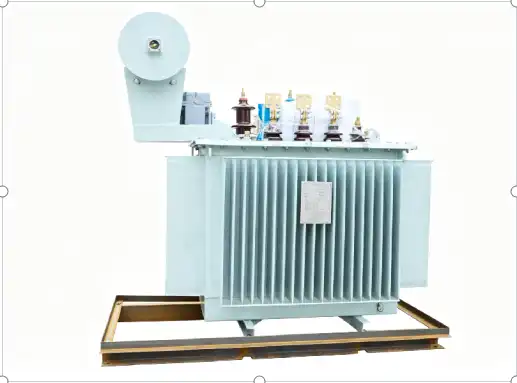
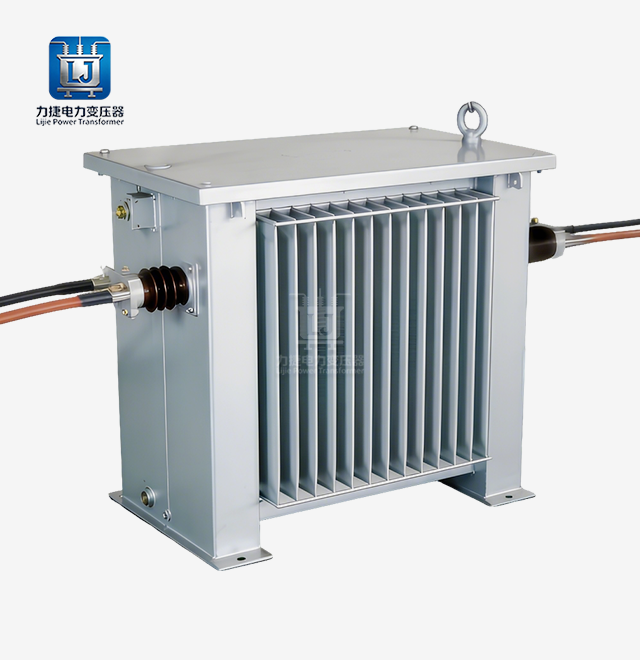
In energy-efficient electrical equipment for large power distribution projects, the S13 type oil-immersed distribution transformer represents a breakthrough. This new unit has far reduced operating losses than the S11 and S9. This solves purchase concerns regarding lifespan cost and dependability. These transformers can operate without maintenance for 30 years in utility grids, renewable energy installations, and heavy industries with high-permeability silicon steel cores and all-copper windings in totally sealed corrugated tanks.
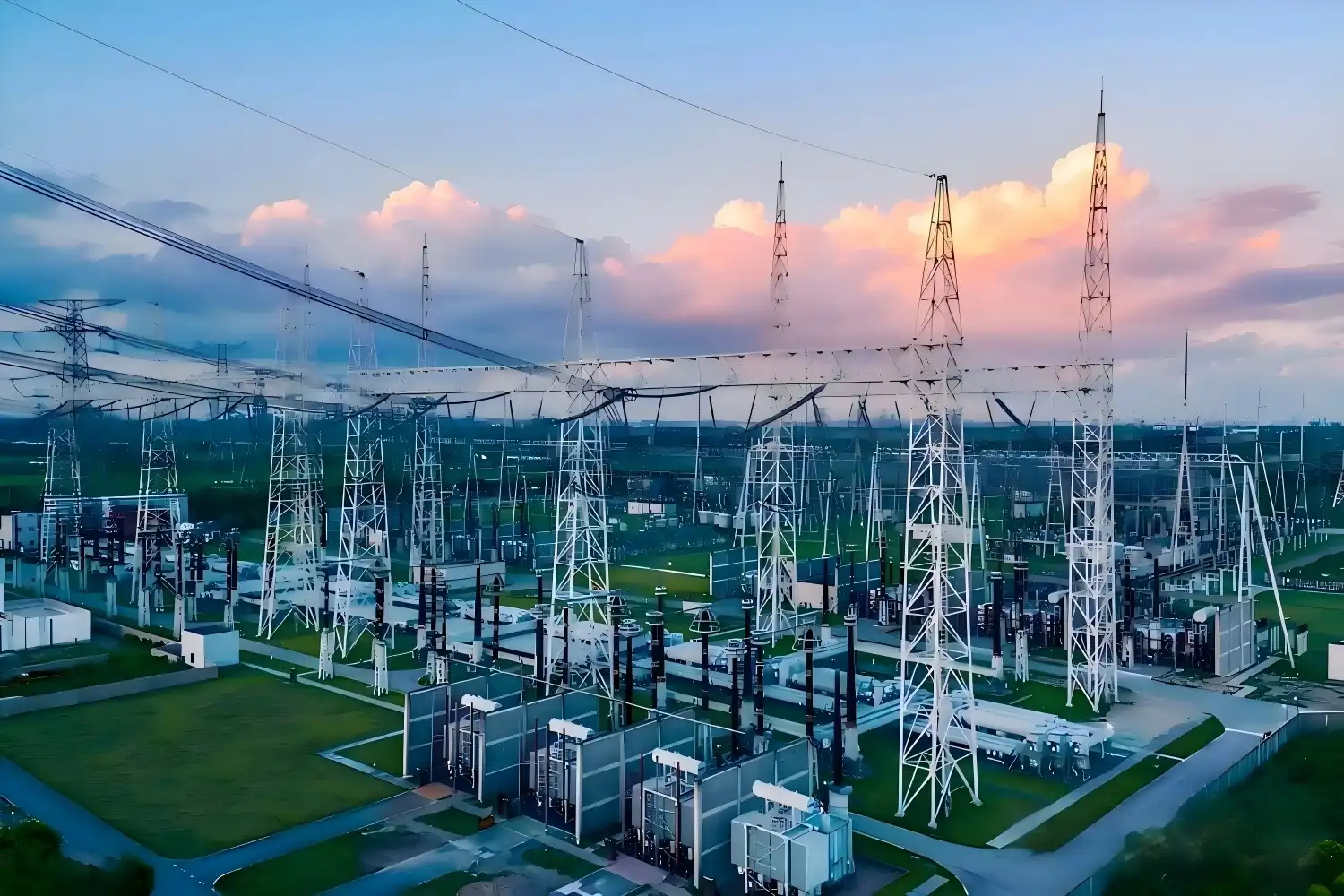
Modern power transfer requires technically sound and cost-effective technology. Oil-immersed transformers cool and insulate with mineral oil. Even with changing loads, this maintains voltage. That the S13 series fulfills both IEC 60076 and GB/T 1094 specifications makes it unique. This makes it suitable for utility systems, industries, and green energy initiatives worldwide.
Electromagnetic flux between the main and secondary windings powers the transformer. Moving oil around the curved tank removes heat from operation, keeping the temperature steady even under peak demand. Outdoor cooling fans are unnecessary with ONAN (Oil Natural Air Natural) natural convection cooling. This reduces mechanical failure and noise.
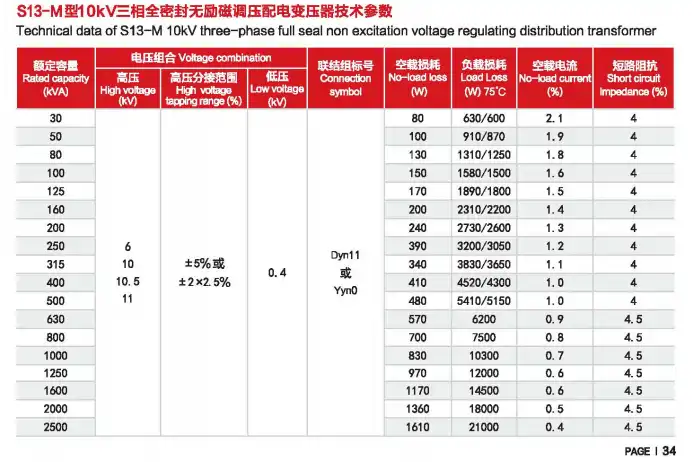
These units can meet many North American and international power demands. Single-phase and three-phase models with 30kVA to 3150kVA rated power and 6kV and 12kV primary voltages are available. Non-excitation tap changers allow for voltage adjustments of ±5% or ±22.5%, so the field may respond to grid circumstances without power. Connection groups Dyn11 and Yyn0 support delta-wye and wye-wye configurations. This suits industrial power system grounding and harmonic control demands.
Utility companies install these transformers on pads or poles to service businesses and homes. Industrial manufacturers use them to give consistent loads to metal furnaces, mines, and chemical processing plants. They are utilized by solar and wind energy system builders. Their sturdy architecture handles varying generating output and adverse weather.
Transformer design is constantly improved to save energy. Each generation reduces core losses and winding resistance, consuming less power over many years. When procurement teams know these performance criteria, they may consider the total cost of ownership instead of the purchase price.
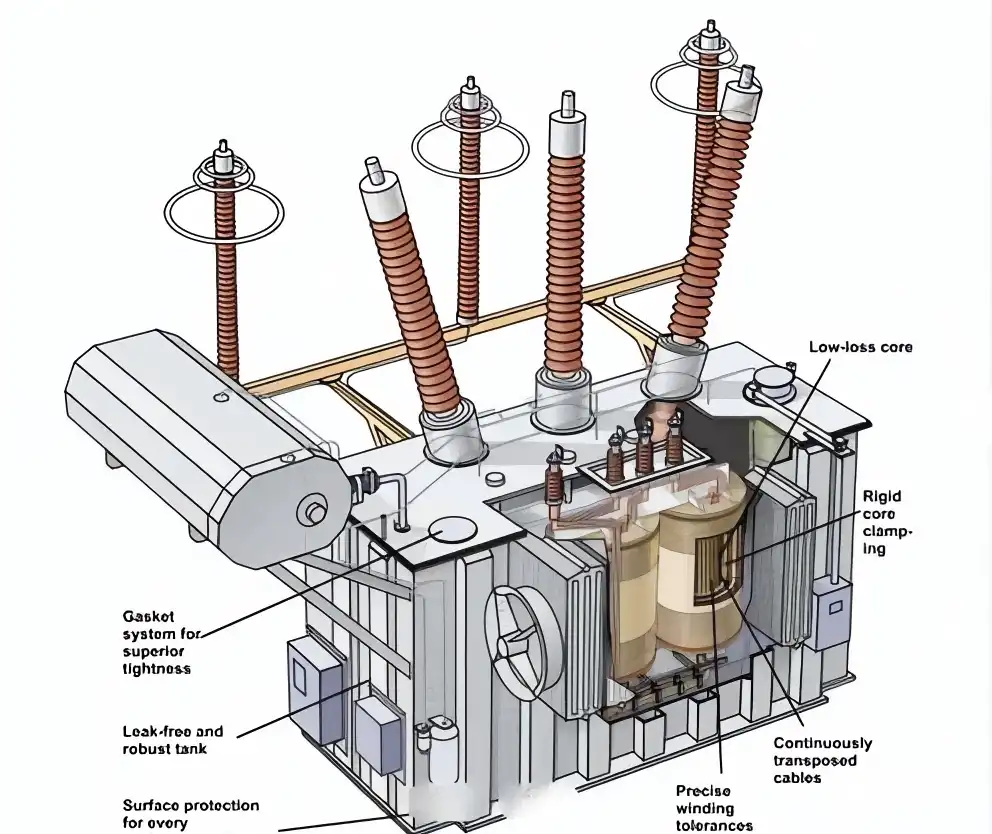
S13 type oil-immersed distribution transformer: Transformer cores are comprised of high-quality cold-rolled grain-oriented silicon steel. Magnetic resistance decreases with crystal alignment. When two corners meet, multi-step mitered joints seal air gaps that might increase the current. This precision manufacturing reduces no-load losses by 25–30% over S11 predecessors. This is tremendously beneficial in continuously powered distribution networks where wasted energy costs a lot annually.
All-copper wires woven around high-mechanical-strength insulating sheets conduct electricity well and resist faults. A concentric winding design uses low-voltage coils inside high-voltage elements to improve electromagnetic coupling. This arrangement uses technical parameter tables to acquire resistance voltage values that work with upstream safety devices. Better bracing allows these devices to handle short-circuit pressures over 25 times the maximum current. Utility investments are protected during a grid outage.
Corrugated tank transformers are more durable than conservator-style transformers. Accordion-shaped metal fins let insulating oil stretch and contract with temperature without air. This airtight seal prevents moisture and corrosion, which cause older systems to fail. Arc fault explosions are impossible during cool-down because internal pressure is negative. Mineral oil maintains a dielectric strength over 28kV/2.5mm, fulfilling Class A insulation criteria for prolonged full-load operation.
Transformers are tougher to install in private and mixed-use constructions due to noise regulations. Acoustic performance is becoming increasingly significant. Core lamination stacking and springy mounting prevent tank construction vibrations. Sound levels were 3–5 dB below national guidelines. Based on capacity, typical values at 1 meter were 45–52 dB. This silent operation allows installation near inhabited buildings, offering developers more alternatives when urban lot sizes limit their project placement.
Oil-immersed transformers are durable, but they need frequent inspections to catch faults before they cause costly outages. Proactive maintenance strategies extend tool life and maintain safety margins over the operating envelope.
In the S13 type oil-immersed distribution transformer, oxidation, moisture absorption, and insulator breakdown waste progressively degrade transformer oil. Annual oil samples can be tested for dielectric strength, acidity, interfacial tension, and dissolved gas. High levels of hydrogen, acetylene, or ethylene in the tank indicate thermal or electrical stress, which must be investigated before anything catastrophic happens. The totally sealed tank design enhances oil service life compared to breathing units; oil change is rarely needed over the transformer's lifetime unless internal issues emerge.
External supports shield conductors entering the sealed tank. Wire weight and temperature stress porcelain or polymer housings. Cracks, tracks, and oil seepage are visible and need repair. Regular thermographic examinations reveal terminal connection hot spots. Loose hardware or broken contact surfaces increase resistance and aging. Checking torque during scheduled outages prevents transformer-related grid disturbances by strengthening the connection.
Continuous maximum use extends tool life. During daily load cycles, top oil and winding temperature gauges monitor temperature. Programmable alarms alert operators to load shedding or unit checks. S13 designs can endure temperatures up to 40°C outdoors, but operating them in particularly hot settings or with odd loads might accelerate insulation deterioration, reducing the predicted 30-plus-year service life to fewer than twenty years.
Compare transformer technology performance to product demands and usage area before picking one. Each approach has merits and downsides, as expected.
S9 becomes S11, then S13, to indicate that core steel kinds and winding tuning improve. S13 units draw 70% less no-load current and lose 25% less than S11 units. Better silicon steel with less hysteresis and eddy current losses yields these improvements. These efficiency increases reduce system losses and energy costs for utility companies with thousands of always-on distribution transformers. Though less, load losses decrease. When partially loaded, as it is daily, the system is more efficient.
Dry-type transformers reduce oil pollution and make deployment easier in fire-coded areas. Cool cast plastic or varnish-impregnated designs are suitable for business. Oil-immersed units manage heat better at greater loads and lengthy overloading durations prevalent in industry. Oil's specific heat capacity and convection make it superior in heat removal to air cooling, allowing smaller designs with the same values. Lifecycle cost study favors oil-immersed technology for outdoor utility usage despite its higher maintenance. For capacities beyond 1000kVA, dry-type units are larger and cost more.
S13 type oil-immersed distribution transformer uses Modern transformer oils that have flash points above 140°C, making them less flammable than PCB-based fluids. The sealed tank retains oil in a steel cage so it doesn't come too close to the environment when functioning. Ground-mounted devices require extra shielding to comply with EPA spill prevention requirements, increasing installation costs. Dry insulation doesn't have these issues, but water and dirt accelerate insulation breakdown, therefore they can't be utilized outside. When specifying projects, these trade-offs must be assessed against site circumstances and electrical equipment installation requirements.
Buying a lot of transformers requires more than technical specs. You must also assess vendors' competence, quality, and post-delivery support. Buying decisions affect project timeframes, dependability, and maintenance costs.
Reputable suppliers document design guidelines, production processes, and testing procedures using ISO 9001:2015 quality management systems. Multiple labs' IEC 60076 tests affirm electrical performance, thermal powers, and short-circuit strength. For international sales, UL and CE certifications prove a product satisfies North American and European safety requirements. Suppliers to utilities and industries should demonstrate large-volume sales. They have the manufacturing capability to meet project deadlines without compromising batch quality.
For many applications, standard catalog grades work well, but large projects with unique site circumstances or system interface requirements require specialized solutions. Design partnership companies consult with project professionals to determine accessory impedance, insulation, and layout. Distribution network-specific voltage control can use custom tap ranges. Special paint techniques and gasket materials prolong life in corrosion-prone industrial or coastal environments. This technical relationship is especially useful for green energy systems, where the transformer, inverter, and grid connection parameters must match.
Transformers require a lot of resources and handwork. Standard unit lead times are 8–12 weeks, while unique designs that need technical research and specific materials might take 16–20 weeks. Established copper buying and silicon steel allocation contracts demonstrate suppliers' ability to handle price swings and shortages. Purchase managers benefit from framework partnerships with qualified makers because they ensure production capacity for multi-year projects while allowing schedule flexibility for phased deployments.
Transformers are expensive investments that require expert support over decades. Manufacturers with regional service centers process warranty claims faster and support clients with maintenance and repairs. New bushings, tap changers, and tracking instruments are readily available, preventing protracted outages. Documentation, including test findings, nameplate data, and maintenance instructions, simplifies asset management and ensures utility management system compatibility.
Power distribution in utility lines, industries, and renewable energy projects is reliable with the S13 type oil-immersed distribution transformer. Its optimized core design and sealed construction achieve procurement goals, including lower lifetime costs owing to efficiency, low maintenance due to hermetic sealing, and a service life of over 30 years under rated conditions. Procurement teams should prioritize suppliers with ISO certification, a wide range of testing expertise, and a strong support system. These transformers combine performance, affordability, and convenience of use for projects that need to reliably alter voltage and deliver electricity, making them vital to electrical infrastructure.
The totally sealed corrugated tank design saves time and money by not requiring oil changes like breathing-style systems. Annual eye inspections for oil leaks, worn bushings, and broken connections are part of the basic maintenance routine. Dissolved gas study detects intrinsic problems every two to three years. Under heavy demand, thermographic scans identify hot regions that need repair. Following the manufacturer's maintenance plans should extend tool life to 30–40 years.
Transformer oil transfers heat and blocks electricity. High dielectric strength prevents internal flashover, while thermal conductivity and specific heat capacity transfer heat from the core and windings to the tank's edges for airflow. Water-cooled systems provide higher power density than air-cooled designs, offering smaller dimensions and cheaper material costs for the same speeds.
To suit diverse applications, manufacturers adjust resistance values, tap ranges, insulation levels, and accessory packages. Engineers collaborate to optimize green energy, industrial loads with many harmonics, and harsh environmental conditions. It can handle projects of all sizes since production independence permits orders from single samples to fleets of several hundred units.
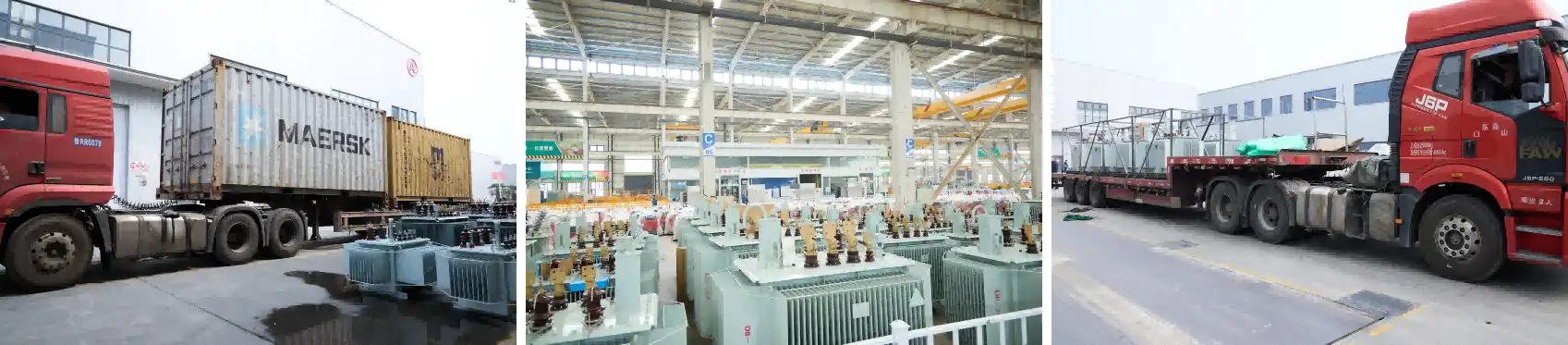
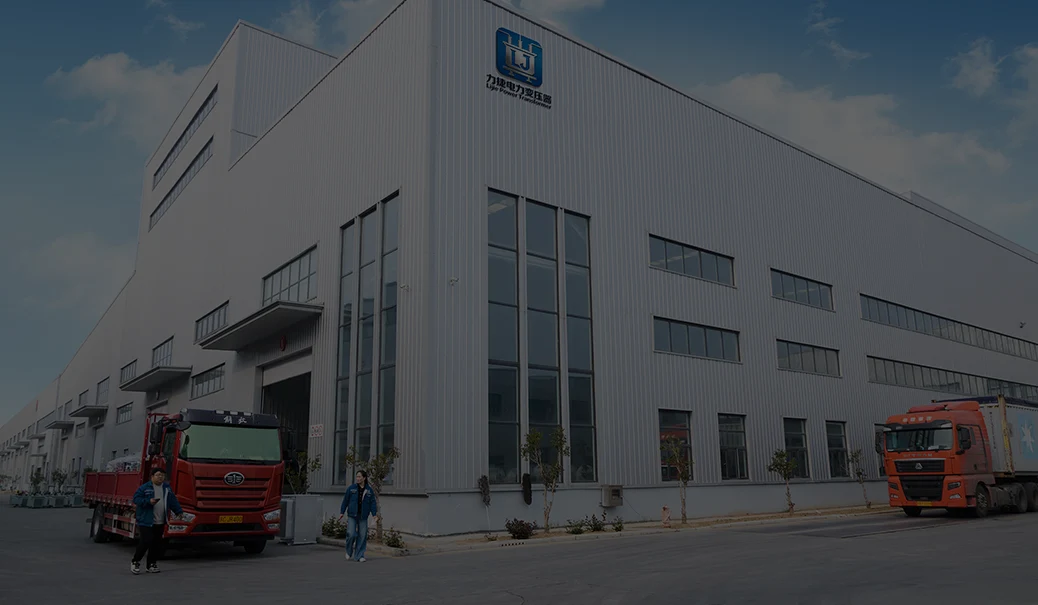
In Xuzhou and Nantong, China, Lijie Electric Power Technology Group has 500,000 square meters of modern manufacturing. These firms manufacture transformers for utilities, industry, and renewable energy worldwide. We manufacture S13-type oil-immersed distribution transformers from 30kVA to 3150kVA. IEC, CE, and UL certifications ensure these transformers satisfy North American and international requirements. As a competent supplier of S13 type oil-immersed distribution transformers to national grid companies, EPC contractors, and industrial producers, we can provide hundreds of units on time since our manufacturing capacity is above 5 billion RMB per year.
Our 160+ graduate and master 's-degreed engineers provide technical help during specification, manufacturing, and testing. Our ISO 9001:2015 accreditation and National High-Tech Enterprise designation demonstrate our commitment to quality stability throughout production runs. Our adaptable staff can help you balance performance, pricing, and delivery timeframes for basic stock units or unique grid integration designs. Contact us at lijieelectrical@gmail.com to discuss your project and receive detailed technical designs for your distribution network.
1. Institute of Electrical and Electronics Engineers, "IEEE Standard for General Requirements for Liquid-Immersed Distribution, Power, and Regulating Transformers," IEEE C57.12.00-2015, 2016.
2. International Electrotechnical Commission, "Power Transformers - Part 1: General," IEC 60076-1:2011, Edition 3.0, 2011.
3. Zhang, Wenhai and Liu, Qinghua, "Energy-Saving Technologies in Oil-Immersed Power Transformers: Materials and Design Innovations," Electric Power Systems Research Journal, Vol. 186, 2020.
4. National Electrical Manufacturers Association, "Guide for Loading Mineral-Oil-Immersed Transformers and Step-Voltage Regulators," NEMA Standards Publication C57.91-2011, 2011.
5. Heathcote, Martin J., "The J&P Transformer Book: A Practical Technology of the Power Transformer," 13th Edition, Newnes Publishing, 2007.
6. U.S. Department of Energy, "Energy Conservation Standards for Distribution Transformers: Final Rule," Federal Register Vol. 78, No. 112, pp. 33913-34044, June 2013.
YOU MAY LIKE

H15%20Amorphous%20Alloy%20Distribution%20Transformer.webp)


11%20Epoxy%20Resin%20Cast%20Dry-Type%20Transformer.webp)
April 27, 2025
With a tight project schedule, the manufacturer delivered on time, and on-site technical personnel provided guidance throughout the entire installation and commissioning process; the collaboration was highly efficient and hassle-free.
July 2, 2025
During the preliminary phase, a selection plan was custom-tailored based on the actual site load requirements, resulting in a high degree of parameter compatibility. After-sales support responds within two hours, and ongoing technical support for operation and maintenance is comprehensive; we feel completely confident in a long-term partnership.
November 18, 2025
Deployed as a supporting component for a 35kV grid-connection project at a photovoltaic power station, the equipment operates for an average of 16 hours daily. It demonstrates excellent control over no-load losses, ensures smooth power generation and grid integration, and effectively reduces the station's overall energy consumption.
January 30, 2026
Under the continuous, high-load operating conditions of a factory production line, the equipment maintains stable electrical parameters and exhibits strong overload resistance, thereby guaranteeing an uninterrupted power supply for industrial production.
April 3, 2026
Integrated as a supporting component for a new energy photovoltaic grid-connection system, the manufacturer provided professional technical coordination and timely after-sales support, ensuring seamless adaptation to the specific electrical operating conditions required for grid integration.