April 27, 2025
With a tight project schedule, the manufacturer delivered on time, and on-site technical personnel provided guidance throughout the entire installation and commissioning process; the collaboration was highly efficient and hassle-free.
Jun 12, 2026
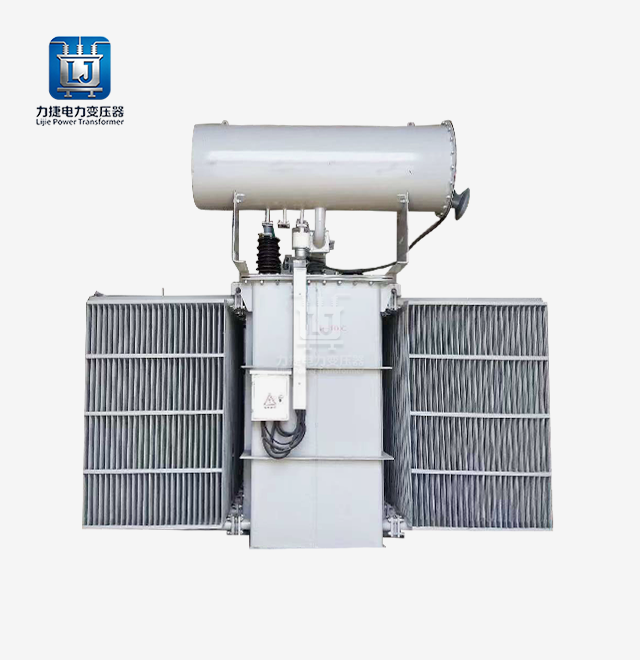
For example, the S20 type 35KV oil-immersed power transformer is an important part of medium-voltage power distribution networks. Its job is to lower the voltage from 35 kilovolts to levels that can be used by factories, renewable energy installations, and regional grid systems. Mineral oil is used as both an insulator and a coolant in this transformer. This lets it handle large electrical loads while keeping its temperature stable for decades of constant use. Its advanced electromagnetic design and fully sealed construction make it especially useful for uses that need long-term dependability, little upkeep, and consistent performance in a range of weather conditions. In addition to changing voltage, this equipment solves important operational problems like controlling harmonic distortion in heavy industrial settings, adding unstable renewable energy sources to stable grid systems, and making sure power quality in remote infrastructure projects where service access is still limited.

This S20 type 35KV oil-immersed power transformer is a big step forward in the engineering of medium-voltage power handling. It combines tried-and-true insulation technology with current efficiency standards to meet the changing needs of both utility companies and industry users.
Our S20 model has a rated voltage of 35KV and a no-load tap changing range that can be adjusted within ±2×2.5%. This lets techs in the field fine-tune the voltage output without turning the unit off. The range of capacities is from 630kVA to 31,500kVA, so it can handle both small substations and big industrial systems. This transformer works with both 50Hz and 60Hz systems and comes in both single-phase and three-phase versions. It can also be used in different foreign areas with different grid standards. The link group name is set to Dyn11 by default, but Yd11 setups can be chosen based on how to ground the system and reduce harmonics.
The structural design changes depending on the capacity. Smaller units have corrugated tanks that allow for natural temperature expansion and contraction, while larger models have flat tanks with fans or forced-air cooling systems. This smart engineering technique makes the best use of materials while making sure there is enough heat transfer across the whole power range.
The transformer is Level 1 energy efficient because it has a magnetic circuit design that is streamlined and uses cold-rolled grain-oriented silicon steel laminations that reduce eddy current losses while it is running. The oil-immersed cooling method uses natural convection in smaller units. Hot oil rises through the winding assembly and cools as it hits the tank walls. It then falls back down to start the cycle all over again. For larger units, forced-air cooling with fans placed on radiator banks speeds up heat transfer when the load is at its highest.
This two-way cooling system lets the transformer keep junction temperatures within safe limits even when it's dealing with temporary overloads. This is very important for industrial settings that experience sudden demand spikes. Additionally, the insulation oil acts as an arc-quenching medium, which improves fault tolerance and increases the expected life span of the component beyond that of dry-type options in the same voltage range.
Compared to dry-type and gas-insulated transformers, the S20 oil-immersed design has significantly better thermal performance per unit volume. This means that it can handle more power in setups with limited room. The liquid insulation method has a higher dielectric strength than air or resin insulation. This means that coil arrangements can be more compact without lowering the voltage withstand capability. This is especially important near the coast or in places with a lot of humidity, where outdoor dirt can make dry insulation systems less effective over time.
Our fully sealed design means that we don't need an external conservator tank. This keeps oxygen and moisture in the air from breaking down the insulation oil. This new design has practically doubled the amount of time that the S11 series transformers can work without any upkeep, with recorded field installations having outdoor service lives of more than 30 years under the right loading conditions.

These S20 type 35KV oil-immersed power transformers are mostly used in industrial power distribution networks, where their dependability has a direct effect on the consistency of output and the cost of running the business.
Our 35KV transformers are used in steel mills, chemical processing plants, and mines to handle the big inrush currents that come from electric arc furnaces, large motor starts, and rectifier systems. The transformer can withstand short-circuits up to 25 times its maximum power, which means it stays mechanically sound even when other equipment would break down. The low impedance voltage design keeps the voltage stable even when the load changes quickly. This keeps downstream safety devices from tripping for no reason and keeps production interruptions to a minimum.
The S20 model can handle continuous slight overload conditions (up to 110% of rated capacity for limited durations, according to IEC 60076-7 guidelines). This gives operators more options during peak production times without speeding up insulation degradation beyond what is acceptable.
At collection points, where the outputs of various generators come together before being sent to the main grid, wind farms and solar sites use these transformers. Harmonic distortion is a problem that all inverter-based green energy systems have to deal with. This unit's ability to handle it keeps both the transformer and the grid equipment upstream from wearing out too quickly. Our Dyn11 connection setup offers neutral grounding that makes zero-sequence current flow easier. This improves system reaction during unbalanced fault conditions that are common in spread production situations.
Integrators of energy storage systems choose this transformer for battery farms that need to be able to flow power in both directions. The oil cooling system effectively gets rid of heat during both charging and discharging cycles, so moderate climates don't need extra forced ventilation.
The S20 transformer's longer repair intervals help lower lifetime costs in places where skilled technical staff may be hours away from construction sites for projects that bring electricity to rural areas and to suburbs. The fully sealed design keeps the inside parts safe from salt spray near the coast, airborne pollutants near industrial areas, and high temperatures in both desert and cold deployment sites. Utility companies like the choices for integrating IoT-ready sensors that let them check the temperature of the oil, the load current, and the resistance of the bushings to insulation from afar without having to go to the site.
These tracking tools are very helpful for condition-based maintenance scheduling because they let utilities choose the best inspection times based on real running stress instead of random calendar plans. This cuts down on operational costs while still meeting dependability goals.

To get the most out of your investment in an S20 type 35KV oil-immersed power transformer, you need to know both how to do regular maintenance and how to improve its performance using methods that work for oil-insulated equipment.
Checking the quality of the oil is an important part of keeping these transformers in good shape. An annual dissolved gas study finds early signs of problems by finding the unique gas patterns connected to partial discharge, thermal breakdown, and arcing inside the tank. Keeping the oil breakdown voltage above 70kV by filtering it on a regular basis stops the insulation from breaking down. On the other hand, keeping the water content below 10ppm keeps the dielectric strength and stops the cellulose from breaking down in the paper insulation that wraps the windings.
When infrared thermography studies are done during times of high demand, hotspots that show links that are breaking down or cooling passages that are getting clogged are found before they become major problems that affect service. Our corrugated tank design makes it easier to check for oil leaks at the points where the gaskets meet. However, the hermetically sealed construction has been very good at keeping the seals from wearing down, even after decades of temperature cycles.
Most of the time, overheating is caused by not enough cooling capacity during prolonged overload or blocked airflow around radiator units. Most thermal management problems can be fixed by making sure that forced-air cooling fans turn on at the right temperature and leaving enough space around the transformer box. Unusual noise levels higher than 60dB(A) at rated load could mean that the core laminations are loose or there is a mechanical resonance that needs to be inspected from the inside. However, these problems don't happen very often in field service these days, thanks to better quality control measures in production.
Checking the torque on tank bolts usually fixes oil leaks at gasket interfaces, since thermal cycling can gradually loosen joint tension. If it turns out that the cover needs to be replaced, the fully sealed design lets this be done without draining all the oil, which cuts down on downtime and the risk of external exposure.
For transformers working below 1000kVA in milder temperatures, natural oil movement is still enough. However, installations inside buildings may need extra room ventilation to keep heat from building up. Larger units with forced-air cooling work best when the fans are controlled by a timer instead of running all the time. This lowers the amount of power they use without changing the temperature. Cleaning radiator fins on a regular basis is important to get rid of the dust and debris that builds up and stops heat from transferring. This is especially important in places like farms and building sites where particles are in the air.
By placing temperature monitors in the winding assembly in a smart way, load management systems can delay tasks that aren't necessary during times of high thermal stress. This increases the system's useful capacity without having to change any hardware. This way of scheduling loads is especially helpful when using green energy, and the patterns of production may not match up with the patterns of demand.
To choose the right S20 type 35KV oil-immersed power transformer, you have to weigh technical needs against the total cost of ownership and make sure the provider can meet your long-term operating needs.
Capacity size should take into account both the current load needs and the expected growth over the equipment's 30-year design life. If it's too small, it needs to be replaced too soon, and if it's too big, it costs more up front and is less efficient at light loads. It is important to choose the impedance voltage based on thorough short-circuit studies instead of normal catalog numbers because it affects the fault current magnitude and how well the system's protections work together. Environmental working conditions, like the highest temperature, altitude, and exposure to corrosive atmospheres, need to be described during the design phase to make sure that the right materials are chosen and that the right thermal derating factors are used.
Approval compliance is a must for foreign projects. For example, IEC 60076 conformity is needed for markets in Europe and Asia, while UL and CSA approval make installations easier in North America. Our factories keep these certifications up to date with regular checks by a third party. This makes sure that the quality of each batch of products is the same.
For utility-grade transformers, the initial purchase price usually makes up 30–40% of their lifetime costs. The main cost over many decades of service is the energy lost during operation. When compared to standard efficiency units, units with a level 1 energy efficiency grade have lower no-load and load losses. This means that they generate positive cash flow from energy savings that usually pay the efficiency premium within 3–5 years of operation at utility power rates. The sealed construction allows for longer repair intervals, which lowers labor costs and minimizes income losses caused by downtime. This is especially important for industry users, where production interruptions cost a lot of money.
The cost of shipping and installing a transformer goes up as its size and weight go up. This means that small designs are better for placements in remote areas that need special rigging tools or chopper placement. Our modular approach to bigger capacity units lets them be put together on-site when entry problems make it impossible to send transformers that are already fully put together.
Established transformer makers like Lijie Electric can offer technical detail and production scale that smaller companies can't match. This is especially true for big infrastructure projects that need uniform specs across many units. Our research and development (R&D) team, which is made up of more than 160 engineers with advanced degrees, keeps up with ongoing product improvement programs that use data from the field to make design improvements. This helps customers by making the products more reliable over time.
Stability in the supply chain is very important for keeping project plans, since delivering transformers is often on the key path for commissioning substations and turning on facilities. Our two production sites cover an area of 500,000 square meters, which gives us a backup in case something goes wrong. We keep wait times at 8–12 weeks for normal specifications and 16–20 weeks for custom designs that need specialized engineering.

When you know the pros and cons of the different S20 type 35KV oil-immersed power transformers, you can make smart choices that meet the needs of your application and your business's goals.
When it comes to thermal efficiency, oil-immersed transformers are better than dry-type units of the same grade. This means that they can handle more continuous loads while still taking up the same amount of space. This thermal benefit comes from the fact that oil insulation systems are better at moving heat than air or resin insulation systems. This means that more aggressive winding packing rates can be used without affecting reliability. The liquid insulation system can also naturally stop arcs, which reduces damage during internal fault events. This means that the unit can often be put back into service after corrective maintenance instead of having to be replaced completely.
For placements inside occupied buildings where code requires non-combustible equipment, dry-type transformers are better because they don't use flammable insulating solutions, which can cause fires. Gas-insulated designs have the smallest physical footprint, but they are also much more expensive at first, which is hard to explain except in uses that need to save room, like underground power stations in cities or platforms in the ocean.
Oil-immersed transformers that are sealed can handle tough outdoor conditions like high and low temperatures, high and low humidity, salt spray, and airborne contaminants better than dry-type transformers that need safe enclosures. With the right downsizing, our units can safely work in temperatures up to 40°C, and they can be made to work in even harsher conditions with better cooling systems and special oil mixes. The self-contained design makes installation easier because it doesn't need to be installed in a climate-controlled building. However, there must be enough space around the machine for air flow and servicing access.
Seismic and wind loading factors prefer oil-filled transformers because they have a lower center of gravity and stronger mechanical construction than dry-type units. This is especially important for installations in areas that are prone to earthquakes or hurricanes.
Insulating oil choice has a big effect on how long a generator lasts and how often it needs to be maintained. Meeting the requirements of IEC 60296 for mineral oil ensures reliable performance based on decades of field experience, while also making it easy to dispose of and recycle. Natural ester fluids made from vegetable oils are better at preventing fires and breaking down naturally, but they cost more and may need different upkeep procedures. Synthetic ester fluids have better thermal qualities, which allow them to work at higher temperatures, but they might not be compatible with some seal materials, so they need to be carefully specified when they are bought.
Our normal S20 configuration uses high-grade mineral oil that strikes a good mix between performance, cost, and environmental responsibility. However, different fluid specs can be made to work with certain applications and government rules.
The S20 type 35KV oil-immersed power transformer has been used successfully in industrial power distribution, integrating renewable energy, and utility grid uses where dependability and cost-effectiveness over its lifetime are important factors. Its Level 1 energy efficiency, long-lasting operation without upkeep, and high environmental tolerance all address the main concerns of procurement managers, electricity engineers, and project managers in charge of major infrastructure investments. This guide explains the basic specs, what the application needs, and how to keep things in good shape. By doing so, you can make smart choices about what to buy and how to specify it, which will save you money in the long run. For demanding medium-voltage uses where performance can't be sacrificed, oil-immersed technology is still the gold standard.
When properly kept, S20 type 35KV oil-immersed power transformers can safely work outside for 30 years or more, which is a lot longer than the 20 years that older designs were supposed to last. The fully sealed design keeps oil from breaking down when it comes in contact with air, and the Level 1 efficiency lowers the stress that heat puts on shielding systems. Monitoring the quality of the oil and dissolved gases on a regular basis allows condition-based upkeep that extends the useful life of the system.
Some of the customization choices are non-standard voltage ratios, specific impedance values for fault current limitation, better cooling systems for placements at high altitudes or temperatures, and different ways to connect the devices. Our engineering team compares unique specs to IEEE and IEC standards to make sure that the solutions they come up with are legal. For engineered-to-order units, lead times are 4 to 6 weeks longer than normal production plans.
Reputable makers offer 24-month guarantees that cover flaws in the materials and the work, with longer warranties available for important uses. Technical support includes overseeing the installation, helping with the commissioning process, and teaching care staff. The availability of spare parts and the time it takes for field service to respond are two important factors to consider when comparing providers, especially for installations that are far away.
Lijie Electric is ready to help you with your medium-voltage power infrastructure projects by providing designed transformer solutions backed by a wealth of technical knowledge and a track record of producing high-quality products. We are a certified maker of S20 type 35KV oil-immersed power transformer with ISO 9001:2015, IEC, CE, and UL certifications. Our quality is the same for both normal catalog goods and designs that are made just for your purpose. Our technical team works directly with project planners, electrical engineers, and procurement managers to come up with the best options for transformers that meet performance needs while also staying within budget and meeting delivery dates. You can email us at lijieelectrical@gmail.com to talk about the details of your project, get full technical documentation, or get low prices for buying one unit or making a deal for a lot of units. Visit lijie-electrical.com to see our full line of products and learn more about how our production scale, technical depth, and dedication to service make us the best choice for you when you need a transformer for a tough power distribution job.
1. International Electrotechnical Commission, "Power Transformers - Part 1: General," IEC 60076-1:2011, Geneva, Switzerland, 2011.
2. IEEE Standards Association, "IEEE Standard for General Requirements for Liquid-Immersed Distribution, Power, and Regulating Transformers," IEEE C57.12.00-2015, New York, USA, 2015.
3. National Standardization Administration of China, "Technical Parameters and Requirements for Oil-Immersed Power Transformers," GB/T 6451-2015, Beijing, China, 2015.
4. CIGRE Working Group A2.37, "Transformer Reliability Survey," CIGRE Technical Brochure 642, Paris, France, 2015.
5. U.S. Department of Energy, "Energy Conservation Program: Energy Conservation Standards for Distribution Transformers," Federal Register Vol. 78, No. 72, Washington D.C., 2013.
6. Institution of Engineering and Technology, "Power Transformer Application and Maintenance Guidelines," IET Power and Energy Series 83, London, United Kingdom, 2017.
YOU MAY LIKE

18%20type%20dry-type%20distribution%20transformer.webp)
10%20type%20dry-type%20distribution%20transformer.webp)

18%20type%20epoxy%20resin%20cast%20transformer.webp)


April 27, 2025
With a tight project schedule, the manufacturer delivered on time, and on-site technical personnel provided guidance throughout the entire installation and commissioning process; the collaboration was highly efficient and hassle-free.
July 2, 2025
During the preliminary phase, a selection plan was custom-tailored based on the actual site load requirements, resulting in a high degree of parameter compatibility. After-sales support responds within two hours, and ongoing technical support for operation and maintenance is comprehensive; we feel completely confident in a long-term partnership.
November 18, 2025
Deployed as a supporting component for a 35kV grid-connection project at a photovoltaic power station, the equipment operates for an average of 16 hours daily. It demonstrates excellent control over no-load losses, ensures smooth power generation and grid integration, and effectively reduces the station's overall energy consumption.
January 30, 2026
Under the continuous, high-load operating conditions of a factory production line, the equipment maintains stable electrical parameters and exhibits strong overload resistance, thereby guaranteeing an uninterrupted power supply for industrial production.
April 3, 2026
Integrated as a supporting component for a new energy photovoltaic grid-connection system, the manufacturer provided professional technical coordination and timely after-sales support, ensuring seamless adaptation to the specific electrical operating conditions required for grid integration.