April 27, 2025
With a tight project schedule, the manufacturer delivered on time, and on-site technical personnel provided guidance throughout the entire installation and commissioning process; the collaboration was highly efficient and hassle-free.
Sep 2, 2026
Navigating the renewable energy landscape requires partnerships with dependable voltage transformation providers. A qualified Step-up Transformer Supplier delivers more than equipment—they provide engineered solutions that match your project's voltage elevation requirements, efficiency targets, and grid connection standards. Working with an experienced Step-up Transformer Supplier can help ensure that transformer designs are properly matched to the electrical characteristics of renewable energy systems. Whether managing utility-scale solar arrays or offshore wind installations, partnering with a Step-up Transformer Supplier that understands harmonic mitigation, thermal management, and international compliance protocols can directly influence project ROI and operational uptime over decades of service. Selecting the right Step-up Transformer Supplier also gives project teams access to technical guidance, customization capabilities, and long-term service support. A reliable Step-up Transformer Supplier can therefore become a strategic partner in improving transformer performance, grid integration, and long-term renewable energy project reliability.

Voltage transformation sits at the heart of green energy pricing. Wind turbines make electricity between 575V and 4,160V, and solar farms make electricity between 480V and 690V. However, transmission networks work at 34.5kV, 138kV, or higher voltages. Step-up transformers fill in this gap by lowering the amount of current so that resistive losses are kept to a minimum along long-distance transmission lines. It's simple physics: doubling the voltage cuts the transmission current in half. This lowers I²R losses by 75% and makes it possible for power to be sent cheaply from faraway power plants to places where people need it.
The surroundings and the amount of work that needs to be done affect the choice of equipment. Dry-type transformers with epoxy resin insulation can be used indoors and in places that are prone to fire. They can handle up to 15 MVA of power and have temperature class H insulation that can work at 180°C. Because they put out themselves, they are perfect for building-integrated solar systems and distributed power projects where fire rules don't allow liquid-filled equipment.
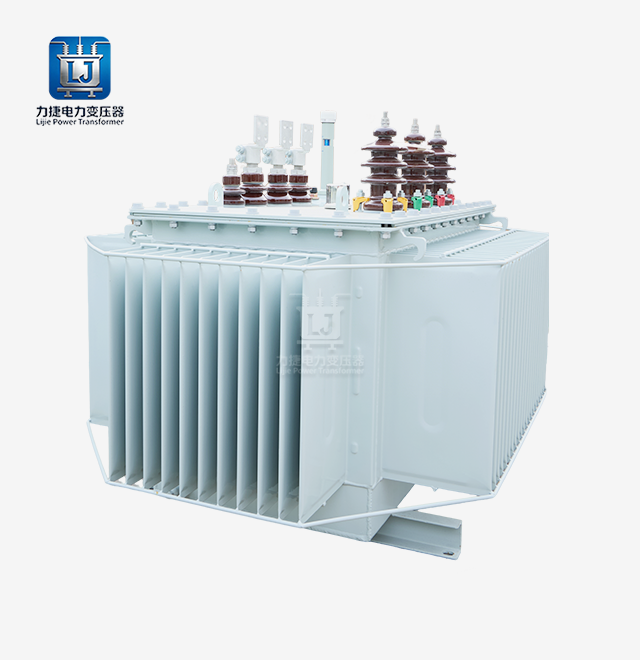
Utility-scale green energy systems mostly use oil-immersed designs because they provide effective thermal management and can be scaled economically, making an experienced Step-up Transformer Supplier an important partner for large renewable energy projects. Cold-rolled grain-oriented silicon steel cores and mineral-oil cooling can support continuous operation at 50 MVA and above. Transformer oil has a dielectric strength of about 30 kV/mm, while air has a dielectric strength of around 3 kV/mm, allowing electrical clearances to be maintained within relatively compact structures. A qualified Step-up Transformer Supplier can also provide sealed, nitrogen-blanketed protection systems that help prevent moisture from entering transformers installed at coastal wind farms, where humidity and salt exposure can accelerate insulation degradation. Working with a reliable Step-up Transformer Supplier allows project developers to select appropriate cooling, insulation, and enclosure solutions for demanding renewable energy environments. An experienced Step-up Transformer Supplier can further support customized transformer configurations for large-scale wind and solar installations.
Transformation ratio matching checks how well a system works with both collection systems and transmission infrastructure. Large wind mills need a 50:1 ratio, which can be found in a 34.5kV/690V unit. Solar inverters that pair with 480V secondary batteries need 34.5kV/480V setups. Efficiency measurements per IEC 60076-1 standards reveal that premium units achieve 98.5-99.2% full-load efficiency, translating to substantial energy savings. On a 20 MW solar farm, the difference between 98% and 99% efficiency is 200 kW of continuous losses, which add up to over 1.75 GWh per year at $40/MWh and cost $70,000 in revenue.
During grid faults and lightning events, equipment's ability to stay alive depends on how well its insulation is coordinated. Based on the BIL ratings, which stand for "Basic Impulse Level," equipment in the 34.5kV class usually has a 200 kV BIL rating for its ability to handle short-term overvoltages. Testing for partial discharge according to IEC 60270 makes sure that the insulation is solid, and acceptance limits below 10 pC make sure that the dielectric will work for a long time. Continuous ratings are based on temperature rise limits, which are usually 65°C for windings in ONAN cooling mode. These limits have a direct effect on service life, since insulation ages twice as fast for every 8–10°C rise in temperature.

How well your green energy project meets commissioning dates and performance guarantees depends on the supplier you choose. The process of evaluating must find a balance between technical skill and business terms, keeping in mind that the lowest initial cost does not always mean the lowest lifecycle cost. For solar systems, engineers need small units that can be placed on pads and have tracking built in. For offshore wind, engineers need enclosures that can withstand salt fog and be qualified for seismic activity.
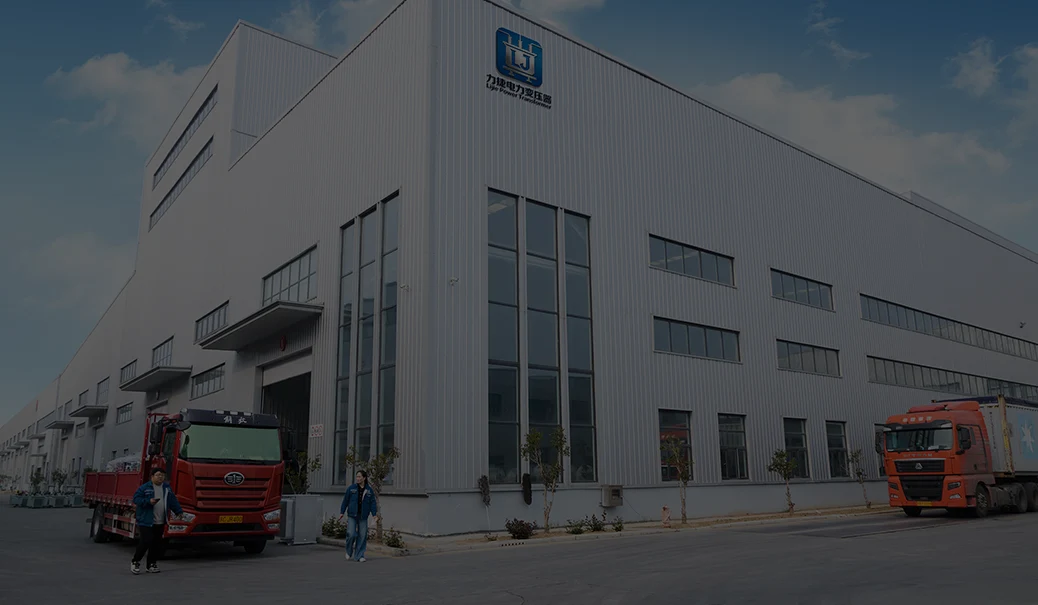
The first step in evaluating a manufacturing capability is to confirm its production capacity. Facilities that handle more than 5,000 MVA per year show economies of scale and well-established supplier lines. Visit production lines to see how precise the core cutting, tension control, and vacuum impregnation processes are. These are the kinds of manufacturing details that separate reliable equipment from equipment that breaks down too soon. The 500,000-square-meter Lijie Electric manufacturing complex in Xuzhou and Nantong is an example of the infrastructure needed for reliable large-volume delivery. It can make everything from 500kV ultra-high-voltage units to small distribution transformers.
Portfolios of certifications show how to get into new markets and how mature a quality system is. Registration under ISO 9001:2015 shows that procedures are followed, and IEC 60076 type test results back up promises of electrical performance. UL listing and CE marking make it possible to sell in North America and Europe, which is very important for EPC workers who work in more than one country. Make sure that design schools hire degreed engineers who have worked with green energy before; temperature modeling of solar farm environments is very different from industrial plant environments. Suppliers that have been named a "Specialized, Refined, and New 'Little Giant'" by China's Ministry of Industry have shown that they can come up with new ideas and be technical stars.
Standard catalog items rarely provide the specialized features needed to optimize green energy systems, which is why selecting an experienced Step-up Transformer Supplier is important. Wind turbine step-up transformers may require features such as two secondary windings for backup inverter connections, temperature sensors at 10 winding locations for thermal mapping, and customized bushing configurations to match the structure of the tower base. A capable Step-up Transformer Supplier can develop these configurations according to the specific requirements of wind power installations. Integrated switchgear sections that group medium-voltage equipment together can also help solar applications by reducing substation size by 30–40%. When compared with conventional silicon steel, amorphous metal cores can significantly reduce no-load losses, which is particularly beneficial for solar farms that remain lightly loaded or idle overnight. Working with a qualified Step-up Transformer Supplier allows renewable energy developers to combine customized transformer designs with integrated equipment solutions. An experienced Step-up Transformer Supplier can therefore help improve system efficiency, space utilization, and long-term operational performance.
Suppliers who offer help with design iterations during the development of a project are very valuable. Adjusting the impedance range makes sure that the inverter's fault ride-through works right. Harmonic reduction techniques are changed by custom vector groups (Dyn11 vs. YNd11). We've seen six-week cuts in procurement times when suppliers put engineers on client design teams to work out interface standards before the RFQ is released instead of through change orders after the award.

The acquisition strategy has a direct effect on the project's costs and on how sure the schedule is. Renewable installations have special buying problems. Sites that are far away make delivery more difficult, and construction schedules with multiple phases need equipment to be delivered at different times to match the commissioning sequences. Structured review systems that measure total ownership costs help purchasing managers balance the need to cut costs with the need to be reliable.
Technical specifications must spell out the limits of operations and the requirements for the interface. List the ranges of ambient temperatures, changes for elevation, and classes of seismic zones that affect rating and mechanical design. It is important to specify the short-circuit duty using three-phase and line-to-ground fault current magnitudes at the primary and secondary terminals. Failures caused by inadequate ratings in this area can be very bad during grid disturbances. Include parameters for power quality such as harmonic distortion levels, unbalanced loads, and voltage regulation limits when renewable output changes.
Delivery terms have a big effect on the project's cash flow. Divide FOB prices into their individual parts, such as ex-works cost, regional transport, export packaging, ocean freight, and target port charges. This openness shows how markups work and lets you improve operations. Make sure you use the right Incoterms. DDP (Delivered Duty Paid) puts all the risk on the suppliers but raises the prices they quote, while EXW (Ex Works) needs the buyer's freight forwarder to coordinate but lowers costs. For projects that need 20 or more units, set up framework agreements with call-off schedules that are tied to construction milestones. This way, you can secure capacity without committing capital too early.
When there is a lot of volume, there is price power. Putting all 60 pad-mounted transformers for a 300 MW solar farm on one purchase order instead of three 20-unit packages usually saves 8–12% on costs by making production runs more efficient. Payment terms affect working capital. A 30% deposit, 60% before shipment, and 10% after commissioning is a common structure. However, extending terms to 90 days after delivery improves project IRR by lowering interest costs during the construction period.
Manufacturing lead times depend on how complicated the specifications are and how busy the factory is, so choosing a reliable Step-up Transformer Supplier is important for maintaining project schedules. Catalog items from an experienced Step-up Transformer Supplier usually ship within 8 to 12 weeks, while engineered solutions may require 16 to 24 weeks from order placement to delivery. Lead times can increase by another 4 to 6 weeks during periods of high demand, such as the third quarter when projects are rushing to meet year-end completion targets. When a Step-up Transformer Supplier keeps long-lead components such as HV bushings and tap changers in stock, delivery windows can be shortened, and procurement risks can be reduced. Lijie Electric's purchasing relationships with major steel mills and copper plants can help secure materials when supply-chain disruptions occur, providing an advantage that many mid-tier manufacturers may not be able to offer. Selecting a Step-up Transformer Supplier with strong material sourcing capabilities can therefore improve delivery reliability and support demanding renewable energy and grid infrastructure projects. A capable Step-up Transformer Supplier can also provide greater flexibility when unexpected supply-chain challenges affect production schedules.

Over 25 to 30 years of running, a project's cash returns are based on how well its equipment works. Differences in how well adequate and excellent transformers work add up to millions of dollars in lost revenue on large-scale utility projects. Just as important, different providers have different patterns of dependability. When something fails too soon, it leads to warranty claims, replacement supplies, and lost generation income that far outweighs the initial purchase savings.
Transformer losses can be broken down into two groups: load losses and no-load (core) losses. Magnetizing the core causes no-load losses that happen all the time, no matter how much is loaded. These losses usually amount to 0.15 to 0.25% of the rated capacity. At $40/MWh, a 25 MVA unit with 35 kW of no-load losses uses 306 MWh of electricity every year, which costs $12,240. This parameter is affected by the choice of core material. At 1.7T flux density, normal M4 silicon steel loses 1.3 W/kg, laser-scribed HiB steel loses 0.9 W/kg, and amorphous metal loses 0.3 W/kg.
Because of winding resistance and random flux heating, load losses go up as the square of the current. These are usually between 0.6% and 0.8% of capacity at maximum load. Choosing the right conductor affects resistance. Copper's 1.68 µ©·cm resistivity has 40% lower losses than aluminum's 2.82 ¼··cm, which makes the higher cost worth it because it saves money over time. Optimizing the winding geometry lowers stray losses. Careful placement of parallel conductors and interweaving primary and secondary coils lowers the formation of eddy currents in structural parts.
Dissolved gas analysis (DGA), which is done on oil samples every three months, finds cracks before they break. High hydrogen levels mean corona discharge, and high acetylene levels mean arcing. If you look at these signs over time, especially the H₂/CH₱ and CO/CO₂ ratios, you can see trends of insulation degradation. Thermographic checking, which is usually done once a year but will increase to every six months after 15 years of operation, finds hotspots caused by loose links or winding distortion.
Monitoring the condition of oil keeps an eye on its acidity, moisture content, and dielectric strength. Keeping the wetness level in paper insulation below 15 ppm keeps its mechanical strength and stops bubbles from forming when the insulation is overloaded. Reclaiming oil through vacuum drying increases service intervals, and replacing all the oil every 20 years brings it back to its original insulating properties. Streaming winding temperatures, load currents, and oil levels to SCADA systems is made possible by automated monitoring systems that are becoming more standard on units above 10 MVA. This allows predictive maintenance that cuts unplanned outages by 60%.
Performance data from solar systems in the real world shows that these ideas work. A 150 MW solar farm in California with pad-mounted transformers that are 98.8% efficient and working at 70% average capacity factor makes 9.2 GWh more energy each year than units that are 98.0% efficient, which is worth $368,000 each year. Over the course of the project's 25-year life at a discount rate of 3%, this difference in efficiency supports an extra $6.8 million investment. This shows why buying decisions can't just be based on the initial capital cost.

The market for voltage transformation is growing quickly because of the rapid expansion of renewable energy, creating strong demand for experienced Step-up Transformer Supplier companies. The installation of wind and solar power is expected to drive continued growth in transformer demand through 2030, which is reshaping the supplier landscape. As competition increases, well-known manufacturers in Europe and North America face growing pressure from Asian companies that can offer comparable technical performance at 20–30% lower prices. For buyers, working with a competitive Step-up Transformer Supplier can provide opportunities to balance technical requirements, pricing, and delivery capabilities. Understanding the positioning of each Step-up Transformer Supplier across this competitive spectrum makes it easier to improve procurement strategies and select suppliers that provide the best overall value. Comparing multiple Step-up Transformer Supplier options based on quality, manufacturing capacity, certifications, and total cost can further support informed purchasing decisions.
Global tier-one suppliers like ABB, Siemens Energy, and Schneider Electric can charge higher prices because they have strong service networks and reputations that go back hundreds of years. Their technical depth helps with the toughest jobs, like offshore wind farms, HVDC converter stations, and large-scale battery storage systems that need special control integration. The warranty lasts for 5 to 10 years and includes 24-hour emergency service. This is because installed base data shows that only 0.15% of units fail every year.
Local makers compete by being able to respond quickly to customization requests and offer flexible delivery options. Lijie Electric is a good example of this positioning: with yearly sales of more than 5 billion RMB, the company has the size of a global corporation, and its two production bases and 160+ engineering staff make it possible to optimize each product for its specific use. With a product line that includes 500kV ultra-high-voltage transformers and small substations, EPC contractors who are in charge of complex renewable energy projects can buy everything they need in one place. IEC 60076 compliance and ISO 9001, CE, and UL approvals show that the quality system is mature enough to meet foreign standards. The "Quality-Trusted Enterprise" title from Jiangsu Province proves that the system works consistently.
Using additive manufacturing, you can make cooling duct geometries that are better at distributing heat by 18–22% compared to traditional methods. This means that existing designs can be improved. Silicon carbide semiconductors in the switchgear that goes with it lower the amount of harmonics that get into transformers, which means that less derating is needed. Biodegradable ester fluids are better at protecting against fire and being safe for the environment than mineral oil. This is why they are becoming more popular in environmentally friendly solar installations, even though they cost 40% more.
Using design parameters, factory test data, and operational measurements, digital twin technology makes virtual copies. Machine learning algorithms look for patterns in fleets of identical units and can tell 3 to 6 months in advance when something will break. With this feature, upkeep is no longer based on time but on conditions, which cuts costs by 25% and raises uptime. Instead of adding monitoring systems after the fact, suppliers who build in sensors and connectivity during production provide better data quality through accurate measurements and planned signal routing.
Price changes are caused by changes in raw materials and the use of production capacity. Copper prices that go up and down between $8,000 and $10,000 per ton cause transformer costs to vary by 5 to 7 percent, and the limited supply of electrical steel increases the risk of wait time. These effects are lessened by suppliers who have vertical integration or long-term contracts for materials. Lead times for normal renewable setups are 12 to 16 weeks right now, but they can be 20 to 24 weeks for custom designs that need engineering study.
For green energy projects, choosing a reliable Step-up Transformer Supplier means finding a balance between technical performance, commercial terms, and the ability to provide long-term support. When evaluating suppliers, the best procurement strategies look beyond the initial purchase price and assess quality certifications, manufacturing capacity, customization responsiveness, and total lifecycle costs. An experienced Step-up Transformer Supplier can provide technical solutions that match the specific requirements of renewable energy installations and grid integration projects. As green energy installations become larger and grid integration becomes more complex, partnerships with a capable Step-up Transformer Supplier that offers technical collaboration, predictive maintenance, and responsive service can create significant long-term value. When procurement professionals establish evaluation frameworks that measure cost savings, service availability, and reliability performance, selecting the right Step-up Transformer Supplier can help projects operate efficiently and profitably for decades. Working with a dependable Step-up Transformer Supplier also provides greater confidence in equipment quality, maintenance support, and long-term project performance.

Quality and compliance certifications are objective proof that a company can make something. ISO 9001:2015 confirms that the planning, production, and testing methods all follow the same set of rules. Independent lab testing of IEC 60076 type test results backs up claims about electricity performance. UL listing lets you install it in North America, and CE marking shows that it meets the requirements of the European Low Voltage Directive. Look over plant inspection records from certifying groups and ask to be present during testing to make sure that quality is always being met.
Lead times depend on design complexity and plant loading. Standard stock setups are sent out 10 to 14 weeks after the order is confirmed. Custom designs that need thermal analysis, impedance optimization, or special materials make the lead time 18 to 24 weeks. When the design freeze happens has a huge impact on the plan; changes to specifications made after production starts add 4–8 weeks. During busy times, limited space may add an extra month. Talking about project timelines early on lets providers book production times and get parts that take a long time to arrive.
Total cost of ownership for renewable installations that are always on is mostly made up of efficiency losses. At $40/MWh, the difference in efficiency between 98.5% and 99.0% on a 30 MVA unit working at 70% capacity factor is $52,000 per year. At a discount rate of 3%, this is worth $1.3 million right now, after 25 years. Patterns of reliability are also very important, because early failures lead to higher costs for new parts, installation work, and missed income from generation, which is more than the initial equipment savings. The warranty terms, maintenance needs, and availability of spare parts round out the lifecycle equation.
Lijie Electric has been making transformers for more than 20 years and is now working on green energy projects in six countries. Our Xuzhou and Nantong factories cover 500,000 square meters and make a wide range of voltage-changing equipment, from small solar inverter step-up units to 500kV transmission transformers. All of this equipment is certified to meet ISO 9001, IEC 60076, CE, and UL standards. Our team of 160+ engineers creates designs that work best for each application and are backed by strict testing procedures. This is true whether your project needs standard pad-mounted layouts or custom-engineered solutions for tough weather conditions. We know that procurement managers need more than just reasonable prices. You need to know that you will get what you ordered, have expert help during setup, and get quick service for decades to come. We are a well-known Step-up Transformer Supplier and manufacturer that works with utility-scale solar, wind, and power generation systems. Our applications engineering team would love to talk to you about the details of your project. Visit lijie-electrical.com or email us at lijieelectrical@gmail.com to learn more about how our production skills, quality systems, and focus on customer satisfaction can help you reach your green energy goals.
1. International Electrotechnical Commission (2018). Power Transformers – Part 1: General Requirements. IEC 60076-1:2018 Standard.
2. IEEE Power and Energy Society (2019). IEEE Standard for Liquid-Immersed Distribution, Power, and Regulating Transformers. IEEE C57.12.00-2015.
3. National Renewable Energy Laboratory (2022). Grid Integration of Variable Renewable Energy: Technical Requirements and Best Practices. NREL Technical Report Series.
4. American Wind Energy Association (2021). Wind Power Transformer Specifications and Performance Standards for Utility-Scale Projects. AWEA Technical Standards Publication.
5. Solar Energy Industries Association (2023). Best Practices for Solar Farm Electrical Infrastructure Design and Procurement. SEIA Technical Guidelines.
6. Kulkarni, S.V. and Khaparde, S.A. (2020). Transformer Engineering: Design, Technology, and Diagnostics. CRC Press, Second Edition.
YOU MAY LIKE


H15%20distribution%20transformer.webp)
18%20type%20dry-type%20distribution%20transformer.webp)
14%20Epoxy%20Resin%20Dry%20Type%20Transformer.webp)

April 27, 2025
With a tight project schedule, the manufacturer delivered on time, and on-site technical personnel provided guidance throughout the entire installation and commissioning process; the collaboration was highly efficient and hassle-free.
July 2, 2025
During the preliminary phase, a selection plan was custom-tailored based on the actual site load requirements, resulting in a high degree of parameter compatibility. After-sales support responds within two hours, and ongoing technical support for operation and maintenance is comprehensive; we feel completely confident in a long-term partnership.
November 18, 2025
Deployed as a supporting component for a 35kV grid-connection project at a photovoltaic power station, the equipment operates for an average of 16 hours daily. It demonstrates excellent control over no-load losses, ensures smooth power generation and grid integration, and effectively reduces the station's overall energy consumption.
January 30, 2026
Under the continuous, high-load operating conditions of a factory production line, the equipment maintains stable electrical parameters and exhibits strong overload resistance, thereby guaranteeing an uninterrupted power supply for industrial production.
April 3, 2026
Integrated as a supporting component for a new energy photovoltaic grid-connection system, the manufacturer provided professional technical coordination and timely after-sales support, ensuring seamless adaptation to the specific electrical operating conditions required for grid integration.