April 27, 2025
With a tight project schedule, the manufacturer delivered on time, and on-site technical personnel provided guidance throughout the entire installation and commissioning process; the collaboration was highly efficient and hassle-free.
Jul 2, 2026
A common question that industrial engineers and purchasing managers ask about medium-voltage distribution equipment is whether or not a single transformer platform can handle the tough needs of steel mills, mines, renewable energy farms, and utility substations. This question is clearly answered by the S20 type 35KV oil-immersed power transformer. This transformer meets the needs of industrial processes for stability and performance with its Level 1 energy efficiency, fully sealed hermetic structure, and ability to work with capacities ranging from 630kVA to 31,500kVA. Its oil-immersed cooling technology keeps it running smoothly even when it's under a lot of stress, and the fact that it meets IEC 60076 and GB 1094 standards means that it will be accepted around the world in EPC projects and infrastructure developments.
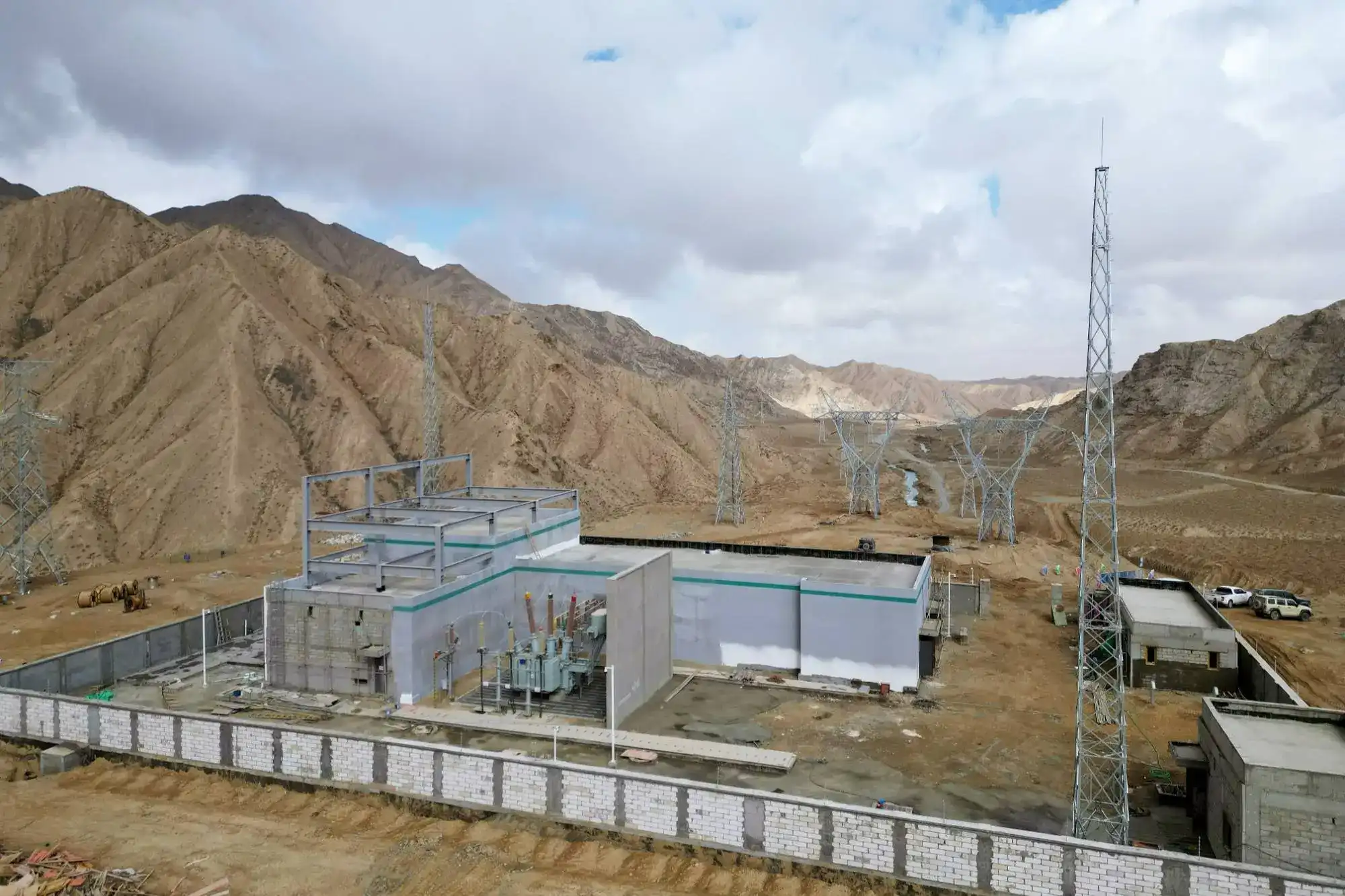
Transformers in modern factories need to be able to handle steady loads, harmonic distortion, and high temperatures and humidity without affecting their downtime. The S20 platform meets these goals by using a carefully chosen mix of materials and design concepts. At its heart is a magnetic core made of high-permeability cold-rolled grain-oriented silicon steel. This steel reduces eddy current losses and provides better electromagnetic efficiency. The unit has a fixed voltage of 35kV and tap settings that can be changed by ±2±2.5%. This lets field workers adjust voltage outputs precisely without turning off the system.
Capacity choices are very varied, so they can be used for projects ranging from small distribution nodes that need 630kVA to big industrial substations that need 31,500kVA. You can choose between single-phase and three-phase setups, and the frequency can be set to 50Hz or 60Hz to match the standards of your local grid. Different upstream and downstream electricity systems can work with different connection group names, such as Dyn11 as the best choice or Yd11 as an alternative.
Dry transformers depend on air flow, but oil-immersed types use natural insulating oil to do two things: keep the electricity safe and control the temperature. The oil covers the core and windings, keeping the insulator from breaking down and absorbing the heat that is generated during operation. This heat moves to the outside walls of the transformer's tank, where it is released into the air by natural airflow or forced air cooling.
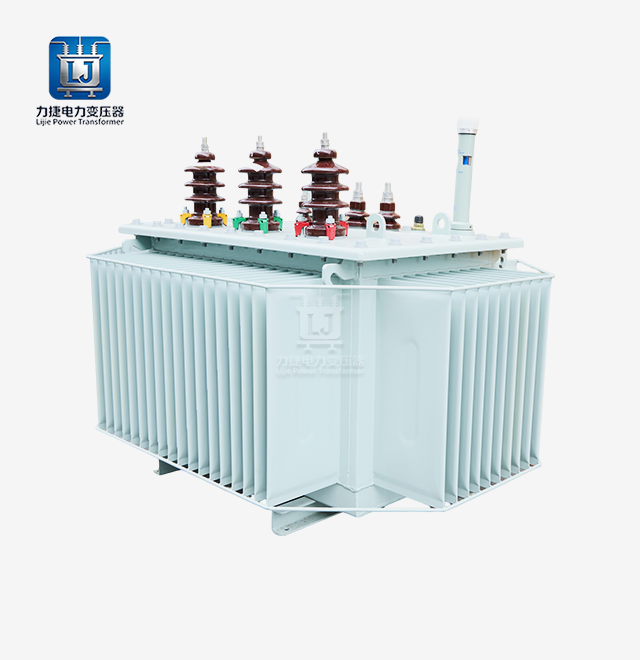
Corrugated tank designs are used in smaller units because they improve surface area without adding more heaters. For better cooling, bigger transformers have flat tank designs with fan banks that are bolted together. Because of this, the S20 type 35KV oil-immersed power transformer can be used in a wide range of settings, from small indoor substations to large outdoor power distribution yards. The two types of cooling—oil-immersed self-cooling (ONAN) or oil-immersed air-cooling (ONAF)—adjust to the environment, keeping the temperature stable even when it gets close to 40℃ outside.
Teams in charge of buying things often compare oil-immersed transformers to dry-type options. While dry transformers are better in places that are likely to catch fire, oil-immersed units are better in tough industrial settings because they can handle more overloading, have longer insulation life, and cost less over their whole lifecycle. The oil medium makes cooling more efficient, which lets the S20 handle short-term overloads that happen a lot in heavy industry and mining. Because it is shut, airborne moisture and oxygen can't get in, which would damage insulation materials and shorten their useful lives.
Noise levels are still very important to think about, especially in mixed-use industrial parks or places with a lot of people. With careful core stacking and damping materials, the S20 type 35kV oil-immersed power transformer keeps noise levels at 60dB(A) or lower for 1000kVA units, which meets strict environmental standards without losing performance. Because of these features, oil-immersed transformers are the best choice for large-scale utility projects and commercial uses where dependability and low cost are more important than leaving a small footprint.
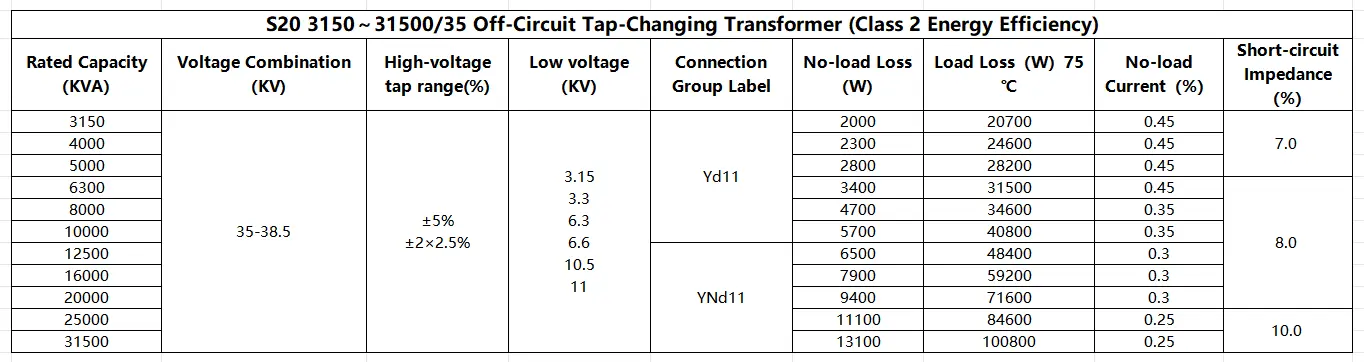
Using less energy has a direct effect on how much it costs to run a generator over its 30-year life. The S20 type 35KV oil-immersed power transformer gets a Level 1 rating for energy economy, which means that it uses about 10% less energy when it's not in use and over 5% less energy when it is. It is possible to measure the yearly savings that these changes bring, especially for sites that are running at full capacity. The vacuum drying method used during production makes sure that the moisture content of insulation materials stays below 0.5%. This keeps them from wearing out too quickly and maintains their insulating strength.
Under-rated load conditions, temperature rise stays well within IEC standards. The highest temperature rise for the oil is limited to 55K, and the highest temperature rise for the windings is limited to 65K. This temperature discipline makes insulation last longer and keeps things running smoothly during times of high demand or sudden load spikes. Industrial users gain from less upkeep for cooling systems and a lower chance of breakdowns caused by heat.
Even though they are built to last, transformers will experience stress points over the course of their lives. Degradation of oil quality is one of the most common problems. It can be caused by rust, water getting in, or contamination from old insulation. Dissolved gas analysis (DGA) done on a regular basis finds small problems before they get worse and cause major breakdowns. By following gases like hydrogen, methane, and acetylene, you can see if the tank is burning, partially discharged, or arcing.
Periodic inspections are also needed for mechanical stability. Over time, temperature cycling can make winding clamping structures looser, which could cause tremors caused by resonance or movement due to short-circuit forces. Checking the torque on fixed joints and analyzing vibrations while the machine is running can help find this kind of wear and tear early. External flashovers, which cause a lot of transformer breakdowns, can be avoided by checking the state of the bushings using power factor testing and infrared thermography.
To make transformers last at least 30 years, they need to be maintained in a strict way. Condition-based tracking is based on taking oil samples every three months and DGA tests once a year. Filtering or replacing the oil gets rid of acids and particles that build up, restores the dielectric strength, and stops sludge from forming. Regular checks of the gaskets and seals during shutdowns stop oil leaks, which are bad for both the insulator and the environment.
The S20 type 35KV oil-immersed power transformer’s fully sealed hermetic design means that it doesn't need to be serviced or replaced twice as long as models with conservatories. This is because it doesn't need breather cleaning or silica gel replacement. Internal temperature growth in corrugated tanks keeps pressure from building up and putting stress on seals. These designs have lower total ownership costs while still keeping high uptime. This is very important for places like steel mills, mining operations, and continuous-process manufacturing facilities where unplanned downtime can cost a lot of money.
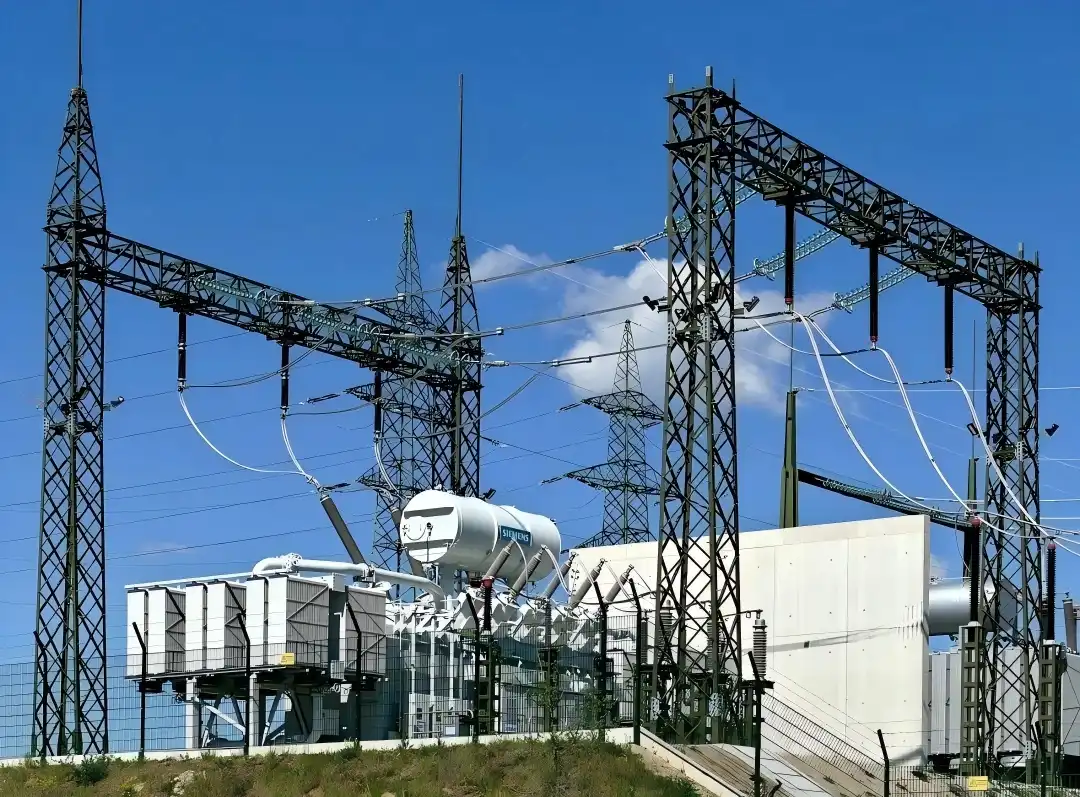
Transformers that can handle non-linear loads and high inrush currents from motor starts are needed on assembly lines for cars, in chemical plants, and in cement factories. The S20's strong mechanical design can handle short-circuit forces of up to 25 times the maximum power. This keeps equipment from breaking down when there is a fault. Its resistance voltage specifications—which can be changed to fit the needs of the user—ensure even power distribution across multiple production zones by letting loads be shared in parallel configurations.
A steel mill in the Midwest of the United States replaced old S9-series transformers with S20 units. This cut the mill's yearly energy use by 18% and got rid of two unexpected power outages that were caused by insulation failures. The fully sealed design worked especially well in the plant's high-humidity climate, where older conservator-style transformers lost their oil more quickly.
A 50MW solar project in Texas used S20 transformers at collector substations. They said that a certification agreement with IEC and IEEE standards was the most important factor in the buying process. The project went into commercial operation 12% faster than planned. This was partly because the transformer's curved tank design made installation easier by getting rid of the need for an external cooling assembly.
Safety and environmental compliance go beyond just electricity performance. FR3 natural ester fluid, a renewable alternative to mineral oil, can be used if desired. This helps with fire safety in urban substations and follows EPA rules for the environment. Installations near private areas can happen without having to pay a lot of money for expensive acoustic enclosures. This speeds up the approval process and lowers the overall cost of the project.
Differences that can be measured in terms of speed, dependability, and total cost of ownership are what make procurement choices possible. The S20 series cuts no-load losses by 15–25% compared to the S11 series. This is possible because the core materials and production quality are better. Load losses go down in the same way, which means that energy savings cover the small price increase within 5 to 7 years of operation. Because it is fully sealed and has better rust protection, the S20 lasts 50% longer outside—30 years compared to 20 years for S11 units.
There are some benefits to using dry-type transformers in indoor settings where fire safety rules are strict, but they lose some of their maximum capacity and heat efficiency. IEC 60076-7 allows 110% constant overload situations to be handled more smoothly by oil-immersed designs. However, operating beyond the nameplate limits for a long time speeds up the aging of the insulation. Oil-immersed technology is still the best choice for industrial uses that care more about stability than size.
More than just technical specs need to be looked at when choosing a trustworthy S20 type 35KV oil-immersed power transformer maker. IEC 60076 compliance shows that global electrical standards are being followed, and ISO 9001:2015 approval shows that quality management systems are advanced. UL and CE marks make it easier for projects in North America and Europe to enter the market, which helps reduce costs associated with retesting and regulatory delays.
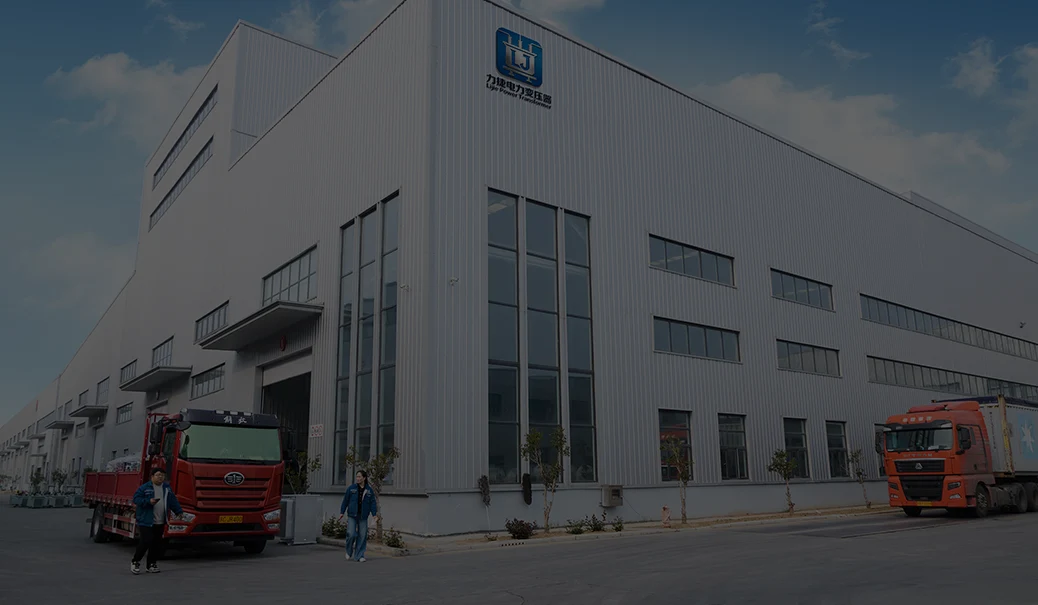
Lijie Electric Power Technology Group has a production footprint of 500,000 square meters, a staff of 2,000 people, including 160 engineers with doctoral and master's degrees, and yearly sales of more than 5 billion RMB. Being named a "Quality-Trusted Enterprise" in Jiangsu Province and a "High-Tech Enterprise" at the national level shows a strong dedication to innovation and dependability. China's National Transformer Quality Supervision Center and Wuhan High Voltage Research Institute put products through a lot of tests to make sure they work the way they're supposed to in the lab and in the field.
The ability to provide technical help is what sets strategic partners apart from commodity providers, especially in complex equipment such as the S20 type 35KV oil-immersed power transformer. Comprehensive warranty terms, which usually cover production flaws for 24 months after starting, offer basic safety, but the real costs of downtime are determined by responsive field service networks. When problems happen, manufacturers who offer regional service centers, expert hotlines that are open 24/7, and stocked stockpiles of spare parts keep downtime to a minimum.
It's also important that customization works well. Voltage ratios, impedance values, and environmental grades that aren't normal are often needed for projects. If a supplier has an in-house design team and flexible production lines, they can meet these needs without charging too much for wait time. This lets procurement managers find the best transformer standards for each site's conditions instead of settling for something off the shelf.
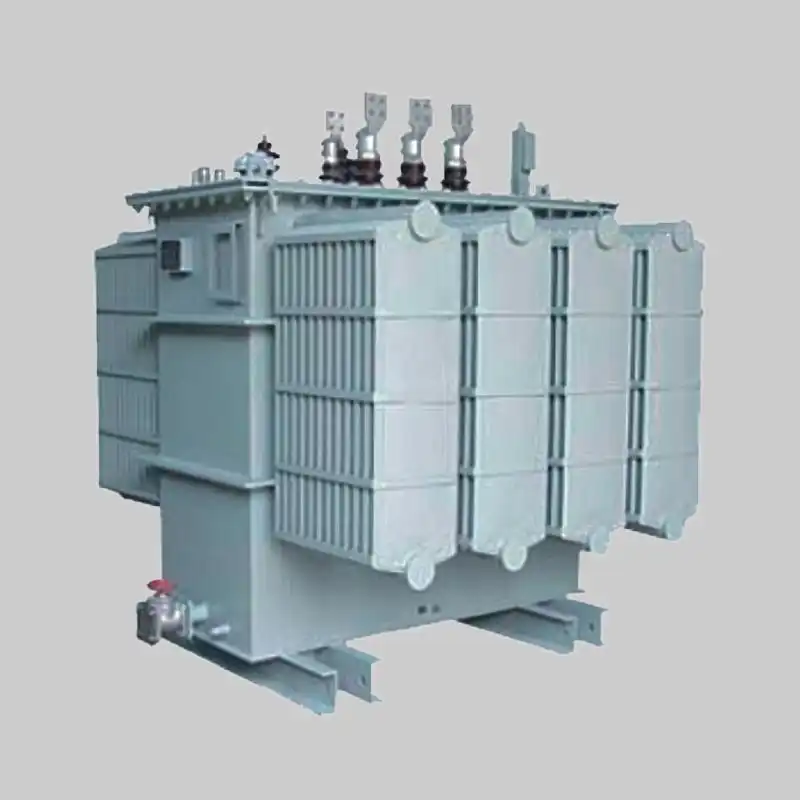
Large building projects need deliveries of S20 type 35KV oil-immersed power transformers that are planned ahead of time and have the same quality across many units. These deliveries can last for months or even years. Manufacturers that have been around for a while keep enough raw materials on hand and enough production capacity to keep their end of framework deals without quality issues or delays. Batch consistency makes sure that all parallel transformers have the same electrical properties, which is important for load-sharing in substations and industrial distribution networks.
Customization goes beyond electrical parameters and includes things like mounting setups, extra packages, and coatings that protect the electronics. Corrosion protection grades C4 or C5 work best for sites near the coast, while warming oil rated for low temperatures is needed in places that get very cold. By making these standards clear during the buying process, changes made in the field that would void warranties and create possible failure points can be avoided.
Unit prices are only one part of the total project costs. Transformers that weigh between 15,000 kg and 45,000 kg need special treatment and freight planning when they are shipped internationally. Protocols for factory acceptance testing (FAT), fees for third-party inspections, and import taxes all have an effect on budgets. Reliable providers break down costs in great detail and help with shipping planning, so you don't have to pay extra costs while the job is being done.
Lead times depend on volume and the level of customization. Standard 1000kVA to 2500kVA units usually ship between 8 and 12 weeks, but it can take up to 16 to 20 weeks for bigger transformers that need special windings. To reduce schedule risks, procurement managers involve suppliers early in the planning process and secure production slots before site engineering is finalized.
To work with transformer makers effectively, you need to make detailed technical specs that include voltage levels, capacity needs, impedance goals, environmental conditions, and relevant standards. By including load profiles and single-line layouts, engineers can suggest improved solutions instead of standard catalog items.
Lijie Electric is happy to help with technical questions at lijieelectrical@gmail.com. Their experienced application engineers can help you choose the right generator, look at your customization choices, and make sure you have all the paperwork you need for compliance. Clear communication of project requirements speeds up quoting and makes sure supplied equipment meets practical standards, whether you're looking for a single unit or a multi-year supply deal.
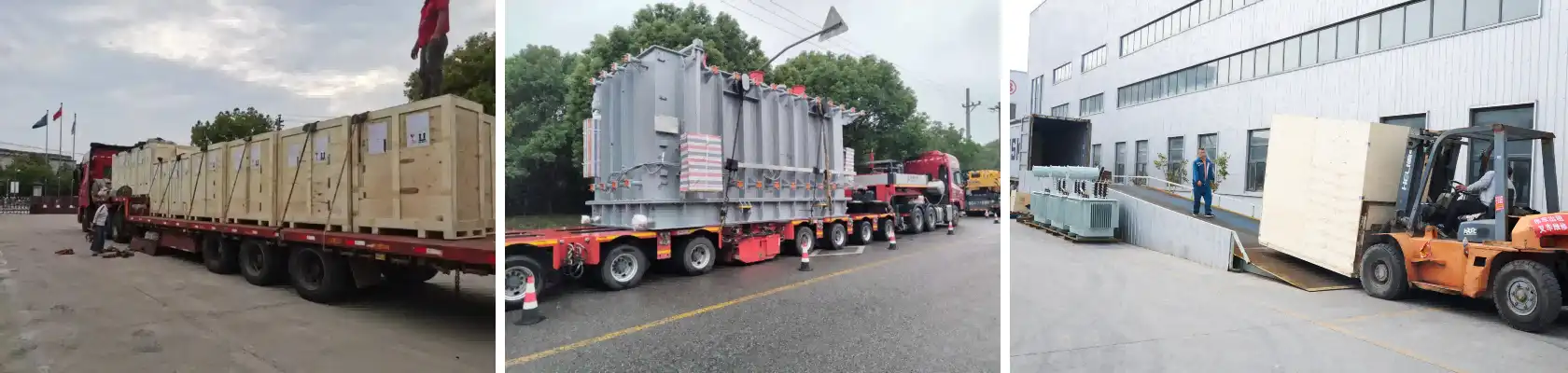
Transformers that combine electrical performance, lifetime cost, and operating dependability are needed for industrial power distribution. The S20 type 35KV oil-immersed power transformer meets these needs because it has Level 1 energy efficiency, a design that keeps out air and water for 30 years, and it meets international standards like IEC 60076 and ANSI specifications. Because it can be used in manufacturing, green energy, utilities, and mining, and because it has good thermal management and low noise output, it is a practical choice for procurement managers who care more about long-term value than starting cost. Choosing qualified providers with strong quality systems, full certifications, and quick expert support lowers project risks even more and makes sure that the transformer is delivered on time and works reliably for its entire life.
The S20 has about 10% less no-load losses and over 5% less load losses than the S11 types, which means it meets the strict Phase 2 energy saving standards. Over a normal 30-year period, these changes save a lot of money, especially for facilities that are used a lot and are running at above 70% capacity factor.
The fully sealed structure gets rid of the need to service the breather and increases the time between oil changes to 10 to 15 years under normal conditions. For routine upkeep, oil samples are taken every three months for dissolved gas analysis, infrared thermography is done once a year, and bushings are inspected every so often. This is a lot less work than for designs with conservators.
The transformer is intended to work at its rated capacity, but it can also handle temporary overloads according to IEC 60076-7 rules. These can be up to 110% for short periods of time, based on the temperature and pre-load history of the system. Long-term overload speeds up insulation aging, shortening its total life, so correct sizing is still very important during design.
The tightly sealed tank keeps water out, and available C4/C5 coatings that resist corrosion protect the outside in salt-spray areas. These features make the working life longer than 30 years in harsh environments where regular transformers rust and lose their covering more quickly.
Working with a skilled S20 type 35KV oil-immersed power transformer provider is necessary to meet tight project deadlines and performance standards. Lijie Electric Power Technology Group has 500,000 square meters of production space and a wide range of licenses, such as ISO 9001:2015, IEC, CE, and UL approvals. They can make high-tech products. For large orders, our engineering team creates unique solutions that take into account voltage configurations, environmental ratings, and shipping plans that work with the goals of your project. When we buy transformers for large-scale green energy projects, heavy industrial buildings, or upgrades to the regional grid, we make sure they are of high quality and offer help after the sale to reduce operating risks. You can talk to our technical experts about your transformer needs, get full specs, or set up factory acceptance testing by emailing lijieelectrical@gmail.com.
1. International Electrotechnical Commission. "Power Transformers - Part 1: General," IEC 60076-1:2011, Geneva, Switzerland, 2011.
2. Institute of Electrical and Electronics Engineers. "IEEE Standard General Requirements for Liquid-Immersed Distribution, Power, and Regulating Transformers," IEEE C57.12.00-2015, New York, 2015.
3. National Standardization Administration of China. "Technical Parameters and Requirements for Oil-Immersed Power Transformers," GB/T 6451-2015, Beijing, China, 2015.
4. Heathcote, M.J. "The J&P Transformer Book: A Practical Technology of the Power Transformer," 13th Edition, Newnes, Oxford, United Kingdom, 2007.
5. Kulkarni, S.V. and Khaparde, S.A. "Transformer Engineering: Design, Technology, and Diagnostics," 2nd Edition, CRC Press, Boca Raton, Florida, 2013.
6. Harlow, J.H. "Electric Power Transformer Engineering," 3rd Edition, CRC Press, Boca Raton, Florida, 2017.
YOU MAY LIKE




18%20type%2035KV%20power%20transformer.webp)
April 27, 2025
With a tight project schedule, the manufacturer delivered on time, and on-site technical personnel provided guidance throughout the entire installation and commissioning process; the collaboration was highly efficient and hassle-free.
July 2, 2025
During the preliminary phase, a selection plan was custom-tailored based on the actual site load requirements, resulting in a high degree of parameter compatibility. After-sales support responds within two hours, and ongoing technical support for operation and maintenance is comprehensive; we feel completely confident in a long-term partnership.
November 18, 2025
Deployed as a supporting component for a 35kV grid-connection project at a photovoltaic power station, the equipment operates for an average of 16 hours daily. It demonstrates excellent control over no-load losses, ensures smooth power generation and grid integration, and effectively reduces the station's overall energy consumption.
January 30, 2026
Under the continuous, high-load operating conditions of a factory production line, the equipment maintains stable electrical parameters and exhibits strong overload resistance, thereby guaranteeing an uninterrupted power supply for industrial production.
April 3, 2026
Integrated as a supporting component for a new energy photovoltaic grid-connection system, the manufacturer provided professional technical coordination and timely after-sales support, ensuring seamless adaptation to the specific electrical operating conditions required for grid integration.