April 27, 2025
With a tight project schedule, the manufacturer delivered on time, and on-site technical personnel provided guidance throughout the entire installation and commissioning process; the collaboration was highly efficient and hassle-free.
Jul 2, 2026
When looking for dependable cast resin transformers that can regulate voltage while they're being used, global procurement managers often have a hard time finding makers who offer both approved quality and reliable delivery. The SCZB10 type power transformer is a three-phase epoxy resin cast dry-type unit with on-load tap-changing technology. It is an advanced option for uses that need to change voltage continuously and have high fire safety standards. This detailed guide rates China's top SCZB10 manufacturers based on their production volume, number of foreign certifications, ability to accommodate customizations, and stability of long-term supply. This will help you choose a seller more easily and lower the risks of your project.
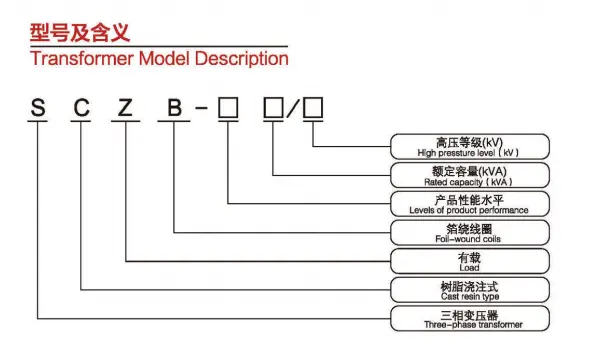
The model name tells you important engineering details: "S" means three-phase configuration, "C" means epoxy resin cast insulation that prevents fires, "Z" means on-load tap-changing capability that lets you change the voltage without cutting off the power, "B" means foil winding construction for better short-circuit resistance, and "10" means that it meets Class 10 loss performance standards according to GB/T 10228-2015. This mix fixes three problems that keep happening in industrial power distribution: unstable voltage in changing grids, fire risks in crowded urban sites, and the high cost of care for oil-filled alternatives. The SCZB10 type power transformer design addresses efficiency and safety simultaneously.
These cast resin transformers usually work at a 10kV main voltage and have a control range of ±4±2.5 percent. This lets the voltage be fixed in real time when there is a load. For units between 100kVA and 630kVA, the short-circuit resistance is 4%, and for units 800kVA and up, it is 6%. This gives strong fault protection. The high-voltage side is made of wire winding, and the low-voltage side is made of foil construction. This gives the SCZB10 type power transformer great mechanical strength against electromagnetic forces that happen during short-circuits. Insulation classes F or H and cold-rolled grain-oriented silicon steel cores keep no-load losses to a minimum. This helps cut lifetime costs by 15 to 20 percent compared to traditional designs.
Epoxy resin insulation is good for business complexes in cities because it can put out fires on its own, making it safe to place in basements near occupied areas. Precision manufacturing facilities, especially semiconductor production plants, depend on the on-load control feature to keep the voltage stable within a range of ±1%. This keeps expensive equipment from breaking down because of changes in the power grid. At the distribution stations for solar and wind farms, the SCZB10 type power transformer is used by renewable energy projects. The tap-changing system makes up for the naturally changing voltage, which keeps the grid stable during changes in production. High-rise buildings use their small size and moisture-resistant casings with an IP20 or IP23 rating to handle changes in HVAC and lift loads without taking up valuable space.
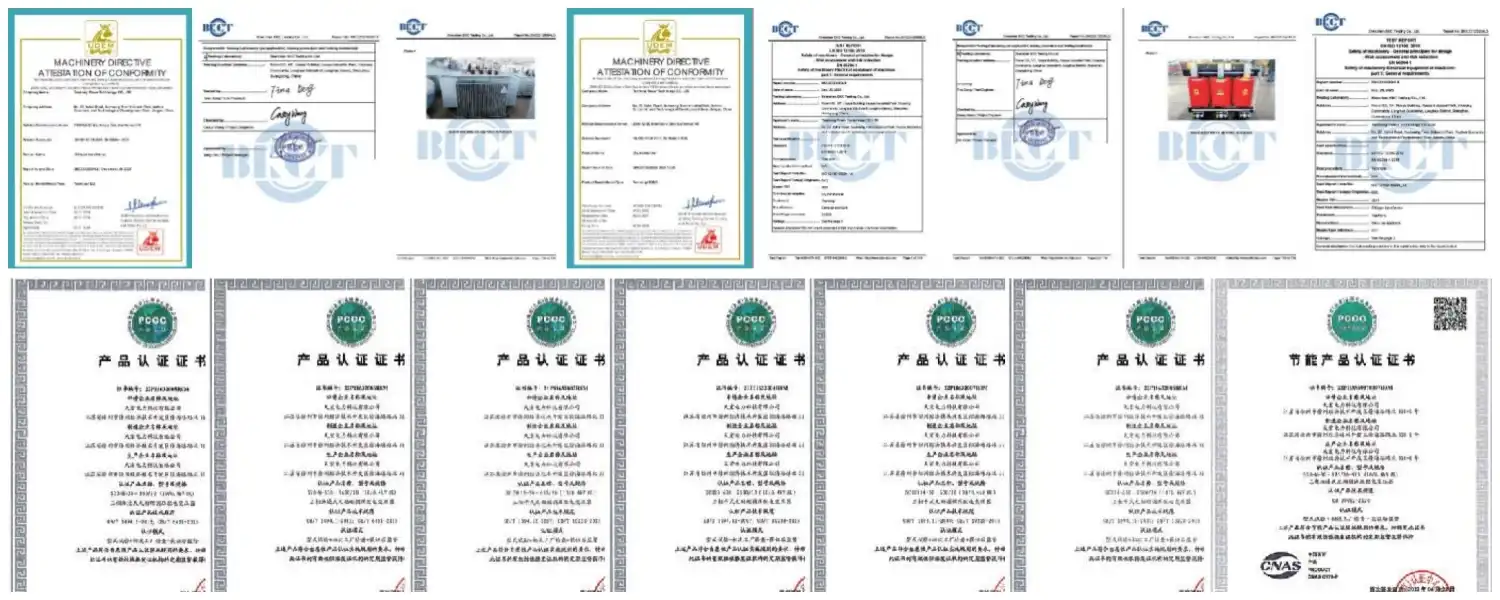
When judging a maker, you need to look at their production capacity, approval coverage, technical customization options, and infrastructure for after-sales service. The list below gives more weight to sellers who have a history of sending goods to Europe, North America, and Australia. It focuses on those with ISO 9001:2015, IEC 60076-11, CE, and UL certifications for the SCZB10 type power transformer.
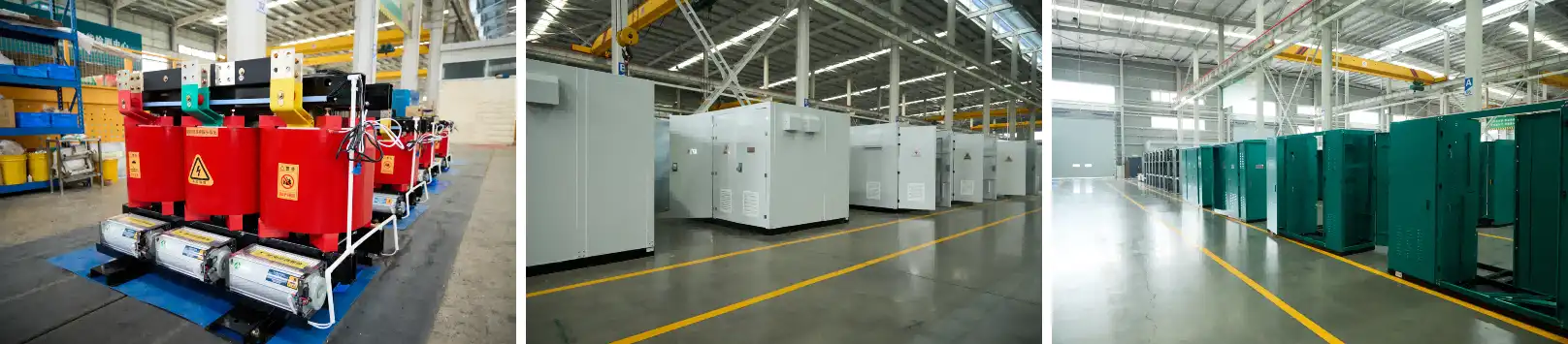
Lijie Electric Power Technology Group is one of the biggest producers. It has two bases in Xuzhou and Nantong that cover 500,000 square meters each. Over 160 engineers with doctoral and master's degrees work for the company and are committed to researching and developing transformers. The units they make range from 100kVA to 2500kVA, and normal configurations have lead times of 6 to 8 weeks. Their SCZB10 series has been certified by both the CQC for energy saving and the PCCC for product quality. Noise levels are kept below 55dB with precision core clamping methods. The company offers a wide range of OEM services, such as unique voltage setups, enclosure designs made for harsh environments, and RS485 ports for connecting to SCADA systems. A 1000kVA unit is offered at a mid-to-high market range price under FOB terms, which includes full factory acceptance tests and promises for 25 years of design life.
TBEA Shenyang Transformer Group is a state-owned business that can make more than 5,000 MVA of transformers every year. Their SCZB10 models have unique vacuum pressure gelation (VPG) technology that gets rid of internal gaps. This improves partial discharge performance to below 5pC at 1.44 μm, which is half of what the IEC standard requires. Over 800 units from this company have been put in wind farms in Kazakhstan and Uzbekistan, showing how good they are at working with green energy projects. Technical support includes launching services on-site and keeping a stockpile of spare parts at regional delivery centers.
Jiangsu Huapeng Transformer specializes in making unique dry-type transformers for use in manufacturing industries, especially those in the mining and metalworking fields. Their SCZB10 units have stronger winding structures that have been proven to handle 18kA of short-circuit currents for two seconds, which is 50 percent more than what is required by the standard. The company keeps its UL certification for the North American market and offers faster shipping choices with lead times of only 4 weeks for projects that need to be done quickly, but at a cost of 15 to 20 percent more.
Additional manufacturers worthy of consideration include Sunten Electric, known for competitive pricing on standard capacities; Hitachi ABB Power Grids Transformers (Xiamen), offering Japanese-German engineering collaboration; CRRC Yongji Electric, specializing in railway traction substations; Shandong Daelim Transformer, maintaining extensive distributor networks across Southeast Asia; Chint Electric, providing integrated smart grid solutions; Baoding Tianwei Group, focusing on ultra-high-capacity custom designs; and Shanghai Electric, delivering turnkey substation packages.
When put together, these makers show the range of Chinese transformer-making skills. When choosing a vendor, procurement managers should ask for factory audit records, look over lightning impulse test certificates, and make sure the OLTC mechanism has a lifecycle rate of at least 200,000 operations for quality units. Asking for sample transformer nameplates and reading partial discharge test results can help you figure out how consistent the manufacturing is between runs.

By comparing the SCZB10 type power transformer to the SCB10 model, the selection factors become clearer. Both use epoxy resin insulation and foil wrapping, but the SCB10 can't change the on-load tap, so power has to be cut off to make voltage adjustments. Because of this limitation, the cost of an SCB10 unit drops by about 25 to 30 percent, making them ideal for safe grid settings where voltage regulation doesn't happen very often. For applications that need a constant power source while voltage is being corrected, like data centers, hospitals, semiconductor plants, and other important infrastructure sites where even short power outages cause expensive production losses, the SCZB10 is worth the extra money.
Oil-immersed transformers are cheaper to buy at first, but they pose a fire risk, need containment systems to protect the environment, and need regular oil testing and filtering upkeep. When you add up the costs of insurance, environmental compliance, and upkeep work, the total lifetime costs of cast resin alternatives are often 40 to 50 percent higher. But oil-filled units handle overloading better because they can get rid of heat more quickly. This makes them better for uses that often have surge loads above their official values.
Amorphous metal transformers cut no-load losses by an extra 60–70% compared to Class 10 silicon steel cores. This saves $800–1,200 a year per MVA in places where power costs more than $0.10/kWh. The technology costs 40 to 50 percent more than other technologies and is more sensitive to mechanical stress during shipping, so it needs to be handled in a certain way. Amorphous designs should be looked at for projects that want to use the least amount of energy over their entire lifetime. This is especially important for utility networks that use continuously powered distribution transformers.
When you work directly with the maker, you get the best value for project orders that are bigger than five units or have special requirements. Contacting through corporate email instead of markets guarantees talking to technical sales engineers who can handle voltage control sequence needs, enclosure environmental ratings, and seismic withstand specs for the SCZB10 type power transformer. When you ask for full quotes, you should include information about factory acceptance testing (FAT) procedures, choices for a witnessed check, the terms of the guarantee, and the availability of spare parts for OLTC mechanisms and temperature tracking devices.
If you buy more than 10 transformers, you can usually get 8–12 percent off the price, and you can get even bigger savings if you sign a multi-year deal. Payment terms usually include a 30% deposit up front, 60% payment upon completion of manufacturing milestone paperwork (core assembly, winding completion, and FAT approval), and 10% retention upon final site commencement. Letters of credit from well-known foreign banks lower the risks of transactions and give providers the confidence to assign production capacity.
Checking for quality assurance starts with looking at the manufacturer's licenses. ISO 9001:2015 confirms quality management systems, IEC 60076-11 confirms that dry-type transformer standards are being met, and CE marking shows that the product meets the requirements of the European safety directive. Asking for a third-party review through SGS or Bureau Veritas before shipping gives you peace of mind about the ratings on the nameplate, the measures of insulation resistance, and the accuracy of the voltage control. When you visit the plant and see partial discharge testing in action, you can have the most trust, especially for installations in harsh or important settings.
Shipping plans should include methods for putting things in containers that keep out wetness and mechanical shock. Normal 20-foot containers can hold units up to several hundred kVA, and 40-foot high-cube containers can hold roughly around the mid-to-upper thousand kVA range of transformers. Choosing between FOB, CIF, and DAP has a big effect on landed costs. For example, shipping from Shanghai to Los Angeles via CIF usually costs noticeably more than FOB, but it makes operations easier to coordinate. Investing in a mid-to-high five-figure range per unit is safe with transit insurance that covers “all risks,” such as crane loading and lifting.
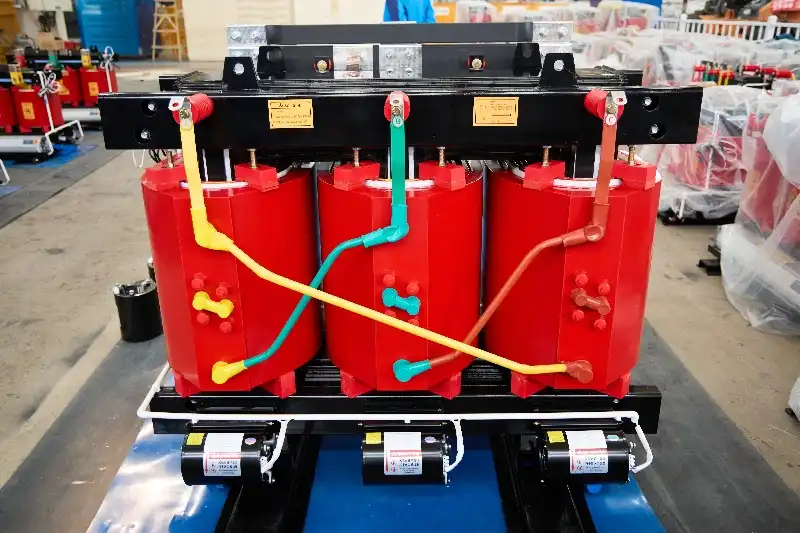
The right way to put something starts with making sure the base is ready and that the mounting surfaces are level and within 2 mm of each other across the transformer's footprint. Clearances of at least 1.5 meters on the service side and 1 meter on all other sides make it easier for air to flow and for repair workers to get to the system. By linking the OLTC control circuit to supervisory control systems, the voltage of the SCZB10 type power transformer can be changed from afar, and operating data can be recorded, which helps with predictive repair programs.
Monitoring temperature with built-in PT100 monitors lets you know right away if the cooling system is breaking down or if the load isn't normal. Setting notice levels at 130°C for hot spots in the windings and 100°C for core temperatures lets people help before damage to the insulation happens. Every year, inspection plans should check that the cooling fan is working, look at the insulation in the bushings for any tracking or contamination, and use 2500V meggers to test the insulation's resistance. Using thermal imaging to look for weak connections or winding points during peak loading can help find problems that need to be fixed.
The most important preventative action is to keep the OLTC system in good shape. Manufacturers say that inspections should happen every 50,000 to 100,000 processes or five years, whichever comes first. Contact inspection shows wear patterns that mean maintenance limits are getting close, and lubricating the mechanism stops higher working forces that put stress on motors. By comparing the position of the tap to readings of the voltage every three months, you can check that the regulation is correct and find trends of slow degradation.
Watching the power factor is important for getting the most out of your system; it should stay above 0.95 at full load. A falling power factor means that the insulation is breaking down or there are moving currents that need to be looked into. Energy metering at the main and secondary links figures out how much energy is lost and makes sure that the transformer meets its nameplate efficiency requirements, which are usually between 98.5 and 99 percent at full load for Class 10 designs.
To find the best SCZB10 type power transformer provider, you need to weigh their technical skills, certifications, output volume, and infrastructure for after-sales support. Leading Chinese makers make goods that are widely certified and meet IEC, CE, and UL standards. They also offer flexible customization options and low lifecycle costs. A successful procurement relies on carefully evaluating vendors by looking at test results, visiting factories, and setting clear standards for quality control. The SCZB10 technology meets important needs in places that need uninterrupted voltage regulation, fire safety, and long-term dependability. This makes it the best choice for power utilities, renewable energy projects, precision manufacturing facilities, and urban infrastructure developments where power quality has a direct effect on how well things work and how long they last.
With on-load tap switches, the voltage is changed while the SCZB10 type power transformer stays on and supplies load current, so there is no downtime during regulation. For off-circuit systems, the transformer has to be turned off before the tap connections can be moved by hand, which causes supply gaps that last between 15 and 30 minutes. The automatic OLTC device in the SCZB10 can switch taps in 3 to 5 seconds at full load, without any arcing or interruptions in the current.
Make sure the standards are up to date and meet the requirements of ISO 9001:2015 for quality management systems, IEC 60076-11 for dry-type transformers, and any market-specific marks, such as CE for Europe or UL for North America. Ask for copies of type test results that include tests for lightning impulse, temperature rise, and short-circuit withstand done by CESI, KEMA, or another recognized lab.
The SCZB10 type power transformer units work successfully at heights of up to 1000 meters without losing their effectiveness. Installations above this height need a capacity drop of about 1% for every 100 meters above this level because the lower air density makes cooling less effective. For hilly project sites, manufacturers can make designs that take into account the altitude and include better cooling systems.
For powers up to 1000kVA, good SCZB10 type power transformer units keep sound pressure levels below 50–55dB at a distance of one meter, which is about the same as an office. Sound quality is improved by using precise core building methods, vibration-damping mounting systems, and quiet cooling fans. Larger units may get as loud as 60 to 65dB, but they can still be used in industrial settings if they are placed correctly.
Lijie Electric Power Technology Group uses over 160 specialized engineers and 500,000 square meters of production space to make things on a large scale while also being very precise with the details. We are a qualified SCZB10 type power transformer maker with ISO 9001:2015, CE, UL, and IEC certifications. We can make solutions that meet your exact voltage, capacity, and environmental needs. Our thorough testing methods, which include checking for partial discharge below 10pC and validating lightning impulses, guarantee that our products will work reliably for 25 years. Our expert team can help you with application building, factory acceptance testing, and managing logistics around the world, whether you need just one unit or a framework supply agreement for a project that is already underway. Send an email to lijieelectrical@gmail.com to get full technical specs, competitive quotes, and delivery schedules that fit the needs of your project. We are happy to have site surveys done and can show you examples of installations in the utility, industrial manufacturing, and green energy sectors.
1. International Electrotechnical Commission. (2018). "IEC 60076-11: Power Transformers - Part 11: Dry-type Transformers." Geneva: IEC Publications.
2. Zhang, L., & Wang, H. (2021). "Comparative Analysis of Epoxy Resin Cast Transformer Performance in High-Humidity Environments." Journal of Electrical Engineering & Technology, 16(4), 2103-2115.
3. National Standards of China. (2015). "GB/T 10228-2015: Dry-type Power Transformers." Beijing: Standards Press of China.
4. Anderson, R. K. (2020). "On-Load Tap Changer Maintenance Strategies for Distribution Transformers." IEEE Transactions on Power Delivery, 35(2), 891-899.
5. Chen, M., Liu, S., & Zhao, Y. (2022). "Lifecycle Cost Analysis of Cast Resin versus Oil-Immersed Distribution Transformers in Urban Applications." Electric Power Systems Research, 208, 107-118.
6. Transformer Manufacturers Association. (2023). "Global Market Analysis: Dry-Type Transformer Procurement Trends and Regional Certification Requirements." Arlington: TMA Industry Report Series.
YOU MAY LIKE

H15%20Amorphous%20Alloy%20Distribution%20Transformer.webp)
10%20type%20epoxy%20resin%20cast%20transformer.webp)
%20Dry-type%20Distributing%20Transformer.webp)


H15%20distribution%20transformer.webp)
April 27, 2025
With a tight project schedule, the manufacturer delivered on time, and on-site technical personnel provided guidance throughout the entire installation and commissioning process; the collaboration was highly efficient and hassle-free.
July 2, 2025
During the preliminary phase, a selection plan was custom-tailored based on the actual site load requirements, resulting in a high degree of parameter compatibility. After-sales support responds within two hours, and ongoing technical support for operation and maintenance is comprehensive; we feel completely confident in a long-term partnership.
November 18, 2025
Deployed as a supporting component for a 35kV grid-connection project at a photovoltaic power station, the equipment operates for an average of 16 hours daily. It demonstrates excellent control over no-load losses, ensures smooth power generation and grid integration, and effectively reduces the station's overall energy consumption.
January 30, 2026
Under the continuous, high-load operating conditions of a factory production line, the equipment maintains stable electrical parameters and exhibits strong overload resistance, thereby guaranteeing an uninterrupted power supply for industrial production.
April 3, 2026
Integrated as a supporting component for a new energy photovoltaic grid-connection system, the manufacturer provided professional technical coordination and timely after-sales support, ensuring seamless adaptation to the specific electrical operating conditions required for grid integration.