April 27, 2025
With a tight project schedule, the manufacturer delivered on time, and on-site technical personnel provided guidance throughout the entire installation and commissioning process; the collaboration was highly efficient and hassle-free.
Jul 26, 2026
When selecting a large-capacity power distribution solution for critical infrastructure, the 6300kVA~100000kVA three-winding transformer with OLTC stands out as an essential hub device. This equipment combines a three-winding architecture with On-Load Tap Changer technology, enabling seamless voltage conversion across multiple levels—such as 220kV/110kV/35kV/10kV—without interrupting power supply. Designed for regional substations, large energy bases, grid interconnection points, and heavy industrial complexes, these transformers deliver precise voltage regulation under fluctuating load conditions while ensuring long-term operational stability and efficiency.
6300kVA~100000kVA Three-winding transformers with OLTC are now an essential part of modern power infrastructure. They make precise voltage regulation and operational flexibility possible, which are very important in today's energy world. These transformers are the most important part of distributing and sending electricity safely in power plants, hubs for green energy, and heavy industries.
For procurement managers, electrical engineers, and project directors working on big projects, knowing the technical details and practical benefits of 6300kVA~100000kVA Three-winding transformers with OLTC can have a big effect on the success of the project. This guide shows you the most important things to think about when choosing a transformer so that your investment gives you the best performance, longevity, and cost-effectiveness in complex grid applications.
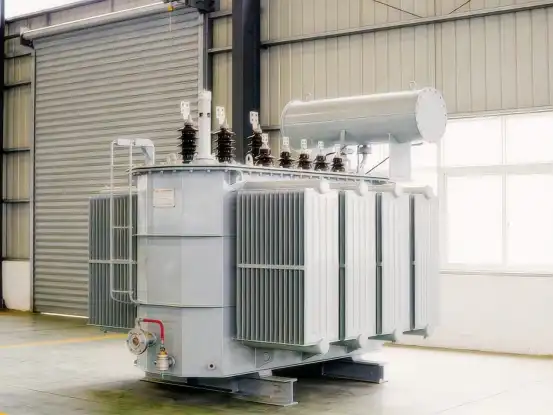
A three-winding transformer has three separate sets of windings inside one core. These sets are usually called high-voltage (HV), medium-voltage (MV), and low-voltage (LV). This design lets power be sent across three voltage levels at the same time, so there's no need for multiple separate transformers. The arrangement cuts down on the size of the installation area, lowers the cost of capital, and makes designing substations easier.
When these transformers are paired with OLTC technology, they can change voltage ratios on the fly while the system is still running. This feature handles voltage changes caused by changing loads or unstable grids, keeping power quality stable without stopping service. The OLTC mechanism can usually handle more than 200,000 tap operations without any maintenance, giving years of reliable service.
6300kVA~100000kVA Three-winding transformers with OLTC are designed to meet a wide range of operating needs. On the high-voltage side, rated voltages can go up to 220kV, and the medium- and low-voltage windings are set up based on the needs of the project. Cooling methods like ONAN (Oil Natural Air Natural) and ONAF (Oil Natural Air Forced) make sure that heat is managed well, even when the system is running at full capacity all the time.
The high-permeability grain-oriented silicon steel cores in these units cut down on no-load losses and make the energy economy better. Insulation systems meet the requirements of IEC 60076 and keep partial discharge values below 10pC at 1.5Um. Copper wires that have been hardened and physically stabilised winding structures improve the ability to survive short circuits. This makes the wiring strong in harsh industrial and utility settings.
Three-winding OLTC transformers in regional hub substations change 220kV transmission-level electricity to 35kV for industrial parks and 10kV for urban distribution networks at the same time. Large thermal or hydropower plants with more than 1000MW of capacity raise the voltage of their generators from 20kV to 220kV so that they can connect to the grid. For their own use, the plants lower the voltage to 10kV. This dual usefulness streamlines processes and cuts down on the need for duplicate tools.
Power exchange between grids with different voltage levels, like 220kV, 110kV, and 35kV combinations, can be managed better at points where power grids from different regions connect. Large industry users in the steel, chemical, and metallurgical sectors use the three-winding structure to provide 220kV power to main production loads, 35kV power to secondary workshops, and 10kV power to office buildings—all from a single transformer system.
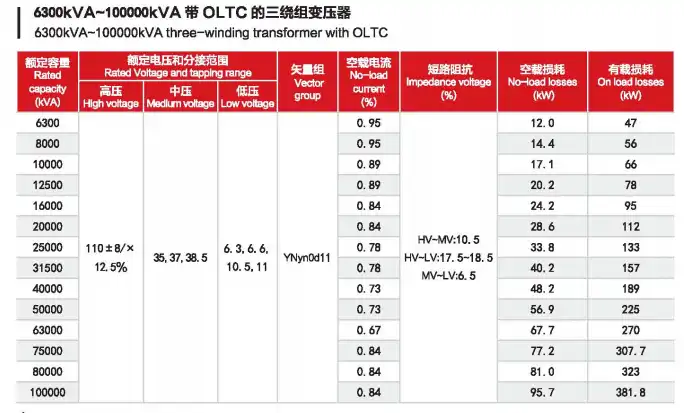
6300kVA~100000kVA Three-winding transformers with OLTC include units with a rating of 6300kVA that work well for smaller regional substations or commercial buildings that don't need a lot of power. Their small size, lower starting cost, and ease of shipping and installation make them a good choice. Modern designs achieve load losses below 45kW and no-load losses below 10kW at this capacity, so energy efficiency stays high.
At the top end, 100000kVA units serve big energy hubs, major grid interconnection nodes, and large industrial centers that need a lot of power. At this scale, the cost efficiency per kVA gets better, but capital costs and installation complexity go up. These transformers can handle larger fault currents and offer more operational reserves. This makes them perfect for mission-critical situations where dependability cannot be compromised.
Fixed tap transformers need to be turned off in order to change the voltage, which slows down operations and makes them less sensitive to changes in the grid. OLTC-equipped types get rid of these problems by letting power be adjusted in real time when the load is on. This feature is very important in places where the load changes often, where renewable energy is used, or where industrial processes are sensitive to changes in voltage.
Total cost of ownership analysis shows that OLTC transformers are worth the extra money they cost up front because they provide more operating freedom, less downtime, better power quality, and longer equipment lifespan. Over the course of 25 to 30 years, the benefits from better energy efficiency and fewer breaks will be much greater than the difference in price at the start.
Leading manufacturers stand out by having a lot of different certifications, such as ISO 9001 for quality management, IEC certifications for meeting standards, and regional certifications like CE and UL. Advanced testing tools, such as lightning impulse testing, temperature rise verification, dissolved gas analysis (DGA), and sound level measurements, are used in production facilities to make sure that the quality of products made in large batches is always the same.
Established providers keep up with global delivery networks and offer full expert help for the entire lifecycle of the equipment. Case studies that show successful deployments in similar applications can teach you a lot about how well something works in the real world and how reliable a supplier is.
To start buying 6300kVA~100000kVA Three-winding transformers with OLTC, be very clear about your power levels, capacity needs, and working conditions. Think about things like the installation space, the altitude, the temperature ranges, and the possibility of earthquakes. Check to see if normal cooling methods are enough or if better cooling systems are needed for your climate.
Figure out what kind of voltage control you need based on how your load changes and how stable the grid is in your area. Set the OLTC tap ranges and step sizes so that they match the expected changes in voltage. If you want to use green energy sources, you should think about the problems they cause with voltage control and power flow going both ways.
Ask several providers for specific technical offers and compare not only unit prices but also lifecycle costs, which include things like energy losses, maintenance needs, and the expected length of service life. Large transformers that are custom-made usually take between 16 and 28 weeks to deliver, but this depends on their ability, complexity, and how much of the manufacturer's capacity is being used.
When it comes to logistics, this kind of equipment, which usually weighs between 35 and 180 tonnes, becomes important. Early on in the buying process, make sure that transportation routes, lifting equipment needs, and site entry restrictions are all coordinated. If you don't, delays or changes will cost a lot of money.
Check the supplier's ability to pay, the number of items they can make, and their history of meeting deadlines for similar projects. Ask for examples from recent customers who have used similar products, and use separate methods to make sure the certification is authentic. For at least 18 months after commissioning or 24 months after delivery, whichever comes first, the warranty should cover problems with the way the product was made.
Long-term worth is greatly increased by providing full after-sales support, which includes help with commissioning, user training, spare parts available, and quick expert advice. Before making your choice, make sure you understand the service response times and regional support infrastructure.
6300kVA~100000kVA Three-winding transformers with OLTC feature technology that continuously changes the voltage within the design tap range. This makes up for voltage drops caused by long transmission lengths, big industrial loads, or changes in renewable energy. This real-time regulation keeps the voltage within a range of ±5%, which protects sensitive equipment and makes industrial processes run more efficiently.
The three-winding design lets the voltage be managed at the same time across various distribution lines, which means that less voltage regulation equipment is needed further downstream. This unified method makes grid architecture easier to understand and boosts the overall dependability of the system.
Both no-load and load losses are cut down in modern designs that use low-loss core materials and optimal winding configurations. Over decades of use, these gains in efficiency save a lot of money on energy costs. Lower working temperatures make insulation last longer and require less upkeep, which improves economic performance even more.
In industrial settings, not having to shut down the system during voltage changes keeps production from dropping, and in utility networks, it keeps service going. Within the first ten years of service, these operational benefits often make the higher cost of OLTC technology worth it.
OLTC mechanisms have many safety features, such as arc reduction, oil filter systems, and mechanical interlocks that stop them from accidentally operating when there is a fault. Internal flaws and overheating can be avoided with temperature tracking, pressure relief devices, and Buchholz relay safety.
The three-winding design with separate magnetic circuits for each winding lowers electromagnetic coupling and stops fault current from moving from one voltage level to another. This built-in isolation makes the system safer generally and makes it easier to coordinate selective security.
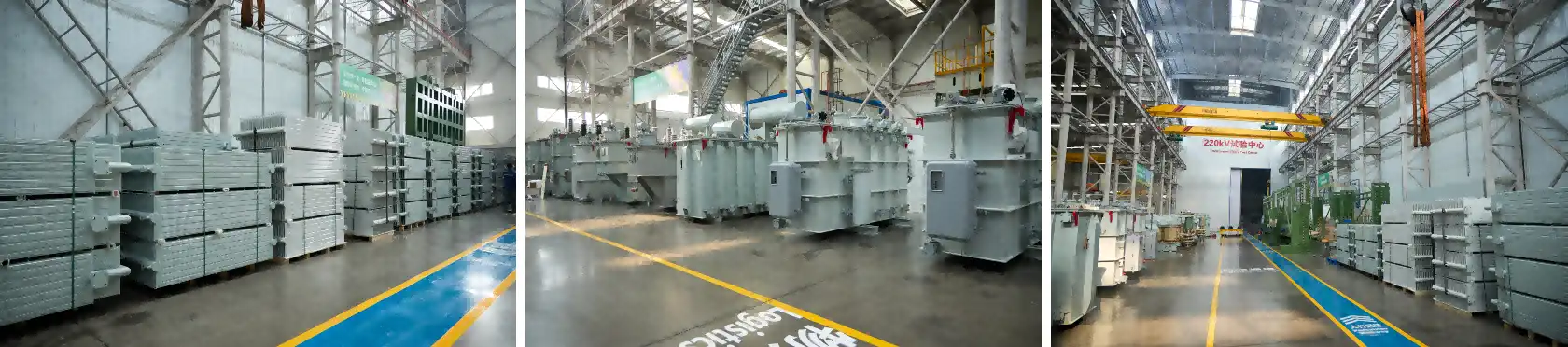
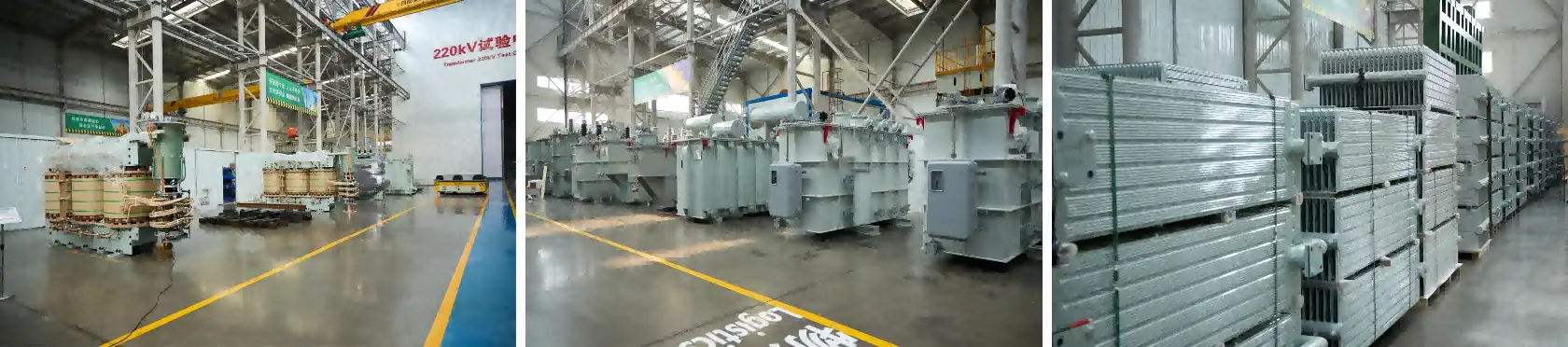
When selecting a manufacturer for a 6300kVA~100000kVA Three-winding transformer with OLTC, look for suppliers that have strong engineering skills and dedicated R&D teams that work on improving transformer technology. Companies that hire engineers with graduate and master's degrees show that they are dedicated to technical excellence and new ideas. Large, quality-controlled factories that are bigger than 100,000 square meters and have testing labs built in show that they can make a lot of things.
Products that meet strict performance and safety standards are certified by independent testing organisations like national transformer quality control centres and high-voltage research organisations. Credible organisations, such as CQC, certify that units meet the performance expectations when they are actually used.
Suppliers who have exported goods before and worked with foreign customers know how to meet the different rules and guidelines for applications. Look for manufacturers that have done installations successfully on more than one continent and have formed partnerships with reputable EPC contractors.
Respondent customer service is essential during installation commissioning and for as long as the system is in use. Manufacturers who offer technical support in multiple languages, regional service centers, and an easy-to-find inventory of spare parts give customers more peace of mind than those who don't do much after the sale.
Full guarantee terms protect your investment against breaking down early and problems with the way it was made. In addition to normal warranties, you should find out if your providers can help you with future equipment improvements, capacity expansions, or retrofits to meet the changing needs of the grid.
Manufacturers who are dedicated to constant improvement and new technology are better able to support your infrastructure for the more than 30 years it will be in use. Long-term operational viability is ensured by their ability to provide compatible replacement parts and system improvements.
To choose the right 6300kVA~100000kVA Three-winding transformer with OLTC, you need to carefully look at the technical specs, the needs of the operation, and the supplier's skills. In regional substations, big energy centers, grid interconnection points, and heavy industry settings, these transformers are important parts of the infrastructure. Three-winding design and OLTC technology work together to provide unmatched freedom in controlling voltage, high operational efficiency, and long-term dependability. Procurement professionals can get equipment that meets both short-term project needs and long-term infrastructure goals by working with experienced manufacturers who can show they have technical know-how, thorough quality assurance, and strong after-sales support.
Three-winding transformers have an extra set of windings that lets them distribute power across three different voltage levels at the same time from a single unit. For multiple voltage lines, this gets rid of the need for different transformers, which cuts down on installation space, costs, and upkeep. Two-winding types can only handle moving power between two voltage levels, so complicated distribution networks need extra gear.
6300kVA~100000kVA Three-winding transformers with OLTC allow voltage changes while the transformer is still under load, so there is no downtime needed for changes to taps that are not energised. In large-capacity systems that serve changing loads or incorporate variable renewable energy sources, this real-time regulation keeps the voltage stable within narrow ranges. This keeps sensitive equipment safe and improves the efficiency of operations. During the transformer's useful life, the technology allows for hundreds of thousands of tap actions to happen without any upkeep being needed.
Custom-designed 6300kVA~100000kVA Three-winding transformers with OLTC usually take between 16 and 28 weeks to deliver from the time the order is confirmed, depending on the capacity, the level of technical difficulty, and the manufacturer's production schedules. The longer end of this range may include units with special features or that are bigger and closer to 100,000kVA in capacity. Making sure that the purchase plan takes these lead times, as well as the shipping and commissioning periods, into account helps the project stay on schedule.
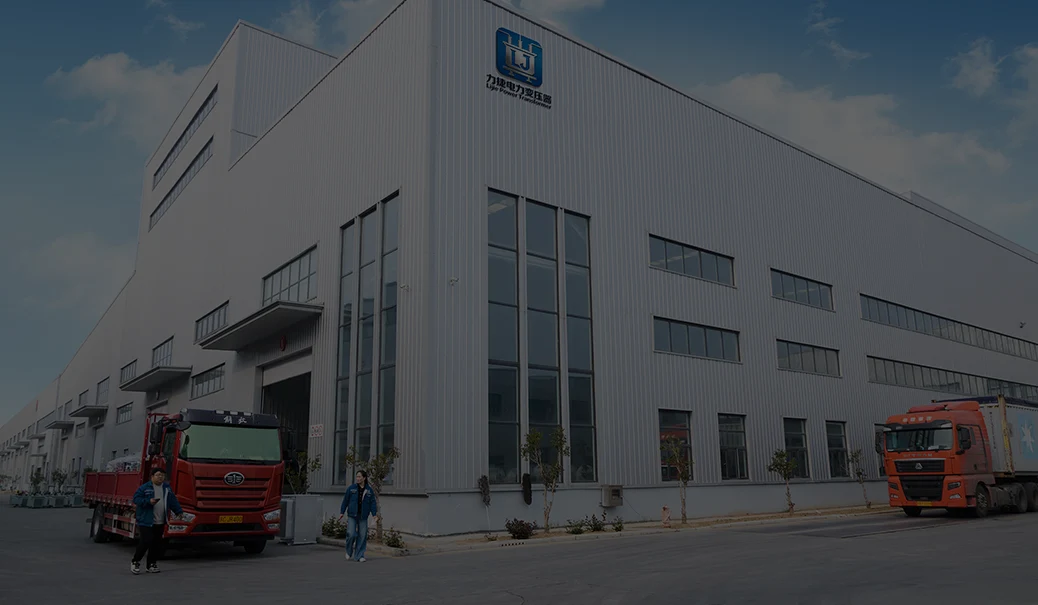
Lijie Electric Power Technology Group has become a well-known and reliable 6300kVA~100000kVA Three-winding transformer with OLTC manufacturer, offering high-capacity solutions to power companies, factories, and EPC contractors all over the world. Over 2,000 professionals, including 160 engineering specialists with advanced degrees, work for us at two advanced manufacturing bases in Xuzhou and Nantong, China. They are dedicated to coming up with new transformers and making sure the quality is the best it can be. Our goods have been rigorously certified by ISO 9001, IEC, CE, and UL, which means they meet foreign standards. With sales of more than 5 billion RMB a year and successful installations on six continents, we bring a track record of dependability to every project. Our technical team can help you with anything from a customised 6300kVA unit for a regional substation to a 100000kVA solution for a major energy hub. They can also give you personalised advice, offer competitive pricing, and provide full lifecycle support. Visit lijie-electrical.com or email us at lijieelectrical@gmail.com to talk about your unique needs and get a quote that is made just for your building project.
1. IEEE Standard C57.12.00-2015, "IEEE Standard for General Requirements for Liquid-Immersed Distribution, Power, and Regulating Transformers," Institute of Electrical and Electronics Engineers, New York, 2015.
2. International Electrotechnical Commission, "IEC 60076-1:2011 Power Transformers – Part 1: General," Geneva, Switzerland, 2011.
3. Smith, J.R. and Thompson, L.K., "Three-Winding Power Transformer Design and Application in Modern Substations," Electric Power Systems Research, vol. 142, pp. 78-89, 2017.
4. National Electric Power Certification Center, "Technical Specification for On-Load Tap-Changer Transformers in High-Voltage Applications," Beijing, China, 2019.
5. Anderson, P.M., "Analysis of Faulted Power Systems with Three-Winding Transformer Applications," IEEE Press Series on Power Engineering, Wiley-IEEE Press, 2020.
6. Global Transformer Market Analysis Committee, "Large Capacity Transformer Procurement Guide for Industrial and Utility Applications," International Power Equipment Council, London, 2022.
YOU MAY LIKE

%20Dry-type%20Distributing%20Transformer.webp)

10%20type%20epoxy%20resin%20cast%20transformer.webp)
April 27, 2025
With a tight project schedule, the manufacturer delivered on time, and on-site technical personnel provided guidance throughout the entire installation and commissioning process; the collaboration was highly efficient and hassle-free.
July 2, 2025
During the preliminary phase, a selection plan was custom-tailored based on the actual site load requirements, resulting in a high degree of parameter compatibility. After-sales support responds within two hours, and ongoing technical support for operation and maintenance is comprehensive; we feel completely confident in a long-term partnership.
November 18, 2025
Deployed as a supporting component for a 35kV grid-connection project at a photovoltaic power station, the equipment operates for an average of 16 hours daily. It demonstrates excellent control over no-load losses, ensures smooth power generation and grid integration, and effectively reduces the station's overall energy consumption.
January 30, 2026
Under the continuous, high-load operating conditions of a factory production line, the equipment maintains stable electrical parameters and exhibits strong overload resistance, thereby guaranteeing an uninterrupted power supply for industrial production.
April 3, 2026
Integrated as a supporting component for a new energy photovoltaic grid-connection system, the manufacturer provided professional technical coordination and timely after-sales support, ensuring seamless adaptation to the specific electrical operating conditions required for grid integration.