April 27, 2025
With a tight project schedule, the manufacturer delivered on time, and on-site technical personnel provided guidance throughout the entire installation and commissioning process; the collaboration was highly efficient and hassle-free.
Jul 22, 2026
Maintaining stable voltage in large power distribution systems is always hard, especially when the load changes. A high-performance solution designed for 110kV and 220kV substations with large load changes and voltage instability is a 6300kVA~120000kVA Three-winding transformer with NVTC (On-Load Tap Changing). These oil-immersed power transformers have three separate windings—high voltage, medium voltage, and low voltage—that are all connected to a common core. The NVTC mechanism lets the voltage be changed without turning off the system, so it can keep delivering power even in harsh industrial settings.
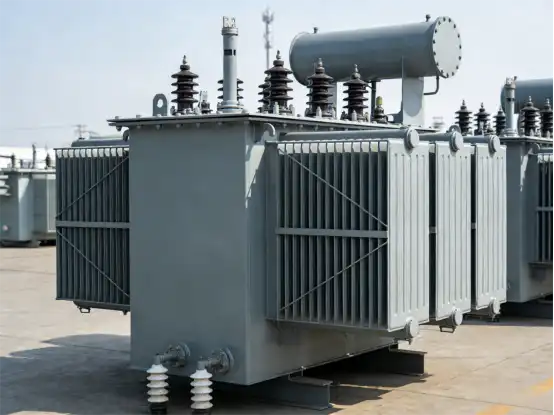
6300kVA~120000kVA Three-winding transformers with NVTC can solve complicated problems with power distribution that a single dual-winding unit can't. The three-winding design connects multiple voltage levels at the same time, which reduces the size of the substation and the money needed to build it. This design works especially well for green energy installations, heavy industry sites, and regional utility substations that need to make sure that different voltage levels work together.
The core of the transformer is made of high-grade cold-rolled grain-oriented silicon steel, which reduces no-load losses and improves the efficiency of the magnetic flux. No-load loss is usually 20–30% lower with these cores than with standard silicon steel grades. High-purity copper windings that don't contain any oxygen provide better conductivity and heat performance, which is important for long-term use with changing loads. With this mix of materials, the rated capacity can reach 120 MVA, and the temperature stays stable across voltage classes up to 220kV.
The NVTC system lets you change the taps even when the power is fully on. This fixes voltage changes that happen during the day and night, seasonal changes in demand, or unstable grid conditions. Typical tap adjustment ranges are ±2.5% or ±5%, which lets you precisely control the voltage without having to stop service. On-load tap changing keeps the power source going all the time, unlike de-energised tap changers that need the system to be shut down. This is important for processes that can't handle voltage changes, like making semiconductors, working with precision metals, and running a data center. The mechanism uses vacuum-arc switching technology, which makes it last longer than 300,000 processes and keep the partial discharge levels low, usually less than 10pC at 1.5Um.
Along with international standards like IEC 60076 and IEEE C57.12.00, these transformers meet the energy efficiency requirements of GB 1094 and GB 20052. Frequency Response Analysis during production proved that the high short-circuit resistance can handle fault situations without deforming the windings. Testing the dielectric strength ensures that the insulation is intact across all windings. This supports service lives of more than 30 years in tough industrial settings with high temperatures and earthquakes.
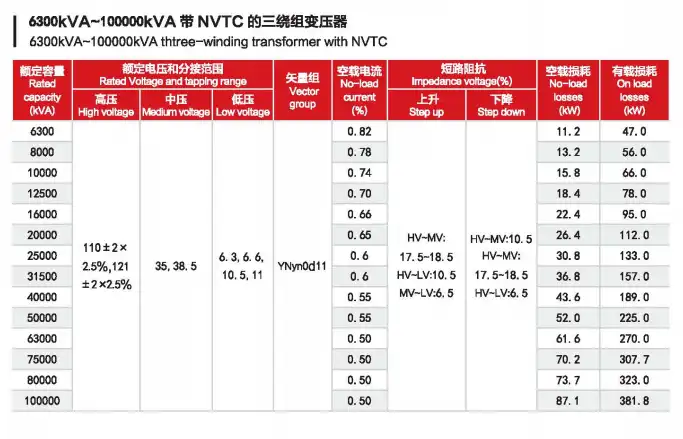
More and more, industrial operations need power systems that are flexible enough to adapt to changing load profiles without losing their reliability or efficiency. 6300kVA~120000kVA Three-winding transformer with NVTC that can change the load tap offers real practical benefits in a number of performance areas.
Modern core materials and winding designs keep energy losses to a minimum during transformation processes. Even when the facility is only partially loaded, which happens a lot in places where production schedules change, no-load losses stay low. When you change the taps while the load is on, you get rid of voltage-related problems. Equipment that isn't working in the right voltage levels wastes energy and wears out faster. Maintaining voltage within ±2% of standard values through automatic tap adjustment cuts yearly energy costs by 3-7% in most industrial settings, which adds up to big savings over many years of use.
Power from solar farms and wind farms is produced at voltages that change depending on the weather. Collection substation units use three-winding transformers to connect circuits for green energy, local distribution networks, and utility transmission lines. The NVTC mechanism evens out the voltage changes that come with renewable energy sources. This keeps power quality problems from happening that would set off protective relays or hurt sensitive grid equipment. A 120,000kVA unit put in at a 150MW wind farm in the Midwest kept the voltage stable even when the output changed from 20% to 100% of its capacity. This got rid of the 47 grid shutdown events that were happening every year with the old equipment.
Metallurgical plants, chemical processing plants, and mining operations put a lot of stress on the electrical system by using large amounts of inductive loads and rapid bursts of current. Three-winding designs keep sensitive secondary systems away from main process loads. This stops harmonic distortion from spreading while powering several types of voltage-dependent equipment at the same time. A steel mill in the Great Lakes area got rid of two transformers with two windings and replaced them with a single 80,000kVA transformer with three windings. This cut the size of the substation by 40% and raised the power factor from 0.82 to 0.94 by improving the way the windings were arranged and controlling the taps.
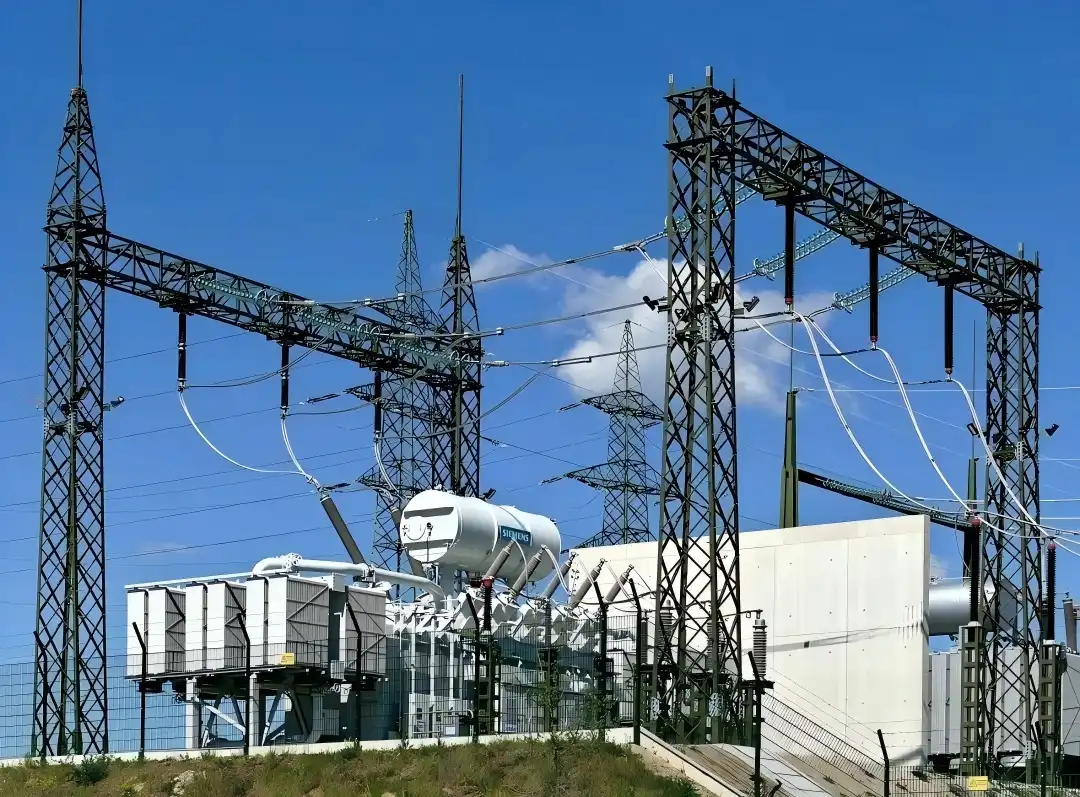
When making a purchase decision, you have to weigh operational needs and expected lifecycle costs against different transformer configurations, cooling technologies, and capacity ratings. When engineers and purchasing teams know about technical differences, they can choose a 6300kVA~120000kVA Three-winding transformer with NVTC that meets both the goals of the current project and the standards for long-term performance.
In simple point-to-point voltage change tasks, dual-winding transformers work very well. Three-winding designs are useful when systems need to connect three voltage levels at the same time or when isolating certain loads is useful for operations. The extra winding makes the initial cost of the equipment about 15–25% higher, but it gets rid of the need for secondary transformation stages and the infrastructure that goes with them. Urban substations that are limited on space benefit the most because a single three-winding unit takes up 60% less space than a similar dual-winding arrangement. This makes security coordination easier and lowers the cost of maintenance.
Mineral oil is used in oil-immersed transformers to both insulate and get rid of heat. Natural circulation cooling (ONAN) doesn't need any extra power, which makes it more reliable in remote locations. Forced-air systems (ONAF) make it easier for units with more than 50,000kVA of cooling power to work in hot conditions. In the 6300–120,000kVA capacity range, oil-based cooling performs better thermally than dry-type options. It keeps the temperatures of the winding hot spots within safe limits during prolonged overload situations. The sealed-tank design keeps the inside parts from getting contaminated by the environment, which increases their useful lives. This is especially helpful in dusty or corrosive industrial settings.
The right capacity sizing strikes a balance between the original investment and the freedom and efficiency of operations. Under-sizing forces constant operation close to rated capacity, which speeds up the ageing of insulation and raises the risk of failure. Oversizing makes the system less efficient under normal load conditions and raises the cost of capital. The best capacity choice is based on a detailed load study that takes into account future growth, seasonal changes, and situations with high demand. A 35,000kVA unit could handle a current 24MW load with 40% headroom to support planned facility expansion. A 50,000kVA transformer, on the other hand, gives you more room for unexpected load growth or N-1 operation after a parallel unit goes down.
Buying a 6300kVA~120000kVA Three-winding transformer with NVTC requires a lot of money and requires careful source review and specification alignment. To do a good job of procurement, you need to think about technical requirements, quality assurance, delivery times, and lifecycle support.
Suppliers with a good reputation keep full quality management systems that are approved to ISO 9001:2015 standards. These systems show consistent production methods and rules for tracking products. UL, CE, and IEC compliance approvals for particular products show that they meet regional safety and performance standards that are needed for utility and industrial installations. Manufacturing facilities should have regular, type, and special testing tools that have been approved by reputable third-party labs. For example, National Transformer Quality Supervision and Inspection Center accreditation or something similar makes sure that claims about electrical, mechanical, and thermal performance are checked by a third party.
It's rare for standard catalogue items to perfectly match the conditions or needs of a specific site. Manufacturers that offer strong technical customisation services change the core designs, coil configurations, impedance values, and other systems to fit the needs of each project. This includes being able to work with voltage ratios that aren't standard, having better seismic ratings for installations in Zones 3–4, or adding special safety features. Thorough technical discussions during the development of specifications keep expensive changes from having to be made after the equipment has been delivered and make sure that it works with the current substation infrastructure and protection plans.
Lead times for making transformers are very long. They are usually between 16 and 24 weeks for normal specifications and 30 weeks or more for units that are made to exact specs. For multi-unit projects that need to be installed in stages, suppliers with a lot of production capacity across multiple factories lower the risk of delivery. Verification of manufacturing throughput—annual production exceeding 10,000MVA combined capacity shows scale sufficient for large utility or industrial framework agreements—lowers supply chain vulnerability, which is important for staying on schedule with the project.
A full warranty that lasts for 24 to 36 months after the product is put into use protects against manufacturing flaws and early failures. Responding technical support infrastructure, such as field service capabilities, spare parts availability, and diagnostic expertise, is just as important. When suppliers keep regional service centers staffed with factory-trained workers, they can quickly fix operating problems and keep downtime costs as low as possible, which are often higher than the cost of replacing equipment during busy production times.
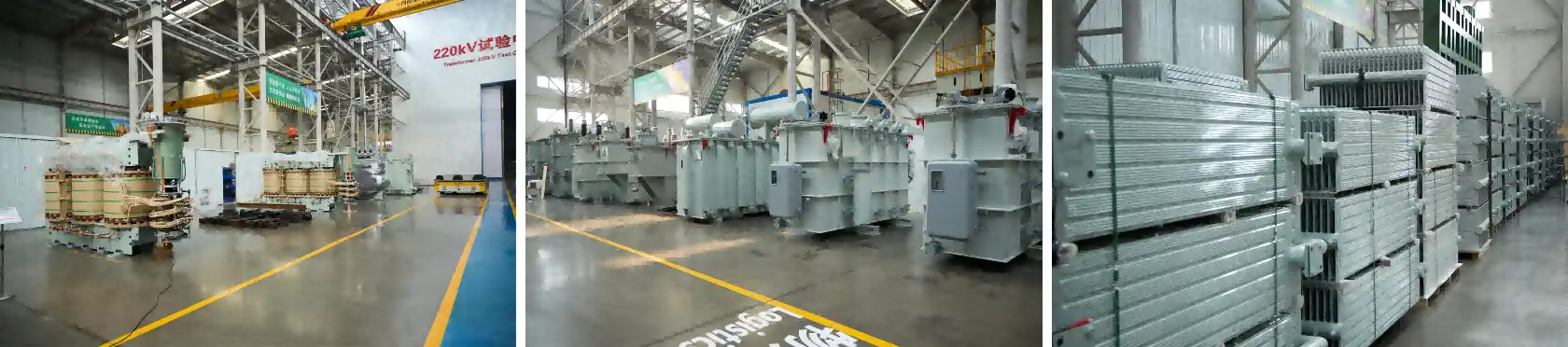
Proactive repair extends the life of 6300kVA~120000kVA Three-winding transformer with NVTC while keeping economy and reliability levels high. Setting up routine maintenance and inspection plans can cut down on unplanned downtime and increase the worth of an object over many decades of service.
Visual inspections are done every three months to look for signs of possible problems inside the machine. For example, oil leaks, strange discolouration, strange noise signatures, or strange temperature patterns need to be looked into in more detail. An annual dissolved gas analysis (DGA) of insulating oil can find small problems before they become big ones. For example, certain gas ratios can show overheating, partial discharge, or cellulose degradation. Regular oil samples to check the moisture content stop insulation from breaking down; keeping moisture levels below 20ppm keeps dielectric strength, which is needed for safe high-voltage operation.
Because they are mechanically complicated and put a lot of stress on the arc switch, on-load tap changes need extra care. Testing every six months under no-load conditions makes sure that the mechanical action is smooth and that the contacts are solid. Monitoring the oil condition of a tap changer finds carbon buildup on the switching arcs that needs to be filtered or replaced at intervals based on how often it is used. Units that change taps 10 times a day or more need oil maintenance more often than units that only change the oil when the seasons change. Contact resistance readings show damage that needs to be fixed before it affects the dependability of operations.
Dust and other particles stick to radiator surfaces, making them less effective at removing heat. Cleaning once a year keeps the cooling capacity at the design level and keeps working temperatures from getting too high, which speeds up the ageing of insulation. On ONAF systems, cooling fan motors need to be oiled and vibration analysis must be done to confirm the condition of the bearings. By keeping an eye on the winding temperature signs and oil temperature gauges, you can get a sense of the normal range of temperatures. Any changes from this range can mean that problems are starting to show up, like clogged cooling paths, failed pumps, or higher core losses that need to be looked into more thoroughly.
Following OSHA's rules on electricity safety and the EPA's rules on the environment protects people and the environment while making sure operations are legal. Safety systems are ready when the protective relay settings, grounding system integrity, and pressure relief device functionality are tested on a regular basis. Documenting all maintenance activities, test results, and oil analysis data meets regulation requirements and provides past records that are useful for figuring out the state and estimating how much life is left, which helps with planning for replacements.
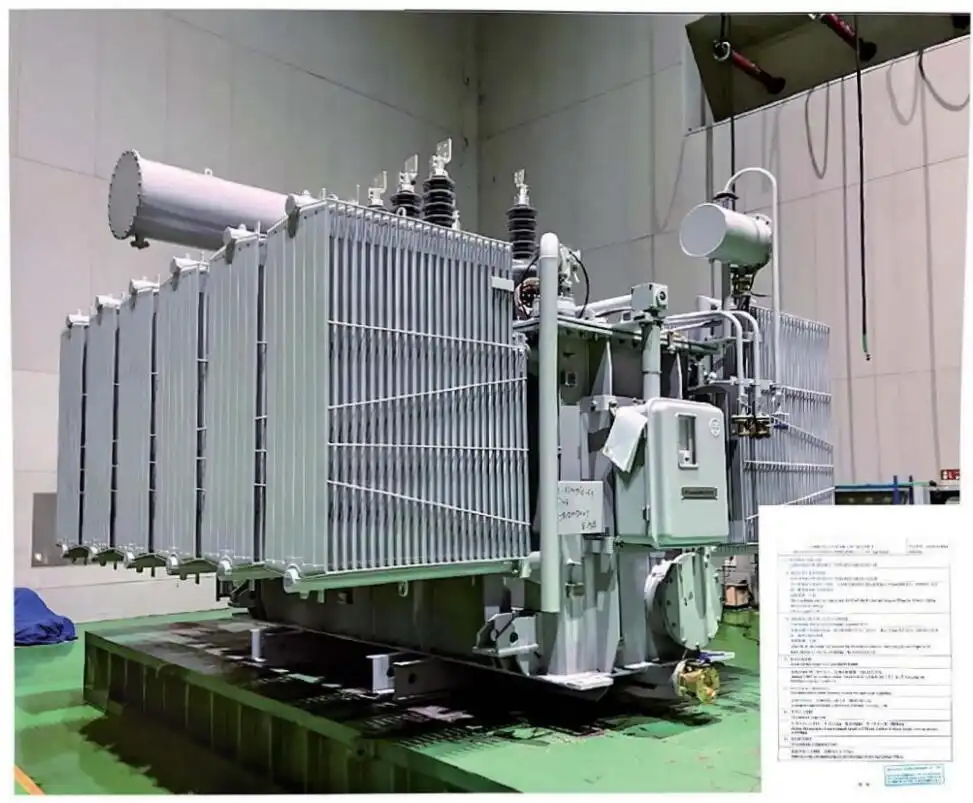
High-capacity 6300kVA~120000kVA Three-winding transformer with NVTC that can change taps while the load is on are an important part of current industrial power systems that deal with changing loads and unstable voltage. We can see that using high-tech core materials, advanced winding designs, and dynamic voltage control makes utility substations, renewable energy installations, and heavy industry facilities more efficient, flexible, and reliable. For deployment to go smoothly, technical specs, manufacturer abilities, and lifecycle support infrastructure must all be carefully looked over to make sure they meet operational needs and long-term performance goals.
On-load tap changing lets the voltage be changed while the machine is running at full speed, without stopping service. This is very important for processes that can't handle power outages. This feature keeps the voltage at the right level even when the grid or load changes. This makes equipment more efficient, extends its useful life, and stops production interruptions that cost a lot of money in settings where production is constant.
According to standard specs, it takes 16 to 24 weeks from the time an order is confirmed until it is delivered. This time includes getting the materials, making the product, and testing it thoroughly in the plant. Customised units with special power ratios, better environmental ratings, or extra-special support systems may make delivery take up to 30 weeks longer. Suppliers with a lot of production capacity and various factories are better able to meet the needs of urgent projects with shorter deadlines.
If you pay close attention to impedance matching, protection coordination, and physical interface requirements, you can make sure that properly specified units work with existing power systems without any problems. Experienced makers offer technical help during the creation of specifications, making sure that the new equipment will work with existing switchgear, safety relays, and control systems. This keeps expensive changes from having to be made during the installation and testing phases.
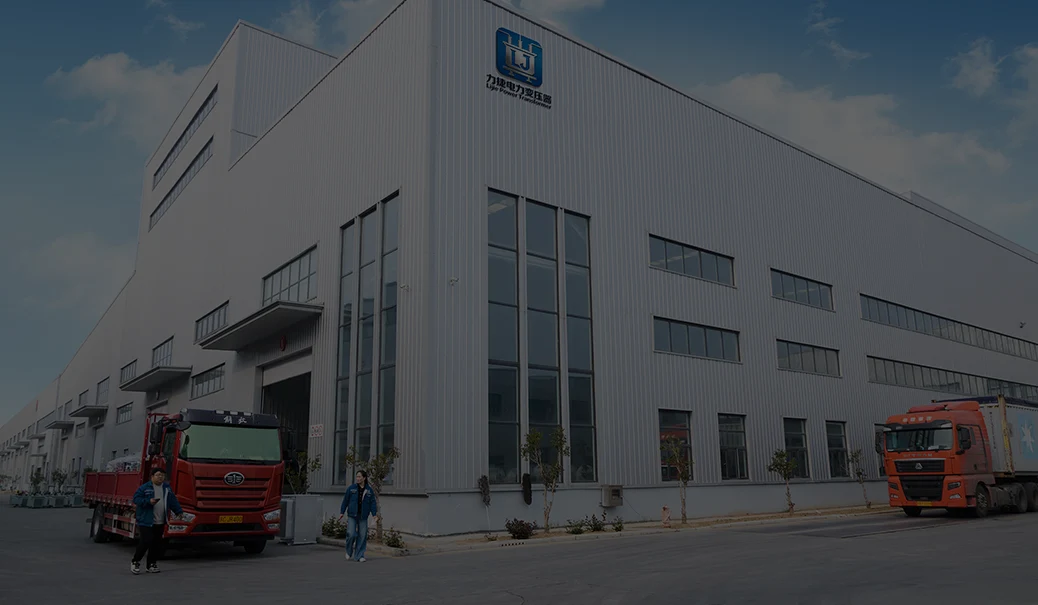
Lijie Electric Power Technology Group has been making high-quality transformers for more than 20 years and can help you with your important power infrastructure projects. Our 6300kVA~120000kVA Three-winding transformer with NVTC represents the pinnacle of this expertise, offering simultaneous voltage regulation across three distinct windings with no-load tap-changing capability for industrial complexes, renewable integration, and utility substations. We provide trustworthy three-winding transformers with NVTC for tough industrial uses from our 500,000-square-meter state-of-the-art facilities that have been approved by national officials for advanced testing. Our production methods are ISO 9001, CE, and UL approved, so the quality is the same for all units ranging from 6300kVA to 120,000kVA. They also meet GB 1094, GB 20052, and IEC 60076 standards. Because we are a reliable three-winding transformer supplier to utility companies, renewable energy developers, and industrial manufacturers all over North America, our engineering team can make any changes you need to fit your voltage needs, operating conditions, and other factors. Email our technical experts at lijieelectrical@gmail.com to talk about your project needs and get detailed specifications backed by our promise of quality, dependability, and quick service throughout the lifecycle of the equipment.
1. Bean, R.L., Chackan, N., Moore, H.R. and Wentz, E.C. (1988). Transformers for the Electric Power Industry. McGraw-Hill Professional Engineering.
2. Harlow, J.H. (2012). Electric Power Transformer Engineering (3rd Edition). CRC Press, Boca Raton.
3. IEEE Standards Association. (2018). IEEE C57.12.00-2015: Standard for Liquid-Immersed Distribution, Power, and Regulating Transformers. Institute of Electrical and Electronics Engineers.
4. Kulkarni, S.V. and Khaparde, S.A. (2017). Transformer Engineering: Design, Technology, and Diagnostics (2nd Edition). CRC Press.
5. National Electrical Manufacturers Association. (2016). NEMA TP 2: Standard Efficiency for Liquid-Filled Distribution Transformers. NEMA, Rosslyn.
6. Wang, M. (2013). Power Transformer Design Practices. CRC Press, Boca Raton.
YOU MAY LIKE

11%20type%2035KV%20dry-immersed%20transformer_1778136495348.webp)


April 27, 2025
With a tight project schedule, the manufacturer delivered on time, and on-site technical personnel provided guidance throughout the entire installation and commissioning process; the collaboration was highly efficient and hassle-free.
July 2, 2025
During the preliminary phase, a selection plan was custom-tailored based on the actual site load requirements, resulting in a high degree of parameter compatibility. After-sales support responds within two hours, and ongoing technical support for operation and maintenance is comprehensive; we feel completely confident in a long-term partnership.
November 18, 2025
Deployed as a supporting component for a 35kV grid-connection project at a photovoltaic power station, the equipment operates for an average of 16 hours daily. It demonstrates excellent control over no-load losses, ensures smooth power generation and grid integration, and effectively reduces the station's overall energy consumption.
January 30, 2026
Under the continuous, high-load operating conditions of a factory production line, the equipment maintains stable electrical parameters and exhibits strong overload resistance, thereby guaranteeing an uninterrupted power supply for industrial production.
April 3, 2026
Integrated as a supporting component for a new energy photovoltaic grid-connection system, the manufacturer provided professional technical coordination and timely after-sales support, ensuring seamless adaptation to the specific electrical operating conditions required for grid integration.