April 27, 2025
With a tight project schedule, the manufacturer delivered on time, and on-site technical personnel provided guidance throughout the entire installation and commissioning process; the collaboration was highly efficient and hassle-free.
Jul 15, 2026
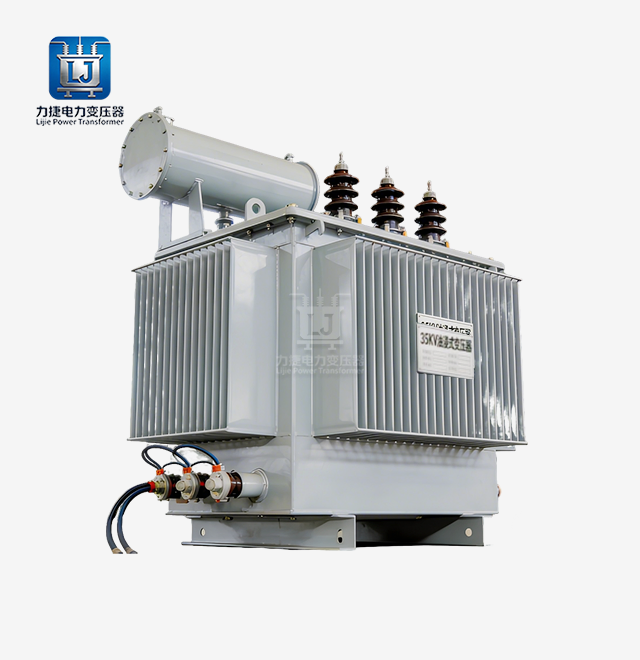
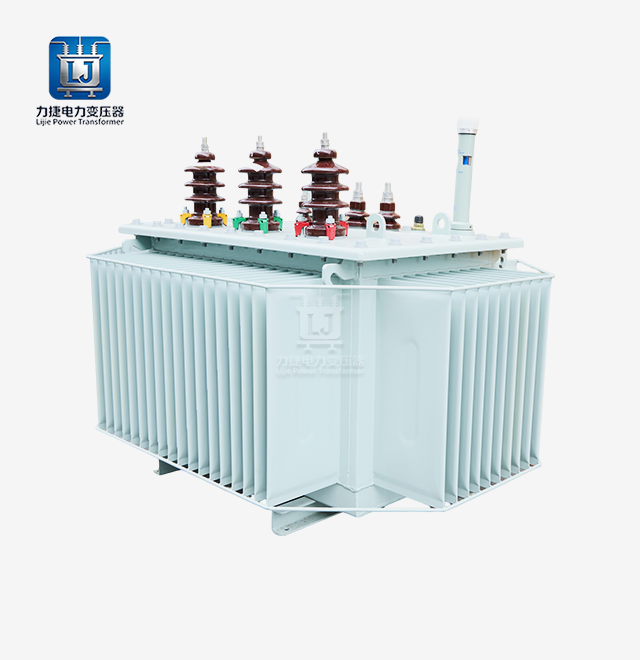
The S13 type single-phase distribution transformer has been used for many years and has been shown to be effective at distributing power. It also has measurable energy gains that have a direct effect on lifecycle costs. This transformer has a hermetically sealed oil-immersed design and a cold-rolled grain-oriented silicon steel core. Compared to older S11 types, it has 25–30% less no-load losses and keeps the voltage stable under a wide range of load situations. The S13 type single-phase distribution transformer offers a good mix of performance, compliance, and long-term reliability, backed by IEC and UL approvals. It's perfect for procurement managers who have to deal with energy-saving rules and engineers who are building durable grid infrastructure.
The United States' power distribution system is under two types of pressure: old equipment that is getting close to the end of its useful life, and strict rules about energy efficiency that make running costs look closely at. When regional utilities replace transformers from the 1970s and renewable energy companies add distributed generation, they both have to figure out how to minimise losses without lowering dependability or going over budget.
This is directly dealt with by the S13 type single-phase distribution transformer. It was designed to work continuously in harsh conditions, such as coastal humidity and high altitude placements. It is an important part of bringing electricity to rural areas, mounting it on poles in cities, and using it in industrial backup power systems. This model is unique not only because of its technical specs but also because it meets real buying goals, such as predictable performance over 30-year service lives, compliance with North American standards, and a clear understanding of the total cost of ownership.
Since 2018, Lijie Electric has made more than 12,000 S13 type single-phase distribution transformer units for projects ranging from solar farms in Arizona to upgrades to the utility grid in New England. This summary talks about the technical choices that led to the S13 type single-phase distribution transformer's efficiency claims, contrasts it with other types of transformers, and suggests what purchasing teams should check before sending out purchase orders.
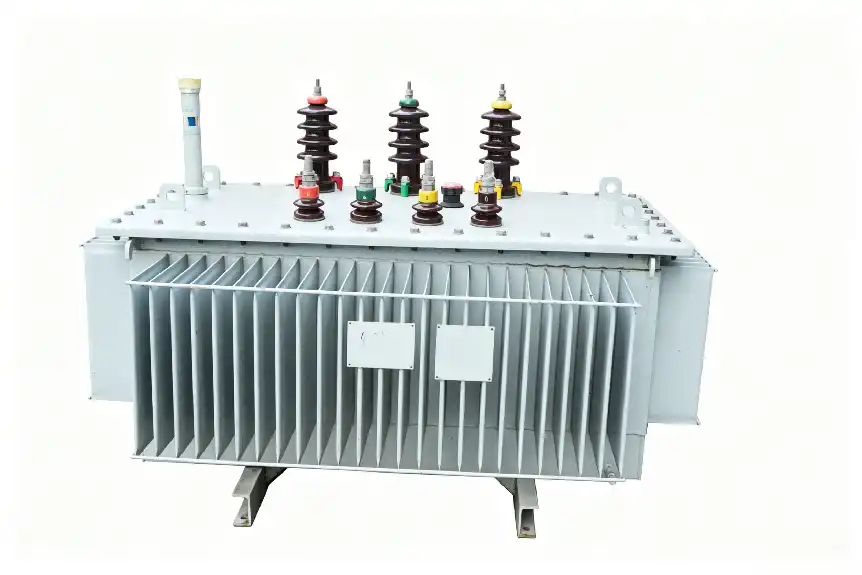
There are two main ways that oil-immersed transformers become more efficient: they reduce magnetic core losses when they're not in use, and they reduce resistive losses when they are. The S13 type single-phase distribution transformer has a wound core structure made of 0.27 mm cold-rolled grain-oriented silicon steel, which is 15–18% more magnetically permeable than regular materials. This tighter grain alignment cuts down on eddy current formation, which lowers no-load losses to levels that meet DOE efficiency tier standards.
Copper wires that don't contain oxygen are grouped in a low-reactance way in the winding design. This shape lowers the impedance voltage to 4–6%, which lowers the amount of heat that is generated during times of high demand. With vacuum oil-filling processes that get rid of internal gaps, the thermal management system keeps the temperature of the winding hotspots below 98°C even when the load is 110% of its stated capacity. This is very important for sites where the ambient temperature is close to 40°C.
Our S13 type single-phase distribution transformer series has output voltages of 0.4kV and input voltages of 6kV and 12kV. Its capacity ranges from 30kVA to 3150kVA. The non-excitation tap switch has adjustment ranges of ±5% and ±2²2.5%, so workers can fix problems with line voltage drop without turning off the unit. Standard setups work with both 50Hz and 60Hz frequencies, so they can be used for foreign projects and microgrids with different power sources.
Insulation systems meet Class A thermal standards, which means they can handle 35kV AC power frequency and 75kV lightning charge, and for an S13 type single-phase distribution transformer, these insulation margins are particularly important because the transformer is often installed in exposed outdoor locations where lightning strikes and switching surges are common. These margins are 40% higher than the normal levels of stress in a distribution system. This gives room for temporary overvoltages that happen a lot in places where lightning strikes or capacitor switching happens. The Dyn11 connection group configuration works with neutral grounding and handles harmonic current better, which is very important for data centers and other places with a lot of electronic loads.
The S13 type single-phase distribution transformer's sealed tank design works best for projects that bring electricity to rural areas. Open-breathing transformers need to be reconditioned and tested for oil every year, but the corrugated fan design keeps moisture and rust out. We have tracked units in Montana and Wyoming that have been working for 8 years or more without any upkeep. Compared to older models, these units have cut the number of utility crew calls by 60%.
The S13 type single-phase distribution transformer's lower noise emissions make it useful for domestic uses in cities. When measured one metre away from the tank, noise levels drop to 45dB, which is 20% less than the national standard. This is important for basement installations in multi-family buildings, where vibrations can cause tenants to complain. Commercial builders in Chicago and Philadelphia have asked for S13 type single-phase distribution transformer units in order to meet noise restrictions in mixed-use projects.
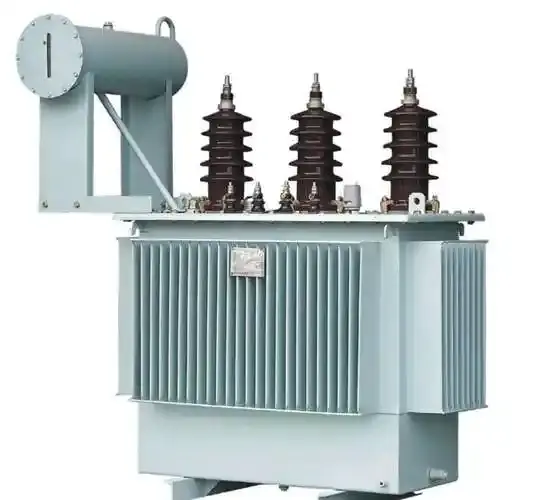
To figure out how much efficiency has been improved, you have to look at both no-load and load losses over normal duty cycles. A 500kVA S11 transformer loses about 650W of power when there is no load, but a similar S13 type single-phase distribution transformer unit loses only 480W, which is a 26% drop. This saves 1,490 kWh over the course of a year with 8760 hours of use. With industrial electricity rates in the Midwest averaging $0.11/kWh, each transformer saves $164 a year just by using less electricity when it's not in use.
Gains are similar for load reduction. The optimised winding geometry of the S13 type single-phase distribution transformer cuts resistive losses by 12–15% when it's loaded at 75%, which is typical of commercial buildings during business hours. Payback times for the extra S13 type single-phase distribution transformer cost are shorter than when you buy reduced S11 goods for places with long peak demand periods, like factories that run two shifts. They only take 3–4 years.
In harsh climates, changes in thermal function become very important. Because the S13 type single-phase distribution transformer can get rid of heat better than the S9 types, the oil temperature rise is kept to 55°C above ambient. This 10-degree difference increases the life of the insulation system by about 40%, which delays the need for major repairs and lowers the risk of a catastrophic failure during heat waves when grid load is highest.
In continuous running settings, the S13 type single-phase distribution transformer is by far the best choice. Hospital emergency power systems, wastewater treatment plants, and telecommunications switching centers all have yearly load factors of 95% or more, which means that the extra 15-20% cost is covered by the guarantee. On the other hand, seasonal recreation areas or temporary construction sites don't benefit much from being more efficient, so it makes more financial sense to refurbish S11 units.
Another clear use case is for setups that can't handle noise. Acoustic performance needs to be met in places like schools, hospitals, and housing projects close to distribution equipment. The S9 and early S11 models can't do this without expensive external shelters. The S13 type single-phase distribution transformer's low-noise design gets rid of those extra costs and makes the permit process easier in places with strict sound level limits.
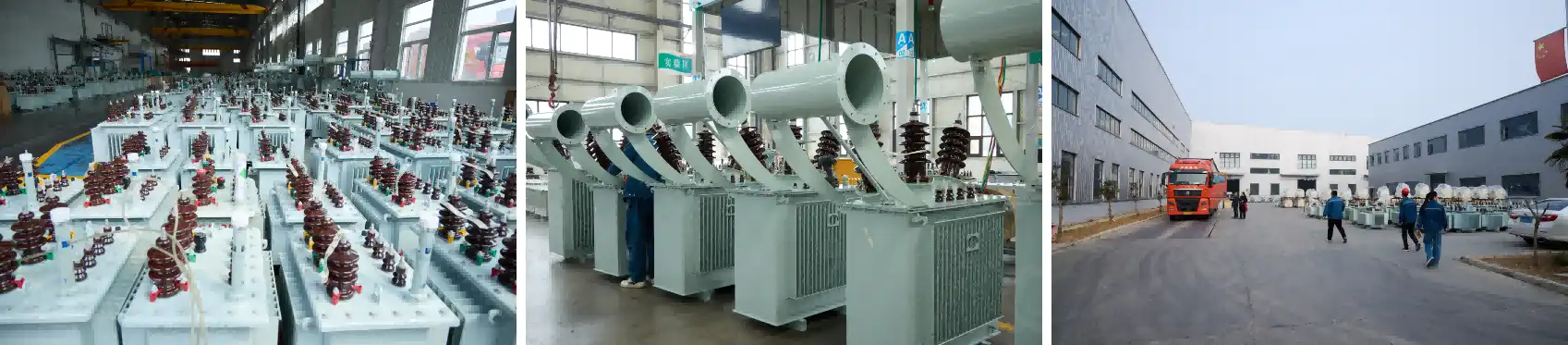
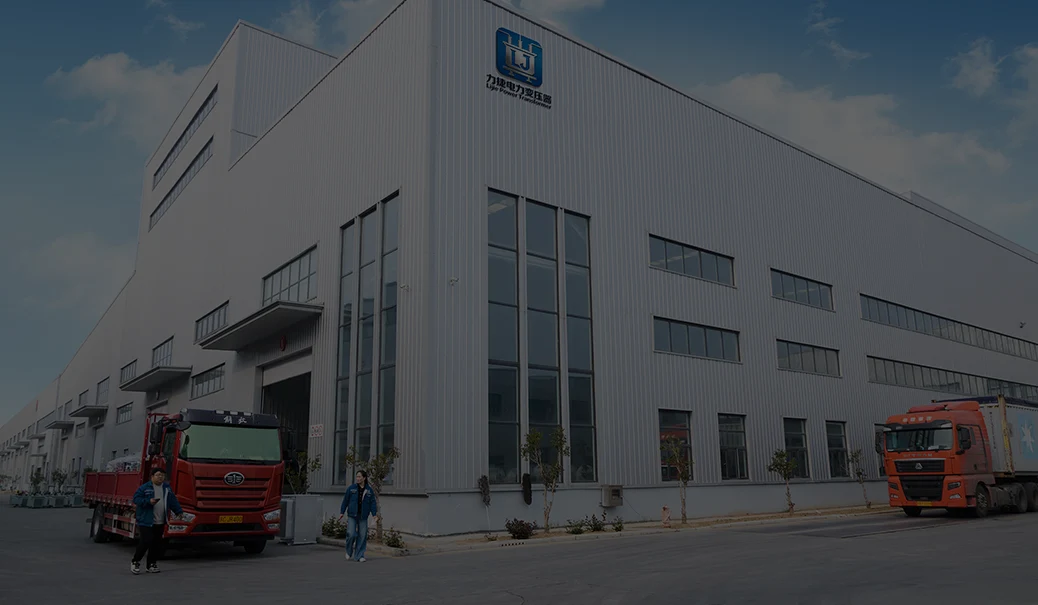
Direct ties with manufacturers give you the most control over your purchases and the most ways to customise them, and for an S13 type single-phase distribution transformer, this means you can specify core material grade, voltage ratings, and connection group configurations directly with the production team, ensuring the transformer meets your exact distribution requirements. Lijie Electric has two 500,000-square-meter factories in Xuzhou and Nantong that are equipped with dedicated S13 type single-phase distribution transformer production lines that can meet orders for 200 units within 8 weeks. This vertical integration makes sure that quality control is always the same, from getting the silicon steel to testing it at high voltage. This is because there are no third-party responsibilities that would bring variation.
Authorised distributor networks offer regional inventory benefits for smaller projects or replacements that need to be done right away. When looking at distributors, make sure they only sell factory-sealed units and not rebranded imports that don't have all the necessary certification paperwork. Ask if the serial number can be linked to the records of the original production process, and make sure that warranty service duties are transferred through the distribution route. Reliable wholesalers have technical support staff that can look over single-line diagrams and make sure that the impedance matches up with current safety coordination methods.
Volume purchasing deals let you save money on costs in ways other than per-unit savings. Standardised specifications, pre-negotiated price increases tied to copper and steel commodity indices, and priority production scheduling during busy construction seasons are all common parts of multi-year framework contracts with utility clients. These arrangements make it easier to manage purchases and keep budgets stable for capital improvement programs that last 5 to 10 years.
Copper windings and quality silicon steel make up 55–60% of the cost of making an S13 type single-phase distribution transformer, so the price shows what it's made of. Standard 500kVA units cost between $8,500 and $11,000 FOB plant. Depending on the level of customisation, extra costs run from 10 to 25 percent. Non-standard voltage ratios, paint systems designed for seaside areas, and seismic strengthening kits all come with extra costs, but they keep the field from having to be changed, which would be very expensive.
Different specifications and order sizes have different lead times. Stock configurations ship in 6 to 8 weeks, but custom-engineered units need 10 to 14 weeks to allow for design verification testing and factory acceptance tests that the customer witnesses. Adding 4 to 6 weeks for international shipping to U.S. ports brings the total time it takes to get something from the purchase order to the job site to 14 to 20 weeks. For projects with tight deadlines, placing orders for transformers early on, during the planning phase, rather than waiting until the building contract is awarded, is a good idea.
As standard, the warranty covers parts and labour for 24 months from the date of commissioning. You can extend the warranty to 60 months if you want to. Make sure that the guarantee terms cover damage caused by shipping, mistakes in installation, and events beyond the customer's control. At Lijie Electric, our service network includes regional support centers in California and Texas. These centers are filled with field experts who can do diagnostics on-site and send emergency spare parts within 48 hours.
Cold-rolled grain-oriented electrical steel is the most important material improvement in the last 20 years for making distribution transformers more efficient. This steel was made by carefully rolling and heating it, and its magnetic domains are lined up within 3–5 degrees of the direction of rolling. This orientation minimises hysteresis losses, which are the energy lost when magnetic domains change direction with each AC cycle. The pieces are cut and stacked to make transformer cores.
Step-lap joints are used in the S13 type single-phase distribution transformer core design at points where the flow changes direction. Step-lap joints stack steel laminations in a staggered design instead of the usual butt joints, which leave gaps for air that can block magnetic paths. This method lowers the amount of localised flux concentration and the losses that come with it by 8–12%. This makes a real difference in the S13 type single-phase distribution transformer's excellent no-load performance measures.
By laser scribing steel surfaces, controlled magnetic domains are created that make eddy currents even weaker. With this surface treatment and insulating coatings between the layers, currents can only flow along very small paths, where resistance losses are very small. The S13 type single-phase distribution transformer can achieve no-load loss densities below 1.0W/kg thanks to these materials and processing innovations working together. This makes it one of the most efficient oil-immersed designs on the market.
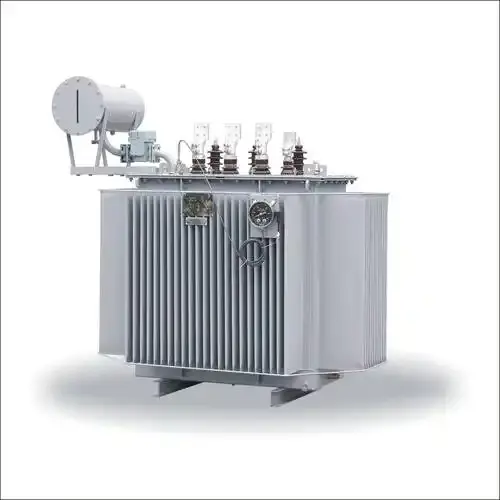
Natural convection currents inside the tank move heat from the windings to the outside areas of the radiators for oil-immersed cooling, and for an S13 type single-phase distribution transformer, this cooling efficiency is enhanced by a corrugated tank design that increases surface area by 35% compared to smooth-wall tanks, allowing natural air circulation to dissipate heat effectively without the need for fans or pumps. The S13 type single-phase distribution transformer's corrugated tank design has 35% more surface area than tanks with smooth walls of the same volume. This bigger touch area with outside air speeds up the rate at which heat is lost without the need for forced-air fans or pumped oil circulation systems, which are harder to maintain and have more ways to break down.
When designing something better, the patterns of oil flow inside it are also taken into account. Computational fluid dynamics modelling found areas in older transformer designs where heat buildup slowed down or stopped while the system was overloaded for a long time. The S13 type single-phase distribution transformer's baffle placement and winding spacer design help oil flow evenly, keeping temperature differences across the height of the winding to less than 10°C. This even heating lowers the stress on the metal from different expansions, which is a main reason why insulation fails in old transformers.
The fully sealed tank doesn't have any breathing holes that could let airborne moisture get into the oil during thermal cycling. Moisture getting into insulation speeds up its breakdown and lowers its electrical strength, which means that expensive oil replacement or recovery is needed. The S13 type single-phase distribution transformer keeps the amount of oxygen and moisture below 10ppm through hermetic sealing, which means that the oil will last longer than 25 years under normal working conditions. This means that standard fluid maintenance will not be included in lifetime cost estimates.
Production capacity has a direct effect on how reliably projects are delivered. Over 2,000 people work at Lijie Electric's two factories. Among them are 160 engineers with advanced degrees in materials science and electrical engineering. This level of technical detail helps with ongoing improvement programs that have lowered the number of manufacturing defects to 0.08%. This number was confirmed by checks done by a third party by the National Transformer Quality Supervision and Inspection Center.
Our quality control protocols use testing routines with multiple steps that are in line with IEC 60076 and IEEE C57.12.00 standards. Routine tests are done on every S13 type single-phase distribution transformer unit, which include checking the turns ratio, measuring the resistance, testing the applied potential, and testing for caused overvoltage at twice the rated voltage. Random samples from every production batch are put through extended dielectric testing and partial discharge measurements to find any problems with the way they were made before they are shipped. Because of this strict approach, our installed base has field failure rates below 0.12% per year, which is much lower than the industry average of 0.5-0.8%.
When parts are delivered as raw materials and are put together at the end, traceability systems keep track of them. Silicon steel coils come with mill approvals that list their chemical and magnetic qualities. Tensile strength test results and conductivity measurements are printed on copper wire spools. This line of paperwork makes it possible to find the root cause of problems in the field and gives procurement teams proof that important rules were followed during quality checks or regulatory inspections.
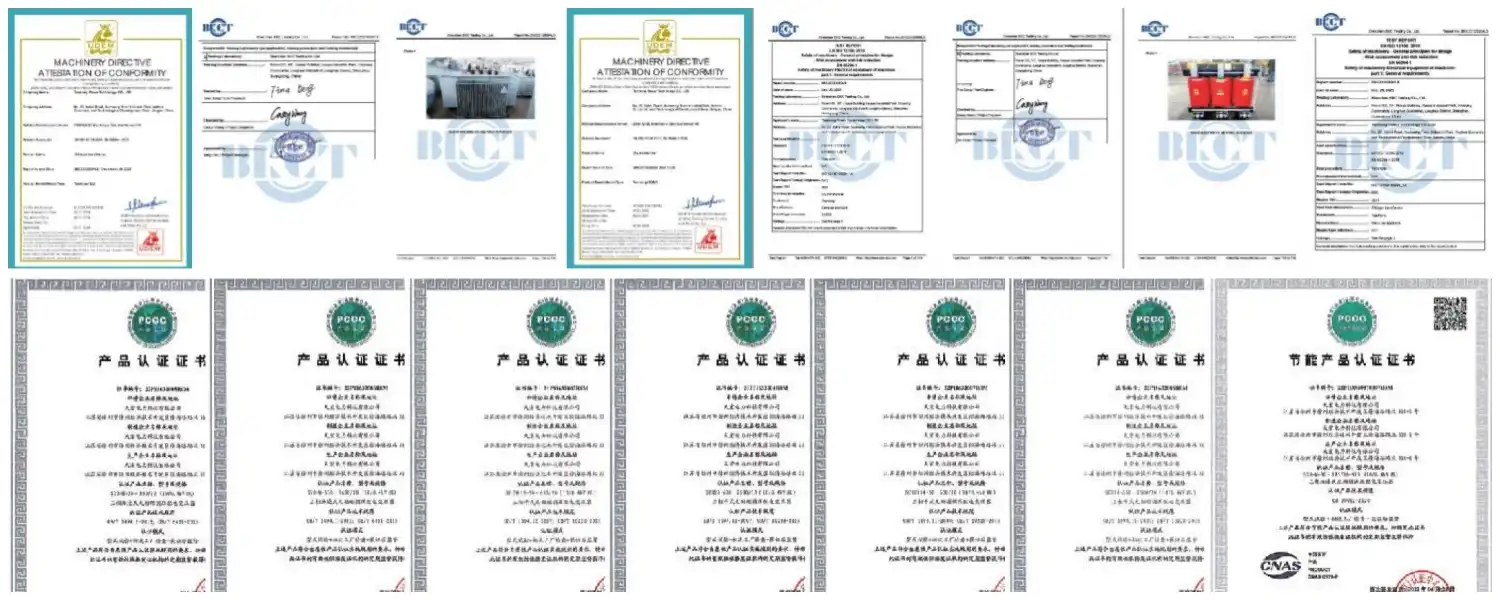
International certificates show that the design meets the needs of the area. For the European market, our S13 type single-phase distribution transformer series has CE marking, UL listing for installations that must follow the National Electrical Code, and CQC energy efficiency certification that shows measured losses. These certificates get rid of technical problems that come up with cross-border projects and make it easier for officials to give their approval.
Our quality management system meets world standards for process control and continuous growth, as shown by our ISO 9001:2015 certification. Accredited registrars do surveillance checks on us once a year to make sure we keep written processes for design validation, source qualification, in-process inspection, and managing corrective actions. For companies that buy things and have partner qualification programs, ISO certification is a normal way to show that the manufacturing process is mature.
Product-specific certifications include type testing results from recognised labs that show how the product performs in terms of temperature rise, short-circuit resistance, and sound quality. These reports back up what the maker says and help engineers figure out who is responsible for what during project risk assessments. At Lijie Electric, we keep a technical library of all certification papers that clients can use in building bids and regulatory compliance paperwork.
To choose the best distribution transformer, you need to weigh short-term budget limits against long-term operating economics, technical specifications against real-world reliability, and a supplier's skills beyond what they say on the marketing materials. There are measurable improvements in efficiency with the S13 type single-phase distribution transformer that add up over many decades of service, lowering both energy use and the number of times that maintenance needs to be done. Its fully sealed design works well in harsh environments, from the humidity of the coast to the UV rays of high elevations. Its soundproofing also meets the needs of urban installations without the need for expensive external shelters. The S13 type single-phase distribution transformer is a useful tool for procurement teams that are in charge of grid modernisation programs or projects that integrate renewable energy. It has been tested and proven to work well in a variety of settings around the world.
The quality of the core material and the shape of the windings determine how efficiently they work. A grain-oriented silicon steel that has been cold-rolled and has a magnetic permeability above 1.88 T lowers no-load losses by keeping hysteresis and eddy current formation to a minimum. Using oxygen-free copper in the right layer arrangements in a winding design lowers resistive losses when the load is applied. Precision in manufacturing during core stacking and tension control during winding ensures that these design benefits are carried out well in the field.
Both types keep their Class A insulation ratings and can handle winding temperatures up to 105°C. The S13 type single-phase distribution transformer's better cooling system, which includes a bigger radiator and better oil flow, keeps steady-state temperatures lower even when the load is the same. This 8–12°C drop in temperature increases the life span of insulation by about 40%, which means it doesn't need to be replaced as soon, and there is a lower chance of a catastrophic failure during times of high demand when grid stress is at its strongest.
As a choice for customisation, non-standard main voltages from 6kV to 12kV and secondary voltages other than 240V/480V are available. You can get custom tap ranges, resistance values, and connection groups, but it will take an extra two to three weeks for engineers to confirm them. During the quotation process, procurement teams should include single-line diagrams and protection coordination studies to make sure that the proposed specifications work well with the current infrastructure.
Lijie Electric can meet the needs of your project when it needs certified efficiency, proven dependability, and quick expert help. We are an ISO 9001:2015 certified S13 type single-phase distribution transformer manufacturer with over 12,000 units in use across North America. We know how hard it is to buy things when you have to meet tight deadlines, stick to a budget, and give performance guarantees that last for decades. Our 500,000-square-meter production plants have normal lead times of 8 weeks, but they can be fully customised to meet specific voltage, environmental, or seismic needs. Email our engineering team at lijieelectrical@gmail.com to talk about your needs, get factory test reports, and look into volume pricing structures that work with your capital planning cycles. You can find detailed datasheets and case studies showing real-world performance data at lijie-electrical.com.
1. Institute of Electrical and Electronics Engineers (2019). IEEE Standard for General Requirements for Liquid-Immersed Distribution, Power, and Regulating Transformers, IEEE Std C57.12.00-2015.
2. International Electrotechnical Commission (2018). Power Transformers – Part 1: General Requirements, IEC 60076-1:2011+AMD1:2018.
3. U.S. Department of Energy (2016). Energy Conservation Program: Energy Conservation Standards for Distribution Transformers, Federal Register Vol. 81, No. 73.
4. National Electrical Manufacturers Association (2020). Guide for Loading Mineral-Oil-Immersed Transformers and Step-Voltage Regulators, NEMA TP 2-2005 (R2020).
5. Electric Power Research Institute (2017). Distribution Transformer Life Extension Strategies: Economic Analysis and Field Validation, EPRI Technical Report 3002010645.
6. American National Standards Institute (2018). Requirements for Liquid-Immersed Distribution Substation Transformers, ANSI C57.12.20-2017.
YOU MAY LIKE
12%20Series%20Dry%20Type%20Transformer.webp)



April 27, 2025
With a tight project schedule, the manufacturer delivered on time, and on-site technical personnel provided guidance throughout the entire installation and commissioning process; the collaboration was highly efficient and hassle-free.
July 2, 2025
During the preliminary phase, a selection plan was custom-tailored based on the actual site load requirements, resulting in a high degree of parameter compatibility. After-sales support responds within two hours, and ongoing technical support for operation and maintenance is comprehensive; we feel completely confident in a long-term partnership.
November 18, 2025
Deployed as a supporting component for a 35kV grid-connection project at a photovoltaic power station, the equipment operates for an average of 16 hours daily. It demonstrates excellent control over no-load losses, ensures smooth power generation and grid integration, and effectively reduces the station's overall energy consumption.
January 30, 2026
Under the continuous, high-load operating conditions of a factory production line, the equipment maintains stable electrical parameters and exhibits strong overload resistance, thereby guaranteeing an uninterrupted power supply for industrial production.
April 3, 2026
Integrated as a supporting component for a new energy photovoltaic grid-connection system, the manufacturer provided professional technical coordination and timely after-sales support, ensuring seamless adaptation to the specific electrical operating conditions required for grid integration.