April 27, 2025
With a tight project schedule, the manufacturer delivered on time, and on-site technical personnel provided guidance throughout the entire installation and commissioning process; the collaboration was highly efficient and hassle-free.
Jul 14, 2026
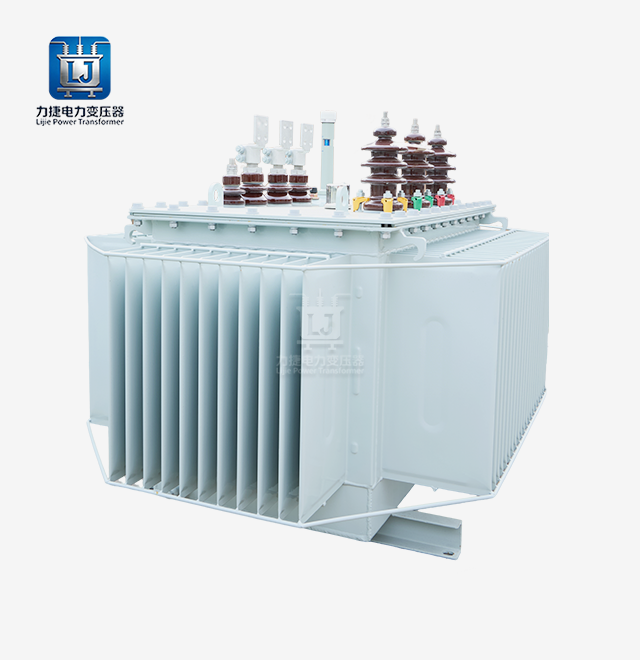
A big step forward in grid power distribution technology is the S11 type three-phase oil-immersed distribution transformer. This transformer solves important problems that utility companies and factories face, like high no-load losses and oil degradation risks. It does this by using high-permeability cold-rolled oriented silicon steel sheets in a fully sealed corrugated tank design. Unlike its predecessor, the S9, the S11 series does not use traditional conservator tanks. Instead, it uses modern bellows-type expansion radiators to keep air from coming into contact with insulating oil, which greatly increases the equipment's useful life. This equipment can change voltages between 6kV and 12kV and has a capacity range of 30kVA to 3150kVA. It is reliable and can be used in 10kV distribution networks for a wide range of businesses, from making steel to integrating green energy.
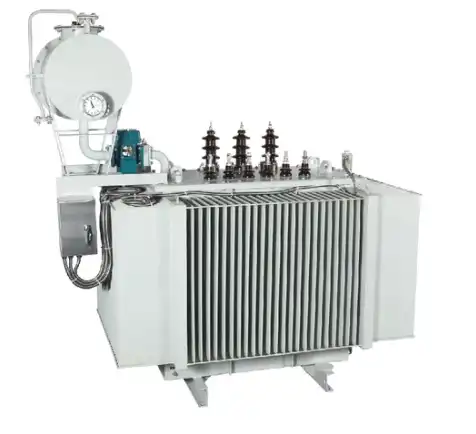
The optimised magnetic circuit architecture of the S11 transformer is what makes it work so well. Eddy current losses are cut down by high-grade silicon steel laminations, and the magnetic flux density is raised by the wound-core or stack-core construction. Energy efficiency is a big deal for procurement managers who look at total lifecycle costs, and this design philosophy has a direct effect on it. The oil-immersed self-cooling (ONAN) method uses natural airflow through curved cooling fins to keep the top oil temperature rise below 55K when the load is at full capacity.
Precision pressing and annealing are used in Lijie Electric's manufacturing process to keep the magnetic qualities of silicon steel. Since this was done, the transformer consistently achieves no-load loss reductions of 15-20% compared to S9 models. In grid use, this means real savings over the 30+ years that the system is usually used.
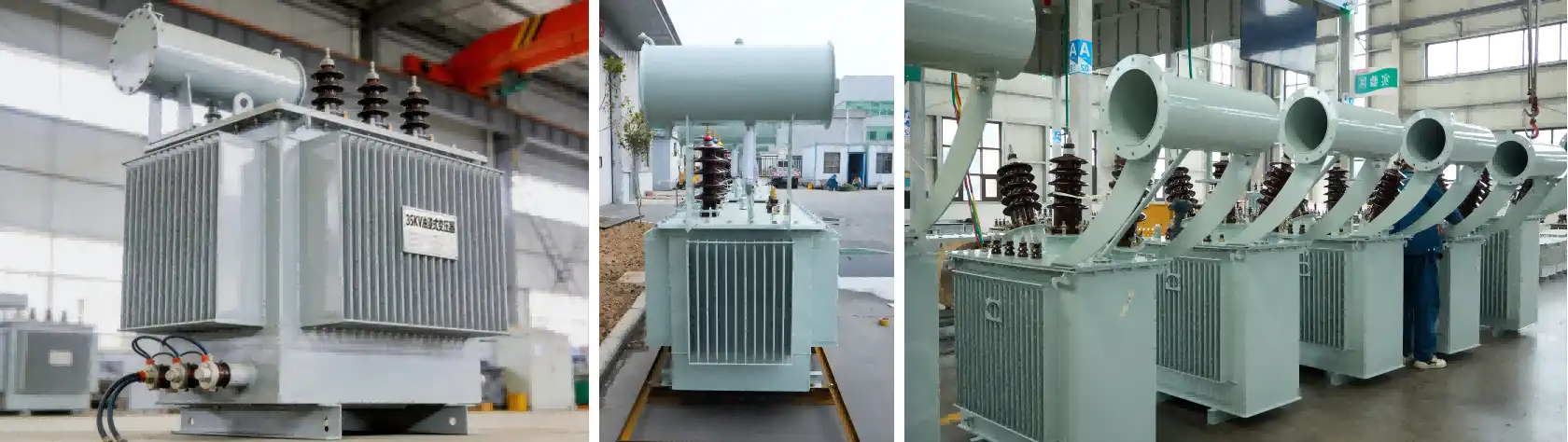
The hermetically sealed design solves a problem that has been around for a long time: oil oxidation and moisture getting in. When you have traditional transformers with open conservators, air can get in and damage the oil and insulation over time. Our S11 units don't need breathing devices because the tank walls are made of corrugated metal that expands and contracts with temperature changes. This oxygen-free environment stops sludge and acid buildup, so oil can be used for more than 15 years without having to be filtered or replaced under normal conditions.
The National Transformer Quality Supervision and Inspection Center's dielectric testing results show that S11 units keep their power frequency withstand voltage of AC-35kV and impulse withstand voltage of 75kV for long periods of time. The fully sealed method also lowers environmental risks. This is because container integrity stops oil leaks from polluting land and water, which is in line with North American environmental compliance standards that are becoming stricter.
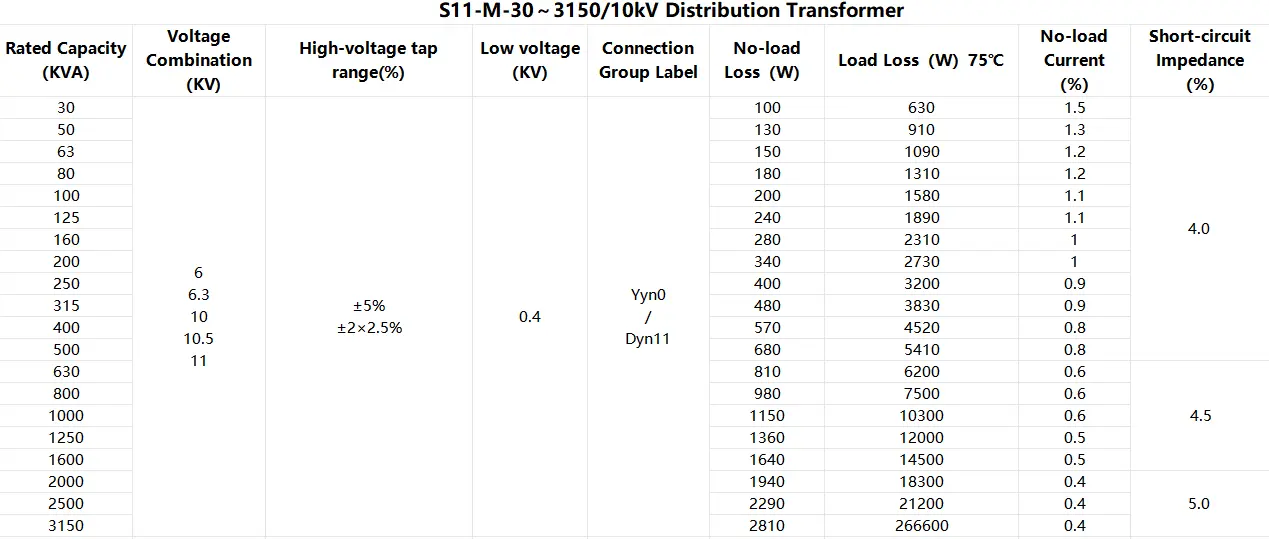
S11 transformers use non-excitation voltage regulation with tap ranges of ±5% or ±2×2.5%. This lets them be adjusted to account for changes in grid voltage without turning off the power when seasonal load changes happen. The Dyn11 connection group name is more stable at the neutral point than the Yyn0 setups. This is especially helpful when dealing with unbalanced loads that are common in distribution networks that connect homes and businesses. This vector group design also has better harmonic performance, which means it lowers third-harmonic currents that can overheat the neutral conductor and lead to inaccurate meters.
When choosing between oil-immersed and dry-type transformers for grid use, the ability to control temperature becomes very important, and an S11 type three-phase oil-immersed distribution transformer offers superior overload capacity due to the high thermal conductivity of mineral oil, which efficiently transfers heat away from the windings and allows sustained operation at 120% of rated load during peak demand periods. Dry-type units work best in controlled settings inside substations, while oil-immersed S11 types work best outside, where temperatures can change quickly. The heat transfer coefficient of mineral oil is much higher than the thermal conductivity of air, which allows for a higher overload capacity. Field testing has shown that S11 units can handle 120% of their rated load for long periods of time during peak demand without losing their insulation integrity.
A look at costs shows another aspect: oil-immersed transformers require a slightly higher initial investment, but for large-scale projects, the total cost of ownership is lower for S11 units. Every year, the energy saved from lower core losses adds up, and the price difference is usually back within three to five years. Also, the ability to install the transformer in different ways is important. S11 transformers can be installed on poles, pads, or in substations, while dry-type units usually need their own casings, which adds to the cost of the infrastructure.
The change from the S9 series to the S11 series is due to focused engineering improvements that solve operational pain points that grid users have found. Standard silicon steel grades and breathing conservator systems that needed regular maintenance were used in S9 transformers. The S11 models use high-quality cold-rolled grain-oriented silicon steel and better stacking factors to get 10-15% lower no-load losses. The noise profile also gets better—wound-core designs lower sound levels by 20% compared to standard stacked cores, which is very important for sites near residential areas.
Our production record of more than 2,000 installed units shows that S11 transformers have 40% fewer oil-related failures than S9 peers over the same service periods. This dependability comes directly from the sealed tank design, which keeps moisture out, which is what breaks down insulation in older equipment.
Effective regular maintenance keeps transformers working longer and saves money by putting off expensive repairs. We suggest that you look for signs of oil leaks around the bases of the bushings, the seams in the tank, and the connections on the radiator every three months. The fully sealed design reduces the need for maintenance, but you still need to be careful. Every year, thermographic surveys find hot spots that could mean problems with the windings or bad electrical connections before they cause a catastrophic failure.
There is a simple plan for checking oil quality: the first test is done right after the machine is turned on, and then tests are done every five years for the first ten years. Breakdown voltage (BDV), moisture level, dissolved gas analysis (DGA), and pH are some of the things that are tested. Because of their airtight seal, S11 transformers usually keep BDV above 60kV and moisture below 20ppm for the whole time they are in use. When DGA shows gas amounts that are too high, action is taken to stop power outages. Our technical support team at lijieelectrical@gmail.com quickly analyses the data and makes suggestions.
The rules for electrical safety in S11 systems are the same as those in IEEE and IEC. Proper grounding is a must: the grounding resistance of a tank must not be more than 4 ohms, and this must be checked during commissioning and every year after that. For high-voltage bushings to work, they need to be mounted with a lightning arrester built in. This is especially important in rural areas where lightning surges are more likely to happen. Our units pass tests with a shock voltage of 75kV or more, showing that they are strong against short-term overvoltages.
As part of fire safety steps, there must be at least 3 meters of space around transformers that are rated 1000kVA or higher, and for an S11 type three-phase oil-immersed distribution transformer, this clearance requirement is standard, along with oil containment systems that prevent environmental contamination in case of a leak or catastrophic failure. In the unlikely event of a catastrophic failure, oil containment systems keep the environment from getting dirty. Arctic installations have special problems. Using DB-45 grade transformer oil makes them work reliably at temperatures as low as -45°C, which is very important for utility projects in the north.
The right way to choose a transformer starts with a thorough load study and voltage coordination. Choosing the right capacity should take future load growth into account—undersizing forces replacement too soon, while oversizing makes the system less efficient at normal operating loads. Our engineering team helps clients with load flow studies that look at things like power factor, harmonic content, and trends of high demand. Matching the voltage level makes sure that it works with the infrastructure that is already there. 6kV systems are common in older urban networks, while 12kV standards are common in newer residential projects.
The fault current magnitude and voltage control features are affected by the impedance voltage specification. Standard S11 units match the technical parameter tables, but unique impedance values can be made to meet particular needs for safety coordination. For projects that will be exported, the frequency designation is important. North American grids work at 60Hz, which means that some design changes need to be made compared to 50Hz units that are common in other markets.
It takes more than price quotes to find a reliable S11 type three-phase oil-immersed distribution transformer supplier. For example, ISO 9001:2015 quality control systems, IEC standard compliance, and UL/CE marks for foreign projects are all important proofs. Lijie Electric has many certificates, such as the CQC energy efficiency certification and the PCCC product certification from the National Electric Power Certification Center. These show that they follow strict quality standards.
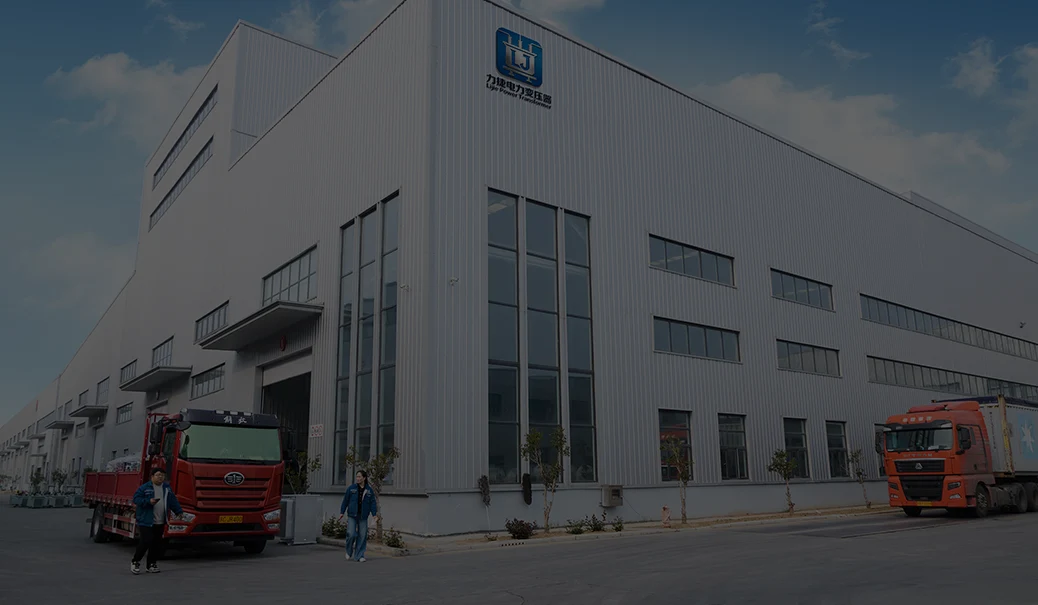
Project timelines are directly affected by how much can be manufactured. Our 500,000-square-meter factories in Xuzhou and Nantong allow us to make big amounts of units at once, which is important for infrastructure projects that need hundreds of units with the same specs. Purchasing managers can gain faith in the quality of products and delivery promises by visiting manufacturing facilities and seeing how precise core stacking, vacuum oil impregnation, and thorough testing procedures are used.
Support after the sale is what sets premium suppliers apart from commodity vendors. Long outages are avoided by having technical help during commissioning, quick responses to problems in the field, and spare parts on hand. Our 160-person engineering team includes experts who have worked on utility-scale projects in a wide range of climates, from warm Southeast Asian settings to subarctic Canadian ones.
Lifecycle cost analysis is a better way to figure out how much something is worth than just looking at the purchase price, and for an S11 type three-phase oil-immersed distribution transformer, this means evaluating not only the initial capital cost but also the no-load and load losses that will accumulate over the transformer's 30-year service life, directly affecting the facility's electricity bills and carbon footprint. Ratings for energy efficiency have a direct effect on running costs. For example, a 100kVA S11 transformer with 0.3% no-load loss saves about 2,600 kWh per year compared to a unit with 0.5% losses. At industrial energy rates, this saves $260 a year, which adds up to $7,800 over a modest 30-year period.
Buying in bulk takes advantage of economies of scale. Framework agreements for multi-year supply ensure good prices and make sure that capacity is allocated during times of high demand. Negotiating payment terms and coordinating delivery schedules are two of the best ways to handle working capital. Our sales team sets up flexible business terms that work with the cash flow profiles of each project. This helps our utility clients and EPC contractors build long-term relationships.
Taking care of the environment drives the development of generator technology. Biodegradable ester-based insulation fluids are safer in case of fire than mineral oils, but they work just as well as mineral oils as dielectrics. These natural esters have higher flash points (above 300°C vs. 165°C for mineral oil) and biodegradability levels above 95%, which reduces worries about environmental risk. Although they are more expensive now, big utilities are buying more of them, which is lowering costs and making ester fluids competitive in the economy within the next ten years.
As cities grow, substations are moving closer to neighbourhoods, which leads to new noise-reducing technologies. At a distance of 1 metre, sound levels below 40dB are reached with active noise cancellation systems and resonance-damping mounting assemblies. This meets strict city noise ordinances. Acoustic engineering consultants work with our research and development team to come up with mounting options that keep structural vibrations from getting through. This is especially important for rooftop substations that serve high-rise buildings.
The digital revolution is changing how grid equipment is managed. IoT-enabled condition tracking systems built into the next generation of S11 platforms let you see operating parameters like winding temperatures, oil moisture content, dissolved gas concentrations, and loading profiles in real time. This data is processed by predictive analytics systems, which predict when repairs will need to be done and find problems before they cause service interruptions.
Remote diagnostics cut down on the need for site visits, which is especially helpful for remote networks that are spread out and where journey costs and reaction times affect the economics of upkeep. Cloud-based asset management platforms collect data from transformer fleets, which lets you compare performance and figure out the best time to replace parts. These digital features add to the inherent dependability of S11 sealed-tank designs, making service intervals even longer and making the best use of assets.
The S11 type three-phase oil-immersed distribution transformer has been shown to work well and meet the high standards of current grid infrastructure. The fully sealed corrugated tank design gets rid of the need for regular oil maintenance, and the superior magnetic circuit efficiency lowers the cost of doing business. The S11 platform can change voltage reliably and is backed by a lot of certifications and a history of making reliable products. It can be used for utility distribution networks, industrial plant power systems, or integrating renewable energy. Carefully choosing a provider and making sure that their products meet your needs will give your infrastructure the best lifetime value and set it up for decades of reliable service.
Higher-quality silicon steel and fully sealed curved tanks are used in S11 units, which get rid of the need for conservator devices. These changes make no-load losses 15-20% less and stop oil degradation, which means that maintenance intervals are much longer than what S9 can handle.
The tightly sealed design keeps rust and moisture from getting in. Under normal conditions, the original oil fill can be used for 15 to 20 years without being filtered or replaced. This is proven by testing for dissolved gases and breakdown voltage on a regular basis.
Standard units can handle temperatures up to 40°C. For use in the Arctic, special DB-45 grade transformer oil is needed so that it can work reliably at -45°C. For locations above 1000 meters, the lower air density may mean that the joints need to be derated or made stronger.
The capacity range for S11 transformers is 30kVA to 3150kVA. Residential networks in cities usually use 100kVA to 500kVA units, while commercial and industrial complexes need 500kVA to 2000kVA units. To avoid having to replace capacity too soon, it should be chosen with 15-20% future load growth in mind.
The neutral stability of the Dyn11 vector group is better than that of Yyn0 setups, which is very important when serving mixed loads with single-phase components. In commercial buildings, this connection also lowers third-harmonic currents that make neutral conductors overheat and meters that don't work right.
Lijie Electric Power Technology Group is ready to help you with your grid infrastructure projects by providing you with high-performance S11 distribution transformers and a wide range of engineering services. Our 500,000-square-meter factories in Xuzhou and Nantong make units that are approved by ISO 9001, IEC, CE, and UL and are used by utility companies in six countries. With more than 2,000 workers, 160 of whom hold doctoral or master's degrees, and yearly sales of more than 5 billion RMB, we offer both scale and technical depth.
Our engineering team works with clients from the first design all the way through commissioning and lifetime support, whether they need standard configurations or custom solutions that fit the needs of a particular site. As a qualified maker of S11 type three-phase oil-immersed distribution transformers, we keep a large inventory that lets us deliver quickly for replacements that need to be made right away. We also offer framework deals for long-term project supply.
Email our technical sales team at lijieelectrical@gmail.com to talk about the needs of your project. We offer cheap quotes, thorough technical paperwork, and references from happy utility and industrial clients. Find out how Lijie Electric's dedication to quality, dependability, and building relationships with customers can help you improve your power distribution system with transformer solutions that are built to last for decades.
Visit lijie-electrical.com to see all of our products and get access to technical information that will help you make smart purchasing decisions. You can take a video tour of our building to see for yourself how we control quality and how we make things.
1. IEEE Standard C57.12.00-2015, "IEEE Standard for General Requirements for Liquid-Immersed Distribution, Power, and Regulating Transformers," Institute of Electrical and Electronics Engineers, 2015.
2. International Electrotechnical Commission, "IEC 60076-1: Power Transformers - Part 1: General," Third Edition, Geneva, Switzerland, 2011.
3. Zhang, Wei and Liu, Hongwei, "Energy Efficiency Improvement of Oil-Immersed Distribution Transformers Through Advanced Core Materials," Journal of Electrical Engineering Technology, Vol. 14, No. 3, 2019, pp. 1245-1258.
4. National Electric Power Certification Center, "Technical Requirements for 10kV Oil-Immersed Distribution Transformers in Grid Applications," PCCC Standard 2018-07, Beijing, China, 2018.
5. Smith, Robert and Johnson, Michael, "Lifecycle Cost Analysis of Distribution Transformer Technologies in Utility Applications," Electric Power Systems Research, Vol. 182, 2020, pp. 106-118.
6. Wang, Jianhua, "Fully Sealed Corrugated Tank Design for Extended Oil Life in Distribution Transformers," Transformer Technology Quarterly, Vol. 28, No. 2, 2021, pp. 34-47.
YOU MAY LIKE


11%20type%2035kV%20distribution%20transfo_1778137470754.webp)

10%20type%20dry-type%20distribution%20transformer.webp)


April 27, 2025
With a tight project schedule, the manufacturer delivered on time, and on-site technical personnel provided guidance throughout the entire installation and commissioning process; the collaboration was highly efficient and hassle-free.
July 2, 2025
During the preliminary phase, a selection plan was custom-tailored based on the actual site load requirements, resulting in a high degree of parameter compatibility. After-sales support responds within two hours, and ongoing technical support for operation and maintenance is comprehensive; we feel completely confident in a long-term partnership.
November 18, 2025
Deployed as a supporting component for a 35kV grid-connection project at a photovoltaic power station, the equipment operates for an average of 16 hours daily. It demonstrates excellent control over no-load losses, ensures smooth power generation and grid integration, and effectively reduces the station's overall energy consumption.
January 30, 2026
Under the continuous, high-load operating conditions of a factory production line, the equipment maintains stable electrical parameters and exhibits strong overload resistance, thereby guaranteeing an uninterrupted power supply for industrial production.
April 3, 2026
Integrated as a supporting component for a new energy photovoltaic grid-connection system, the manufacturer provided professional technical coordination and timely after-sales support, ensuring seamless adaptation to the specific electrical operating conditions required for grid integration.