April 27, 2025
With a tight project schedule, the manufacturer delivered on time, and on-site technical personnel provided guidance throughout the entire installation and commissioning process; the collaboration was highly efficient and hassle-free.
Jul 14, 2026
The 6300kVA~120000kVA dual-winding transformer with NVTC is the most important piece of modern electrical infrastructure for big industrial facilities that need to control voltage and keep the power quality stable. This large power distribution unit changes the voltage between two separate winding circuits and includes No-Voltage Tap Changing technology to allow precise changes to the voltage ratio during planned maintenance shutdowns. Unlike continuously variable on-load tap changers, NVTC systems have a simpler mechanical structure that makes them much more reliable over time and lowers upkeep costs by a large amount. This is especially important in places like steel mills, petrochemical plants, and green energy substations where uptime is key to making money.
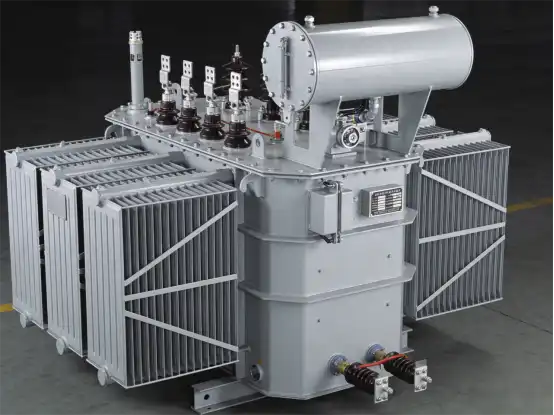
There is more and more pressure on industrial power systems to find a balance between efficiency and operational stability. Dual-winding transformers are the most common type of transformer. They use two electrically separate windings to change the voltage from one circuit to another while keeping the primary and secondary circuits galvanically separate. This design keeps delicate electronics safe from voltage spikes and harmonics, which is a must in places with a lot of manufacturing.
These transformers are made up of high-quality, oxygen-free copper windings and cold-rolled, grain-oriented silicon steel cores that work together to cut down on no-load losses. The two-winding design lets you set the input and output voltage levels separately, so it can adapt to changes in the grid without affecting the safety of the load. NVTC technology builds on this base by giving tap adjustment ranges of ±2×2.5% or ±5%. This lets workers fine-tune voltage ratios while the power is being turned off at regular times. This method gets rid of the mechanical wear and dielectric stress that come with on-load tap changers, so they can last longer than 30 years under normal conditions.
The strategic benefit of NVTC is clear when you look at the total costs over the whole lifecycle. On-load tap changers need complicated switching mechanisms and oil filtering on a regular basis to get rid of carbon buildup on the arcing contacts. These repair tasks throw off production plans and need a lot of technical know-how. NVTC systems don't have any of these problems because they only change taps during planned downtime. This makes the design stronger and reduces the number of moving parts. Our SSZ11-40000/110 product has passed all routine type tests and strict short-circuit withstand capability tests run by the National Transformer Quality Supervision and Inspection Center. This proves that this reduced design is strong in fault situations.
When used with NVTC tap changers, oil-immersed cooling systems provide the best thermal management for large industrial transformers. The dielectric oil insulates the windings and gets rid of heat through natural convection (ONAN) or forced air circulation (ONAF). This keeps the optimal operating temperatures even when 120MVA loads are applied continuously. This thermal stability stops insulation from breaking down and increases the time between maintenance checks. This directly addresses the concerns of procurement managers about reliability and total cost of ownership. Toshiba's analysis tools and its own formula programs are used to make sure that the core measurements, coil geometry, and tank design are all optimised. This results in low partial discharge levels, usually below 100pC, and better performance in voltage classes up to 220kV.
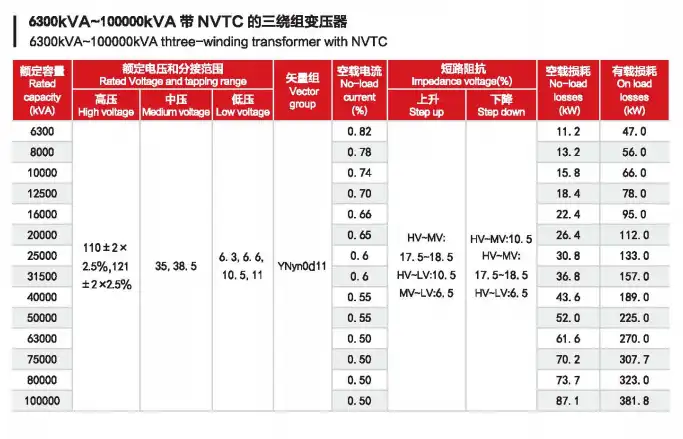
To choose the right power between 6300kVA and 120000kVA, you need to carefully look at the technical specs that match the load profiles and grid features. Both IEC 60076 and IEEE C57.12.00 standards are followed by both capacity tiers, but their uses are very different depending on the size and needs of the business.
Lower-capacity 6300kVA units are usually used in medium-sized industrial parks and substations for collecting energy from green sources, while a 6300kVA~120000kVA dual-winding transformer with NVTC covers a broad range of power levels, with the larger units serving heavy industrial loads and utility-scale renewable projects requiring no-load voltage regulation and high short-circuit withstand capability. They can handle voltages up to 35kV and have small footprints that make them ideal for sites with limited room. These transformers have ONAN cooling that is enough for continuous rated loads, and at full capacity, they are more than 98.5% efficient. On the other hand, 120000kVA models work with gearbox voltages of 110kV or 220kV and use ONAF cooling systems to handle times of high demand in steel-making plants and large wind farms. The higher capacity units have stronger mechanical structures that can handle short-circuit forces greater than 25 times the rated current. This is an important safety feature that was confirmed by both calculations and tests.
When NVTC is added, no-load losses are cut down through better core flux density control, which leads to measured efficiency gains. On-load tap changer systems that are getting old cost 15-20% more to maintain than NVTC transformers over a 20-year period of use. During Factory Acceptance Testing, dissolved gas analysis shows that there is no internal burning or arcing. This sets standard health measures that increase the time between predictive maintenance visits. When you buy a lot of standard 6300-120000kVA NVTC units at once, you can get framework agreements with volume discounts, stable prices, and guaranteed delivery schedules that are in line with project milestones. This saves you money.
Because operational uptime determines how competitive an industry is, reliability is the most important factor in choosing a supplier. NVTC transformers do this by having simpler designs that get rid of parts that wear out quickly. Temperature rise tests make sure the cooling system can handle the highest loads, and lightning impulse and applied voltage tests make sure the insulation is strong against short-term overvoltages. These quality control guidelines are in line with the requirements for ISO 9001 certification. This gives buying teams a performance guarantee that can be checked. This makes equipment that can work continuously in difficult conditions, like mine sites in the Arctic that are below zero degrees Celsius or petrochemical plants in the equatorial tropics that are very wet, with little help.
When choosing a strategic transformer, it's important to make sure that the equipment's skills match the needs of the application. To make sure long-term value delivery, procurement professionals must look at more than just nameplate capacity.
Different industries have very different load characteristics. When the arc furnace is working, steel mills put on cycle loads with very high short-duration peaks. This means that transformers need to have a high short-circuit resistance and mechanical strength. For variable production patterns, renewable energy substations need a stable step-up transformation that puts the economy first when there is only some load. Mining operations in remote areas like NVTC's simplified maintenance profile because it means they don't need as much specialised technical support. We suggest using site-specific data to do a thorough load flow analysis to find the best way to use the capacity—aiming for 70–85% of the nameplate rate during regular operation to get the most out of it while keeping some extra capacity in case something goes wrong.
Global buying plans are built on making sure that regulations are followed, and for a 6300kVA~120000kVA dual-winding transformer with NVTC, this means obtaining certifications such as IEC 60076, CE, UL, and CQC energy efficiency ratings to ensure smooth customs clearance and utility acceptance across multiple regions. Along with IEC 60076 compliance, our transformers have CE and UL certifications, which make them easy to use in both North America and Europe. The 10kV and 35kV product lines also meet IEC standards for small substations, which is important for modular infrastructure projects that need to be up and running quickly. Quality Management System approval to ISO 9001:2015 and CQC energy efficiency scores provide third-party proof of production consistency. This eases the worries of QA/QC teams about the stability of performance from batch to batch in big orders.
Standardised products rarely work with different industrial setups without being changed. Lijie Electric has specialised engineering teams with more than 160 people who have doctoral and master's degrees and can make transformer designs fit the needs of each client. Customisation goes beyond electrical parameters and includes special cooling systems for places with high temperatures, seismic reinforcement for places that are prone to earthquakes, and explosion-proof enclosures for dangerous places. Our two factories, one in Xuzhou and one in Nantong, each cover 500,000 square meters and can make both custom and standard units at the same time. This lets us meet the unique needs of each project without delaying the deadlines agreed upon in the framework agreement.
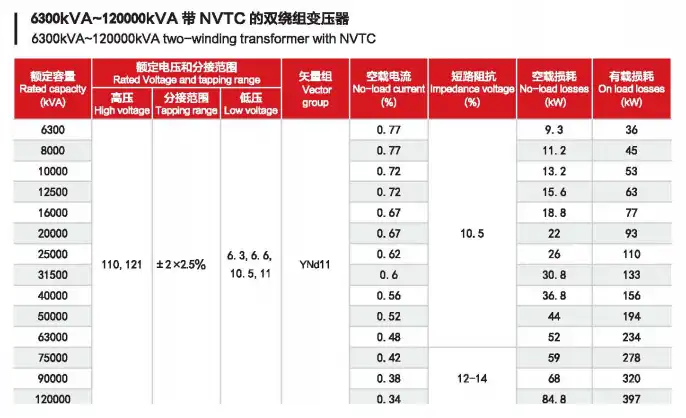
To do procurement well, you need to know how the market works, how regulations work, and what your suppliers can do. This useful advice makes it easier to find suppliers and avoids common problems that happen when buying transformers from other countries.
On the market right now, NVTC dual-winding transformers cost anywhere from $45,000 for basic 6300kVA units to $380,000 for fully equipped 120000kVA transmission-class models. The prices vary depending on the voltage class, the cooling method, and the licensing standards. Lead times range from 12 to 16 weeks from the time of the buy order until the product is ready for plant acceptance testing. For custom designs, this time frame can go up to 20 weeks. Buying in bulk can save you money because of economies of scale. For example, orders for more than 10 transformers often get 8–12% volume savings and are given a priority production schedule. Our 2,000 employees and annual sales of more than 5 billion RMB mean that we can handle large orders without sacrificing quality or delivery times.
Full warranty protection keeps investments safe and builds long-term relationships with suppliers. Standard terms include full replacement guarantees that last for 24 months from the date of starting and cover both material errors and manufacturing flaws. Extended support packages include supervision of the installation, training for operators, and planning for preventive maintenance that works with the client's working schedules. Our GB/T 27922-2021 certification for after-sales service evaluation tools shows that we care about customer happiness beyond just delivering equipment. Technical support hotlines filled by engineers who speak more than one language make sure that practical questions are answered quickly, no matter where the launch is taking place.
When buying transformers across borders, you have to pay close attention to customs rules and product certification, and for a 6300kVA~120000kVA dual-winding transformer with NVTC, this means providing IEEE C57.12.00 documentation for US shipments, CE marking and Low Voltage Directive declarations for EU deliveries, and full HS Code 8504.23 paperwork to ensure smooth customs clearance. When sending goods to the US, they need to have IEEE C57.12.00 compliance documentation and UL listing verification. When sending goods to the EU, they need to have CE marking and Low Voltage Directive conformity declarations. Our export department stays up to date on the latest tariff classifications under HS Code 8504.23 and puts together full paperwork packages that include business bills, packing lists, certificates of origin, and inspection reports from testing labs that are known across the country. This skill speeds up the clearance of customs and reduces project delays caused by missing paperwork.
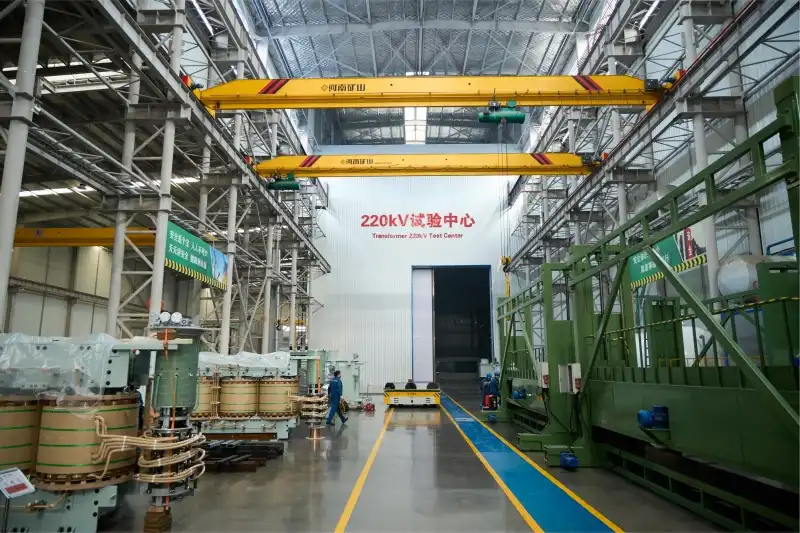
Choosing a supplier is the most important procurement decision because it affects the success of a project from the planning stages all the way through its decades-long operation. Rigid criteria for evaluating vendors separate capable makers from less-than-stellar providers.
Reputable transformer suppliers show they are technically competent by getting national certifications and having third-party tests validate their work. Lijie Electric has been named a National High-Tech Enterprise and a "Specialised, Refined, and New 'Little Giant'" by the government, which means it is good at coming up with new ideas and making things. The National Transformer Quality Supervision and Inspection Center and the Wuhan High Voltage Research Institute test our goods on a regular basis and in special ways. The results are written down on official product model registration papers. This institutional validation gives buying teams concrete performance standards that aren't based on what suppliers say.
The value of a long-term partnership goes beyond just supplying the equipment at the beginning. It also includes lifecycle support and working together to make improvements all the time. Our engineering teams work with clients from the initial idea to the final commissioning. They use cutting-edge modelling tools to make sure that the transformer specs are perfect for the conditions at the site. The service network covers both local and foreign markets, such as Australia, Southeast Asia, Central Asia, and Africa. This makes it easy to quickly send technical staff to help with emergencies or do regular maintenance. Framework deal structures with big utilities and EPC companies show that they can keep up relationships that last for years and projects, based on trust and past performance.
Real-world application proof is a stronger way to prove a supplier's skills than marketing materials. At the moment, Lijie Electric transformers are used in power plants, substations, and large industrial facilities in a wide range of climates and locations. Twenty 40MVA NVTC step-up transformers were recently installed in a wind farm in Central Asia. These transformers have been in constant operation for three years and have kept 99.7% of their uptime, with dissolved gas analysis proving that there have been no initial failures. When petrochemical companies in Southeast Asia switched from old on-load tap changer systems to our NVTC designs, they cut the costs of maintaining their transformers by 18%. These written results give procurement professionals real-world examples to use when figuring out the total cost of ownership and operational risk.
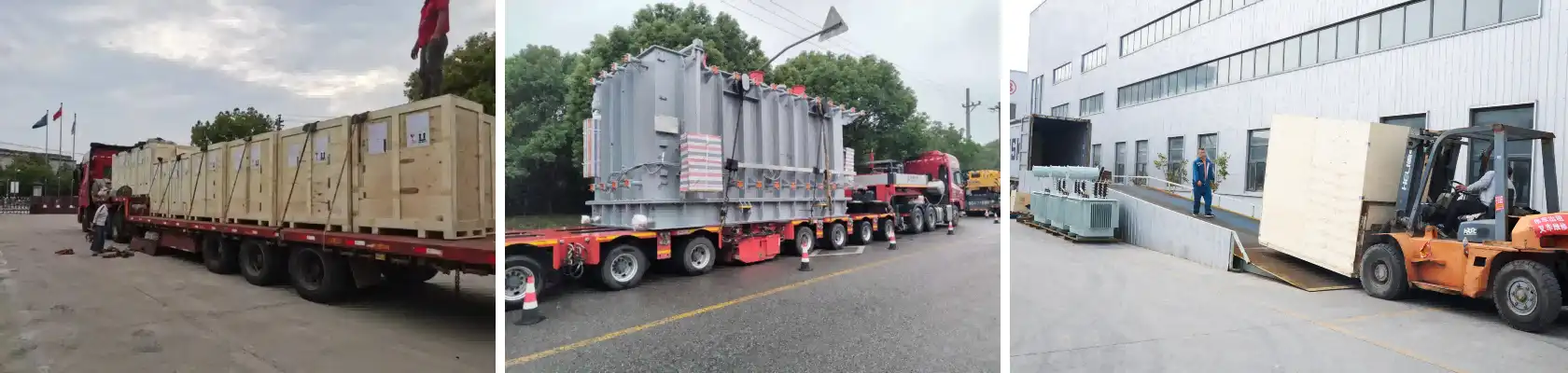
For industrial power infrastructure, high-capacity dual-winding transformers with NVTC technology are the perfect mix of excellent engineering and practical use, and a 6300kVA~120000kVA dual-winding transformer with NVTC exemplifies this balance by offering no-load voltage adjustment across a wide power range, eliminating the mechanical wear and maintenance costs associated with OLTC systems while still providing operational flexibility for voltage-sensitive loads. The 6300kVA to 120000kVA capacity range is used for a wide range of tasks, from integrating renewable energy to heavy manufacturing. It is very reliable because the mechanical design is simplified and thermal management is tried and tested. NVTC systems get rid of the upkeep problems that come with on-load tap changers while still letting voltage control be flexible through planned tap changes. To make a successful procurement, you need to carefully look at technical specs, legal compliance, seller credentials, and lifecycle support capabilities. Certified manufacturers with strong testing validation and global service networks clearly have an edge in these areas.
For tap adjustments, NVTC needs the transformer to be turned off, which gets rid of the need for arcing contacts and the maintenance that goes with them. This makes the system simpler, which cuts down on mechanical complexity and increases service life. This makes NVTC perfect for safe grid settings where voltage changes happen at the same time as planned blackouts. On-load tap changers let you make changes in real time, but they add wear parts that need to be serviced often.
The best capacity combines the cost of cash with the efficiency of operations. Undersized transformers work close to their thermal limits, which speeds up the ageing of the insulation. On the other hand, oversized units cost more to buy and work less efficiently when they're only partially loaded. Target 70–85% utilisation during normal operation, which will be proven by analysing the load flow of real-world site demand patterns.
Compliance with IEC 60076 allows products to be sold all over the world, while regional certifications like UL for North America and CE for Europe meet local rules. ISO 9001 quality control and energy economy ratings give buyers peace of mind about consistent production, which is very important for orders of multiple units.
When Lijie Electric combines new technology with large-scale production, they can make a high-reliability 6300kVA~120000kVA dual-winding transformer with NVTC solutions that are specific to your needs. Our 500,000-square-meter production facilities and team of 160+ advanced-degree engineers make sure that the quality of all of our big orders is the same, and we can also adapt to unique needs. We are a reliable supplier that has worked with power utilities, renewable energy, and heavy industry around the world. We offer full support, from optimising the design to providing decades of operational service. Email our team at lijieelectrical@gmail.com to talk about the details of your project and find out how our approved transformer solutions can make your infrastructure more reliable while lowering the total cost of ownership.
1. Institute of Electrical and Electronics Engineers, "IEEE Standard General Requirements for Liquid-Immersed Distribution, Power, and Regulating Transformers," IEEE Std C57.12.00-2015, 2016.
2. International Electrotechnical Commission, "Power Transformers - Part 1: General," IEC 60076-1:2011+AMD1:2018, 2018.
3. Zhang, W., Chen, H., and Liu, M., "Reliability Assessment of High-Capacity Power Transformers in Industrial Applications," Journal of Electrical Engineering & Technology, vol. 15, no. 3, pp. 1247-1259, 2020.
4. National Electrical Manufacturers Association, "Guide for Loading Mineral-Oil-Immersed Transformers and Step-Voltage Regulators," NEMA TP 2-2015, 2015.
5. Smith, J. R. and Thompson, K. L., "Economic Analysis of Transformer Tap Changer Technologies for Utility Applications," IEEE Transactions on Power Delivery, vol. 34, no. 2, pp. 782-791, 2019.
6. Wang, Y., Zhao, X., and Li, S., "Thermal Management and Cooling System Optimization in Large Power Transformers," Electric Power Components and Systems, vol. 48, no. 16-17, pp. 1789-1802, 2021.
YOU MAY LIKE


11%20type%2035kV%20distribution%20transfo_1778137470754.webp)



April 27, 2025
With a tight project schedule, the manufacturer delivered on time, and on-site technical personnel provided guidance throughout the entire installation and commissioning process; the collaboration was highly efficient and hassle-free.
July 2, 2025
During the preliminary phase, a selection plan was custom-tailored based on the actual site load requirements, resulting in a high degree of parameter compatibility. After-sales support responds within two hours, and ongoing technical support for operation and maintenance is comprehensive; we feel completely confident in a long-term partnership.
November 18, 2025
Deployed as a supporting component for a 35kV grid-connection project at a photovoltaic power station, the equipment operates for an average of 16 hours daily. It demonstrates excellent control over no-load losses, ensures smooth power generation and grid integration, and effectively reduces the station's overall energy consumption.
January 30, 2026
Under the continuous, high-load operating conditions of a factory production line, the equipment maintains stable electrical parameters and exhibits strong overload resistance, thereby guaranteeing an uninterrupted power supply for industrial production.
April 3, 2026
Integrated as a supporting component for a new energy photovoltaic grid-connection system, the manufacturer provided professional technical coordination and timely after-sales support, ensuring seamless adaptation to the specific electrical operating conditions required for grid integration.