April 27, 2025
With a tight project schedule, the manufacturer delivered on time, and on-site technical personnel provided guidance throughout the entire installation and commissioning process; the collaboration was highly efficient and hassle-free.
Jul 15, 2026
A 6300kVA~100000kVA Three-winding transformer with OLTC is necessary when the current power infrastructure requires simultaneous connection across multiple voltage levels. This powerful gear combines three separate windings—usually high-voltage, medium-voltage, and low-voltage—into a single substation footprint. This lets three different voltage systems connect. The On-Load Tap Changer technology lets exact voltage regulation happen without cutting off the power supply. This helps utilities and industry users across the US with grid stability, cost efficiency, and complex energy management.
Grid modernisation projects depend more and more on transformers, which are reliable and flexible in how they work. As the use of renewable energy grows and industrial loads change without warning, it becomes harder for purchasing managers and electrical engineers to choose equipment that meets both short-term technical needs and long-term performance expectations. Knowing the details of three-winding OLTC transformers is very important for the success of projects that we've worked on with utilities and big commercial clients.
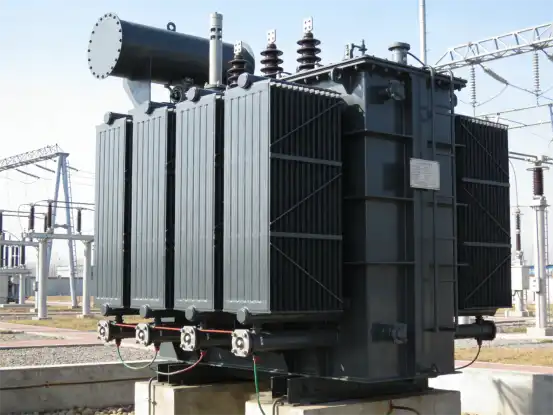
The structure of three-winding transformers is very different from the structure of two-winding transformers. Instead of just raising or lowering the voltage, these units control the flow of power across three different voltage levels in a single tank. This makes the substation plan easier and reduces the size of the area needed. This design works especially well in regional hub substations, where 220kV transmission lines must feed both 35kV industrial parks and 10kV urban distribution networks at the same time.
By switching between transformer taps without turning off the power, OLTC mechanisms allow voltage adjustment when the load is full. In real life, this means that when factories quickly increase production or when renewable energy sources cause supply fluctuations, the transformer instantly makes up for it so that the output voltage stays stable. Modern OLTC systems can do more than 200,000 processes without needing any upkeep. This makes them much more reliable and able to keep running even when the power goes out. To make smooth tap changes, you need very precise mechanical systems that sequence contacts and filter oil to stop damage from arcing during switching events.
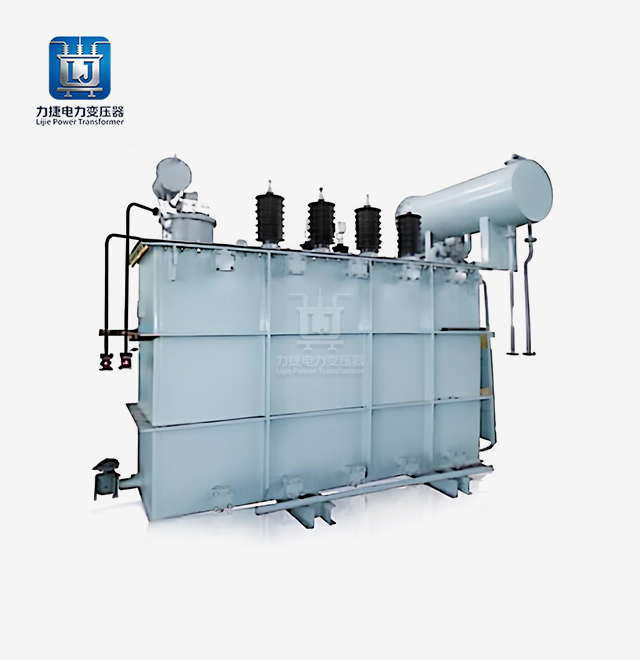
Most 6300kVA~100000kVA Three-winding transformer with OLTCs can handle voltages of up to 110kV or 220kV on the primary winding. There are two types of cooling systems: ONAN (Oil Natural Air Natural) and ONAF (Oil Natural Air Forced). The type of cooling system used depends on the load profile and the environment. Construction closely follows IEC 60076 guidelines, with insulation levels made to withstand lightning impulse voltages and applied voltage tests that confirm the stability of the dielectric. Using high-permeability grain-oriented silicon steel sheets in the core construction cuts down on no-load losses to a minimum. Stabilised winding structures and hardened copper conductors make sure that the structure can handle short-circuits very well.
Three-winding units are more cost-effective than putting multiple two-winding transformers to do the same job. They also require less upkeep and capital spending. Grid freedom goes up a lot because power can be sent to different voltage levels without having to go through any change steps first. Operators can balance demand across industrial, commercial, and residential sectors from a single control point as load management gets smarter. Reliability goes up because there are fewer separate transformers, so there are fewer places where the power could fail.
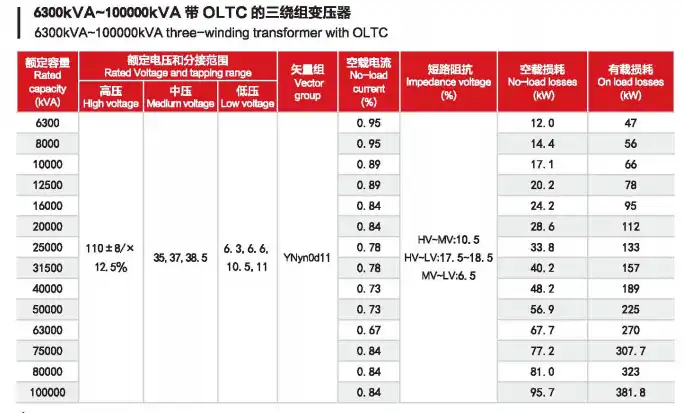
Knowing how these specialised 6300kVA~100000kVA three-winding transformers with OLTCs are usually used helps buying teams figure out when they will give them the best return on investment. The most common use is probably regional transmission substations, where the three-winding design connects 110kV transmission lines to 35kV industry feeds and 10kV urban distribution networks at the same time. The OLTC keeps the voltage stable across all three levels, even when the load changes. This keeps equipment from breaking and keeps service from being interrupted.
For thermal and hydropower plants with 1000MW or more, three-winding transformers are needed to handle the complicated power flows. The energy from the generator, which is usually around 20kV, needs to be raised to 220kV before it can be sent to the main grid. The facility needs 10kV power for both plant operations and extra equipment at the same time. A three-winding design makes this "step-up plus step-down" action easy. It gets rid of the need for different auxiliary transformers and cuts down on energy loss during the conversion process.
Voltage compatibility is very important when connecting power sources in different states or regions. Three-winding transformers that can work at 220kV, 110kV, or 35kV make it easier for power to flow between grids that use different voltage standards. The OLTC keeps things stable at the point where the two networks join, which stops power drops that could affect both networks. This ability has become very important as the U.S. grid moves toward better regional planning and sharing of green energy across state lines.
Steel mills, chemical plants, and metallurgical facilities all have their own problems with how they distribute power. For example, electric arc furnaces and heavy machinery may need a 220kV high-voltage supply. Auxiliary workshops run on 35kV systems, and administrative buildings need 10kV service. All of these needs can be met efficiently by installing a single three-winding transformer. This simplifies the substation and makes the whole system work better during production cycles that have huge changes in load that happen all at once.
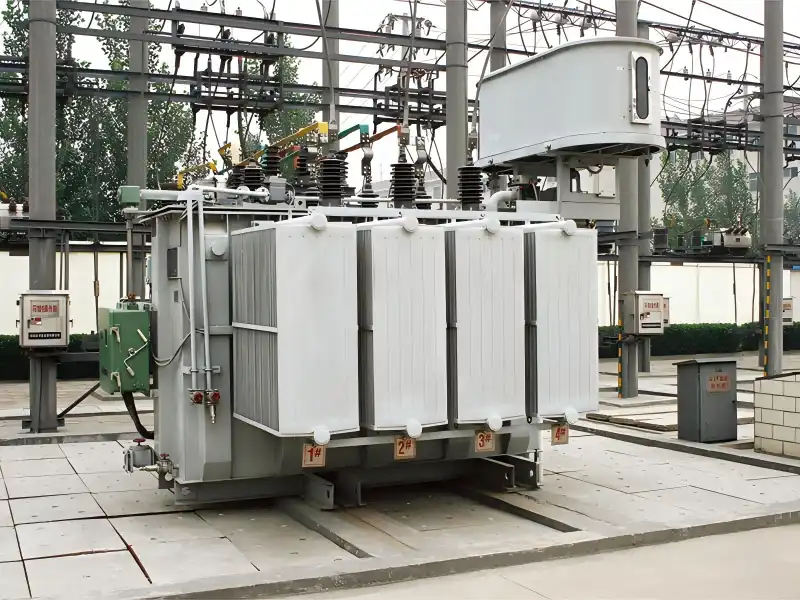
Choosing the right 6300kVA~100000kVA Three-winding transformer with OLTC depends on a number of things that affect each other. The initial capacity decisions are obviously based on the size of the project, but procurement managers also have to think about how the load will grow in the future, the need for redundancy, and the limitations of the physical installation. Ultra-high capacity transformers, which are close to 100,000kVA, are used in regional transmission hubs and large power plants. Medium-capacity units, which are around 6300kVA, are better for smaller industrial parks and localised distribution upgrades.
OLTC technology has come a long way, and now there are mechanical, electric, and mixed versions. Mechanical OLTC systems are still the most common because they have been used for decades and have been shown to be reliable. While electronic tap switches are faster to respond and need less care, they are more expensive and need to be serviced by people who know what they're doing. Hybrid designs try to find a balance between these factors by combining strong mechanical parts with complex electronic control systems. The operational climate, the availability of repair tools, and the voltage regulation speed needs of each application should be the most important factors in the selection process.
The unit price is only one part of the total cost of ownership. Energy economy performance has a direct effect on running costs over the 20–30-year service life of the transformer. This means that low-loss designs are more cost-effective, even though they are more expensive to buy. Warranty coverage and support after the sale affect the amount of risk that is involved, especially for projects that are far away or that have to work in harsh conditions. When you bundle installation and starting services, you save time on projects and make sure that the right steps are taken to safely start up the equipment during its first few critical hours of use.
The quality of the 6300kVA~100000kVA Three-winding transformer with OLTC directly affects how safe and reliable the grid is. Before being shipped, thorough testing protocols make sure that every unit meets the design requirements. Dielectric tests, such as lightning impulse and applied voltage checks, make sure that the insulation is still good when it's put under stress conditions that mimic the worst lightning hits and switching transients. Full-load temperature rise tests show how well the cooling system works and find any hotspots that might speed up the ageing of the insulation.
New Methods for Diagnosing. Dissolved Gas Analysis (DGA) finds possible internal faults by finding specific gas patterns that are made when the transformer tank overheats or arcs. For units in this size range, this non-invasive diagnostic method is now normal. OLTC sequence testing makes sure that tap changes happen smoothly, without short breaks or voltage spikes that could harm sensitive equipment further down the line. Sound level readings make sure that environmental noise rules are being followed, which is becoming a more important factor for substations that are close to civilian areas.
All the gear that is sent to utilities and businesses in the U.S. has to meet IEEE/ANSI or IEC standards by going through documented Routine, Type, and Special tests. ISO 9001 quality management certification shows that the production process is consistent, and CE and UL markings show that the product is safe to put in a variety of legal settings. Partially discharged amounts below 10pC at 1.5Um show better insulation quality, which means it will last longer and be less likely to fail.
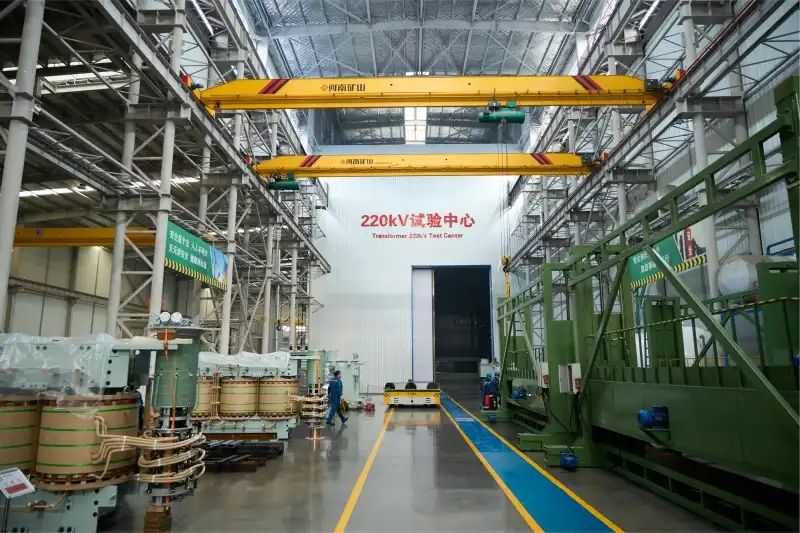
Preventive maintenance programs that work well protect the large amounts of money that are spent on big transformers. For important installations, routine checks should happen every three months. These inspections should focus on oil quality analysis, OLTC contact condition assessment, and bushing integrity verification. As part of yearly full inspections, thermographic scans are used to find strange heating patterns, sound signature analysis is used to find mechanical issues, and all cooling system parts are carefully looked over.
Special care must be taken with the tap changer mechanism because it is the most mechanically active part of the transformer. Carbon particles are made during switching operations. Oil filtration designed for the OLTC compartment gets rid of these particles, stopping contamination buildup that could lead to contact failure. Cleaning and calibrating the contacts should be done at the manufacturer's suggested times, which are usually every three to five years, based on how often they are used. Replacing worn parts like arcing contacts and selector switch elements before they break down stops unexpected power blackouts and makes the system last longer.
When a 6300kVA~100000kVA Three-winding transformer with OLTCs has problems with voltage regulation, systematic diagnostic procedures quickly find the root causes. Most of the time, a misaligned position sensor or a problem with the control circuit is to blame for an irregular tap position indication. Strange noises heard during tap changes could mean that the OLTC section doesn't have enough oil, the drive parts are worn out, or the contact is wearing away. Taking care of these problems right away stops further damage and keeps the voltage control accuracy that makes the original investment in OLTC technology worth it.
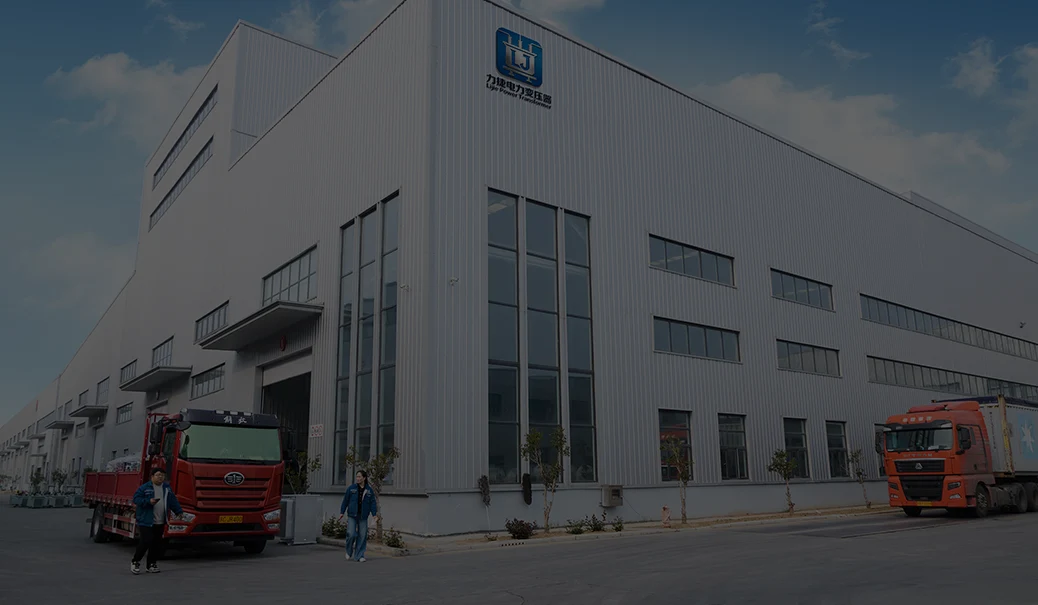
Lijie Electric Power Technology Group has been making transformers for more than 20 years and brings that experience to every project. Our two main R&D and production bases are in Xuzhou and Nantong. Together they cover 500,000 square meters and have more than 2,000 employees, 160 of whom are engineering specialists with advanced degrees. We can make customised three-winding OLTC options that meet your exact voltage needs, operating limits, and environmental conditions, thanks to our wide range of technical skills.
Advanced electromagnetic design principles and thermal management innovations are used in our 6300kVA~100000kVA Three-winding transformer with OLTC product line. We use low-loss core materials and precise wrapping methods to meet the highest efficiency standards in the business. By paying close attention to mechanical bracing and conductor choice, the short-circuit withstand capability goes above and beyond what is required. Designs for cooling systems that get rid of heat as efficiently as possible while using as little extra power as possible keep running costs low over the life of the transformer.
Lijie Electric uses thorough testing methods that are in line with IEC and IEEE standards for quality control. Before it is shipped, every unit goes through dielectric testing, temperature rise verification, and OLTC sequence proof. Our quality management systems are certified by ISO 9001, and our products have CE and UL markings that are recognised by utilities and industrial operators all over the world. The fact that our annual production capacity is more than 5 billion RMB in sales volume shows that big power companies and industry clients trust our engineering and manufacturing skills.
Customer success stories from regional utilities and industrial centers show that installing Lijie Electric transformers led to measured changes in performance. A Midwest utility that manages a lot of renewable energy found that precise voltage regulation made the grid more stable. Meanwhile, a steel mill that switched to our three-winding OLTC design cut down on production interruptions by 40%. These confirmed results show that we are dedicated to providing solutions that solve real operating problems, not just those that meet the bare minimum.
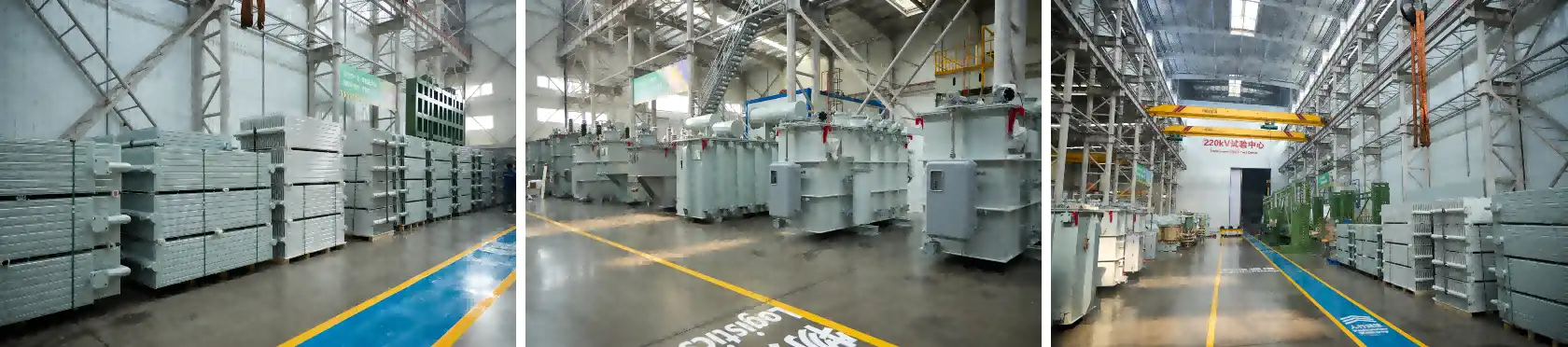
When choosing the right 6300kVA~100000kVA Three-winding transformer with OLTC for grid upgrade projects, it's important to weigh technical specs against cost and how well the transformer will work. Between 6300kVA and 100000kVA, the range covers most utility and industrial needs, from regional substations to generation plants and big industrial buildings. OLTC technology provides the precise voltage control needed for modern grids that use green energy and manage changing loads. Long-term dependability and return on investment depend on good manufacturing, thorough testing, and ongoing maintenance support. Companies that make buying decisions based on these factors will be better able to improve grid performance and operational stability.
How much capacity to use depends on how much peak load is needed, how much growth is expected in the future, and how much redundancy is needed. To serve many distribution feeders, regional substations usually need 50000kVA to 100000kVA units. Industrial facilities should make sure that transformers are 125% of their maximum expected load so that they can handle startup fluctuations and give themselves a safety margin. Our tech team can look at your load patterns and voltage needs to figure out the best capacity specs for you.
Preventive maintenance works best when oil samples are taken every three months and full inspections are done once a year. Depending on the number of operations, OLTC-specific maintenance, like checking the contacts and lubricating the mechanism, should be done every three to five years. Utilities that use transformers in key grid locations often do more frequent checks using online diagnostic tools that give a constant picture of the state. With regular repair, things usually last 25 to 30 years with little unplanned downtime.
Specialised transformer makers are very good at customising their products. Different uses can have different voltage ratios, impedance values, cooling setups, and safety methods. When engineering approval and production setup are taken into account, lead times for unique designs are usually 16 to 24 weeks longer than for standard configurations. Working with makers who are used to making custom solutions ensures that specific needs are met without sacrificing efficiency or following the rules.
With tried-and-true three-winding OLTC transformer options, Lijie Electric is ready to help you with your grid update projects. Together, our engineers have decades of experience designing and making power transformers for industrial and utility clients in North America and around the world. We know that procurement managers have to deal with a lot of technical issues and business pressures when they have to choose critical grid infrastructure. We provide competitive solutions backed by thorough quality assurance and quick technical support, whether you need a 6300kVA~100000kVA Three-winding transformer with OLTC for a regional substation, generation facility, or industrial complex. Email us at lijieelectrical@gmail.com to talk about your unique needs. Our experts will give you thorough technical advice, cheap quotes, and project schedules that are made to fit your installation plan. We are a reliable three-winding OLTC transformer source that can meet the needs of grid modernisation projects with our technical know-how and high-quality manufacturing.
1. IEEE Standards Association. "IEEE C57.12.00-2015 - IEEE Standard for General Requirements for Liquid-Immersed Distribution, Power, and Regulating Transformers." Institute of Electrical and Electronics Engineers, 2015.
2. International Electrotechnical Commission. "IEC 60076-1:2011 Power Transformers - Part 1: General Requirements." International Electrotechnical Commission Technical Committee 14, 2011.
3. Harlow, James H. "Electric Power Transformer Engineering, Third Edition." CRC Press Taylor & Francis Group, 2017.
4. Kulkarni, S.V. and Khaparde, S.A. "Transformer Engineering: Design, Technology, and Diagnostics, Second Edition." CRC Press, 2013.
5. United States Department of Energy. "Large Power Transformers and the U.S. Electric Grid: Infrastructure Security and Reliability Issues." Office of Electricity Delivery and Energy Reliability, 2014.
6. Heathcote, Martin J. "The J&P Transformer Book: A Practical Technology of the Power Transformer, Thirteenth Edition." Newnes Elsevier Publishing, 2007.
YOU MAY LIKE


12%20type%2035KV%20dry-immersed%20transformer_1778136610496.webp)


April 27, 2025
With a tight project schedule, the manufacturer delivered on time, and on-site technical personnel provided guidance throughout the entire installation and commissioning process; the collaboration was highly efficient and hassle-free.
July 2, 2025
During the preliminary phase, a selection plan was custom-tailored based on the actual site load requirements, resulting in a high degree of parameter compatibility. After-sales support responds within two hours, and ongoing technical support for operation and maintenance is comprehensive; we feel completely confident in a long-term partnership.
November 18, 2025
Deployed as a supporting component for a 35kV grid-connection project at a photovoltaic power station, the equipment operates for an average of 16 hours daily. It demonstrates excellent control over no-load losses, ensures smooth power generation and grid integration, and effectively reduces the station's overall energy consumption.
January 30, 2026
Under the continuous, high-load operating conditions of a factory production line, the equipment maintains stable electrical parameters and exhibits strong overload resistance, thereby guaranteeing an uninterrupted power supply for industrial production.
April 3, 2026
Integrated as a supporting component for a new energy photovoltaic grid-connection system, the manufacturer provided professional technical coordination and timely after-sales support, ensuring seamless adaptation to the specific electrical operating conditions required for grid integration.