April 27, 2025
With a tight project schedule, the manufacturer delivered on time, and on-site technical personnel provided guidance throughout the entire installation and commissioning process; the collaboration was highly efficient and hassle-free.
Jul 15, 2026
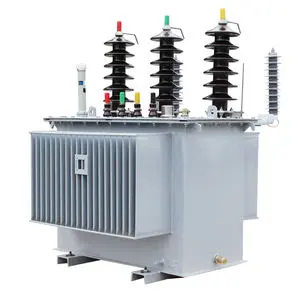
The S(B)H15 type three-phase fully sealed distribution transformer works by electromagnetic induction between its primary and secondary windings, which are wrapped around a core made of an amorphous alloy. When alternating current runs through the primary winding, it creates a magnetic flux inside the core. This flux causes voltage to build up or down in the secondary winding, which adjusts the amount of electricity to meet the needs. The fully sealed corrugated tank design keeps air from coming into contact with the insulating oil, which stops oxidation and moisture contamination. The flexible corrugated walls also allow for thermal expansion, which means that the tank will work reliably and without maintenance for decades in grid infrastructure and renewable energy installations.
Learning the basics of how this equipment works can change the way you buy it, especially if you use lifecycle costs and operational reliability as the main criteria for your decision. Now let's look at how this new way of distributing power works and what it can do for us.
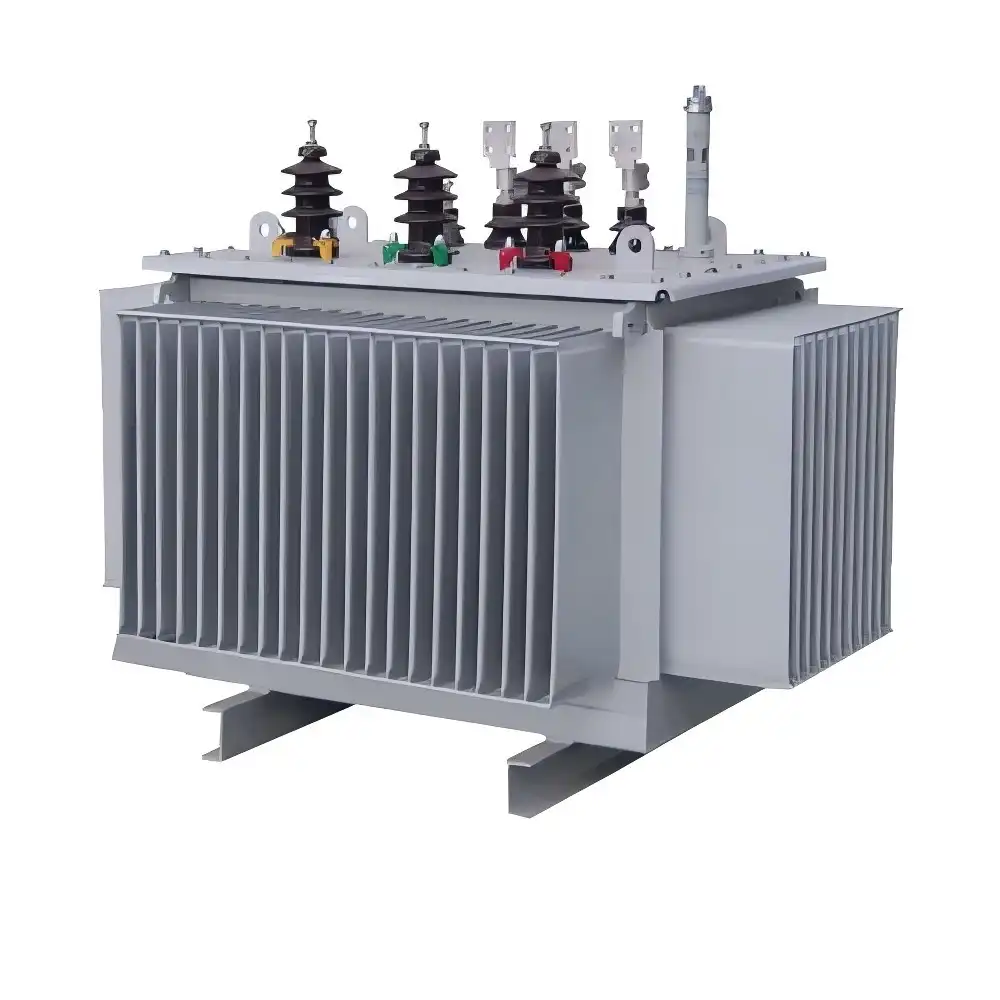
Magnetic induction is the basic idea behind how transformers work. A rotating magnetic field is made inside the core material when three-phase alternating current flows into the main winding setup. This field's strength and direction are always changing, which causes the secondary windings to have a proportional voltage based on the number of turns between each coil set.
The S(B)H15 design uses a Dyn11 connection group configuration, which gives the secondary side neutral grounding and keeps the delta connections on the primary side. This setup effectively reduces harmonics, which is very important for renewable energy uses, where inverter-generated harmonics can lower power quality. The three-phase system makes sure that the load is spread out evenly and uses less conductor material than single-phase systems.
The most innovative thing about this transformer is how it is built. Amorphous alloy ribbons have an amorphous atomic arrangement, which is different from traditional silicon steel laminations that have crystalline atomic structures. This is because they are made through rapid solidification processes. This basic difference in materials greatly lowers hysteresis losses, which are the energy lost when magnetic domains readjust during each AC cycle.
The results of tests show that amorphous cores have about 80% lower no-load losses than regular silicon steel cores. When your building uses transformers 24 hours a day, seven days a week, with different loads, this efficiency benefit directly leads to measurable cost savings. A 1000kVA unit can save you several thousand dollars a year just on electricity costs, and it usually pays for itself in less than four years.
The term "fully sealed" refers to an oil tank system that is completely sealed and doesn't need an oil growth tank like most designs do. When the temperature changes, the oil amount changes, and the curved tank walls flex in and out to accommodate the changes. This gets rid of the point where oil meets air, which is where oxidation and moisture absorption usually happen.
Degradation of oil is one of the main ways that conventional transformers fail. Adding moisture lowers the dielectric strength, and oxidation makes the sludge, which makes cooling less effective. By completely closing the system, the S(B)H15 increases the expected lifespan of the insulation system from 20 years to 30 years or more, as long as the right steps are taken to process and fill the oil at the beginning.
Tap changers change the number of turns between the main and secondary windings to control the voltage. The S(B)H15 uses non-excitation tap changing, which means that changes are only made when the transformer is not powered up. Standard tap ranges of ±5% or ±2×2.5% can handle changes in distribution networks' voltage, keeping the secondary voltage stable even when the main voltage changes.
It can handle power frequency voltages of up to 35kV AC and lightning surge voltages of up to 75kV, which means it passes the IEC 60076 dielectric test, and for an S(B)H15 type three-phase fully sealed distribution transformer, this robust insulation margin is especially valuable in rural or coastal areas where lightning activity is high, and grid stability may be less predictable. This strong insulation design gives you extra safety that you need in places where lightning strikes often or where equipment nearby is switching transients.
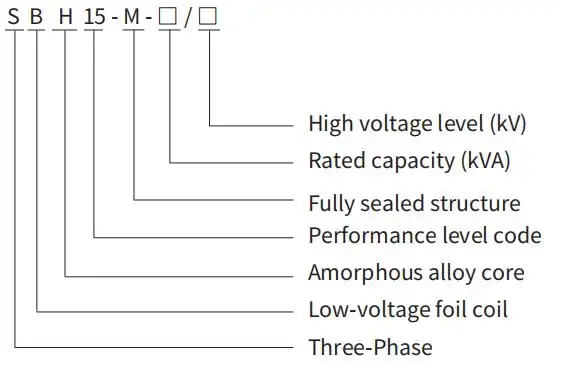
The S(B)H15 is one of the most energy-efficient distribution transformers on the market because it has achieved Level 1 energy efficiency scores. The performance is due to the amorphous core technology and optimised winding designs that cut down on both no-load and load losses.
Take a look at a normal industrial building that runs a 1500kVA generator at 60% of its full capacity for 8,760 hours a year. At their rated capacity, traditional silicon steel transformers may lose about 2,500W when they're not loaded and about 15,000W when they are. The S(B)H15 cuts no-load losses to about 500W, which is more than 2,000W of continuous draw. At an average of $0.10/kWh for industrial electricity, this one improvement in efficiency saves more than $1,750 a year just in no-load losses. When applied to a utility's thousands of transformers, these savings add up to millions of dollars over the life of the equipment.
When compared to traditional oil-immersed units, the sealed tank design changes the maintenance needs in a big way. During their service life, conventional transformers need to have oil samples and tests done on a regular basis, breather silica gel replaced, conservators inspected, and the oil may need to be recycled or replaced. These things cost money in terms of supplies and labour, and they also put operations at risk during repair windows.
The S(B)H15, on the other hand, gets rid of these regular maintenance tasks. Once properly set up with good shielding oil, the sealed system keeps the oil's stability for the whole time the transformer is in use. This benefit is especially useful for green energy installations that are far away and hard to get to, as it makes upkeep costs go up quickly. Equipment that works effectively without regular service visits is very helpful for wind farms in mountainous areas or solar setups in desert areas.
Oil containment rules are getting stricter in all areas, and facilities that release oil into the environment will face big fines. The sealed design naturally lowers the risk of oil leaks by getting rid of gasket joints at conservator links and cutting down on the number of places where something could go wrong.
The corrugated tank design makes the structure more stable during earthquakes or shipping accidents. Compared to traditional flat-wall tanks with many flanged connections, this containment system is stronger because the seams are continuously welded instead of being bolted together. This improved safety rating is necessary for sites in areas that are bad for the environment or close to water sources, where even small amounts of oil can have bad effects.
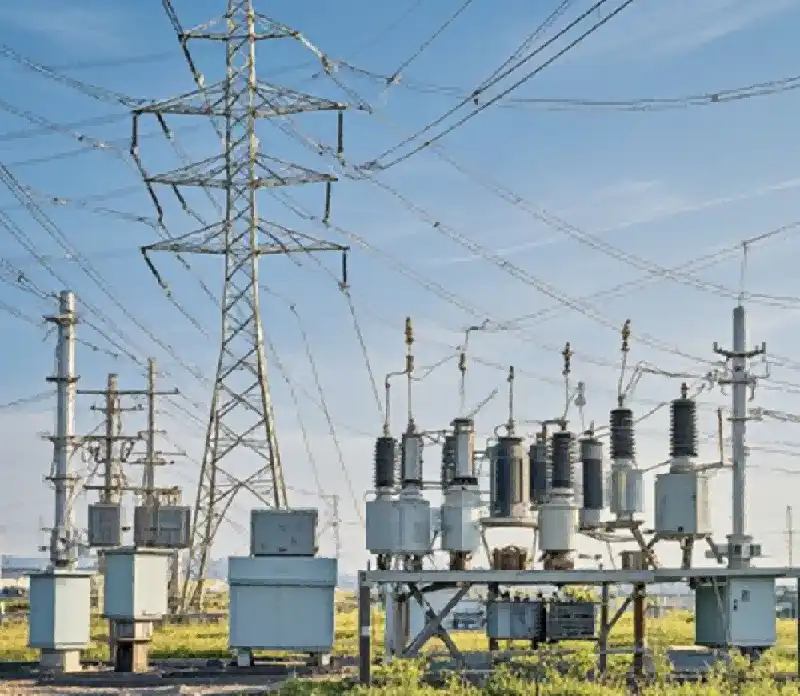
Traditional S11 series transformers with silicon steel cores have been reliable for decades, setting a standard for how well newer technologies should work. When buying teams compare the total cost of ownership, they find that amorphous alloy designs have strong benefits.
At full capacity, a 1000kVA S11 transformer loses about 1,800W when it's not loaded and about 10,500W when it is, while an S(B)H15 type three-phase fully sealed distribution transformer of the same rating reduces no-load losses to approximately 350W and load losses to 9,500W, representing a significant efficiency improvement that translates into substantial energy savings over the transformer's service life. These numbers go down to about 350W no-load and 9,500W load losses for the similar S(B)H15 unit. At modest power rates, the energy savings from less no-load losses alone over a 25-year service life are more than $30,000. When plans to expand a facility call for installing more than one transformer, the overall savings make up for the higher starting costs while also being better for the environment because they lower carbon emissions.
Standard oil-immersed transformers with conservators need to be maintained regularly to keep up with performance standards. The point where oil and air meet in conservatories lets water in, which weakens the protection over time. Breather systems try to solve this problem, but silica gel dessicants need to be replaced when they get full, and how well they work depends on how often they are maintained.
The fully sealed option gets rid of all of these worries. Field experience from utilities that have extensively used sealed transformers shows that service calls and unplanned power outages have dropped by a huge amount. One regional utility said that in their first 15 years of service, sealed units have 60% lower failure rates than transformers with conservators, and almost no failures are caused by moisture. This dependability directly leads to more systems being available and lower replacement costs.
The unique operating problems of renewable energy systems make sealed amorphous alloy transformer designs the best choice. Depending on the time of day and the weather, solar arrays and wind farms can run for long periods of time with little or no load. During these times, the main source of energy used is no-load losses.
The 80% drop in no-load losses means that the S(B)H15 wastes a lot less energy keeping its magnetic field strong during the 4,000 to 6,000 hours a year when renewable energy runs at low output. Because of this, grid operators who are putting in place energy storage systems and green interconnection projects favour it. Amorphous alloy transformers have been used in many large-scale solar installations in the southwestern United States because they are more efficient. These installations have seen measurable improvements in their overall project economics.
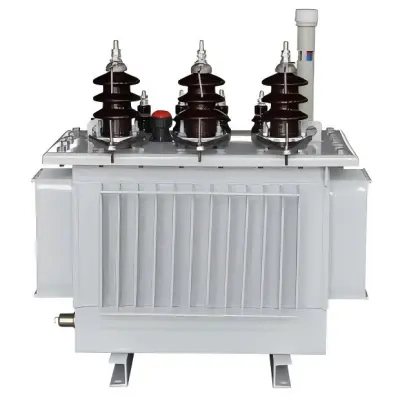
To find reliable S(B)H15 type three-phase fully sealed distribution transformer suppliers, you need to make sure of a few important things. As well as ISO 9001:2015 certification, factories should show product-specific approvals like IEC 60076 compliance and regional certifications like CE marking or UL listing, based on where the product will be installed.
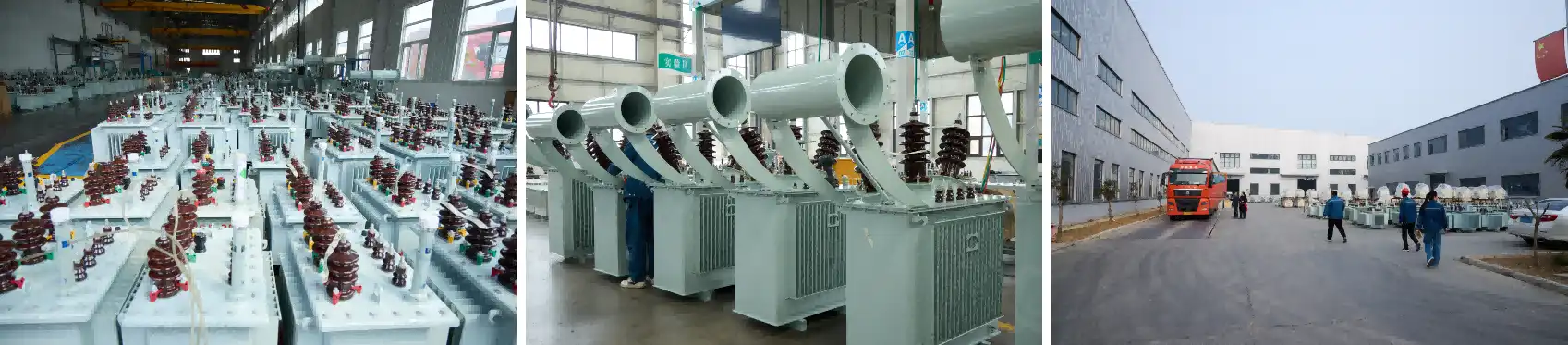
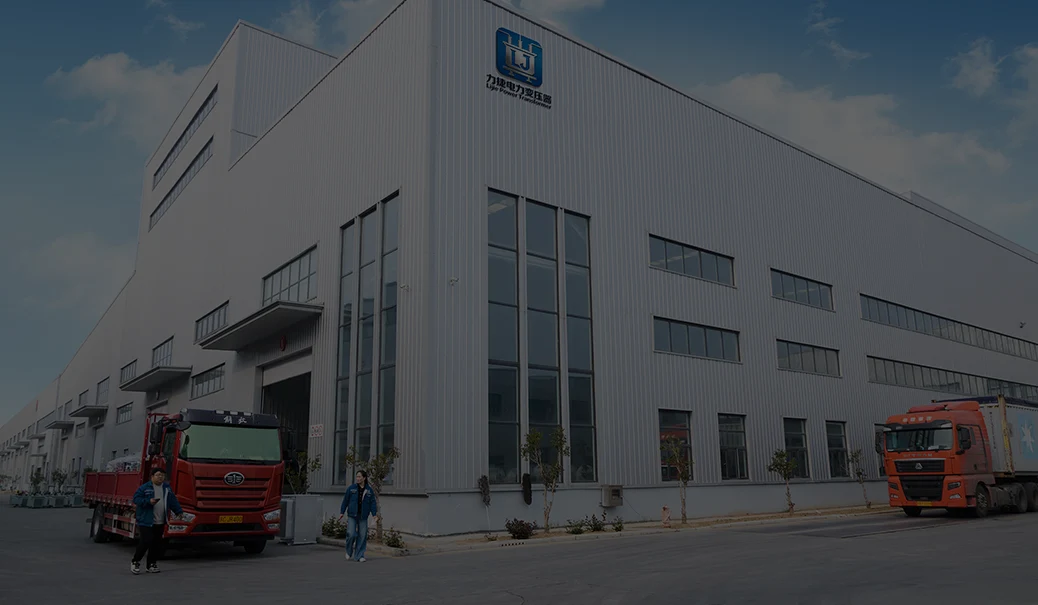
When working on big infrastructure projects that need a lot of pieces in a short amount of time, production ability is very important. Manufacturers with established production lines that can deliver 500 or more transformers a year give big projects the supply chain stability they need. Lijie Electric Power Technology Group has two locations with manufacturing facilities that cover 500,000 square meters. The company has more than 2,000 employees and produces enough every year to support projects that need standard batch deliveries.
When examining possible suppliers, ask for proof of past project experience with similar tasks. A company's past work on green energy projects or changes to utility networks shows that they can do more than just meet basic product requirements. Teams in charge of buying things can evaluate quality control methods, testing equipment, and production management systems by visiting factories in person.
The needs for a distribution network are very different depending on the area and the purpose. Standard catalogue items work for many setups, but specification optimisation is often helpful for big jobs. Customisation options include changing the voltage ratio beyond standard taps, creating unique winding configurations to reduce harmonics, improving seismic ratings for areas prone to earthquakes, and lowering the rating for high-elevation installs.
Manufacturers who are good at what they do keep engineering teams that are prepared to work together on defining requirements and improving specifications, and for an S(B)H15 type three-phase fully sealed distribution transformer, this collaboration is particularly valuable when the transformer must integrate with renewable energy systems, industrial drives, or sensitive electronic loads that demand specific impedance, harmonic tolerance, and voltage regulation characteristics. This technical relationship is very helpful when adding transformers to complicated green energy systems or factories that need to meet certain power quality standards. True technology partners can give you access to detailed technical documentation, finite element analysis for modelling thermal and electromagnetic fields, and the ability to test prototypes.
Amorphous metal transformers usually cost 20–40% more than silicon steel options at first, but this depends on the capacity and other specifications. This extra charge is because the materials for amorphous ribbon are more expensive, and the manufacturing process is more complicated. Lifecycle economic study, on the other hand, always shows that the total costs of ownership are lower when energy savings are properly valued.
When making budget suggestions, use accurate predictions of how much power will cost to figure out the present value of energy savings over the expected service life. Include differences in maintenance costs that favour sealed designs—plan to spend between $800 and $1,500 a year on generator care with a conservator, but almost nothing on maintenance for sealed units. When failure rates go down, replacement costs go down, and system reliability goes up, which is good for the bottom line in critical situations.
Standard catalogue items usually ship 8 to 12 weeks after an order is placed, but lead times can be longer for special orders or when demand is high. Framework agreements help big projects that need a lot of units by making sure there is enough production capacity and setting delivery dates that work with building goals.
Because transformers are heavy and have limited dimensions, transportation arrangements need to be carefully planned. It takes special handling tools to load, move, and set up a 1500kVA unit because it weighs between 4,000 and 5,000 kg. Work with transportation companies that know how to handle electrical equipment to make sure it is properly secured, protected from vibrations while being shipped, and meets any size requirements for shipping by road or rail.
Preparing the site should happen at the same time as making the transformers. Before putting in the equipment, the pad foundations need to have had enough time to cure. The cable termination should also be ready, and the protection relay settings should have been programmed using the transformer impedance values given by the manufacturer. If you plan ahead, the arrival of the transformer will coincide with the site's readiness, which will avoid costly storage delays or rushed installation procedures.
The basis for decades of steady service is set by proper commissioning. Before turning on the power, make sure that the shielding oil meets or exceeds the criteria. When tested according to ASTM D1816 for a 2.5 mm gap, the dielectric breakdown voltage should be higher than 60 kV. The moisture content must stay below 10 ppm, as measured by the Karl Fischer titration, and the dissolved gas analysis should not show any signs of arcing or thermal problems.
The sealed tank design keeps out moisture while it's working, but contamination during production or installation can hurt its long-term performance. If you can, make sure you see the oil processing steps in action, or demand thorough records of the hoover drying, oil filtering, and cleanliness rules that were followed during production. These safety measures don't cost much to install, but they save a lot of money in repairs later on.
Electrical testing procedures should include checking the resistance of the windings on all phases, the resistance of the insulation, the power factor of the insulation, and the turns ratio at all tap positions, and for an S(B)H15 type three-phase fully sealed distribution transformer, these baseline measurements are critical to verify that the sealed tank and internal connections have not been compromised during transit and installation. Check the recorded values against the factory test results to make sure that damage has not been caused by transporting and installing the equipment. Reports that were ordered to record these readings set the standard for future medical tests.
Even though sealed transformers don't need as much care as older designs, they are still worth checking on a regular basis to see how they're doing. Hotspots found by thermal imaging scans could mean that connections are loose, loads aren't being applied properly, or there are problems with the cooling system. Depending on how important they are, surveys should be done once a year or every six months to find trends in data that show problems before they become failures.
Load tracking, which can be done with SCADA systems or separate recording gear, compares real working profiles to what was planned. When transformers are consistently loaded above 80% of their rated capacity, the insulation systems wear out faster, and units that are consistently loaded below 40% of their rated capacity may not be using all of their installed capacity. This operational data helps make decisions about long-term asset management and improves how networks are set up.
Small oil samples can still be drawn through sampling holes on sealed transformers so that dissolved gas measurement can still be done. Three to five years between tests is enough time for most installations, but more often tests are needed for important assets. Key gases like hydrogen, acetylene, ethylene, and carbon monoxide can be used to find early signs of faults before they become catastrophic failures.
The installation setting has a big effect on the transformer's life. While the S(B)H15 is approved for temperatures up to 40°C, operating it near this temperature for a long time speeds up the insulation's breakdown. If you can, put up shade structures or shelters with air flow to keep the direct sunlight from heating up the area. In hot climates, this simple step can add years to the life of insulation.
Enough space around the transformer is needed for it to cool properly. The self-cooling design that is submerged in oil depends on convection currents inside the tank and air moving naturally around the outside. Installations in small rooms or places with limited airflow make cooling less effective and may need load derating. Follow the installation manuals' minimum clearances and don't put heat-generating equipment near transformers.
Places that are prone to earthquakes should pay attention to seismic safety. Even though the sealed tank building makes the structure more stable, it is still important to have a good base and anchors. Talk to structural engineers who know about IEEE 693 seismic qualification standards to make sure that the anchorage for the transformer can handle the expected ground motion without breaking.
The S(B)H15 type three-phase fully sealed distribution transformer is an advanced technology answer to three important issues in modern power distribution: saving energy, making sure the system works reliably, and lowering the overall cost over its lifetime. Its amorphous alloy core gives it clear efficiency benefits that add up to big savings over many decades of use, and the sealed tank design gets rid of the maintenance problems and failures caused by moisture that come with regular equipment. When procurement professionals look at investments in transformers for adding green energy, updating the power grid, or expanding industrial facilities, the technical and economic case for sealed amorphous metal designs is strong when the full cost of ownership is considered.
The disordered atomic structure of amorphous alloy lowers the energy needed for each AC cycle to realign the magnetic domain. Compared to grain-oriented silicon steel, this basic property of the material cuts hysteresis losses by about 80%. The efficiency benefit is most noticeable when the load is low or not there at all, when core losses are higher than total losses.
The dielectric properties of the oil in a completely sealed system stay the same for the transformer's 30+ year design life as long as it is properly handled. Since there is no air contact, oxidation and moisture absorption can't happen, which are the main ways that traditional designs break down. Long-term success is based on the quality of the oil at the start and how well it was vacuum processed during production.
Standard versions can work in temperatures up to 40°C and at heights up to 1,000 meters. Higher elevation locations need to be downsized or have their specifications changed to account for the fact that cooling works less well in air that is less dense. Extreme environment applications can be met by custom designs that include better insulation, different cooling systems, or higher-quality materials. However, these changes can affect prices and lead times.
The Lijie Electric Power Technology Group has a lot of experience making amorphous metal distribution transformers. Each year, they make more than 5 billion RMB in sales and place them all over the world. Our S(B)H15 type three-phase fully sealed distribution transformer meets strict IEC 60076 standards and has CE and UL certifications that make it easier for foreign projects to follow the rules. We have industrial facilities that cover 500,000 square meters and engineering teams with more than 160 advanced degrees. This means that we can work with you on technical issues and make the things that big infrastructure projects need. Email our experienced application engineers at lijieelectrical@gmail.com to talk about your unique needs and get thorough technical proposals that are made to fit your voltage class, capacity needs, and the conditions of the surroundings. Find out why major power companies and developers of renewable energy use Lijie Electric as their distribution transformer supplier for important power infrastructure projects.
1. International Electrotechnical Commission. "Power Transformers – Part 1: General." IEC 60076-1:2011.
2. Zhang, W., and Liu, T. "Performance Analysis of Amorphous Alloy Distribution Transformers in Renewable Energy Applications." IEEE Transactions on Power Delivery, vol. 34, no. 2, 2019, pp. 687-695.
3. National Electrical Manufacturers Association. "Guide for Loading Mineral-Oil-Immersed Transformers and Step-Voltage Regulators." ANSI/IEEE C57.91-2011.
4. Chen, M., et al. "Long-Term Reliability Assessment of Sealed Distribution Transformers in Utility Networks." Electric Power Systems Research, vol. 156, 2018, pp. 112-120.
5. American Society for Testing and Materials. "Standard Test Method for Dielectric Breakdown Voltage of Insulating Oils of Petroleum Origin Using VDE Electrodes." ASTM D1816-12.
6. Kulkarni, S.V., and Khaparde, S.A. "Transformer Engineering: Design, Technology, and Diagnostics." CRC Press, 2nd edition, 2012.
YOU MAY LIKE


10%20type%20epoxy%20resin%20cast%20transformer.webp)


%20Dry-type%20Distributing%20Transformer.webp)
April 27, 2025
With a tight project schedule, the manufacturer delivered on time, and on-site technical personnel provided guidance throughout the entire installation and commissioning process; the collaboration was highly efficient and hassle-free.
July 2, 2025
During the preliminary phase, a selection plan was custom-tailored based on the actual site load requirements, resulting in a high degree of parameter compatibility. After-sales support responds within two hours, and ongoing technical support for operation and maintenance is comprehensive; we feel completely confident in a long-term partnership.
November 18, 2025
Deployed as a supporting component for a 35kV grid-connection project at a photovoltaic power station, the equipment operates for an average of 16 hours daily. It demonstrates excellent control over no-load losses, ensures smooth power generation and grid integration, and effectively reduces the station's overall energy consumption.
January 30, 2026
Under the continuous, high-load operating conditions of a factory production line, the equipment maintains stable electrical parameters and exhibits strong overload resistance, thereby guaranteeing an uninterrupted power supply for industrial production.
April 3, 2026
Integrated as a supporting component for a new energy photovoltaic grid-connection system, the manufacturer provided professional technical coordination and timely after-sales support, ensuring seamless adaptation to the specific electrical operating conditions required for grid integration.