April 27, 2025
With a tight project schedule, the manufacturer delivered on time, and on-site technical personnel provided guidance throughout the entire installation and commissioning process; the collaboration was highly efficient and hassle-free.
Jun 20, 2026
An in-depth guide for technical decision-makers and people who buy things for businesses. Alternating current in the primary winding forms a magnetic field in the core, which causes voltage to be generated in the secondary winding. This is how the S11 type 35KV oil-immersed power transformer works. Mineral oil wraps around the core and windings, protecting them from electricity and passively removing heat through airflow. This design, which is bathed in oil, has about 25–30% lower no-load losses than older systems, and it will keep working reliably for decades in harsh utility and industrial settings.
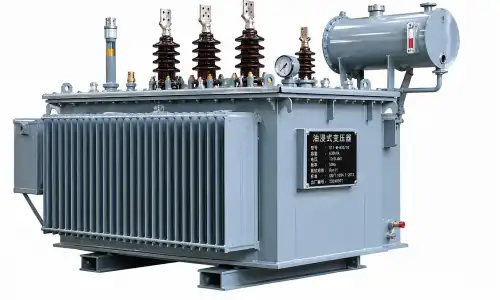
Achieving reliable industrial power transfer requires tools that can keep working for 20 to 30 years. In the United States, the S11 type 35KV oil-immersed power transformer is now an important part of infrastructure for utilities, green energy projects, and heavy industry buildings. This guide looks at how these transformers work, what specs are most important when buying them, and what upkeep methods give the best return on investment.
Electrical experts who are building substations need equipment that meets strict IEC and IEEE standards. Procurement managers, on the other hand, have to weigh the costs of the equipment up front against the total costs over its lifetime. Drawing on decades of manufacturing experience and field performance data, we've organized this material to meet both professional needs and business concerns. Knowing how S11 type 35KV oil-immersed power transformers work is important whether you're choosing transformers for a solar farm in Arizona or improving distribution networks in the Midwest.
A high-voltage alternating current flows into the main winding, which makes the layered silicon steel core magnetic. The changing magnetic field causes voltage to be generated in the secondary winding based on the number of turns. This lowers the voltage from 35KV to levels suitable for distribution. Core material is grain-oriented silicon steel that is about 0.27 mm thick and reduces eddy current losses while keeping magnetic permeability. Full-angle joints and raised lap construction cut down on air gaps at the corners, which lets the magnetic flux density range from 1.65 to 1.70 Tesla without getting too high.
Copper windings that don't contain oxygen decrease resistance losses and can handle mechanical stress during short circuits. The internal winding support structure has smooth edges on the pads and support bars, which makes the electric field spread out evenly. For units with a power rating of 12,500 kVA or more, uniform continuous support plates press on both the inner and outer coils at the same time. This keeps the axial height constant and provides excellent short-circuit resistance. This way of building keeps the windings from deforming, which is what goes wrong with 60% of transformers in the field.
The S11 type 35KV oil-immersed power transformer uses mineral transformer oil that meets IEC 60296 standards, which has a shielding strength greater than 60kV breakdown voltage and moves heat from the windings to the tank surface. As the oil heats up, natural convection moves it upward through winding pathways and then downward along the cooler walls of the tank. This circulation removes heat without the need for pumps or fans. The fully sealed tank design prevents the oil from coming into contact with oxygen and moisture in the air, significantly extending the service life of the oil and eliminating breathing systems that accelerate degradation in older designs.
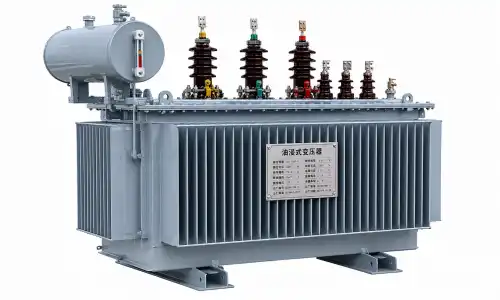
The main voltage of these transformers is 35KV, and their capacities range from 630 kVA to 31,500 kVA, making them suitable for both small industry substations and large utility-scale installations. No-load tap switches let you change the voltage over a range of ±5%, with middle points at ±2.5%. This lets you optimize the field without turning off the unit. Some connection types are Yyn0 for grounding uses and Dyn11 for phase shift benefits that improve system stability. 50Hz and 60Hz frequency ratings can be used for foreign projects, and single-phase and three-phase setups give designers more options.
The main cause of no-load losses is core magnetization, and they range from about 0.8kW at 500kVA ratings to 18kW at 10MVA ratings. Load losses, which are mostly caused by copper resistance heating, range from 5.5kW to 85kW, depending on the capacity. These changes in efficiency directly lead to cost savings. Based on $0.10/kWh industrial rates, a 2,500 kVA unit that runs constantly at 75% load usually uses $15,000 less energy a year than its S9 series models. Temperature rise limits of 65K for windings and 60K for oil make sure that the device stays stable at temperatures up to 40°C, which is in line with IEEE C57.12.00 thermal performance standards.
Core building methods keep noise pollution below the levels allowed by law for urban sites. The shape of the corrugated tank wall stops flat sound waves from reflecting, which slows the spread of noise. Impedance voltage, which is usually between 4% and 8% based on capacity, limits fault current while also meeting the needs for voltage control. Choosing the right impedance saves equipment further down the line during faults while keeping the voltage drop acceptable under regular loading. This is very important for places that need to start motors or sensitive electronic loads.
Predictive maintenance plans are based on tests that check the quality of the oil. Dissolved gas analysis finds small problems before they become big ones, and dielectric strength tests make sure the shielding is still good. Most systems should be sampled every 12 to 24 months, but places with a high risk of contamination or heavy loads should be sampled every three months. Bushing checks look for cracks in the ceramics, make sure the ground connections are correct, and measure the power factor to find places where water is getting in. To keep them from arcing and burning, mechanical inspections and measurements of contact resistance must be done on tap changer devices once a year.
Overheating usually means that the system is overloaded, the cooling system is blocked, or there is damage to the internal windings. Thermal imaging scans find hot spots in insulation before they break. When temperature changes and vibrations weaken seals, oil leaks often happen where gaskets meet, like between tank covers and bushing bases. The S11 type 35KV oil-immersed power transformer design solves this problem with precisely polished mating surfaces and advanced sealing materials, but it's still a good idea to tighten them every so often. Unusual sound signs point to loose core laminations or winding movement, which needs to be looked into right away to stop damage from spreading.
De-energization processes must follow lockout/tagout rules and make sure there is no electricity before people come close. When handling transformer oil, it's important to know its flash point, which is usually above 140°C, and how to properly control a spill. Nitrogen blanketing keeps the damp out during oil sampling or internal checks. When working in confined tank areas, you need to wear gloves that are rated for voltage, arc flash suits that are rated for incident energy levels, and respirators. Ground grid integrity verification stops step and touch potentials when there is a fault, which protects operations and repair staff.

For placements near busy areas, dry-type transformers are better because they don't use flammable liquids, which can cause fires. However, their limited ability to cool with air limits their capacity and makes them less efficient than oil-immersed designs. It is common for a 2,500 kVA dry-type unit to have 15-20% higher losses and take up 40% more room than a similar S11 type 35KV oil-immersed power transformer. Because the oil system transfers heat better, it can be built more compactly and handle more overload for longer. These are important benefits for utility and heavy industry settings where equipment selection is based on how well it works with heat and how much room it takes up.
Sulfur hexafluoride gas-insulated transformers are very small and don't cause any environmental problems like oil-based transformers do. Their sealed design makes them good for places where upkeep access is limited. But the capital costs are 150–200% higher than for oil-immersed versions, and handling SF6 requires special skills that make operations more difficult. Gas-insulated designs are more cost-effective for ultra-high-voltage substations in cities where the cost of land justifies the higher prices of the equipment. For the 35KV class, oil-immersed technology offers the best mix of cost, efficiency, and ease of maintenance.
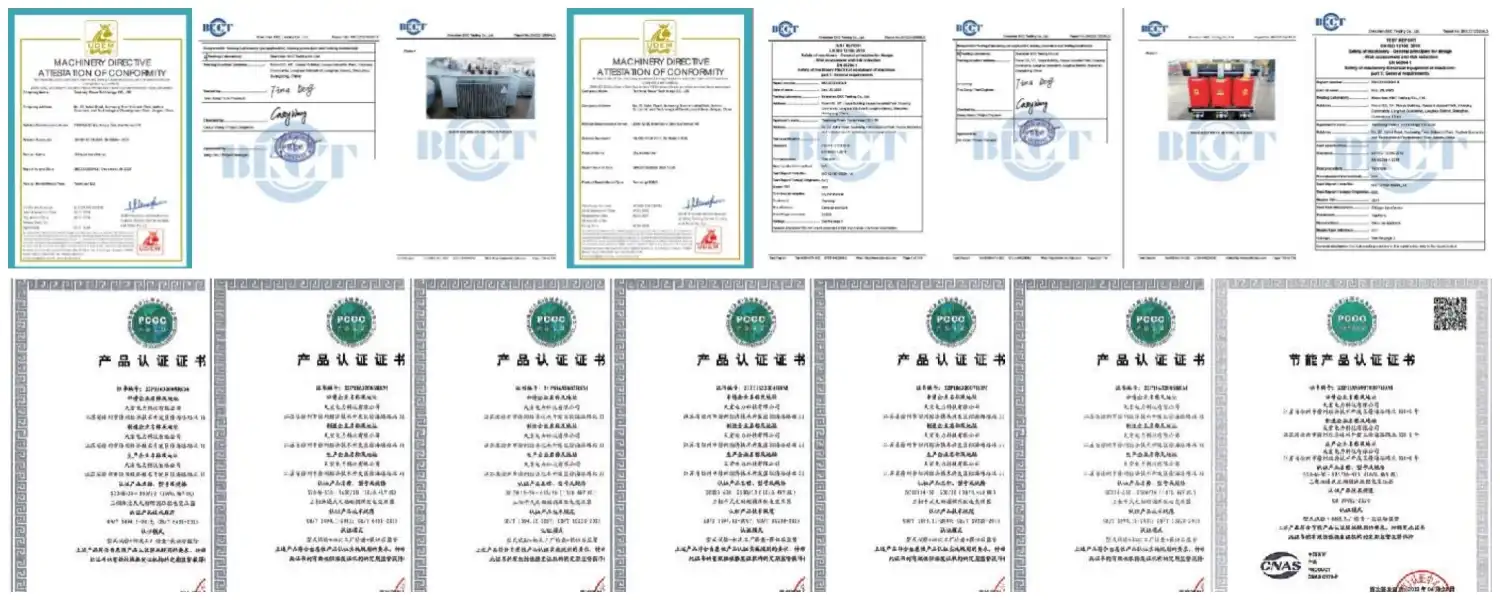
Well-known companies like ABB, Siemens, and Schneider Electric manufacture products similar to the S11 type 35KV oil-immersed power transformer, backed by global service networks. Asian companies like Lijie Electric combine modern production techniques with low prices to gain more market share. They achieve this by obtaining certifications such as ISO 9001:2015, CE, UL, and IEC compliance. Instead of relying solely on a company's brand name, procurement teams should evaluate its product testing capabilities, large-scale production responsiveness, and proven field performance. Objective performance validation comes from third-party testing organizations such as the National Transformer Quality Supervision and Inspection Center.
To find the right transformer capacity, you need to do a thorough load study that looks at things like peak demand, variety factors, and plans for future growth. Oversizing by 20–30% allows for growth while keeping operations running efficiently. However, having too much capacity increases no-load costs and initial investment. Conditions at the site, such as the temperature, elevation, earthquake needs, and the size of the space available, limit the choice of tools. Different customization choices, like impedance specification, auxiliary winding setups, and specialty tracking systems, can be made to fit the needs of each application. During the RFQ process, making clear technical specifications makes sure that offers meet real needs instead of causing people to compromise.
The price of a transformer depends on its capacity grade, the cost of materials (mostly copper and electrical steel), the licensing standards, and the position of the maker. Price advantages can be gained by making volume promises for projects that involve more than one unit and by setting flexible delivery times that work with the manufacturer's production plans. To figure out the total cost of ownership, you have to add up the energy losses over the expected lifespan, the length of the guarantee, and the number of repair visits that are planned. Over 25 years of running, a unit that costs 15% less but loses 10% more usually ends up costing more. When negotiating a contract, it's important to pay equal attention to both the equipment specs and the payment terms, performance promises, and availability of spare parts.
Suppliers that you can trust show that they can handle big orders without affecting delivery times or quality standards. Audits of factories check the tools used for production, the ways they check for quality, and their ability to test. Systematic quality management is shown by ISO 9001 certification, and agreement with relevant standards is shown by IEC, CE, and UL product-specific certifications. When problems happen, the framework for after-sales support, which includes expert help, a collection of spare parts, and field service options, is very important. References from similar projects and recorded mean time between failure (MTBF) data give more concrete measures of success than just marketing claims.
The S11 type 35KV oil-immersed power transformer is an example of advanced technology that has been improved over many years by engineers. Its electromagnetic induction principle, which is improved by using high-quality materials and making sure every part is exactly right, leads to higher efficiency and cost savings. Understanding how things work, what they're made of, and how often they need to be maintained gives procurement workers and engineers the information they need to make choices that meet project needs and company goals. These transformers are still very important for utilities, factories, and green energy sites all over North America, even though power infrastructure is changing to meet higher standards for efficiency and dependability.
Testing the quality of the oil once a year finds decline before it affects the dielectric strength and safety. Dissolved gas research finds early signs of problems like overheating and partial release. Most problems in the field can be avoided by checking the bushings, maintaining the tap changer, and making sure the cooling system works. When used in utility uses, S11 type 35KV oil-immersed power transformers that are well taken care of usually last 30 years or more.
Mineral oil is a better insulator than air because it has a breakdown voltage higher than 60kV and moves heat much more efficiently. This lets more power fit into a smaller space and makes it easier to overload. There is no chance of fire with dry systems, but they don't work as well with heat and usually cost more per kVA of power. Designs that are soaked in oil are good for heavy-duty uses and outdoor installs.
Lockout/tagout measures keep power from being turned on by mistake during maintenance. Arc flash danger analysis tells you what PPE you need for different jobs. To take an oil sample, the spill must be contained, and the equipment must be properly grounded. Entering a tank requires following limited space rules, which include testing the air quality and letting air flow through the area. Ground grid checking keeps people safe when there is a fault. Following the rules set by NFPA 70E and IEEE C2 guarantees full safety.
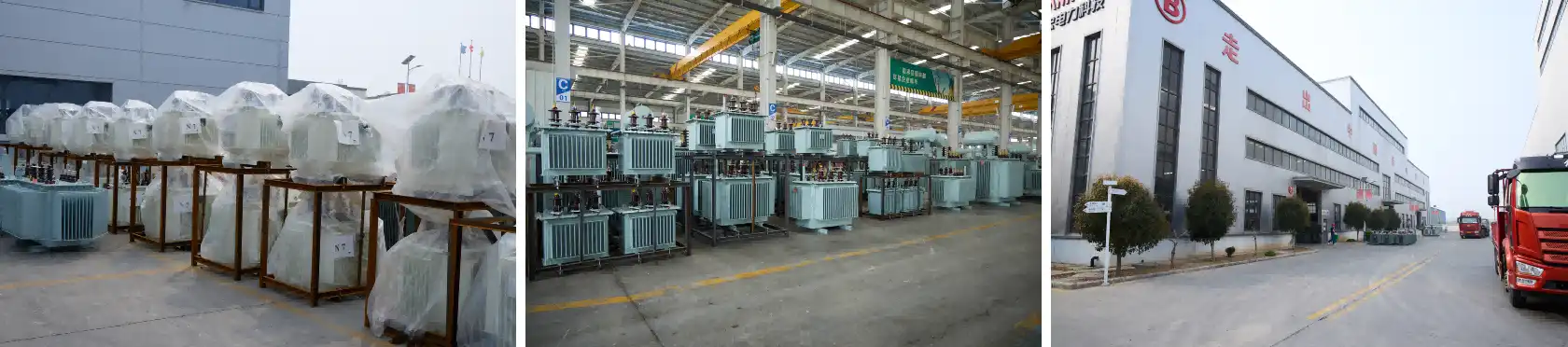
With two factories that cover 500,000 square meters, Lijie Electric makes S11 type 35KV oil-immersed power transformers with capacities ranging from 630 kVA to 31,500 kVA. Over 160 engineers on our team have doctoral or master's degrees. They develop transformers that meet IEC, CE, and UL standards and are in line with GB 20052-2020 Level III energy saving standards. The factory can make more than 5 billion RMB a year, which helps with big purchases for industry and utility projects. The National Transformer Quality Supervision and Inspection Center tests each transformer for its type. This makes sure that all production runs work the same way. Email our expert sales team at lijieelectrical@gmail.com for more information, to get help with customization, or to get bulk prices. We help buying managers and engineering teams with developing specifications, installing, and testing. We also offer full after-sales service that meets GB/T 27922-2021 standards.
1. IEEE C57.12.00-2015, "IEEE Standard for General Requirements for Liquid-Immersed Distribution, Power, and Regulating Transformers," Institute of Electrical and Electronics Engineers, 2015.
2. Heathcote, Martin J., "The J&P Transformer Book: A Practical Technology of the Power Transformer," 13th Edition, Newnes Publishing, 2007.
3. Harlow, James H., "Electric Power Transformer Engineering," 3rd Edition, CRC Press, 2017.
4. IEC 60076-1:2011, "Power Transformers - Part 1: General Requirements," International Electrotechnical Commission, 2011.
5. Kulkarni, S.V. and Khaparde, S.A., "Transformer Engineering: Design, Technology, and Diagnostics," 2nd Edition, CRC Press, 2013.
6. GB 20052-2020, "Limited Values of Energy Efficiency and Energy Efficiency Grades for Three-Phase Distribution Transformers," Standardization Administration of China, 2020.
YOU MAY LIKE



14%20Epoxy%20Resin%20Dry%20Type%20Transformer.webp)
18%20type%20epoxy%20resin%20cast%20transformer.webp)
April 27, 2025
With a tight project schedule, the manufacturer delivered on time, and on-site technical personnel provided guidance throughout the entire installation and commissioning process; the collaboration was highly efficient and hassle-free.
July 2, 2025
During the preliminary phase, a selection plan was custom-tailored based on the actual site load requirements, resulting in a high degree of parameter compatibility. After-sales support responds within two hours, and ongoing technical support for operation and maintenance is comprehensive; we feel completely confident in a long-term partnership.
November 18, 2025
Deployed as a supporting component for a 35kV grid-connection project at a photovoltaic power station, the equipment operates for an average of 16 hours daily. It demonstrates excellent control over no-load losses, ensures smooth power generation and grid integration, and effectively reduces the station's overall energy consumption.
January 30, 2026
Under the continuous, high-load operating conditions of a factory production line, the equipment maintains stable electrical parameters and exhibits strong overload resistance, thereby guaranteeing an uninterrupted power supply for industrial production.
April 3, 2026
Integrated as a supporting component for a new energy photovoltaic grid-connection system, the manufacturer provided professional technical coordination and timely after-sales support, ensuring seamless adaptation to the specific electrical operating conditions required for grid integration.