April 27, 2025
With a tight project schedule, the manufacturer delivered on time, and on-site technical personnel provided guidance throughout the entire installation and commissioning process; the collaboration was highly efficient and hassle-free.
Jul 20, 2026
The S13 type three-phase distribution transformer is a big step forward in oil-immersed power distribution technology. It was designed for industry and utility uses that need to be very reliable and use very little energy. This high-performance gear has cold-rolled grain-oriented silicon steel cores and optimised winding configurations, which make both no-load and load losses measurably lower than in older models. With certifications that meet IEC60076 and GB/T10228 standards, the S13 transformer meets important buying goals like low total cost of ownership, stable operation, and meeting international quality standards. These are important for power utilities, renewable energy integrators, and large industrial facilities.
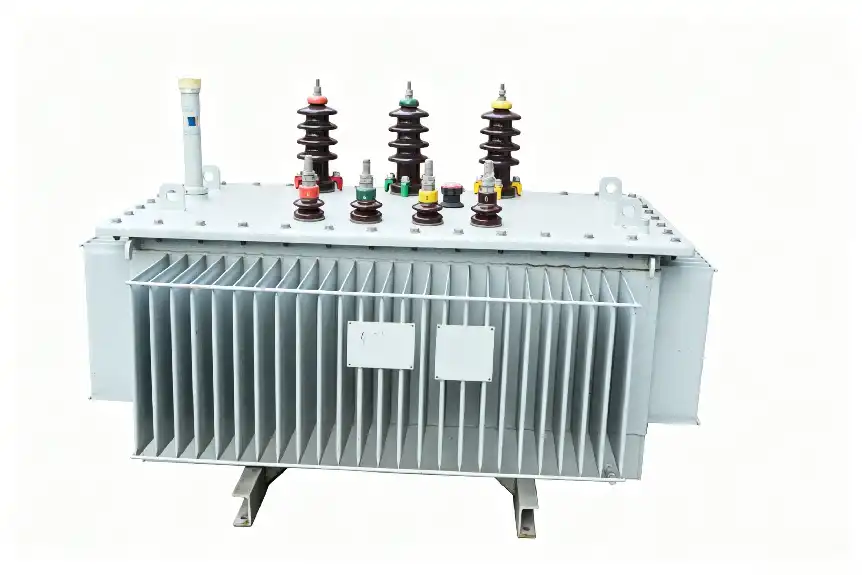
With its combination of new materials and tried-and-true design principles, the S13 type three-phase distribution transformer stands out as a refined solution for modern power networks. At Lijie Electric, we've seen how purchasing managers and electrical engineers rank different technical factors when looking at different transformer options. The capacity ranges from 30kVA to 3150kVA, so it can be used for a wide range of situations, from small industrial parks to large grid substations. These units give you the voltage control you need for changing load conditions because they can work at 6kV and 12kV voltage levels and have flexible tap configurations of ±5% or ±2×2.5%.
The mechanism for no-excitation voltage regulation makes S13 type three-phase distribution transformer operation easier and keeps costs low, especially in places where changes in load happen in predictable ways. Connection group names like Dyn11 or Yyno allow for a wide range of configurations that can be used for different grounding needs and harmonic mitigation strategies. The oil-immersed self-cooling method gets rid of the need for forced cooling systems, which makes installation easier and lowers the cost of ongoing upkeep. Power frequency withstand voltages of AC-35kV and impulse withstand voltages of L1-75kV in insulation levels provide strong protection against transient overvoltages that happen in industrial settings and during grid switching operations.
By comparing their performance to older S11 transformers, S13 transformers have no-load loss reductions of about 25–30%. This is because high-permeability silicon steel sheets with the right width, which is usually between 0.23mm and 0.30mm, were used. The design of the magnetic circuit keeps flux distribution good while minimising eddy current losses. Load losses are also reduced by all-copper windings that are made to exact measurements. This means that even at full capacity, there aren't many resistive losses. Over the course of a typical 25-year operational lifetime, these improvements in efficiency save a lot of money on energy costs. This is a calculation that procurement managers who look at lifecycle economics really understand.
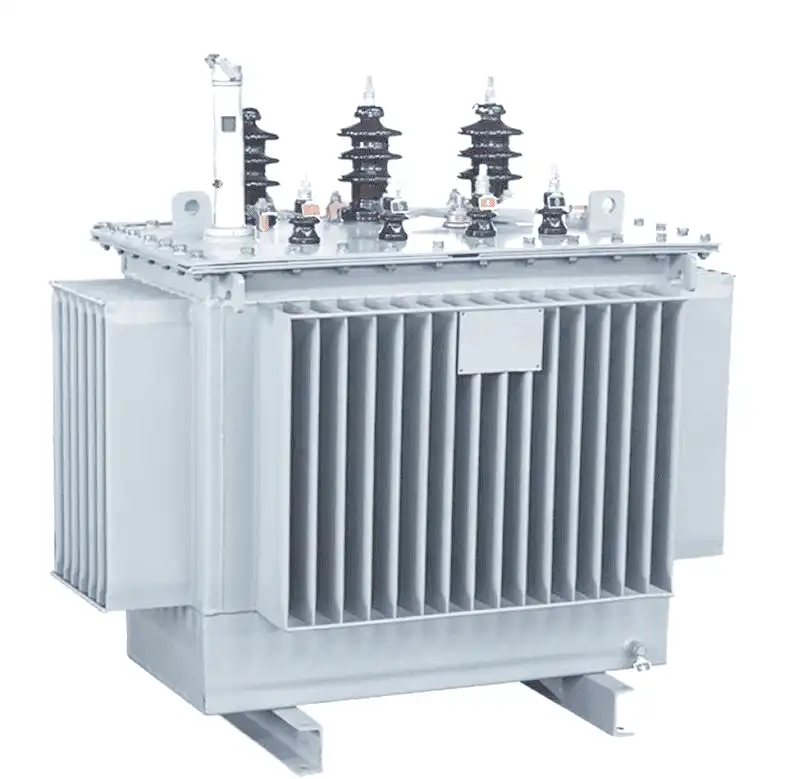
Another thing that sets them apart is their acoustic show. The S13 series works with noise levels that are about 3 to 5 decibels lower than what is required by the standard, and tests show that they are usually 20% lower than the JB/T10088-2004 national standard. This improvement in sound quality is due to new ways of clamping the core and building methods that reduce vibrations. The corrugated tank design not only lets the oil expand without the need for extra separators, but it also works well as a radiator, spreading heat over a larger area. This fully sealed structure stops water from getting in and oil from oxidising, which are both very important for installations in humid climates or coastal areas where the environment speeds up the ageing process of regular designs.
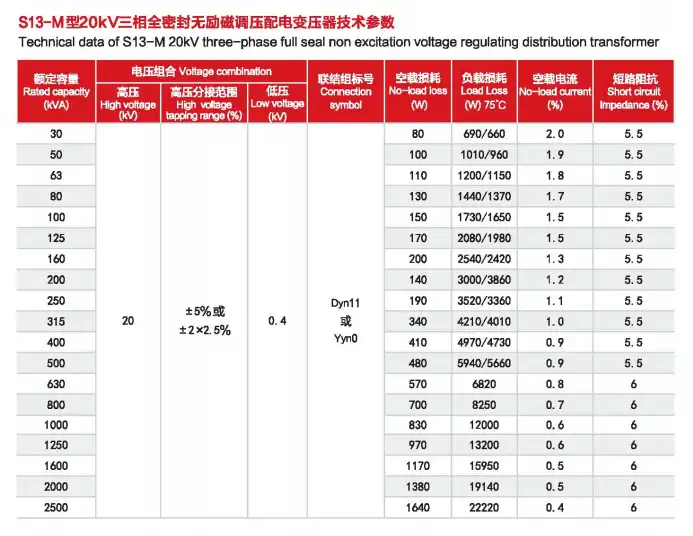
When investing in transformers, knowing how they compare in terms of performance helps match technical specs with the needs of the application. The S13 type three-phase distribution transformer is at the top of the hierarchy of efficiency because it strikes a good balance between performance gains and buying costs.
Even though amorphous core transformers have the lowest no-load losses, silicon steel designs like the S13 are often better for certain tasks because they are more practical. Amorphous cores are more easily damaged by mechanical stress and need to be handled carefully when being moved and put in place. Because they have higher initial prices, they need longer amortisation times. This means that they work best for continuous base-load uses. S13 silicon steel transformers are a practical middle ground. They offer big improvements in efficiency, proven mechanical robustness, and a wider range of availability across supply chains. These are all very important factors for project managers who are working with limited budgets and tight installation schedules.
The engineering idea behind S13 type three-phase distribution transformers is to keep losses as low as possible across all load ranges. Core losses are the biggest when the load is low, and copper losses become important when the load goes up. The S13 design makes both loss components work better by choosing the right materials and arranging them in the right way.
Precision cutting and step-lap construction are used to make high-permeability silicon steel laminations. This gets rid of air gaps that would otherwise make magnetising current and no-load losses go up. Using vacuum oil-filling methods gets rid of tiny air bubbles in the insulation system. This stops points of partial discharge that could damage the long-term integrity of the dielectric. This strict manufacturing process directly supports the longer 30-year design life that procurement requirements are calling for more and more.
When the temperature of the oil changes, the corrugated tank surface area expands and contracts in an elastic way. This keeps the internal pressure at the right level without the need for bladder systems or breather mechanisms that are hard to maintain. When the load is at its highest, the spread cooling surface keeps the temperatures of the winding hot spots within safe limits. This keeps the insulation intact even when there is a brief overload. The S13 type three-phase distribution transformer has been successfully applied in solar farms, where it can handle inverter-generated harmonics without derating and continue operating reliably in temperatures ranging from -25°C to +40°C.
In the southeast of the United States, a distribution company replaced twenty-four old transformers with S13 units that were each rated at 1000kVA. The amount of energy used each year went down by 187,000 kWh, which, at normal commercial rates, means an annual savings of $18,700. In less than four years, the project made enough money to cover its costs, and it also made the power more stable across the distribution network it served. These real results back up the claims of speed and show why S13 technology should be used in business.
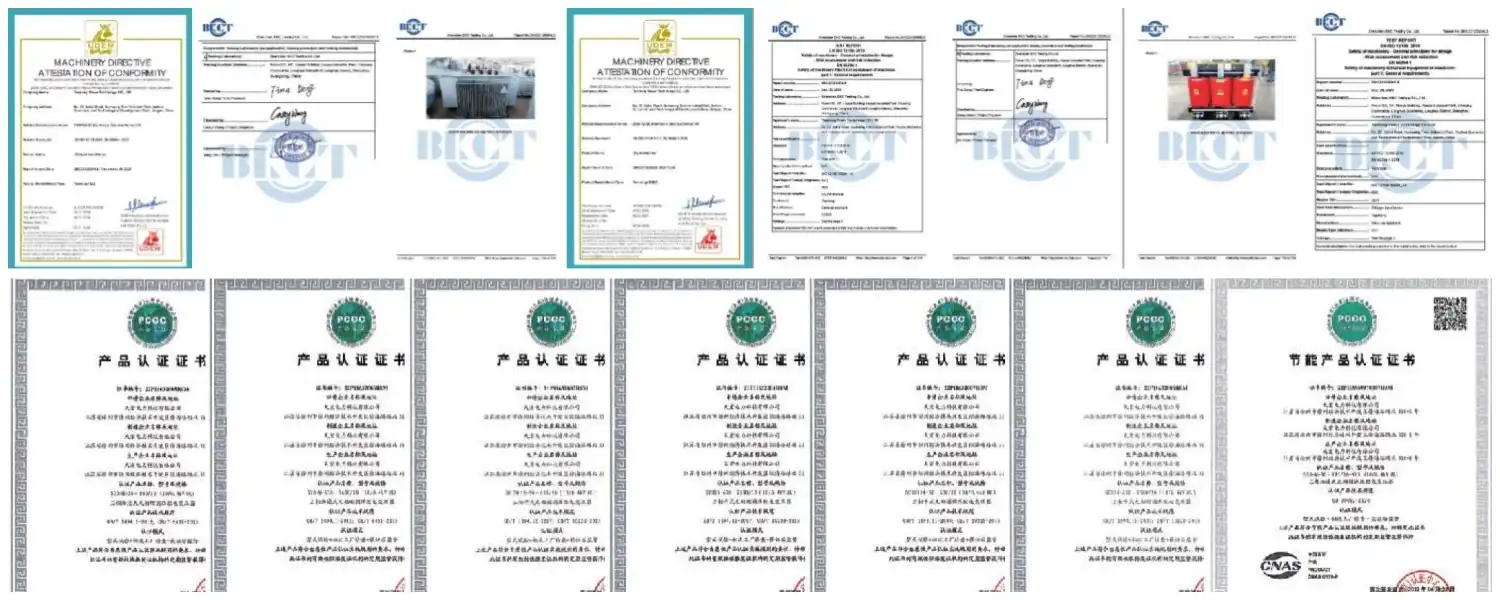
Reputable manufacturers have full quality management systems that are certified to ISO 9001:2015 standards. Third-party certification bodies regularly audit production facilities to make sure they are up to code. IEC compliance testing results, CE marking for entry to the European market, and UL recognition for installs in North America should all be part of a product's certifications. At Lijie Electric, our factories in Xuzhou and Nantong are inspected once a year to make sure they are following the written rules for everything from checking the raw materials to doing the final factory acceptance testing.
For big infrastructure projects, custom specifications are often needed that aren't available in a catalogue. Voltage ratios, impedance values, and accessory configurations of S13 type three-phase distribution transformer may need to be changed to work with existing systems or to fit the conditions of a specific site. When manufacturers have their own engineering teams, they can quickly respond to these requests for customisation, which usually adds two to four weeks to the normal production schedule. During the planning stages of a project, our technical staff works directly with design firms and EPC companies to make sure that the final standards meet both technical needs and installation limitations.
The costs of buying something are only one part of the total costs that come up over its lifetime. For continuously loaded units, efficiency is the most important economic factor because the energy losses over decades of operation often exceed the initial capital investment. Costs of ownership are also affected by how often maintenance is needed, how easy it is to get replacement parts, and the length of the warranty. Fully sealed S13 transformers don't need to be oil sampled or monitored for moisture on a regular basis, which cuts down on maintenance work compared to alternatives with conservators. When comparing prices, smart buyers use financial models that include estimated energy costs over the expected service life. This shows them the real economic benefits of high-efficiency equipment.
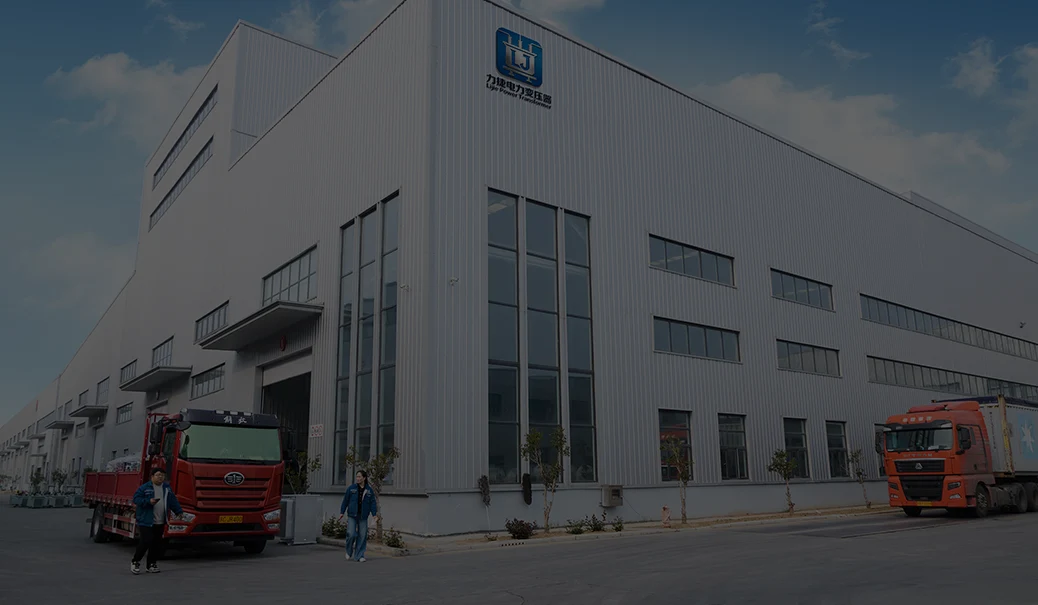
Suppliers with a lot of production capacity show that they can handle big projects that need dozens or even hundreds of the same units. Lijie Electric's 500,000-square-meter factory and more than 2,000 employees, including more than 160 engineers with advanced degrees, give big utility and industrial projects the technical depth and production throughput they need. When standardising spare parts inventories across multiple sites, batch consistency is very important. Our written quality management procedures make sure that units made months apart have the same performance characteristics and can be put together with different parts.
For international projects, certain certificates are often needed to meet the needs of the target market. Compliance with IEC 60076 makes it easier for global standards to be met, and regional certifications like CE make it easier to get goods through customs in the European Union. The National Electric Power Certification Center in China has given our transformers the PCCC product certification and the CQC energy efficiency certification. Purchasing offices are looking for these badges more and more as proof of third-party verification. For these certifications, strict testing procedures are used, such as impulse voltage withstand tests, partial discharge measurements, and temperature rise verification. These tests protect buyers from buying low-quality equipment.
Help with technical issues during setup, help with fixing problems during use, and the ability to respond quickly to emergencies are what set exceptional suppliers apart from average ones. You can reach our technical support team at lijieelectrical@gmail.com. They are application engineers who know how to deal with problems that come up in different industries and parts of the world. Warranty programs that cover more than the standard coverage show that the manufacturer trusts the reliability of the product and protects buyers financially in case something goes wrong. Our dedication to providing excellent service has earned us awards such as the GB/T 27922-2021 certification for after-sales service systems, which proves that we handle customer support in a structured way.
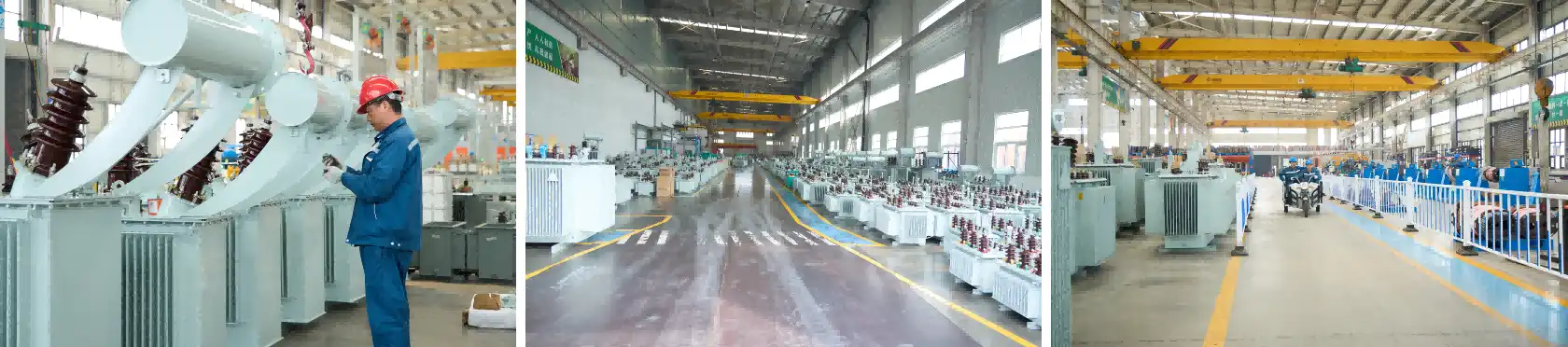
In conclusion, the S13 type three-phase distribution transformer has measurable performance benefits that meet the most important needs of modern power infrastructure procurement. Lifecycle value for utilities, industrial facilities, and renewable energy projects is very high because of low energy loss, no maintenance needed, and strong construction. Improvements in technology over previous generations have led to real operational benefits, such as lower ownership costs, longer service life, and more stable grids. When choosing tools for a job that depends on stability and long-term cost savings, S13 technology is always the best choice after a careful look at efficiency requirements, supplier capabilities, and total cost of ownership. As power grids around the world become more modern and efficiency standards get stricter, the S13 transformer is seen as a tried-and-true option that is backed by years of production experience and a full support system.
Because they use improved silicon steel cores and better magnetic circuit design, S13 units have about 25–30% lower no-load losses. Compared to S11 transformers, noise levels drop by about 20%, making them better for installations near homes. The fully sealed curved tank design gets rid of the problems that older types with conservatories often had with water.
S13 transformers are great for solar and wind installations because they are strong and do a great job of managing heat. They can handle the changes in voltage and harmonic content that come with inverter-based power without having to derate. A lot of companies that work with green energy choose S13 units because they are reliable and efficient at the same time.
Standard catalogue specifications usually ship within 8 to 12 weeks, while custom units take 10 to 16 weeks, depending on how complicated they are. Lead times are affected by the supply of raw materials, the schedules for plant production, and the logistics of shipping. By involving suppliers early on in the planning stages of a project, production slots can be reserved, making sure that delivery times match up with construction milestones.
Lijie Electric has been making transformers for decades and can help you with your power infrastructure projects by combining advanced production skills with full technical support. As a manufacturer of the S13 type three-phase distribution transformer, we have ISO 9001:2015 certification, IEC compliance testing, and CE/UL recognition for all of our products. We have the size and stability needed for large-scale deployments—annual sales of more than 5 billion RMB and factories that cover 500,000 square meters. Email our engineering team at lijieelectrical@gmail.com to talk about the needs of your specific application, get customised quotes, or set up factory tours. We are the best partner for procurement managers who want reliable transformer solutions that deliver measurable value over decades of service because we are committed to quality, have competitive lifecycle costs, and deliver on time every time.
1. International Electrotechnical Commission. (2018). Power Transformers – Part 1: General. IEC 60076-1 Standard, Geneva.
2. Zhang, W., & Liu, H. (2021). Energy Efficiency Analysis of Oil-Immersed Distribution Transformers in Modern Grid Applications. Journal of Electrical Engineering Technology, 16(4), 1847-1859.
3. National Electrical Manufacturers Association. (2019). Guide for Loading Mineral-Oil-Immersed Transformers and Step-Voltage Regulators. ANSI/IEEE C57.91 Standard.
4. Chen, M., Wang, Y., & Li, X. (2020). Comparative Study of Silicon Steel and Amorphous Core Transformers for Renewable Energy Integration. International Journal of Power Systems, 12(3), 421-435.
5. American Society for Testing and Materials. (2022). Standard Specification for Mineral Insulating Oil Used in Electrical Apparatus. ASTM D3487-16 Standard.
6. Kumar, R., & Patel, S. (2023). Life Cycle Cost Assessment of Distribution Transformers: A Practical Framework for Utilities. IEEE Transactions on Power Delivery, 38(2), 1156-1168.
YOU MAY LIKE
%20Dry-type%20Distributing%20Transformer.webp)

11%20type%2035kV%20distribution%20transfo_1778137470754.webp)


April 27, 2025
With a tight project schedule, the manufacturer delivered on time, and on-site technical personnel provided guidance throughout the entire installation and commissioning process; the collaboration was highly efficient and hassle-free.
July 2, 2025
During the preliminary phase, a selection plan was custom-tailored based on the actual site load requirements, resulting in a high degree of parameter compatibility. After-sales support responds within two hours, and ongoing technical support for operation and maintenance is comprehensive; we feel completely confident in a long-term partnership.
November 18, 2025
Deployed as a supporting component for a 35kV grid-connection project at a photovoltaic power station, the equipment operates for an average of 16 hours daily. It demonstrates excellent control over no-load losses, ensures smooth power generation and grid integration, and effectively reduces the station's overall energy consumption.
January 30, 2026
Under the continuous, high-load operating conditions of a factory production line, the equipment maintains stable electrical parameters and exhibits strong overload resistance, thereby guaranteeing an uninterrupted power supply for industrial production.
April 3, 2026
Integrated as a supporting component for a new energy photovoltaic grid-connection system, the manufacturer provided professional technical coordination and timely after-sales support, ensuring seamless adaptation to the specific electrical operating conditions required for grid integration.