April 27, 2025
With a tight project schedule, the manufacturer delivered on time, and on-site technical personnel provided guidance throughout the entire installation and commissioning process; the collaboration was highly efficient and hassle-free.
Jul 18, 2026
Choosing the right transformer technology has a direct effect on grid stability, operational costs, and long-term dependability when you are in charge of large-scale power distribution projects. The 6300kVA~100000kVA Three-winding transformer with OLTC stands out as a smart choice for utility companies, industrial manufacturers, and EPC contractors who need to handle complicated voltage issues. This equipment has three separate windings and the ability to change the on-load tap. This lets it convert power between different voltage levels at the same time, like 220kV, 35kV, and 10kV, without stopping service. The built-in OLTC system changes the voltage dynamically based on the load, which handles changes that come up because of adding renewable energy, heavy industrial operations, or imbalances in the regional grid. This transformer cuts down on capital costs, makes designing substations easier, and improves energy efficiency and system uptime by combining multiple voltage distributions into a single size.
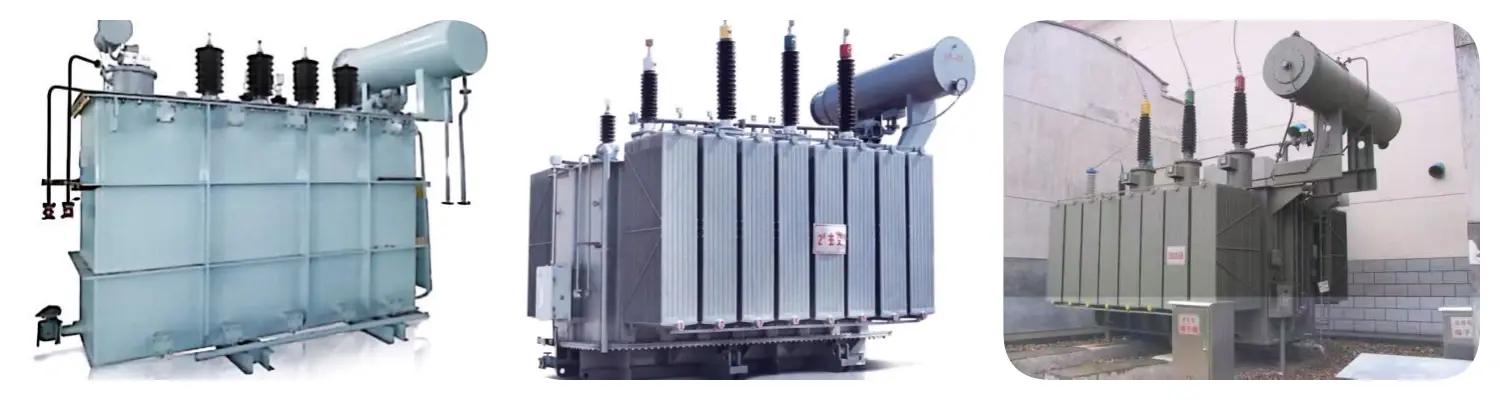
In Xuzhou and Nantong, where our factories cover 500,000 square meters, we've designed three-winding transformers that solve real-world problems with delivery. Unlike most equipment with two windings, this one has three physically separate windings: high-voltage (HV), medium-voltage (MV), and low-voltage (LV). This means that one transformer can serve more than one voltage network at the same time.
The three-winding design works with electromagnetic induction across three different coils that are wound around a single silicon steel core. Each wire links to a different voltage level in your power system. This lets power flow from one network to another in both directions. This design gets rid of the need for multiple step-up and step-down transformers, which means that up to 40% less room is needed for installation than with standard setups.
The on-load tap changer part is connected to the main winding and has motor-driven switching contacts that change the transformer's turns ratio while it's carrying full load current. Our OLTC units can handle more than 200,000 operations without any maintenance. They provide ±10% voltage regulation across 17 tap positions to account for changes in the grid without stopping service.
We use high-permeability grain-oriented silicon steel with 0.27 mm laminations, and our no-load losses are less than 0.15% of the rated capacity. Copper conductors that don't contain oxygen in a continuously transposed cable (CTC) format cut eddy current losses by 30% compared to rectangular conductors. Our thermal management systems, which include ONAN and ONAF cooling, keep the hotspot temperatures below 98°C even when the load is full for a long time and the temperature outside is up to 40°C.
Thermally improved kraft paper that is coated with FR3 natural ester fluid is used in the insulation system. This improves fire safety and makes the asset last longer than 35 years. For HV terminals, lightning impulse withstand levels reach 1050kV, which meets IEC 60076-3 standards for harsh grid conditions. Partially discharge levels always stay below 50pC at 1.5Um, proving good manufacturing quality that keeps insulation from failing too soon.
These technical skills will directly lead to lower upkeep costs and better power quality for your buildings. The strong short-circuit withstand strength, which is proven by fake testing at approved labs, ensures that equipment can handle fault conditions that would damage lesser transformers, saving your investment.
Power system planners are under more and more pressure to deal with the limitations of variable green production, electrified industry loads, and old infrastructure. 6300kVA~100000kVA Three-winding transformers with OLTC can handle these problems by managing voltage in different networks that are linked to each other.
Grid voltage can change by up to 8% in just a few minutes when solar farms add power during the busiest times of the day or when wind generation drops during the busiest times of the evening. With older transformers that don't have tap changers, operators have to reduce generation or reduce load to keep voltage limits. The OLTC mechanism constantly checks for changes in voltage and, within 3–5 seconds, changes the position of the taps to keep the voltage stable within ±2%.
We've given units to projects that integrate green energy. The three-winding design links a 220kV transmission line, a 35kV collector network, and a 10kV auxiliary service, and all of these are controlled by a single transformer. The cost of reactive power adjustment equipment goes down by 25% with this setup, and the facility's power factor goes up from 0.82 to 0.96.
Our National Transformer Quality Supervision and Inspection Center certifications show that for 6300kVA units, the total load losses are 0.48% at rated capacity, and for 100MVA units, they are 0.42% when optimised for normal loading profiles. The three-winding method cuts annual losses by 18–22% compared to using separate dual-winding transformers for each voltage conversion.
Think about a steel factory that needs 220kV for its arc furnaces, 35kV for its rolling mills, and 10kV for its other machines. Putting in three different transformers would cause no-load losses that are more than 150kW all the time. This is cut down to 82kW by our single 63MVA three-winding unit, which saves $47,000 a year at $0.08/kWh and pays for itself in the first year of operation.
Unplanned power outages are not acceptable at regional hub substations that serve more than 500,000 people. Our three-winding transformers are tested for 72 hours at 120% of their rated load to see if they meet the thermal stability limits that keep them from failing from burning. The OLTC compartment has nitrogen blanketing to stop moisture from getting in and arc byproducts from building up, which are the main reasons why competing designs fail at the tap changer.
Dissolved gas analysis methods we've set up with utility clients find problems months before they happen, so maintenance can happen on a plan instead of having to be done in an emergency. Acoustic monitoring systems keep an eye on partial discharge activity all the time, and 12 critical points with fibre optic temperature sensors give real-time thermal profiling. With these predicted maintenance tools, the number of forced outages across our installed base drops to less than 0.2 events per 100 transformer-years.
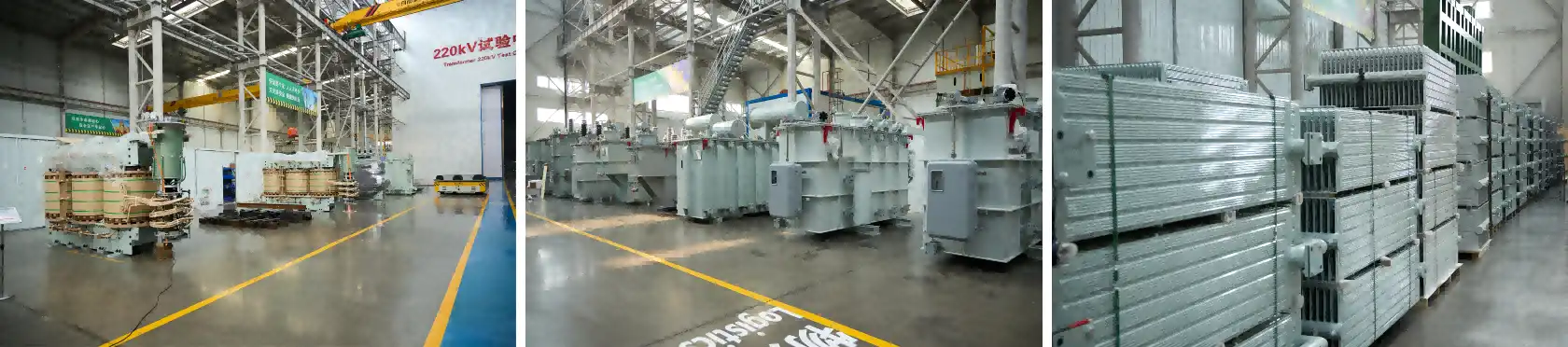
To choose the right capacity, you have to match the 6300kVA~100000kVA Three-winding transformer with OLTC features to the load needs, growth projections, and site limitations. Both ends of this band are used for different things and have different technical objectives.
For 6300kVA units, conservator tank designs with nitrogen cushions are common. These are good for mild load cycling in industrial parks or green substations that serve 5–15MW of linked capacity. The small size—about 3.2 meters long, 2.1 meters wide, and 3.5 meters high—fits into the area of an existing transformer during retrofits.
Transformers with a rating of 100MVA use forced-air cooling with fans that are managed by a timer to handle heavy loads all the time in regional transmission substations or energy-intensive buildings that need more than 80MW of power. These units take up about 6m²4m of floor space and are 5m tall, so they need base designs that can support 85 tonnes of equipment and seismic bracing for Zone 3 earthquakes.
The impedance properties are very different. 6.3MVA units have impedance between the windings that is between 7.5 and 9%, while 100MVA designs reach 12 to 14 % to keep fault currents within the standards for circuit breakers that interrupt. This changes how protections work together and needs careful engineering during specification.
The initial costs are about 0.7 times the capacity ratio, which means that a 100MVA unit costs about 9.8 times a 6.3MVA unit, not the linear 15.9× that capacity alone would suggest. This gap is closed by the bigger transformer's higher efficiency, which saves money on operations.
Higher capacities need more maintenance because they hold more oil (26,000 litres vs. 4,200 litres), which needs to be processed every 3–5 years at a cost of $18,000–$32,000 per service cycle, and for a 6300kVA~100000kVA Three-winding transformer with OLTC, this larger oil volume directly increases both the frequency and cost of oil filtration and dielectric testing compared to smaller units. OLTC maintenance intervals stay the same at 100,000 operations, no matter what size transformer it is. However, it costs 60% more to refurbish the diverter switch assemblies on larger units.
For 100MVA units that are properly maintained, the expected service life is 40 years. For 6.3MVA transformers that are used at higher average loading percentages, the expected service life is 35 years. If you use a 6% discount rate to figure out the net present value over the whole lifecycle, the larger unit costs 14% less per MVA-year in utility applications with steady long-term loads.
Choosing a supplier is more than just looking at the specs of their equipment; they also have to look at their production capabilities, licensing portfolio, and service infrastructure. Our ISO 9001:2015 quality systems are inspected once a year, and you can follow the quality all the way from the certificates from the silicon steel mill to the final activation reports. The Low Voltage Directive and the Electromagnetic Compatibility Directive are covered by our CE marking. The UL listing lets code compliance happen in all North American jurisdictions.
When project deadlines get tight, customisation speed is very important. Our engineering team, which is made up of more than 160 professionals with graduate and master's degrees, finishes custom designs in 6 to 8 weeks by changing standard platforms to fit different voltage combinations, seismic needs, or altitude derating factors. With a yearly production capacity of more than 15GVA, delivery is guaranteed within 16 to 20 weeks for normal specifications and 24 to 28 weeks for custom designs.
When you look at how 6300kVA~100000kVA Three-winding transformers with OLTC are used in different operational settings, you can see how flexible they are. We have a better understanding of application-specific needs now that we have supplied units to projects on four continents.
The hub application works ideally in a 220kV substation we set up in a coastal city area. The 63MVA transformer changes the 220kV transmission power that comes in to 35kV for industrial parks with semiconductor production facilities and to 10kV for urban distribution that feeds apartment buildings and business areas. The OLTC keeps the 10kV level, even though the 220kV source voltage changes by 18% due to long transmission lengths and different load trends.
The single transformer took the place of two different units that were supposed to be set up. This saved the utility $840,000 in equipment costs and $320,000 in building work for the transformer bay that was no longer needed. Protection schemes were made easier by the three-winding arrangement, which cut the number of relay panels from nine to five and sped up the commissioning process by three weeks.
Thermal power sources with 1000MW or more are another natural fit. We've given them 80MVA units with both a generator step-up function and a station service change function. The setup changes the generator's output from 20kV to 220kV so that it can connect to the grid. At the same time, it gives 10kV to systems like boiler feed pumps, coal handling, and cooling towers that use 6–8 percent of the plant's output.
The integrated design gets rid of the extra transformer that was usually installed separately. This saves 1.8MW of generation capacity that was lost during the extra transformation step. OLTC was very helpful during black-start procedures, when the generator voltage changes by about 12% during synchronisation. The tap changer kept the auxiliary bus voltage stable, which kept critical motor loads from tripping for no reason.
Three-winding flexibility is very helpful for provincial power exchange points. We finished a project that connects a 220kV system in an industrial province to a 110kV network in a rural region next door. The project also gives 35kV to an economic development zone on the border. The 50MVA transformer allows power to flow in both directions and exceeds 300GWh per year. The OLTC balances out the 8–11% voltage difference between the asynchronous systems.
Grid operators say that OLTC-enabled voltage control got rid of 82% of the human switching tasks that were needed to handle power exchange levels, and for a 6300kVA~100000kVA Three-winding transformer with OLTC, this automation is particularly impactful because it enables rapid response to grid fluctuations across multiple voltage levels without requiring manual intervention. This cut the work of operators and the time it took to respond to emergencies from 8 to 12 minutes to less than 90 seconds using automated SCADA commands.
The multi-voltage industry demand profile can be seen in integrated steel production plants. A metalworking complex we work with needs 220kV at 47MVA for its electric arc furnaces, 35kV at 18MVA for constant casting and rolling, and 10kV at 6MVA for its office buildings and repair shops. The 80MVA three-winding transformer connects all loads to the utility grid through a single point, which makes metering and figuring out the power factor penalty easier.
When the facility put up a 12MW solar array on the roof, the OLTC function became very important. In times when production was low and solar output was high, the 220kV grid had trouble with voltage rise. The tap changer now changes itself automatically to keep the contract voltage the same, no matter which way the power flows. This lets the facility sell extra electricity without worrying about voltage violations, which is good for the grid operator.
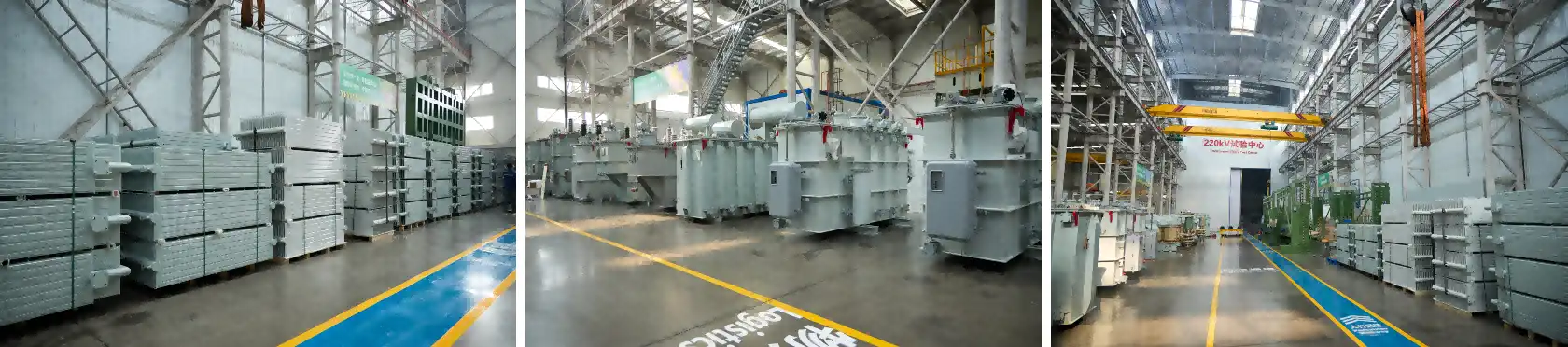
A long-lasting asset rests on proactive repair plans that are tailored to how the 6300kVA~100000kVA Three-winding transformer with OLTC is used. Our method includes regular checks, tracking based on state, and replacing parts in a planned way.
We suggest taking samples of oil every three months for dissolved gas analysis. There are eight key gases that show signs of heat stress, arcing, or cellulose breakdown. These are hydrogen, methane, ethane, ethylene, acetylene, carbon monoxide, carbon dioxide, and oxygen. Thermographic scans of OLTC motor cabinets and bushing connections find hotspots that are starting to form before they cause damage to the insulation.
Every year, maintenance checks make sure that the OLTC works across the whole tap range by checking the time of transitions and making sure that the limit switches are lined up correctly. Testing the functionality of the Buchholz relay makes sure that gas accumulation detection stays on. Replacing the silica gel breathers and inspecting the conservator stops moisture from getting in, which speeds up the breakdown of oil and the ageing of insulation.
Every 10 years, major repairs are done that include reclaiming the oil by vacuum dehydrating and filtering it to get the dielectric strength back above 40kV breakdown voltage. When we look at the wear patterns on the contacts of an OLTC diverter switch, we replace them when the erosion is more than 2 mm or when the resistance rises 20% above the commissioning baseline. Testing the core's insulation resistance at these times makes sure that inter-lamination shorts haven't formed.
As required by IEC 60076 and IEEE C57.12.00, every transformer that leaves our facility goes through regular tests. Applied voltage testing at 2Um/√3 for one minute and lightning impulse testing with 1.2/50μs waves at Basic Insulation Level are two types of dielectric tests. We test 10% of our production units for temperature rise by putting them under 120% of their normal load for 72 hours and keeping track of the temperatures at the hotspots for oil and winding.
Third-party labs use synthetic methods according to IEC 60076-5 to test and validate short-circuits. They put transformers through fault currents that are 12 to 18 times their maximum current for certain amounts of time. Measurements of acoustic noise in semi-anechoic chambers confirm that the levels are within 75dBA at 1 metre, which is the acceptable level for urban installations.
OLTC sequence testing includes 3,000 full-range operations under load before shipping. This checks the mechanical stability and makes sure that the partial discharge activity stays below 100pC during tap changes. As part of our project paperwork, we give full factory acceptance test results that include oscillograms, thermographs, and material certificates.
Our service network places field workers in North America, Southeast Asia, Central Asia, Africa, and Oceania so that they can respond within 4 hours to major manufacturing areas in those areas. Because spare parts are kept in regional hubs, OLTC drive motors, tap selectors, and bushing assemblies can be sent out within 48 hours of a request. Technical help for emergencies is available 24 hours a day, seven days a week at lijieelectrical@gmail.com and through local language hotlines.
We keep detailed operational histories for each transformer through serialised digital records. This lets us use predictive analytics to figure out what maintenance needs to be done based on actual loading patterns, ambient conditions, and the total number of OLTC operations. Clients get asset health reports every three months with suggestions based on risk level and budget optimisation.
Transformers come with a five-year warranty and OLTC mechanisms with a three-year warranty. You can extend the warranty to ten years, which includes regular repair as part of a levelized service agreement. This method turns unpredictable repair costs into reasonable operating costs and makes sure that assets are available more than 99.7% of the time.
When purchasing, teams look at 6300kVA~100000kVA Three-winding transformer with OLTC suppliers, they have to weigh the technical performance, the business terms, and the chance of a long-term partnership. We've set up our products so that they meet the needs of buying managers and project engineers who are making decisions.
First, write down all three voltage levels your system needs, along with the load capacities and growth rates you expect over the next 15 to 20 years. Include the temperature ranges, the elevation if it's higher than 1000 meters, the classification of the seismic zone, and any space limitations that affect the size of the transformer. Set the impedance needs based on studies of safety cooperation and the fault current limits of current-carrying devices that are already in place.
Different places have different rules about protecting the environment. For example, California needs materials without PCBs and dielectric fluids made from plants in some situations. In the EU, sites need to follow RoHS and REACH rules. Our design team changes the specs to fit local building rules without making shipping times longer.
When thinking about power quality, one thing to think about is that the harmonic content of the load is a rectifier or a variable frequency drive. This can change the way the windings are connected (delta vs. wye) and may need K-factor ratings. Noise limits are very important for transformers that are close to residential areas. We offer acoustic enclosures that lower sound levels by 15dBA when site conditions don't allow for distance attenuation.
If a manufacturer says they are in compliance, they should back up their claims with certified test reports from accredited laboratories. We have approvals from China's National Transformer Quality Supervision and Inspection Center, KEMA for international type testing, CQC for energy efficiency showing losses 10% lower than Chinese national efficiency standards, and PCCC for product certification, which means equipment can be bought by the State Grid Corporation.
Our IEC 60076 compliance certificates cover transformers with rated voltages from 10kV to 220kV. They are backed up by witness testing, in which reps from the client watch plant acceptance tests. UL listing under UL 1561 and UL 1562 makes it possible to follow the rules in all of North America's jurisdictions without having to go through field testing or get special permission from local authorities.
A review of our manufacturing capabilities shows that we can meet delivery dates. Our two production bases run 16 advanced winding lines and 8 vacuum oil-filling stations, which together process more than 400 power transformers every month. With in-house testing labs, you don't have to rely on the availability of an outside test house. You can control quality and schedule.
Our prices are clear, with detailed details that show the base price of the transformer, the cost of the OLTC mechanism, the cost of any extra equipment (like radiators, fans, and safety devices), shipping, and help with installation. When projects commit to buying a lot of identical units, the prices of those units go down by 8 to 12 percent. This is good for large infrastructure deployments.
Milestone structures allow for flexible payment terms that fit the project's cash flow patterns: a 30% down payment allows for the purchase of materials, 50% upon plant acceptance testing, 15% upon delivery, and 5% retained after successful operation. For exports, we accept letters of credit from foreign banks. We manage exchange risk with forward contracts that lock in prices for delivery windows every six months.
At the moment, lead times are 18 to 22 weeks for standard specifications under 80MVA and 26 to 30 weeks for customised or larger units. If project deadlines need to be sped up, you can pay an extra 15% for expedited delivery with a 4-week schedule compression. We keep production slots open for emergency replacements, and we can supply standard 10MVA to 35MVA units within 8 weeks when there are major failures to important infrastructure.
Choosing a three-winding OLTC transformer in the 6300kVA to 100MVA range is a big investment in infrastructure that needs to be carefully thought out in terms of technical performance, lifecycle costs, and the supplier's abilities, and a 6300kVA~100000kVA Three-winding transformer with OLTC represents this investment at its most complex, offering simultaneous voltage regulation for three distinct windings to serve mixed loads in industrial parks, renewable integration, and utility substations. The multi-voltage design and dynamic tap-changing features solve problems with voltage stability that regular transformers can't, especially when renewable energy is used, heavy industry is involved, or the regional grid is connected. Whether technology lasts the 35–40 years it was designed to or breaks down before that time depends on how well it is maintained and how well the maker supports it. We've supplied transformers to projects in a wide range of businesses and locations that met the strictest technical standards and time frames.
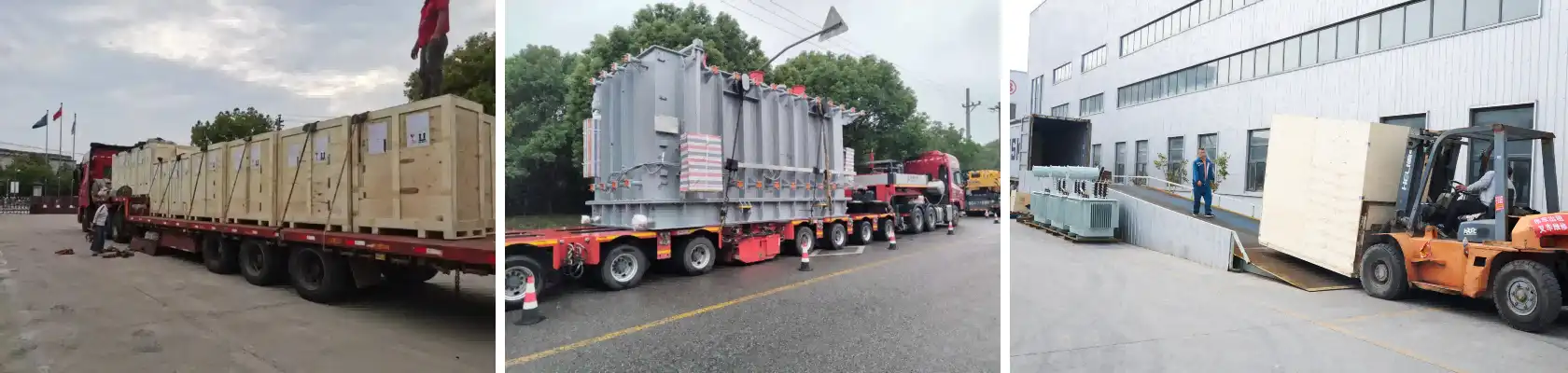
On-load tap changers change the voltage while carrying the full load current. This means that they don't need to stop service, as offload mechanisms do. In current grids, where voltage changes all the time because of variable renewable generation and changing load trends, this ability is very important. OLTC mechanisms allow automated voltage control through SCADA systems, which can respond to problems in the grid within seconds. Our OLTC designs can handle more than 200,000 processes without any upkeep. Off-load tap changers, on the other hand, need to be shut down for every adjustment, which makes them impractical for situations where regulation needs to happen often.
When designed correctly, the three-winding design doesn't naturally shorten the life of transformers compared to dual-winding designs. With three windings, thermal management gets trickier, and the design has to be carefully thought out to avoid hotspots in certain areas. Our finite element thermal modelling makes sure that the temperature difference between the windings stays within 15°C. This keeps the insulation from wearing out faster than it should. When properly designed and maintained, three-winding transformers usually last longer than 35 years, which is the same as or longer than the average transformer lifespan.
Standard three-winding OLTC transformers with a rating of less than 80MVA usually ship 18 to 24 weeks after the contract is signed. Specialised or larger units, on the other hand, take 24 to 30 weeks. Schedules can be cut by 4 to 6 weeks when emergency replacements are made quickly. Standard guarantees in the industry cover transformer tanks and windings for five years and OLTC devices for three years. When you buy a scheduled maintenance agreement along with an extended warranty that lasts up to 10 years, you get fixed lifecycle costs and the manufacturer's involvement throughout the asset's working life.
Lijie Electric offers tried-and-true three-winding OLTC transformer options ranging from 6300kVA to 100MVA. Their production experience spans 30 years, and their products have been installed in over 15 countries. Our ISO 9001, CE, UL, and IEC certifications show that our quality systems meet the highest international standards. Our 500,000-square-meter production facilities also make sure that we can meet your project's delivery deadline. We can make any voltage combinations, impedance characteristics, and cooling configurations to fit your exact needs as a top 6300kVA~100000kVA Three-winding transformer with OLTC source.
Technical collaboration starts with preliminary design, when our engineering team of 160+ professionals with advanced degrees figures out the best transformer parameters for your needs. Uncertainty about procurement is taken away by clear pricing, flexible payment terms, and responsive project management. Email lijieelectrical@gmail.com right now to talk about your power transfer needs. We will give you detailed technical proposals, a lifecycle cost analysis, and delivery schedules that are in line with your construction milestones. This will ensure that the infrastructure for your transformers works reliably for decades.
1. Institute of Electrical and Electronics Engineers (2019). IEEE Standard for General Requirements for Liquid-Immersed Distribution, Power, and Regulating Transformers, IEEE C57.12.00-2019.
2. International Electrotechnical Commission (2018). Power Transformers – Part 1: General Requirements, IEC 60076-1:2018.
3. Zhang, H., Wang, Y., & Liu, S. (2021). Thermal Analysis and Optimization of Large Three-Winding Power Transformers. Electric Power Systems Research, 195, 107164.
4. National Electric Power Certification Center (2020). Technical Specifications for On-Load Tap Changers in High-Voltage Transformers. Beijing: China Electric Power Press.
5. Kumar, A. & Patel, R. (2022). Lifecycle Cost Assessment of Power Transformers in Utility Applications. Journal of Energy Engineering, 148(3), 04022008.
6. American National Standards Institute (2020). Requirements for Transformer Tank Rupture Mitigation, ANSI/IEEE C57.156-2020.
YOU MAY LIKE





April 27, 2025
With a tight project schedule, the manufacturer delivered on time, and on-site technical personnel provided guidance throughout the entire installation and commissioning process; the collaboration was highly efficient and hassle-free.
July 2, 2025
During the preliminary phase, a selection plan was custom-tailored based on the actual site load requirements, resulting in a high degree of parameter compatibility. After-sales support responds within two hours, and ongoing technical support for operation and maintenance is comprehensive; we feel completely confident in a long-term partnership.
November 18, 2025
Deployed as a supporting component for a 35kV grid-connection project at a photovoltaic power station, the equipment operates for an average of 16 hours daily. It demonstrates excellent control over no-load losses, ensures smooth power generation and grid integration, and effectively reduces the station's overall energy consumption.
January 30, 2026
Under the continuous, high-load operating conditions of a factory production line, the equipment maintains stable electrical parameters and exhibits strong overload resistance, thereby guaranteeing an uninterrupted power supply for industrial production.
April 3, 2026
Integrated as a supporting component for a new energy photovoltaic grid-connection system, the manufacturer provided professional technical coordination and timely after-sales support, ensuring seamless adaptation to the specific electrical operating conditions required for grid integration.