April 27, 2025
With a tight project schedule, the manufacturer delivered on time, and on-site technical personnel provided guidance throughout the entire installation and commissioning process; the collaboration was highly efficient and hassle-free.
Sep 3, 2026
When engineers and procurement managers evaluate transformer options for underground power distribution, the pad mount transformer consistently emerges as the preferred solution. Unlike a standard distribution box transformer, a pad mount unit combines tamper-resistant enclosure design, higher capacity ratings, and seamless underground cable termination in a single ground-level package. These qualities make it indispensable across urban residential networks, commercial campuses, solar farms, and large-scale industrial facilities where reliability, safety, and regulatory compliance are non-negotiable. This article explores exactly why that preference exists—and what it means for your next procurement decision.

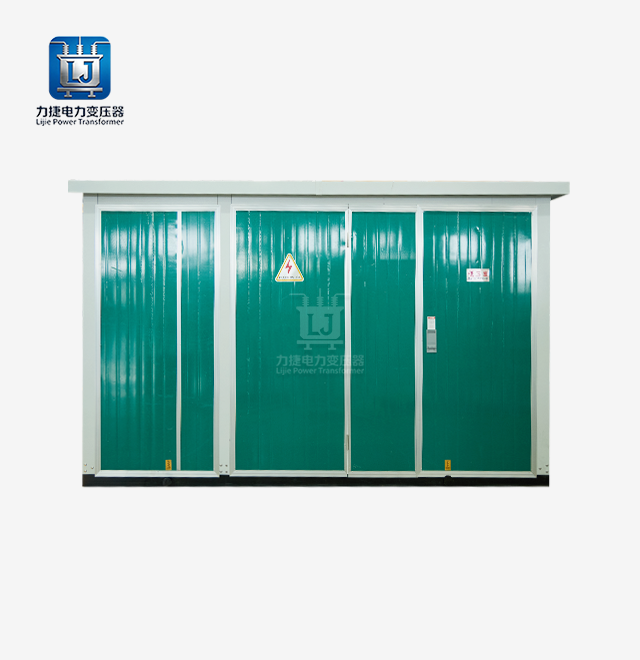
Pad-Mount Transformers are self-contained units that are put on the ground on a concrete pad and directly linked to cable systems that run underground. Inside a locked, hard-to-tamper-with steel cabinet [1], they step down high-voltage primary power (usually 4 kV to 35 kV) to secondary usage voltage (usually 120/240 V or 480 V).
A Distribution Box Transformer is mostly made for small, surface-mounted jobs that need to switch and protect low power. Pad-Mount Transformers, on the other hand, change the voltage and have built-in cable compartments for both incoming and outgoing underground conductors. Their sealed oil-immersed or dry cores can handle higher kVA values, usually between 75 kVA and 2,500 kVA. This makes them better for main underground distribution loops, both structurally and electrically.
The units shown here are used in three high-stakes situations. In residential underground distribution projects, they get rid of the need for overhead lines while still delivering power in a safe, low-profile way. Hospitals, colleges, shopping centers, and other commercial and institutional buildings depend on them to keep areas with a lot of foot traffic safe while leaving a small footprint. They are used as step-up or step-down interfaces in renewable energy setups like wind farms and solar farms. They have special coatings that protect them from UV rays and high-salinity, corrosive atmospheres, which keeps grid-tie performance stable even when load cycles change.
Pad Mount Transformer is the most popular choice because it offers a number of useful engineering benefits that directly address the challenges encountered in large-scale power projects.
In terms of structure and function, these are the main things that make them stand out:
All of these benefits lower the total cost over the lifecycle, which is a key factor in big infrastructure budgets. If you install and take care of a well-specified Pad-Mount Transformer the right way, it should last 25 to 30 years with little to no corrective repair.

Choosing the right type of transformer depends on the layout of the site, the rules that apply, and the needs of the business. Pad-Mount Transformers fit into that picture in a specific and useful way.
In rural or low-density areas, pole-mount transformers do a good job of serving overhead distribution networks. However, urban underground systems need to be accessed from the ground, and overhead infrastructure makes it more vulnerable to storms and less attractive. Pad-Mount units get rid of these problems, giving repair teams better access and not needing any extra space above them while still changing voltage.
When used indoors, dry type transformers are much better than oil-immersed ones, especially when there is a risk of fire or not enough airflow. However, dry type units usually have higher energy losses during both no-load and load conditions than oil-immersed Pad Mount Transformer units, which can affect long-term energy costs. For underground outdoor power lines where temperatures change significantly, oil-immersed Pad Mount Transformer units provide more stable thermal performance during seasonal load cycles.
In low-voltage networks, the Distribution Box Transformer works well as a small hub for switching and protecting. A Pad-Mount Transformer can change power from primary to secondary and protect itself at the same time. This makes it a more complete option for underground substations than just an extra device.
When buying Pad-Mount Transformers for green energy, utility, or industry projects, you have to make choices that go far beyond the price per unit.
Alignment of technical specifications is a basic necessity. Buyers need to check the project-specific load flow studies and fault current analyzes to make sure the voltage class, kVA rating, impedance tolerance, cooling class, and insulation system grade are correct. In the United States, Pad-Mount Transformer construction is governed by IEEE C57.12.25. For international projects, IEC 60076 is used.
Certification compliance is also something that can't be negotiated. Products must have ISO 9001 quality control approval, and projects that want to sell to people in other countries need CE or UL marks. Instead of self-declared specifications, suppliers with test records from known labs that can be checked by a third party offer much lower procurement risk for big orders.
On EPC contracts, project timelines are directly affected by how reliable deliveries are. If a provider has specific manufacturing capacity and clear production scheduling, there is less chance that milestone delays will happen, which can lead to liquidated damages terms. Long-term framework agreements with qualified Pad Mount Transformer manufacturers make it possible to plan ahead for costs and keep supplies coming even as multi-phase infrastructure is rolled out.

Whether a transformer works as expected for its full rated service life depends on how well it was installed. The first step in getting the site ready is to build a reinforced concrete pad that will hold the transformer's weight, including the oil, and keep it in line with the underground duct bank routing. Before building the pad starts, the soil's bearing ability and draining properties must be checked.
Article 250 of the NEC says that grounding electrode systems must have equal potential connections between the transformer tank, the cabinet, and any secondary switchgear that is connected to them. To terminate cables in the high-voltage area, trained professionals must use elbow connectors that are rated for the system voltage class.
Oil amount and quality, gasket integrity, cabinet locking devices, and ground link resistance should all be checked on a regular basis. Dissolved gas analysis on oil-immersed units can find insulation breakdown years before it gets bad enough to fail thermally. Keeping inspection records helps with guarantee claims and shows that you're following the rules for how utilities should work.
Pad Mount Transformers are the most common way to distribute electricity underground because they solve real technical problems like changing voltage, keeping cables safe, and keeping the environment contained, all in one easy-to-maintain unit. They are better than pole-mount, dry-type, and distribution box options in terms of safety, lifecycle costs, and how quickly and easily they can be installed. Choosing the right Pad Mount Transformer is still one of the most important parts of system design, no matter if it's for a home neighborhood, a business campus, or a utility-scale solar interconnection.
Under normal load conditions, an oil-immersed Pad-Mount Transformer that is well taken care of will work effectively for 25 to 30 years. The main things that shorten service life are overloading, water getting in, and putting off upkeep. Doing dissolved gas analyzes and thermographic inspections on a regular basis greatly increases the life of an operation.
The deadfront design gets rid of any visible energized connections, which protects repair workers from arc flash. Unauthorized people can't get into public areas because of tamper-resistant cabinet locks and penta-head bolt closures. These meet both OSHA and NEC standards in cases where Distribution Box units need extra protective enclosures.
Yes. Units made to work with both solar and wind power have special UV-resistant coatings, corrosion-resistant cabinet materials, and impedance profiles that match the output profiles of the inverter. Custom tap designs meet the needs for voltage control over a range of generation cycles.
Working with a well-known Pad-Mount Transformer maker that has ISO 9001, CE, UL, and IEC certifications makes sure that the products are real and follow all the rules. Lijie Electric provides customized options with tested documentation from a third party and specialized help for buying in bulk.
Certified Pad-Mount Transformer options from Lijie Electric are made for underground distribution, integrating green energy, and industrial uses. Our team helps businesses buy things from us from the very beginning, all the way through delivery. We have 500,000 square meters of manufacturing space and are certified by ISO 9001, CE, UL, and IEC. To get a personalized quote from a reliable Pad-Mount Transformer maker, email our engineering team at lijieelectrical@gmail.com or visit lijie-electrical.com.

1. IEEE Std C57.12.25-2013 — IEEE Standard for Pad-Mounted, Compartmental-Type, Self-Cooled, Single-Phase Distribution Transformers with Separable Insulated High-Voltage Connectors. IEEE, 2013. https://standards.ieee.org/ieee/C57.12.25/3749/
2. U.S. Department of Energy — Renewable Energy Grid Integration: Transformer Requirements for Solar and Wind Facilities. DOE Office of Electricity, 2021. https://www.energy.gov/oe/articles/transformer-resilience-and-advanced-components
3. National Fire Protection Association — NFPA 70: National Electrical Code, Article 450 — Transformers and Transformer Vaults. NFPA, 2023. https://www.nfpa.org/codes-and-standards/nfpa-70-standard-development/70
4. Electric Power Research Institute (EPRI) — Distribution Transformer Life Expectancy and Reliability Assessment. EPRI, 2020. https://www.epri.com/research/products/000000003002019840
5. IEC 60076-1:2011 — Power Transformers – Part 1: General. International Electrotechnical Commission, 2011. https://webstore.iec.ch/publication/600
6. IEEE Std C57.104-2019 — IEEE Guide for the Interpretation of Gases Generated in Mineral Oil-Immersed Transformers. IEEE, 2019. https://standards.ieee.org/ieee/C57.104/6713/
YOU MAY LIKE
12%20type%2035kV%20distribution%20transformer.webp)




April 27, 2025
With a tight project schedule, the manufacturer delivered on time, and on-site technical personnel provided guidance throughout the entire installation and commissioning process; the collaboration was highly efficient and hassle-free.
July 2, 2025
During the preliminary phase, a selection plan was custom-tailored based on the actual site load requirements, resulting in a high degree of parameter compatibility. After-sales support responds within two hours, and ongoing technical support for operation and maintenance is comprehensive; we feel completely confident in a long-term partnership.
November 18, 2025
Deployed as a supporting component for a 35kV grid-connection project at a photovoltaic power station, the equipment operates for an average of 16 hours daily. It demonstrates excellent control over no-load losses, ensures smooth power generation and grid integration, and effectively reduces the station's overall energy consumption.
January 30, 2026
Under the continuous, high-load operating conditions of a factory production line, the equipment maintains stable electrical parameters and exhibits strong overload resistance, thereby guaranteeing an uninterrupted power supply for industrial production.
April 3, 2026
Integrated as a supporting component for a new energy photovoltaic grid-connection system, the manufacturer provided professional technical coordination and timely after-sales support, ensuring seamless adaptation to the specific electrical operating conditions required for grid integration.