April 27, 2025
With a tight project schedule, the manufacturer delivered on time, and on-site technical personnel provided guidance throughout the entire installation and commissioning process; the collaboration was highly efficient and hassle-free.
Sep 12, 2026
To connect energy from photovoltaic panels to the transfer line, utility-scale solar plants need power exchange equipment that works well. A step-up transformer is an important part of this process because it raises the low AC voltage output from string or central inverters to a high voltage level that can work with the grid, usually 34.5kV, 115kV, or higher. Without this power increase, cable losses would make it too expensive for big solar projects to be worth doing. The U.S. Energy Information Administration says that utility-scale solar capacity topped 97 GW in 2023. This means that high-performance power transformers are more important than ever for maintaining the national grid and meeting green energy goals.
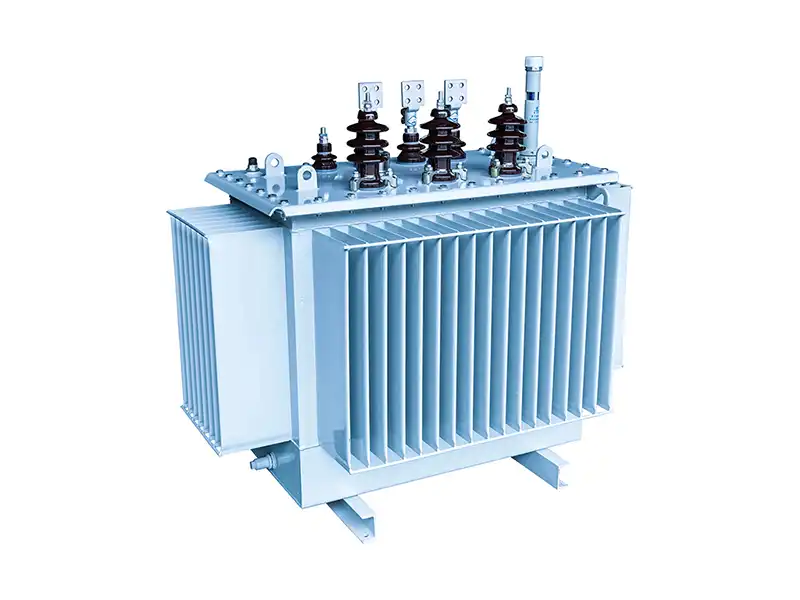
A step-up transformer raises the voltage of an AC circuit by keeping the secondary winding with more turns than the primary winding. This is a direct use of Faraday's Law of Induction. In solar plants, inverters usually put out between 600V and 1500V AC. The transformer then raises this voltage to transmission level. It can do this with up to 99% efficiency thanks to grain-oriented silicon steel (CRGO) cores that reduce hysteresis and eddy current losses. The voltage ratio (k > 1), which is found by dividing the number of secondary turns by the number of primary turns, is the most important scientific factor.
Before ordering equipment, engineers and purchasing managers who are looking at solar-grade transformers should look at a few key factors:
These standards for a Step‑up Transformer have a direct effect on how reliable the system will be in the long run. Over the course of a 25–30-year project, choosing equipment that works with the site conditions from the start can save a lot of money in the long run.
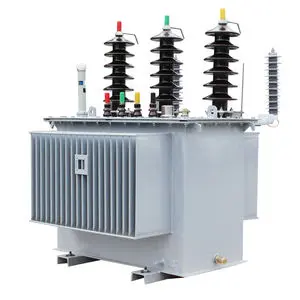
In a solar plant, a power step-up unit's main job is simple: it raises voltage, lowers current, and stops I²R losses across transmission lines. When the voltage is 34.5kV instead of 1,000V, the same amount of power moves at a quarter of the current, which greatly reduces heat loss due to resistance. A 2022 NREL study on the performance of utility-scale PV systems proved that the placement and efficiency of transformers are two of the five most important factors that affect the total plant yield rates.
These transformers do more than just raise the voltage; they also work directly with string and central generators, as well as medium-voltage (MV) collection systems. In big plants that cover hundreds of acres, power from solar blocks is combined by several pad-mounted or skid-mounted step-up units before it is sent to the transmission network by a single substation generator. This stacked design makes redundancy better; if one unit goes down, blocks next to it will still be making money.
Oil-immersed step-up transformers with on-load tap changers (OLTC) have been used in projects across the U.S. South-west and have shown that they can keep the output voltage stable even when the amount of sunlight changes throughout the day. This protects equipment further down the grid from voltage deviation events.
Not only is there a technical difference between oil-immersed and dry-type units for a Step‑up Transformer, but there are also issues of site logistics, environmental risk tolerance, and the ability to do long-term upkeep. Oil-immersed transformers are the best choice for open-field utility solar because they have higher MVA ratings, take up less space, and cost less per MVA. Dry-type cast-resin units don't pose a fire risk or oil storage issues, which makes them a better choice for installations on rooftops or near bodies of water where environmental permits limit oil use.
When choosing the right size solar step-up transformer, these are the main things to think about:
Before buying, you need to make sure of these factors with both the inverter maker and the utility's interface expert. If you get this wrong at the design step, it could take months longer to start doing business.
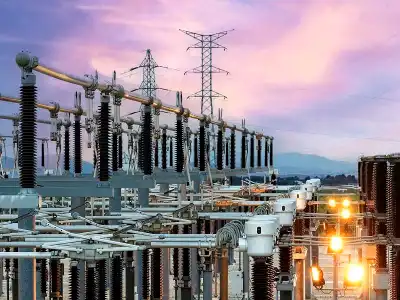
Price per unit for a Step‑up Transformer is only one factor that goes into buying things for big solar projects. The total cost over the whole lifetime includes loses from not being loaded, loads, repair times, the availability of extra parts, and the guarantee. Over the course of 25 years, an asset that has 15% lower initial cost but 20% higher yearly no-load losses can end up costing a lot more. Lifecycle cost models are being used more and more by procurement managers at EPC firms and IPPs to compare bids instead of just unit price.
Just as important as unit success is the supply chain's ability to work reliably. Large solar projects buy 20 to 80 generator units per part of the project. If shipping times are late, the commercial operation dates are pushed back, which is against the terms of the PPA. Supply chain risk is greatly reduced when you work with a company that is certified by ISO 9001:2015, has a large production capacity, and also has CE, UL, and IEC certifications. Customisation options, such as OLTC integration, neutral wiring setups, and skid-mounting arrangements, increase the value of purchase when dealing with unusual site conditions.
The next generation of solar-grade power transformers is not just passive electrical equipment, but also assets that are actively monitored and connected to the internet of things (IoT). Dissolved Gas Analysis (DGA) sensors built into oil-immersed units constantly track chemical fingerprints inside the units that happen before insulation fails. This lets maintenance be planned ahead of time, before problems happen. IEEE Std C57.104 says that early DGA action can add 5 to 8 years to the service life of a transformer compared to repair plans that are based on time.
Amorphous alloy core technology is becoming more popular in solar applications because it cuts no-load losses by up to 70% compared to traditional silicon steel cores. This is a big benefit for transformers that run 24 hours a day, even when the sun isn't shining. Hybrid solar-plus-storage plants are more complicated because transformers have to handle power flows going both ways while battery systems charge from the grid during off-peak hours. This requires better insulation grades and a wider range of impedance tolerances.
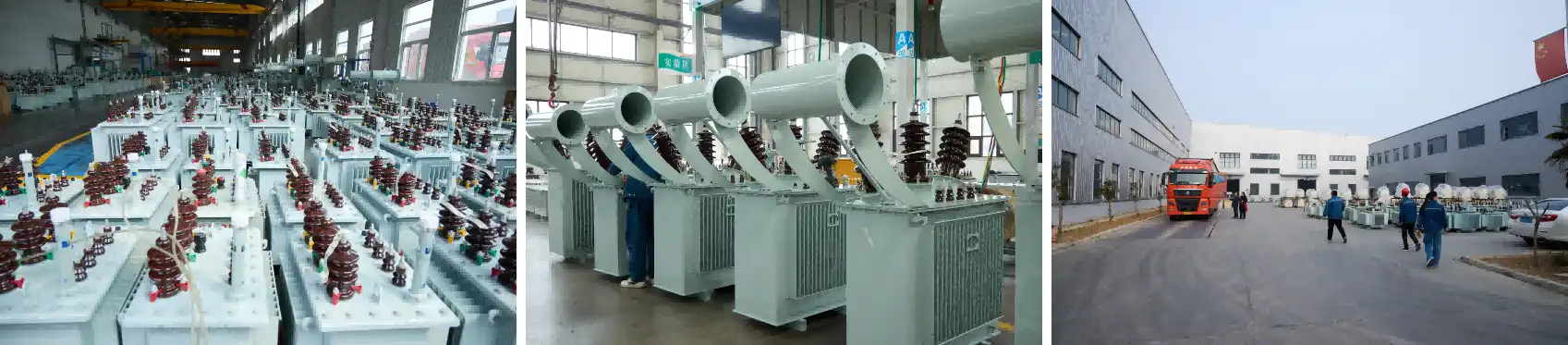
It takes technical know-how, discipline in the supply chain, and a long-term view of operational performance to choose the right step-up transformer for a utility-scale solar plant. Every purchase choice has an impact on the project's income and megawatt-hours, from figuring out the voltage ratio to making sure the project meets IEC standards and from choosing the cooling method to meeting OLTC requirements. As the United States' solar capacity keeps growing, the generator that serves each solar block becomes just as important from a strategic point of view as the cells above it. The best way to get reliable, low-cost production assets is to work with qualified, experienced makers who know both the electricity and business sides of solar projects.
Technically, transformer reciprocity allows reversed operation, but it is not recommended without deliberate derating. Internal tap changer settings, impedance compensation, and insulation coordination are all optimized for the intended power flow direction. Reversing operation without engineering review risks insulation stress and inaccurate voltage regulation.
Audible hum originates from magnetostriction in the laminated steel core—the core physically vibrates at twice the supply frequency. High-quality CRGO laminations with tight core clamping and resin encapsulation significantly attenuate this noise, which matters in installations near residential zones or wildlife-sensitive areas.
For utility-scale solar assets, annual DGA testing is the industry baseline. For units operating above 80% continuous load or in high-ambient-temperature regions, semi-annual testing provides earlier fault detection and protects against unplanned outages during peak generation seasons.
Dyn11 is the most common vector group in U.S. solar interconnections. It provides a 30-degree phase shift that suppresses triplen harmonics generated by inverter switching, reducing harmonic distortion on the collection network and satisfying IEEE 519 harmonic limits.
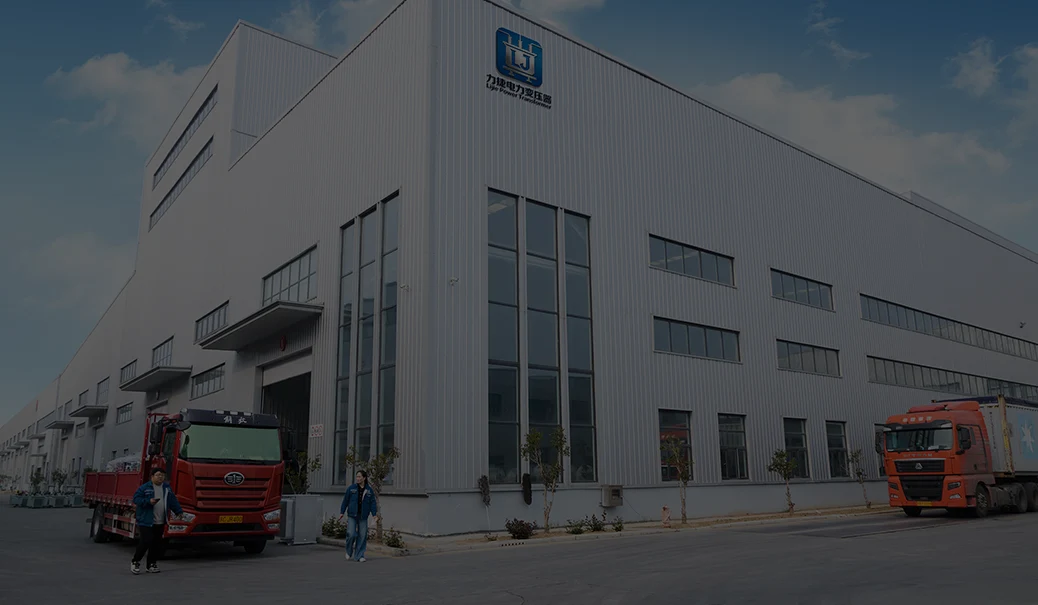
Lijie Electric is a reliable company that makes step-up transformers for power providers, green energy producers, and EPC workers all over the world, including in the United States. Our dry and oil-immersed solar transformers are certified by ISO 9001:2015, CE, UL, and IEC. They are also backed by a 2,000-person industrial team with 500,000 m² of space to make them. We meet your project's needs, whether it's 5 MVA pad-mount units or 50 MVA substation-grade assemblies. We do it on time and as planned. Contact our engineering team at lijieelectrical@gmail.com or visit lijie-electrical.com to request a technical proposal.
1. U.S. Energy Information Administration — Electric Power Monthly, 2024.
2. National Renewable Energy Laboratory (NREL) — Utility-Scale PV System Performance and Cost Benchmark, 2022.
3. IEEE Standard C57.12.00 — IEEE Standard for General Requirements for Liquid-Immersed Distribution, Power, and Regulating Transformers, 2021.
4. IEC 60076-1 — Power Transformers – General, International Electrotechnical Commission, 2011 (with amendments).
5. IEEE Standard C57.104 — IEEE Guide for the Interpretation of Gases Generated in Mineral Oil-Immersed Transformers, 2019.
6. Wood Mackenzie Power & Renewables — U.S. Solar Market Insight Annual Report, 2023.
YOU MAY LIKE


H15%20distribution%20transformer.webp)
11%20type%2035KV%20dry-immersed%20transformer_1778136495348.webp)
18%20type%2035KV%20power%20transformer.webp)

13%20type%20epoxy%20resin%20cast%20transformer.webp)
April 27, 2025
With a tight project schedule, the manufacturer delivered on time, and on-site technical personnel provided guidance throughout the entire installation and commissioning process; the collaboration was highly efficient and hassle-free.
July 2, 2025
During the preliminary phase, a selection plan was custom-tailored based on the actual site load requirements, resulting in a high degree of parameter compatibility. After-sales support responds within two hours, and ongoing technical support for operation and maintenance is comprehensive; we feel completely confident in a long-term partnership.
November 18, 2025
Deployed as a supporting component for a 35kV grid-connection project at a photovoltaic power station, the equipment operates for an average of 16 hours daily. It demonstrates excellent control over no-load losses, ensures smooth power generation and grid integration, and effectively reduces the station's overall energy consumption.
January 30, 2026
Under the continuous, high-load operating conditions of a factory production line, the equipment maintains stable electrical parameters and exhibits strong overload resistance, thereby guaranteeing an uninterrupted power supply for industrial production.
April 3, 2026
Integrated as a supporting component for a new energy photovoltaic grid-connection system, the manufacturer provided professional technical coordination and timely after-sales support, ensuring seamless adaptation to the specific electrical operating conditions required for grid integration.