April 27, 2025
With a tight project schedule, the manufacturer delivered on time, and on-site technical personnel provided guidance throughout the entire installation and commissioning process; the collaboration was highly efficient and hassle-free.
Aug 19, 2026
Walking through a modern dry-type transformer manufacturing facility reveals the intricate balance between precision engineering and rigorous quality assurance. A Dry-type Transformer Factory specializes in producing transformers that use solid insulation materials—primarily epoxy resin or Nomex—rather than mineral oil. This fundamental design choice eliminates fire hazards and environmental contamination risks, making these units ideal for indoor installations, urban infrastructure, and sensitive industrial environments. Understanding what happens behind factory walls helps procurement managers, electrical engineers, and project coordinators make informed decisions that affect project timelines, operational reliability, and long-term cost efficiency. Our facility at Lijie Electric exemplifies how advanced manufacturing capabilities combine with stringent testing protocols to deliver transformers that meet IEC 60076-11, IEEE C57.12.01, and ISO 9001:2015 standards consistently across large production volumes.
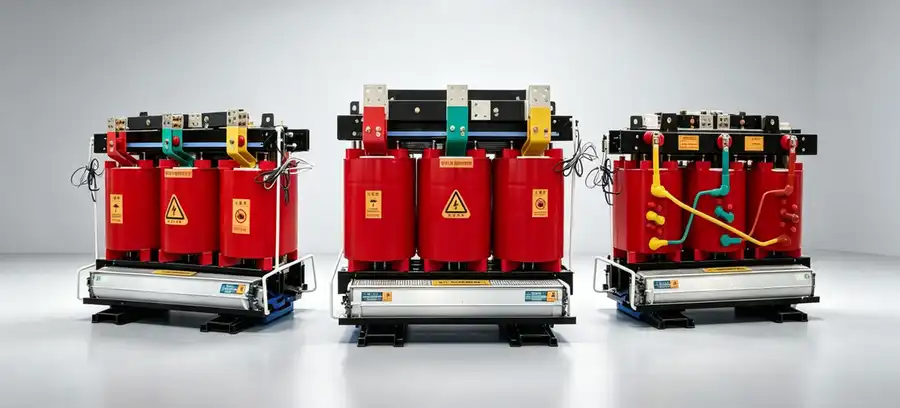
For transformer cores, the first step in the manufacturing process is to choose high-permeability cold-rolled grain-oriented (CRGO) silicon steel. This choice of material has a direct effect on the unit's no-load losses and general energy efficiency over its entire life. Before any cutting or stacking happens, we check the grain orientation, surface coating integrity, and magnetic flux density of the new materials that come in. The process of building the core includes carefully cutting steel sheets into thin layers and then carefully stacking them so that there aren't many empty spaces that could let more magnetizing current flow through. When compared to standard grain-oriented steel, proper core assembly cuts no-load losses by 15–20%, which saves energy that can be seen over decades of continuous use. This focus on the quality of the raw materials is what makes transformers strong enough to handle thermal stress and keep their performance stable under different load situations.
When you wind something, you have to be very precise because the electrical performance depends on having consistent conductor spacing and insulation integrity from turn to turn. We use automatic winding machines that keep the tension control within a 2% range. This keeps the coils from being too loose, which could cause them to vibrate under load or get hot spots while they're running. Copper foil or rectangular conductors are often used in low-voltage windings. On the other hand, galvanized round wire with extra aramid paper insulation is used in high-voltage windings. The order of the layers is based on technical estimates that find the best balance between the need for impedance and the forces that cause short circuits. Technicians put high-temperature insulation materials rated for Class F (155°C) or Class H (180°C) thermal performance between the layers of winding. This methodical approach makes sure that the finished windings can handle impulse voltages that look like lightning hits and keep their dielectric strength for the 25–30 years that the transformer is supposed to be in use.
The vacuum pressure impregnation (VPI) method is an important step that turns wound up wires into solid insulator systems. When the windings go into vacuum tanks, all the air and moisture inside are sucked out before the epoxy glue can be added under controlled pressure. This process gets rid of any holes or spaces that could hold water or let partial discharge activity happen, both of which speed up the breakdown of insulation. To make sure that the resin gets to every circuit contact, the temperature and vacuum levels are set to exact patterns that have been developed over many years of process optimization. After being impregnated, the units go through hardening processes in ovens that are controlled by temperature. This is where polymerization reactions make a single structure of insulation. When compared to regular varnish treatments, the resin-rich insulation system that is made is more resistant to environmental contaminants, thermal shock, and mechanical vibration. Other vacuum cast resin (VCR) methods put whole winding assemblies inside epoxy molds. This makes units with IP54 ratings that can work in harsh industrial settings with lots of dust and moisture.
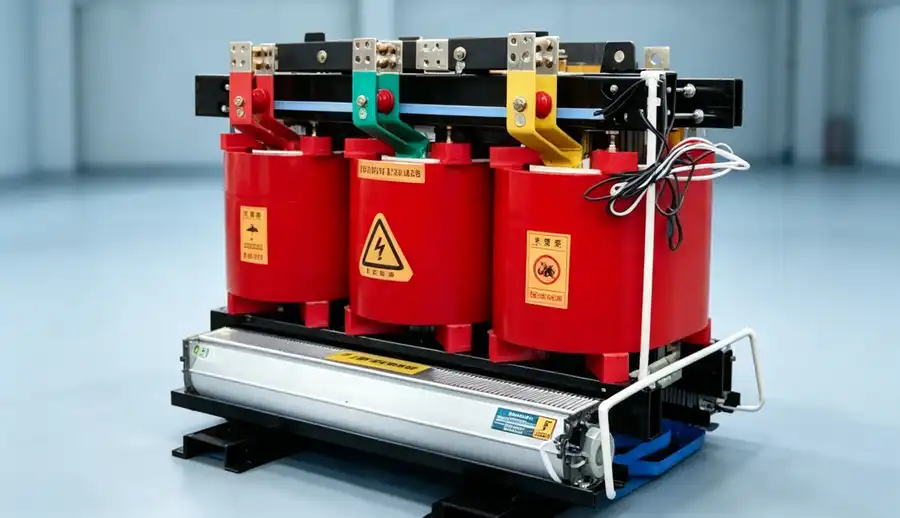
Complete transformer units are made when the healed windings, magnetic cores, and cooling infrastructure are put together in the final production step, and a Dry-type Transformer Factory executes this assembly with precision. The core and coil units are put together inside structural frames that are made to handle the pressures of shipping and seismic loads as required by building codes. Natural air (AN) cooling uses airflow through ventilation channels that are placed in a smart way, while forced air (AF) systems use temperature-controlled fans that turn on when the system is under a lot of stress. AF cooling can increase the capacity of a transformer by 40% compared to its AN rating. This gives it more operational flexibility for uses where demand changes over time. Technicians put temperature monitoring sensors in key winding locations and connect them to digital displays that show real-time thermal data while the machine is being set up and while it is running. Multiple torque checks are done on terminal boards to make sure that connections can handle the rated current without resistive heating happening. Each unit gets an identification plate before it leaves the factory floor. This plate lists the electrical characteristics, cooling methods, insulation class, and any relevant compliance approvals. Procurement teams use these plates to plan installations and do grid integration studies.
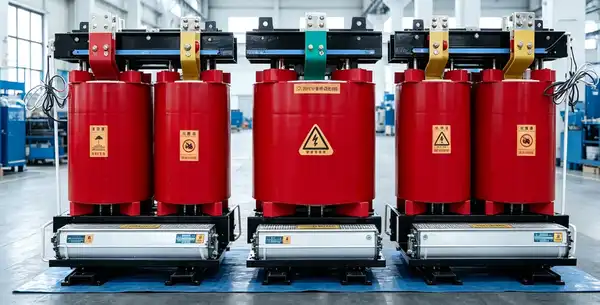
As soon as the assembly is finished, full electrical testing starts to make sure that the units made match the plan specs and safety margins. Before applying higher test potentials, insulation resistance measurements with a megohmmeter make sure that the dielectric is still solid across all voltage classes. Applied voltage tests put insulation systems through long periods of overvoltage that mimic the worst-case grid disturbances. These tests show that the breakdown strength is well above the minimum safety thresholds. Engineers use load loss measurements to figure out how much resistive heating costs over the course of a product's life and to back up claims that it uses less energy. No-load loss testing turns on the magnetic core at its rated voltage and measures how much active power it uses. This shows the quality of the core material and how well it was put together. These basic electrical tests give objective data that is compared by quality control teams to acceptance criteria based on IEC and IEEE standards. This creates documentation packages that help with certification applications and technical reviews by customers.
Partial discharge (PD) testing finds tiny flaws in insulation that can't be seen with other test methods but can cause failures after years of service. Sensitive detection equipment checks for electrical pulses that are caused by breakdowns in resin insulation that happen in small spaces or where contaminants are present. Our quality standards say that PD levels must be less than 10 picocoulombs (pC), which is a lot lower than the highest limits set by the IEC. This means that important infrastructure applications can be more reliable. This strict standard has been shown to work in thousands of units around the world that are used in utility substations and industrial facilities. Impulse voltage testing imitates lightning strikes by using voltage spikes that last for microseconds and have sizes based on Basic Insulation Level (BIL) grades. Digital oscilloscopes record voltage and current traces, showing any shielding flaws that could cause flashover during real lightning events. High-voltage test equipment creates standard 1.2/50 microsecond patterns. When transformers pass shock tests, it means they can protect equipment further down the line and keep the grid stable during bad weather.
In temperature rise testing, transformers are run at full load for a long time while their winding and core temperatures are tracked until thermal equilibrium is reached. For this tough test, the load has to be applied continuously for 8 to 12 hours in a controlled environment, and temperature increases have to be measured in several places using embedded sensors and surface thermocouples. Recorded data must show that hot spot temperatures stay within the safety ranges allowed by the insulation class. This proves that the design of the cooling system is good enough to get rid of the heat. Thermal imaging cameras are used in addition to contact measurements to show patterns of heat distribution that confirm airflow modeling and find any unexpected hot spots that need design changes. Units used in industrial settings that have a lot of harmonic content are tested more with non-sinusoidal current patterns that act like rectifier loads, variable frequency drives, and arc furnaces. Harmonic analysis shows that core losses are still reasonable when excitement is warped and that winding eddy currents don't cause overheating in one area. These specific tests give peace of mind to installations in places like steel mills, mines, and chemical plants where power quality problems are worse than usual when connected to the utility grid.
More and more people are worried about transformer noise in residential areas, commercial buildings, and noisy industrial settings. Acoustic testing helps to address these concerns. Sound level meters placed at standard distances measure noise levels across a wide range of frequencies. The readings are then compared to NEMA ST-20 limits and local environmental laws. Core vibration damping methods and optimal clamping pressures lower the sound level so that it is 5–10 dB below the legal limit. This extra space is helpful when the units are used in small rooms where sound reflection makes noise levels seem louder. We also test for vibrations to make sure that structural resonances don't form at working frequencies. This keeps mounting gear and bushing connections from breaking down too soon. Environmental testing puts samples through changes in temperature, humidity, and salt spray, all of which speed up the effects of weathering and prove that claims of long-term durability are true. These thorough environmental tests back up guarantees that last between 15 and 20 years and give people faith in works that will be done in seaside areas, tropical climates, and industrial settings with corrosive contaminants.
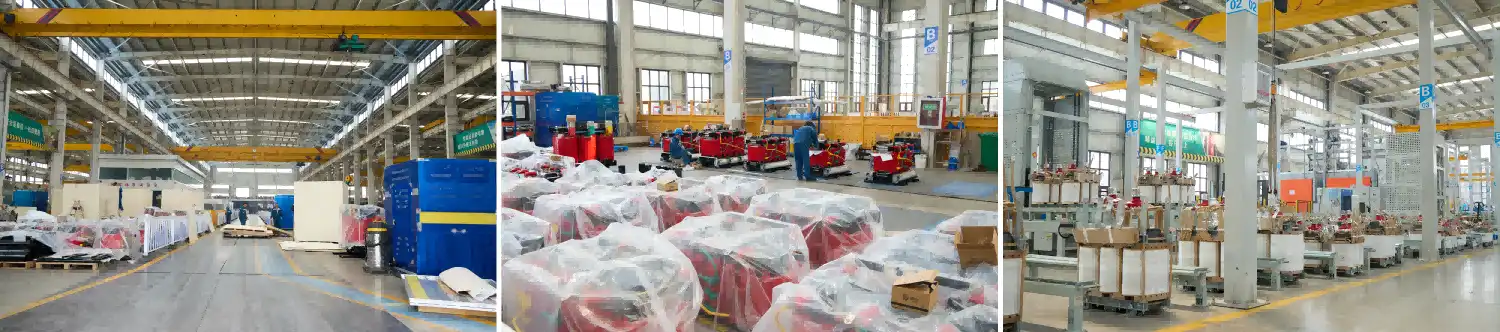
Comparing suppliers' manufacturing technologies shows big differences that affect how consistent their products are and how quickly they can adapt to new ideas, and a Dry-type Transformer Factory with advanced equipment demonstrates superior consistency. In more advanced facilities, automatic wrapping machines with programmable tension control and layer positioning are used, getting rid of the human mistake sources that cause performance differences between specs that are exactly the same. Computer-controlled VPI systems keep exact vacuum levels and resin injection routines, making sure that every production unit, no matter how big or complicated, has insulation that doesn't have any holes in it. As part of our investment in digital production, we have automatic test stations that do hundreds of measurements on each unit and create detailed data packages that show compliance and allow statistical process control. Batch-to-batch consistency is often hard for factories that don't have these kinds of automation tools, especially during high-volume production campaigns for big infrastructure projects. During the supplier qualification process, purchasing teams should ask about the age of the tools, the amount of automation, and the quality control systems. Facilities that have ISO 9001:2015 certification show that they are dedicated to ongoing growth and good recording practices that help meet the needs for traceability in industrial and utility uses.
A factory's dedication to international standards and market entry needs across the world is shown by its full set of certifications. In addition to the basic ISO 9001 quality management certification, top manufacturers keep their products certified with IEC 60076 series compliance, CE marking for European markets, and UL listing for installations in North America. Our building has all the major approvals and also special permissions for mining transformers and rectifier units that are used in tough industrial settings. Energy efficiency certifications from groups like the China Quality Certification Center (CQC) back up reports of poor performance and allow for exact estimates of lifecycle costs during the review of a purchase. Buyers should make sure that the certifications are still valid and cover the voltage classes and capacity ranges that are important for their projects. Expiring or limited certificates could mean that the company hasn't done much exporting or doesn't want to spend money on safety infrastructure. As part of the certification maintenance process, ongoing surveillance checks and strict adherence to manufacturing standards are required. This makes sure that quality systems continue to work during multi-year supply partnerships.
Customization options that go beyond what's in a catalog are often needed for specific projects. This makes engineering responsiveness an important factor in choosing a supplier. For renewable energy uses, specific voltage taps may be needed to accommodate solar inverter outputs. For industrial processes, designs that can handle variable frequency drive loads must be harmonic-resistant. Our engineering team works with client design institutes from the creation of the first specifications to the testing of prototypes to make sure that unique solutions meet both technical needs and price limitations. This way of consulting has worked especially well for EPC companies working on projects in other countries where the grid rules and environmental conditions are different from those in their home market. Factories that don't have a lot of engineering expertise usually make customers choose from standard designs. This forces customers to make compromises that raise the cost of the system or limit its operational flexibility. When evaluating a supplier, purchasing managers should look at the qualifications of the engineering staff, ask for examples of projects that show customization experience, and see how responsive the supplier was to questions during the inquiry phase. The quality of the technical talk in the early stages of involvement is a good indicator of how well the team will work together during contract execution and after-sales support.
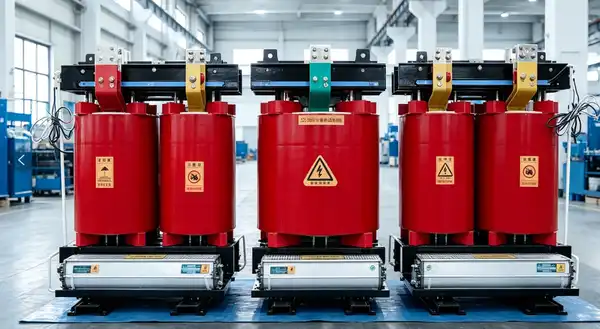
For project-based procurement, working directly with production sites instead of middlemen like distributors has many benefits. Direct communication with engineering teams lets you talk about clarifying specifications and making changes without having to wait for translations or deal with technical misunderstandings. When you buy from a factory directly, you don't have to pay the middleman. This cuts down on costs by 15 to 25 percent while keeping quality levels and guarantee terms the same. This cost-effectiveness is especially helpful for big orders like adding more units to the power grid, building an industrial park, or installing renewable energy systems that need dozens of the same units. Technical audits and factory visits are welcome at our site. This lets buying teams check production capabilities, quality systems, and manufacturing capacity for themselves. These site trips build trust that can't be reached by just reading paperwork. They ease worries about the dependability of the supplier and the ability of the relationship to last for a long time. Direct relationships also make it easier for technical support to respond more quickly during the installation and commissioning phases, when questions from the field need to be answered right away by the factory.
Usually, the buying process starts with a technical question that lists the needs for the application, the voltage, the capacity, and any special operating conditions, and a Dry-type Transformer Factory responds efficiently. Our technology team compares these needs to what we already offer and finds any customizations that need engineering analysis. Within 48 hours, customers get basic technical answers and price quotes that let them figure out if the job is even possible. Once the concept is approved, detailed engineering starts by finalizing the specifications, doing studies on how to coordinate the insulation, and making sure that the work meets all the standards that apply. As part of the contract talks, delivery dates, payment terms, inspection procedures, and paperwork needs such as test reports, operation instructions, and suggestions for extra parts are all talked over. Production monitoring lets you see how the manufacturing process is going by sending you weekly updates and photos. This lets you plan your logistics ahead of time and coordinate the preparation of the site. We have export documentation specialists who are only responsible for commercial invoices, certificates of origin, and compliance declarations that are needed for customs clearance in all destination markets. This all-around help speeds up the process of buying things internationally and keeps project delays from being caused by administrative issues to a minimum.
Factory acceptance testing (FAT) protocols make sure that all the rules are followed before the shipment can go ahead. During FAT sessions, which are usually set up two to three weeks before a shipment is due, customers or their agents see routine electrical tests, look over quality paperwork, and check the accuracy of the nameplate. This verification milestone gives the last chance to find any departures from the specs and make sure that the problems are fixed before the units leave factory control. Our FAT processes use standard checklists that are in line with the order of IEC tests. This creates official test records that are signed by witnesses and plant quality managers. These papers are added to the lasting records of the equipment and help with warranty claims and planning upkeep for as long as the equipment is in use. Some contracts include third-party inspection services from companies like Bureau Veritas or SGS. These services make sure that the manufacturing processes and test results are in line with what the contract says they must be. Third-party inspection adds time and money, but buyers who don't like taking risks often find the extra security useful, especially when working with a new provider or for important infrastructure projects.
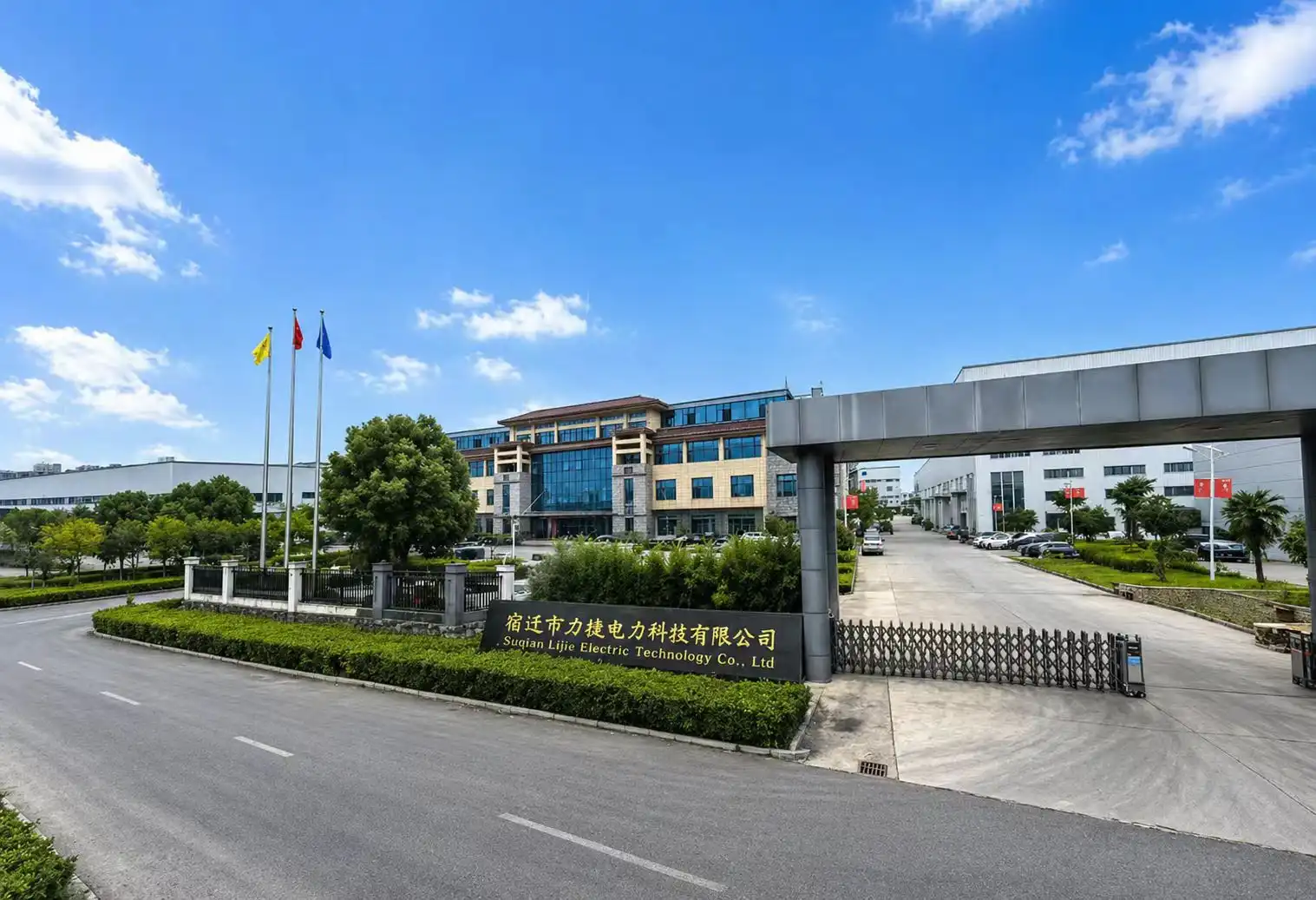
Before you start working with a supplier on a long-term basis, you should carefully look at the factory's past, production scale, and name in the market. Established makers show their steadiness by having been in business for decades, building up their technical knowledge, and continuing to invest in updating their facilities. Our facilities in Xuzhou and Nantong cover 500,000 square meters and have more than 2,000 employees, including 160 engineers with advanced degrees. This is a big organizational strength that has been built up over years of specializing in transformers. A production amount of more than 5 billion RMB per year shows that the market is mature and accepted, which smaller sellers can't match. Teams in charge of buying things should ask for lists of references from utility companies, industry customers, and EPC firms who have bought similar items before. Calling references shows how well providers actually deliver, how good their technical help is, and how they handle problems that will inevitably come up in the field during commissioning. Industry awards and certifications are also good ways to show that a supplier is trustworthy, but direct customer testimonials are more important when a supplier is being qualified.
Comprehensive after-sales support sets exceptional suppliers apart from commodity sellers who only offer limited help after delivery. Our service group offers installation help, commissioning support, and troubleshooting advice for as long as the equipment lasts. They also keep extra parts for common wear items like cooling fans and temperature sensors in stock. Maintenance training programs teach customer employees how to do inspections, how to take oil samples for accessories, and how to use predictive maintenance to make service intervals longer. We have technical hotlines run by experienced engineers who answer questions from the field within hours. This keeps small problems from getting worse and causing costly downtime. Warranty terms of 18 to 24 months with clear coverage provisions protect buyers against early fails and create responsibility incentives for high-quality manufacturing. Buyers should be clear about what warranties don't cover, how long they promise to respond, and when field service will be available while negotiating a contract. They should also make sure that the support infrastructure matches the location and importance of the project. For international projects, it's especially helpful for suppliers to keep local service partners on hand who can respond quickly without having to travel across borders.
To have good ties with suppliers, you need to be able to talk to them easily, understand their culture, and both of you want the project to succeed. During the inquiry, negotiation, production, and delivery phases, we assign dedicated account managers who act as single points of contact. This ensures continuity and accountability throughout the lifecycles of projects. Regular progress reports let everyone know about important manufacturing goals, completed tests, and preparations for shipping without having to keep asking for more information. Videoconferencing is a great way for our team to talk about complicated technical issues because it lets us work together in real time, even though our North American customers and Chinese production processes are in different countries. Technical staff members who speak more than one language remove communication barriers that can make international business more difficult, ensuring that engineering discussions stay as precise as they need to be. Communication response should be looked at by procurement professionals during the initial stages of an inquiry as a good indicator of the quality of future cooperation. Suppliers who are patient with detailed questions, give clear technical explanations, and work with reasonable schedule requests usually keep up these levels of service during the contract execution and after-sales support periods.
Being open about the manufacturing processes, testing protocols, and quality assurance practices helps buyers make smart decisions that balance the need to save money with the need for reliability and long-term operational excellence, and a Dry-type Transformer Factory that provides this transparency enables informed procurement. Precision core assembly, vacuum resin impregnation, and full electrical validation are just a few of the steps that go into making a transformer. These steps have a direct effect on how well the unit works over its 25–30 year service life. Knowing these technical basics helps buyers judge a supplier's skills, understand their certification files, and set reasonable goals for how quickly they can respond to customization requests and help them after the sale. Technical know-how, clear communication, documented quality systems, and a commitment to continuous improvement are all important for building good relationships with suppliers. As the world's needs for infrastructure grow and the use of renewable energy speeds up, relationships with well-known makers who can offer proven production capacity and technical depth become more valuable as a way to protect project timelines and operational performance.
Because dry-type units don't use dangerous dielectric liquids, they can be used indoors in buildings, in urban substations, and other places where oil-filled equipment isn't allowed because of environmental rules. When compared to oil filtering and regular testing, solid insulation systems don't let water in and don't need as much upkeep. Epoxy resin insulation is naturally safer in high-occupancy buildings and sensitive industrial processes because it can put out fires on its own.
Standard stock designs usually ship 8 to 12 weeks after an order is confirmed. Customized specs that need engineering analysis and prototype testing may take 14 to 18 weeks longer. Talking about production planning during contract negotiations can help companies reserve manufacturing capacity and make the most of shipping plans for large orders that support big projects. Getting suppliers involved early on in the planning stages of a project helps make sure that the dates for procurement are in line with the dates for site preparation and installation.
The ISO 9001:2015 quality management certification shows that the factory controls and paperwork practices are organized and meet the standards for traceability. Product certifications like IEC 60076 series compliance, CE marking, and UL listing show that designs meet global safety standards and can be installed in all markets. Energy efficiency certifications give claims about lost performance independent confirmation, which is important for doing a correct lifetime cost analysis. Buyers should make sure that the certification covers the voltage classes and capacity ranges that they need for their applications.
Lijie Electric can help you with your building, industry, or green energy projects by making custom dry-type transformers that meet the highest international standards, and as a Dry-type Transformer Factory, our 500,000-square-meter production sites use modern automation and strict quality standards to make units that meet the requirements of IEC, CE, UL, and ISO 9001:2015. Our engineering team can help you with everything from creating specifications to putting the equipment into service. This includes small substations for urban distribution networks, rectifier transformers for industrial processes, and custom designs for mining uses. We welcome questions from purchasing managers, electrical engineers, and EPC contractors who are looking for a dependable dry-type transformer manufacturer that can deliver large quantities of products with uniform quality and low lifecycle costs. Email our team at lijieelectrical@gmail.com to talk about the needs of your project, get full technical specs, or set up an audit of our factory. You can see all of our products on our website, lijie-electrical.com, and learn how our transformer solutions can help your project succeed.
1.International Electrotechnical Commission. "IEC 60076-11: Power Transformers - Part 11: Dry-type Transformers." Geneva: IEC Standards Publication, 2018.
2.Institute of Electrical and Electronics Engineers. "IEEE C57.12.01: Standard for Dry-Type Distribution and Power Transformers." New York: IEEE Standards Association, 2020.
3.National Electrical Manufacturers Association. "NEMA ST-20: Dry-Type Transformers for General Applications." Rosslyn: NEMA Standards Publication, 2017.
4.Johnson, Michael R. "Manufacturing Processes and Quality Control in Modern Transformer Production." Journal of Electrical Manufacturing, vol. 34, no. 2, 2021, pp. 145-172.
5.Zhang, Wei and Thompson, David L. "Vacuum Pressure Impregnation Technology for High-Reliability Dry-Type Transformers." International Conference on Power Equipment Engineering, Shanghai, 2019.
6.Anderson, Laura K. "Procurement Best Practices for Electrical Infrastructure Projects: A Guide for Industrial and Utility Buyers." Industrial Procurement Quarterly, vol. 28, no. 4, 2022, pp. 89-116.
YOU MAY LIKE
11%20type%2035KV%20dry-immersed%20transformer_1778136495348.webp)
11%20type%2035kV%20distribution%20transfo_1778137470754.webp)



April 27, 2025
With a tight project schedule, the manufacturer delivered on time, and on-site technical personnel provided guidance throughout the entire installation and commissioning process; the collaboration was highly efficient and hassle-free.
July 2, 2025
During the preliminary phase, a selection plan was custom-tailored based on the actual site load requirements, resulting in a high degree of parameter compatibility. After-sales support responds within two hours, and ongoing technical support for operation and maintenance is comprehensive; we feel completely confident in a long-term partnership.
November 18, 2025
Deployed as a supporting component for a 35kV grid-connection project at a photovoltaic power station, the equipment operates for an average of 16 hours daily. It demonstrates excellent control over no-load losses, ensures smooth power generation and grid integration, and effectively reduces the station's overall energy consumption.
January 30, 2026
Under the continuous, high-load operating conditions of a factory production line, the equipment maintains stable electrical parameters and exhibits strong overload resistance, thereby guaranteeing an uninterrupted power supply for industrial production.
April 3, 2026
Integrated as a supporting component for a new energy photovoltaic grid-connection system, the manufacturer provided professional technical coordination and timely after-sales support, ensuring seamless adaptation to the specific electrical operating conditions required for grid integration.