April 27, 2025
With a tight project schedule, the manufacturer delivered on time, and on-site technical personnel provided guidance throughout the entire installation and commissioning process; the collaboration was highly efficient and hassle-free.
Sep 12, 2026
When engineers and purchasing managers start to plan large-scale infrastructure for charging electric vehicles, one question keeps coming up: what role does an MV transformer play? Most people don't realise how important the answer is. An MV transformer lowers the medium voltage from the power grid to the low voltage levels that charging equipment needs. The medium voltage ranges from 6kV to 35kV. A DC fast charger or high-power charging hub can't work safely or effectively without this change. As the use of electric vehicles (EVs) grows across the US, it's important for anyone buying power tools on a large scale to understand the role of this part.
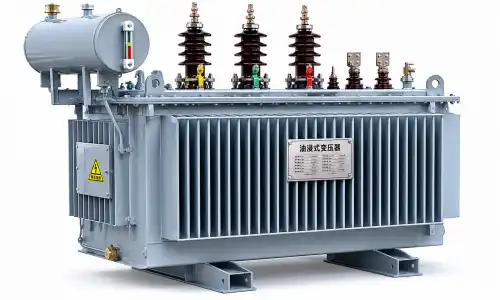
Power from utility distribution lines has a medium voltage that is much too high for charging electronics. This supply is stopped by a medium voltage transformer, which steps it down to 400V or 480V, which is the normal input range for most charging points in businesses. The transformer also offers galvanic separation, which keeps sensitive EV charging devices safe from disruption on the grid, short-term overvoltages, and noise pollution caused by charges that use inverters.
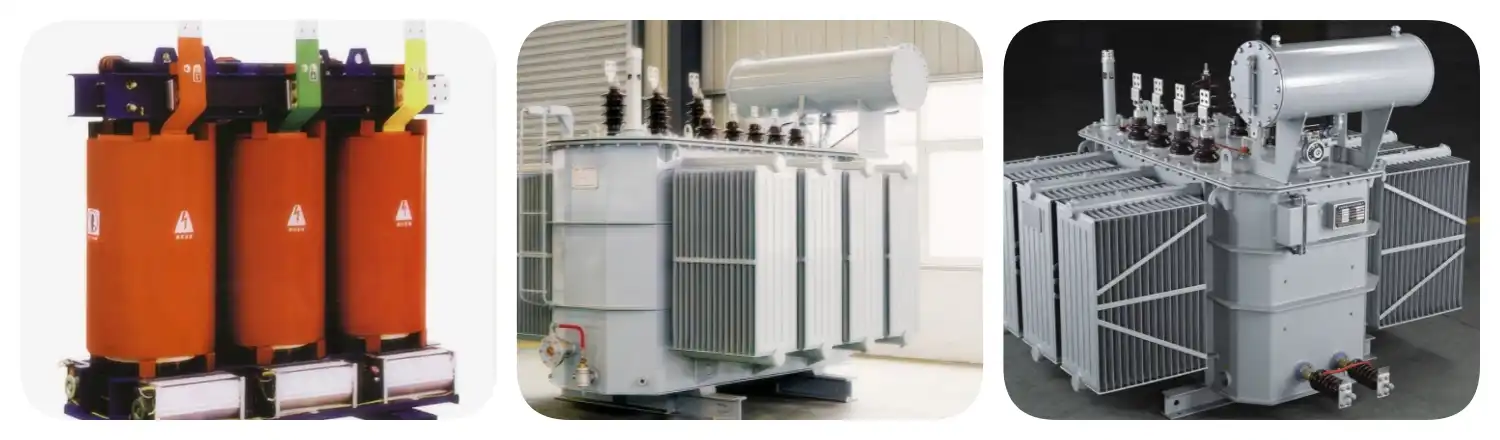
In EV charging projects, three types of transformers are usually used:
Each configuration is made for a different type of installation. Making the right choice at the start can save you a lot of money on repairs later on. This is a problem that buying teams with a lot of experience know all too well.
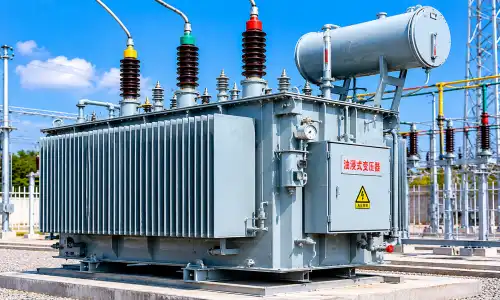
There is a reason why EV infrastructure is moving towards middle voltage power design, and an MV Transformer is central to this shift. Distributing power at a medium voltage lowers circuit losses over longer cable runs. This is very important for charging routes between states, big parking lots, and industrial fleet bases where the distance between the utility connection point and each charger can be several hundred metres or more.
Because of these main working benefits, medium voltage design is the best choice:
These benefits directly lead to lower total cost of ownership, which is a strong case for procurement managers who are looking at budgets for rolling out EVs to multiple sites. Buying a good generator will pay for itself many times over in the long run because it is reliable and efficient.
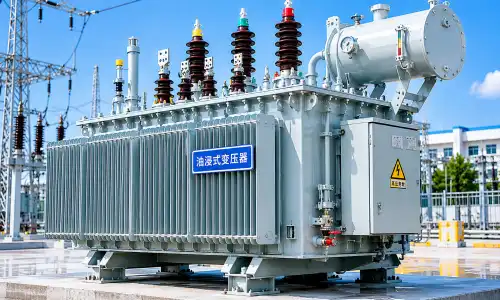
It takes more than comparing brand ratings to choose a medium voltage generator for a project that charges electric vehicles. Before making a short list of suppliers, procurement engineers should look at the voltage ratio, kVA capacity, cooling class, insulation level (BIL), efficiency tier, and certifications.
Distribution transformers like an MV Transformer sold in the United States must meet DOE 2016 efficiency standards. IEC 60076 sets rules for planning and testing methods around the world. Transformers that are going to be exported should have CE certification, and transformers that are going to serve certain industrial clients may need UL listing. Verifying upfront that certification requirements are met avoids costly delays during project commissioning.
What the supplier can do is just as important. Large EV infrastructure projects need batch consistency, which means that every unit sent to a rollout across multiple sites must work the same. The tracking that QA/QC teams need can be found with suppliers who have strong quality management systems (ISO 9001:2015 approved) and written plant acceptance testing methods.
In a wide voltage range from 35kV and below, Lijie Electric makes dry-type transformers, oil-immersed transformers, and built small substations. At the National Transformer Quality Supervision and Inspection Centre, all of the products have passed both type tests and regular tests. The line of products has ISO 9001:2015, CE, UL, and IEC standards, which are directly in line with the needs of U.S.-based EV infrastructure makers and EPC companies.
Even a well-specified transformer won't work well if it's not installed correctly. Before turning on the power, commissioning teams should make sure that the transformer tap settings match the real utility voltage. Article 250 of the NEC says that grounding must be done correctly, and the gaps around transformer enclosures should be kept to the manufacturer's specs so that the cooling works well.
Factory acceptance testing, which checks the insulation resistance, turns ratio, and no-load loss, makes sure that the unit that was shipped meets the design requirements. On-site setup tests, especially power factor tests of windings, set a standard for checking the state of the system in the future.
Overloading from adding extra chargers without planning to and warming of the neutral wire from harmonic currents are two common field problems in EV charging operations, and both can be mitigated by selecting an appropriate MV Transformer. Both problems can be avoided by choosing the right starting size and winding design. When problems happen during operation, it takes less time to fix them when you work with a supplier that offers responsive technical support.
The transformer for medium voltage is changing. Solid-state transformer technology is moving from research to early commercial deployment. It promises programmable voltage conversion, built-in power quality management, and bidirectional power flow. These are all features that are useful for vehicle-to-grid (V2G) applications that are becoming more popular in the U.S. market.
On regular transformers, IoT-enabled tracking tools can already be used right now. Sensors built into the insulation that measure temperature, load current, and the health of the insulation send information to cloud platforms. This lets repair plans be made ahead of time, which stops unplanned power outages. The International Energy Agency's 2023 Global EV Outlook says that the world's public fast-charging infrastructure needs to grow tenfold by 2030 to keep up with the expected rate of EV usage. On that path of growth, there will always be a need for power distribution equipment that works well and is reliable at all voltage levels.
Regulatory momentum makes this direction stronger. The U.S. Infrastructure Investment and Jobs Act set aside $7.5 billion to expand the EV charging network. A lot of this money goes to projects that need medium voltage distribution equipment that meets internationally recognised standards.
An MV transformer is not a common part of EV charging infrastructure; it is the technical base that decides how well, safely, and at a large scale an EV charging hub works. It takes careful technical judgement to match the transformer type, size, and approval to the particular application setting. As EV networks grow quickly in the US and around the world, procurement professionals who know how medium voltage power is distributed will be able to make better sourcing decisions, lower project risk, and lower lifecycle costs.
Medium voltage transformers in EV charging applications typically operate between 6kV and 35kV on the primary side, stepping down to 400V or 480V on the secondary side for charging equipment compatibility.
Dry-type units are preferred for indoor and urban installations due to their fire safety profile and compact footprint. Oil-immersed models handle higher thermal loads and suit outdoor fast-charging corridors where sustained heavy loads are common.
With proper specification, installation, and maintenance, these transformers routinely achieve a service life of 25 to 30 years—making them a sound long-term infrastructure investment.
For U.S. projects, verify DOE 2016 efficiency compliance and UL listing. For international projects, IEC 60076 type test certificates and CE certification are standard requirements. ISO 9001:2015 factory certification confirms consistent manufacturing quality.
Yes. A single medium voltage transformer with adequate kVA capacity can feed a low-voltage distribution panel serving multiple charging pedestals, making this architecture highly cost-effective for large charging hubs.
The Lijie Electric Power Technology Group makes certified MV Transformer units that are specifically designed for difficult EV infrastructure projects. There are ISO 9001:2015, CE, UL, and IEC marks on our dry-type transformers, oil-immersed units, and premade substations. We have over 160 licensed engineers on staff and annual sales of more than 5 billion RMB, so we can meet the needs of your project for both batch supply and technical depth. Contact our team today at lijieelectrical@gmail.com or visit lijie-electrical.com for specifications and competitive quotes.
1. International Energy Agency. Global EV Outlook 2023. IEA, 2023.
2. IEEE Standards Association. IEEE C57.12.00: Standard for General Requirements for Liquid-Immersed Distribution, Power, and Regulating Transformers. IEEE, 2021.
3. International Electrotechnical Commission. IEC 60076-1: Power Transformers – General. IEC, 2011.
4. U.S. Department of Energy. Energy Conservation Standards for Distribution Transformers. DOE, 2016.
5. Rocky Mountain Institute. Charging Infrastructure for Electric Vehicles: Grid Integration and Power Quality Considerations. RMI, 2022.
6. Electric Power Research Institute. Medium Voltage Infrastructure Requirements for High-Power EV Charging Deployments. EPRI, 2022.
YOU MAY LIKE




18%20type%20dry-type%20distribution%20transformer.webp)
April 27, 2025
With a tight project schedule, the manufacturer delivered on time, and on-site technical personnel provided guidance throughout the entire installation and commissioning process; the collaboration was highly efficient and hassle-free.
July 2, 2025
During the preliminary phase, a selection plan was custom-tailored based on the actual site load requirements, resulting in a high degree of parameter compatibility. After-sales support responds within two hours, and ongoing technical support for operation and maintenance is comprehensive; we feel completely confident in a long-term partnership.
November 18, 2025
Deployed as a supporting component for a 35kV grid-connection project at a photovoltaic power station, the equipment operates for an average of 16 hours daily. It demonstrates excellent control over no-load losses, ensures smooth power generation and grid integration, and effectively reduces the station's overall energy consumption.
January 30, 2026
Under the continuous, high-load operating conditions of a factory production line, the equipment maintains stable electrical parameters and exhibits strong overload resistance, thereby guaranteeing an uninterrupted power supply for industrial production.
April 3, 2026
Integrated as a supporting component for a new energy photovoltaic grid-connection system, the manufacturer provided professional technical coordination and timely after-sales support, ensuring seamless adaptation to the specific electrical operating conditions required for grid integration.