April 27, 2025
With a tight project schedule, the manufacturer delivered on time, and on-site technical personnel provided guidance throughout the entire installation and commissioning process; the collaboration was highly efficient and hassle-free.
Aug 26, 2026
When sourcing power equipment for large-scale projects, procurement managers and electrical engineers face a recurring challenge: finding a manufacturing partner capable of delivering voltage transformation solutions that balance reliability, global compliance, and long-term cost efficiency. At Lijie Electric, our Step-up Transformer Factory operates across two manufacturing bases covering 500,000 square meters in China, employing more than 2,000 professionals who produce transformers rated from 35kV to ultra-high-voltage 500kV systems. We understand that your infrastructure projects—whether wind farms in the American Midwest, utility substations in Texas, or industrial plants in California—demand equipment engineered for three-decade operational lifespans with minimal failure risk. This discussion explores how advanced transformer manufacturing supports renewable energy integration, utility-scale transmission, and remote industrial operations while addressing critical procurement concerns such as certification compliance, delivery timelines, and lifecycle cost management.
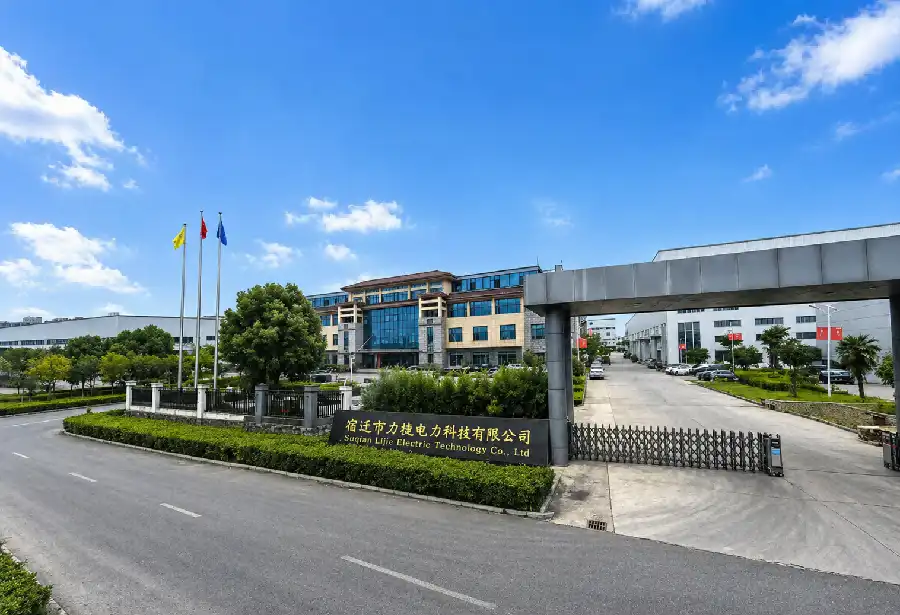
Voltage step-up technology is used by modern power lines to send energy over hundreds of miles more efficiently. This is done by lowering the resistive losses that happen at lower voltage levels. Companies that make this kind of tool use complex production processes that have a direct effect on how well the products work in tough environments.
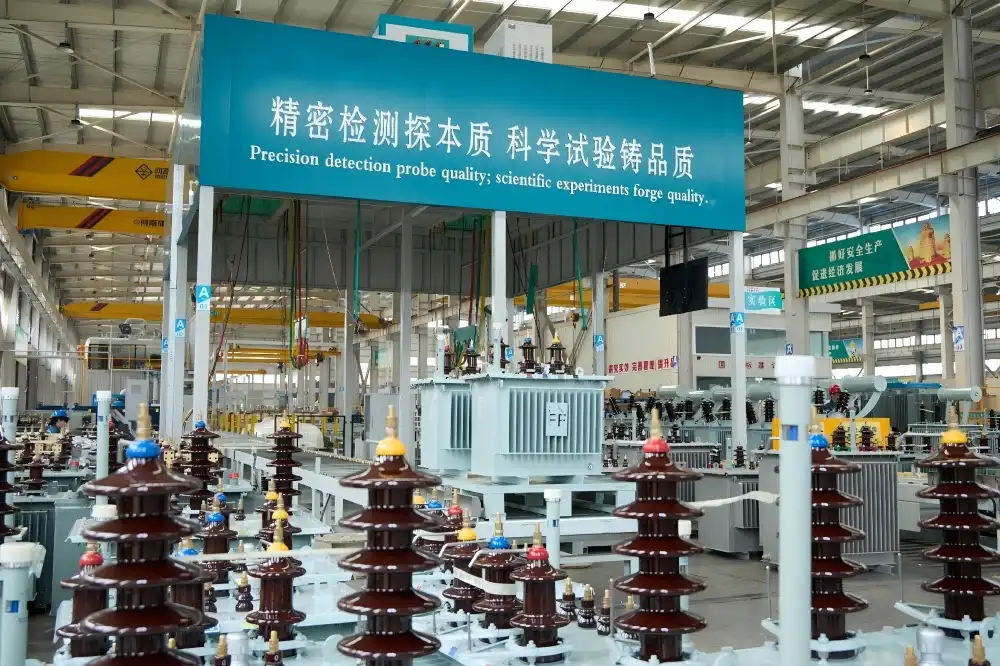
Industry 4.0 automation is used throughout all of our assembly lines. For example, robotic welding is used to build tanks, and computerized winding machines keep the accuracy of the turns ratio within ±0.5%. During vacuum drying, real-time tracking systems keep an eye on temperature profiles to make sure that the amount of water in the insulation materials stays below 0.5% by weight before they are impregnated with oil. This attention to manufacturing detail solves problems with batch consistency that come up during procurement. This is because utility companies and EPC contractors need the same performance from multiple units delivered over long project timelines. Our ISO 9001:2015 license and status as a "National High-Tech Enterprise" show that we have strict quality controls that keep warranty claims and unplanned outages to a minimum.
When our products leave our factories, they have IEC 60076 approval for foreign markets and CE and UL markings that make it easier to get them through customs in North America and the European Union. Our engineering files have thorough test results that cover dielectric strength, temperature rise limits, and the ability to withstand short-circuits. These data sets are necessary for procurement teams to coordinate approvals with utility engineering departments. Taking care of the environment also means using insulating fluids with a low GWP (global warming potential) and installing closed-loop cooling systems that use less water during the cooling process.
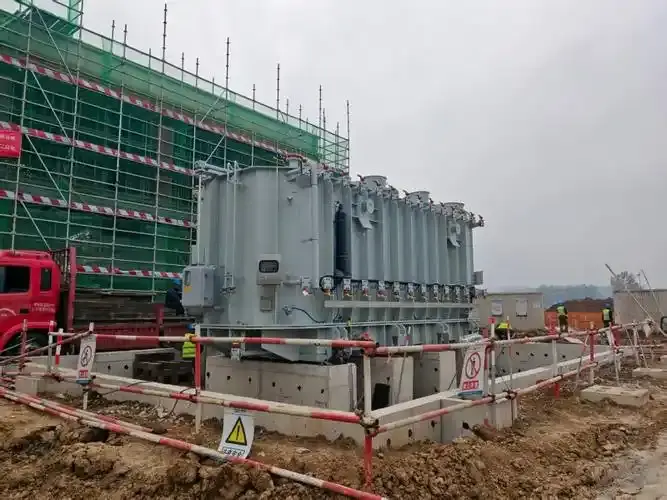
Because production profiles change and grid interconnection standards must be met, installing renewable energy poses its own set of problems. Transformers must be able to handle harmonic currents and voltage changes without speeding up insulation degradation when solar farms change the output of a 690V inverter to 33kV for medium-voltage collection systems. Our design team changes vector group configurations like Dyn11 or Ynd11 to fit existing substation layouts and manages zero-sequence current flow. Customizing the impedance percentage helps grid operators keep fault level compatibility, which stops failures from spreading when there is a short circuit. We just finished a 220kV substation project that needed special seismic anchoring for Zone 4 installations. This shows that we can change standard designs to fit building codes that are specific to a region.
Procurement managers like it when suppliers stay involved after delivering equipment. Our Step-up Transformer Factory service network interprets dissolved gas analysis (DGA), which helps support teams find small problems before they become big ones. Protocols for thermal imaging and oil sample kits are part of the detailed repair instructions we give to operations staff. When purchasing managers arrange framework deals, they get access to specialized technical agents who know the history of the project and can get spare parts faster when there is an outage. Our partnership model is different from transactional supplier relationships because it is based on service, which is in line with the GB/T 27922-2021 after-sales approval we received.
Voltage transformation equipment is used in a wide range of operating situations, each with its own set of technical and business challenges that need to be taken into account by effective buying strategies.
Most wind turbine engines put out 690V or 1kV three-phase power, which needs to be changed to 33kV or higher before it can be sent to utility connecting points. In the prefabricated substations we make for these uses, we include dry-type transformers from our Step-up Transformer Factory that can work continuously in wind farms' dusty and humid environments. The small size lowers the cost of civil construction, which is important when building on hundreds of acres of land. Similar rules apply to solar photovoltaic systems, but converter harmonics require K-factor-rated transformers that can handle non-sinusoidal current waveforms without overheating. Our ONAF (Oil Natural Air Forced) cooling designs offer 25–33% more capacity during peak generation times, making the most of the sun's energy when it is at its strongest.
For extra-high-voltage transmission, regional power companies that raise the generator terminal voltage from 18kV to 230kV need to make sure that the equipment they use has been tested to survive lightning impulse spikes of more than 1,050kV peak. We use factory acceptance testing (FAT) procedures that include these impulse tests along with measurements of partial discharges below 100 picocoulombs. This makes sure that internal insulation gaps won't spread over many years of use. Utilities that run coal, gas, or nuclear power plants like that we can receive transformers with ratings higher than 300 MVA on guaranteed delivery dates that work with planned outage windows. Lead times for these custom-engineered units are usually between 32 and 44 weeks, so procurement teams need to be involved early on to make sure they can work with construction goals.
Sharing technical documents, third-party certificates, and practical track records that can be checked builds trust in supplier relationships.
Every transformer goes through regular tests that check the turns ratio, measure the resistance of the windings at all tap positions, and look at the dielectric loss (tan delta) to see how good the insulation is. Buyers who care about long-term dependability put a high value on partial discharge testing that is done at 1.5 times the rated voltage to find corona activity that could mean there are problems with the manufacturing process or contamination of the material. Oil-immersed units get a moisture-in-oil test that makes sure the levels are below 10 parts per million before they are shipped. This keeps them from aging faster when they are first turned on. Our test labs are still accredited by the CNAS, which means that measurements can be traced back to international standards that are accepted by utility acceptance processes. When procurement teams come to our Xuzhou and Nantong factories, they see these testing methods going on along with the production processes. This gives them more faith in the consistency of the manufacturing.
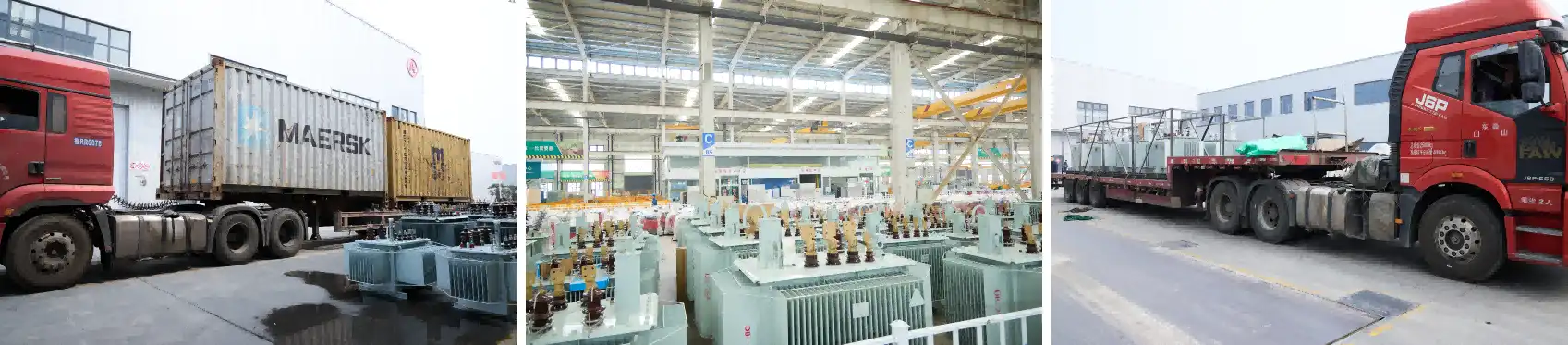
To get transformers that weigh 50 to 200 tons to international project sites, you need to coordinate logistics like heavy-haul trucking, port handling, and customs paperwork. We keep in touch with freight forwarders who know how to handle electrical equipment that is too big for its box. This makes the export process easier for buyers in Australia, New Zealand, Central Asia, Africa, and Southeast Asia. As a reliable Step-up Transformer Factory, we provide IEC-compliant solutions backed up by UL certification for North American markets. This lets EPC companies select our equipment in a wide range of regulatory environments. Letters of credit and milestone-based billing structures are popular in multi-year infrastructure projects, and the payment terms can support them. This addresses worries raised by purchasing teams about supply chain financing.
When planning for infrastructure that will last 30 to 50 years, you need equipment that can adapt to changing grid architectures and operational paradigms.
Environmental responsibility and resource efficiency are becoming more and more important to buyers when choosing providers. When compared to standard silicon steel cores, our amorphous metal transformer designs cut no-load losses by 60–70%. This means that over many decades of use, they save a lot of energy. When a piece of equipment is no longer useful, our decommissioning support helps get the materials back into circulation. For example, copper windings and steel tanks are put into recycling streams. These eco-friendly actions are in line with how companies buy things, which stresses the environmental effect over the whole lifecycle, not just the original cost of the capital.
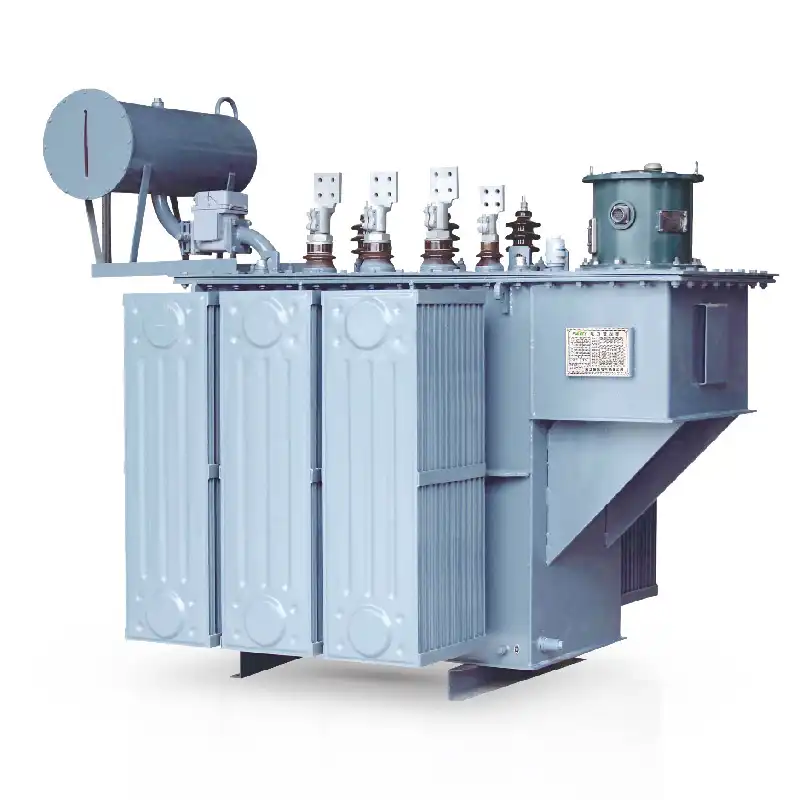
Our transformers are designed to last between 25 and 30 years if they are kept according to the suggested schedules for oil sampling and temperature tracking. Design gaps built into mechanical and thermal systems account for degradation over time, making sure they work reliably for the length of time they were meant to.
Of course. We set up vector groups like Dyn11, Ynd11, and YNyn0 based on how the grid needs to be connected, along with exact impedance percentage control matching fault level calculations from utility protection engineers. This ability to customize works with the different system designs that come up in foreign projects.
We use precision gripping methods and core materials with a high permeability to lower noise caused by vibrations to levels that meet NEMA TR-1 standards, usually below 65 dBA at full load. This sound shows works well for placements near homes where noise pollution rules apply.
ONAF cooling systems manage heat well for cyclic loading patterns, adding 25–33% more capacity during times of high demand without going over temperature rise limits. In steel plants and mines where load profiles change during production shifts, this design works well.
Lijie Electric is ready to help you with your infrastructure projects by providing high-quality production, full certification compliance, and quick expert collaboration. At our Xuzhou and Nantong production bases, we keep standard models in stock and can fully customize them for specific uses in the industrial, power transmission, and green energy sectors. When looking for Step-up Transformer Factory suppliers, you should look at our history of bringing reliable equipment to projects in six countries. Our service network also offers repair advice and quick parts delivery. Email our engineering team at lijieelectrical@gmail.com to talk about voltage levels, cooling setups, and delivery schedules that work with the time frame of your project. When you go to lijie-electrical.com, you can look at technical specifications and ask for detailed quotes that meet your needs.
1. IEEE Standards Association. (2018). IEEE Standard for General Requirements for Liquid-Immersed Distribution, Power, and Regulating Transformers. IEEE C57.12.00-2015.
2. International Electrotechnical Commission. (2021). Power Transformers—Part 1: General Requirements. IEC 60076-1:2011+AMD1:2018 CSV.
3. National Electrical Manufacturers Association. (2016). Application Guide for Transformer Sound Levels. NEMA TR-1-2016.
4. Myers, S.D., Kelly, J.J., & Parrish, R.H. (2019). A Guide to Transformer Maintenance. Transformer Maintenance Institute Technical Publication Series.
5. Tenbohlen, S., & Coenen, S. (2020). Diagnostic Measurements for Power Transformers: Partial Discharge Analysis and Frequency Response Testing. Energies Journal, Vol. 13, Issue 11.
6. U.S. Department of Energy. (2022). Energy Efficiency Standards for Distribution Transformers: Technical Support Document. Office of Energy Efficiency and Renewable Energy Publication.
YOU MAY LIKE
%20Dry-type%20Distributing%20Transformer.webp)


12%20type%2035KV%20dry-immersed%20transformer_1778136610496.webp)

11%20type%2035KV%20dry-immersed%20transformer_1778136495348.webp)
April 27, 2025
With a tight project schedule, the manufacturer delivered on time, and on-site technical personnel provided guidance throughout the entire installation and commissioning process; the collaboration was highly efficient and hassle-free.
July 2, 2025
During the preliminary phase, a selection plan was custom-tailored based on the actual site load requirements, resulting in a high degree of parameter compatibility. After-sales support responds within two hours, and ongoing technical support for operation and maintenance is comprehensive; we feel completely confident in a long-term partnership.
November 18, 2025
Deployed as a supporting component for a 35kV grid-connection project at a photovoltaic power station, the equipment operates for an average of 16 hours daily. It demonstrates excellent control over no-load losses, ensures smooth power generation and grid integration, and effectively reduces the station's overall energy consumption.
January 30, 2026
Under the continuous, high-load operating conditions of a factory production line, the equipment maintains stable electrical parameters and exhibits strong overload resistance, thereby guaranteeing an uninterrupted power supply for industrial production.
April 3, 2026
Integrated as a supporting component for a new energy photovoltaic grid-connection system, the manufacturer provided professional technical coordination and timely after-sales support, ensuring seamless adaptation to the specific electrical operating conditions required for grid integration.