April 27, 2025
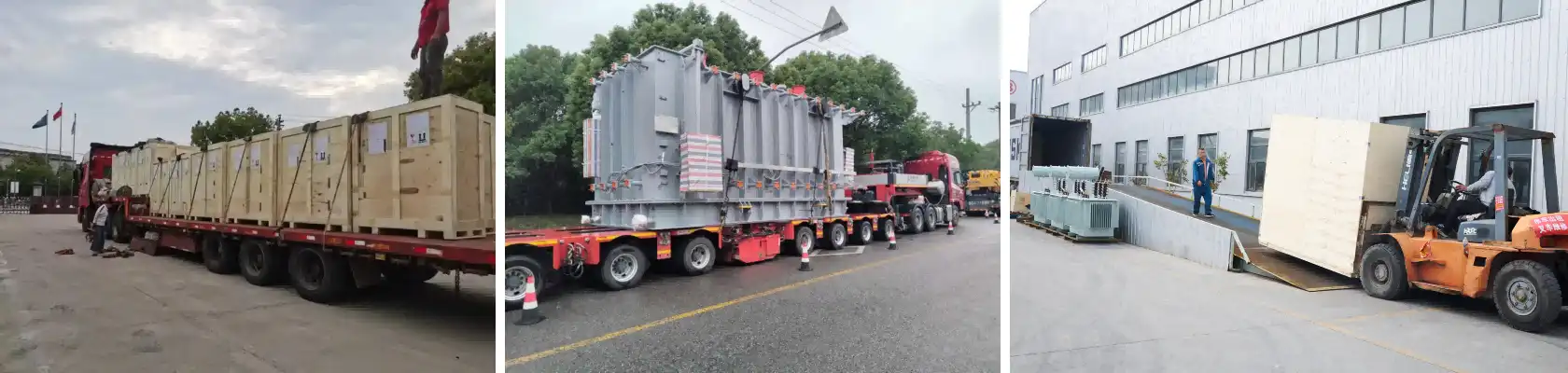
With a tight project schedule, the manufacturer delivered on time, and on-site technical personnel provided guidance throughout the entire installation and commissioning process; the collaboration was highly efficient and hassle-free.
Jun 24, 2026
When we look at power distribution tools, we often have to make a tough choice: which transformer technology will give us the most value over many years of use? The S (B) H15 Series Oil-immersed Amorphous Alloy Transformer gives a very clear answer to this question. When compared to standard silicon steel models like the S11 series, this modern unit cuts no-load losses by 70–80% thanks to its iron-based amorphous metal cores. This means that utility companies, factories, and renewable energy integrators in charge of big projects will be able to cut their running costs and carbon footprints by a certain amount. These are two important factors that describe modern infrastructure investment.
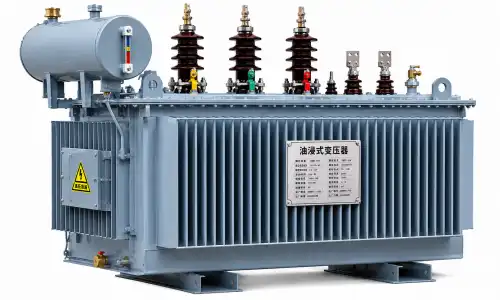
Distribution transformers have used crystalline silicon steel cores for a long time, but the introduction of amorphous metal materials has completely changed how efficient they are. 'S' stands for a three-phase setup, 'B' for foil winding construction for better performance, 'H' for the amorphous metal core, and '15' for the generation's efficiency tier. Amorphous alloy cores have an ordered collection of atoms, while standard cores have ordered atomic structures. This is because they solidify quickly. This one-of-a-kind structure makes it possible for magnetic domains to reconnect with very little energy resistance. This makes hysteresis and eddy current losses during magnetization cycles much smaller.
When transformers are not in use, they waste energy and heat because the solid grain borders of traditional silicon steel cores don't let magnetic flux changes pass through them. Amorphous metal bands, which are mostly made up of iron, silicon, and boron, don't have any grain boundaries at all. The material has a higher magnetic permeability than most cores, which means it can become magnetized and demagnetized more quickly with less energy loss. This physical benefit directly solves the biggest problem the industry has been facing for a long time: standby energy use in delivery networks that aren't very busy.
The S (B) H15 Series Oil-immersed Amorphous Alloy Transformer has a Level 1 energy efficiency grade and can handle voltages of 6kV and 12kV across a range of 30kVA to 2500kVA. Its non-excitation voltage regulation system lets you set tap ranges between ±5% and ±2.5%, so it can handle changes in the grid without needing complicated controls. The unit easily adjusts to different power standards around the world, working with both 50Hz and 60Hz systems and having link group names like Dyn11 and Yyn0. The Oil-immersed self-cooling method keeps the right temperature in outdoor settings up to 40℃, and the insulation levels meet strict standards, with an AC power frequency withstand voltage of 35kV and an impulse withstand voltage of 75kV, so they can work reliably in tough grids.
Energy economy isn't just a requirement; it's what determines the total cost of ownership for distribution transformers that are used constantly for 10 to 30 years. The S (B) H15 Series Oil-immersed Amorphous Alloy Transformer utilizes advanced amorphous core technology to achieve ultra-low no-load losses, as its magnetic domains respond to alternating current with minimal friction. Independent tests show that these transformers consume 70–80% less power during idle operation than conventional models. This advantage is particularly valuable in rural distribution networks, commercial buildings, and renewable energy facilities, where transformers often operate under partial-load conditions. Over a 20-year service life, the resulting energy savings can more than offset the initial capital investment, especially as electricity prices continue to rise and carbon pricing mechanisms become increasingly widespread.
Magnetostriction, which is when core materials physically expand and contract in magnetic fields, makes noise that can be heard in standard transformers, sometimes going beyond what is allowed in the workplace. The S (B) H15 solves this problem with improved clamping structures that reduce the tremors that come with amorphous ribbon cores. The sound levels are still much lower than with regular units, which makes living areas, hospitals, and office buildings better places to be. The low temperature rise feature, on the other hand, makes insulation systems last longer by slowing down thermal decline. This thermal edge means less repair work and lower lifetime costs, which is appealing to procurement managers who have to balance tight budgets with the need for dependability.
Third-party approvals back up what the S (B) H15 Series Oil-immersed Amorphous Alloy Transformer says about its efficiency. International quality standards are met by units that meet IEC 60076 and GB/T 25446 standards. ISO 9001:2015, CE, and UL certifications give buyers confidence around the world. Installations in power plants, industrial parks, and green energy projects in several countries have shown energy savings that meet maker standards. These real-world results show that amorphous metal technology does what it says it will do. This makes it a good choice for companies that want to report on sustainability and follow ESG guidelines.
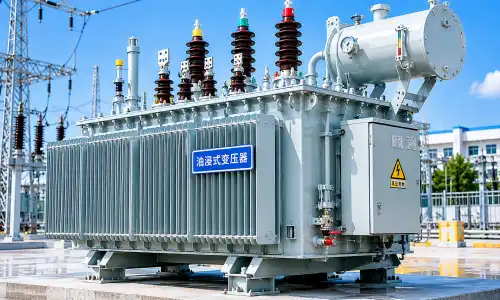
Oil-immersed amorphous metal transformers can be used in a lot of different fields. The national grid operators put S (B) H15 units into the transmission and distribution networks. Reducing no-load losses directly raises grid efficiency measures. These transformers are used by people who work with renewable energy to make sure that strict environmental standards are met while still getting the most energy out of solar farms, wind setups, and energy storage systems. The unit's mechanical strength and ability to resist overloading help producers in steel production, mining, and chemical processing. This makes sure that the power supply stays stable even during times of high demand.
Because the S (B) H15 Series Oil-immersed Amorphous Alloy Transformer is fully insulated, it doesn't need to be checked for insulation and oil leaks on a regular basis, which are problems that come with regular transformers. Corrugated tanks can handle temperature growth without having breather devices that let water and dirt into the internal parts. This closed design works especially well in coastal areas, places with a lot of humidity, and dusty factories, where outside factors usually speed up the breakdown of insulation. Purchasing managers like that there is less planned upkeep, which lowers operational costs and keeps production running as smoothly as possible over the transformer's lifetime.
Manufacturers usually offer guarantees because they are sure that amorphous metal technology will last for a long time. If you place these transformers correctly and don't go over their estimated load limits, they should work well for 25 to 30 years. Units can handle electrical problems and weather stresses that would damage less durable equipment because they are made of materials that don't rust and have a high short-circuit tolerance. When project managers are planning to build new infrastructure or upgrade existing infrastructure, they can safely estimate when operations will start because the repair cycles are much longer than what is normally expected for transformers.
The S (B) H15 Series Oil-immersed Amorphous Alloy Transformer's real value can be seen by calculating its costs and benefits. The starting costs of these transformers are usually 15-20% higher than those made of silicon steel, but they pay for themselves very quickly because they use less energy. When compared to an S11 comparable, a 1000kVA S (B) H15 unit that runs constantly at 30% load can save about 15,000 kWh per year. At an average of $0.10 per kWh for industrial energy, this saves $1,500 a year and pays for itself in three to five years. After this point, every year after that brings a pure cash gain along with lower carbon emissions that help companies reach their environmental goals.
For indoor installs, dry-type transformers with epoxy resin insulation are safer in case of fire, but they aren't as efficient as oil-immersed amorphous designs. The S (B) H15's liquid insulation offers better cooling and defense against voltage impulses, which increases the component's life in high-voltage and outdoor settings. The Oil-immersed flexible design usually has the best technical and financial profile for utility-scale projects that want to save the most energy and lower their total cost of ownership.
Procurement experts evaluate load losses, no-load losses, noise performance, and expected service life when comparing transformer technologies. The S (B) H15 Series Oil-immersed Amorphous Alloy Transformer performs strongly across all of these criteria. Its no-load losses are 60–70% lower than those of grain-oriented steel alternatives, its sound levels remain below 45 dB even at full operating capacity, and field data confirms operational lifespans of 25 years or more. These advantages make the S (B) H15 Series Oil-immersed Amorphous Alloy Transformer an attractive choice for electrical engineers focused on efficiency standards, supply chain managers seeking dependable sourcing, and project managers responsible for large-scale deployments that require consistent batch quality.
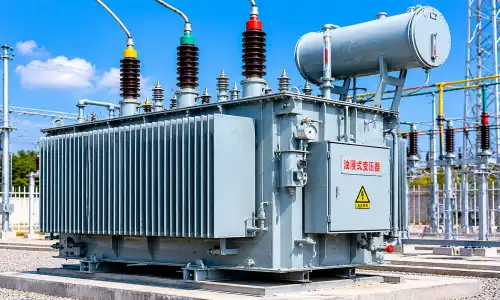
To get real S (B) H15 Series Oil-immersed Amorphous Alloy Transformers, you need to work with makers who can show they can produce large quantities of high-quality products. Authorized providers give full records—like type test results, routine test certificates, and material traceability records—that meet the needs of quality management and are needed for legal checks. Standard capacity ranges have lead times of 8 to 12 weeks, which works for project plans and lets the plant make changes when voltage levels, tap ranges, or environmental conditions need them.
Reputable manufacturers use ISO 9001 quality management systems, hire large engineering teams with advanced degrees, and run testing centers that are set up for standard, type, and special testing methods. The ability to produce more than 10,000 MVA per year shows that the system can be expanded to support multi-phase infrastructure projects without supply delays. International certifications, like IEC compliance, CE marking, and UL listing, show that a product is ready to be exported and works with global purchasing standards. This lowers the technical risk for international industrial operators and EPC companies working abroad.
Leading providers do more than just deliver products; they also offer installation advice, help with commissioning, and quick expert support throughout the entire operating lifecycle. This service feature is very helpful for adding transformers to complicated substations, making sure they work with existing safety systems, or fixing problems that happen when performance changes without warning. Long-term framework deals with well-known makers guarantee stable prices, priority production slots during times of high demand, and ongoing product optimization that keeps up with changing grid needs and government rules.
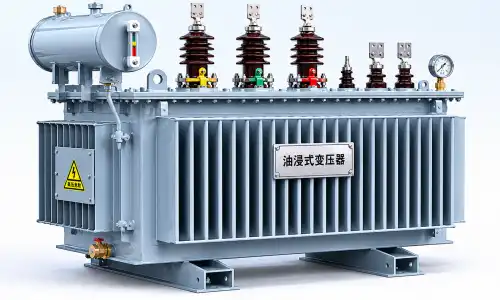
The S (B) H15 Series Oil-immersed Amorphous Alloy Transformer is a great step forward in distribution technology. It makes a real difference in how much energy is used, how much it costs to run, and how little damage it does to the environment. Its very low no-load losses, design that doesn't need any upkeep, and proven dependability address the main concerns of power companies, industrial facilities, and renewable energy developers who are in charge of large-scale infrastructure. When you look at the total cost of ownership over many years or decades, the initial price turns into big savings over time while also meeting carbon reduction requirements. This technology fits with both short-term project needs and long-term strategic goals for procurement teams that put performance, certification compliance, and source security at the top of their list of priorities.
The S (B) H15 Series Oil-immersed Amorphous Alloy Transformer has an iron-based amorphous metal core with an atomic structure that is not organized, which reduces magnetic resistance when the flux changes. This cuts no-load losses by 70–80% compared to crystalline silicon steel cores. This saves a lot of energy during times when distribution networks are not being used or have low loads.
Traditional conservator-style transformers need to have their oil samples, filters, and breathers changed on a regular basis. This fully sealed version doesn't need any of those things. The S (B) H15 is great for large-scale operations and remote setups because it doesn't need any upkeep. This lowers running costs and increases service intervals.
Of course. The tightly sealed perforated tank design keeps water, dust, and salt spray from getting into the internal parts. These S (B) H15 Series Oil-immersed Amorphous Alloy Transformers work effectively in coastal, high-humidity, and industrial settings where regular transformers often break down early because they have the right anti-corrosion coatings and temperature values for conditions up to 40°C.
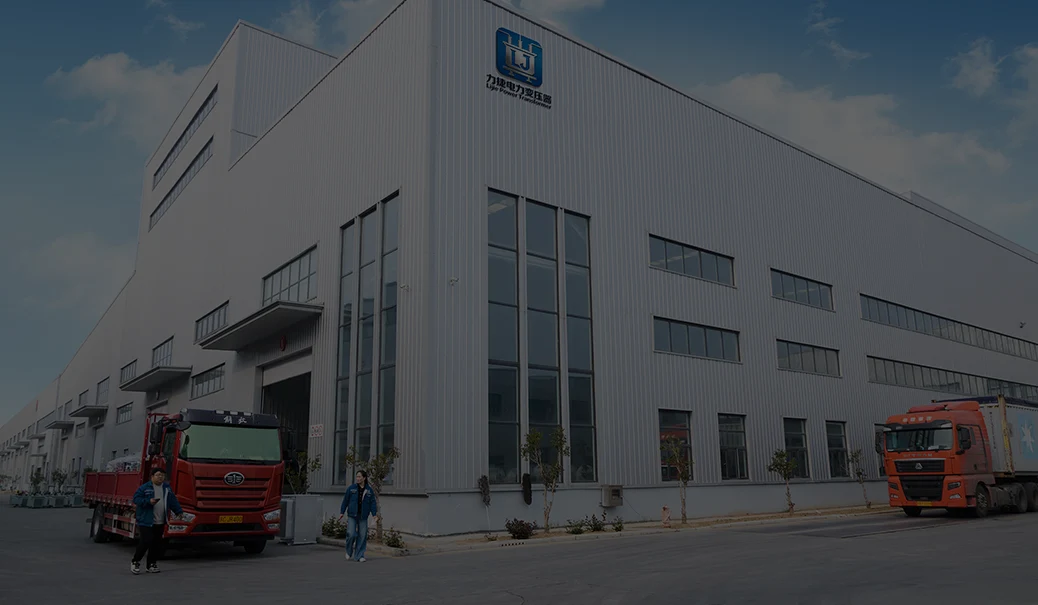
We at Lijie Electric have a wide range of S (B) H15 Series Oil-immersed Amorphous Alloy Transformers that are made to strict IEC and UL standards and can help you with your power distribution projects. We have two modern production facilities that cover 500,000 square meters and employ more than 160 engineers with doctoral and master's degrees. This gives us the production scale and technical know-how that big projects need. We are a reliable provider of Oil-immersed Amorphous Alloy transformers with a track record of custom engineering, batch consistency, and global shipping. We make sure that your infrastructure investments work well for decades to come. You can email our team at lijieelectrical@gmail.com or visit lijie-electrical.com to talk about your voltage needs, capacity specs, and delivery dates. We'll show you how our Level 1 efficiency S (B) H15 units can lower your running costs and help you meet your sustainability goals.
1. International Electrotechnical Commission (2011). "Power Transformers—Part 1: General." IEC 60076-1 Standard Publication.
2. Wang, L., & Zhang, H. (2018). "Energy Efficiency Assessment of Amorphous Alloy Distribution Transformers in Rural Grid Applications." Journal of Electrical Engineering & Technology, 13(4), 1589-1597.
3. National Institute of Standards and Technology (2020). "Lifecycle Cost Analysis of Distribution Transformer Technologies." NIST Technical Report 1925.
4. Chen, M., Liu, Y., & Zhao, X. (2019). "Comparative Study on Noise Characteristics of Amorphous and Silicon Steel Core Transformers." IEEE Transactions on Power Delivery, 34(2), 712-720.
5. European Copper Institute (2017). "Total Cost of Ownership Analysis for Distribution Transformers: A Guide for Utilities and Industrial Users." Brussels: ECI Publications.
6. American Society for Testing and Materials (2021). "Standard Specification for Amorphous Magnetic Core Alloys." ASTM A838-21 Standard.
YOU MAY LIKE
10%20type%2035kV%20transformer.webp)

14%20Epoxy%20Resin%20Dry%20Type%20Transformer.webp)



April 27, 2025
With a tight project schedule, the manufacturer delivered on time, and on-site technical personnel provided guidance throughout the entire installation and commissioning process; the collaboration was highly efficient and hassle-free.
July 2, 2025
During the preliminary phase, a selection plan was custom-tailored based on the actual site load requirements, resulting in a high degree of parameter compatibility. After-sales support responds within two hours, and ongoing technical support for operation and maintenance is comprehensive; we feel completely confident in a long-term partnership.
November 18, 2025
Deployed as a supporting component for a 35kV grid-connection project at a photovoltaic power station, the equipment operates for an average of 16 hours daily. It demonstrates excellent control over no-load losses, ensures smooth power generation and grid integration, and effectively reduces the station's overall energy consumption.
January 30, 2026
Under the continuous, high-load operating conditions of a factory production line, the equipment maintains stable electrical parameters and exhibits strong overload resistance, thereby guaranteeing an uninterrupted power supply for industrial production.
April 3, 2026
Integrated as a supporting component for a new energy photovoltaic grid-connection system, the manufacturer provided professional technical coordination and timely after-sales support, ensuring seamless adaptation to the specific electrical operating conditions required for grid integration.