April 27, 2025
With a tight project schedule, the manufacturer delivered on time, and on-site technical personnel provided guidance throughout the entire installation and commissioning process; the collaboration was highly efficient and hassle-free.
Aug 27, 2026
When purchasing from a step-up transformer factory, engineers must prioritize three essential areas: technical compatibility with existing infrastructure, manufacturing quality control standards, and lifecycle reliability expectations. A qualified factory demonstrates proven capacity through certifications like ISO 9001 and IEC compliance while offering transparent testing protocols including turns ratio verification and partial discharge analysis. Understanding these fundamentals protects your investment and ensures transformers will perform reliably throughout their expected 25-30 year operational lifespan, particularly in demanding applications such as renewable energy integration and ultra-high-voltage transmission systems.
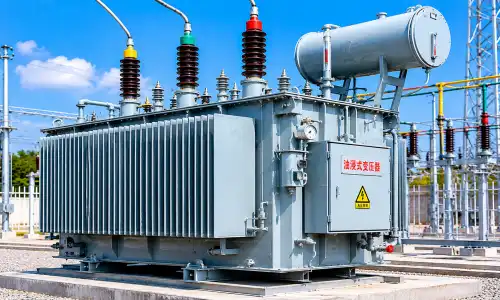
Transformers that raise electrical potential from generation levels to transport voltages are designed and made only at a location that specializes in voltage conversion. The areas of these factories are usually very large, between 100,000 and 500,000 square meters. They have precise machines for core lamination, automatic coil winding systems, and vacuum impregnation rooms. Batch consistency and delivery times are directly affected by the operational scale. This is especially true for big infrastructure projects that need dozens of identical units. Knowing if a manufacturer uses separate production lines or shared tools can help you figure out how consistent the quality will be across all of your orders.
Testing is the last step in making sure everything is okay before shipping. Regular tests check the electrical properties, and type tests send sample units through lightning shocks that mimic atmospheric swells. Tests that measure temperature rise show that cooling systems can get rid of heat during peak loads without damaging the insulation. When factories let customers watch factory acceptance tests, it shows that they believe in their methods and builds trust through openness.
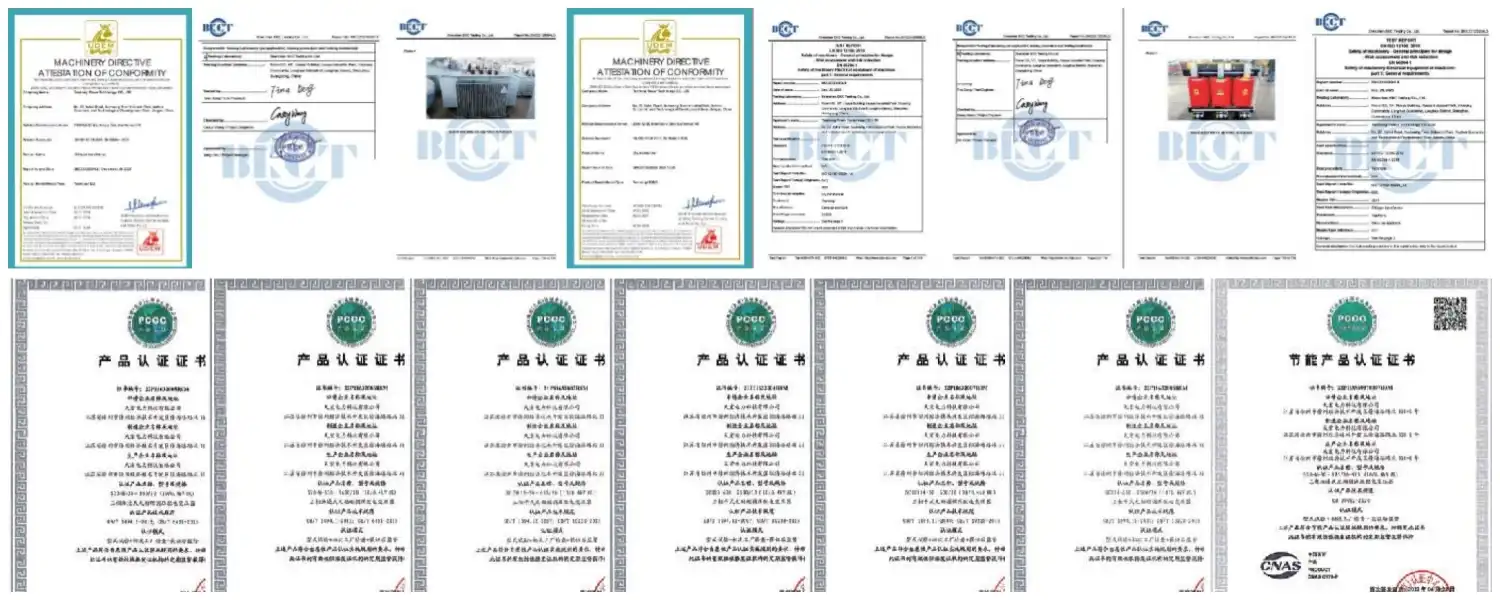
Certifications are a basic way to show that someone knows how to make complicated things. Systematic quality management is shown by ISO 9001 certification, but the date of certification is important—factories that were just certified don't have the operational maturity of those that have been in compliance for over a decade. Technical performance factors are governed by IEC standards, which make sure that units can work with gear made by different companies around the world. UL certification is needed for projects in North America to get governmental approval and meet insurance standards.
In addition to basic certifications, you should look for more specialized ones. Transformers can survive Zone 4 earthquakes, according to their seismic qualification papers, thanks to their strong mounting systems and flexible bushing connections. Energy efficiency certifications show that you're following DOE rules, which has a direct effect on your operational costs over many years of service. Factories that have more than one foreign certification usually have better standards inside their own company than factories that only meet domestic standards.
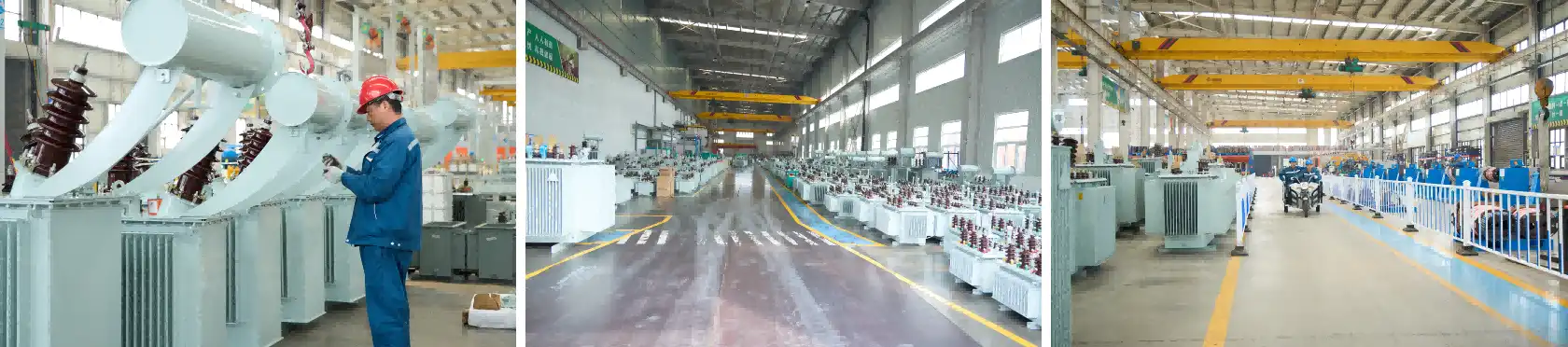
Batch production should get extra care for projects that span more than one place. To make fifty identical transformers, you have to keep finding materials, training workers, and making sure that testing equipment is always calibrated. Small makers may have trouble keeping tolerances across big batches, which can cause performance differences between units that were made early and late. Find out about past batch consistency metrics and ask for references from projects of the same size.
Quality control is more than just the final inspection. During production, top makers use statistical process control to keep an eye on things like core stacking factors and winding stress in real time. With this data-driven method, differences are found before they have an effect on finished goods. Ask to see the quality control records from recent projects that are similar to yours. Look at more than just the pass/fail results; look at the measurement ranges that show how well the process works.
Warranty terms show that the maker is confident, but they need to be carefully interpreted. A 25-year guarantee sounds great until you find out that it only covers catastrophic breakdowns and not performance degradation that still requires replacement before its time. Comprehensive guarantees cover things like loss of efficiency, higher noise levels, and oil pollution that happen after a certain amount of time. Make warranty service arrangements clearer. For example, some makers require sending whole units to faraway facilities, which can cause longer downtime compared to on-site repair commitments.
Total lifecycle cost is much higher than the purchase price for equipment that will be used for 30 years. Energy efficiency has a direct effect on running costs. For example, a transformer with 0.5% less losses saves a lot of money on energy costs every year, and it might pay for itself in five years. Don't just look at the nameplate efficiency at rated capacity when figuring out the lifecycle cost. Use your projected load profile and local electricity rates as well.
Installation and commissioning are often the times when hidden costs show up. Some manufacturers give you detailed installation guides and technical support over the internet, while others don't give you much information and make you hire outside experts. Spare parts price and availability should be made clear from the start; private parts with single-source supply lines leave companies open to long-term risks. Your operations team will be less reliant on outside service providers throughout the duration of your devices if they are trained in maintenance.
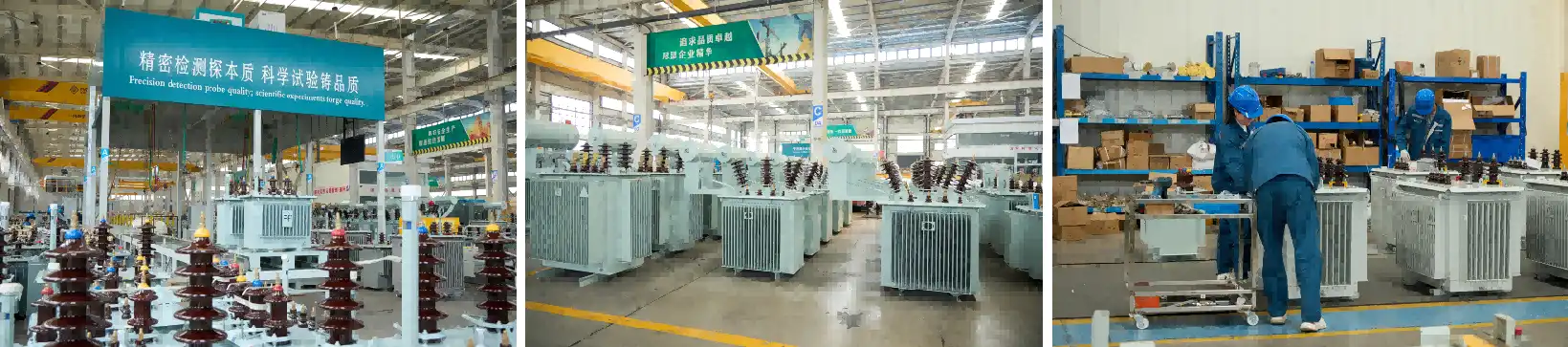
Specialized facilities spend money on testing equipment that is specific to voltage. Lightning impulse generators that can make 1.2/50 microsecond waveforms at 1200kV or higher are huge investments that can only be made by makers who are committed to the task. In the same way, general-purpose facilities rarely have controlled settings free of outside electrical noise that are good for partial discharge detection systems with a sensitivity below 10 picocoulombs. When comparing manufacturers, find out if their highest voltage rating is tested in-house or by outside labs. This will show you how technically advanced the company really is.
Manufacturing standards vary a lot from one part of the world to another, which affects both the quality of the product and the customer service provided after the sale. European makers usually focus on small designs that make less noise, because they have to fit in tight spaces and follow strict environmental rules. Their goods usually have advanced cooling systems and high-quality core materials, which makes them more expensive but better at what they do and take up less space.
Asian manufacturers are quickly improving their technical skills while keeping their prices low thanks to economies of scale and supply chains that are vertically integrated. Leading Asian facilities now meet European quality standards and offer prices that are 15–25% lower, which makes them especially appealing for big projects with limited funds. To make sure the quality is consistent, though, you need to do your research and ask for third-party testing results from widely known labs instead of just depending on manufacturer certifications.
North American makers focus on meeting local standards and providing quick service, which is helpful for projects that want to minimize the risk of downtime. Their closeness makes it possible for faster supply of spare parts and on-site expert help, but these services usually come at a higher cost. Instead of assuming that one region is always better than others, the best choice depends on the project's priorities, such as initial cost savings, lifecycle efficiency, or service accessibility.
Usually, price changes for volume come after threshold breaks. The price of the second through fifth units might be 85% of the price of the first unit. Prices go down even more for orders over ten units. But placing too many orders leads to higher costs for keeping supplies and a higher risk of technology becoming outdated. Find the best order number by weighing bulk discounts against the cost of storage and the chance that specifications will change before putting all the units into service. Some makers offer frame deals that guarantee prices for staged deliveries. This combines the cost-effectiveness of volume with the ability to change inventory as needed.
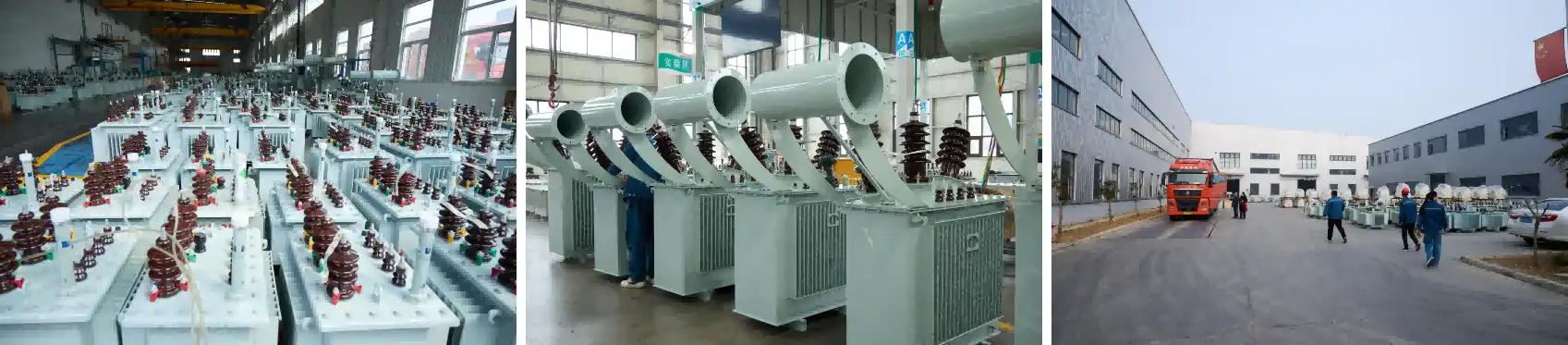
Sending a step-up transformer factory is more complicated than sending regular freight. Large power transformers can be over 100 tons and more than 5 meters long and wide. To get them where they need to go, they require special low-bed trucks and route studies to identify obstacles such as low bridges or tight turns that may prevent transportation. Delivery times involve more than just the manufacturing process. They also include transportation planning, customs clearance for international shipments, and final delivery to hard-to-reach installation sites.
Standard terms of delivery like "Ex Works," "FOB," and "DDP" have big effects on costs. When something is sold "Ex Works," the customer is responsible for all transportation costs and risks from the plant gate. When something is sold "Delivered Duty Paid," the seller takes care of everything until the target site. Make sure everyone knows what their job is in each part of the planning process, especially when it comes to insurance coverage during transport. Claims for damaged transformers can take months to settle, which delays the start of the project.
Lead times range from 12 weeks for normal distribution transformers to 40 weeks or more for extra-high-voltage units that are made to order. It is important to include the time it takes to make something, the time it takes to test it, the time it takes to ship it, and some extra time in case something goes wrong. Sometimes factories can speed up production for an extra 15 to 30 percent of the cost, but they can't rush processes like curing insulation without lowering the quality. Realistic planning keeps projects from being delayed, which costs a lot of money, and avoids charging extra for rushing.
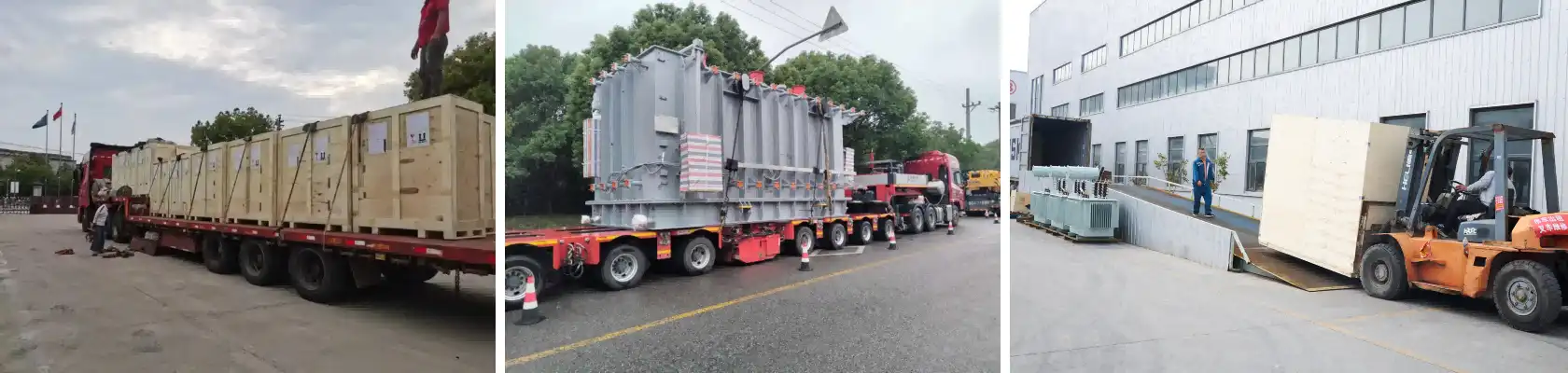
Getting a transformer shouldn't end when it's delivered. Leading makers offer commissioning help by sending experienced techs to oversee the initial activation and make sure performance meets specs under real-world load conditions. This service finds mistakes in installations before they do any harm and teaches your support staff the right way to do things. Manufacturers who offer regular inspection programs help optimize maintenance intervals and find new problems before they get worse over the course of the equipment's useful life.
How quickly technical help responds varies a lot between providers. Some Step-up Transformer Factory companies keep hotlines open 24 hours a day, seven days a week, with engineers who can make decisions right away. Other factories route calls through layers of sales reps who don't have technical knowledge. During the procurement process, test how responsive the maker is. Manufacturers that respond quickly and in detail to complicated technical questions are likely to keep up that level of service after the sale. Quality of documentation also shows attention to help. Comprehensive guides with troubleshooting flowcharts and maintenance plans allow operations to run without outside help, while limited paperwork makes operations reliant on outside help all the time.
Certification doesn't stay the same; standards change over time, and producers must keep up with them by being audited on a regular basis. Current compliance is shown by a new ISO 9001:2015 certification, but audit history shows that things have always been the same. Ask for certification timelines that show years of ongoing compliance instead of just the most recent original certification. When factories lost and then regained their certification, quality probably dropped, which raised concerns about the discipline of manufacturing.
Compliance goes beyond quality systems and includes safety and environmental rules as well. Getting ISO 14001 environmental certification means that oils, chemicals, and waste materials are managed in a controlled way. This lowers the risk of environmental events that could stop production in the supply chain. OHSA 18001 approval for workplace safety means that employees are less likely to leave and are better trained, which has a direct effect on the regularity of production. These certifications show that an organization is mature, which is linked to long-term partnerships that you can count on.
Professional-grade transformers are made to last 25 to 30 years under normal conditions, but how long they actually last depends a lot on how they are used and how well they are maintained. Transformers that were regularly loaded to near their rated capacity aged faster than those that were loaded to a low level. Regular oil sampling and dissolved gas analysis can find problems years before they break down, which greatly increases the service life. Insulation systems are kept from aging too quickly by thermal tracking systems that stop overloads from lasting too long. Some utilities say that well-maintained units can last for 40 years or more, while transformers that aren't maintained may need to be replaced every 15 years.
Reliable factories let you change a lot about vector groups like Dyn11 or Ynd11 to fit current grid setups. This keeps phase angle problems from happening during parallel operation. Customizing the impedance percentage makes sure that fault current works well with upstream safety devices. If the impedance is too low, it can stop the circuit breaker from working, and if it's too high, it can mess up voltage control. These customizations usually add two to four weeks to the production time and small price hikes, but at good facilities, they shouldn't cost a lot more.
Getting rid of noise requires more than one technical method. Core materials with a high permeability, such as grain-oriented electrical steel, lower magnetostrictive shaking, which is the main source of noise. Precision core locking methods keep mechanical resonance amplification to a minimum. Using sound isolation pads in the design of the tank stops noise from getting to the fixing structures. Leading manufacturers regularly meet NEMA TR-1 standards, which say that sound levels for distribution transformers must be below 65 dBA at rated capacity. For noise-sensitive urban areas, custom designs can reach even lower levels.
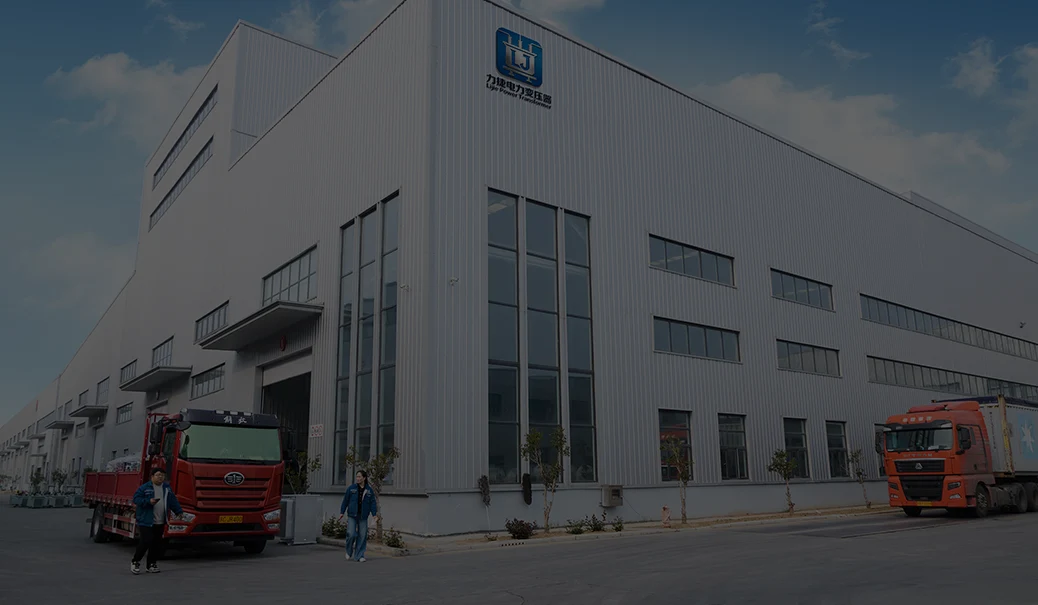
Lijie Electric is the step-up transformer maker that engineering teams all over the world choose for their most important power infrastructure projects. Our 500,000-square-meter factories in Xuzhou and Nantong are certified by ISO 9001:2015, IEC, CE, and UL. This means that the quality of every unit we make is the same. We offer custom voltage solutions ranging from 35kV power transformers to 500kV+ ultra-high-voltage systems. Our team of over 160 highly skilled engineers holds more than 5 billion RMB in yearly production. Our thorough testing methods include checking for partial discharges, dissolved gases, and lightning impulses, and we guarantee that the systems will work for 25 to 30 years.
Whether your project involves integrating green energy, utility-scale transmission, or heavy industry uses, our technical team can help you find the right transformer specs for your needs. We help global EPC contractors by making exporting easier and managing projects quickly. Email our engineering experts at lijieelectrical@gmail.com to talk about how you need to change the voltage, look over the technical specs, and get full quotes. You can look at all of our products and download technical information by going to lijie-electrical.com. Let us show you why major power companies, developers of green energy, and industrial makers choose to work with Lijie Electric on long-term supply partnerships.
1. IEEE Standard C57.12.00-2015, "IEEE Standard for General Requirements for Liquid-Immersed Distribution, Power, and Regulating Transformers," Institute of Electrical and Electronics Engineers, New York, 2015.
2. International Electrotechnical Commission, "IEC 60076-1:2011 Power Transformers - Part 1: General," IEC Central Office, Geneva, Switzerland, 2011.
3. Harlow, James H., "Electric Power Transformer Engineering, Third Edition," CRC Press, Boca Raton, Florida, 2012.
4. National Electrical Manufacturers Association, "NEMA TR-1-2018: Transformers, Regulators, and Reactors," NEMA Publications, Rosslyn, Virginia, 2018.
5. McNutt, W. J. and Johnson, W. C., "Procurement and Acceptance Testing of Power Transformers," IEEE Transactions on Power Apparatus and Systems, Volume PAS-103, Issue 9, September 1984.
6. Heathcote, Martin J., "J&P Transformer Book: A Practical Technology of the Power Transformer, Thirteenth Edition," Newnes Publishing, Oxford, United Kingdom, 1998.
YOU MAY LIKE


12%20Series%20Dry%20Type%20Transformer.webp)


11%20type%2035kV%20distribution%20transfo_1778137470754.webp)

April 27, 2025
With a tight project schedule, the manufacturer delivered on time, and on-site technical personnel provided guidance throughout the entire installation and commissioning process; the collaboration was highly efficient and hassle-free.
July 2, 2025
During the preliminary phase, a selection plan was custom-tailored based on the actual site load requirements, resulting in a high degree of parameter compatibility. After-sales support responds within two hours, and ongoing technical support for operation and maintenance is comprehensive; we feel completely confident in a long-term partnership.
November 18, 2025
Deployed as a supporting component for a 35kV grid-connection project at a photovoltaic power station, the equipment operates for an average of 16 hours daily. It demonstrates excellent control over no-load losses, ensures smooth power generation and grid integration, and effectively reduces the station's overall energy consumption.
January 30, 2026
Under the continuous, high-load operating conditions of a factory production line, the equipment maintains stable electrical parameters and exhibits strong overload resistance, thereby guaranteeing an uninterrupted power supply for industrial production.
April 3, 2026
Integrated as a supporting component for a new energy photovoltaic grid-connection system, the manufacturer provided professional technical coordination and timely after-sales support, ensuring seamless adaptation to the specific electrical operating conditions required for grid integration.