April 27, 2025
With a tight project schedule, the manufacturer delivered on time, and on-site technical personnel provided guidance throughout the entire installation and commissioning process; the collaboration was highly efficient and hassle-free.
Sep 11, 2026
Modern power grids move electricity across hundreds of miles before it reaches a factory floor or a wind farm connection point. At the center of that process sits the high voltage transformer — a piece of equipment that steps voltage up for long-distance transmission and back down for safe end-use distribution. Without reliable transformer technology, grid operators could not manage load fluctuations, integrate renewable generation, or maintain the voltage stability that industrial and utility customers depend on every single day.

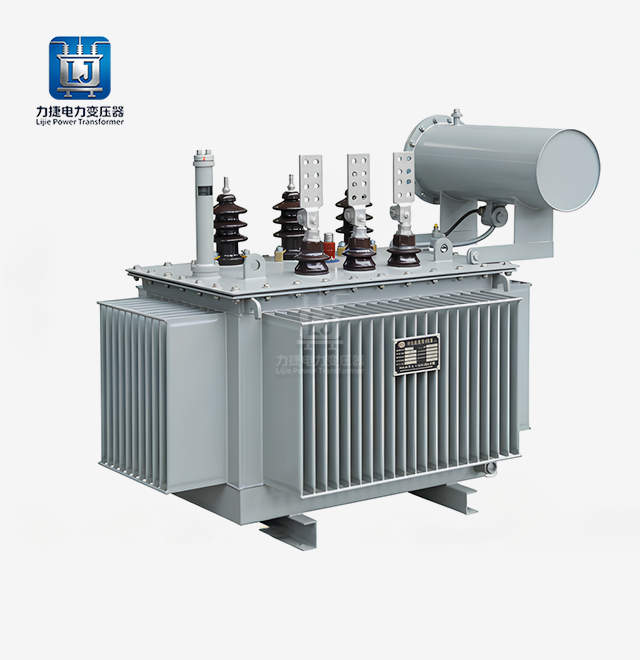
A High Voltage Transformer with a rating of more than 35 kV is generally called a High Voltage Transformer. Its main job is to change electromagnetic energy. The primary windings take in high-voltage AC current, and the secondary windings send the changed voltage to the next part of the grid or to equipment that will be used. Most industrial uses can be broken down into two main design groups.
Mineral oil or a manufactured ester is used as both a coolant and an insulator in oil-immersed units. Different types of cooling systems, like ONAN (Oil Natural Air Natural) and ONAF (Oil Natural Air Forced), can handle heat in a lot of different types of equipment, from 500 kV transmission-grade equipment to units for distribution. Cold-rolled grain-oriented silicon steel (CRGO) is used to make the magnetic core. This reduces hysteresis and eddy-current losses and, in turn, the cost of operating the magnet over its entire life. Dry-Type and Resin-Insulated Transformers
Dry units don't use any liquid insulation at all; instead, they use cast-resin coating or vacuum-pressure-impregnated resin. They work well indoors, in data centers, at substations for green energy, and in urban distribution projects where oil can't be used because of fire safety or environmental concerns. The standard quality measure for insulation integrity in both design families is partial discharge levels below 10 pC. This is the level set by IEC 60076 and IEEE C57.12.00.
Design compliance is more than just how well the dielectric works. There are different ways for a High Voltage Transformer to connect to the grid, and these include short-circuit impedance standards, no-load loss limits, and vector group setups. If buyers know these factors, they can much more accurately match equipment to their voltage level, load profile, and coupling needs.
In the US, grid workers are in charge of more than 700,000 miles of transmission lines. A High Voltage Transformer is used at every big voltage change on this network. The useful things that these gadgets do go far beyond just changing voltages.
Here are the core functional roles that define their value in modern infrastructure:
Overall, these three roles explain why transmission and distribution operators think of buying High Voltage Transformers as an investment rather than a simple purchase. A unit that works for 25–30 years with expected losses and no unplanned downtime is worth a lot more than one that was chosen based only on price.

Power companies, EPC contractors, and industry makers all have to deal with a real selection problem: the right High Voltage Transformer for a steel mill rectifier bank is not the same as the right High Voltage Transformer for a utility substation or a solar interconnection project.
When the MVA rate is high, oil-immersed units are the most cost-effective and have the best heating capacity. Transmission-class and heavy-industrial uses are dominated by them. For example, electric furnace transformers, rectifier transformers, and mining transformers all depend on oil cooling to handle long periods of heavy loads. Dry-type units give up some thermal capacity in exchange for installation flexibility and environmental safety. This is why they are the standard choice for commercial distribution inside buildings, urban infrastructure projects, and small substations with a rating of 35 kV or less.
Procurement managers should look at five things at the same time when judging manufacturers: the range of technical certifications they offer, their ability to customize products, the consistency of their batches, how responsive they are after the sale, and the total cost of the product over its entire life. It is a lot easier to work with multiple vendors on big projects when the seller can provide both IEC 60076-certified oil-immersed units and cast-resin dry-type transformers from the same quality system.
If you do normal planned upkeep on your High Voltage Transformer, it will last for 30 years. Units that aren't maintained often break down within 15 years, and replacing them without planning to in a live center has direct and secondary costs that are much higher than the cost of a maintenance program.
Dissolved Gas Analysis (DGA) is the most useful troubleshooting tool that asset managers can use. Periodic oil sampling finds small faults like arcing, overheating, and partial discharge before they get worse and cause catastrophic failures. Sweep Frequency Response Analysis (SFRA) checks to see if the shape of the windings has changed during shipping or short-circuits. Testing for temperature rise at full load shows that the cooling system works within its design limits.
People who work near live high-voltage equipment must follow arc-flash risk analysis steps that are in line with NFPA 70E and other related IEC safety standards. Local utility interconnection rules and national electrical codes must be followed when installing High Voltage Transformers. Insulation resistance tests and power-factor readings done during commissioning set a standard that will be used in future maintenance records to look at trends.

A clear specification is the first step to reliable procurement. The technical datasheet must include the voltage ratio, rated capacity in MVA, vector group, cooling class, insulation level, and any standards that apply (IEC, IEEE, or both). This is required before any supplier evaluation can begin. When a design gap is found after the contract has been awarded, it almost always causes delays and extra costs.
Some signs that a supplier is reliable are ISO 9001:2015 approval, CE and UL marks, type-test reports from approved third-party labs, and proof that they can deliver in batches. For projects that need a steady supply of goods, like green energy farms, industrial park rollouts, and grid modernization programs, they need a manufacturing partner that has shown they can make a lot of goods, not just a lot of items in their store.
Equal weight should be given to after-sales service. The total cost of ownership over a 25-year asset life depends on things like warranty terms, availability of spare parts, online diagnostic support, and on-site operational help.
In every way, High Voltage Transformers are equipment that holds weight. They decide how well energy goes from being made to being used, how regularly the grid fixes problems, and how well renewable sources connect to current networks. Choosing the right unit for the voltage level, load profile, climate, and safety standards is a choice that will have long-lasting effects for many years to come. When companies buy High Voltage Transformers as a strategic technical decision instead of a normal purchase, the grid works better, costs are lower over the project's life, and the results are better overall.

Dielectric oil is used to insulate and cool oil-immersed transformers, which lets them handle a lot of heat at high MVA ratings. Because dry-type units use glue or air insulation, there is no risk of fire or spills, and they can be used indoors or in places that are sensitive to the environment. The decision relies on the rated capacity, the placement setting, the need for fire safety, and the person's desire for upkeep.
Visual inspections should be done at least once a year, and DGA oil samples should be taken every one to two years for units that are in critical service. Every five to six years or after a major fault, it's best to do a full maintenance review that includes insulation resistance, power factor, and SFRA.
Yes, normal catalog units don't cover the voltage ratios, impedance values, and mechanical setups that are needed for electric furnace transformers, rectifier transformers, and mine transformers. During the specification phase, reputable manufacturers work directly with electrical engineers to make units that are specifically designed to work in each project's conditions.
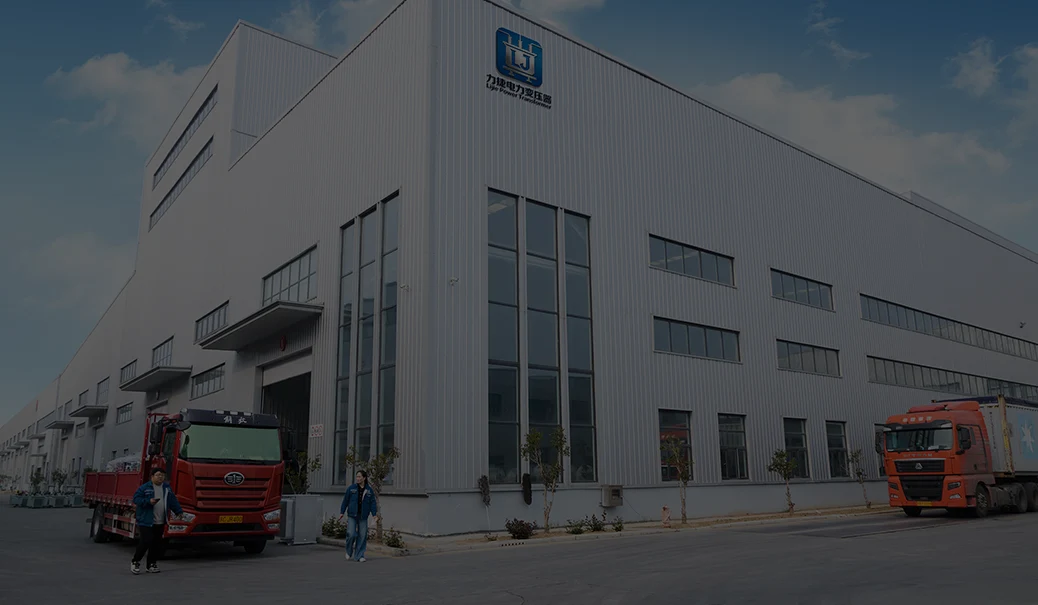
Lijie Electric Power Technology Group manufactures a comprehensive range of approved High Voltage Transformer products, including ultra-high-voltage units with 500 kV and small 35 kV substations. These products are backed by ISO 9001:2015, CE, UL, and IEC certifications. With more than 160 qualified engineers working in buildings that cover 500,000 square meters and yearly sales that top 5 billion RMB, we can provide the reliable batch supply that big projects need. Contact us today to discuss your specifications.
Email: lijieelectrical@gmail.com | Website: lijie-electrical.com
1. ABB Ltd. Transformer Handbook (4th ed.). ABB Power Transformers, 2016. https://new.abb.com/products/transformers
2. International Electrotechnical Commission. IEC 60076-1: Power Transformers — Part 1: General. IEC, 2011. https://www.iec.ch/homepage
3. U.S. Energy Information Administration. Electric Power Annual 2022. EIA, 2023. https://www.eia.gov/electricity/annual/
4. U.S. Department of Energy. Transformer Efficiency and Reliability: A National Perspective. DOE Office of Electricity, 2020. https://www.energy.gov/oe/articles/transformer-resilience-and-advanced-components
5. IEEE. IEEE C57.12.00: IEEE Standard for General Requirements for Liquid-Immersed Distribution, Power, and Regulating Transformers. IEEE, 2021. https://standards.ieee.org/ieee/C57.12.00/10695/
6. North American Electric Reliability Corporation (NERC). Transformer Procurement and Vendor Management Guidelines. NERC, 2022. https://www.nerc.com/pa/Stand/Pages/default.aspx
YOU MAY LIKE

12%20type%2035kV%20distribution%20transformer.webp)


April 27, 2025
With a tight project schedule, the manufacturer delivered on time, and on-site technical personnel provided guidance throughout the entire installation and commissioning process; the collaboration was highly efficient and hassle-free.
July 2, 2025
During the preliminary phase, a selection plan was custom-tailored based on the actual site load requirements, resulting in a high degree of parameter compatibility. After-sales support responds within two hours, and ongoing technical support for operation and maintenance is comprehensive; we feel completely confident in a long-term partnership.
November 18, 2025
Deployed as a supporting component for a 35kV grid-connection project at a photovoltaic power station, the equipment operates for an average of 16 hours daily. It demonstrates excellent control over no-load losses, ensures smooth power generation and grid integration, and effectively reduces the station's overall energy consumption.
January 30, 2026
Under the continuous, high-load operating conditions of a factory production line, the equipment maintains stable electrical parameters and exhibits strong overload resistance, thereby guaranteeing an uninterrupted power supply for industrial production.
April 3, 2026
Integrated as a supporting component for a new energy photovoltaic grid-connection system, the manufacturer provided professional technical coordination and timely after-sales support, ensuring seamless adaptation to the specific electrical operating conditions required for grid integration.