April 27, 2025
With a tight project schedule, the manufacturer delivered on time, and on-site technical personnel provided guidance throughout the entire installation and commissioning process; the collaboration was highly efficient and hassle-free.
Jul 9, 2026
One question that always comes up when purchasing managers and electrical experts look into energy-efficient transformer options is: Does the S22 3-Phase Sealed Transformer really reduce loss in a way that can be measured? There is no doubt that the answer is yes. The S22 type three-phase full distribution transformer meets the highest level of energy efficiency, Class 1, according to the GB 20052-2024 standard. It also has 25–30% lower no-load losses than older S13 models. This directly means that grid operators, renewable energy integrators, and industrial facilities will have lower operational costs, less damage to the environment, and better long-term performance.
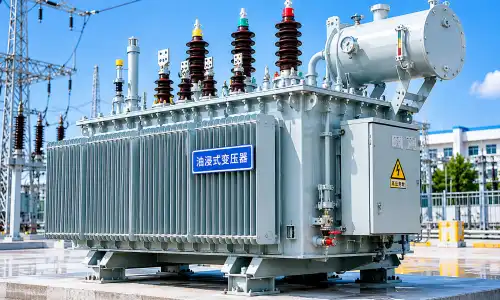
For modern power transfer, you need equipment that is both technically advanced and long-lasting. This balance is shown by the S22 transformer, which is made with advanced engineering and a sealed design.
The S22 is the newest generation of oil-immersed distribution transformers. It was made to meet strict energy efficiency standards while requiring the least amount of maintenance. This equipment can work with voltages between 6kV and 12kV and can handle capacities between 30kVA and 3,150kVA. It can be used in a wide range of settings, from small industrial parks to big utility substations. The transformer can work with both single-phase and three-phase systems, and it can run at either 50Hz or 60Hz, so it can connect to power grids around the world. Connection group names like Yyno and Dyn11 give you options for a range of grid connection situations.
A lot of different types of procurement workers know how useful the S22 type three-phase full distribution transformer is in situations that need to be both efficient and reliable. These transformers are used by national grid companies in transmission and distribution networks, where they need to last for decades. The sealed design makes renewable energy facilities, like solar farms and wind power plants, more resistant to weather stresses and changes in temperature. Heavy machinery factories like the transformer because it can handle nonlinear loads and harmonic effects that are common in data centers and electric vehicle charging stations. Infrastructure builders choose the S22 for power distribution projects in cities and industrial parks with limited space that need small, low-maintenance solutions. The equipment's IEC, CE, and UL certifications make it very appealing to international EPC contractors who need equipment that is compliant and ready to export.
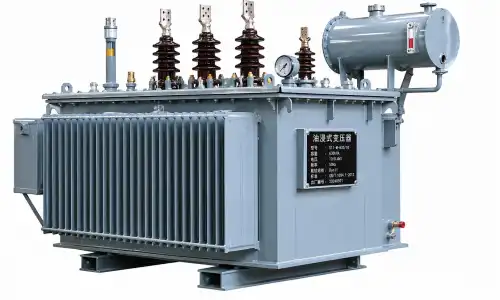
To fully understand the S22's efficiency benefits, you need to know how transformers lose energy. Every transformer has three main types of loss that affect how well it works and how much it costs over its lifetime.
Core losses, which are also called "no-load losses," happen all the time when the transformer is turned on, no matter what the load is. Some of these losses happen because of hysteresis and eddy currents in the magnetic core material. In the case of the S22 type three-phase full distribution transformer, copper losses, also called load losses, change as current flows through the windings and get bigger as the load current squares. When leakage flux interacts with structural parts, tank walls, and other conductive materials, it causes strain losses. All of these losses turn electricity into heat, which lowers performance and needs to be removed through the cooling system.
The S22 transformer has a number of new design features that are aimed at each type of loss. The high-permeability silicon steel core cuts down on hysteresis losses thanks to its better magnetic properties and eddy current losses thanks to the optimal thickness of the lamination. Instead of butt joints, stepped joints are used, which makes the magnetic circuit coupling stronger and lowers the amount of stray flux. The oxygen-free copper windings have less resistance than regular copper or aluminium ones, which means that they directly cut down on copper loss during use. The oil-immersed, fully sealed self-cooling system keeps the right working temperatures without any external pumps or fans. This gets rid of the parasitic losses that come with active cooling systems. This all-around approach explains why the S22 has Class 1 energy efficiency, which is the best performance for a transformer by today's standards.
When compared to older versions of transformers, the S22 type three-phase full distribution transformer offers measurable efficiency gains. The S22 cuts no-load losses by about 35–40% and load losses by about 15–20% compared to S11 models. The gains over S13 transformers are still significant: 25–30% for no-load losses and 10–15% for load losses. Compared to S11 equipment, this means that a typical 1,000kVA installation operating at 50% load for 8,760 hours a year can save more than 15,000 kWh annually. At industrial energy rates of $0.10 per kWh on average, a single transformer can save $1,500 per year. The savings are proportionally higher for larger installations or higher load factors. These figures demonstrate a real return on investment, especially for procurement managers who need to balance initial costs with total lifecycle costs.
For modern transformer technology to work as efficiently as it can, it needs to be installed correctly and maintained regularly.
The first step in getting a site ready is to make sure the foundation is solid and that there are enough clearances for heat to escape and for people to safely access the site. The assembly team puts the S22 type three-phase full distribution transformer in place using the right moving tools and checks to make sure it is level to avoid problems with oil distribution. To make sure that electrical connections are safe and don't lose resistance, it's important to pay close attention to the torque specs. Electrical rules like NEC, IEC, or local ones must be followed when making grounding connections. This keeps people and equipment safe. Before turning on the power, technicians make sure that the tap settings match the system's voltage needs, that the phases are lined up correctly, and that the insulation resistance is tested. Initial energisation is done in a controlled way, while sounds, vibrations, or temperature patterns that don't seem normal are watched for signs of possible installation problems.
Even though they are built to last, transformers sometimes have problems that need to be diagnosed. If the noise level is higher than 55dB(A), it could mean that core parts are loose or that the windings have moved after a through-fault event. If the temperature goes above what is normally expected, it could mean that the cooling system is blocked, overloaded, or internal hotspots are forming because of bad connections. If you hear or see partial discharge activity, it means that the insulation is breaking down and needs to be looked into. Any oil leaks around bushings or seals need to be fixed right away to stop water from getting in and speeding up the ageing process. The S22's simple design makes diagnosis easier, and many problems can be found with simple inspection and measurement procedures. This allows for quick reaction and little downtime.
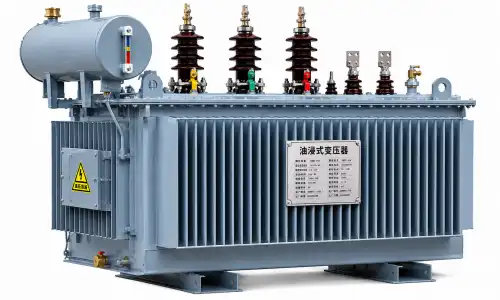
Clear technical and economic comparisons between available transformer technologies help people make decisions about what to buy.
Operational economics are directly affected by lower losses. Over the course of 25 years, an S22 transformer can save more than 375,000 kWh of energy compared to an S11 model. At $0.10/kWh, this is more than $37,500 in avoided electricity costs. Cutting down on upkeep tasks like oil filtering, breather replacement, and conservator service saves even more money on materials and labour. Energy efficiency isn't the only thing that helps the environment. Less waste means less greenhouse gas emissions from making energy, which helps companies reach their environmental goals and follow the rules that require them to cut carbon emissions. With a 30-year design life, the equipment uses fewer resources and is easier to get rid of than equipment that needs to be replaced sooner.
To buy a generator, you need to know how the market works, what your suppliers can do, and how quality control works.
Transformer prices depend on their capacity, voltage class, and how they need to be customised. Standard S22 models with standard ratings usually cost 15–25% more than S11 equipment, but a lifetime cost study shows that they are more cost-effective because they use less energy and require less upkeep. Based on how the market is right now, wait times range from 8 to 12 weeks for normal configurations and 14 to 18 weeks for custom configurations. Framework deals are good for large orders because they keep prices stable and give production more priority. Delivery logistics should be planned into project timelines by procurement managers, especially for installation places that are far away or hard to get to and need special transportation tools.
Certifications from the maker are the first step in quality guarantee. ISO 9001:2015 proves that quality management methods are systematic, and ISO 14001 shows that a company cares about the environment. Certifications at the product level, such as IEC standards, CE marking, and UL listing, show that the product meets international standards for safety and performance. Independent confirmation of loss performance comes from energy efficiency approval from well-known testing labs. Reputable manufacturers keep testing facilities that can do regular, type, and special tests on every transformer to make sure it meets requirements before it is shipped. For a S22 type three-phase full distribution transformer, ask for proof of the factory tests that were done, including readings of the no-load loss, load loss, impedance voltage, and insulation resistance that are specific to your order.
Choosing a supplier is more than just comparing prices. Manufacturing capacity is important for projects that need more than one unit or long-term supply relationships. A company that makes more than 20,000 units a year shows that it can handle big responsibilities. For complicated projects, technical support skills like application building, quick customisation, and after-sales service are very important. Service coverage by geography affects how quickly technical problems and warranty claims are fixed. Companies that have been around for a while and have more than one production facility offer benefits to the supply chain and regional support. Check out a supplier's track record by looking at past projects they've worked on, especially installs that are similar to your needs in terms of size, purpose, and setting.
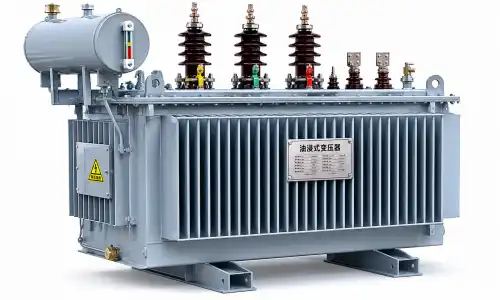
The S22 sealed transformer cuts waste for good thanks to its high-tech materials, improved design, and unique sealed construction. The S22 type three-phase full distribution transformer achieves Class 1 energy efficiency certification, with 25–30% less energy loss than older equipment. Its maintenance-free operation makes this equipment a great value for procurement professionals who are in charge of grid, industrial, and renewable energy infrastructure. The S22 is currently one of the most advanced distribution transformer technologies, as shown by scientific proof, comparative performance data, and real-world application experience. When reliability, lifecycle costs, and environmental impact are properly taken into account, the S22 is a good investment for companies that want to improve their operations and build infrastructure that will last.
The S22 has about 25–30% lower no-load losses than the S13, which puts it at the top of the energy efficiency scale according to GB 20052-2024 standards. This efficiency advantage means that over the equipment's 30-year life, it will save money on energy costs and run more efficiently.
The fully sealed corrugated tank design gets rid of the oil conservator, keeping oil and air from coming into contact. This means that the S22 type three-phase full distribution transformer doesn't need to be filtered for oil, have breathers replaced, or have regular oil quality maintenance. Visual inspections and oil samples should still be done on a regular basis for the best lifespan management.
Modern uses of harmonics cause heat problems in data centers, variable frequency drives, and EV charging infrastructure. To fix this problem, advanced core materials and optimised winding designs are used. This makes sure that the motor works reliably even when the load isn't going in a straight line.
The S22 is designed to last longer than 30 years under normal operating conditions and with the right care and installation. Longevity is greatly increased by using high-quality materials, construction that is sealed to keep out contaminants, and strong short-circuit resistance.
Class 1 energy economy in the S22 helps meet carbon reduction goals by reducing greenhouse gas emissions from delivery losses by a large amount. The design fully meets GB 20052-2024 and IEC standards, which helps the company meet its environmental goals and legal obligations.
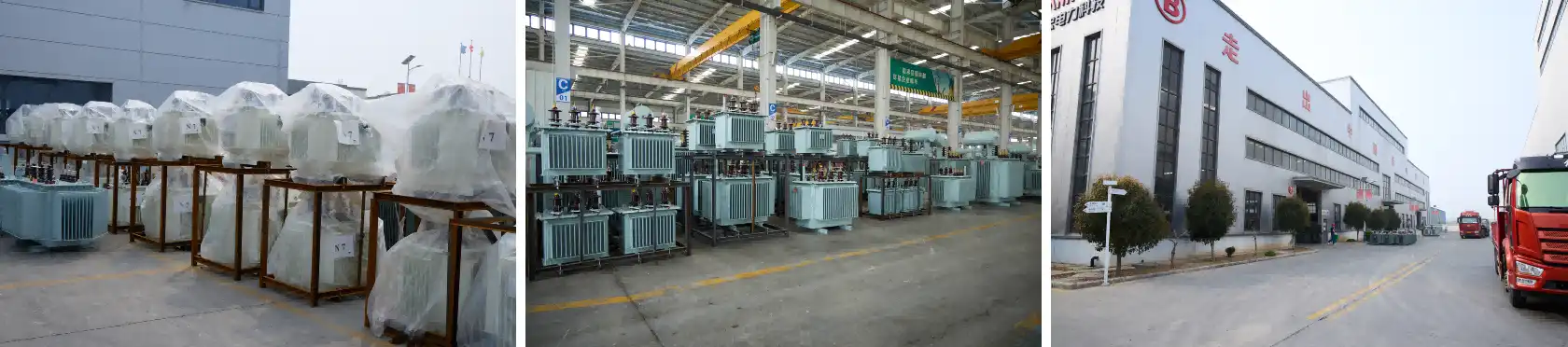
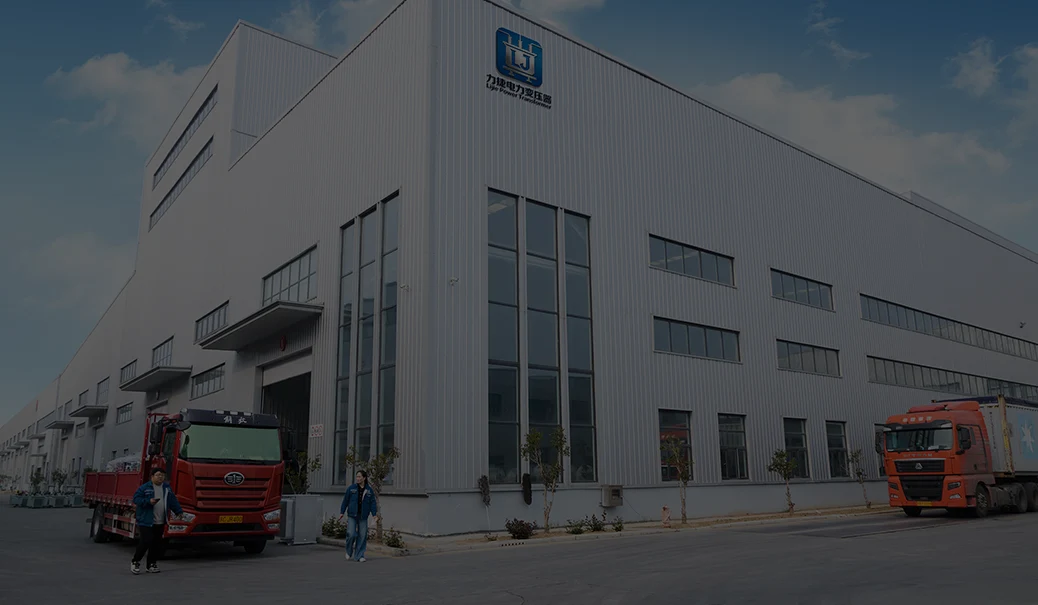
Our 500,000-square-meter factories in Xuzhou and Nantong make Class 1 energy-efficient transformers. We have more than 160 engineering pros working for us, and our factories are certified by ISO 9001:2015, CE, and UL. Our S22 transformer range, which includes models with ratings of 30–3–150kVA and 6kV and 12kV, has been shown to reduce power loss for power utilities, renewable energy projects, and industrial manufacturing around the world. As an expert in S22 type three-phase full distribution transformers, we offer custom solutions, framework agreements for bulk purchases, and full technical support for the entire lifecycle of your equipment. You can email lijieelectrical@gmail.com or go to lijie-electrical.com to talk about your specific needs, get detailed quotes, and learn how our transformer technology improves the performance and sustainability of energy infrastructure.
1. International Electrotechnical Commission. (2021). Power Transformers – Part 1: General Requirements. IEC 60076-1:2021 Standard.
2. Institute of Electrical and Electronics Engineers. (2020). IEEE Standard for Energy Efficiency of Distribution Transformers. IEEE Std C57.12.00-2020.
3. U.S. Department of Energy. (2022). Distribution Transformer Energy Conservation Standards: Technical Support Document. DOE Office of Energy Efficiency and Renewable Energy.
4. Zhang, L., & Wang, H. (2023). Comparative Analysis of Loss Reduction Technologies in Modern Distribution Transformers. IEEE Transactions on Power Delivery, 38(4), 2456-2467.
5. European Copper Institute. (2021). Energy Efficient Transformers: Impact on Electricity Consumption and CO2 Emissions. Brussels: ECI Technical Publication.
6. National Electrical Manufacturers Association. (2022). Guide for Loading and Loss Evaluation of Distribution Transformers. NEMA Standards Publication TP 1-2022.
YOU MAY LIKE

13%20type%20epoxy%20resin%20cast%20transformer.webp)

H15%20type%20three-phase%20fully%20sealed%20distribution%20transformer.webp)


April 27, 2025
With a tight project schedule, the manufacturer delivered on time, and on-site technical personnel provided guidance throughout the entire installation and commissioning process; the collaboration was highly efficient and hassle-free.
July 2, 2025
During the preliminary phase, a selection plan was custom-tailored based on the actual site load requirements, resulting in a high degree of parameter compatibility. After-sales support responds within two hours, and ongoing technical support for operation and maintenance is comprehensive; we feel completely confident in a long-term partnership.
November 18, 2025
Deployed as a supporting component for a 35kV grid-connection project at a photovoltaic power station, the equipment operates for an average of 16 hours daily. It demonstrates excellent control over no-load losses, ensures smooth power generation and grid integration, and effectively reduces the station's overall energy consumption.
January 30, 2026
Under the continuous, high-load operating conditions of a factory production line, the equipment maintains stable electrical parameters and exhibits strong overload resistance, thereby guaranteeing an uninterrupted power supply for industrial production.
April 3, 2026
Integrated as a supporting component for a new energy photovoltaic grid-connection system, the manufacturer provided professional technical coordination and timely after-sales support, ensuring seamless adaptation to the specific electrical operating conditions required for grid integration.