April 27, 2025
With a tight project schedule, the manufacturer delivered on time, and on-site technical personnel provided guidance throughout the entire installation and commissioning process; the collaboration was highly efficient and hassle-free.
Jul 21, 2026
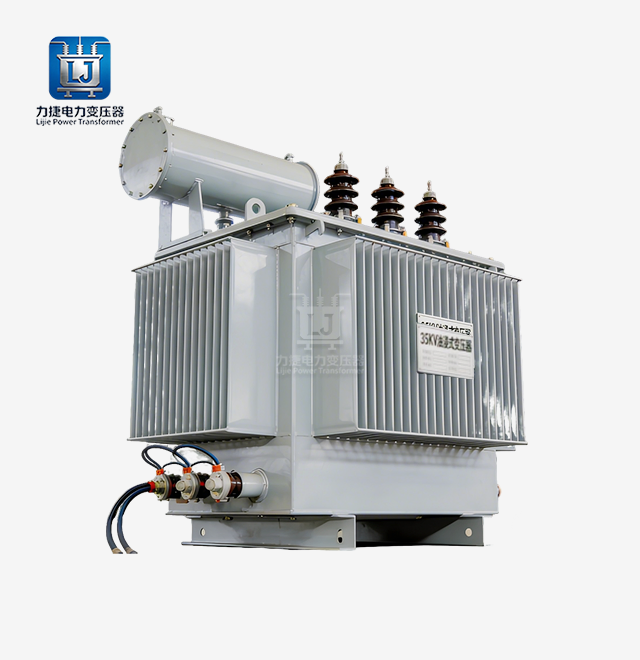
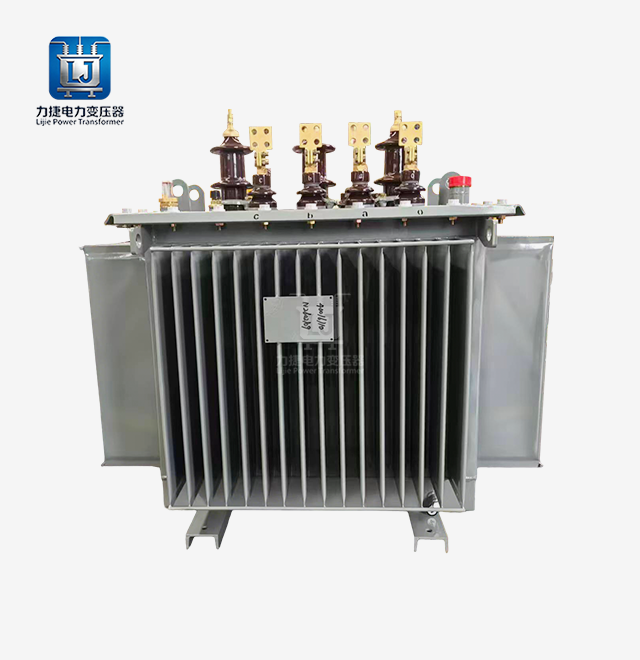
When there is alternating current in the primary windings of the S22 type 35KV oil-immersed power transformer, it forms a magnetic flux through a silicon steel core. This flux causes voltage to build up in the secondary windings. The shielding oil has two very important jobs: it keeps high-voltage parts from touching each other and it moves heat from the core and windings to the outside world efficiently. This fully sealed corrugated tank design keeps oil from oxidising and allows for thermal expansion, which keeps the voltage stable from 35kV to lower distribution levels across capacities from 630kVA to 31,500kVA while using very little energy.
In today's power grid, picking the right distribution equipment has a direct effect on prices, the dependability of the system, and the long-term performance of assets. When we ask procurement managers and electrical experts what their biggest problems are, three issues keep coming up: keeping track of all the costs over the whole lifecycle, making sure power stays on, and meeting ever stricter energy saving standards.
The 35kV class is a very important voltage level in distribution networks that connect transmission systems to factories, renewable energy installations and regional substations. We at Lijie Electric have learned that technical specs don't always tell the whole story by working with power companies and industrial makers on six different countries. People who make decisions need to know how transformers work in the places where they're used, like a wind farm with changing loads, a steel plant with equipment that produces a lot of harmonics, or a rural substation that doesn't need much care.
This guide looks at how oil-immersed distribution transformers work, their technical features, and what you need to think about when buying them. It gives technical teams and supply chain professionals the information they need to make sure the equipment they choose fits both short-term project needs and long-term infrastructure goals.
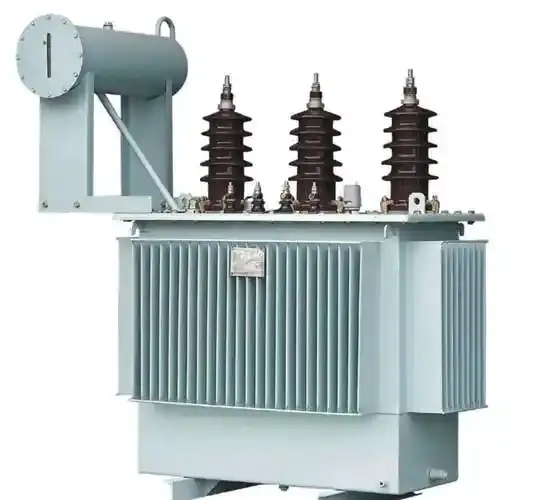
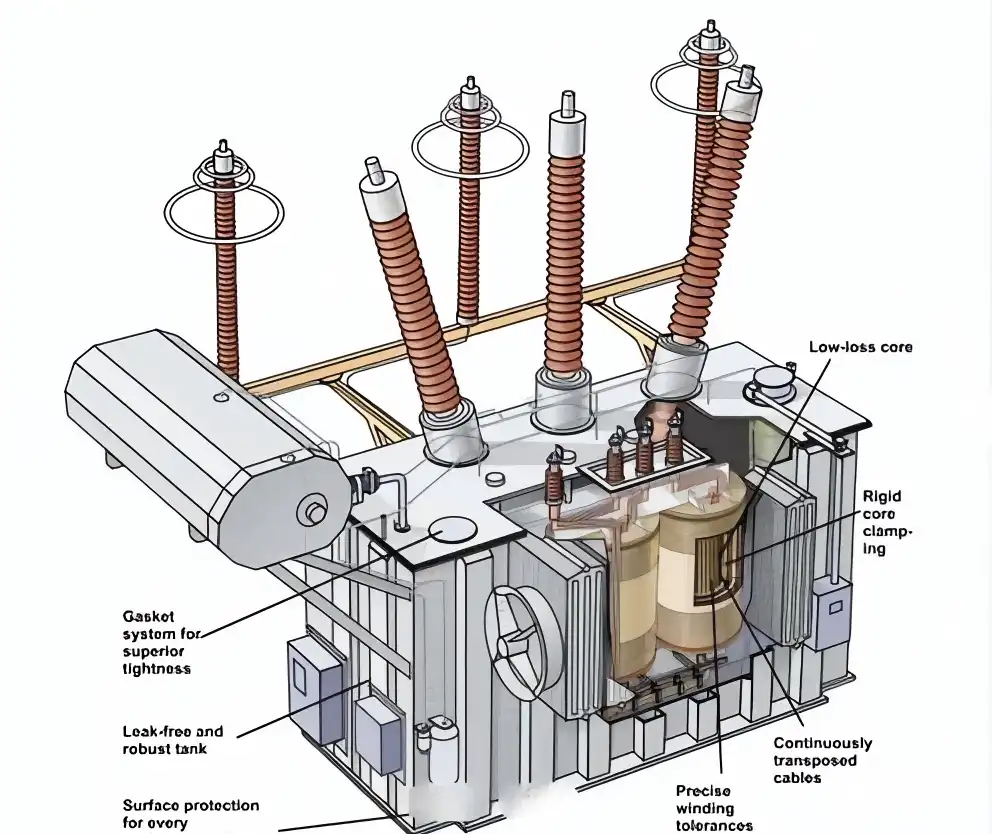
At the center of this distribution equipment is a magnetic core made of cold-rolled grain-oriented silicon steel sheets that are very permeable. These special materials, which are often improved by laser-scribing, cut down on eddy current losses and boost magnetic flux efficiency. Depending on the size needed, the core has either three or five limbs, with main and secondary windings carefully placed around each limb.
High-purity electrolytic copper conductors are arranged in concentric cylindrical layers in the winding system. The primary windings connect to the 35kV supply with tap connections every ±2 2.5% for no-excitation voltage regulation. The secondary windings deliver power at 10kV, 6kV, or 0.4kV, depending on the needs of the application. This set-up changes the voltage through basic electromagnetic induction. Alternating current in the primary windings makes magnetic flux through the core, which causes proportional voltage in the secondary windings based on the turns ratio.
Mineral shielding oil fills the covered tank. Oil-immersed designs are different from dry-type designs in two important ways. The oil makes a strong dielectric barrier between high-voltage parts, which stops flashover and keeps the system's stability in regular situations as well as during short overvoltages. At the same time, the oil soaks up heat from the core and windings due to load losses. It then moves this heat to the tank walls through natural convection, where it escapes to the outside air.
This passive heat transfer process is all that the ONAN (Oil Natural, Air Natural) cooling method does for units from 500kVA to 2500kVA. Larger units with power ratings of 3150kVA or more have OFAF (Oil Forced, Air Forced) systems. In these systems, pumps move oil through outdoor heaters with fans, which increases the efficiency of heat transfer by 45% when the load is high. The corrugated tank design gets rid of the need for conservatories, so the oil volume can expand straight into the tank wall's flexure. At the same time, the tank remains completely isolated from the air, which keeps wetness out and oil from oxidising.
The Dyn11 connection group, which is the best configuration for most installations, uses a delta arrangement to connect the primary windings, while a wye arrangement with an accessible neutral is used for the secondary windings, and for an S22 type 35KV oil-immersed power transformer, this vector group is particularly effective at mitigating third-harmonic currents generated by nonlinear loads such as variable frequency drives, EV chargers, and rectifiers. When powering nonlinear loads like variable frequency drives, charging infrastructure, or rectifier systems, this vector group is very helpful. Third-harmonic currents that would normally flow through the windings are naturally stopped by the configuration. This prevents extra heating and potential resonance problems.
A phase angle shift of 330 degrees (or -30 degrees) between the main and secondary voltages allows the power system to be properly grounded and makes it easier for other transformers to work together in parallel. The neutral point link on the secondary windings can handle both three-phase and single-phase loads. This makes these units very useful for a wide range of industrial and business uses. Different Yd11 setups are used for situations where secondary neutral access is not needed. However, the Dyn11 arrangement has become the standard because it is so flexible in how it works.
These distribution transformers can handle main voltages of 35kV and have built-in tap changers that can adjust by ±2±2.5%. For systems that need a wider range of adjustments, this range can be increased to ±3±2.5%. There are different secondary voltage options, such as 10kV for subtransmission uses, 6kV for some industrial processes, and 0.4kV for final distribution to end users. Most configurations have a 35kV main and either a 10kV or 0.4kV secondary, based on the design of the distribution system.
There are standards for capacities ranging from 630kVA for small factories or rural substations to 31,500kVA for large factories or green energy collection points. This range works for both standard setups and custom-engineered solutions that need specific capacity levels because of the load profile or the limitations of the site. The modular approach to manufacturing lets production be flexible while keeping quality standards the same across all capacity ranges.
Energy efficiency has a direct effect on operating costs over the course of a transformer's many decades of service, so loss characteristics are an important thing to think about when buying one. A typical 1000kVA unit shows no-load losses of 800W or less. These are the constant core magnetisation losses that happen whenever the transformer is turned on, no matter what the load is. Load losses at rated current reach a high point of 7200W, which shows that the windings are resistively heating up when they are fully loaded.
These specs mean that no-load losses are 10% lower than they were in the earlier S20 series and load losses are 4% better. Compared to older S11 technology, which is still used in many systems, the improvement is even more impressive: no-load losses drop by 43%, which means that each transformer saves more than 2,200 kWh of energy each year, even before load loss improvements are taken into account. These improvements in efficiency are in line with the Grade 1 energy efficiency standards set by GB 20052-2020. This makes these units some of the best distribution transformers in their voltage class.
The H+ class insulation system can handle constant temperatures of up to 200°C, which is a large thermal margin above usual working conditions. This strong ability to withstand high temperatures makes insulation last longer than 35 years under normal load conditions. This lowers the cost of replacement over time and increases the reliability of the supply in the long term. The insulation on the primary winding can handle a power frequency of 70kV for one minute and a peak lightning impulse of 170kV. The 10kV secondary windings can handle 42kV of power frequency stress during normal tests.
At 1.58 times the maximum voltage split by the square root of three, partial discharge levels stay below 2pC. This means that there are only small problems with the insulation that could become failures over time. This low partial discharge signature shows that the insulation layers, winding geometry, and oil processing were all carefully thought out during production. The IP67 rating stops all dust from getting in and provides brief immersion resistance. The C5-M rating handles harsh seaside areas with salt spray, industrial zones with airborne contaminants, and sites up to 3000 meters above sea level.
A short-circuit impedance of 6.5% (±10% tolerance) that meets GB/T 1094.5 standards strikes the right mix between fault current limits and voltage control performance, and for an S22 type 35KV oil-immersed power transformer, this impedance level ensures that the transformer can withstand 2.5 times its rated current for up to two seconds during a system fault without suffering permanent winding deformation or insulation damage. During system breakdowns, these transformers can handle 2.5 times their rated current for two seconds without any damage to the core structure or windings. This fault tolerance saves utility investments during grid problems while keeping up with the right upstream safety devices.
The technical strength also applies to the sound quality. The characteristic transformer hum is caused by magnetostriction, which is when the dimensions of silicon steel change when magnetic flux passes through it. Modern methods for building cores lower these vibrations, keeping sound levels at or below 50dB(A) for 1000kVA units. This is about the same volume as a regular talk and 8dB(A) below the national standard limits set by JB/T 10088.
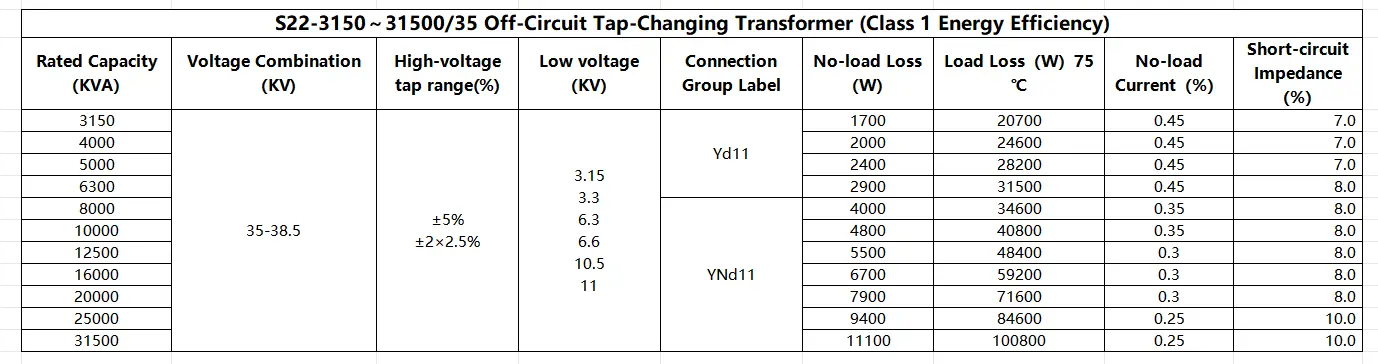
Energy use makes up the biggest part of a transformer's overall cost of ownership over its entire working life, which is usually a lot more than the original purchase price. Because it uses less electricity, the ultra-low loss design gives a measurable financial return. This is especially useful as utility rates continue to rise around the world. The no-load loss reduction is especially important in applications with changeable loads where transformers stay on during times of low demand. Distribution lines, renewable energy collection systems, and backup capacity installations can all benefit from lower idling losses.
Load loss changes make the system even more efficient during peak demand times, when the cost of energy is highest and the system is almost full. All of these effects work together to save money over time, which improves the project's economics and lowers the carbon emissions that come from making electricity. These features of efficiency are in line with corporate sustainability efforts and stricter environmental rules that affect businesses all over the world.
The fully sealed tank design stops the atmospheric effects that lower the quality of the oil in regular conservator-type transformers. Moisture getting in, which is a main reason why shielding breaks down, can't happen, and air exposure, which speeds up oil oxidation and sludge formation, can't happen either. This safety feature is especially useful in coastal settings where humid air would quickly mix with oil and in industrial areas where airborne particles could get into transformers otherwise.
Temperature rise limits of 65K for the windings and 55K for the top oil layer, which meet the standards of GB/T 1094.2, make sure that the system can still work safely even when it is overloaded for a long time or when the temperature outside is high. The thermal gaps stop the formation of hotspots, which speeds up the ageing process of insulation. This keeps the insulation's performance steady over long service periods. These design features mean that there is less upkeep to do, fewer unexpected outages, and lower lifecycle management costs. These are all very important benefits for remote sites where getting to service can be hard.
Power electronic loads that produce harmonic currents are becoming more common in modern electrical systems. For example, variable frequency drives that control motors, charging stations for electric vehicles, and renewable energy inverters all send non-sinusoidal current waveforms into distribution networks. The Dyn11 link group naturally controls these harmonic components, stopping flow through the transformer windings that would otherwise add to the heat and potential drop.
Load-bearing voltage regulation keeps the secondary voltage stable even when the primary voltage changes or when the load changes. This makes sure that the connected equipment always gets the same quality of power. This stability is especially important for sensitive industrial processes where changes in voltage can stop work or hurt machines. The control system does more than just change the power. It also makes the process more consistent and extends the life of the equipment.
To find a trustworthy transformer provider, you need to check their technical skills, quality control systems, and compliance with regulations, and for an S22 type 35KV oil-immersed power transformer, this means verifying that the manufacturer holds ISO 9001:2015 for quality management, IEC 60076 compliance for international transformer standards, and CE or UL certifications as required by the target market's utility regulations. ISO 9001:2015 certification shows that quality processes have been set up, and IEC 60076 compliance shows that international transformer standards that are accepted in all places around the world have been met. The CE mark shows that the product meets European safety standards, and the UL mark lets it be sold in North American markets, where utility standards often require this approval.
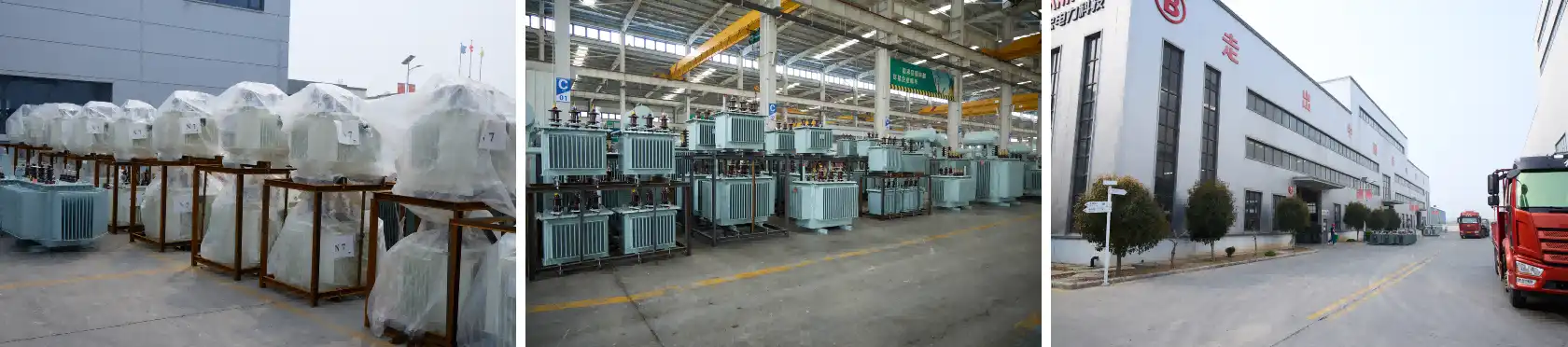
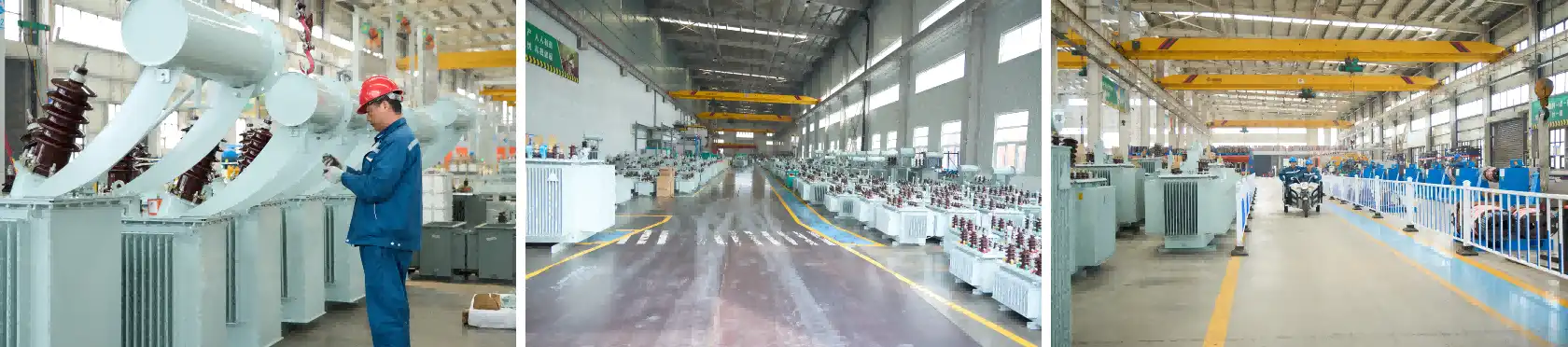
Find out more about the factory size and scientific tools than just basic certifications. Facilities that are bigger than 500,000 square meters, with specific research and development teams and high-tech testing tools, show that the company can handle both mass production and special engineering. The credentials of engineering staff, especially advanced degrees in electrical engineering and transformer design, show that they have the technical knowledge to handle complicated project needs or fix problems in the field. All of these things together show if a manufacturer can consistently deliver high-quality goods in large quantities while also providing quick technical support throughout the lifecycle of a project.
Standard standard transformers usually have fast production cycles or are kept in stock, while custom-engineered units need longer production times. Lead times for standard designs are usually 8 to 12 weeks, while they can be 16 to 20 weeks for special configurations that need custom voltage ratios, unique windings, or changed tank geometries. Large projects with many units benefit from shipping plans that are spaced out to match building milestones. This way, costs for storage on-site are kept to a minimum while installation work is kept up.
International logistics is more complicated because the size and shape of the containers, the way they are handled at the port, the paperwork needed for customs, and the rules for importing all affect the costs and dates of delivery. Experienced manufacturers offer full logistics support, which includes designing export packaging, coordinating shipping, and preparing paperwork. This makes the process of buying things from other countries easier. These services are especially helpful for EPC contractors working on projects in more than one country, where knowing the local rules and having established shipping connections can speed up the project's completion.
When you look at the average 30-year working lifespan for distribution equipment, the purchase price is only a small part of how much the transformer really costs. Energy losses, including both no-load and load losses, add up to big energy bills that often go over the cost of buying the equipment in the first ten years. To figure out lifecycle costs, you have to guess yearly load factors, guess how energy rates will change over time, and apply the right discount rates to future costs.
Long-term cost analysis also takes into account the need for maintenance. The sealed tank design makes routine maintenance a lot easier than with breather designs, which need to test the oil regularly, remove moisture, and eventually replace the oil. Long-term warranties that cover both parts and labour move risk from the buyer to the maker, protecting the buyer financially against early failures. When you look at these economic factors along with reliability qualities, you can often see that premium-efficiency transformers, which cost more at first, give you better returns on your money by lowering your running costs.
Older S11 transformers, which are still widely used in infrastructure, have much higher core losses because they are made with less modern silicon steel materials and more traditional core building methods, while an S22 type 35KV oil-immersed power transformer incorporates advanced amorphous alloy or high-permeability silicon steel cores and optimized yoke designs to reduce no-load losses by up to 43%, delivering immediate energy savings and faster payback on replacement investments. Modern materials and manufacturing methods have made it possible to cut no-load loss by 43%. This saves money right away when the equipment is replaced, and the energy savings often support faster refill cycles even before the equipment reaches the end of its useful life.
Better core materials and sealed tank designs were added to the S13 series compared to the S11 series. The current generation equipment goes beyond what S13 could do by reducing loss even more, making insulation systems better, and making sure that the machines are made with more precision. The small changes may not seem like much on paper, but they add up to big performance gains over decades of constant use, especially in high-use situations where transformers work close to their rated capacity for long periods of time.
Dry transformers with cast resin or nomex insulation don't have the fire risk that comes with insulating oil that can catch fire. This makes them the best choice for setups inside of buildings that are already occupied. During short-term peak demands, the solid insulation system can handle overloads better. Dry-type systems, on the other hand, have higher losses across similar ratings, make more noise, and cost more per kVA of power.
Oil-immersed technology works best in outdoor substations, industrial buildings that already have fire control systems, and places where saving energy is more important than fire safety. The better cooling efficiency lets smaller designs work with higher power ratings, and the liquid insulation protects against impulse voltage better during lightning strikes or switching transients. For large-scale uses, industrial buildings, and renewable energy installations, oil-immersed transformers usually offer better performance-to-cost ratios, even though they need base designs that include oil containment features.
Standardisation, proven reliability, and compatibility with existing infrastructure are important to power companies that are putting equipment into distribution networks. The organisations in question usually keep lists of approved tools that were made after a lot of testing and performance review in the field. Established manufacturers with a large installed base and a track record spanning decades are better able to meet the needs of utilities than newer suppliers who don't have field performance data.
Renewable energy projects, especially solar and wind systems, have their own problems, like changing loads and power electronics that are hard to maintain because they are often in rural areas. These needs are met by the fully sealed design, harmonic tolerance through the Dyn11 configuration, and longer maintenance intervals. In industries like steel production, mining, chemical processing, and heavy manufacturing, structures need to be strong enough to resist vibrations, changes in temperature, and electrical stress from starting or rectifying big motors. The mechanical strength requirements and heat tolerances give the material the durability it needs for these tough conditions.
Knowing how transformers work, their technical specs, and how to buy them can help you choose equipment that meets both your short-term project needs and your long-term operating goals. When you combine electromagnetic design basics with modern materials technology and sealed tank construction, you get performance qualities that meet strict efficiency standards and operating reliability across a wide range of application environments.
When making purchasing choices, it's always best to weigh initial costs against lifetime costs, look at more than just a manufacturer's specifications, and think about the total cost of ownership instead of just the purchase price, and for an S22 type 35KV oil-immersed power transformer, this means recognizing that the higher upfront cost of a high-efficiency S22 unit is offset by substantial energy savings and reduced maintenance over its 30-year service life compared to older, less efficient models. Modern oil-immersed distribution transformers have technical benefits like better energy efficiency, greater environmental adaptability, and longer service intervals. These benefits directly translate into financial returns through lower operating costs and higher system reliability over many decades of use.
Design life is more than 30 years under stated pressure conditions if it is installed correctly and checked on a regular basis. The H+ insulation system and sealed tank design keep the oil from breaking down, which supports longer service periods. How long something actually lasts depends on how it is used, its environment, and how well it is maintained. Units that are kept out of high temperatures and run at typical loads below 70% of their rated capacity often last longer than 35 years before they need to be replaced.
Compared to conventional transformers with breathers, the sealed design requires a lot less maintenance. Visual checks once a year to look for oil leaks, make sure the cooling system works, and make sure the right loads are being put on most setups are enough to keep an eye on them. Every two to three years, dissolved gas analysis tests can find internal faults that are starting to form before they become catastrophic. Older technologies need to be tested for oil and moisture once a year. This makes sealed designs especially useful in remote areas where getting service is expensive.
Multiple safety devices keep both people and tools safe. When there are problems inside, pressure release devices go off and let the gases out safely, instead of letting the tank burst in a terrible way. Temperature monitoring with winding temperature indicators and oil temperature gauges lets you find overloading or cooling system problems early on. The IP67 rating keeps you from touching live parts by accident and keeps the insides from getting dirty from the outside. Insulation problems can be found before they become fails by using secondary neutral monitoring to find ground faults.
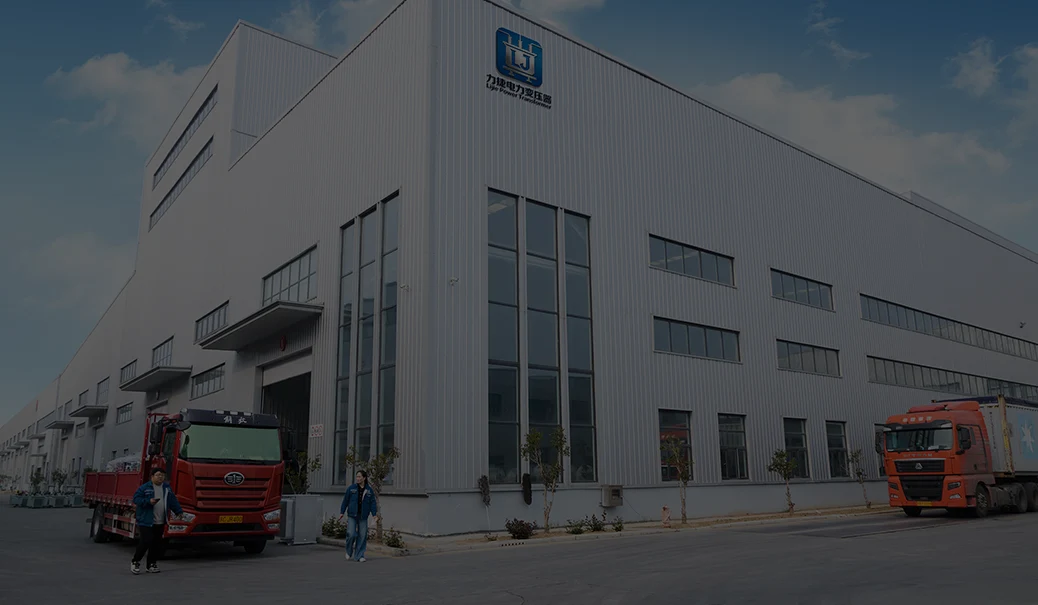
Lijie Electric has been making transformers for more than 20 years and can help with power infrastructure projects all over the world. Our 500,000-square-meter factories in Xuzhou and Nantong are home to more than 2,000 skilled workers, including 160 engineers with advanced degrees in materials science and electrical engineering. This level of technical knowledge allows for both mass production of standard designs and custom engineering to meet the specific needs of a project. This helps procurement managers find a reliable oil-immersed transformer supplier with whom they can work together for a long time.
We make a full line of power and distribution transformers with values from 10kV to 500kV, and our S22 type 35KV oil-immersed power transformer is a flagship product in this range, combining ultra-low no-load losses, robust short-circuit withstand capability, and full compliance with IEC, CE, and UL standards for global project deployment. All of our products are certified by IEC, CE, and UL to meet the needs of projects around the world. Our ISO 9001:2015-certified quality management systems make sure that our manufacturing standards are always met, and our status as a national "Specialised, Refined, and New 'Little Giant' enterprise" shows that we are able to come up with new ideas and be a technology star. Our established transportation network makes it possible for us to send to over 20 countries in Asia, Africa, and Oceania for projects that need oil-immersed power transformers for sale.
Get in touch with our technical team to talk about the needs of your particular project, get full specs, or get quotes for standard or custom-engineered solutions. You can email Lijie Electric at lijieelectrical@gmail.com or go to lijie-electrical.com to see our full range of products and learn how our transformer solutions can help you reach your infrastructure goals.
1. IEEE Standard C57.12.00-2015, "General Requirements for Liquid-Immersed Distribution, Power, and Regulating Transformers," Institute of Electrical and Electronics Engineers, 2015.
2. International Electrotechnical Commission, "IEC 60076-1: Power Transformers - Part 1: General," Third Edition, 2011.
3. GB 20052-2020, "Minimum Allowable Values of Energy Efficiency and Energy Efficiency Grades for Three-Phase Distribution Transformers," Standards Press of China, 2020.
4. Harlow, James H., "Electric Power Transformer Engineering," Third Edition, CRC Press, 2017.
5. GB/T 1094.2-2013, "Power Transformers - Part 2: Temperature Rise for Liquid-Immersed Transformers," Standards Press of China, 2013.
6. Kulkarni, S.V. and Khaparde, S.A., "Transformer Engineering: Design, Technology, and Diagnostics," Second Edition, CRC Press, 2013.
YOU MAY LIKE
H15%20Amorphous%20Alloy%20Distribution%20Transformer.webp)




April 27, 2025
With a tight project schedule, the manufacturer delivered on time, and on-site technical personnel provided guidance throughout the entire installation and commissioning process; the collaboration was highly efficient and hassle-free.
July 2, 2025
During the preliminary phase, a selection plan was custom-tailored based on the actual site load requirements, resulting in a high degree of parameter compatibility. After-sales support responds within two hours, and ongoing technical support for operation and maintenance is comprehensive; we feel completely confident in a long-term partnership.
November 18, 2025
Deployed as a supporting component for a 35kV grid-connection project at a photovoltaic power station, the equipment operates for an average of 16 hours daily. It demonstrates excellent control over no-load losses, ensures smooth power generation and grid integration, and effectively reduces the station's overall energy consumption.
January 30, 2026
Under the continuous, high-load operating conditions of a factory production line, the equipment maintains stable electrical parameters and exhibits strong overload resistance, thereby guaranteeing an uninterrupted power supply for industrial production.
April 3, 2026
Integrated as a supporting component for a new energy photovoltaic grid-connection system, the manufacturer provided professional technical coordination and timely after-sales support, ensuring seamless adaptation to the specific electrical operating conditions required for grid integration.