April 27, 2025
With a tight project schedule, the manufacturer delivered on time, and on-site technical personnel provided guidance throughout the entire installation and commissioning process; the collaboration was highly efficient and hassle-free.
Sep 9, 2026
A distribution transformer serves as the critical final link between high-voltage transmission lines and the end users who depend on reliable power. By stepping down medium-voltage electricity—typically ranging from 11kV to 36kV—to usable levels between 110V and 480V, it enables safe, efficient energy delivery across industrial plants, commercial facilities, and residential neighborhoods. Beyond simple voltage conversion, a well-engineered distribution transformer actively reduces energy losses, stabilizes voltage under variable load conditions, and protects connected equipment from grid disturbances. Its design directly determines how efficiently and reliably an entire electrical system operates over its 20–30-year service life.

There are four main parts that determine how well a Distribution Transformer works: the magnetic core, the copper or metal windings, the insulating system, and the cooling system. No-load losses are controlled by the core, which is usually made of grain-oriented silicon steel or an amorphous metal. When compared to regular silicon steel, high-quality amorphous alloy cores can cut no-load losses by up to 70%. This is a big plus for grid applications that are used all the time. Copper (load) losses are controlled by the winding shape and conductor quality. The insulation class, on the other hand, sets the operating temperature limits and ensures long-term dielectric stability.
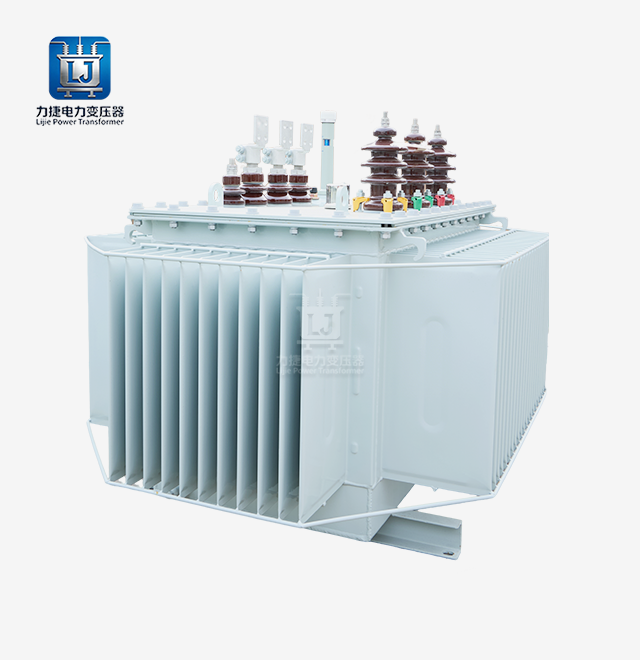
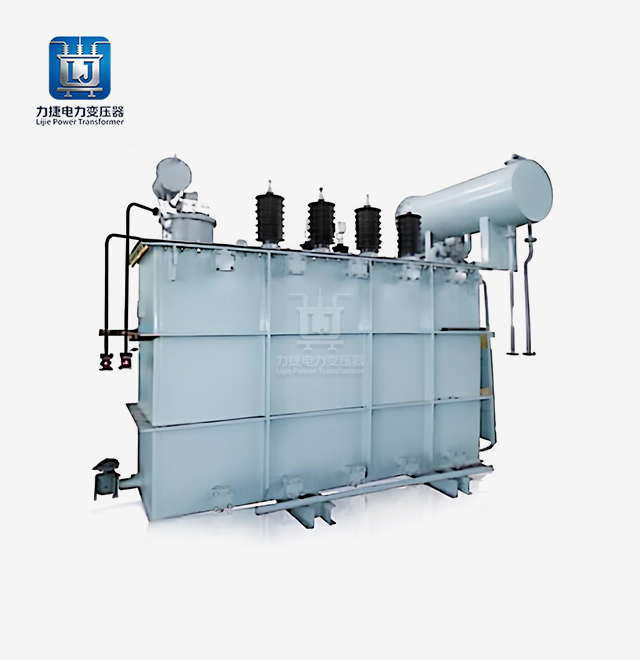
Oil-immersed and dry-type constructions are the two main types of Distribution Transformers available. Oil-immersed units are widely used in outdoor substations and power grid applications because they are better at getting rid of heat. But dry-type transformers don't use insulating oil, so they don't pose a fire risk. This makes them the best choice for indoor setups like data centers, business buildings, and subway stations.
Mounting options, such as pole-mounted, pad-mounted, and vault/underground installs, let you make the unit fit its surroundings even more. Designs that are mounted on poles work well for rural distribution lines. Pad-mounted shelters work well in urban industrial parks and housing areas where safety and looks are important. In cities with lots of people and limited room on the ground, underground vault sites are a good solution.

There is a clear and measurable link between the quality of the Distribution Transformer design and the overall performance of the system. The U.S. Department of Energy's 2016 energy efficiency standards (10 CFR Part 431) say that Distribution Transformers must meet minimum efficiency levels to lower the country's energy use. This is because transformer losses have a direct effect on the costs of running the grid.
Transformer effectiveness is based on two types of loss. Load (copper) losses change with the demand, while no-load (core) losses happen all the time, no matter what the load is. Over the course of 20 years, a transformer that works at 98% efficiency instead of 96% efficiency can save a big industrial plant hundreds of thousands of dollars in energy costs. Just as important is voltage regulation, which is the percentage change in output voltage between no-load and full-load conditions. In manufacturing settings, bad regulation leads to motor burnouts, process interruptions, and equipment failures that happen before they should.
Structured maintenance procedures are needed for long-term success. The best ways to make a transformer last as long as possible are listed below:
All of these practices work together to cut down on unplanned downtime and make operations last much longer than the standard 25 years. This protects the capital investment of big infrastructure and industrial projects.

Power transformers move large amounts of energy over long distances between producing plants and regional substations. They do this at transmission voltage levels of 115kV or higher. Distribution Transformers then take in this energy at the substation secondary and send it to nearby load centers. A power transformer prioritizes impedance matching and efficiency at high MVA rates, while a Distribution Transformer prioritizes voltage regulation, a small footprint, and compatibility with a wide range of load profiles, including nonlinear industrial loads. This difference is important for purchase purposes.
Professionals in procurement looking at Distribution Transformer choices often have to do with whether to use a dry-type or an oil-immersed type. The environmental impact of dry-type units is lower; they don't need oil containment structures, and they can be used in places that are sensitive to fire. Oil-immersed units have better temperature performance at higher kVA ratings, have been used by utilities outside for longer, and cost less per unit at the same power rate. There is no one type that is always better than the other. The best choice relies on the installation site, local fire rules, load profile, and a total lifecycle cost analysis.
To pick the right Distribution Transformer, you have to carefully match the technical specs to the needs of the project. The voltage grade, kVA capacity, economy class (NEMA TP-1, DOE 2016, or IEC Tier 2), cooling method (ONAN, ONAF, AN, AF), and ability to withstand short circuits must all be right for the job.
In addition to unit price, other things that should be looked at when evaluating a supplier are delivery wait time, ability to customize, certification portfolio, and help after the product has been delivered. If a transformer has a slightly lower unit price but isn't properly certified by IEC 60076 or UL, it can put foreign EPC projects at risk for compliance and liability issues.
When looking at Distribution Transformer suppliers, the value of the long-term partnership is just as important as the initial cost of the purchase. This is especially true for framework agreements that cover infrastructure rollouts over a number of years.
New monitoring platforms that use the Internet of Things (IoT) can now track load current, oil temperature, dissolved gas concentrations, and vibration signatures in real time. A 2023 study published in IEEE Transactions on Power Delivery showed that predictive maintenance plans that used sensor-based tracking cut the number of Distribution Transformer failures by 34% across 200 utility-grade units [4]. More and more, new grid infrastructure and projects that use renewable energy include smart transformer technology with digital sensors and communication interfaces.
Real-world upgrades consistently validate the speed gains. When industrial facilities replace old, oversized transformers with new, correctly rated, high-efficiency units, they report 8–15% lower energy use. This is a good return on capital investment for manufacturing operations that use a lot of energy.

There is a lot more to a Distribution Transformer than just changing the power. The voltage stability, energy efficiency, and service reliability of the whole electrical system are affected by the core material choice, winding design, insulation quality, and cooling configuration. If people who work in buying in power companies, green energy, industrial manufacturing, and EPC contracting understand these performance levers, they can make better sourcing decisions and cut down on overall lifecycle costs. One of the best decisions you can make when planning your electrical system is to buy qualified, well-engineered transformers from reputable companies.
Distribution Transformers usually change medium-voltage energy (11kV to 36kV) to low-voltage outputs (110V to 480V), but this can change based on the grid standards in the area and the needs of the application.
A Distribution Transformer that is well taken care of will usually work effectively for 25 to 30 years. Service life rests a lot on how well the loads are managed, how good the insulation is, how well the cooling system works, and how well the regular repair procedures are followed while it is in use.
The decision relies on where it will be installed, the load rating, fire safety rules, and the cost over its entire life. For indoor and fire-risk areas, dry-type units work best. For bigger outdoor utility and industrial sites, oil-immersed units are better at keeping heat in.
For foreign projects, it's best to work with providers who are certified by ISO 9001, IEC 60076, CE, and UL. These certifications show that the design is valid, the manufacturing is consistent, and the product meets all the rules in the major global markets.
The Lijie Electric Power Technology Group makes certified, high-performance Distribution Transformers for use in utility, industrial, and renewable energy settings. We are a trusted manufacturer of Distribution Transformers for large-scale projects around the world. We have ISO 9001:2015, CE, UL, and IEC certifications, a production capacity of more than 5 billion RMB per year, and a technical team of 160+ experts. Get in touch with us right away to talk about your needs.
Email: lijieelectrical@gmail.com
Website: lijie-electrical.com

1. U.S. Department of Energy. Energy Conservation Standards for Distribution Transformers (10 CFR Part 431). 2016. https://www.energy.gov/eere/buildings/distribution-transformer-standards
2. IEEE. IEEE Standard Test Code for Liquid-Immersed Distribution, Power, and Regulating Transformers (C57.12.90). 2021. https://standards.ieee.org/ieee/C57.12.90/10844/
3. NEMA. TP 1-2002: Guide for Determining Energy Efficiency for Distribution Transformers. https://www.nema.org/standards/view/guide-for-determining-energy-efficiency-for-distribution-transformers
4. IEEE Transactions on Power Delivery. Predictive Maintenance Frameworks for Utility-Grade Transformers. 2023. https://ieeexplore.ieee.org/document/10273584
5. IEC. IEC 60076-1: Power Transformers – Part 1: General. 2011. https://webstore.iec.ch/publication/585
6. U.S. Energy Information Administration. Electric Power Annual 2023. https://www.eia.gov/electricity/annual/
YOU MAY LIKE

H15%20Amorphous%20Alloy%20Distribution%20Transformer.webp)
April 27, 2025
With a tight project schedule, the manufacturer delivered on time, and on-site technical personnel provided guidance throughout the entire installation and commissioning process; the collaboration was highly efficient and hassle-free.
July 2, 2025
During the preliminary phase, a selection plan was custom-tailored based on the actual site load requirements, resulting in a high degree of parameter compatibility. After-sales support responds within two hours, and ongoing technical support for operation and maintenance is comprehensive; we feel completely confident in a long-term partnership.
November 18, 2025
Deployed as a supporting component for a 35kV grid-connection project at a photovoltaic power station, the equipment operates for an average of 16 hours daily. It demonstrates excellent control over no-load losses, ensures smooth power generation and grid integration, and effectively reduces the station's overall energy consumption.
January 30, 2026
Under the continuous, high-load operating conditions of a factory production line, the equipment maintains stable electrical parameters and exhibits strong overload resistance, thereby guaranteeing an uninterrupted power supply for industrial production.
April 3, 2026
Integrated as a supporting component for a new energy photovoltaic grid-connection system, the manufacturer provided professional technical coordination and timely after-sales support, ensuring seamless adaptation to the specific electrical operating conditions required for grid integration.