April 27, 2025
With a tight project schedule, the manufacturer delivered on time, and on-site technical personnel provided guidance throughout the entire installation and commissioning process; the collaboration was highly efficient and hassle-free.
Sep 8, 2026
The rapid expansion of solar farms, wind parks, and energy storage systems has placed high-voltage power equipment at the center of modern grid infrastructure. An HV transformer—any unit operating above 35 kV—serves as the critical interface between a generation site and the transmission grid. It steps up output voltage to reduce resistive losses over long distances, manages harmonic distortion from variable renewable sources, and provides galvanic isolation that protects downstream assets. Without this equipment, even the most advanced solar array or wind turbine cluster cannot deliver power to consumers reliably or cost-effectively.

When a transformer's rated voltage goes over 35 kV, it crosses the high-voltage threshold. Operating voltages in utility-scale green projects are usually between 110 kV and 500 kV. In ultra-high-voltage (UHV) uses, the voltage can go as high as 800 kV or more. At these voltages, the unit can move power from a big solar or wind farm over hundreds of kilometers with very little I²R loss, which a low-voltage version can't do on a large scale.
Renewable energy uses mostly two types of transformers. Cast-resin insulation makes dry-type units flame-resistant and good for indoor substations, offshore wind platforms, or places that need to be sensitive to the environment. Mineral or synthetic oil is used to insulate and cool oil-immersed units. These units can handle higher power levels and are best for outdoor utility-scale installs. Smart versions of both families now have built-in sensors and Internet of Things (IoT) monitoring that let operators see the temperature of the windings, the partial discharge, and the levels of dissolved gases in real time. This information is used to make preventative maintenance plans [IEC 60076-1, 2011].
Over the life of an asset, which is usually 25 to 30 years, even small efficiency losses add up to big income drops. Modern HV transformer design puts a lot of emphasis on every part of the electromagnetic and thermal circuit. This is because a 0.1% reduction in no-load loss on a 200 MVA unit can save hundreds of thousands of dollars over the course of its useful life.
At the heart of performance in renewable applications are these engineering traits:
All of these design choices lower running costs over the course of a product's life, which is a key factor when buying teams look at the total cost of ownership instead of just the unit purchase price. Maintenance plans work well with smart design. For example, dissolved gas analysis (DGA) done once a year and real-time partial discharge monitoring (goal: below 100 pC at 1.58 Um) help operators spot small problems before they get worse and cause unplanned outages.

Low-voltage transformers can only handle a limited amount of power and voltage, which is not sufficient for utility-scale green energy sources. An HV Transformer can step up the voltage to transmission levels, enabling efficient long-distance power delivery. According to Ohm's law, increasing the transmission voltage reduces the current required for the same power output, which significantly lowers line losses. A 300 MW offshore wind farm, for example, can connect to the onshore grid more efficiently when its power output is stepped up to a high transmission voltage such as 220 kV. HV equipment can also combine power from multiple wind turbines or transformer banks into a single transmission line, simplifying the infrastructure and helping reduce construction costs.
Oil-immersed units have a higher power density and are more cost-effective for large outdoor installations. However, they need systems to keep the oil contained, and fluids must be tested regularly. Dry-type units cost more to buy, but they don't need oil-related upkeep and don't pose an environmental risk. This is an important thing to think about in LEED-certified industrial parks or near wetland conservation areas. Using capitalized loss values in lifecycle cost modeling, dry-type designs are usually better for indoor or environmentally restricted sites, while oil-immersed designs are better for open-field utility projects [NEMA TP 2, 2005].
It is just as important to choose the right provider as it is to choose the right technical standard. People who work in procurement and are in charge of utility-scale or EPC projects should look at HV Transformer providers based on five factors: their certification portfolio, their manufacturing capacity, how much they can customize their products, how clear their lead times are, and their post-commissioning support infrastructure. Certifications are important because they show that something has been checked by a third party. Units going to U.S. projects have to meet IEEE C57 and ANSI standards; units going to foreign projects have to meet IEC standards; and safety listings (UL, CE) are often included in the addenda to EPC contracts. Suppliers with ISO 9001:2015 quality management certification show consistent process control across production batches. This is very important when a project needs 20 or 50 identical units to be delivered on a regular basis.
When a renewable energy project needs non-standard parameters, like tap ranges that aren't the same for every grid voltage, impedance values that aren't the same everywhere to limit fault current, or small footprints for containerized substations, custom manufacturing is needed. Instead of using a trading middleman, going directly to a manufacturer with in-house R&D cuts down on the number of engineering iterations and the chance of specification drift happening between placing an order and factory acceptance testing [CIGRE Technical Brochure 543, 2013].

Following the rules is required for projects to get insurance, for grid link approval, and for the safety of workers. In the US, OSHA 29 CFR 1910.269 sets the rules for how to safely work with HV electrical tools. NFPA 70E adds to this by requiring an arc-flash danger estimate. Internationally, the IEC 60076 series sets standards for testing, protection, and efficiency that are accepted by most grid providers around the world.
Strong site practices include making sure the grounding is correct before turning on the power, inspecting with an infrared thermograph during startup, and following strict lock-out/tag-out (LOTO) rules during repair windows. Factory acceptance tests (FAT) and site acceptance tests (SAT) with witnessed partial discharge and impulse tests create a valid audit trail that meets the needs of both regulatory bodies and project financiers [NFPA 70E, 2021].
HV Transformers are an important part of any green energy system—every megawatt sent to the grid depends on them. They are very important in solar, wind, and hybrid storage projects because they can increase voltage, handle variable loads, lower transmission losses, and provide galvanic isolation. A project will meet its energy yield and financial goals over a 25- to 30-year asset life if it chooses units with proven dielectric engineering, approved performance standards, and manufacturer-backed service support.
As a general rule, anything above 1 kV is considered high voltage. However, for utility-scale renewable energy systems, 35 kV is the realistic lower limit. At the place where they link to the grid, most solar and wind projects work at 110 kV, 220 kV, or 500 kV.
A smart transformer has digital communication modules and sensors built right in. The sensors measure things like temperature, shaking, and partial discharge, and the modules send real-time data to SCADA or asset management systems. Conventional units need to be inspected by hand. Smart variants cut down on unplanned downtime and help maintenance plans that plan ahead.
Ask for a full test report from a recognized lab that includes routine and type tests that meet IEEE C57.12.00 standards, along with a certificate of compliance from a well-known certification body. Check the no-load and load loss values against the 10 CFR Part 431 thresholds for DOE efficiency rules.
Yes, combined makers with large product lines can provide both families under a single quality management system. This makes it easier to find qualified vendors, manage spare parts, and handle warranties for complicated hybrid projects.
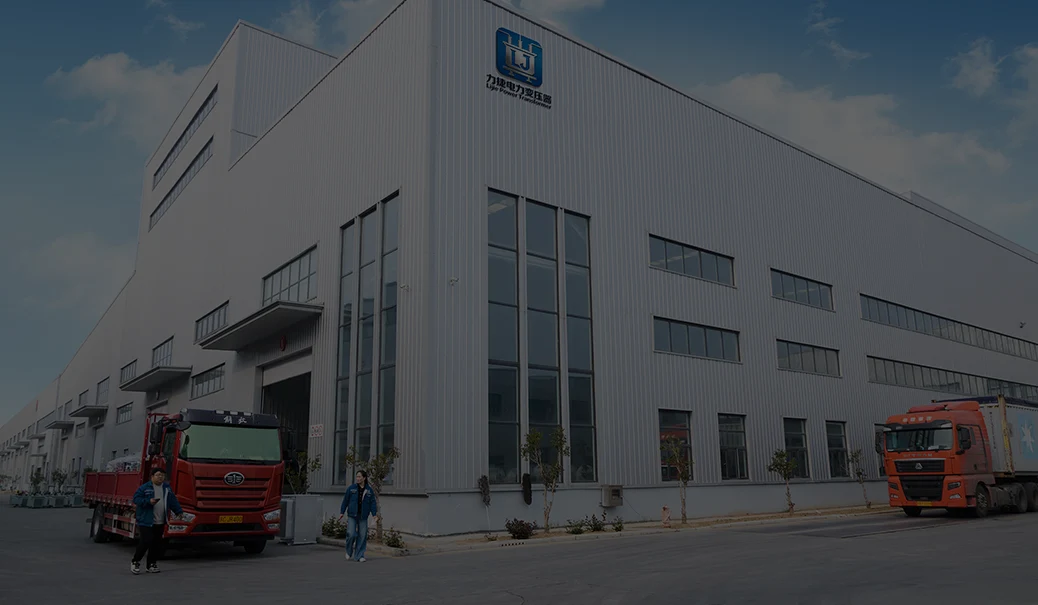
Lijie Electric stands among trusted HV transformer manufacturers with over 2,000 workers, two R&D bases covering 500,000 m2, and yearly sales topping 5 billion RMB. Our units, which are approved by ISO 9001:2015, IEC, CE, and UL, work with voltages ranging from 35 kV to 500 kV and above. They come in different types, such as dry-type, oil-immersed, amorphous alloy, and prefabricated substation options. To get a custom specification review or bulk-order quote today, email our engineering team at lijieelectrical@gmail.com or visit lijie-electrical.com.

1. International Electrotechnical Commission. IEC 60076-1: Power Transformers – General (2011). Geneva: IEC. https://webstore.iec.ch/publication/590
2. IEEE Standards Association. IEEE C57.12.00: Standard for General Requirements for Liquid-Immersed Distribution, Power, and Regulating Transformers (2015). https://standards.ieee.org/ieee/C57.12.00/5553/
3. U.S. Department of Energy. Energy Conservation Standards for Distribution Transformers, 10 CFR Part 431 (2016). https://www.ecfr.gov/current/title-10/chapter-II/subchapter-D/part-431/subpart-K
4. National Electrical Manufacturers Association. NEMA TP 2: Standard Test Method for Measuring the Energy Consumption of Distribution Transformers (2005). https://www.nema.org/standards/view/Standard-Test-Method-for-Measuring-the-Energy-Consumption-of-Distribution-Transformers
5. CIGRE Working Group A2.26. Technical Brochure 543: Transformer Reliability Survey (2013). Paris: CIGRE. https://www.cigre.org/publication/list/technical-brochures
6. National Fire Protection Association. NFPA 70E: Standard for Electrical Safety in the Workplace (2021). Quincy, MA: NFPA. https://www.nfpa.org/codes-and-standards/nfpa-70e-standard-for-electrical-safety-in-the-workplace/free-access
YOU MAY LIKE
10%20type%20dry-type%20distribution%20transformer.webp)


11%20Epoxy%20Resin%20Cast%20Dry-Type%20Transformer.webp)

April 27, 2025
With a tight project schedule, the manufacturer delivered on time, and on-site technical personnel provided guidance throughout the entire installation and commissioning process; the collaboration was highly efficient and hassle-free.
July 2, 2025
During the preliminary phase, a selection plan was custom-tailored based on the actual site load requirements, resulting in a high degree of parameter compatibility. After-sales support responds within two hours, and ongoing technical support for operation and maintenance is comprehensive; we feel completely confident in a long-term partnership.
November 18, 2025
Deployed as a supporting component for a 35kV grid-connection project at a photovoltaic power station, the equipment operates for an average of 16 hours daily. It demonstrates excellent control over no-load losses, ensures smooth power generation and grid integration, and effectively reduces the station's overall energy consumption.
January 30, 2026
Under the continuous, high-load operating conditions of a factory production line, the equipment maintains stable electrical parameters and exhibits strong overload resistance, thereby guaranteeing an uninterrupted power supply for industrial production.
April 3, 2026
Integrated as a supporting component for a new energy photovoltaic grid-connection system, the manufacturer provided professional technical coordination and timely after-sales support, ensuring seamless adaptation to the specific electrical operating conditions required for grid integration.