April 27, 2025
With a tight project schedule, the manufacturer delivered on time, and on-site technical personnel provided guidance throughout the entire installation and commissioning process; the collaboration was highly efficient and hassle-free.
Sep 2, 2026
When industrial facilities and utility operators face voltage conversion challenges, working with a reliable step-down transformer supplier becomes mission-critical. These suppliers provide essential equipment that safely reduces transmission voltages to usable levels for commercial operations, manufacturing processes, and regional distribution networks. Choosing the right partner means accessing proven technology, certified compliance, and dependable project support that keeps your operations running smoothly for decades.

Step-down transformers are the most important part of managing voltage in both the business and public sectors. High transmission voltages, usually between 110kV and 500kV, are turned down to levels that can be used in factories, office buildings, and home grids by these devices. Electromagnetic induction is used in the change process. Primary and secondary windings wrapped around high-permeability cores make voltage ratios that fit the needs of each application.
Cold-rolled grain-oriented (CRGO) silicon steel cores in modern voltage reduction equipment keep hysteresis and eddy current losses to a minimum while the equipment is in use. The choice of material has a direct effect on how efficiently the unit works. Good units have energy conversion rates of 98 to 99%. The winding conductors, which are usually electrolytic copper or aluminum with high conductivity, handle large amounts of current while staying stable at room temperature. There are different types of insulation, with Class H (continuous operation at 180°C) and Class R (220°C) offering thermal margins that protect against overload situations.
Different cooling methods are used for different purposes. Natural Air (AN) cooling works best for smaller distribution units, while Oil Natural Air Natural (ONAN) systems are better for larger setups that need to get rid of heat quickly. For large-scale utility applications, oil-immersed designs provide better cooling and arc suppression, while dry-type designs remove fire risks in enclosed business areas.
These transformers are used by power companies at substations to lower the voltage of bulk transmissions for regional distribution networks. They are added to solar farms and wind sites by renewable energy facilities, which change the generators' output to amounts that can be used on the grid. For example, electric furnace transformers are used in steel mills, rectifier transformers are used in electrochemical processes, and mine transformers are used underground. Each type is designed to work in tough environments and with harmonic distortions.
For urban infrastructure projects, commercial real estate owners ask for small substations and premade units with a rating of 35kV or less. These installations need to make the best use of room without sacrificing safety or the ease of upkeep. International engineering firms look for IEC/CE/UL-certified gear that works well on all kinds of projects around the world. This gear needs to meet different regional standards.

When choosing a transformer maker, you need to do more than just look at prices. Purchasing teams have to look at many factors that affect the stability of the supply chain over time and the dependability of the equipment they buy.
Large utility projects need a reliable step-down transformer supplier that can produce batches of more than a few thousand units per year while maintaining consistent manufacturing quality throughout long production runs. A capable step-down transformer supplier should support these large orders with strict testing protocols covering electrical parameters, insulation performance, and mechanical integrity. Customization requirements can vary significantly depending on the application. For example, grid operators may require special tap changers for precise voltage control, while industrial customers may need step-down transformer supplier solutions designed to handle harmonics when operating with variable frequency drives. By choosing an experienced step-down transformer supplier, buyers can obtain consistent production, application-specific customization, and reliable quality control for demanding utility and industrial projects. A professional step-down transformer supplier can therefore provide scalable manufacturing capabilities while adapting transformer designs to different operating requirements.
Things to think about with a warranty go beyond the standard coverage periods. Check to see if the providers offer performance guarantees that cover no-load losses, temperature rise limits, and insulation protection over 10 to 30 years of use. Technical support for installation guidance, commissioning help, and rapid response maintenance programs that minimize downtime risks should all be part of the after-sales service.
Factory checks look at the manufacturing processes and quality control points as the first step in making sure a product is of good quality. Look for automatic winding tools that make sure the conductors are placed correctly, vacuum impregnation systems that make sure the insulation stays intact, and full testing facilities that simulate the loads that come up in real life. Certification files need to show that they meet safety standards like ISO 9001:2015, IEC 60076, IEEE C57.12.00, and regional safety standards that are important to your target markets.
More than just unit prices, pricing clarity is important. To find hidden costs, ask for thorough breakdowns of things like supplies, work, testing, packing, and shipping. Compare the total lifecycle costs of different units based on their energy efficiency ratings. A unit with 0.5% lower losses can pay for itself through lower operating costs over many years of service. Delivery times affect project schedules; suppliers with large stockpiles of raw materials and flexible production schedules can better meet urgent needs.
Global companies like Siemens, ABB, and Schneider Electric have advanced research and development (R&D) departments and a lot of established bases that show how reliable their products are in the field. Their products usually have high prices that are justified by using better materials, testing them thoroughly, and having extensive global service networks. Regional experts can give you a competitive edge by letting you make changes easily, communicating more quickly, and providing localized technical help that speeds up project completion.
New companies from developing markets are starting to make alternatives that are cheaper and more up to international standards. Check to see if their certification is real, ask for examples of previous installs, and think about using a third-party inspection service to make sure the requirements are met. Find the right balance between saving money and the chance that you won't be able to get spare parts or long-term professional help.

Proper installation sets the stage for decades of trouble-free use, while regular maintenance keeps equipment running at its best and increases its useful life.
The design of the foundation must take into account the weight and vibrations of the transformer, and it must have enough ventilation to keep water from building up. Clearance zones around units allow airflow to get rid of heat and make it easy to do maintenance work. Transportation logistics need special handling tools. For example, crane capacities, road weight limits, and shipping container measurements all affect how easily big utility-scale units can be delivered.
Before turning on the power, installation teams should verify the incoming inspection results against the factory test records provided by the step-down transformer supplier. The step-down transformer supplier should provide accurate documentation covering oil quality for immersed units, insulation resistance readings, and winding ratios so that installation teams can confirm that the equipment meets the required specifications. Particular attention should be given to grounding systems because proper earthing helps protect people and equipment from lightning strikes and electrical fault conditions. Connection torque specifications provided by the step-down transformer supplier should also be followed carefully to prevent leads from loosening, which can create hotspots and contribute to premature failures. By following the installation requirements and technical documentation supplied by a reliable step-down transformer supplier, commissioning teams can improve safety, connection reliability, and long-term transformer performance. A professional step-down transformer supplier can further support installation teams by providing clear testing records and technical guidance throughout the commissioning process.
Regular checks find problems early on, before they get worse and cost a lot to fix. Visual checks find oil leaks, rust, and blockages in the cooling system. Unusual patterns of temperature found by thermographic surveys can mean that connections are loose or there are problems inside the structure. When transformers are submerged in oil, the concentrations of dissolved gases, the amount of moisture, and the dielectric strength are measured. These are the things that show how the insulation is breaking down and if there is partial discharge activity.
Different designs need different amounts of upkeep. The radiators and airflow paths in natural convection units need to be cleaned every so often. In forced-air systems, the fan motor needs to be oiled, and the belt tension needs to be changed. According to the manufacturer's plans, oil circulation pumps need to have their seals checked and their bearings replaced. Compressed air cleaning is good for dry-type transformers because it gets rid of dust buildup that lowers the cooling efficiency.
Keeping efficiency high has a direct effect on running costs. No-load losses alone use up about 4,000 to 6,000 kWh per year in a 2MVA transformer that is running at 80% capacity. Maintaining the right amount of oil, cleaning the cooling surfaces, and fixing any problems that show up will keep the quoted efficiency for the 20 to 30 years of service, avoiding the 5 to 10 percent loss of efficiency that happens in units that aren't taken care of.

To make good procurement decisions, you need to know how technical features fit in with pricing and service commitments from suppliers.
Standard distribution transformers with 500kVA to 2500kVA ratings usually cost between $15,000 and $75,000, depending on the voltage class and the way they are cooled. For special tap designs, seismic reinforcement, or high-temperature grades, customization costs an extra 10 to 30 percent. Price levels are set by how a brand is positioned. Well-known multinational companies charge 20–40% more than new companies that offer the same specifications.
Large project volumes can get better prices through framework deals that lock in rates for multiple years of delivery plans. When you buy more than 50 units at once, you can often get 8–15% off. However, you have to negotiate payment terms and delivery times in order to balance the supplier's cash flow with the buyer's budget cycles.
Amorphous metal cores in low-loss designs cut no-load losses by 70–80% compared to regular silicon steel, but the higher costs of the materials make the original buy prices 15–25% higher. A lifecycle cost analysis usually shows that the extra cost is worth it. For example, a 1000kVA amorphous core transformer saves between $500 and $800 a year in energy costs at normal utility rates, paying for itself in 8 to 12 years while also helping to reach sustainability goals.
Biodegradable ester fluids can be used instead of mineral oils in fire-sensitive installations as an eco-friendly alternative, and an experienced step-down transformer supplier can provide suitable transformer configurations for these applications. Although ester fluids may cost 30–50% more than conventional mineral oils, they can offer advantages in temperature performance and environmental safety. A qualified step-down transformer supplier can also provide prefabricated designs that integrate transformers, switchgear, and protection systems into compact enclosures, helping reduce installation time by 40–60% in suitable projects. These integrated solutions can lower overall project costs by reducing labor requirements and accelerating completion. By working with a reliable step-down transformer supplier, buyers can select appropriate ester-fluid and prefabricated transformer solutions based on site conditions and project requirements. An experienced step-down transformer supplier can further support project efficiency by coordinating equipment specifications, protection systems, and delivery requirements.
Most warranty packages cover manufacturing flaws for two to five years, but you can pay extra for choices that last longer. Carefully read through the exclusions—many warranties don't cover problems caused by bad fitting or upkeep. Service level agreements should include how quickly technical questions will be answered, when help will be available on-site, and promises to keep extra parts stocked so that repairs don't have to be shut down.
The terms of international shipping have a big effect on landing costs. FOB (Free on Board) pricing puts the responsibility for operations on the buyer, while CIF (Cost, Insurance, and Freight) pricing lets buyers know how much the goods will cost when they are shipped but may limit their choice of carriers. There are different ways to make payments, such as letters of credit that protect both parties and staged payments that are tied to manufacturing milestones and performance verification. These terms make sure that risk is shared fairly and that the project has enough cash flow.

Real-life examples show how choosing the right equipment and working with the right suppliers can lead to operational excellence in a wide range of settings.
A large steel factory worked with a well-known transformer maker to replace old electric burner transformers that were breaking down all the time. The new 80MVA units had better harmonic filtering and could handle short-circuits for more than 25 times the maximum power. Unplanned downtime dropped by 75% within six months of installation, and better efficiency cut monthly electricity costs by $18,000. The supplier's on-site setup help and thorough training programs helped the facility's care team improve how things worked.
A regional power distribution operator had to deal with fast load growth that meant adding more capacity to substations in a number of places. Over the course of 18 months, they put in place forty 25MVA transformers with the help of a source that offered standard but flexible designs. The manufacturer's strong supply chain made sure that units were shipped within 12 to 14 weeks, even though there were a lot of orders. Third-party testing showed that the quality of the whole batch was consistent, which made it easier to keep track of spare parts and train maintenance staff. After five years of use, the installation base is still 99.7% available, which is higher than the reliability goals.
For a 200MW solar farm to work, 80 pad-mounted transformers had to step down the 34.5kV collector voltages to transmission levels. The chosen provider came up with special solutions to deal with problems that come up in desert environments. These included coatings that are more resistant to UV light, radiators that can handle higher temperatures, and systems that filter sand from cooling equipment. A lot of scientific teamwork during the planning phase led to the best placement of the transformers and the least amount of cable loss. The installation went into business operation two weeks early, and all of the units worked within 0.5% of their efficiency rates.
Finding a reliable step-down transformer supplier for voltage conversion equipment means balancing technical specifications, lifecycle costs, and the supplier's capabilities with your business requirements. Whether you manage utility-scale infrastructure, industrial manufacturing, or renewable energy projects, choosing an experienced step-down transformer supplier with strong quality-control systems, relevant international certifications, and responsive technical support can help protect your investment and support reliable operation for decades. A capable step-down transformer supplier can also provide manufacturing expertise, customization options, and coordinated delivery services to meet different project requirements. Working with an established step-down transformer supplier makes it easier to address complex purchasing challenges while maintaining consistent product quality and project efficiency. By selecting the right step-down transformer supplier, buyers can turn reliable equipment sourcing, technical support, and customized transformer solutions into long-term operational advantages.

Make sure that the ISO 9001:2015 quality management system certification shows that the manufacturing processes are consistent. Compliance with IEC 60076 and IEEE C57.12.00 makes sure that electrical performance meets global standards. Regional safety standards, such as CE, UL, or CSA, make sure that equipment is safe for use in certain areas. When big investments are at stake, ask for copies of the certifications and check their accuracy through the organizations that issued them.
Standard stock items usually ship 8 to 12 weeks after an order is confirmed, as long as the materials are available. Custom designs that need unique voltage ratios, custom cores, or non-standard tools add 14 to 20 weeks to the lead time. Large utility-scale transformers with more than 50MVA may take 24 to 30 weeks to build because they are more complicated to make and need more time for testing. Share project schedules early on to find potential problems.
For utility-grade equipment, the initial purchase price usually makes up 30 to 40 percent of the total costs over its lifetime. When you run an inefficient business, you lose a lot of energy. For example, a 2MVA transformer with an extra 1% loss costs about $3,500 a year in lost power. When managed well, maintenance costs should be about 5 to 8 percent of the purchase price per year. Long outages caused by reliability problems have indirect costs that are often higher than the cost of replacing the equipment. These costs come from missed output or customer penalties.
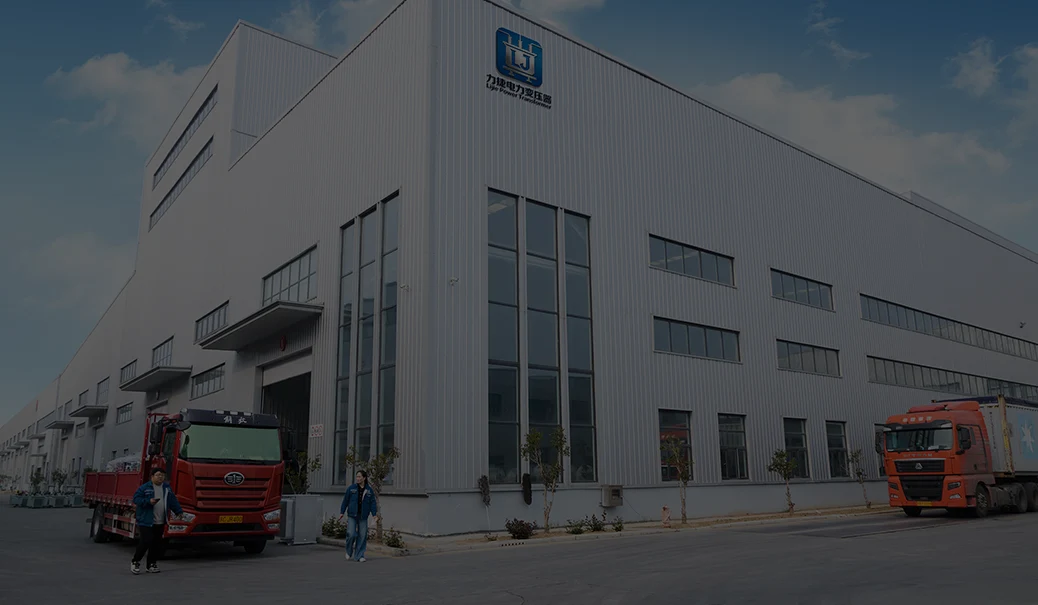
Our 500,000-square-meter production facilities are home to Lijie Electric Power Technology Group, which has been making high-quality products for 30 years and also has full engineering capabilities. Ultra-high-voltage transformers up to 500kV and specialized industrial units are all in our line-up. All of them are certified to IEC, CE, and UL standards after being put through rigorous testing at national inspection centers. With more than 2,000 workers, including 160 engineers with advanced degrees, we provide power utilities, green energy developers, and industry makers around the world with custom solutions that meet their exact needs.
Our ISO 9001:2015-certified quality systems and status as a "Specialized, Refined, and New Little Giant" business show that we are dedicated to providing reliable, energy-efficient goods with quick expert support. Whether you need a lot of distribution transformers for a utility project or custom-engineered solutions for a specific industry use, our engineering teams work together to make sure that the designs are as good as they can be while keeping prices low and delivery times on track.
Our expert sales team can be reached at lijieelectrical@gmail.com by procurement managers looking for a reliable transformer supplier manufacturer to talk about project needs, get full specs, or set up factory visits. Find out how our track record in Australia, Southeast Asia, Central Asia, and Africa can help you make the most of your next infrastructure investment. You can look at all of our products and download detailed information by going to lijie-electrical.com.
1. IEEE Standards Association, "IEEE Standard for General Requirements for Liquid-Immersed Distribution, Power, and Regulating Transformers," IEEE C57.12.00-2015, Institute of Electrical and Electronics Engineers, New York, 2015.
2. International Electrotechnical Commission, "Power Transformers – Part 1: General," IEC 60076-1:2011, International Electrotechnical Commission, Geneva, 2011.
3. Kennedy, B.W., "Energy Efficient Transformers," McGraw-Hill Professional, New York, 2013.
4. Harlow, J.H., "Electric Power Transformer Engineering," Third Edition, CRC Press, Boca Raton, 2017.
5. National Electrical Manufacturers Association, "Guide for Loading Mineral-Oil-Immersed Transformers and Step-Voltage Regulators," ANSI/IEEE C57.91-2011, Arlington, 2012.
6. Kulkarni, S.V. and Khaparde, S.A., "Transformer Engineering: Design, Technology, and Diagnostics," Second Edition, CRC Press, Boca Raton, 2013.
YOU MAY LIKE

11%20type%2035KV%20dry-immersed%20transformer_1778136495348.webp)

H15%20distribution%20transformer.webp)
April 27, 2025
With a tight project schedule, the manufacturer delivered on time, and on-site technical personnel provided guidance throughout the entire installation and commissioning process; the collaboration was highly efficient and hassle-free.
July 2, 2025
During the preliminary phase, a selection plan was custom-tailored based on the actual site load requirements, resulting in a high degree of parameter compatibility. After-sales support responds within two hours, and ongoing technical support for operation and maintenance is comprehensive; we feel completely confident in a long-term partnership.
November 18, 2025
Deployed as a supporting component for a 35kV grid-connection project at a photovoltaic power station, the equipment operates for an average of 16 hours daily. It demonstrates excellent control over no-load losses, ensures smooth power generation and grid integration, and effectively reduces the station's overall energy consumption.
January 30, 2026
Under the continuous, high-load operating conditions of a factory production line, the equipment maintains stable electrical parameters and exhibits strong overload resistance, thereby guaranteeing an uninterrupted power supply for industrial production.
April 3, 2026
Integrated as a supporting component for a new energy photovoltaic grid-connection system, the manufacturer provided professional technical coordination and timely after-sales support, ensuring seamless adaptation to the specific electrical operating conditions required for grid integration.