April 27, 2025
With a tight project schedule, the manufacturer delivered on time, and on-site technical personnel provided guidance throughout the entire installation and commissioning process; the collaboration was highly efficient and hassle-free.
Sep 27, 2026
Railway power infrastructure demands absolute precision in voltage management. A step-down transformer serves as the backbone of this demand, converting high-transmission voltages—typically 110kV to 220kV—into the lower operational levels that traction systems, signaling equipment, and auxiliary services actually use. Without reliable voltage conversion at every substation along a rail corridor, modern railways simply cannot function safely or efficiently. This article walks through how these devices work in railway contexts, what challenges engineers face, and how to make smarter procurement decisions.
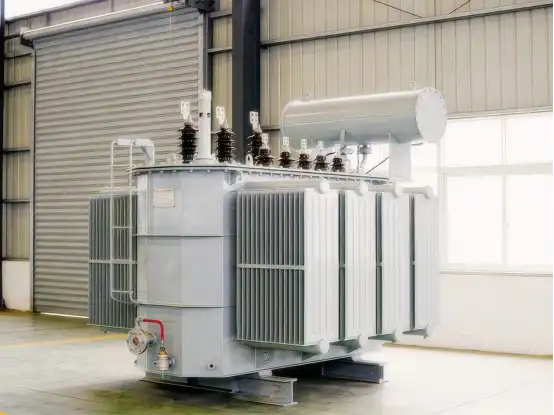
According to Faraday's Law of Induction, a step-down transformer lowers the voltage by the same amount for each turn of the main winding that is greater than the secondary winding. Most of the time, this means stepping the 110kV or 220kV grid supply down to 27.5kV for AC traction systems or even lower to 400V/690V for station secondary loads. Grain-oriented silicon steel (CRGO) cores are used in railway-grade units to keep hysteresis and eddy current losses to a minimum. Class F or Class H insulation systems can handle the heat stress of heavy-load spinning that goes on all the time. Because railroad substations are used 24 hours a day, seven days a week with changing loads, the core and winding design must keep working well for 25 to 30 years without much wear and tear.
The standard AT (Auto Transformer) feeding system and the BT (Booster Transformer) feeding system both use step-down units at traction substations to work in electrified rail networks in the US and around the world. The International Energy Agency says that powered railroads use about 2% of the world's energy. This means that voltage conversion efficiency is a cost factor that can be measured on a large scale. Even a 0.5% increase in transformer efficiency across a big train network saves millions of dollars every year for the life of the equipment.
In a railroad situation, things happen at the same time that don't happen in most industrial setups. Harmonic distortion is caused by changes in load that happen when trains speed up and slow down. Equipment is exposed to water, vibration, and big changes in temperature in tunnels and high areas. Here are the main technical problems and the answers that well-known companies have come up with to solve them:
All of these solutions work together to increase the time between service, lower the number of unplanned power outages, and protect the large amount of money that each traction substation represents.
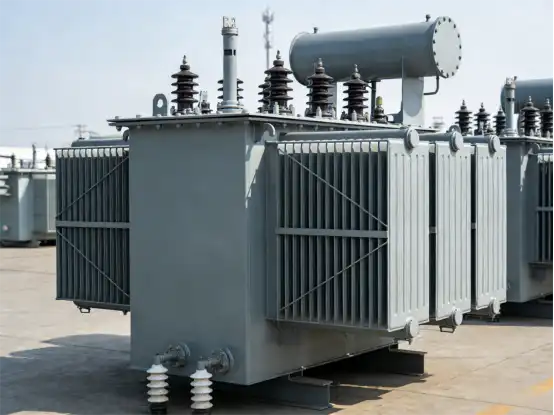
Sometimes, railroad engineers look at other options, such as autotransformers, buck converters, or solid-state voltage controllers. Each choice has a different set of costs and performance characteristics. Autotransformers are a small and inexpensive way to step down voltages by a modest amount. However, they don't provide galvanic isolation like full two-winding transformers do, which is an important safety factor in passenger rail settings. Buck converters and solid-state options work well for small power loads, but they aren't yet ready for megawatt-scale electric power delivery. Isolation transformers separate the electricity, but they are bigger and cost more when scaled up to traction-level power levels.
The traditional step-down transformer is still the most popular choice for power substations because it is strong, has a high level of efficiency (up to 99% in current units), is easy to use, and meets all IEC 60076 and IEEE C57.12.00 standards. Lifecycle cost vs. initial capital expenditure: this is the most logical procurement choice for procurement engineers because the technology base is mature and there are a lot of certified units available.
It's not enough to just match the nameplate number when choosing the right voltage transformer for a railroad job. When skilled procurement managers look at providers, these things come first:
– Alignment of voltage and power rating: Make sure the unit can handle all the voltages needed for the railroad system—for example, a 25kV, 27.5kV, or 2×27.5kV AT system will have different transformer requirements.
A structured maintenance program is important for the long-term performance of a step-down transformer. Hi-pot tests and oil breakdown voltage (BDV) tests performed once a year help ensure that the dielectric system remains in good condition. Dissolved Gas Analysis (DGA) on oil-immersed step-down transformer units can identify early signs of insulation breakdown before the problem becomes severe. Most operators of critical infrastructure perform DGA on a step-down transformer once or twice a year, depending on the operating conditions and maintenance requirements. Using infrared thermal imaging while the step-down transformer is under load can also identify hotspots in bushing connections and tap changers that a visual inspection might miss.
Scheduled preventive maintenance, such as servicing the cooling system, inspecting the gaskets, and cleaning the contacts on the tap changer, reliably extends service life to the 25–30 year design target. Adding forced-air cooling fans or upgrading old units with better silicone-based insulation fluids are both low-cost ways to increase capacity without replacing the whole unit. These actions directly lead to lower total lifecycle cost, which is the most important factor for train infrastructure owners with long-term concession deals.
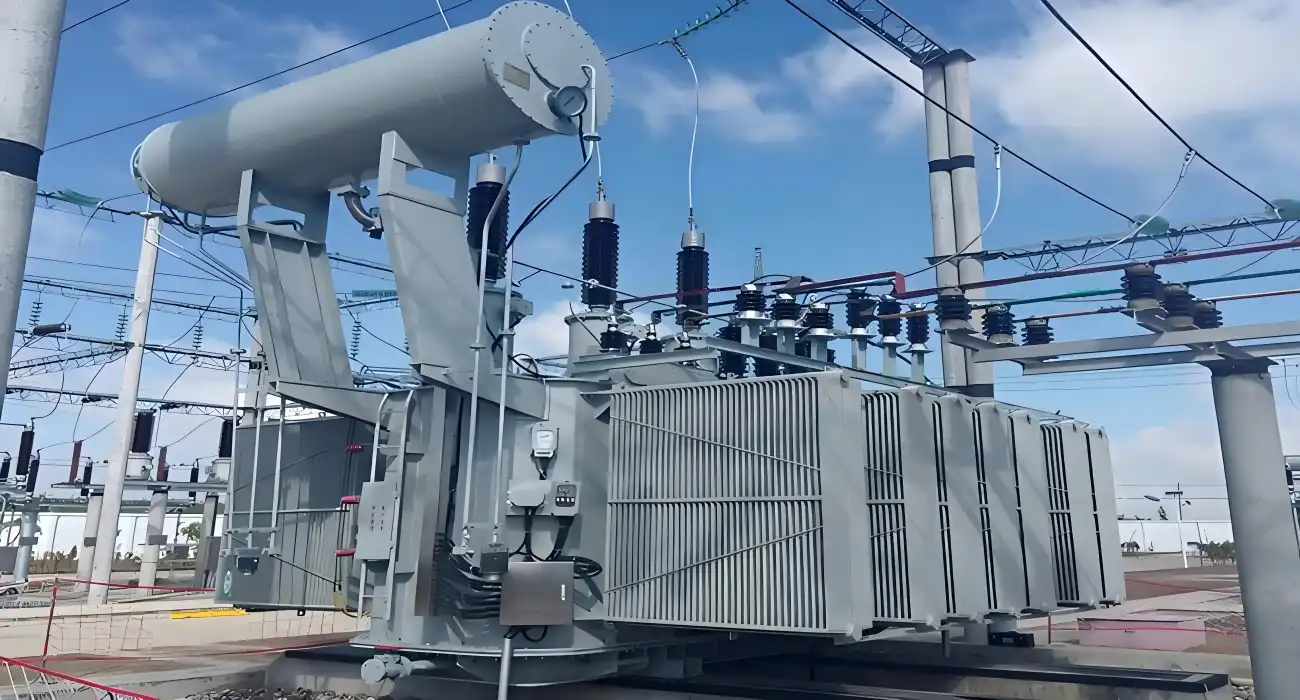
Transformers for railroad power systems need to be able to consistently change voltages, work well in harsh environments, and keep their high level of efficiency for decades of constant use. The step-down transformer is still the most reliable and cost-effective technology for traction substations because it combines tried-and-true engineering principles with new materials and rules for compliance. The most long-lasting organizational results come from purchasing choices that put certification, customization, and long-term source partnerships at the top of the list.
When trains are powered by AC electricity, step-down transformers at traction substations change the 110kV or 220kV grid supply to 27.5kV or 25kV for the overhead contact line. Auxiliary transformers at the station lower the power even more, to 400V or 690V, so that lights, HVAC, and platform equipment can work.
Ask for proof of the IEC 60076 type test results, the production facility's ISO 9001:2015 certification, and, if necessary, CE or UL certification. Reliable manufacturers give full test reports from third-party laboratories that have been approved by the manufacturer.
A normal step-down transformer has two electrically separate windings that keep the high-voltage supply and the traction circuit from touching each other. An autotransformer's main and secondary circuits share a winding. This makes it smaller and cheaper, but it takes away this separation. In many places, railroad safety rules say that key points in the food system must be completely isolated.
Harmonic currents are produced by traction drives and make winding losses and heat higher. This risk can be reduced by choosing a transformer with the right K-factor number and low-impedance wire design. This will also make the insulation last longer.
The Lijie Electric Power Technology Group makes approved step-down transformers that are designed to work in tough railroad and infrastructure situations. The company has ISO 9001:2015, CE, UL, and IEC certifications and offers unique oil-immersed and dry-type units that have been shown to be consistent from batch to batch. Lijie Electric is a dependable step-down transformer supplier for big EPC and utility projects because they have a lot of technical knowledge and can get things to you quickly. You can email our engineering team at lijieelectrical@gmail.com or go to lijie-electrical.com to get a competitive quote or advice on your specifications right away.
1. International Electrotechnical Commission. IEC 60076: Power Transformers. IEC, 2011.
2. IEEE. IEEE C57.12.00: Standard for General Requirements for Liquid-Immersed Distribution, Power, and Regulating Transformers. IEEE, 2015.
3. International Energy Agency. Railway Handbook: Energy Consumption and CO₂ Emissions. IEA/UIC, 2017.
4. Bharat Heavy Electricals Limited & Central Board of Irrigation and Power. Manual on Transformers. CBIP Publication No. 295, 2011.
5. Kulkarni, S.V., and Khaparde, S.A. Transformer Engineering: Design, Technology, and Diagnostics. CRC Press, 2012.
6. Mohan, Ned, Tore M. Undeland, and William P. Robbins. Power Electronics: Converters, Applications, and Design. Wiley, 2002.
YOU MAY LIKE
H15%20type%20three-phase%20fully%20sealed%20distribution%20transformer.webp)


10%20type%2035kV%20transformer.webp)
14%20Epoxy%20Resin%20Dry%20Type%20Transformer.webp)

April 27, 2025
With a tight project schedule, the manufacturer delivered on time, and on-site technical personnel provided guidance throughout the entire installation and commissioning process; the collaboration was highly efficient and hassle-free.
July 2, 2025
During the preliminary phase, a selection plan was custom-tailored based on the actual site load requirements, resulting in a high degree of parameter compatibility. After-sales support responds within two hours, and ongoing technical support for operation and maintenance is comprehensive; we feel completely confident in a long-term partnership.
November 18, 2025
Deployed as a supporting component for a 35kV grid-connection project at a photovoltaic power station, the equipment operates for an average of 16 hours daily. It demonstrates excellent control over no-load losses, ensures smooth power generation and grid integration, and effectively reduces the station's overall energy consumption.
January 30, 2026
Under the continuous, high-load operating conditions of a factory production line, the equipment maintains stable electrical parameters and exhibits strong overload resistance, thereby guaranteeing an uninterrupted power supply for industrial production.
April 3, 2026
Integrated as a supporting component for a new energy photovoltaic grid-connection system, the manufacturer provided professional technical coordination and timely after-sales support, ensuring seamless adaptation to the specific electrical operating conditions required for grid integration.