April 27, 2025
With a tight project schedule, the manufacturer delivered on time, and on-site technical personnel provided guidance throughout the entire installation and commissioning process; the collaboration was highly efficient and hassle-free.
Aug 9, 2026
Dry-type transformers enable low-maintenance electrical infrastructure by eliminating liquid coolant dependencies that drive recurring service demands. Working with a reliable Dry-type Transformer Supplier means procuring units utilizing cast resin or vacuum pressure impregnation technology, removing oil-related inspections, leak remediation, and environmental compliance burdens. These air-cooled systems reduce failure points while meeting stringent fire safety codes, allowing installation proximity to loads without the hazardous material protocols required for oil-filled alternatives, thereby lowering total lifecycle maintenance expenditure across diverse industrial environments.
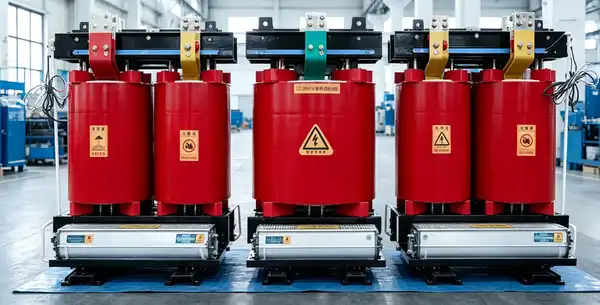
Power utilities, renewable energy installations, and heavy industrial facilities all depend on reliable electrical systems to keep their operations going. But standard transformer technologies need a lot of fluid testing, containment tracking, and pollution cleanup, which can cut into profits because of the high costs of maintenance. Dry-type transformers solve these problems by being fundamentally different from their oil-immersed peers. This makes them valuable assets for procurement professionals who need to balance initial investment with long-term operating efficiency.
This guide looks at how dry-type transformer technology cuts down on maintenance without lowering performance standards that are important for project managers, electrical engineers, and purchasing managers. We look at technical design, maintenance routines, comparison economics, and source selection criteria. Our findings are based on evidence and can help you make smart choices about where to put your capital. If you are in charge of grid modernisation projects, integrating renewable energy, or distributing power to factories, you need to know about these maintenance benefits in order to get the most out of your asset management strategies and see a clear return on your investment.
Mineral oil is not used as the main cooling and dielectric medium in dry-type transformers; instead, solid shielding methods are used. Cast resin technology encases windings in epoxy polymer matrices, and vacuum pressure-coated designs use shielding materials that have been varnished. Both methods get rid of the infrastructure for liquid coolant that needs to be tested for quality regularly, filtration systems need to be maintained, and leak detection protocols need to be followed. The National Electrical Code says that these units can be installed indoors without the need for fire control systems. This shows how safe they are compared to equipment that is filled with flammable liquids.
Compared to cellulose-oil insulation systems, modern cast resin formulations used by a Dry-type Transformer Supplier are better at resisting water absorption, chemical exposure, and changing temperatures. Since there is no oil, there are no oxidation-related degradation mechanisms that weaken the dielectric strength over many years. When ambient air is cooled by natural convection or forced ventilation, it doesn't need pumps, radiators, or heat exchangers that can break down. This means that the equipment will need less maintenance over its lifetime.
All of these design features work together to solve major buying problems. Electrical engineers can plan for performance to drop off over 25 to 30 years, while repair teams don't have to worry about getting the special training and tools they need to handle oil. Environmental compliance officers like it when they don't have to worry about installing infrastructure to contain spills or getting rid of toxic trash. This is especially helpful in urban settings and places that are sensitive to the environment, where the extra rules can add up to high costs.
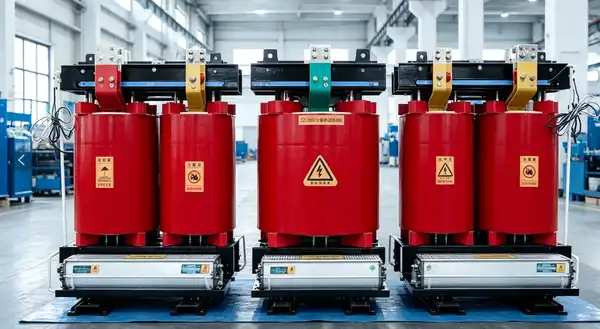
Transformer architecture is based on choosing the voltage class and working with a reliable Dry-type Transformer Supplier that can provide suitable configurations. Most industrial and business uses need distribution voltages of 15kV, 25kV, or 35kV. Temperature rise limits under continuous loads are based on insulation class ratings (Class F 155°C or Class H 180°C), which directly affects expected service life. IEC 60076 standards list cooling setups as either natural air (AN) or forced air (AF). For the same capacity values, forced cooling allows for smaller footprints. Specifications for purchases should clearly mention IEC or IEEE standards. This will make sure that they work with local grid codes and make deploying foreign projects easier.
Three main tasks are needed to maintain dry-type transformers well. Visual checks done every six months find physical damage, too much dust on the windings, and problems with the structure of the enclosure before they become practical problems. Infrared cameras used for thermal imaging can find hotspots that show a connection is weakening or loads aren't being distributed evenly. This lets problems be fixed during planned outages instead of having to be fixed during forced shutdowns. Testing for partial discharge every five years lets you know before the insulation starts to break down, which is especially helpful for units that work in humid or dirty places.
Unlike oil-filled transformers that need to be tested for dissolved gases and dielectric strength every 12 months, dry-type units don't need as much money spent on diagnostics. Routine checks usually take less than two hours per unit per year, while similar equipment that is filled with liquid takes eight to twelve hours. The longer repair interval directly leads to less work being done by workers and longer periods of time between forced outages, both of which are important for factories that run continuous production plans and where unplanned downtime can have a big effect on income.
When it comes to how they work, fire safety is where these technologies really differ. Mineral oil has a flash point of about 145°C, which means it can explode when there are internal faults that cause high-temperature arcs. A reliable Dry-type Transformer Supplier can provide solutions that eliminate this risk completely, as dry-type transformers do not use flammable oil and can be installed in buildings that are already occupied without having to build expensive fire control systems or vaults. This feature is especially useful in places like data centers, hospitals, and high-rise office buildings where safety rules and limited space make it hard to put in oil-filled equipment.
Managing environmental risks includes more than just preventing fires. It also includes avoiding pollution. A single catastrophic transformer failure can release thousands of gallons of dielectric fluid, which needs to be cleaned up right away and may need to be monitored for years after the initial event. The U.S. Environmental Protection Agency considers these kinds of spills to be hazardous material events that need to be reported and cleaned up. With dry-type transformers, these liability risks are totally eliminated. This means that project managers don't have to spend as much for environmental contingency funds and insurance fees as they do for oil-filled installations.
When you think about energy efficiency, you add more complexity. Due to better core cooling, oil-filled transformers usually have slightly lower no-load losses. On the other hand, improved winding configurations in dry-type designs make them as good as or better at load loss performance. For most industrial uses, the difference in practical efficiency stays below 0.3%. This means that the operational environment and ease of maintenance are more important than small differences in loss. When installing renewable energy, dry-type technology is especially preferred because the units must be able to handle harmonic distortion from inverter-based generation without the risk of oil contamination in remote areas that don't have strong spill response infrastructure.
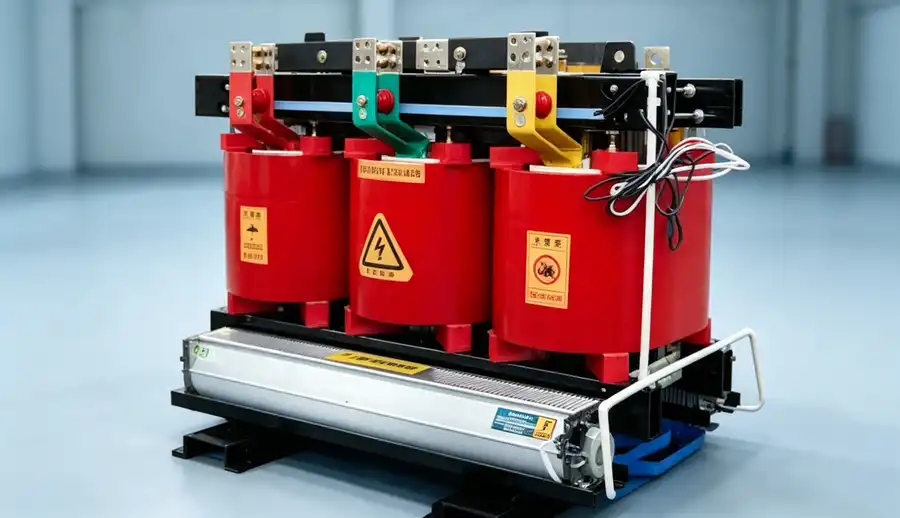
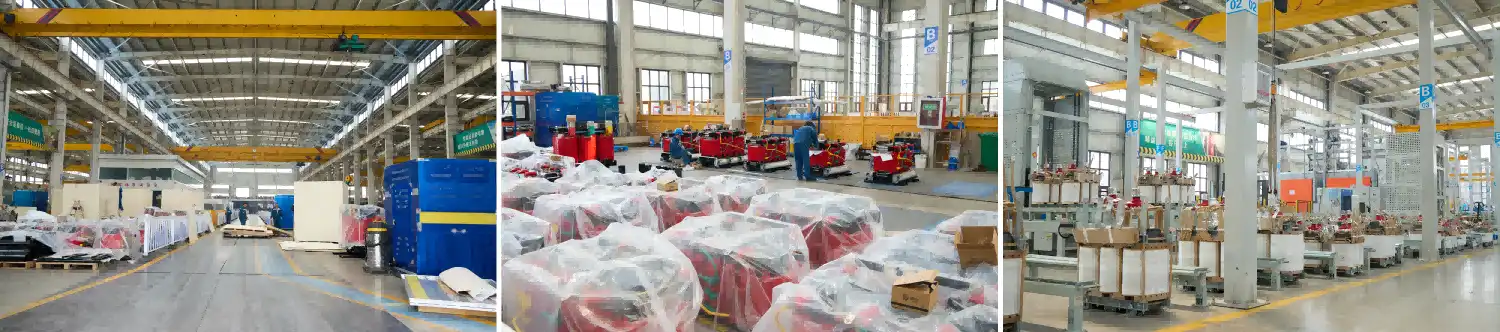
Large projects need suppliers who have a history of being able to make small batches of products consistently high quality across multiple production runs. A review of the manufacturing footprint should look at places bigger than 100,000 square meters that are only used for making transformers. This shows that there is room for multiple production lines to work at the same time, so that one project doesn't get stuck. The qualifications of the people who work there are very important. For example, engineers with advanced degrees in electrical engineering can meet the technical needs of custom designs. When a company makes more than $700 million a year, it usually has a stable supply chain and can buy parts more cheaply, which means it can predict when it will deliver.
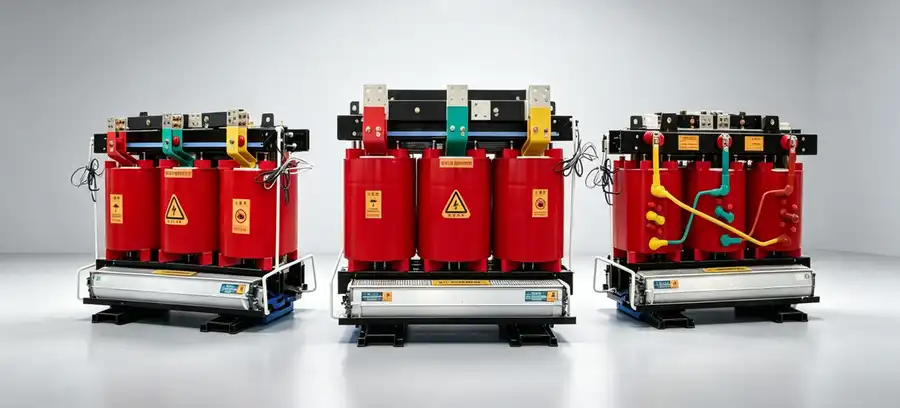
As part of a plan to grow, a steel processing plant in the Midwest replaced old oil-filled unit substations with 2.5MVA dry-type transformers rated at 13.8kV main voltage. The change got rid of the need to sample the oil every three months and do yearly containment inspections, which used to take 120 hours of maintenance time a year at six different transformer sites. Over the next five years, the amount of repair work done on transformer assets dropped by 68%, and the number of unexpected power outages caused by transformer problems went from an average of 2.3 per year to zero. Over five years, the savings on upkeep costs added up to about $340,000, which covered the cost of the extra tools within the expected payback period.
As part of its collector substation network, a 50MW solar farm in the southwestern United States worked with a reliable Dry-type Transformer Supplier to install cast resin dry-type transformers that connect the outputs of inverters to 34.5kV transmission lines. For older machines, the harsh desert environment with big changes in temperature and dust in the air would have required a lot of maintenance on the oil filter and cooling system. Dry-type units working in IP23-rated enclosures showed stable performance at temperatures ranging from -15°C to 50°C, without the need for extra cooling. This proved that the thermal design margins were correct. The project went into commercial operation on time and there were no delays in launching due to generator problems. This was important for getting the production tax credit that was tied to meeting strict deadlines.
For urban power distribution projects in several African countries, an international EPC contractor only used IEC-certified dry-type transformers. This sped up the procurement process and made logistics coordination easier. The relationship with the supplier gave technical help, such as harmonic analysis for loads that don't behave in a straight line and altitude derating calculations for installations at high elevations. This cut down on the number of engineering hours needed to build the plan. Shipping fully assembled units in containers with proof of factory acceptance testing made customs clearance and site commissioning easier. This cut project schedules by six weeks on average compared to regional options that needed more time for field assembly and testing.
Dry-type transformers have basic design features that get rid of the need to handle liquid coolant. This makes them less maintenance-intensive while still meeting performance standards that are needed for stable power distribution. When procurement professionals evaluate these technologies, choosing a reliable Dry-type Transformer Supplier can provide strategic benefits such as better safety profiles, easier environmental compliance, and improved total ownership economics that make capital investment cases stronger. Partnering with a supplier that focuses on certified manufacturing quality, on-time delivery, and quick technical support ensures long-term partnership value that goes beyond the initial purchase of equipment and includes decades of collaboration to optimize operations and improve performance continuously.
When used outside, dry-type transformers work best with the right covers that keep out wetness and dirt. IP23 and IP54 enclosures have a lot in common. IP23 enclosures are good for outdoor setups that are covered, while IP54 enclosures need to be exposed to direct weather. Ratings for ambient temperature should match the extremes of the local climate, and it should be noted that calculations need to be changed for elevations above 1,000 meters in order to keep insulation thermal margins. Conformal coatings on windings can help coastal sites survive salt spray corrosion. This is an option that can be added by trained providers during manufacturing rather than after the fact in the field.
Standard catalogue rates usually ship 8 to 12 weeks after the purchase order is confirmed. This is because of the time it takes to make the product and test its quality. Custom-built units that need special voltage ratios, seismic bracing, or non-standard cases add 14 to 18 weeks to the lead time, which includes checking the plan and making the tools. International logistics can add three to six weeks, depending on how busy the destination port is and how quickly customs processes the goods. Framework agreements with call-off clauses are part of strategic procurement strategies. They let manufacturers keep extra stock on hand so that they can meet predictable deployment schedules. This is especially helpful for phased construction projects where exact delivery timing affects critical path schedules.
Lijie Electric can help you with your efforts to update your infrastructure by using their proven skills in engineering and manufacturing dry-type transformers. Our wide range of products includes distribution transformers up to 35kV as well as rectifier, mining, and electric furnace configurations. All of these are certified to IEC, IEEE, CE and UL standards, which means they can be used in any project around the world. With more than 500,000 square meters of industrial space and quality systems that have been certified by ISO 9001:2015, we can meet the needs of large-scale projects with output that can be scaled up and kept consistent. We have been a Dry-type Transformer Supplier for a long time, and our professional teams can make solutions that fit your individual project needs in terms of voltage, environment, and operating limitations. Get in touch with our engineering experts at lijieelectrical@gmail.com to talk about your buying goals and get thorough technical offers backed by certified performance data and a low lifecycle cost analysis. You can look at our full line of transformers at lijie-electrical.com and learn how our low-maintenance solutions can help you get the most out of your investment in electrical infrastructure.
1. Institute of Electrical and Electronics Engineers. (2019). IEEE C57.12.01-2015: Standard for General Requirements for Dry-Type Distribution and Power Transformers. IEEE Standards Association.
2. International Electrotechnical Commission. (2018). IEC 60076-11: Power Transformers - Part 11: Dry-Type Transformers. IEC Central Office, Geneva.
3. Electric Power Research Institute. (2020). Transformer Maintenance Guide: Volume 2 - Dry-Type Transformers. EPRI Technical Report 3002017866.
4. National Electrical Manufacturers Association. (2017). NEMA ST 20-2017: Dry-Type Transformers for General Applications. NEMA Standards Publication.
5. Bean, R.L., Chackan, N., Moore, H.R., & Wentz, E.C. (2018). Transformers for the Electric Power Industry. McGraw-Hill Professional Engineering Series.
6. U.S. Department of Energy, Office of Energy Efficiency and Renewable Energy. (2021). Energy Conservation Standards for Distribution Transformers: Final Rule Technical Support Document. DOE/EE-2020-BT-STD-0018.
YOU MAY LIKE

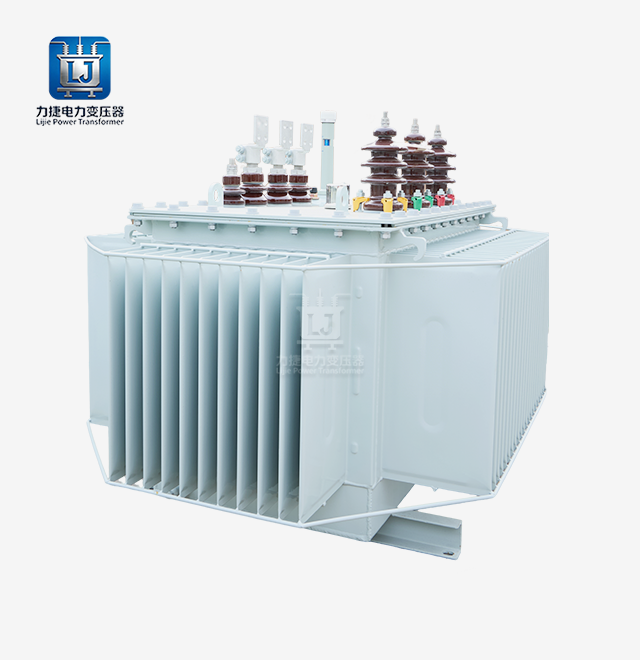
11%20Epoxy%20Resin%20Cast%20Dry-Type%20Transformer.webp)

April 27, 2025
With a tight project schedule, the manufacturer delivered on time, and on-site technical personnel provided guidance throughout the entire installation and commissioning process; the collaboration was highly efficient and hassle-free.
July 2, 2025
During the preliminary phase, a selection plan was custom-tailored based on the actual site load requirements, resulting in a high degree of parameter compatibility. After-sales support responds within two hours, and ongoing technical support for operation and maintenance is comprehensive; we feel completely confident in a long-term partnership.
November 18, 2025
Deployed as a supporting component for a 35kV grid-connection project at a photovoltaic power station, the equipment operates for an average of 16 hours daily. It demonstrates excellent control over no-load losses, ensures smooth power generation and grid integration, and effectively reduces the station's overall energy consumption.
January 30, 2026
Under the continuous, high-load operating conditions of a factory production line, the equipment maintains stable electrical parameters and exhibits strong overload resistance, thereby guaranteeing an uninterrupted power supply for industrial production.
April 3, 2026
Integrated as a supporting component for a new energy photovoltaic grid-connection system, the manufacturer provided professional technical coordination and timely after-sales support, ensuring seamless adaptation to the specific electrical operating conditions required for grid integration.