April 27, 2025
With a tight project schedule, the manufacturer delivered on time, and on-site technical personnel provided guidance throughout the entire installation and commissioning process; the collaboration was highly efficient and hassle-free.
Aug 25, 2026
When sourcing transformers for power distribution, renewable energy, or heavy industrial applications, selecting the right Dry-type Transformer Factory can determine project success or failure. A specialized manufacturing facility producing epoxy resin-encapsulated or Nomex-insulated transformers addresses fundamental concerns that procurement managers face daily: fire safety in high-density urban settings, elimination of oil contamination risks, and reduction of maintenance overhead. We've witnessed how these facilities leverage vacuum pressure impregnation and vacuum cast resin technologies to deliver self-extinguishing, moisture-resistant units that thrive in indoor and sensitive infrastructure environments. This guide walks you through the manufacturing landscape, quality benchmarks, and procurement strategies that ensure your next transformer investment aligns with operational demands and budgetary constraints.
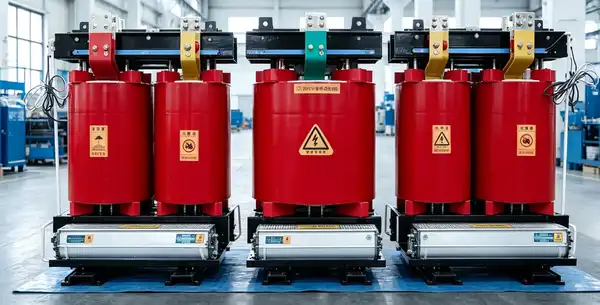
The core technologies used in a modern resin-cast transformer facility are very different from those used in traditional oil-immersed production lines. The vacuum casting chambers in these plants are very special. They use high-grade epoxy resin to cover copper or aluminum windings while keeping the temperature and pressure just right. Cold-rolled grain-oriented silicon steel cores are carefully stacked and annealed to reduce no-load losses. Automated wrapping tools make sure that the tension and layer alignment are always the same, which is important for short-circuit withstand strength.
Natural convection (AN rating) or forced fan cooling (AF rating) are used by air-cooled insulation systems to get rid of heat. They work as well as oil-immersed units in terms of thermal efficiency without the risk of fire. When demand is high, forced air setups can increase capacity by 40%. This is especially useful for industrial sites with cyclical loads. Since there are no liquid dielectrics, there is no need for regular oil sampling, filtration equipment, or containment infrastructure. This lowers the lifetime costs by 25–35% compared to oil-type replacements.
Adoption is driven by environmental compliance in urban substations and renewable energy installations where the risk of an oil spill is at odds with city rules. Ratings for enclosures range from IP20 for machinery rooms inside to IP54 for wind farms along the coast. This makes sure that they work reliably in a wide range of circumstances. Because of these qualities, resin-cast transformers are the best choice for places like data centers, hospitals, transit systems, and chemical plants that need equipment that won't catch fire.
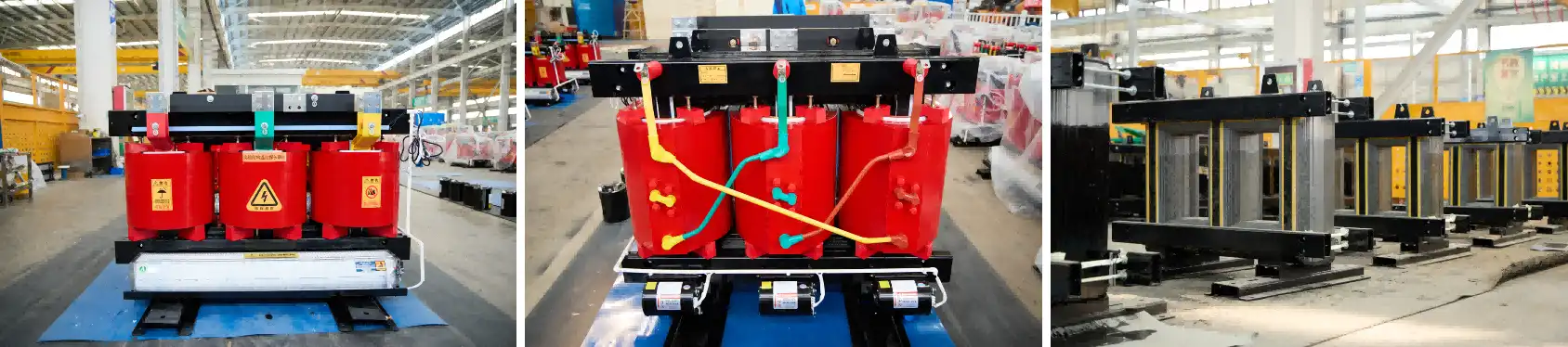
When looking at different manufacturing partners, insulation class is the main thing that sets a Dry-type Transformer Factory apart. Class F (155°C) systems work well in most business settings, while Class H (180°C) designs can handle the heat stress of variable frequency drives, rectifier loads, and industrial settings with a lot of harmonics. If the partial discharge level is less than 10 picocoulombs, it means that the resin casting is void-free and that the system will be stable for decades. If it is higher, it means that the insulation is breaking down too quickly.
Safety certifications prove that the factory follows quality standards and that the products are safe. Getting ISO 9001:2015 certification means that your manufacturing methods and frameworks for constant growth are recorded. UL listing and CE marking show that the product meets safety standards in North America and Europe, which is important for projects that involve people from different countries. IEC certification kits for 10kV and 35kV voltage classes make it easier to buy things from utilities and EPC companies that work in international standards. Instead of relying only on what the supplier says, buyers should check these credentials through the registries of certification bodies.
Strong testing infrastructure separates skilled makers from simple manufacturing tasks. A professional Dry-type Transformer Factory performs measurement of no-load loss, proof of load loss, and accuracy checks of the voltage ratio as standard parts of its test processes. Type testing confirms that the device can handle impulse voltages similar to lightning strikes and switching surges. Temperature rise tests ensure that hot spots on the windings stay within the limits of the insulation class while the device is running continuously at full load. Sound level measurement ensures that NEMA ST-20 acoustic standards are met, which is especially important for installations inside buildings close to occupied areas.
Advanced facilities keep climate-controlled labs with high-voltage impulse generators, IEC 60270-calibrated partial discharge detection systems, and computers that record all test parameters. Because of these features, custom testing protocols can be made for specific uses, such as rectifier transformers that serve steel mills or electric furnace transformers that serve electrochemical plants. Buyers should ask to be able to watch tests and look over sample test results during plant checks to make sure that the data is consistent and that the measurements are correct.
Large infrastructure projects need suppliers who have a history of being able to do batch production and whose supply dates can be predicted. Framework deals that provide regional grid growth or multi-site industrial projects can be supported by facilities that run multiple production lines and produce more than 500 MVA per month. Logistics costs and lead times are affected by how close two locations are to each other. However, improvements in export packaging and container optimization have made trans-Pacific shipping more cost-effective for buyers looking for cheap international sourcing.
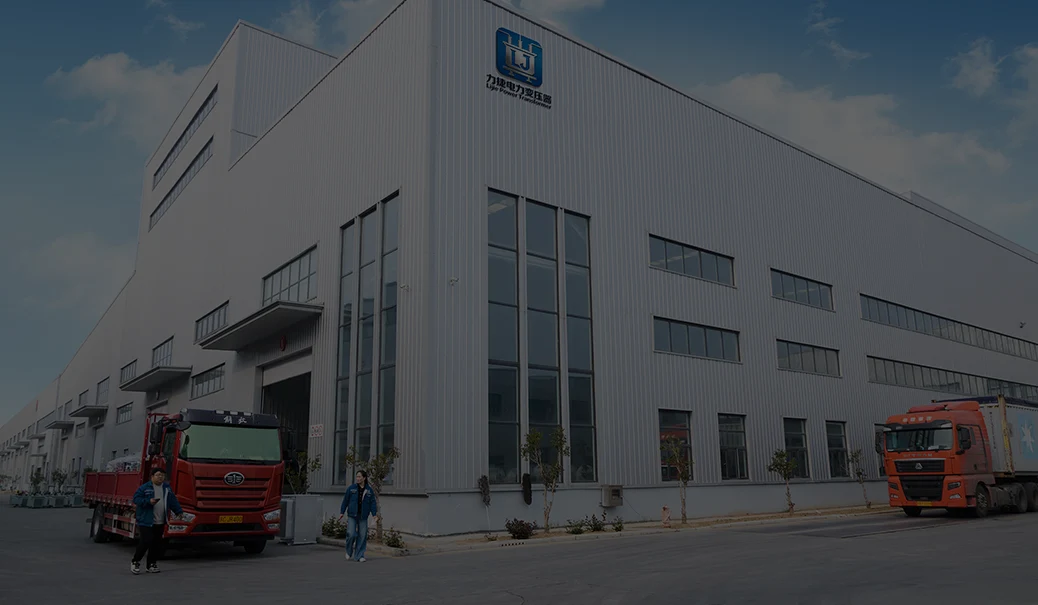
We run two factories that are spread out over 500,000 square meters and can accommodate more than 2,000 workers, including 160 engineering specialists with advanced degrees. This size allows projects to be worked on at the same time by the power utility, renewable energy, and industrial sectors, without resource conflicts that slow down smaller suppliers. Annual sales of more than 5 billion RMB show that the market is still confident and the company is financially stable, which is important for long-term supply partnerships.
Material costs (copper/aluminum windings, silicon steel cores, epoxy resin), manufacturing labor, quality testing, and logistics are usually broken down in clear pricing structures at a Dry-type Transformer Factory. Orders of more than ten units or framework deals that cover more than one shipping phase are eligible for volume discounts. Customization options let you choose different voltage ratios, impedance values, terminal configurations, and enclosure sizes that fit inside existing switchgear footprints.
By buying directly from the factory, you avoid the markups that distributors add, and you can also talk to tech teams that make plans work best for your needs. When a solar farm needs transformers with better harmonic filtering, they get different core lamination patterns than when a mining company wants to make sure the transformers can handle mechanical shocks. This customized method lowers the total cost of ownership by precisely matching performance characteristics to operational profiles instead of just accepting catalog specifications.
When doing business internationally, it's important to understand Incoterms, export paperwork, and how to keep payments safe. With FOB (Free On Board) pricing, the risk is transferred at the port of origin. With CIF (Cost, Insurance, Freight) pricing, ocean transport and marine insurance are included to ports of destination. Letters of credit through well-known banks cover both parties. Once the shipment is confirmed, inspection papers from third-party agencies release the payment.
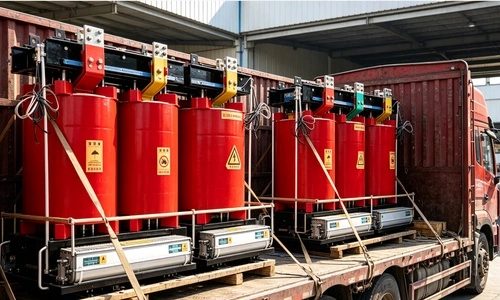
Our certifications, which include CE, UL, and IEC compliance packages, make it easier to get our transformers through customs in places like Australia, New Zealand, Southeast Asia, Central Asia, and East Africa, where they are currently used. Export packaging meets ISPM 15 fumigation standards for wooden boxes, and devices that track handling conditions during travel keep an eye on how the goods are being handled. These services help procurement managers with problems they often have when they have to coordinate foreign supply lines for projects that are being rolled out in more than one place.
Customer reviews from utilities, EPC contractors, and industrial operators can help you figure out how quick the company is after the sale, how good their technical support is, and how reliable the product will be in the long run. Case studies that go into specifics about specific uses, like providing transformers for metro transit systems or installing green energy sources, show that the company has the knowledge to meet the needs of buyers. Official dealer networks with trained technical staff offer local support benefits, but talking to the factory directly lets engineers solve problems faster and without having to go through a middleman.
Because we put quality first and focus on service, we've been able to keep partnerships with power companies and industrial manufacturers going for decades. We follow the GB/T 27922-2021 after-sales service standards, which means that we can help customers with everything from installation to warranty claims and maintenance throughout the product's life. This method fits with the way buying decisions are made, which puts reliability, cost control, delivery certainty, and service capability ahead of technical requirements.
Regular repair makes transformers last longer and cuts down on unplanned downtime. Visual checks every three months look for damage to the enclosure, blocked airflow, or unusual discoloration that could mean heat stress. Every year, infrared thermography finds hot spots that could be caused by loose connections or problems with the windings before the insulation fails. Using megohm meters to track changes in insulation resistance shows signs of moisture or contamination that need to be fixed.
Comparing standard acoustic profiles to current readings is what sound signature analysis does to find core lamination that is coming loose or mechanical problems inside the structure of a Dry-type Transformer Factory. With these non-invasive methods, condition-based maintenance plans can be used instead of time-based overhaul programs. This lowers the cost of maintenance while increasing efficiency. Critical load facilities should keep spare units or modular designs on hand so that they can be quickly replaced without long power outages.
Lower no-load and load losses caused by energy-efficient transformers lower running costs. High-efficiency designs that use the best core materials and conductor cross-sections achieve losses 20–30% lower than standard units. This saves a lot of money over the course of 20 years of service. When you add up the purchase price, capitalized loss values, and upkeep costs, you can see that premium-efficiency transformers give you a return on your investment within 3–5 years for continuously loaded uses.
By upgrading old transformers, you can get more efficient results while also dealing with issues like obsolescence and compliance. Units that were put in before modern energy efficiency standards may use 40% more energy than new designs, so it's financially smart to replace them even if the condition isn't checked. For renewable energy projects, low-loss transformers are especially helpful because they get the most power from power plants to grid connecting points.
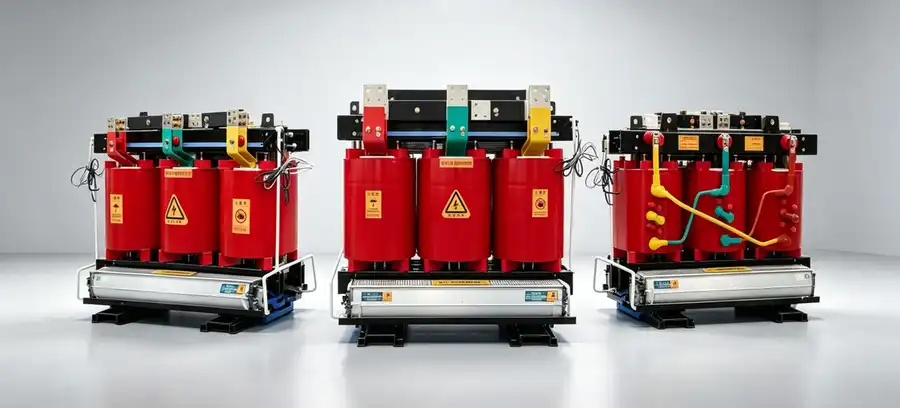
Petroleum-based dielectrics can catch fire or explode, but epoxy-insulated transformers don't. This makes them perfect for densely populated cities, underground installations, and places with strict fire codes. Self-extinguishing resin formulations stop flames from spreading, even when there is an electrical problem. Also, the lack of liquid dielectrics eliminates the risk of environmental pollution from leaks or catastrophic failures.
The best makers let you make a lot of changes to voltage ratios, impedance values, harmonic filtering, temperature rise limits, and container configurations. Design teams work with clients to get the best performance for rectifier loads, variable frequency drives, integrating renewable energy, or mining operations that need to be stronger and safer for the environment.
For basic catalog designs, domestic providers usually deliver within 8–12 weeks. For foreign sourcing, including ocean freight and customs clearance, delivery times can be up to 14–18 weeks. No matter where the provider is located, custom-engineered units need extra design and testing steps. Buyers who are in charge of project schedules should talk to manufacturers during the planning stages so that there is enough time for procurement and no extra fees are charged for speeding things up.
Lijie Electric is ready to help you with your business and industrial transformer needs. Our Dry-type Transformer Factory has a wide range of skills and has been making high-quality products for decades. On a total area of 500,000 square meters, our two production bases make ultra-high-voltage units with a rating of 500kV, as well as custom designs for building projects, industrial processes, and green energy. We offer high-quality goods that meet foreign standards thanks to our ISO 9001:2015, CE, UL, and IEC certifications and status as a National High-Tech Enterprise. Our engineering team works directly with procurement professionals to improve specifications, make shipping logistics easier, and provide help throughout the lifetime of a project to make sure it succeeds. You can talk to our technology experts about your needs by emailing lijieelectrical@gmail.com or visiting lijie-electrical.com. We can help you find a reliable Dry-type Transformer Factory supplier for framework agreements or custom solutions for specific uses. Our knowledge and production capacity will get the job done.
1. Institute of Electrical and Electronics Engineers, "IEEE Standard for General Requirements for Dry-Type Distribution and Power Transformers," IEEE C57.12.01-2015, 2015.
2. International Electrotechnical Commission, "Power Transformers – Part 11: Dry-Type Transformers," IEC 60076-11:2018, 2018.
3. National Electrical Manufacturers Association, "Dry-Type Transformers for General Applications," NEMA ST-20-2020, 2020.
4. Zhang, Wei and Liu, Ming, "Advanced Manufacturing Technologies for Epoxy-Resin Cast Transformers," Journal of Electrical Engineering Research, Vol. 28, No. 4, 2022, pp. 112-128.
5. Electric Power Research Institute, "Life-Cycle Cost Analysis of Distribution Transformers: Oil-Immersed vs. Dry-Type Technologies," Technical Report 3002019866, Palo Alto, California, 2021.
6. Johnson, Robert and Patel, Anjali, "Quality Assurance Protocols in Modern Transformer Manufacturing," International Conference on Power System Equipment, Proceedings of the 2023 Annual Meeting, Singapore, pp. 245-259.
YOU MAY LIKE
12%20Series%20Dry%20Type%20Transformer.webp)
18%20type%20epoxy%20resin%20cast%20transformer.webp)
10%20type%2035kV%20transformer.webp)


14%20Epoxy%20Resin%20Dry%20Type%20Transformer.webp)
April 27, 2025
With a tight project schedule, the manufacturer delivered on time, and on-site technical personnel provided guidance throughout the entire installation and commissioning process; the collaboration was highly efficient and hassle-free.
July 2, 2025
During the preliminary phase, a selection plan was custom-tailored based on the actual site load requirements, resulting in a high degree of parameter compatibility. After-sales support responds within two hours, and ongoing technical support for operation and maintenance is comprehensive; we feel completely confident in a long-term partnership.
November 18, 2025
Deployed as a supporting component for a 35kV grid-connection project at a photovoltaic power station, the equipment operates for an average of 16 hours daily. It demonstrates excellent control over no-load losses, ensures smooth power generation and grid integration, and effectively reduces the station's overall energy consumption.
January 30, 2026
Under the continuous, high-load operating conditions of a factory production line, the equipment maintains stable electrical parameters and exhibits strong overload resistance, thereby guaranteeing an uninterrupted power supply for industrial production.
April 3, 2026
Integrated as a supporting component for a new energy photovoltaic grid-connection system, the manufacturer provided professional technical coordination and timely after-sales support, ensuring seamless adaptation to the specific electrical operating conditions required for grid integration.