April 27, 2025
With a tight project schedule, the manufacturer delivered on time, and on-site technical personnel provided guidance throughout the entire installation and commissioning process; the collaboration was highly efficient and hassle-free.
Oct 14, 2026
Industrial facilities across the U.S. lose billions of dollars annually to power distribution inefficiencies. According to the U.S. Department of Energy, distribution losses account for roughly 5–10% of total electricity consumption in industrial settings. The short answer is yes — a properly selected and maintained electrical transformer can directly reduce these losses. By stepping voltage up or down at the right points in your distribution network, transformers lower the current flowing through cables, which cuts resistive (I²R) losses significantly. Choosing the right transformer type, design, and load matching strategy is what separates a facility running at peak efficiency from one bleeding energy costs every hour.
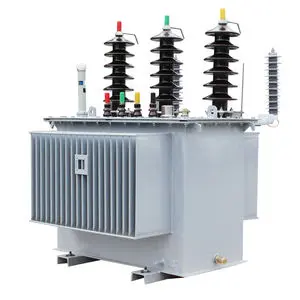
You need to know where a problem comes from before you can fix it. Power distribution losses in factories come from a number of different places, and transformer-based solutions don't always work for all of them.
Heat is made when electricity moves through a wire. The square of the current times the resistance of the conductor gives you the amount of energy that is lost. In other words, doubling the current makes the loss four times bigger. Transformers that raise the voltage at the source lower the current by the same amount. This greatly reduces I²R losses over long wire runs, which is one of the main reasons why high-voltage transmission is common.
Motors and heaters are examples of inductive loads. They use reactive power, which doesn't do any useful work but still puts stress on the distribution network. When the power factor is low, the perceived current goes up, which makes I²R losses go up. When used with power factor adjustment equipment, transformers with the right impedance values help control the flow of reactive power and lower the total stress on the system.
There are two types of internal losses in every transformer: core losses and copper losses. Core losses are no-load losses caused by magnetizing the iron core, and copper losses are load losses caused by current passing through the windings. A transformer that isn't working at its maximum load loses a lot of energy. Both types of loss are kept to a minimum by matching the transformer's capacity to the actual load profiles.
In a business setting, not every transformer works the same way. As a buying manager or electrical engineer, one of the most important choices you can make is choosing the right unit for your needs.
Instead of oil, dry-type units insulate and cool with air or resin encapsulation. One good example is the SCBH15-type electrical transformer. Its amorphous metal core has no-load losses that are up to 70–80% lower than those of silicon-steel core types that are more common. These units work well indoors, in places like data centers, business buildings, and green energy plants that need to be safe from fire and require little upkeep. Their ability to put out fires on their own and low noise level make them very useful in infrastructure in cities with lots of people.
In big industrial and utility-scale settings, oil-immersed transformers are used a lot. In this group, high-quality power transformers usually have an efficiency of more than 99.5% and come in grades ranging from 5 MVA to over 1,000 MVA. To cut down on eddy current and hysteresis losses, they use high-conductivity electrolytic copper windings and grain-oriented silicon steel cores. Specific cooling setups, like ONAN (Oil Natural Air Natural) and ONAF (Oil Natural Air Forced), are chosen based on the load and the surroundings, in line with IEC 60076 and IEEE C57.12.00 standards.
Steel companies, mines, and chemical factories are some examples of places that need custom designs because their load profiles are different. Heavy-duty winding arrangements allow electric furnace transformers to handle high-current, low-voltage needs. For electrochemical processes, rectifier transformers change AC to DC. Mining transformers are made to work in tough situations underground. Each design is made to fit the specific loss profile of its purpose, so a general-purpose unit can't do the job.
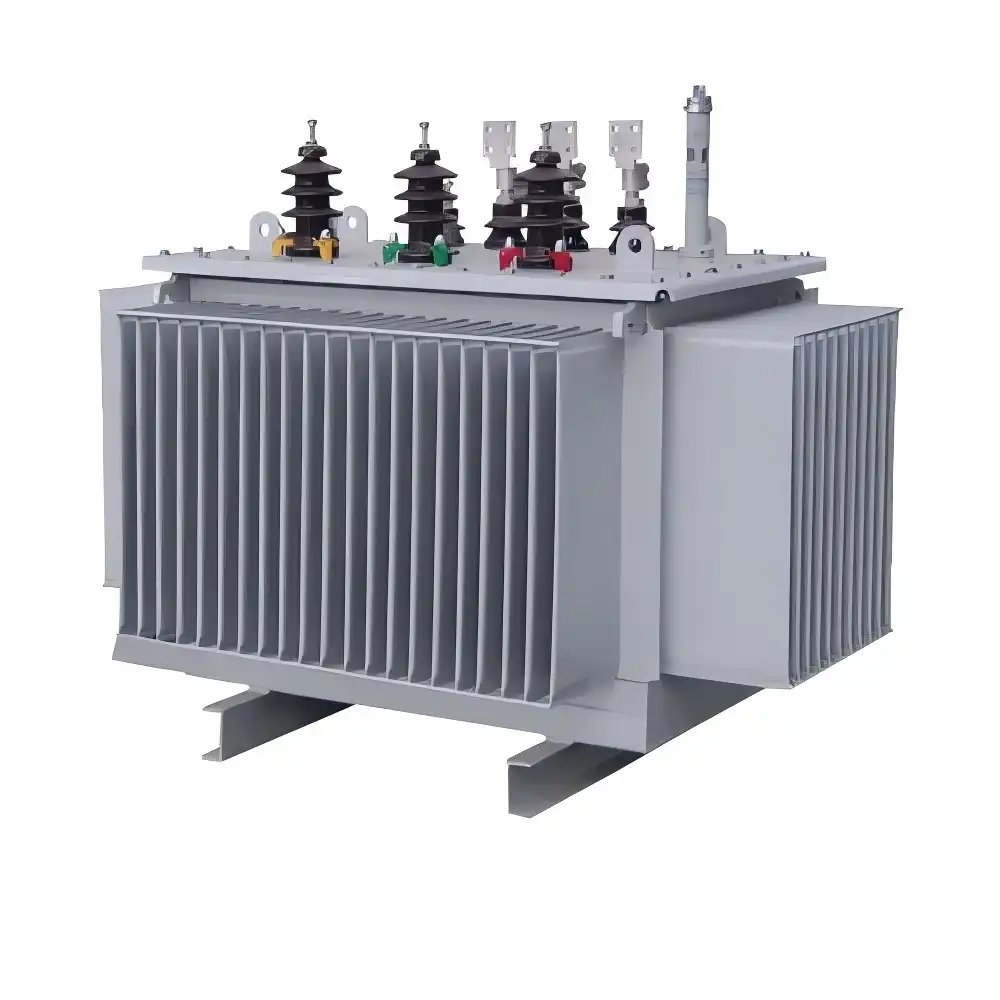
The first step is to choose the right transformer. To keep it working the way it was meant to for 20–30 years, you have to pay close attention to the materials, keep an eye on it, and do regular maintenance.
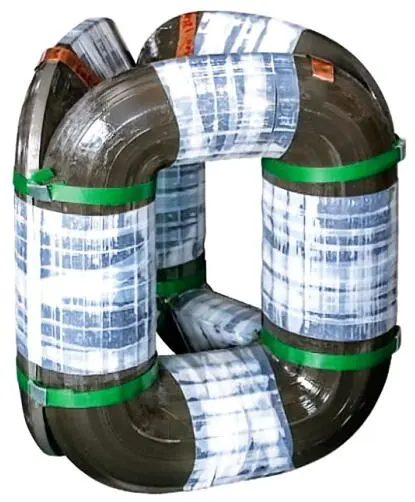
When compared to standard silicon-steel cores, amorphous metal cores in the SCBH15-type distribution transformer cut no-load losses by about 70–80%. This directly leads to measurable annual energy savings for buildings that run for long hours or don't use much power on average. For example, the SPS2-10/0.22 electrical source transformer has high-quality cold-rolled silicon-steel sheet wound cores with advanced epoxy resin vacuum casting. This design gets rid of air gaps and lowers the magnetizing current.
Copper losses are most efficient when a transformer is always run at between 50 and 100% of its maximum capacity. Installing on-load tap changers (OLTCs) lets you change the voltage while the power is still on. This keeps the voltage at the best level even as the load changes throughout the day. This stops core overload caused by too much voltage and current spikes caused by too little voltage.
Regular oil samples, thermal imaging, and dissolved gas analysis (DGA) find flaws as they start to form before they lead to failures or a loss of efficiency. Smart monitoring tools can now keep an eye on the temperature, load factor, and insulator resistance of windings in real time. Facilities that use condition-based repair plans say that their services last 15–20% longer than those that only use time-based schedules.
The case for efficiency is more concrete when it is based on real operational data rather than just theory.
A medium-sized steel mill in the Midwest got rid of old oil-immersed electrical transformer units and replaced them with new amorphous alloy dry-type units that were made to fit the real shift-load patterns. Because of this, transformer losses dropped by 12% every year, which saved about $180,000 a year in energy costs. The upgrade also got rid of two unplanned power outages that were caused by old insulation failing in the old units.
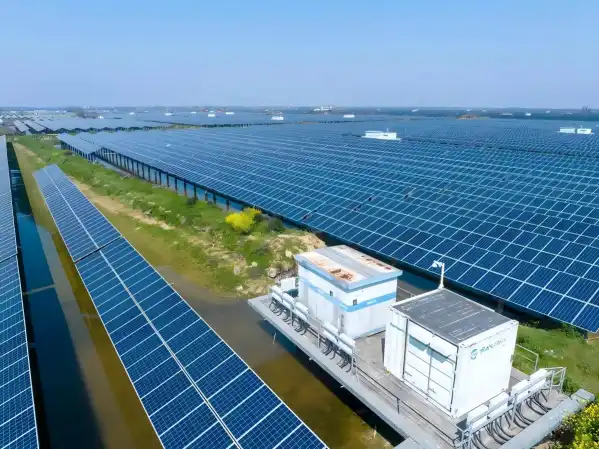
In the Southwest, a utility-scale solar installation used dry-type transformers with low-loss amorphous cores in the design of its collector substation. The transformers were designed with OLTCs to keep the output voltage stable because solar power changes with light. This cut down on the need for reactive power compensation by 18% and raised the total rate of the plant's efficiency by 1.4 percentage points.
Standard silicon-steel core distribution transformers were swapped out for SCBH15-type units in a large data center. The facility's Power Usage Effectiveness (PUE) ratio dropped by 0.08, which saved a lot of money on running costs at the data center scale. This was because less heat was lost from the core, which lowered the thermal load on the HVAC system.
When sourcing transformers for a large industrial or infrastructure project, efficiency ratings are only one part of the evaluation.
Look for units certified under DOE 2016 efficiency standards in the U.S. market, or IEC 60076 / GB standards for international projects. Energy efficiency certification from recognized bodies — such as CQC in China or UL in North America — provides independent verification of loss performance. CE certification is required for European projects, and UL listing is standard for U.S. installations.
The lowest-priced transformer is rarely the most cost-effective over a 25-year service life. Factor in no-load and load losses at your facility's expected average load factor. A transformer priced 15% higher but with 30% lower no-load losses often pays back the price difference within three to five years purely through energy savings.
Large projects demand batch supply consistency. Procurement managers should confirm that their supplier maintains adequate production capacity for project-scale volumes and can deliver to schedule. Custom specifications — voltage ratios, impedance values, mounting configurations — are frequently required, so a manufacturer's engineering responsiveness matters as much as catalog specifications.
Power distribution losses in factories are not unavoidable; they are a technical problem with well-known answers. If you get the right electrical transformer, make sure it's the right size, use good materials, and keep it in good shape, you can cut down on both no-load and load losses, which can save you a lot of money over a decade or more. Transformer technology has come a long way, and now there is a custom-built unit for almost every industrial need. These range from amorphous core dry-type units for data centers and solar farms to heavy-duty oil-immersed designs for steel plants and grid infrastructure.
Losses related to transformers are usually cut by 20–40% when an old or too-big transformer is replaced with a high-efficiency unit that is the right size.
Visual checks should be done once a year, oil analyzes should be done every one to three years for oil-filled units, and thermal imaging scans should be done at least once a year when the load is normal. Dry-type transformers usually don't need to be serviced as often, but they should still be checked for insulation and link strength once a year.
It is better to use dry-type transformers for changing load uses because they usually have lower no-load (core) losses. This is especially true for amorphous core designs. When full efficiency is the most important thing, oil-immersed units are usually the best choice because they lose less load at high capacities. Which option is best for you depends on the type of load, the installation location, and the safety requirements.
The Lijie Electric Power Technology Group makes a wide range of energy-efficient transformers, including dry-type and amorphous alloy electrical transformer units, oil-immersed power transformers, and custom industrial designs. All of their products are approved to meet ISO 9001:2015, IEC, CE, and UL standards. We are a reliable company that makes electrical transformers. Our annual sales exceed 5 billion RMB, and our products are used on five continents. We can handle big project orders with reliable delivery plans and dedicated engineering support. To get a technical consultation, email us at lijieelectrical@gmail.com or go to lijie-electrical.com right now.
1. U.S. Department of Energy — Increasing the Energy Efficiency of Distribution Transformers, 2013.
2. IEEE — IEEE C57.12.00: Standard for General Requirements for Liquid-Immersed Distribution, Power, and Regulating Transformers, 2021.
3. IEC — IEC 60076-1: Power Transformers – Part 1: General, 2011.
4. American Council for an Energy-Efficient Economy (ACEEE) — Energy Efficiency in Distribution Transformers, 2015.
5. Electric Power Research Institute (EPRI) — Assessment of Transformer Losses and Energy Savings Potential in the U.S., 2019.
6. U.S. DOE Office of Energy Efficiency & Renewable Energy — Distribution Transformer Energy Efficiency Program, 2016.
YOU MAY LIKE
H15%20Amorphous%20Alloy%20Distribution%20Transformer.webp)
18%20type%20dry-type%20distribution%20transformer.webp)
H15%20distribution%20transformer.webp)


April 27, 2025
With a tight project schedule, the manufacturer delivered on time, and on-site technical personnel provided guidance throughout the entire installation and commissioning process; the collaboration was highly efficient and hassle-free.
July 2, 2025
During the preliminary phase, a selection plan was custom-tailored based on the actual site load requirements, resulting in a high degree of parameter compatibility. After-sales support responds within two hours, and ongoing technical support for operation and maintenance is comprehensive; we feel completely confident in a long-term partnership.
November 18, 2025
Deployed as a supporting component for a 35kV grid-connection project at a photovoltaic power station, the equipment operates for an average of 16 hours daily. It demonstrates excellent control over no-load losses, ensures smooth power generation and grid integration, and effectively reduces the station's overall energy consumption.
January 30, 2026
Under the continuous, high-load operating conditions of a factory production line, the equipment maintains stable electrical parameters and exhibits strong overload resistance, thereby guaranteeing an uninterrupted power supply for industrial production.
April 3, 2026
Integrated as a supporting component for a new energy photovoltaic grid-connection system, the manufacturer provided professional technical coordination and timely after-sales support, ensuring seamless adaptation to the specific electrical operating conditions required for grid integration.