April 27, 2025
With a tight project schedule, the manufacturer delivered on time, and on-site technical personnel provided guidance throughout the entire installation and commissioning process; the collaboration was highly efficient and hassle-free.
Sep 9, 2026
When renewable energy capacity scales up, the electrical infrastructure behind it must scale with equal precision. Oil-immersed transformers have become the backbone of large-scale solar farms, wind power clusters, and hybrid energy storage systems across the United States and globally. These liquid-filled power transformers manage high, fluctuating load cycles with a level of thermal resilience that dry-type alternatives simply cannot match at utility scale. This article walks through why these transformers are the preferred choice for B2B procurement professionals navigating complex renewable energy projects.

In an Oil-Immersed Transformer, mineral, manufactured ester, or natural ester insulation oil is used as both a coolant and a dielectric barrier. The core and windings are completely submerged in this fluid inside a steel tank that can't be opened. This creates a stable environment inside that stops moisture from getting in, partial discharge, and thermal runaway. This oil-based thermal buffer handles load spikes that would push air-cooled systems to their limits in green energy systems where output changes all the time, like when wind mills start up at dawn, and solar panels reach their peak at noon.
The international standard for power transformers, IEC 60076, says that Oil-Immersed Transformers have much higher dielectric strengths than dry-type units. This means that they are technically better for high-capacity setups outside.
When it comes to structure, these units are essential for green projects because of the following:
These benefits solve the problems that procurement engineers have, like making sure that the system will work for decades, keeping costs low over its lifetime, and keeping performance stable even when green loads change.
How well an Oil-Immersed Transformer works with the constant needs of a green energy system depends on how it is cooled. The ONAN (Oil Natural Air Natural) method only uses convection, and it works well for smaller ratings or places where the temperature is generally moderate. The ONAF (Oil Natural Air Forced) design adds fans to speed up the process of removing heat, which increases capacity without making the unit much bigger. This is a good option for large wind farms that are limited by room and weight.
With forced oil cooling systems like OFAF, Oil-Immersed Transformer efficiency rates stay above 99% even when they're fully loaded. This is a big deal because even a small loss of 1% can cost a utility-scale array thousands of dollars a year.
The three main types of failure that most often happen in renewable installations are oil leaks, insulation degradation, and overheating. By testing Oil-Immersed Transformer oil regularly for dissolved gases (DGA), early signs of insulation breakdown can be found before they cause a failure. During routine checks, thermal imaging finds hot spots in bushings and tap shifters. Checking the oil's acidity, dielectric strength, and moisture content on a regular basis protects the capital investment over a 30-year project horizon and extends the time between services.

Buying choices are rarely made by themselves. Before making a decision, engineers and supply chain managers often compare Oil-Immersed Transformers to dry-type, cast resin, and SF6-insulated options. When it comes to using renewable energy, each technology has its own pros and cons.
Dry-type transformers are easier to get and cost less to buy. They work well in indoor, urban distribution settings. They don't need to be contained by oil, which can make fitting easier in some places. However, they can only handle a certain amount of heat, and when they are constantly under a lot of load, they don't last as long as Oil-Immersed Transformers. The problems with cast resin units are similar. SF6 gas-insulated transformers work well in small areas, but they are coming under more and more legal pressure in the US and Europe because SF6 is a strong greenhouse gas.
On the other hand, Oil-Immersed Transformers can handle all voltages and power capacities needed by utility-scale green projects. Because they can work at 110kV, 220kV, and higher voltage classes, they are directly compatible with the needs for transmission-level connections. Oil-Immersed Transformers always have the lowest cost per kilowatt-hour of power over a 25-year period when total lifetime cost, not just unit price, is taken into account.
To choose the correct Oil-Immersed Transformer for a renewable project, you need to pay close attention to the impedance voltage, cooling class, capacity size, and efficiency tier. In a solar farm, if the transformer grade doesn't meet the inverter output, overloads happen often, which shortens the service life of the transformer. Before finalizing specs, procurement engineers should also make sure that they are in line with IEEE C57.12.00 and IEC 60076. This is especially important for projects that need foreign financing or approval for connecting to utilities.
Most large-scale green energy projects don't fit into a list. When wind farms are built at high elevations, they need Oil-Immersed Transformers that can handle less dense cooling air. For offshore uses, higher IP ratings and tank coatings that don't rust are needed. This is where the ability to customize sets trustworthy makers apart from online sellers.
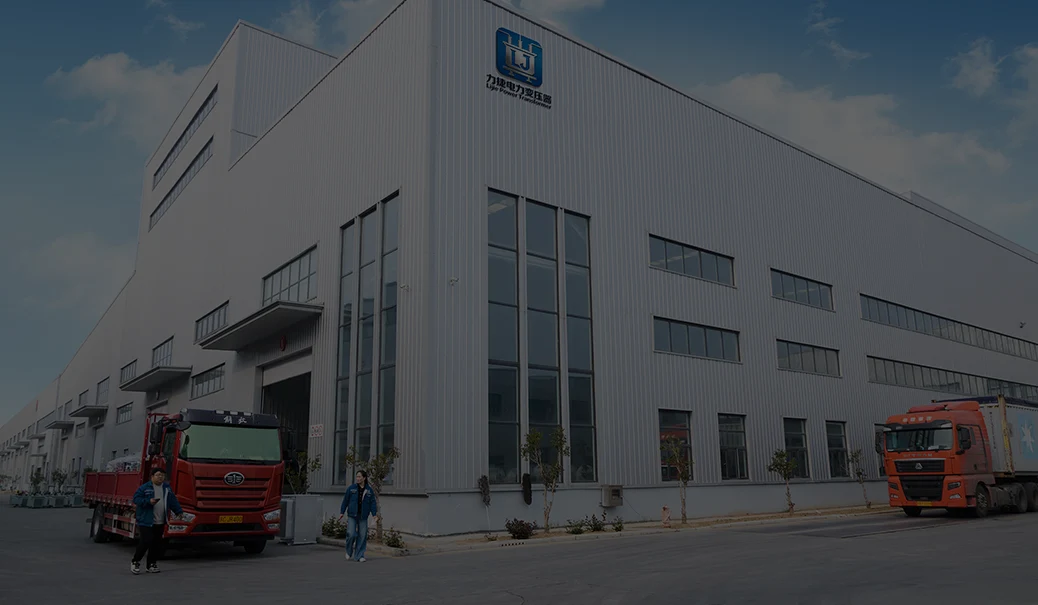
A lot of different voltages are designed and made by Lijie Electric Power Technology Group. They make Oil-Immersed Transformers for distribution-class units with voltages below 35kV and 110kV, 220kV, and 500kV. Lijie Electric has two factories in Xuzhou and Nantong that cover a total area of 500,000 square meters. This allows them to keep up the production level needed to meet the delivery dates for big, project-based orders. All of the goods have energy efficiency certifications from ISO 9001:2015, CE, UL, IEC, and CQC. This means they meet the strict standards that EPC contractors look for when they buy things. You can see the full list of product specifications at lijie-electrical.com.

Distributed generation, microgrids, and battery storage integration are being used more and more in the green energy field. All of these things put new demands on Oil-Immersed Transformer technology. More and more new installations are replacing mineral oil with natural and synthetic ester insulating oils. This is because they are biodegradable and have higher fire safety ratings, which is what most US states require for environmental permits.
IoT-enabled smart tracking platforms can now connect to Oil-Immersed Transformer control systems and send real-time thermal data, telemetry about the oil state, and alerts about planned repairs. Unplanned power outages are less likely to happen at remote green energy sites where inspections are expensive. In response, buying habits are changing, and people are looking for manufacturers who can provide not only hardware, but also hardware that works with embedded monitoring and technical collaboration over the long term.
To handle the nonlinear loads created by inverter-coupled output, Oil-Immersed Transformers that are used in mixed renewable-storage systems need to have a wider tap range and better harmonic tolerance. Manufacturers who spend money on research and development right now for these standards will set the supply picture for the next ten years of green growth in the US.
For large-scale renewable energy infrastructure, Oil-Immersed Transformers are still the best option from both a technical and financial point of view. Because they don't break down in high temperatures, last a long time, work with high voltages, and can be changed to fit specific project needs, they are the best choice for utility developers, EPC contractors, and industrial energy buyers. As the US renewable grid grows, it is essential to work with a manufacturer that can provide in-depth engineering, certified quality, and large-scale production. If you don't, the project will fail.
There is a wide range of Oil-Immersed Transformers for renewable energy projects, from 35kV distribution-class units used in solar farm collection systems to 110kV, 220kV, and 500kV transmission-class models needed to connect to the grid. This is the whole range that Lijie Electric makes.
If you keep up with frequent dissolved gas analysis, oil quality tests, and thermal inspection, an Oil-Immersed Transformer will work consistently for 25–35 years. This makes it a good long-term investment for green energy infrastructure.
Some important certifications are CE, UL, ISO 9001:2015, and IEC 60076 compliance. IEEE C57.12.00 compliance is also important for connecting power grids in the US. The CQC energy efficiency approval shows that the unit meets the standards for its efficiency level.
Yes, Lijie Electric's engineering team can help you customize your order by adding higher IP protection ratings, finishes that don't rust, altitude derating, and better cooling systems.
Lijie Electric makes Oil-Immersed Transformers that are approved and designed to work with large-scale renewable energy projects. As a verified producer of Oil-Immersed Transformers with ISO 9001, CE, UL, and IEC certifications, we can help you buy in bulk, with flexible specs and on-time delivery. To get a quote for your project right away, email our technical team at lijieelectrical@gmail.com or visit lijie-electrical.com to see all of our products.

1. U.S. Energy Information Administration. (2023). Electric Power Annual 2022. U.S. Department of Energy. https://www.eia.gov/electricity/annual/
2. International Electrotechnical Commission. (2011). IEC 60076-1: Power Transformers – General. IEC. https://webstore.iec.ch/publication/590
3. IEEE. (2015). IEEE C57.12.00: IEEE Standard for General Requirements for Liquid-Immersed Distribution, Power, and Regulating Transformers. IEEE Standards Association. https://standards.ieee.org/ieee/C57.12.00/5553/
4. National Renewable Energy Laboratory. (2022). Transformers for Renewable Energy Applications: Performance and Reliability Review. NREL. https://www.nrel.gov/grid/transformers.html
5. BloombergNEF. (2023). Global Renewable Energy Infrastructure Investment Report 2023. BloombergNEF. https://about.bnef.com/blog/global-renewable-energy-investment/
6. Rocky Mountain Institute. (2023). The Future of Grid Infrastructure: Smart Transformers and Distributed Energy Resources. RMI. https://rmi.org/insight/grid-infrastructure-smart-transformers/
YOU MAY LIKE

12%20Series%20Dry%20Type%20Transformer.webp)
11%20Epoxy%20Resin%20Cast%20Dry-Type%20Transformer.webp)

April 27, 2025
With a tight project schedule, the manufacturer delivered on time, and on-site technical personnel provided guidance throughout the entire installation and commissioning process; the collaboration was highly efficient and hassle-free.
July 2, 2025
During the preliminary phase, a selection plan was custom-tailored based on the actual site load requirements, resulting in a high degree of parameter compatibility. After-sales support responds within two hours, and ongoing technical support for operation and maintenance is comprehensive; we feel completely confident in a long-term partnership.
November 18, 2025
Deployed as a supporting component for a 35kV grid-connection project at a photovoltaic power station, the equipment operates for an average of 16 hours daily. It demonstrates excellent control over no-load losses, ensures smooth power generation and grid integration, and effectively reduces the station's overall energy consumption.
January 30, 2026
Under the continuous, high-load operating conditions of a factory production line, the equipment maintains stable electrical parameters and exhibits strong overload resistance, thereby guaranteeing an uninterrupted power supply for industrial production.
April 3, 2026
Integrated as a supporting component for a new energy photovoltaic grid-connection system, the manufacturer provided professional technical coordination and timely after-sales support, ensuring seamless adaptation to the specific electrical operating conditions required for grid integration.