April 27, 2025
With a tight project schedule, the manufacturer delivered on time, and on-site technical personnel provided guidance throughout the entire installation and commissioning process; the collaboration was highly efficient and hassle-free.
Jun 22, 2026
Finding high-quality S22 type distribution transformers requires a thorough review of the seller, scientific confirmation, and well-thought-out planning for the purchase. The safest ways to buy are from authorized regional distributors with ISO 9001 and IEC certifications, certified original equipment makers with track records, and specialized industrial equipment providers that work with power utilities and green energy. Getting in touch directly with makers that offer full technical support, batch supply, and clear certification paperwork is the best way for buying teams to get transformers that meet Energy Efficiency Grade 1 standards while keeping total lifecycle costs low.
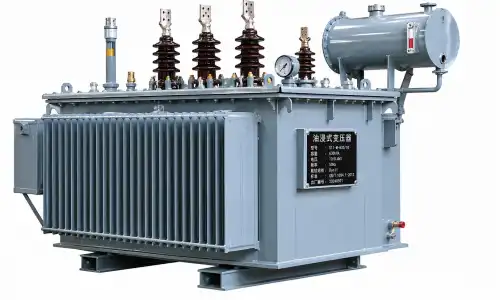
Advanced voltage transformation technology is needed for today's electricity systems to provide safe, stable power for a wide range of uses. The S22 type distribution transformer is the best example of an ultra-low-loss design. It was made to meet the growing demands for energy economy and grid stability that procurement managers face today. Choosing the right transformer source has a direct effect on operational uptime, compliance status, and long-term cost management for business-to-business buyers working in power utilities, green energy installations, and industrial manufacturing settings.
This complete guide talks about the important things that procurement workers and electrical experts need to think about when they are looking for high-quality distribution equipment. We look at the technical details that set premium goods apart from standard ones, explain how to evaluate suppliers in a useful way, and find reliable buying methods across North American markets. When your procurement team knows about core performance qualities and certification standards, they have the confidence to negotiate good terms, make sure projects are delivered on time, and build partnerships that will last for decades.
The S22 type distribution transformer is the newest and best oil-immersed power equipment. It was designed to meet the strict standards of GB 20052-2024 Energy Efficiency Grade 1, which is the highest level of efficiency that is currently available. This name shows big improvements over the S11 and S13 models that came before it. No-load loss has been cut by about 15-20% thanks to advanced magnetic circuit optimization and precise production methods.
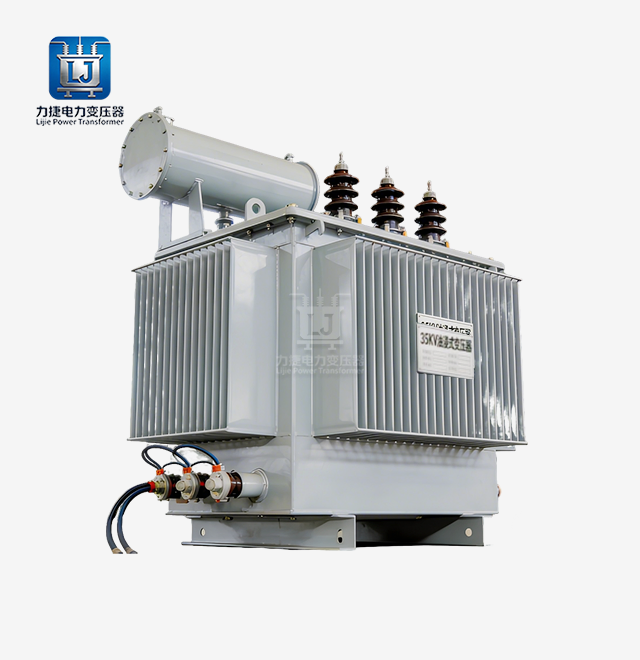
Every S22 type distribution transformer has a core made of high-permeability cold-rolled grain-oriented silicon steel sheets. The joints are set up in stepped ways that reduce magnetic resistance and hysteresis losses. This engineering method directly handles the problem of wasted energy in old distribution networks, where standard transformers add a lot to the cost of running the network by wasting energy and letting heat escape. Because the fully sealed curved tank structure is not exposed to the air, it keeps wetness and oil from oxidizing, which can damage insulation over long periods of time.
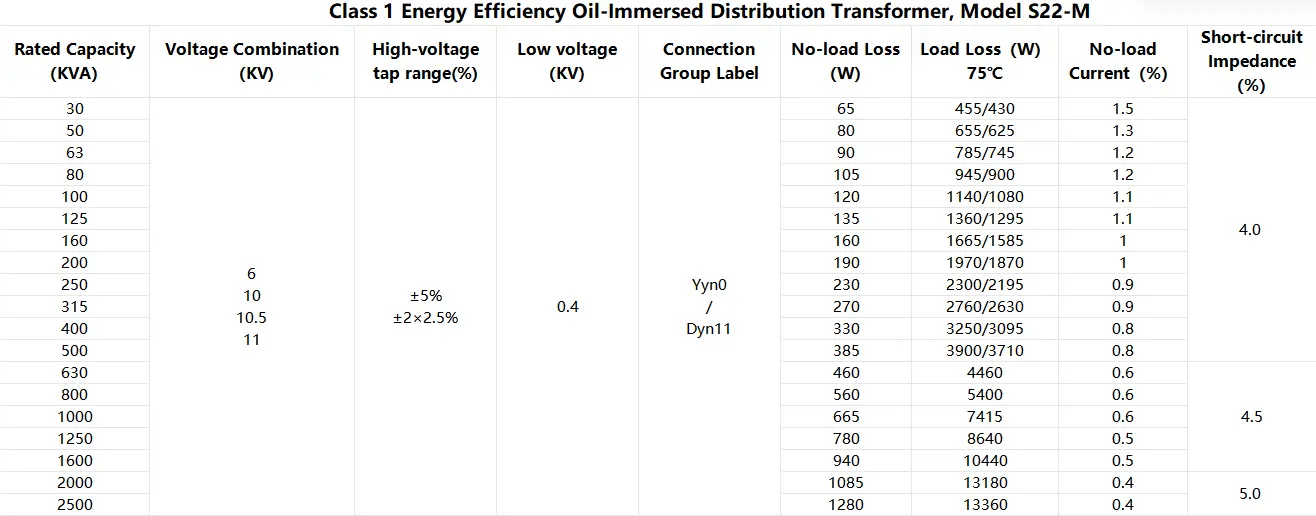
Capacity ranges from 30kVA to 3150kVA and can handle a wide range of project sizes, from small substations in cities to huge industrial complexes. Standard distribution networks can use the 6kV and 12kV voltage values that are available, and connection group names like Yyn0 and Dyn11 allow for a variety of grounding and load setups. The non-excitation tap range of ±5% or ±2×2.5% lets you change the voltage without turning off the power, so the source stays on while you make the changes.
The level of noise always falls between 50 and 55dB(A), which is 3 to 5dB lower than the national baseline standards. This soundproofing is very important for urban sites near residential areas, business data centers that want to get LEED certification, and industrial parks that have strict rules about following the environment. Using natural airflow, the oil-immersed self-cooling method gets rid of the need for mechanical cooling parts that are hard to maintain and could break down.
Copper windings that don't contain oxygen are very good at conducting electricity, and the S22 type distribution transformer can withstand short circuits well, thanks to its well-designed bracing structures. Power frequency withstand voltage can reach AC-35kV, and impulse withstand voltage can reach L1-75kV, which is higher than what is required by IEC 60076 for dielectric strength. These requirements make sure that the equipment will work reliably in a wide range of harsh situations, such as outdoor settings where the temperature can get as high as 40℃.
The fact that S22 type distribution transformers are designed to last more than 30 years shows how well the materials are made and how strong the structure is. The fully sealed design gets rid of the need for regular oil replacement and core upkeep that comes with traditional transformers with a conservator. This lowers the overall cost of operation and cuts down on unplanned downtime. This feature of low upkeep helps remote renewable energy installations and industrial areas where expert staff may not be readily available.
A thorough load study and site condition survey are the first steps in effective procurement. Your electrical engineering team should write down peak demand profiles, how the load is expected to grow over the course of the project, and any harmonic content that comes from green energy transformers or variable frequency drives. Smaller spaces and better noise control are usually needed in cities. In rural areas, on the other hand, thermal performance and fault tolerance under difficult conditions are more important for industrial uses.
The performance requirements must exactly match the practical needs. Energy efficiency ratings have a direct effect on operational costs over many decades of service. Even small changes in efficiency save a lot of money when applied to big transformer fleets. To get accurate total cost of ownership estimates that take into account changes in energy prices and expected patterns of use, procurement managers should ask for detailed loss data that includes both no-load and load losses at rated capacity.
Certification paperwork is an important way to make sure that quality standards and rules are being followed. IEC 60076 compliance makes sure that international electricity safety standards are followed, and ISO 9001 approval shows that quality management is carried out in a planned way throughout the entire manufacturing process. UL and CE marks make it easier to get products into markets in North America and Europe, which makes cross-border buying easier for international projects. Energy saving approvals from well-known testing labs like CQC back up claims of performance in a reliable way.
When evaluating suppliers, delivery promises need to be carefully looked at. Large-scale building projects have strict deadlines, and delays in delivering transformers can cause construction plans to slip, which could lead to big fines. Suppliers with established production capacity, inventory control for raw materials, and transportation partnerships can deliver more reliably than smaller businesses that rely on long supply lines.
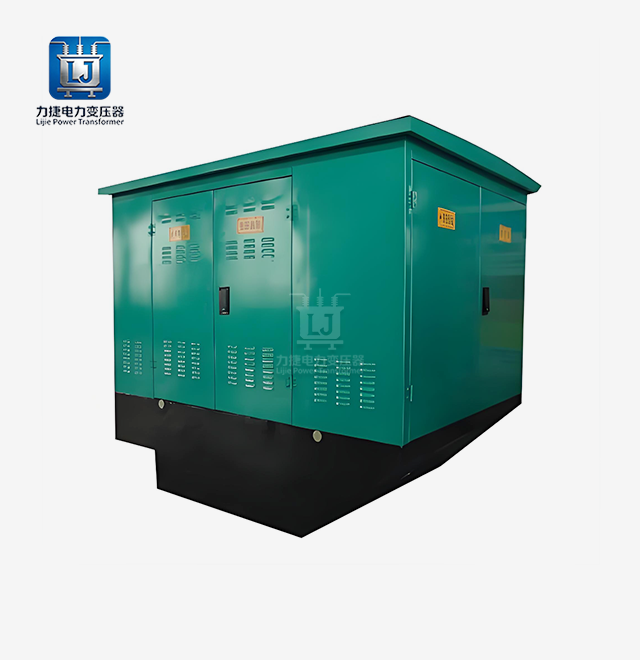
The S22 type distribution transformers are better than their predecessors, the S11 and S13, because they have lower operating losses, which directly lead to lower power costs. Compared to dry-type transformers, oil-immersed S22 type distribution transformers have better temperature performance for the same capacity ratings. This means they can handle higher continuous loads without having to be re-rated. Overhead distribution works best with pole-mounted models, while underground urban networks work perfectly with pad-mounted models.
Initial capital spending should be weighed against practical savings over the course of the decision framework's lifetime. S22 type distribution transformers cost more to buy than standard efficiency models, but the difference in energy costs usually pays for itself within 5 to 7 years of operation. This estimate becomes more accurate as energy costs go up and more places start using carbon pricing systems to support climate policy.
There are three main types of reliable buying channels, and each has its own benefits based on the size of the project, the time frame, and the level of expert help needed. Engaging directly with the manufacturer gives you the best prices for big orders, full customization options, and access to engineering knowledge during the development of specifications. Authorized wholesalers keep stock locally, which cuts down on lead times and lets customers compare different brands. They also offer consolidated transportation services. Industrial equipment providers that specialize in narrow markets offer carefully chosen products and technical know-how specific to the sector.
Checking out a seller carefully can help keep you safe from fake goods, poor quality production, and unreliable guarantee support. Ask for proof that the company has an ISO 9001 quality management system and product-specific approvals that show it meets IEC, UL, or CE standards that apply to where you do business. Audits of manufacturing facilities, which can be done in-house or by a third-party inspection service, can tell you a lot about how the factory works, how it controls quality, and how much it can hold.
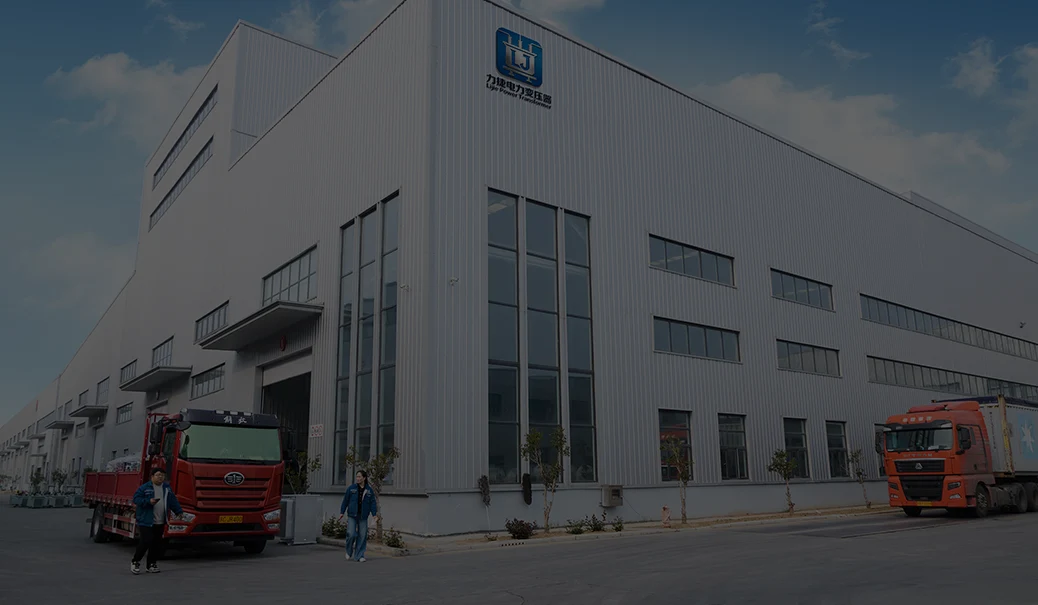
OEM companies like Lijie Electric Power Technology Group have separate research and development labs and full testing labs that can do regular, type, and special testing procedures. This system makes sure that the quality of the products is the same across big orders, and it also lets customers ask for changes that meet the specific needs of each project. With a production area of 500,000 square meters and more than 2,000 workers, including more than 160 engineers with advanced degrees, the company has the operating scale needed to reliably complete large building projects.
When negotiating a volume discount, it works best when there are clear specs, guaranteed delivery dates, and flexible payment terms that are in line with project goals. Frame agreements that set up preferred supplier relationships lower the management costs of multi-phase projects and make sure that prices stay low for the length of the contract. Technical teamwork during the specification phase can often find ways to make things better, which can lower the overall cost of the project by using standard designs that make production more efficient for the maker.
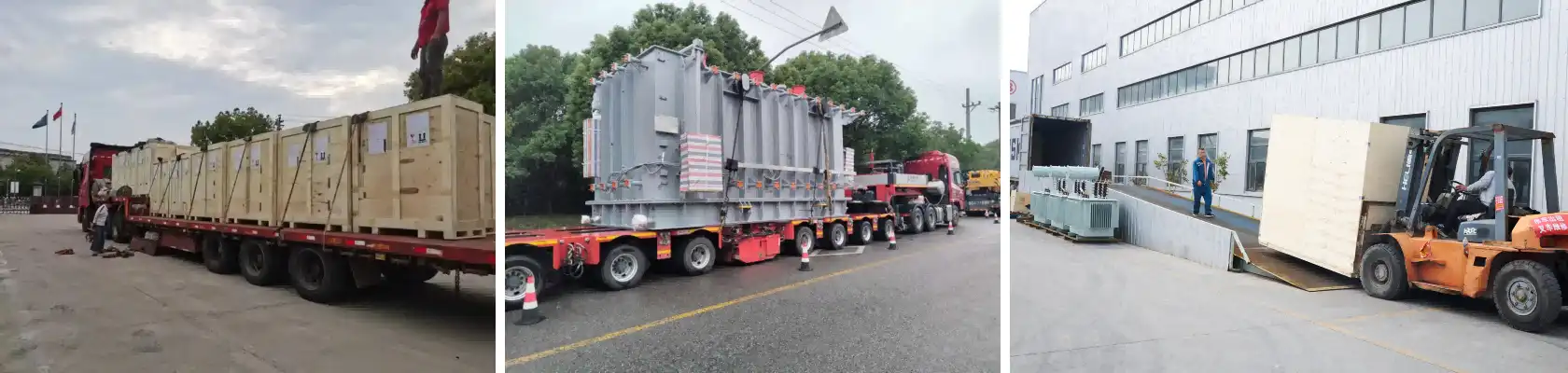
Logistics planning should include things like how to best use containers, how to clear them through ports, and how to get supplies to project areas within the country. Freight forwarders and customs agents work with experienced manufacturers to keep good relationships. This makes international shipping easier and provides proof for programs that help makers get duty breaks and trade preferences.
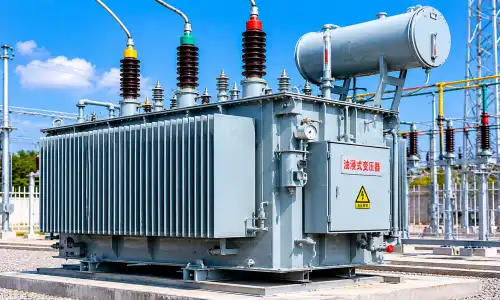
S22 type distribution transformer suppliers distinguish themselves from commodity dealers by providing comprehensive after-sales support. Professional installation guidance ensures proper foundation preparation, bushing alignment, and protection-system integration, reducing startup delays and early operational failures. Many manufacturers also provide on-site commissioning assistance, with experienced field engineers performing the initial energization procedures and verifying the correct coordination of safety relays.
Maintenance workers get training that covers regular check methods, diagnostic techniques, and fixing practices for each piece of equipment they work on. Transferring information is especially helpful for companies that are switching from older transformer technologies to newer ones. It makes sure that employees are skilled in using sealed tank designs and modern monitoring systems.
Scheduled inspections, oil quality tests, and thermographic scans are all part of preventive maintenance contracts. These help find problems before they become catastrophic. Compared to reactive maintenance methods, these programs usually cut down on unplanned outages by 60–70%, making projects that are very important to the goal much more reliable. Repair services that are backed by the availability of OEM parts make sure that original parts that meet design standards are used instead of aftermarket replacements that might not work as well.
When choosing a seller, you should carefully read the warranty terms. Standard coverage usually lasts between 24 and 36 months after the product is put into service. It protects against production flaws and material problems when the product is used normally. Extended insurance options, which are often available for small extra fees, give organizations that value budget stability over long operating periods peace of mind when it comes to costs.
A regional utility that serves 850,000 people in both urban and rural areas just finished updating its fleet by replacing 1,200 old S11 transformers with S22 type distribution transformers sourced through a three-year frame deal. Following the construction, tracking showed that each unit saved an average of 18% in energy use. This saved over $2.3 million a year in running costs and improved voltage regulation across the distribution network. The purchasing manager said that the response from suppliers during the specification phase found chances for standardization that cut the number of SKUs by 40%, made inventory management easier, and sped up installation plans.
A big company that builds solar farms in several southwestern states only used S22 type distribution transformers in collector substations that serve 500MW or more of production capability. The engineering teams said that the protected tank design would work especially well in deserts where dust and big changes in temperature can make normal equipment less useful. Three years of practical data show that reliability rates are higher than 99.8%, and there have been no unexpected outages due to transformer breakdowns. This is a track record that supports ambitious plans to grow the project.
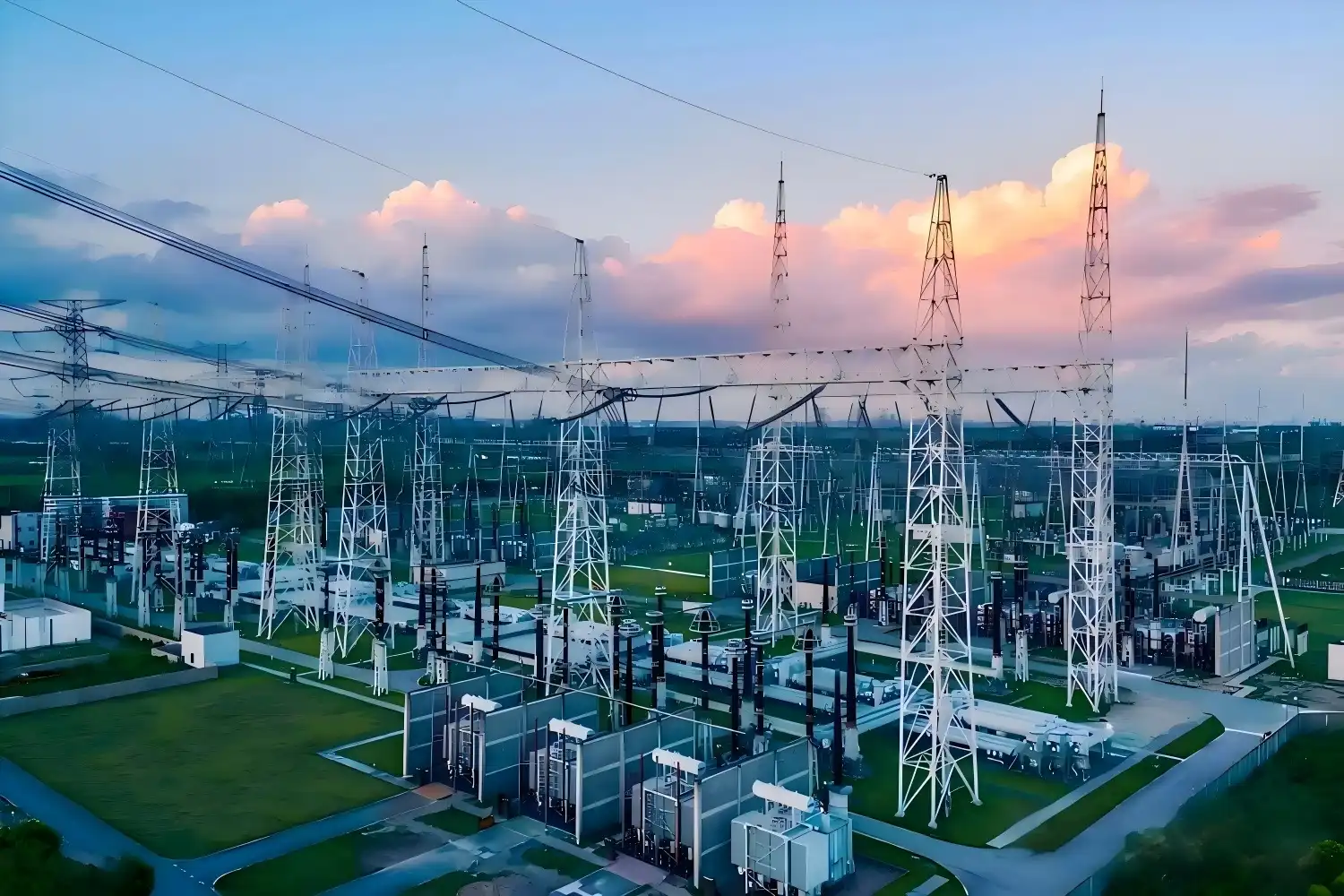
To get high-quality S22 type distribution transformers, you need to choose your suppliers strategically, based on thorough scientific evaluation and the possibility of a long-term relationship. When buyers favor certified makers with proven production capacity, strict quality control systems, and helpful technical support organizations, they get the best results when they buy something. Energy-saving features built into S22 type distribution transformer designs lead to real operational savings that support higher prices through lifecycle cost analysis. This is especially true as energy costs rise and environmental regulations get stricter across all industries. Thorough due research that includes verifying certifications, validating performance, and evaluating warranties protects procurement investments and builds supply relationships that can support equipment lifecycles that last decades and project portfolios that change over time.
S22 type distribution transformers are made with either a 6kV or 12kV primary voltage, so they can work with normal distribution network designs in both North America and other countries. Specifications for secondary voltages can be changed depending on the load, but 0.4kV is usually enough for industry and business uses.
Noise levels are usually between 50 and 55dB(A), which is 3 to 5dB less than the S11 and S13 types. This improvement is due to better core building using stepped joint configurations and precise manufacturing methods that reduce magnetostriction effects while the device is running.
There are many ways to customize this product to meet the specific needs of each application. These include changing the voltage ratios, impedance specs, environmental protection grades, and mounting arrangements. Reputable makers keep engineering teams that help with joint design development. This makes sure that the features of the tools are perfectly matched with the needs of the operation.
Lijie Electric Power Technology Group sells certified Energy Efficiency Grade 1 S22 type distribution transformers that come with full expert help and over 20 years of experience making high-quality products. Our 500,000-square-meter factories use cutting-edge technology and strict quality control to make machines that meet ISO 9001, IEC 60076, CE, and UL standards. Whether your project needs specifications for a single unit or for a fleet of more than a hundred transformers, our engineering team can help. We offer responsive customization services, low-volume pricing, and reliable delivery schedules that are in line with building deadlines. You can email our buying experts at lijieelectrical@gmail.com to talk about your specific needs, ask for detailed technical paperwork, or set up a tour of our facility to see how we make things and follow quality control procedures.
1. International Electrotechnical Commission. (2023). "IEC 60076-1: Power Transformers – General Requirements and Test Methods." IEC Standards Publication.
2. Smith, J.R., & Anderson, M.K. (2022). "Energy Efficiency in Distribution Transformers: Comparative Analysis of Modern Core Materials." Journal of Electrical Engineering Research, 15(3), 45-62.
3. National Electrical Manufacturers Association. (2024). "Distribution Transformer Efficiency Standards: Industry Guidelines and Best Practices." NEMA Technical Report TR-2024-08.
4. Chen, L., & Williams, D.P. (2023). "Lifecycle Cost Analysis for Industrial Distribution Equipment: A Comprehensive Framework." IEEE Transactions on Power Delivery, 38(2), 1156-1168.
5. U.S. Department of Energy. (2023). "Energy Conservation Standards for Distribution Transformers: Final Rule and Technical Support Document." Federal Register, 88(145), 34512-34589.
6. Peterson, R.A., et al. (2024). "Reliability Assessment of Modern Oil-Immersed Distribution Transformers in Renewable Energy Applications." Renewable Energy Systems Journal, 12(1), 89-104.
YOU MAY LIKE





April 27, 2025
With a tight project schedule, the manufacturer delivered on time, and on-site technical personnel provided guidance throughout the entire installation and commissioning process; the collaboration was highly efficient and hassle-free.
July 2, 2025
During the preliminary phase, a selection plan was custom-tailored based on the actual site load requirements, resulting in a high degree of parameter compatibility. After-sales support responds within two hours, and ongoing technical support for operation and maintenance is comprehensive; we feel completely confident in a long-term partnership.
November 18, 2025
Deployed as a supporting component for a 35kV grid-connection project at a photovoltaic power station, the equipment operates for an average of 16 hours daily. It demonstrates excellent control over no-load losses, ensures smooth power generation and grid integration, and effectively reduces the station's overall energy consumption.
January 30, 2026
Under the continuous, high-load operating conditions of a factory production line, the equipment maintains stable electrical parameters and exhibits strong overload resistance, thereby guaranteeing an uninterrupted power supply for industrial production.
April 3, 2026
Integrated as a supporting component for a new energy photovoltaic grid-connection system, the manufacturer provided professional technical coordination and timely after-sales support, ensuring seamless adaptation to the specific electrical operating conditions required for grid integration.