April 27, 2025
With a tight project schedule, the manufacturer delivered on time, and on-site technical personnel provided guidance throughout the entire installation and commissioning process; the collaboration was highly efficient and hassle-free.
Aug 11, 2026
To find the best HV Transformer Supplier, you need to work with a specialized company that can design, engineer, and make high-voltage electrical transformers (usually between 66kV and 1100kV) that solve important problems in modern power distribution. These companies make unique electromagnetic solutions that keep the grid stable, control voltage, and prevent galvanic separation. This lowers risks like energy loss during transfer, the difficulty of integrating green energy, and catastrophic system breakdowns that raise operational costs.

High voltage transformers are the backbone of electrical transmission networks. They change voltage levels so that power can be sent over long distances efficiently and with little energy loss. When primary and secondary windings create a magnetic flux linkage through a laminated core, these devices work on the principles of electromagnetic induction. They step voltages up for transmission or down for distribution and consumption.
Coordinating the insulation is an important part of design, and oil-immersed and dry-type configurations have different dielectric strengths for different voltage classes. Power levels from a few MVA to more than 1000 MVA can be used to meet a wide range of load needs. ONAN, ONAF, or forced-air cooling systems keep the temperature stable even when they are running all the time. The expected lifespan is based on the insulation classes (Class A through H) and how well they handle temperature changes, especially in harsh climates.
Off-the-shelf transformers don't always work well in places where room is limited, like in substations in cities, where temperatures can get very high, like in desert solar sites, or where harmonic distortion from variable frequency drives can happen in mining operations. Custom engineering lets you match impedances precisely, use special tap switches to control voltage, and make tough cases that meet IP54 or higher grades for water resistance. Total lifecycle costs are lower with customized designs because they fit efficiency curves to real load profiles instead of generic duty cycles.

When choosing a manufacturing partner, you need to do a lot of research on their technical skills, ability to scale up production, and service infrastructure. Choosing what to buy depends on finding the right balance between short-term capital costs and long-term promises of reliability and support.
When it comes to large infrastructure projects that require a lot of units, production capacity has a direct effect on project timelines. Scalability is shown by facilities that cover hundreds of thousands of square meters and have specialized winding shops, core assembly lines, and vacuum drying rooms. Advanced degree-holding research and development teams that can come up with new signal technologies are needed to combine digital tracking systems with eco-friendly ester-based insulation fluids or amorphous core materials that cut no-load losses by 70% compared to standard silicon steel.
Transformer assets last for decades, so it's important that they can be serviced after installation. Unplanned downtime is kept to a minimum by suppliers who offer help with commissioning, regular dissolved gas analysis for condition monitoring, and emergency repair response within 48 hours. Having spare parts on hand for joints, tap switches, and safety relays makes it possible to fix problems quickly. Training programs for client maintenance staff help assets last longer by teaching them how to operate properly.
Lead times and shipping processes are affected by how close things are to each other. Domestic HV Transformer Supplier options in the US offer faster delivery times (16 to 24 weeks on average vs. 20 to 30 weeks for exports to other countries) and easier contact across time zones. Cost savings come from economies of scale and the ability to get specific products from international makers. Clearing customs for cross-border projects is easier when export infrastructures are well-established and IEC-certified. A Texas wind farm project in 2022 worked well with an abroad source whose 500,000-square-meter production base sent 85 pad-mounted transformers on a delayed schedule, meeting building goals and staying within budget.
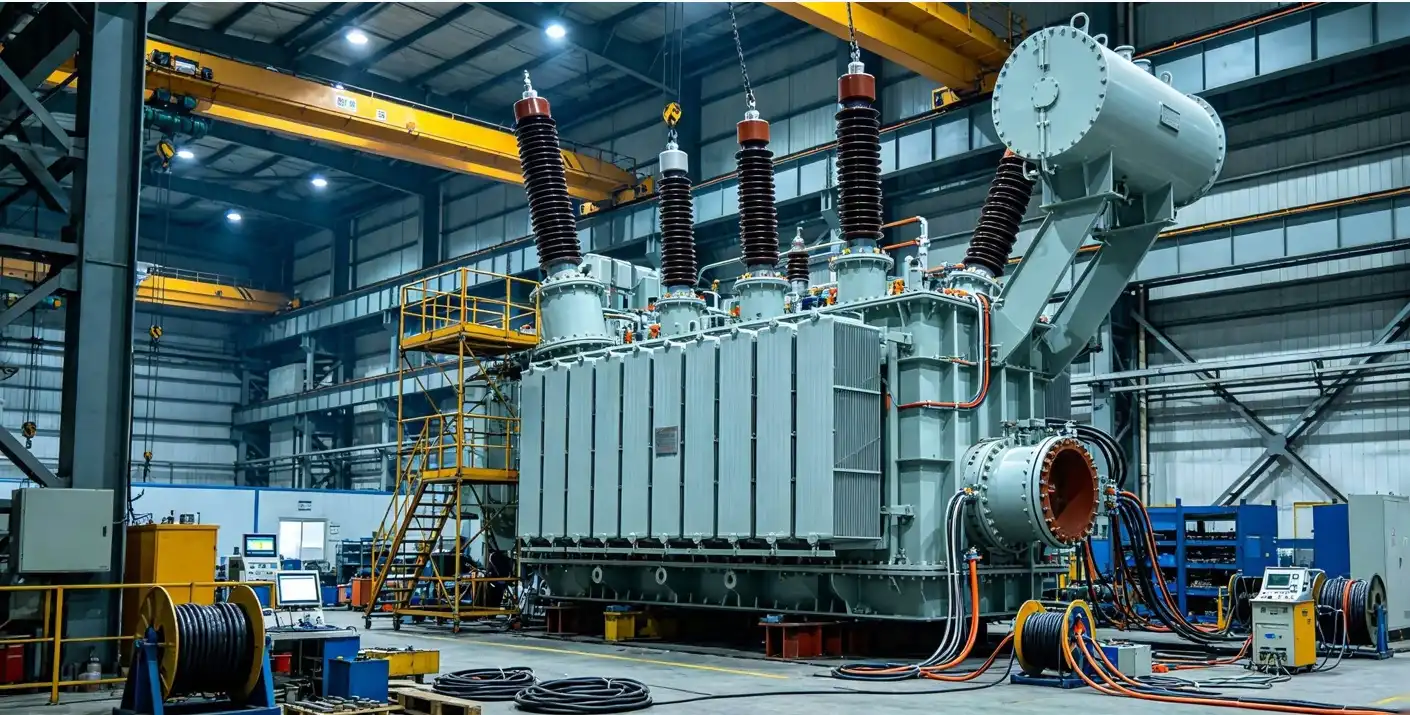
The global transformer market is made up of a lot of different companies, from European conglomerates that have been around for hundreds of years to Asian manufacturers that are quick to change their facilities and offer competitive prices.
Well-known brands keep their good names by having a lot of customers and a low failure rate. Companies with various factories in different countries show supply chain robustness, which is very important when there are shortages of materials or problems with geopolitics. Newer companies use cutting-edge production tools like robotic wrapping machines, 3D core modeling software, and automatic testing rigs to make sure their quality is on par with that of older companies.
60–70% of the price of a transformer is made up of the cost of copper wires, electrical steel, and insulation oil. This means that material markets are directly linked to transformer markets, and selecting a reliable HV Transformer Supplier can help buyers better control material quality, procurement costs, and long-term project performance. After being unstable from 2022 to 2023, grain-oriented electrical steel prices leveled off in 2024, lowering the cost of a finished unit. For projects with more than 50 units, bulk procurement agreements can unlock volume discounts of 8–15%, and longer payment terms can help you better manage your cash flow. Lifecycle cost analysis includes measures of energy efficiency. For example, at $0.10/kWh power rates, a transformer with 0.15% lower losses working at 80% load factor saves $12,000 a year per MVA, which makes the higher initial investments worth it.
Standard guarantees that cover flaws in the manufacturing process for 24 to 36 months are basic promises. Longer guarantees, up to 10 years, show that you trust the design's durability and the quality of the materials used. Full service agreements that include yearly thermographic checks, oil filtering services, and bushing maintenance cost 3 to 5 percent more at first, but they keep machines from breaking down too soon. Performance claims are backed up by independent testing certifications from KEMA or CESI laboratories.
More and more, people who work in procurement use verified project case studies and client testimonials when evaluating an HV Transformer Supplier. Marketing materials aren't as important as a Nevada mining operation's five-year uptime record of more than 99.7% with a certain supplier's rectifier transformers. Industry groups and engineering clubs make it easier for people in the same field to give and receive feedback. Utility customers' return purchases show how satisfied they are.

Clear sharing of specifications, a clear contract, and strategic planning for upkeep are all parts of successful buying that work together to get the best return on investment.
Single-line diagrams, load flow studies, and site environmental data should be part of the first technical questions. As a response, an HV Transformer Supplier sends preliminary designs, loss calculations, and dimensional drawings to help coordinate the civil works. Clarification rounds talk about cooperation for safety, noise limits (usually 65–75 dB at 1 meter), and movement limits for size or weight. Contract talks set up official milestone payments linked to different stages of production: 25% upon order, 50% at plant acceptance testing, and 25% after delivery. This balances the supplier's need for cash flow with the buyer's need to lower their risk.
Framework deals that cover more than one project lower the cost of each unit by standardizing designs and buying raw materials in bulk. A utility company that wants to upgrade 15 substations over the course of three years negotiates volume discounts and spreads out deliveries to fit the schedules of the construction projects. For pressing replacements, buffer stock plans let providers keep a ready supply of standard rates (10MVA, 15MVA at 34.5kV/13.8kV). This allows for faster delivery within 8 to 12 weeks.
Warranty terms separate problems with the way the product was made from problems with how it works that are caused by outside problems, wrong loading, or poor upkeep. Making limitations clear stops arguments during claims. Clear standards are set by service level agreements that say reaction times will be 4 hours for major failures and 24 hours for non-emergency problems. Annual maintenance contracts that cost between 1% and 2% of the asset's value make budgeting easier and guarantee that a professional will be there to help.
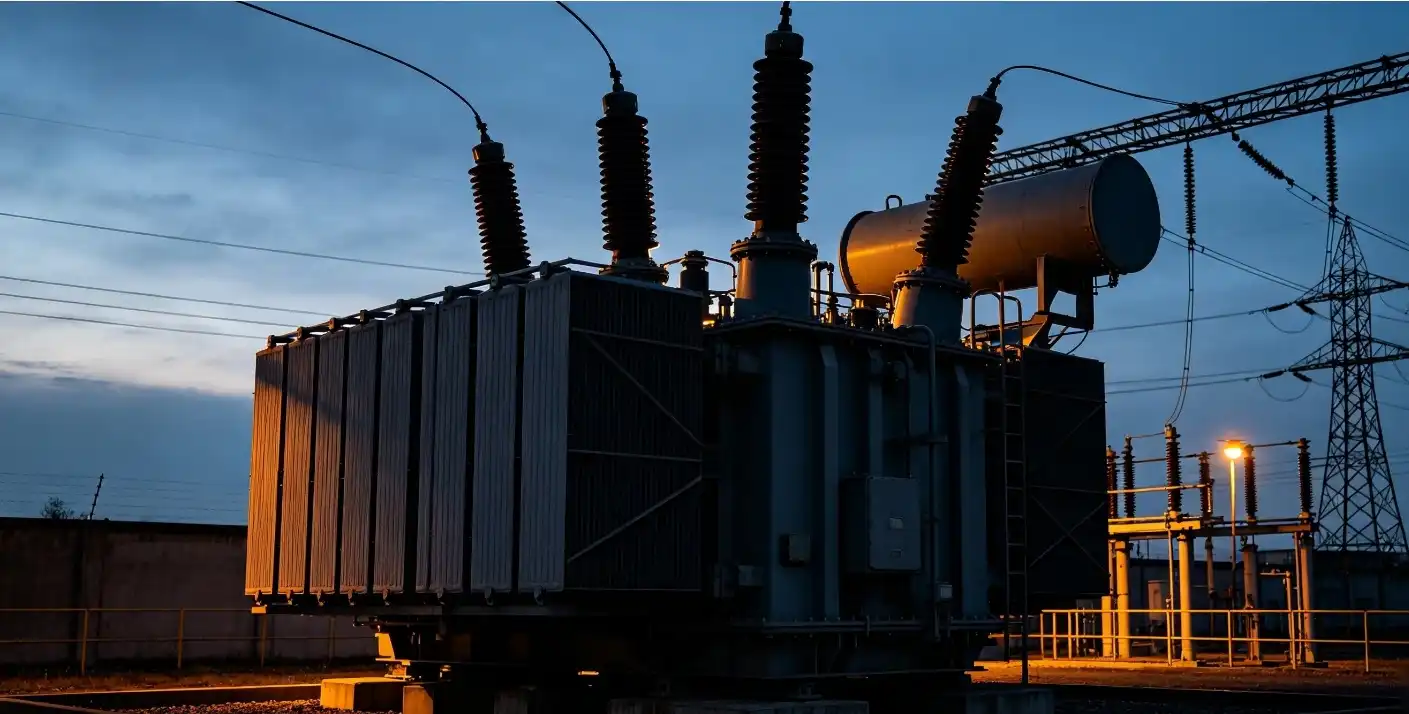
Digitalization, environmental requirements, and grid upgrade projects are pushing technology to change the way transformers are designed and bought.
Supply chain openness through blockchain tracking checks where materials come from and that the production process is legal, which meets the needs of ESG reporting. Installing 50MVA units with plans for future 75MVA upgrades is one way that modular designs allow for phased capacity expansion. This lowers the original capital needed while still allowing for uncertainty about load growth. As deadlines for green energy projects get shorter, advanced production methods like additive manufacturing are being used to cut down on wait times for complex parts.
Transformers with better short-circuit protection and dynamic voltage regulation are needed for grid modernization that includes distributed energy resources. Centralized grid control is possible with SCADA systems and DNP3 communication methods. More and more, procurement requirements require recovered content in steel cores and wrapping materials. This supports the ideas of the green economy while still meeting performance standards.
Navigating the complexities of custom high voltage power distribution demands a strategic approach to supplier selection, balancing technical specifications, manufacturing scale, certification compliance, and lifecycle support when choosing a reliable HV Transformer Supplier. The transformer industry's evolution toward digital integration and sustainable materials creates opportunities for forward-thinking procurement professionals to secure equipment meeting both immediate operational needs and long-term infrastructure goals. Rigorous evaluation of supplier capabilities, transparent communication throughout ordering processes, and proactive maintenance planning ensure reliable power delivery across utility, industrial, and renewable energy applications for decades.

High voltage transformers usually work with main or secondary voltages of 66kV or more. For long-distance transport needs, they can go up to ultrahigh voltage levels of over 500kV. Medium voltage groups include distribution transformers that are less than 35kV.
Depending on the complexity of the design, the voltage class, and the supplier's production plans, standard wait times are between 16 and 30 weeks. Due to the unique way they are built and the long testing procedures, large power transformers with more than 100MVA may take 36 to 48 weeks to complete.
The rules for designing and testing North American grids are set by IEEE C57 guidelines. ANSI standards deal with performance data, while UL approval proves electrical safety compliance. For equipment used in European markets, international projects also need IEC 60076 certification and CE marking.
Condition monitoring can be done on old assets by adding temperature sensors, gas detectors, and communication modules during retrofit installations. The cost of each unit ranges from $15,000 to $50,000, and compatibility relies on the available tank penetrations and internal design.
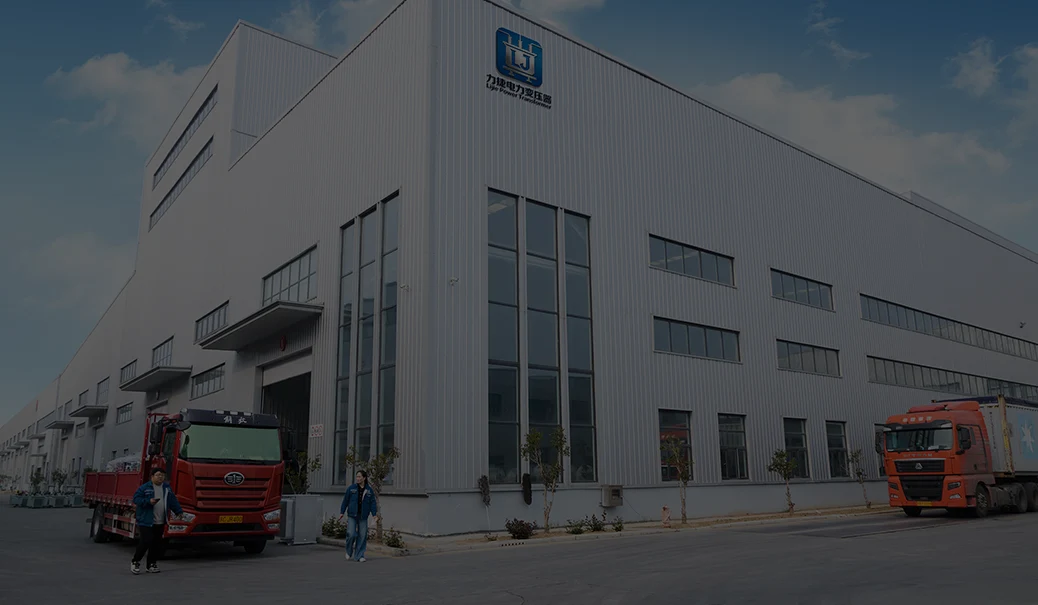
When sourcing a dependable high voltage transformer manufacturer, Lijie Electric delivers proven expertise across utility-scale transmission projects, renewable energy integration, and heavy industrial applications. Our 500,000-square-meter manufacturing facilities in Xuzhou and Nantong produce transformers rated up to 500kV, backed by ISO 9001:2015, IEC, CE, and UL certifications that meet the strictest international compliance standards. With over 160 engineering professionals holding advanced degrees, we provide customized designs addressing unique site conditions—from compact substations for urban developments to mining transformers withstanding extreme environments. Our established export track record across Australia, Southeast Asia, and Central Asia demonstrates logistics capabilities ensuring on-time delivery for multi-phase projects. Contact our team at lijieelectrical@gmail.com to discuss your specifications and discover how our quality-first approach, technical innovation, and comprehensive after-sales support create lasting value for your power infrastructure investments. Visit lijie-electrical.com to explore our complete product portfolio and request a detailed consultation.
1. International Electrotechnical Commission. (2021). Power Transformers – Part 1: General Requirements. IEC 60076-1:2021 Standard.
2. Institute of Electrical and Electronics Engineers. (2020). IEEE Standard for General Requirements for Liquid-Immersed Distribution, Power, and Regulating Transformers. IEEE C57.12.00-2020.
3. Heathcote, M.J. (2019). J & P Transformer Book: A Practical Technology of the Power Transformer (14th Edition). Elsevier Publishing.
4. U.S. Department of Energy. (2022). Transformer Efficiency and Reliability Research: Grid Modernization Laboratory Consortium Report. DOE Technical Publication Series.
5. Kulkarni, S.V., & Khaparde, S.A. (2018). Transformer Engineering: Design, Technology, and Diagnostics (2nd Edition). CRC Press.
6. Global Power Transformer Market Analysis. (2024). Industry Trends, Procurement Strategies, and Technology Innovations in HV Equipment Supply Chains. Energy Infrastructure Research Institute.
YOU MAY LIKE

18%20type%20dry-type%20distribution%20transformer.webp)


April 27, 2025
With a tight project schedule, the manufacturer delivered on time, and on-site technical personnel provided guidance throughout the entire installation and commissioning process; the collaboration was highly efficient and hassle-free.
July 2, 2025
During the preliminary phase, a selection plan was custom-tailored based on the actual site load requirements, resulting in a high degree of parameter compatibility. After-sales support responds within two hours, and ongoing technical support for operation and maintenance is comprehensive; we feel completely confident in a long-term partnership.
November 18, 2025
Deployed as a supporting component for a 35kV grid-connection project at a photovoltaic power station, the equipment operates for an average of 16 hours daily. It demonstrates excellent control over no-load losses, ensures smooth power generation and grid integration, and effectively reduces the station's overall energy consumption.
January 30, 2026
Under the continuous, high-load operating conditions of a factory production line, the equipment maintains stable electrical parameters and exhibits strong overload resistance, thereby guaranteeing an uninterrupted power supply for industrial production.
April 3, 2026
Integrated as a supporting component for a new energy photovoltaic grid-connection system, the manufacturer provided professional technical coordination and timely after-sales support, ensuring seamless adaptation to the specific electrical operating conditions required for grid integration.