April 27, 2025
With a tight project schedule, the manufacturer delivered on time, and on-site technical personnel provided guidance throughout the entire installation and commissioning process; the collaboration was highly efficient and hassle-free.
Jul 20, 2026
Modern power grids need high-capacity 6300kVA~100000kVA dual-winding transformer with OLTCs because they provide great voltage regulation, operational continuity, and reliability. These units let you change the voltage in real time without stopping the power, which is very important for utilities, green energy projects, and heavy industry facilities. Better power quality, less downtime, higher energy economy, and longer machine life are some of the benefits that make them essential for complex grid environments and large-scale industrial processes that need a stable, uninterrupted power supply.
For modern industrial power distribution, you need tools that can handle changing loads, keep the voltage stable, and work well for decades. In the United States, utilities, renewable energy processors, and heavy businesses all depend on 6300kVA~100000kVA dual-winding transformer with OLTCs as a key piece of technology. These high-capacity units make sure that energy transfer stays steady even when conditions are tough.
Working with procurement managers, electrical engineers, and project leaders has taught us that picking the right transformer technology has a direct effect on how well the grid works, how much it costs over its lifetime, and how reliable it is. This guide gives you technical information and useful procurement advice to help you make smart choices that meet the performance needs of your project, your budget, and the needs of regulatory compliance.
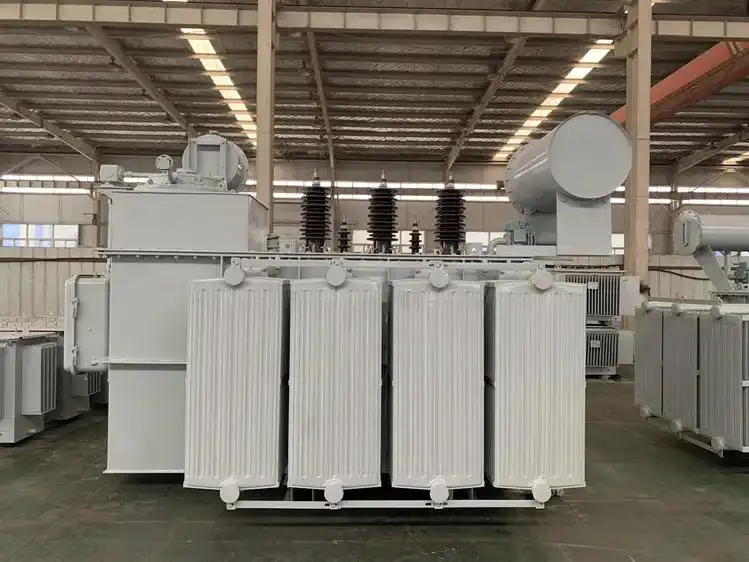
A 6300kVA~100000kVA dual-winding transformer with OLTC has two electrically separate windings, called primary and secondary, that are connected by a magnetic core. This setup is very different from single-winding autotransformers because it completely separates the input and output circuits electrically. The separation makes things safer, better able to handle faults, and easier for protective relays to work together in complicated grid settings.
When working in industrial plants or utility substations, this isolation is very helpful during ground faults or equipment problems. The design keeps the secondary side safe from changes on the primary side. This lowers the risk of failures spreading to other systems that are linked.
On-Load Tap Changers let you change the voltage while the transformer is still on and serving the load. The device works by changing the turns ratio without breaking the circuit by moving between different tap points on the winding. Modern units use vacuum interrupters to cleanly end switching arcs, which keeps oil from getting dirty and extends the time between maintenance visits.
Voltage changes naturally during normal operations because of changing load needs, intermittent renewable energy, or transmission line losses. The OLTC makes up for it by itself, keeping the output voltage within ±5% of its nominal rating. This feature gets rid of the need for service breaks during changes, which is a huge benefit when it comes to providing power to hospitals, data centers, or factories that make things all the time.
Transformers with a power range of 6300kVA~100000kVA usually have a main side voltage of 35kV to 220kV. Core materials are made of high-quality silicon steel that is not oriented and has low hysteresis loss. Windings are made of high-conductivity oxygen-free copper that has low resistance loss. According to IEC 60076 standards, basic insulation levels are made to handle lightning and switching surges.
Cooling systems come in different sizes. A lot of the time, smaller units with about 6300kVA power use ONAN (Oil Natural Air Natural) setups and passive convection. As the capacity goes up to 100,000kVA, forced-air cooling (ONAF) is needed to make sure that heat is removed properly. With these thermal management techniques, the generator stays safe, even when it's under a lot of load in the summer in places with high ambient temperatures.
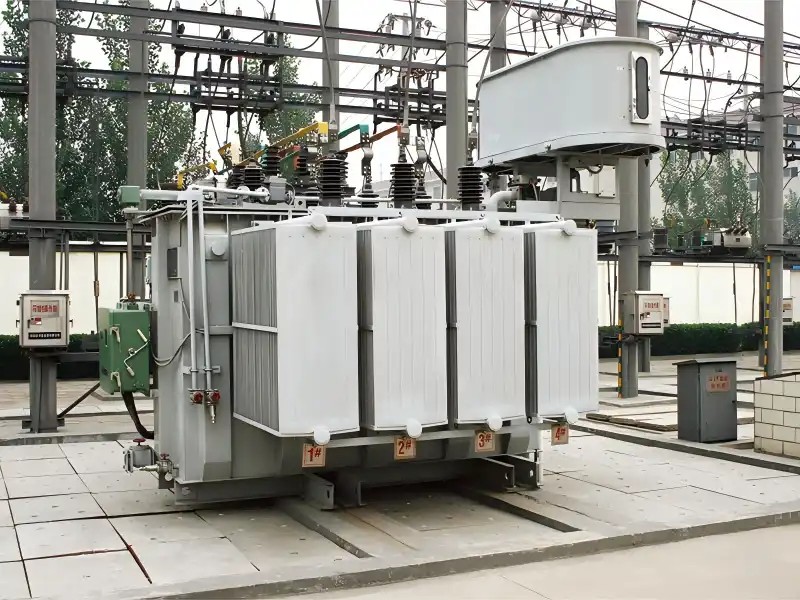
With the ability to change voltage while under load, power quality problems that happen with fixed-tap transformers can be avoided. When a 50,000kVA motor starts up, it can temporarily draw six times its maximum current. This happens in industrial buildings with a lot of motor loads. Within seconds, the 6300kVA~100000kVA dual-winding transformer with OLTC makes up for the loss, keeping the voltage stable across the distribution network and stopping equipment from tripping or processes from stopping.
The problems that renewable energy sources face are similar. Power flows in both directions, and generation changes quickly when wind farms and solar installations are built. These transformers handle these changes without any problems, keeping the grid voltage within the limits set by the utility company while allowing a lot of irregular power sources to connect.
Fixed-tap transformers need to be turned off in order to change the voltage, which creates shutdown windows and makes operations more difficult. OLTC technology gets rid of this problem, so repair teams can change the voltage settings to get the best results based on yearly load patterns or grid conditions without having to plan for downtime. This adaptability directly leads to higher system uptime.
Long-term dependability is ensured by the mechanical strength of modern OLTC mechanisms, which are made to last for 300,000 operations over 30 years. When compared to older oil-arc designs, vacuum switching technology keeps track of operation counts, contact resistance, and oil quality to figure out when maintenance needs to be done before they happen.
Throughout the distribution network, transmission losses are cut down when voltage control is optimised. When the voltage goes above the normal range, resistive losses go up by the same amount. The voltage in OLTC devices stays at the best setpoints, so as little energy as possible is lost. At half load, current designs achieve efficiency scores of more than 99.7%, which means big cost savings over many years of operation.
To make the best core geometry, coil layout, and thermal paths for our ultra-high voltage transformers, Toshiba's research tools and custom calculation programs are used. This careful approach to design makes units that are small, have low no-load losses, have minimal partial discharge levels below 100pC at rated voltage, and make less noise. These performance traits are in line with environmental laws and company goals for sustainability, and they also lower the total cost of ownership.
Transformers with OLTC need to be inspected every 50,000 to 100,000 processes, or every five to seven years. Measurement of contact wear, timing confirmation, and dissolved gas analysis of insulating oil are all normal tasks. These planned activities are much less disruptive than emergency fixes on fixed-tap units that aren't properly controlled and are losing insulation faster because of it.
Modern designs include intelligent tracking systems that keep an eye on important factors all the time. Temperatures of the windings, oil levels, moisture levels, and partial discharge activity are all measured by sensors. Data analytics find problems before they get too bad. This lets repair plans plan ahead, which stops unplanned power blackouts and makes transformers last longer than 30 years.
A 6300kVA transformer is usually used for regional power substations, medium-sized factories, or green energy projects with less than 10MW of capacity. These units are cost-effective and have enough space for load growth, so they can be used in places where peak demand stays below 5000kVA, and growth is forecast to be moderate in the future.
On the other hand, 100000kVA transformers support central utility substations that serve densely populated cities or utility-scale renewable projects that are bigger than 60MW, and a 6300kVA~100000kVA dual-winding transformer with OLTC in this higher range is essential for managing the dynamic voltage fluctuations caused by large motor starts, arc furnaces, or intermittent renewable generation while maintaining stable output to the downstream network. Heavy industrial complexes like steel mills, chemical plants, and large mining operations depend on this range of capacities to handle starting up huge motors and running high-power processes all the time. When serving concentrated loads or grid nodes that are connected to each other, the investment in more capacity saves money through economies of scale.
Upfront capital costs increase roughly linearly with capacity, but the price per kVA goes down as the rating goes up because the manufacturing process is more efficient. It costs twelve to fifteen times more to buy a 100000kVA unit than a 6300kVA generator, but the cost per kVA supplied goes down by twenty to twenty-five percent. When looking at lifetime economics, it is better to have a few bigger units working close to their stated capacity than a bunch of smaller ones working below their optimal efficiency points.
There are two types of energy losses: load losses (winding resistance) and no-load losses (core magnetisation). When the 50000kVA transformer is at full load, it loses about 0.3% of its power as heat, which is equal to 150kW. If you choose the right capacity, the transformer will work at its most efficient, which is usually between 40% and 80% of its rated load. This means that it will waste the least amount of energy and need the least amount of cooling during normal daily load cycles.
When you compare a 6300kVA~100000kVA dual-winding transformer with OLTCs to fixed-tap transformers, you can see that they work very differently. Fixed-tap units need to be physically disconnected in order to switch taps, which interrupts service and makes it harder to respond to changes in the grid. OLTC technology allows for real-time adaptation, which raises the accuracy of voltage control from ±2.5% to ±0.5% when the load changes.
Compared to autotransformers, dual-winding systems provide better electrical isolation, making ground fault prevention easier and lowering the stress caused by through-faults. Autotransformers can save you money in some situations, but dual-winding configurations are still the best choice for utility substations and critical industrial facilities where safety, reliability, and protection coordination are more important than initial cost.
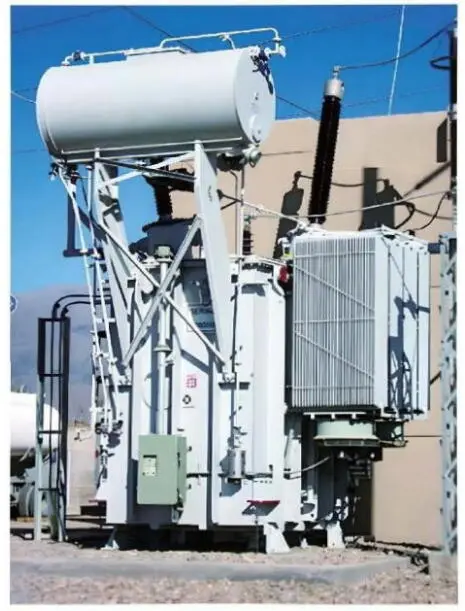
First, write down the load characteristics, such as peak demand, power factor, harmonic content, and the amount of growth that is expected over the asset's 30-year life. The voltage levels on both sides, the short-circuit resistance needs, and the preferred cooling method must all be in line with the standards for infrastructure and utility connections. Basic Insulation Level ratings should take into account the amount of lightning and switching surges that happen in the area.
Environmental factors have a big effect on design choices. According to IEC 60076-2 rules, installations higher than 2000 meters need to be derated because the lower air density affects cooling and insulation gaps. To keep insulating materials from wearing out faster, high ambient temperatures require either better cooling systems or more conservative thermal ratings. In seismic zones, tanks must be built with extra support, and mooring systems must meet building codes.
Prioritize manufacturers holding ISO 9001:2015 certification and product approvals from independent testing authorities. 6300kVA~100000kVA dual-winding transformer with OLTCs should pass all regular tests and tests to see if they can handle short circuits at approved labs like the National Transformer Quality Supervision and Inspection Center. Our SSZ11-40000/110 product passed these tough tests, showing that it is mechanically and electrically sound even when something goes wrong.
For foreign projects, following the rules for certification is very important. The IEC 60076 series sets guidelines for how transformers should work around the world, while the IEEE C57 series covers areas in North America. CE marking shows that the product meets European standards, and UL certification lets it be used in utilities and factories in the United States. For full traceability, make sure that the manufacturer's quality documentation includes test reports, material certificates, and factory acceptance test protocols.
It usually takes four to six months from the time an order is placed until it is delivered for standard designs with common voltage ratios and OLTC configurations. Customised specifications, such as impedance values that aren't standard, specialised cooling systems, or seismic upgrades, can lead to times of eight months or longer. Framework deals help big projects because they lock in prices and make sure there is enough production capacity. This makes sure that delivery dates are predictable across multiple units.
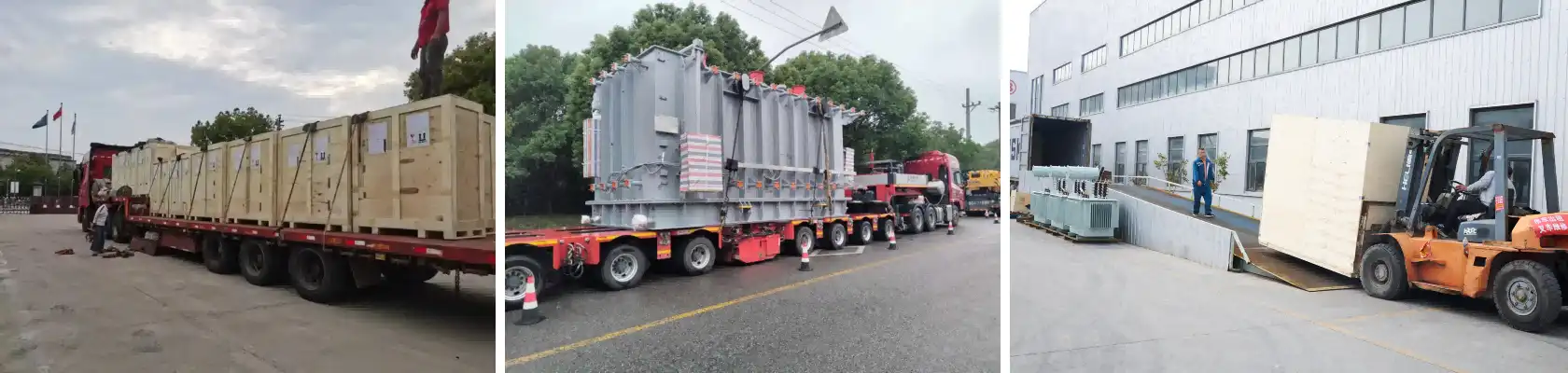
Moving 100000kVA transformers presents special difficulties in terms of operations. When shipping weights are more than 150 tonnes, heavy-haul trucking and route surveys are needed to make sure that bridge load ratings and overhead clearances are correct. Long-distance moves are cheaper by rail, but the last mile of delivery always includes organised road transport and crane unloading at the installation site.
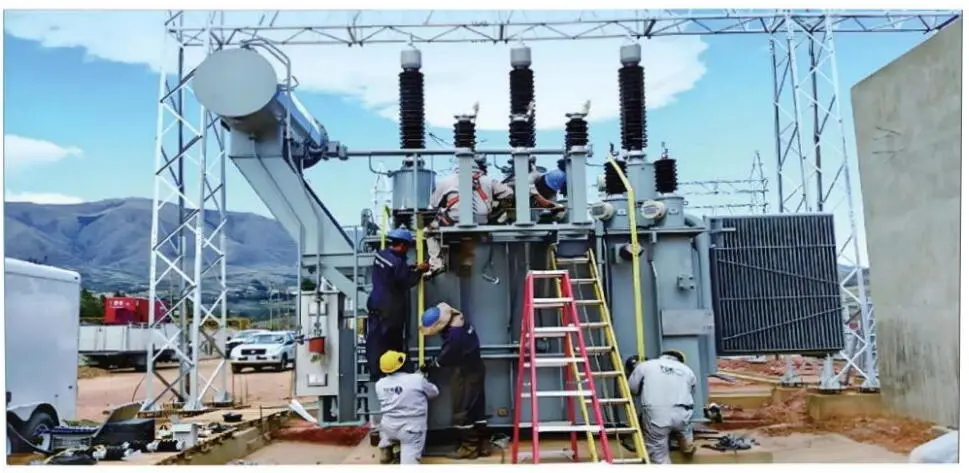
Dissolved Gas Analysis, which is done every three months, finds small problems before they become big ones. If the amounts of hydrogen or acetylene are high, it means that there is partial discharge or arcing inside the tank, which needs to be looked into further. Testing the quality of the oil checks for acidity, moisture, and dielectric strength to see how healthy the insulation system is and how long it will last.
Particular care needs to be given to the 6300kVA~100000kVA dual-winding transformer with OLTC mechanisms. Every year, check the contact resistance at each tap point to find wear trends. Make sure that the timing of the process stays within the manufacturer's guidelines. For example, the whole tap change cycle should take between 3 and 5 seconds. Check bridge resistors and vacuum interrupters for signs of wear and replace parts before they reach the end of their useful life.
Frequency Response Analysis finds changes in the shape of the windings that are caused by mechanical stress or damage during shipping. By comparing baseline measurements taken during commissioning to tests that are done on a regular basis, small changes in geometry can be seen that cannot be seen with normal resistance or ratio tests. This method of diagnosis finds structural problems before they become turn-to-turn faults, which stops service failures.
Hotspots on bushings, tap changer sections, or radiator panels can be found using thermal imaging during heavy operation. Temperature differences of more than 10°C between neighbouring parts should be looked into. Monitoring partial discharge in shielded areas during commissioning and regular testing makes sure that the quality of the insulation stays below 100pC at 1.5 times the rated voltage divided by the root of three. This proves that the dielectric will remain intact over time.
For forced-air cooling systems to work well, the radiator fins need to be cleaned on a regular basis. Dust or other flying particles work as thermal insulation, making cooling less effective and raising temperatures inside. Maintenance schedules say that fan motor bearings need to be oiled, and control circuits need to be checked to make sure that automatic fan staging works when load peaks occur.
Multiple temperature monitors are placed at hotspots in the windings and along oil circulation lines in our transformers to provide clever thermal tracking. With these systems, workers can see thermal performance in real time, which lets them change loading methods during extreme weather or sudden demand spikes. When thermal management is done right, insulation ages at the rate that was planned, giving it a full 30-plus-year service life under normal conditions.
When it comes to voltage stability, operational flexibility, and long-term dependability, a high-capacity 6300kVA~100000kVA dual-winding transformer with OLTC technology really shines. When you combine exact voltage regulation, the ability to handle ongoing loads, and strong thermal performance, you get solutions to some of the biggest problems that utilities, factories, and green energy projects face. By choosing the right size, checking the manufacturer's certifications, and following strict upkeep procedures, these assets will work as expected while keeping the total cost of ownership low. We have successfully sold transformers to utilities and industry clients around the world that go beyond IEC and IEEE standards. Our transformers have been through extensive testing and come with service promises that last for decades.
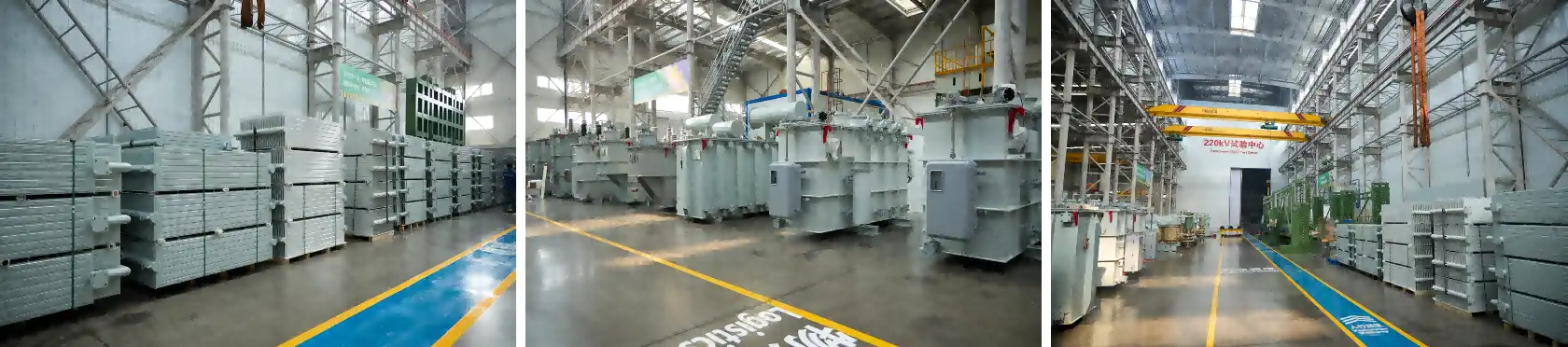
When compared to older oil-arc designs, modern OLTC mechanisms that use vacuum interrupters have a lot less oil contamination. This means that repair will happen every five to seven years instead of every three years. Being able to change voltage while it's being used keeps service from being interrupted, keeps power quality stable when load changes, and adapts automatically to new grid conditions.
The choice of capacity is based on the high load needs along with the amount of space needed for future growth. A 6300kVA unit is good for area distribution that serves a high demand of less than 5000kVA. For factories with loads that are more than 40,000kVA or utility substations that serve densely populated cities, the power needs to be rated at 100,000kVA so that it can start motors and keep the voltage stable during demand surges.
When 6300kVA~100000kVA dual-winding transformer with OLTCs are properly built, units are more than 99.7% efficient at 50% load. Total losses include losses due to core magnetisation that are not affected by load and losses due to resistive windings that are proportional to the square of the current. When transformers are run at 40 to 80% of their maximum capacity, they work at their most efficient during normal daily load cycles.
Transformers can work at heights above 2000 meters as long as they are derated according to IEC 60076-2 standards. Thinner air makes cooling less effective and requires bigger gaps between insulation. Manufacturers offer altitude correction factors that can be used to make sure that the rated capacity and basic insulation levels are right for each site.
Every 50,000 to 100,000 processes, or every five to seven years, OLTC devices need to be checked. As part of maintenance, you check the time of operations, measure the wear on the contacts, and test the quality of the oil. Intelligent monitoring systems keep track of the number of operations and let operators know when maintenance is due, which lets them use predictive maintenance strategies.
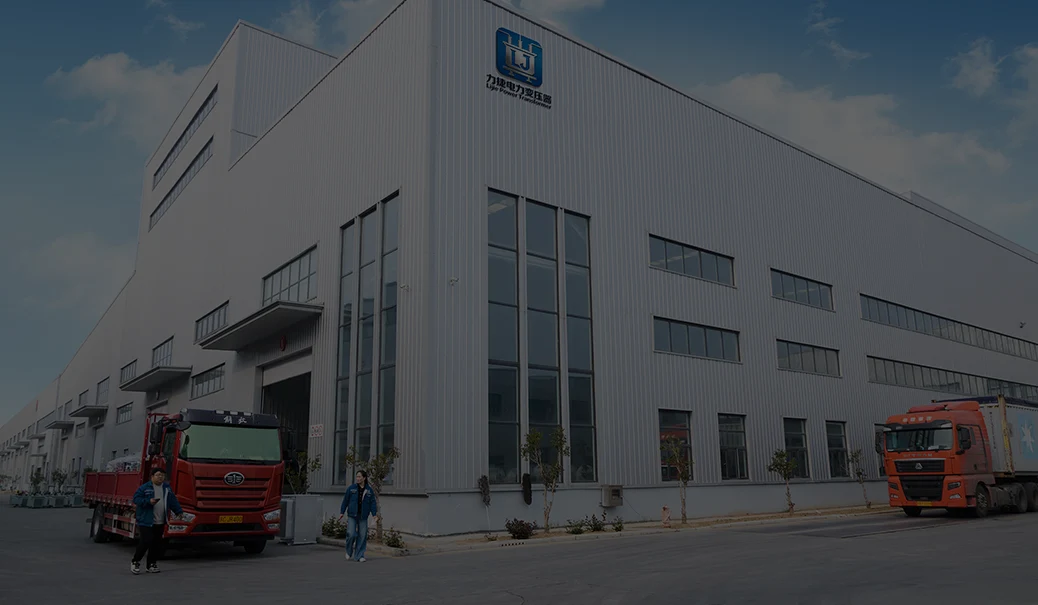
In China, Lijie Electric Power Technology Group runs two advanced production facilities that cover 500,000 square meters. The companies hire more than 2,000 people, including 160 engineering specialists with doctoral and master's degrees. Ultra-high voltage transformers with ratings of 500kV or more are in our product line, along with specialized units for use in utilities, green energy, and industry. Each 6300kVA~100000kVA dual-winding transformer with OLTC goes through strict tests at the National Transformer Quality Supervision and Inspection Center that earn it ISO 9001:2015, CE, UL, and IEC certifications. We want buying managers and expert decision-makers to talk to our engineering team about what your project needs. You can email us at lijieelectrical@gmail.com or go to lijie-electrical.com to learn more about our custom solutions, which come with our reputation for reliability and low prices as a top supplier.
1. International Electrotechnical Commission. "Power Transformers – Part 1: General." IEC 60076-1:2011, Fourth Edition, 2011.
2. Institute of Electrical and Electronics Engineers. "IEEE Standard General Requirements for Liquid-Immersed Distribution, Power, and Regulating Transformers." IEEE C57.12.00-2015, Revision of IEEE C57.12.00-2010, 2015.
3. Harlow, James H. "Electric Power Transformer Engineering." Third Edition, CRC Press, Taylor & Francis Group, 2017.
4. Kulkarni, S.V. and Khaparde, S.A. "Transformer Engineering: Design, Technology, and Diagnostics." Second Edition, CRC Press, 2013.
5. Heathcote, Martin J. "J & P Transformer Book: A Practical Technology of the Power Transformer." Thirteenth Edition, Newnes, Elsevier, 2007.
6. Karsai, K., Kerenyi, D., and Kiss, L. "Large Power Transformers." Studies in Electrical and Electronic Engineering, Volume 25, Elsevier Science Publishers, 1987.
YOU MAY LIKE
10%20type%20dry-type%20distribution%20transformer.webp)


12%20type%20epoxy%20resin%20cast%20transformer.webp)

April 27, 2025
With a tight project schedule, the manufacturer delivered on time, and on-site technical personnel provided guidance throughout the entire installation and commissioning process; the collaboration was highly efficient and hassle-free.
July 2, 2025
During the preliminary phase, a selection plan was custom-tailored based on the actual site load requirements, resulting in a high degree of parameter compatibility. After-sales support responds within two hours, and ongoing technical support for operation and maintenance is comprehensive; we feel completely confident in a long-term partnership.
November 18, 2025
Deployed as a supporting component for a 35kV grid-connection project at a photovoltaic power station, the equipment operates for an average of 16 hours daily. It demonstrates excellent control over no-load losses, ensures smooth power generation and grid integration, and effectively reduces the station's overall energy consumption.
January 30, 2026
Under the continuous, high-load operating conditions of a factory production line, the equipment maintains stable electrical parameters and exhibits strong overload resistance, thereby guaranteeing an uninterrupted power supply for industrial production.
April 3, 2026
Integrated as a supporting component for a new energy photovoltaic grid-connection system, the manufacturer provided professional technical coordination and timely after-sales support, ensuring seamless adaptation to the specific electrical operating conditions required for grid integration.