April 27, 2025
With a tight project schedule, the manufacturer delivered on time, and on-site technical personnel provided guidance throughout the entire installation and commissioning process; the collaboration was highly efficient and hassle-free.
Jul 30, 2026
When utility operators need infrastructure that can withstand decades of continuous service under demanding environmental conditions, they turn to an Oil-Immersed Transformer Supplier. These specialized manufacturers design, engineer, and deliver liquid-filled power transformers where the core and windings remain submerged in insulating oil, enabling superior thermal dissipation and dielectric protection. This approach addresses critical challenges including thermal runaway in high-capacity transmission networks, dielectric failure in humid coastal substations, and the requirement for operational reliability spanning 30 years or more while maintaining stable voltage regulation across complex grid topologies.
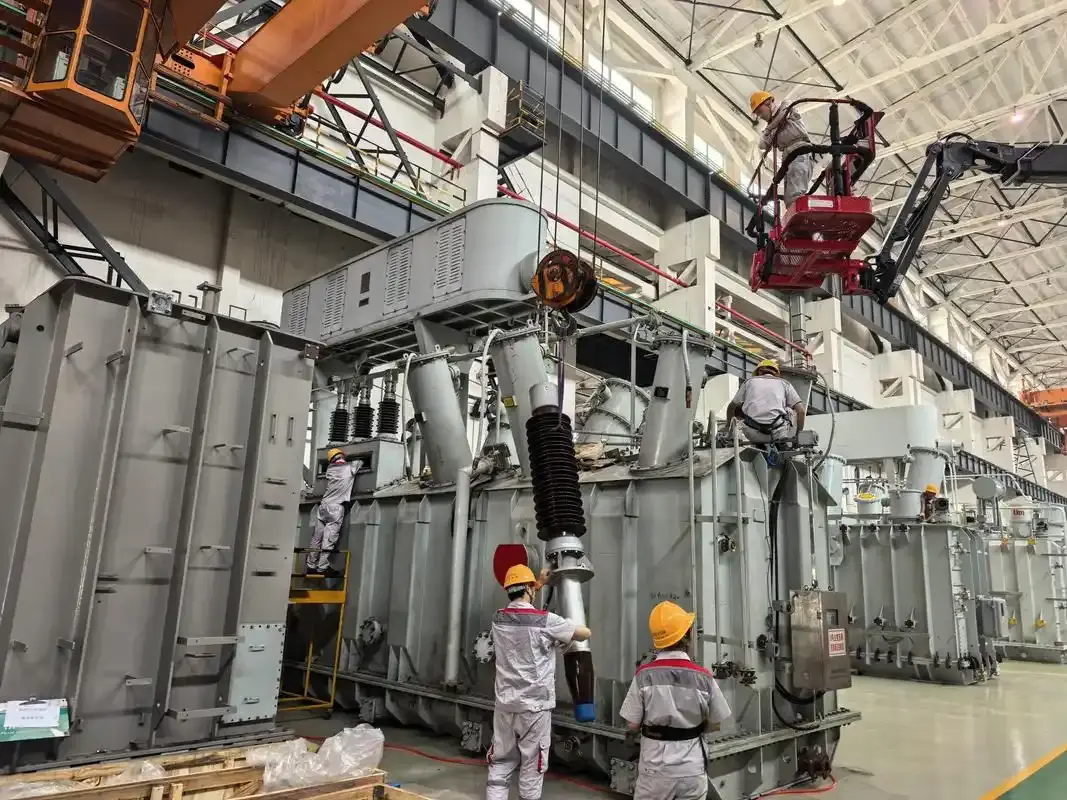
Because they are so good at managing heat and keeping things from leaking, oil-immersed power transformers have become the backbone of utility networks all over the world. These units are different from dry-type ones because they use special insulation oils to keep the core and windings cool while they're working. The liquid medium takes in the heat that is released when electricity is lost and sends it to the radiators or forced cooling systems. This stops localised hotspots that could damage the insulation or shorten the life of the equipment.
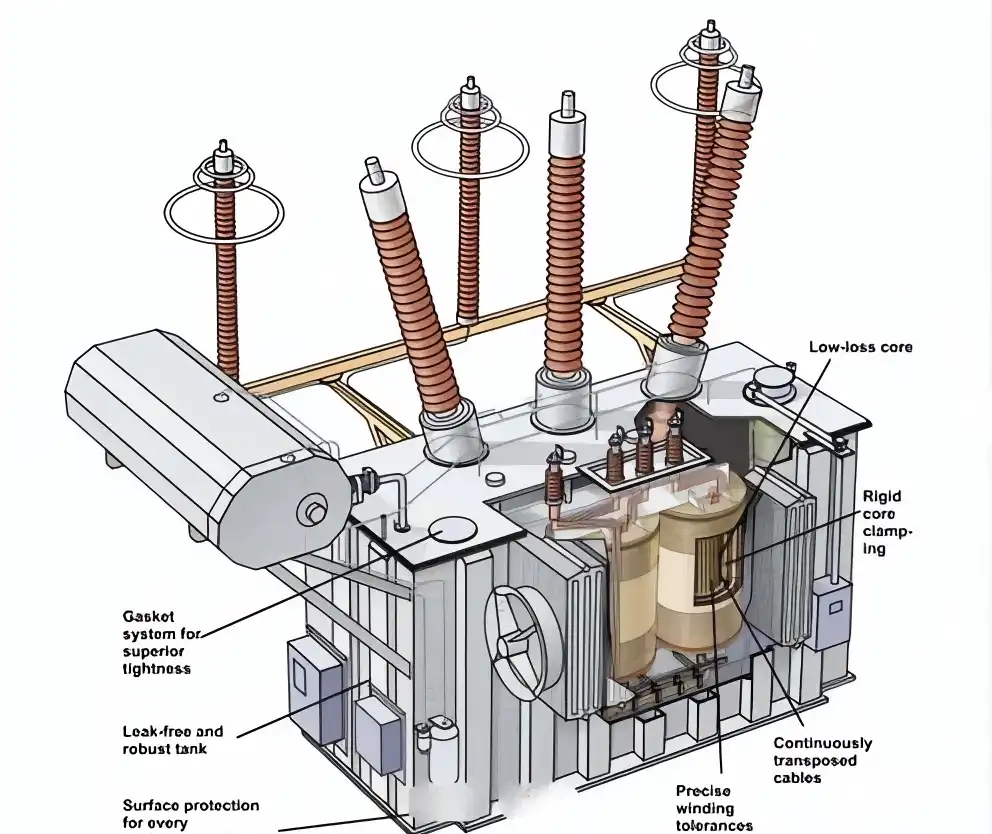
Oil-immersed versions are much better at cooling than air-cooled transformers by a large amount. Mineral oil, which is usually used as an insulator, is about 100 times better at conducting heat than air. This feature makes it possible for small designs to work even at very high voltages, which are very hot. Biodegradable esters and silicone-based fluids, in addition to mineral variants, offer better fire safety and environmental protection, meeting strict safety standards in urban settings or areas that are sensitive to the environment.
Modern oil-filled transformer tanks are made of steel that doesn't rust and epoxy coatings that make them last longer in harsh environments. Modern oil preservation systems, like nitrogen gas blanketing and sealed expansion tanks, stop water from getting in and oxidation from happening, which are two main reasons why insulation wears out. Buchholz relays find unusual gas production from inside faults, and conservator designs keep the oil-air contact from being exposed to too much air. These engineering improvements are in line with IEC 60076 standards and make sure that the equipment works reliably throughout its operational window.
Depending on the voltage class and load factor, oil-immersed transformers lose between 0.25% and 0.5% of their maximum capacity in energy. Compared to less efficient options, these levels of efficiency save a lot of money over the course of 30 years of running. Grid users who are interested in the total cost of ownership rather than just the purchase price find liquid-filled designs especially appealing because they have low no-load losses and require less upkeep.
It can be hard for procurement teams in charge of large-scale utility infrastructure to find partners who can provide both excellent technical service and a reliable supply chain. The selection process starts with making sure that all the project-specific needs are clearly understood. It then moves on to judging the Oil-Immersed Transformer Supplier's skills in a number of areas that have a direct effect on the project's long-term success.
Specifications for transformers are based on their capacity ratings, voltage classes, and impedance values. Choosing the right Oil-Immersed Transformer Supplier helps customers ensure that transformer specifications match their project requirements, operating conditions, and industry standards. Most utility uses need units between 10 MVA distribution transformers working at 35 kV and 500 MVA power transformers working at 220 kV or higher. A professional Oil-Immersed Transformer Supplier can provide equipment with suitable capacity ratings, voltage levels, and technical documentation for different applications. Specific amounts of loss must meet efficiency standards under IEC 60076-20 or DOE rules. Short-circuit withstand capability must match fault current estimates for the installation site. Working with an experienced Oil-Immersed Transformer Supplier allows engineers and buyers to select transformers with reliable performance and compliance with required standards. Climate factors like temperature ranges, altitude, and the classification of seismic zones make technical requirements even more specific. A dependable Oil-Immersed Transformer Supplier can offer customized solutions that consider environmental conditions, operational safety, and long-term reliability. For large-scale power projects, selecting a trusted Oil-Immersed Transformer Supplier ensures better equipment quality, professional support, and efficient energy transmission performance.
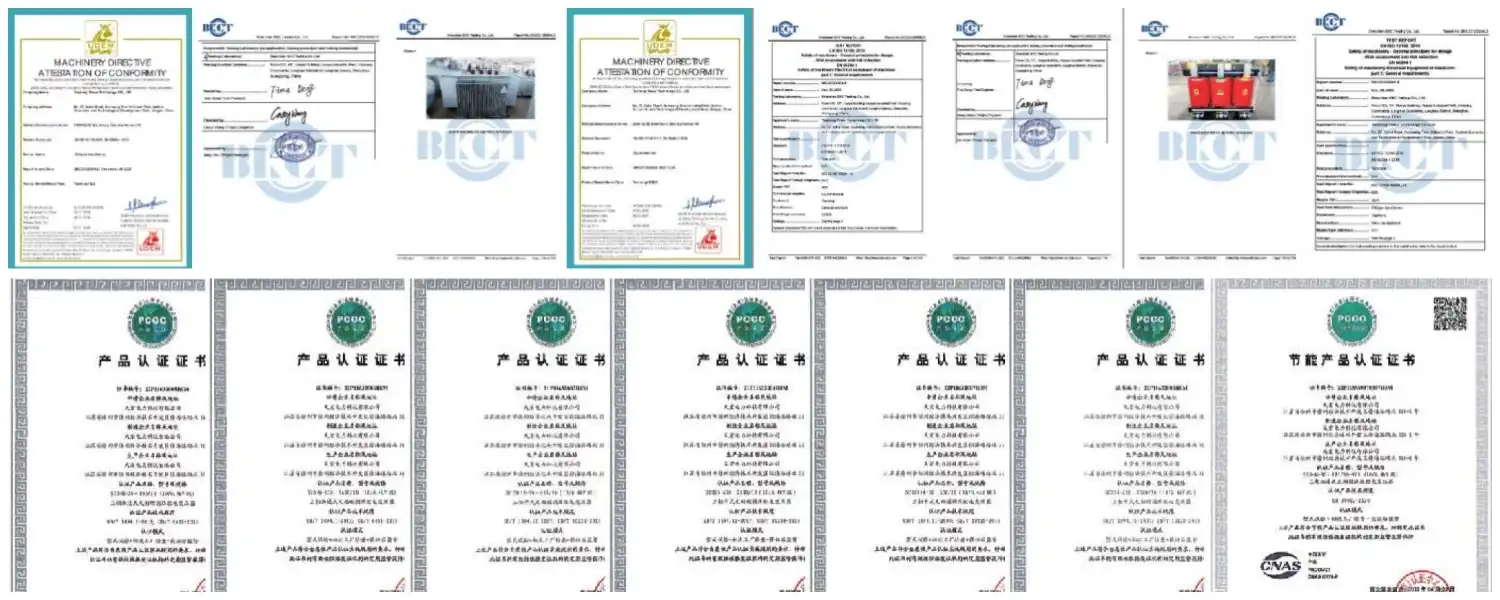
Manufacturers of reliable liquid-filled transformers keep both ISO 9001:2015 quality management certification and ISO 14001 environmental compliance. Product-specific certifications, such as IEC 60076 series compliance, CE marking for European markets, and UL listing for North American installations, show that the product meets safety and performance standards in those regions. The National Electric Power Certification Center's PCCC certification adds to the safety of equipment that is linked to the power grid, and CQC energy efficiency marks make sure that conservation rules are being followed.
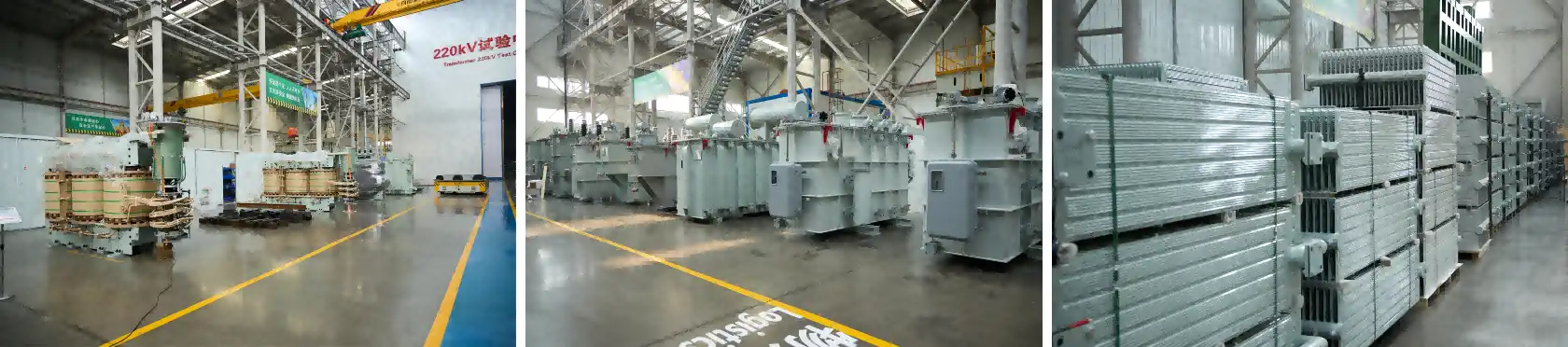
Large utility projects need suppliers who can reliably make large batches of products and whose lead times can be predicted. Facilities with more than 100,000 square meters of production space can usually handle orders for more than one unit without affecting delivery times. Exporting to international markets before shows that you know what paperwork is needed, how to deal with customs, and how to coordinate global logistics. After-sales support infrastructure, such as field service teams, spare parts availability, and technical advice, is especially helpful when fixing operational problems or planning maintenance tasks.
Systematic repair plans have a direct effect on how long oil-immersed transformers work and how reliable they are. When utility companies use proactive tracking and preventive care programs, equipment usually lasts longer than 35 years. On the other hand, reactive maintenance methods often cause equipment to break down early and need expensive emergency repairs.
The most useful diagnostic tool for finding small problems before they become big ones is still dissolved gas analysis (DGA). By taking samples every 12 to 24 months, engineers can see changes in the amounts of hydrogen, methane, ethane, ethylene, and acetylene—all of which can catch fire—that show certain types of faults, like partial discharge, overheating, or arcing. Testing the moisture content makes sure that the dielectric strength stays within acceptable limits, which for mineral oil systems are usually below 50 ppm. Acidity tests find oil breakdown products that could speed up the ageing of insulation.
Visual inspections find problems on the outside, like oil leaks from seals or welded seams, corrosion on the tank's sides, and issues with how the cooling fans or pumps work. A reliable Oil-Immersed Transformer Supplier can provide transformers with advanced monitoring compatibility and support customers in maintaining long-term operational stability. Online tracking tools keep an eye on things like the temperature of the top oil, the temperature of the hotspots in the windings, the load current, and the bushing power factor in real time. An experienced Oil-Immersed Transformer Supplier helps users select equipment that works effectively with predictive maintenance systems and modern monitoring technologies. These constant amounts of data make it possible for predictive analytics to guess when maintenance is needed based on how things are actually working instead of on set dates. Before they get worse, thermal imaging surveys find connections and tap changer mechanisms that are heating up in strange ways. Choosing a professional Oil-Immersed Transformer Supplier ensures access to high-quality transformer solutions, technical guidance, and reliable support for inspection and maintenance processes. A trusted Oil-Immersed Transformer Supplier can help power operators improve equipment reliability, reduce unexpected failures, and extend transformer service life through effective maintenance strategies.
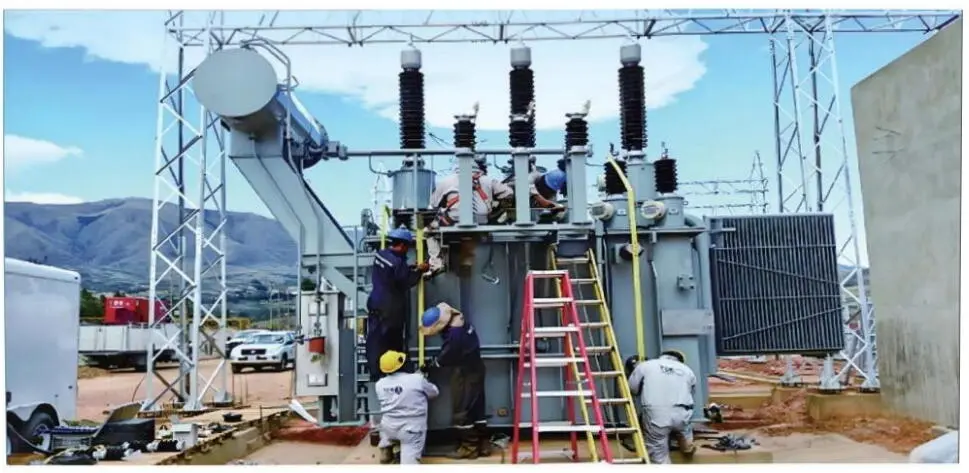
When working with energised high-voltage tools, safety rules must be followed to the letter. Lockout-tagout procedures keep power from being turned on by mistake during repair. Workers can avoid electrical accidents by wearing safety gear that is rated for arc flash hazards. The way oil is sampled and handled takes into account the risk of fire and the rules about how to properly get rid of petroleum products. Large transformer units need special rigging tools and route planning to get them where they need to go because of size restrictions on roads and bridges.
Getting through the acquisition lifecycle quickly and correctly lowers project risks and makes sure that delivered equipment matches technical specifications. Knowing each step of the procurement process helps purchasing managers predict what will be needed and keep to the plan.
In thorough RFQs, there are detailed technical requirements like voltage ratios, connection groups, cooling class names, and working conditions in different environments. Standards like IEC, ANSI, or GB should be listed in the documentation needs, along with any certifications and test records that are needed. Manufacturing lead times, which can be anywhere from 16 to 32 weeks depending on the unit size and level of customisation, must be taken into account when setting delivery dates. Including quantities for both the initial delivery and possible future orders helps suppliers get the best prices while also giving the project room to grow.
Framework agreements for multi-year supply deals ensure the sharing of production capacity and keep prices stable. Payment plans usually include a down payment when the order is confirmed, payments in stages based on manufacturing goals that are confirmed by plant inspections, and the full payment when the job is finished and commissioned. Being able to customise is important when normal catalogue items can't fit specific site limits, altitude derating needs, or unique tap changer configurations. Having in-depth technical conversations during the contracting phase keeps changes or delays in production from being too expensive or too long.
When you export something, you need to translate documents like business invoices, packing lists, certificates of origin, and test results into the language of the country where the goods are going. Working with an experienced Oil-Immersed Transformer Supplier can help ensure that all export documents are prepared correctly and meet international shipping requirements. Transportation damage should be covered by insurance, and the value should be based on replacement cost instead of depreciated value. A professional Oil-Immersed Transformer Supplier can provide support with product certifications, technical documents, and export procedures to reduce potential delays during international transactions. Incoterms make it clear when responsibility changes hands. For complicated utility equipment, DAP or DDP terms are often preferred to make sure the supplier handles customs clearance and final delivery. Choosing a reliable Oil-Immersed Transformer Supplier allows buyers to better manage logistics arrangements and ensure smooth delivery of transformer equipment. When choosing a port, shipping prices and the logistics of getting the goods to the end installation site are both taken into account. A trusted Oil-Immersed Transformer Supplier with global export experience can provide comprehensive solutions that include transportation coordination, documentation support, and reliable after-sales service. This makes the entire purchasing process more efficient and reduces risks for large-scale power projects.
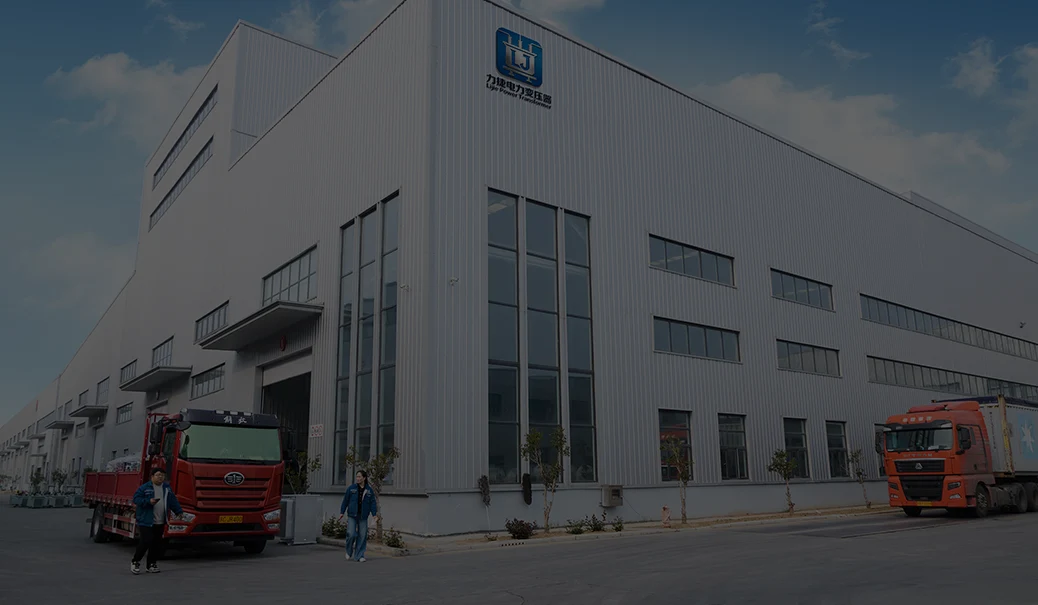
We at Lijie Electric Power Technology Group are known for providing transformer solutions that meet the strict needs of utility building projects. Our two main factories, one in Xuzhou and one in Nantong, are each 500,000 square meters big and have advanced production lines that are run by more than 2,000 skilled workers, 160 of whom have doctoral and master's degrees in engineering. We can confidently serve the most demanding utility applications because we have the size and knowledge to do so.
We sell 110 kV and 220 kV power transformers for transmission and sub-transmission networks, as well as ultra-high-voltage transformers with ratings of 500 kV and higher. For urban grid needs, distribution transformers with voltages below 35 kV are used. In industries, mine transformers and rectifier transformers are examples of specialised units. Before being shipped, each unit goes through strict tests that are checked by both the National Transformer Quality Supervision and Inspection Center and the Wuhan High Voltage Research Institute. This makes sure that the units meet performance standards.
Quality assurance includes more than just regular tests. It also includes full type tests and special exams. Routine test protocols compare the design specifications to the actual winding resistance, voltage ratio accuracy, polarity, and no-load losses. In type tests, representative units are heated up while being overloaded for a long time, and lightning impulse tests are used to simulate short-term overvoltages. Special tests, like measuring the partial discharge and the ability to withstand a short circuit, make sure that the insulator is solid and the mechanical strength is good. Hermetic sealing is confirmed by tank pressure tests, and DGA baseline measurements set reference values for future condition monitoring.
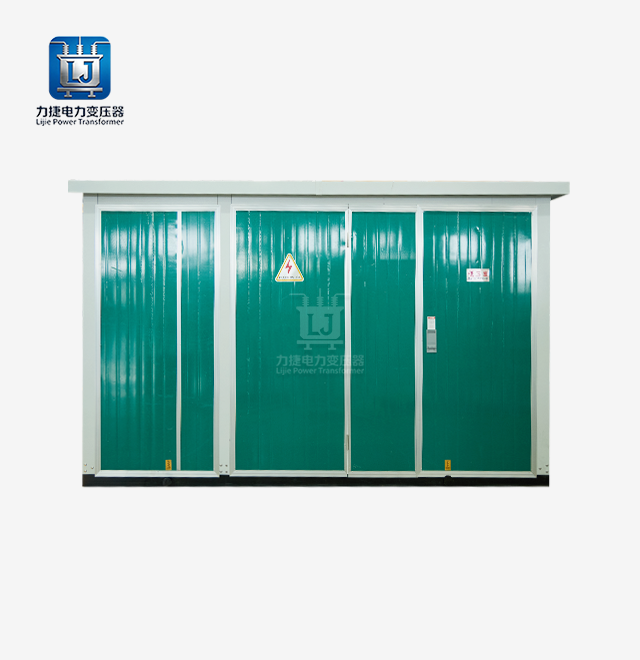
The fact that our quality management system is ISO 9001:2015 certified shows that we follow process rules that are known all over the world. Products are marked with the CE mark for sales in Europe and the UL mark for use in North America. Our 10 kV and 35 kV power transformers and compact substations are IEC-compliant, which makes exporting to international markets easier with fewer rules to follow. These certifications show that we are dedicated to meeting the needs of different regions while keeping manufacturing standards the same in all of our facilities.
We have helped utility companies and factories in Australia, New Zealand, India, Madagascar, Vietnam, Malaysia, Indonesia, Kazakhstan, Tajikistan, Uzbekistan, Kyrgyzstan, Egypt, and Kenya with their transformer needs. This foreign collection shows that we can work with a wide range of technical standards, environmental conditions, and transportation issues. We've built long-term relationships with these customers by putting a focus on service quality, professional help during commissioning, and timely contact throughout the lifecycle of the product.
Environmental duty guides how we make things and how we come up with new products. We are also committed to using low-lead soldering methods, providing biodegradable ester insulating fluids as alternatives to mineral oil, and making the best use of energy during production. These actions are in line with global goals for sustainability and help customers who want to leave less of an impact on the earth. Being named a "National High-Tech Enterprise" and a "Specialised, Refined, and New 'Little Giant'" company shows that we are still putting money into new ideas and improving technology.
To choose a reliable Oil-Immersed Transformer Supplier, you need to carefully evaluate their technical expertise, quality management systems, production capacity, delivery reliability, and customer service. A professional Oil-Immersed Transformer Supplier can provide advanced oil-immersed transformer solutions designed for utility networks that require stable performance and long-term operation. Oil-immersed designs are widely preferred because they provide excellent thermal management, stronger insulation systems, high operational stability, and a proven service life of several decades. When selecting an Oil-Immersed Transformer Supplier, customers should consider manufacturing experience, testing standards, customization capabilities, and the supplier’s ability to deliver reliable transformer products for different power applications. By working with an experienced Oil-Immersed Transformer Supplier, operators can improve asset reliability through planned maintenance, condition monitoring, and preventive inspections, which help extend transformer lifespan, reduce unexpected failures, and minimize unplanned outages. As global power infrastructure continues to grow, choosing the right Oil-Immersed Transformer Supplier becomes increasingly valuable for ensuring safe, efficient, and sustainable energy transmission.
Mineral oil is still the most common insulating fluid because it is cheap, has good dielectric properties, and can conduct heat well. Natural ester fluids made from vegetable oils are biodegradable and have better fire points, which means they can be used in places where safety or environmental standards are very strict. Synthetic esters are more expensive, but they have better heat performance and last longer. The choice is based on the goals of the application, such as budget, environmental concerns, and fire safety rules.
When properly kept, oil-immersed transformers usually last between 30 and 35 years. Units that are installed in stable environments and have proactive maintenance programs that include regular oil analysis, thermal monitoring, and replacing parts when they wear out have been shown to last longer than 40 years. Condition-based maintenance is better than set replacement plans because ageing rates are affected by operational factors such as load profile, ambient temperature changes, and exposure to transient overvoltages.
Before you can get to the inside parts, electrical safety rules say that the power must be turned off, the circuit must be grounded, and lockout-tagout must be confirmed. Proper ventilation, getting rid of sources of ignition, and having fire suppression gear on hand are all parts of oil handling procedures that must take into account the risk of flammability. Protecting the environment stops oil spills from happening during sampling or replacing parts. When working near energised bushings or electrical connections, workers need to wear arc flash personal protective equipment.
Transformer options that are reliable, efficient, and last a long time are needed for utility infrastructure. Lijie Electric Power Technology Group is an Oil-Immersed Transformer Supplier and maker with a lot of experience. They combine their proven engineering skills with strict quality control to make sure they deliver equipment that meets even the most difficult project needs. Ultra-high-voltage transmission transformers and small distribution units are just a few of the many products we offer. All of them are backed by international standards like ISO 9001, CE, UL, and IEC compatibility. Our technical team is ready to help you with your purchase from the initial specification stage through commissioning and beyond, whether you need standard catalogue items or solutions that are specifically designed for your site. You can talk to us about your project needs, get detailed technical documentation, or set up a meeting with one of our engineering experts by emailing lijieelectrical@gmail.com.
1. IEEE Guide for Loading Mineral-Oil-Immersed Transformers and Step-Voltage Regulators, IEEE Standard C57.91-2011, Institute of Electrical and Electronics Engineers, New York, 2011.
2. International Electrotechnical Commission, Power Transformers – Part 1: General, IEC 60076-1:2011, Geneva, Switzerland, 2011.
3. Myers, S.D., Kelly, J.J., and Parrish, R.H., A Guide to Transformer Maintenance, S.D. Myers Inc., Akron, Ohio, 1981.
4. Heathcote, M.J., The J&P Transformer Book: A Practical Technology of the Power Transformer, Thirteenth Edition, Newnes, Oxford, United Kingdom, 1998.
5. Kulkarni, S.V. and Khaparde, S.A., Transformer Engineering: Design, Technology, and Diagnostics, Second Edition, CRC Press, Boca Raton, Florida, 2013.
6. National Electric Energy Supply and Demand Report, U.S. Energy Information Administration, Washington, D.C., 2023.
YOU MAY LIKE

12%20type%2035kV%20distribution%20transformer.webp)


11%20type%2035KV%20dry-immersed%20transformer_1778136495348.webp)


April 27, 2025
With a tight project schedule, the manufacturer delivered on time, and on-site technical personnel provided guidance throughout the entire installation and commissioning process; the collaboration was highly efficient and hassle-free.
July 2, 2025
During the preliminary phase, a selection plan was custom-tailored based on the actual site load requirements, resulting in a high degree of parameter compatibility. After-sales support responds within two hours, and ongoing technical support for operation and maintenance is comprehensive; we feel completely confident in a long-term partnership.
November 18, 2025
Deployed as a supporting component for a 35kV grid-connection project at a photovoltaic power station, the equipment operates for an average of 16 hours daily. It demonstrates excellent control over no-load losses, ensures smooth power generation and grid integration, and effectively reduces the station's overall energy consumption.
January 30, 2026
Under the continuous, high-load operating conditions of a factory production line, the equipment maintains stable electrical parameters and exhibits strong overload resistance, thereby guaranteeing an uninterrupted power supply for industrial production.
April 3, 2026
Integrated as a supporting component for a new energy photovoltaic grid-connection system, the manufacturer provided professional technical coordination and timely after-sales support, ensuring seamless adaptation to the specific electrical operating conditions required for grid integration.