April 27, 2025
With a tight project schedule, the manufacturer delivered on time, and on-site technical personnel provided guidance throughout the entire installation and commissioning process; the collaboration was highly efficient and hassle-free.
Jul 30, 2026
High-power electrical systems demand transformers that deliver unmatched reliability under extreme operational conditions. When national grid operators upgrade transmission infrastructure or industrial manufacturers install electric furnace transformers, the choice between liquid-filled and air-cooled equipment becomes critical. Working with a reputable Oil-Immersed Transformer Supplier ensures you receive products engineered to withstand localized overheating, transient overvoltages, and decades of continuous operation. These liquid-cooled units solve pain points that dry-type transformers cannot address in high-capacity environments—particularly thermal runaway risks and dielectric failure in humid coastal installations.
Oil-immersed transformers use mineral or synthetic dielectric fluids to insulate core-and-coil assemblies while simultaneously removing heat generated during load cycles. This dual-purpose design enables them to handle voltage levels from 10 kV distribution networks up to 500 kV ultra-high-voltage transmission corridors. Procurement managers in steel plants, renewable energy integrators, and EPC contractors rely on these transformers because they reduce lifetime maintenance costs and extend asset lifespans beyond 30 years. Understanding their working principles, thermal management advantages, and supplier selection criteria allows engineering teams to specify equipment that aligns with grid stability requirements and project timelines. This guide walks you through every technical and commercial consideration, ensuring your next procurement decision delivers measurable performance gains and total cost-of-ownership savings.
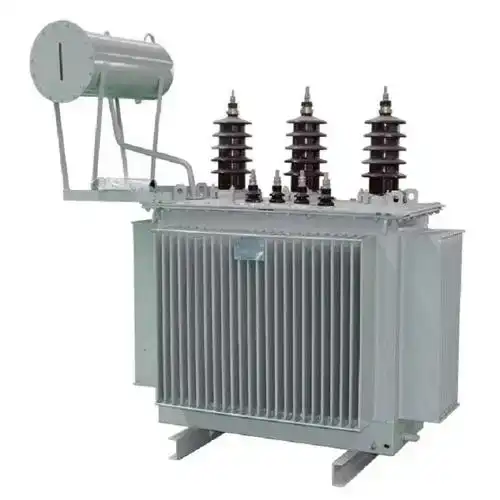
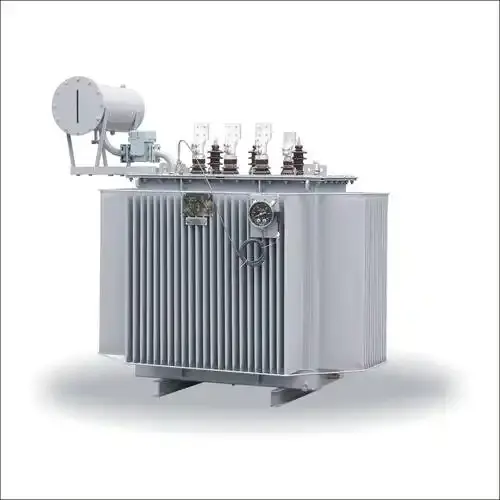
In Oil-Immersed Transformers, copper or aluminum windings and layered silicon-steel cores are submerged in shielding oil that is kept in tanks that cannot be opened. The dielectric fluid keeps the electricity from breaking down between the high-voltage wires and the grounded tank walls. This lets the winding arrangements be more compact, which saves money on materials. When the machine is running, electromagnetic induction heats up the core and windings. The oil that is moving through the machine takes this heat and sends it to outside fans or forced-air cooling systems. This convection-based heat removal keeps the temperatures of the windings below critical levels. This protects the insulation and stops it from aging faster than it should.
The oil also stops partial discharges, which are areas of high electrical stress that wear down shielding over time. The fluid raises the breakdown voltage and makes the transformer last longer by filling tiny holes in paper-wrapped wires. Leading manufacturers choose mineral oils or synthetic esters with low viscosity that stay fluid at temperatures ranging from -40°C to +105°C. This makes sure that the cooling works the same way in industrial parks at the equator and in mining sites in the Arctic.
Depending on the load profile and the environment, different cooling configurations are best. Natural convection systems, also known as ONAN (Oil Natural, Air Natural) systems, use buoyancy to move oil around and passive fan cooling to keep distribution transformers up to 10 MVA cool. Forced-air cooling (ONAF) adds fans to radiators, which makes units rated 25–100 MVA better at getting rid of heat. For power transformers bigger than 100 MVA, forced oil circulation with water-cooled heat exchanges (OFWF) is a common way to get rid of tens of megawatts of heat in a small space.
This thermal flexibility lets oil-immersed designs handle short-term overloads, which is important in case of power outages or process peaks. A unit that is the right size can work at 120% of its stated capacity for hours without breaking, but dry-type transformers could have their insulation fail in the same situation. Because the cooling systems can be changed to fit the needs of the application, liquid-filled transformers are the best choice for variable-load settings like electric arc furnaces and traction power substations.
On-load tap changers (OLTCs) are built into Oil-Immersed Transformers. They change the turns ratios when the load is full, which keeps the secondary voltage fixed even when the grid conditions change. This trait is very important for green energy projects that use solar and wind power to change the voltage. Transformer oil has a high dielectric strength and can handle higher voltage gradients. This lets manufacturers make 220 kV and 500 kV units that are smaller than their air-insulated counterparts. When national grid companies buy transmission transformers for urban substations that don't have a lot of room, they look for ones that save space.
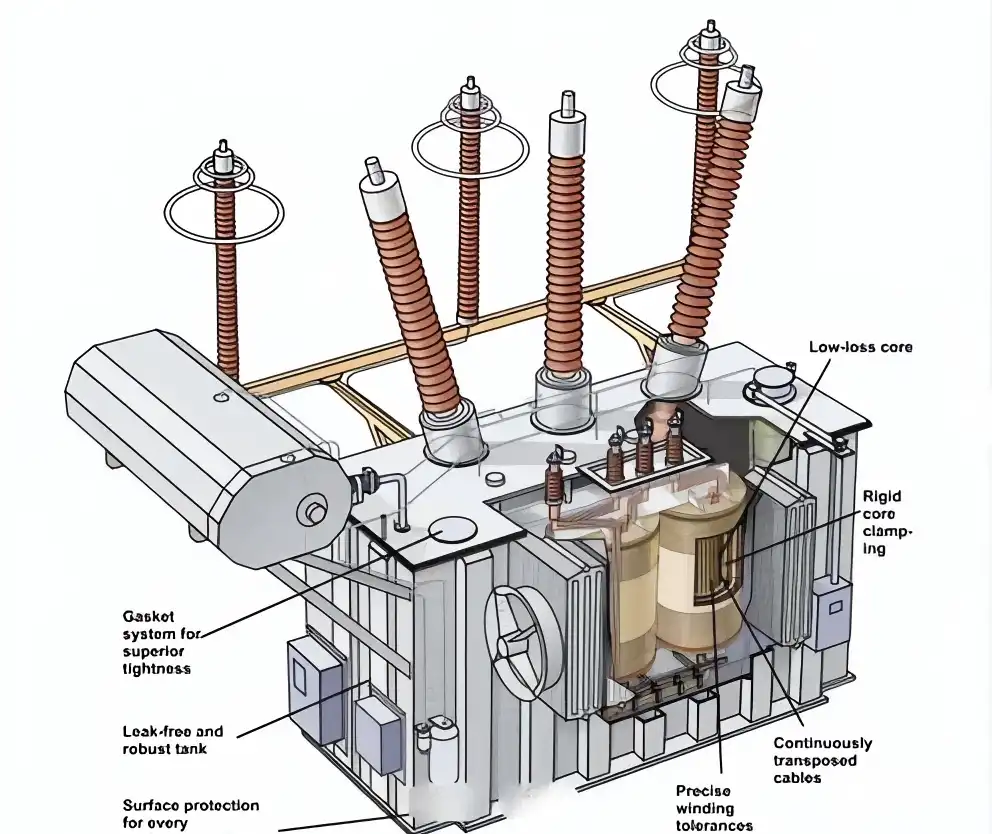
Transformer oil can absorb a lot of heat without getting too hot because it has a high specific heat capacity (about 1,900 J/kg·K for mineral oils). This feature means that they can handle more overload than resin-cast dry-type transformers, which only depend on air flow in the surrounding area. During high demand times in the summer or industrial batch processes, oil-immersed units keep the temperature of the winding hotspot below 110°C. This keeps the cellulose insulation strong.
Field data from utility operators shows that Oil-Immersed Transformers can last 35 years with only a small drop in efficiency if they are properly maintained. The oil's self-healing insulating properties let it recover from small electrical stresses, but solid insulation in dry-type units gets damaged over time and cannot be fixed. This makes it less likely that power will go out without warning, which is a big deal for buying managers who are in charge of measuring grid dependability.
Even though Oil-Immersed Transformers may cost more at first than dry-type equivalents rated below 2.5 MVA, lifecycle cost studies show that liquid-filled designs are more cost-effective for bigger capacities. A 50 MVA oil-immersed unit usually costs 30–40% less per kVA than a similar dry-type transformer. It also loses less energy, which is the main cost of operation over decades, because it manages heat better. Refurbishing Oil-Immersed Transformers by changing old oil and fixing windings further stretches their useful life, spreading out the cost of capital investments over many years.
The cost of maintenance is also going down because oil analysis can spot problems inside the transformer early on. Using dissolved gas analysis (DGA), which finds flammable gases caused by arcing or burning, planned repairs can be made before major problems happen. Dry-type transformers don't have this diagnostic window, so when the insulation breaks, they usually need to be replaced completely.
Core-and-coil assemblies are safe from mechanical shocks during transport and earthquakes because oil-filled tanks have rigid structures. This toughness is valued by mining companies that work in rural areas and by infrastructure builders who put transformers in places where earthquakes happen often. Dust, salt spray, and industrial fumes can damage dry-type insulation surfaces over time. The sealed-tank design protects interior parts from these flying contaminants.
Transformers that are immersed in oil work reliably in wide ranges of temperatures that are hard for air-cooled designs. Installations in desert substations in the Middle East and power plants in Siberia show that they can work in temperatures ranging from -50°C to +50°C. This versatility makes global sourcing easier for EPC companies working on projects in different climates, since they don't have to find different versions of the tools for each area.
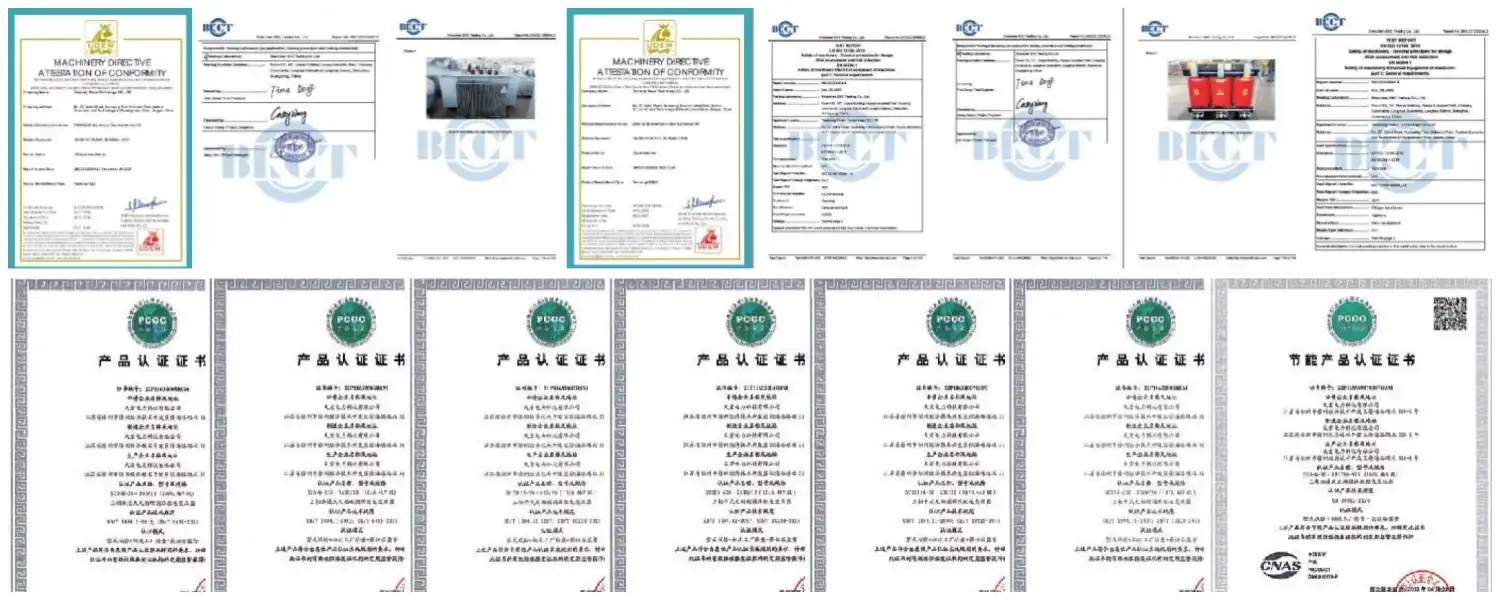
Reputable Oil-Immersed Transformer Supplier companies have quality management systems certified according to ISO 9001:2015, ensuring that manufacturing processes remain consistent from one production batch to another. A professional Oil-Immersed Transformer Supplier follows strict quality control procedures to maintain reliable transformer performance and meet international requirements. Electrical engineers should verify that transformers provided by an experienced Oil-Immersed Transformer Supplier comply with IEC 60076 standards for power transformers or IEEE C57 standards commonly applied in North America. For products exported outside the European Union, a qualified Oil-Immersed Transformer Supplier should provide transformers with the required CE marking to demonstrate compliance with applicable regulations. For installations in the United States, transformers from a trusted Oil-Immersed Transformer Supplier should meet UL certification requirements as required by the National Electrical Code. Choosing a certified Oil-Immersed Transformer Supplier helps customers ensure product safety, regulatory compliance, consistent quality, and dependable operation in different markets worldwide. A reliable Oil-Immersed Transformer Supplier provides not only high-performance transformer products but also complete certification support and technical documentation for successful project implementation.
As part of their quality control procedures, top manufacturers test every unit for winding resistance, voltage ratio, and polarity verification. Type tests, like measuring temperature rise and lightning impulse resistance, make sure that design gaps are accurate. Special tests, like measuring partial discharge, find manufacturing flaws before they are sent out. To make sure that performance claims are true, procurement teams should get test reports from reputable labs like the National Transformer Quality Supervision and Inspection Center or Wuhan High Voltage Research Institute in China, KEMA in Europe, or similar groups.
For big infrastructure projects to go smoothly, the providers need to be able to supply dozens of transformers on time. A company that has more than one production base, like 500,000-square-meter factories that make more than 5 billion RMB a year, shows that they have the size to support multi-year framework deals. The size of the workforce is also important. Companies with more than 2,000 employees, including more than 160 engineers with doctoral and master's degrees, can handle requests for customization and solve difficult technical problems.
To protect against changes in the prices of commodities, supply chain managers should check the supplier's stock of copper wires, silicon steel laminations, and cellulose insulation. When construction schedules require liquidated damages for late delivery, manufacturers with strategic stockpiles can handle short-term supply disruptions without delaying project milestones. This is a huge benefit.
For each application, a custom answer is needed. To handle high inrush currents, electric furnace transformers used to make steel need special winding designs. On the other hand, rectifier transformers used to melt aluminum need to keep harmonic distortion to a minimum. To meet safety standards underground, mining transformers need to be housed in explosion-proof cases and oiled in a way that stops fires. A good supplier will work with you on the specifications and use finite-element analysis to find the best core geometry and computational fluid dynamics to model how well the cooling works.
Support after delivery is what distinguishes leading companies from ordinary commodity sellers. Choosing a reliable Oil-Immersed Transformer Supplier ensures that customers receive comprehensive after-sales services, long-term technical assistance, and professional support throughout the transformer lifecycle. Project risks are significantly reduced when a trusted Oil-Immersed Transformer Supplier provides complete warranties lasting 24 to 36 months along with on-site operational support. Technical training offered by an experienced Oil-Immersed Transformer Supplier helps client maintenance teams improve their skills in areas such as dissolved gas analysis (DGA) interpretation and OLTC servicing, which can extend transformer service life and reduce operational errors. When unexpected issues occur, a professional Oil-Immersed Transformer Supplier with responsive after-sales teams can provide replacement components within 48 hours, helping customers maintain business continuity and protect their operational reputation. By working with a dependable Oil-Immersed Transformer Supplier, companies can benefit from reliable products, efficient maintenance support, and long-term cooperation that improves transformer performance and system reliability. A trusted Oil-Immersed Transformer Supplier delivers not only advanced transformer equipment but also complete lifecycle services that create lasting value for customers.
It's hard for procurement managers to balance the costs of large purchases with the costs of running the business for many years. Suppliers should give thorough cost reports that separate the costs of base equipment, shipping, guidance during installation, and spare parts. Both parties are protected from market volatility by clear pricing models, which include fixed-price contracts with price increases linked to commodity indices.
Cutting down on energy use has a direct effect on running costs. Over the course of 30 years, an electric generator with 0.8% total losses instead of 1.0% losses will save a lot of money on energy costs. When comparing bids, use local utility rates and discount rates to figure out the net present value of the energy savings and then compare that to the difference in purchase price. More efficient products usually deserve higher prices, especially in places where energy costs are high or where carbon taxes are in place.
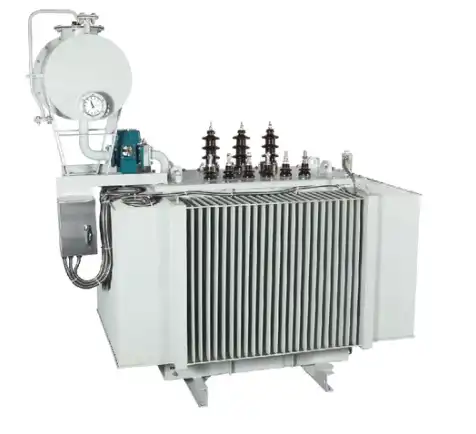
Visual checks should be done once a month to look for oil leaks around radiator joints, gaskets, and bushing seals. Puddles under the generator show that the seal is wearing down or there are weld cracks that need to be fixed right away to keep water out. Check the oil level gauges to make sure the fluid stays between the minimum and maximum marks. Low levels let air into the upper windings, which raises hot spots' temperatures and speeds up aging.
Infrared thermography is used to keep an eye on temperatures and find strange heating patterns. Hotspots on the walls of the tank indicate problems with the internal winding or stopped oil flow paths. The functioning of the cooling system, including the radiator valves, fan motors, and pump bearings, should be checked every three months. If radiator fins get clogged, they can't remove heat as well; cleaning them can fix this problem without spending a lot of money.
Taking oil samples once a year can provide valuable information about the health and operating condition of a transformer. A professional Oil-Immersed Transformer Supplier understands the importance of dissolved gas analysis and can provide transformer solutions designed for reliable long-term operation. The seven main gases monitored in dissolved gas analysis include hydrogen, methane, ethane, ethylene, acetylene, carbon monoxide, and carbon dioxide. An experienced Oil-Immersed Transformer Supplier can support customers with advanced transformer monitoring strategies and maintenance recommendations based on these diagnostic results. The concentration levels and ratios of these gases help identify different types of internal faults. For example, elevated acetylene levels usually indicate arcing between conductors, while increased ethylene levels may suggest excessive heating of cellulose insulation. By continuously tracking these gas trends over many years, operators can apply predictive maintenance strategies and schedule repairs during planned downtime instead of waiting for unexpected and costly failures. Working with a reliable Oil-Immersed Transformer Supplier helps utilities and industrial users improve asset management, extend transformer service life, and maintain stable power system performance. A trusted Oil-Immersed Transformer Supplier provides not only high-quality transformer equipment but also technical support for condition monitoring and lifecycle maintenance.
Moisture content and dielectric strength tests are used to check the quality of oil. If there is more than 30 parts per million of water in the insulation, it stops working well and sludge starts to form. Filtration or replacing the oil brings the dielectric strength back to the levels required. Acidity tests (neutralization number) find oxidation products that eat away at metal parts; results higher than 0.5 mg KOH/g mean that the oil needs to be reclaimed or replaced.
On-load tap switches have the most wear and tear because they move through contact areas thousands of times a year. Manufacturers say that OLTC should be serviced every 100,000 actions or five years, whichever comes first. This service includes checking the contacts, greasing the drive mechanism, and replacing the switching oil. If you don't do any upkeep on your OLTC, the contacts will burn, and the voltage control will eventually stop working.
Bushing conditions get worse because of water absorbing and spreading across porcelain surfaces. Insulation losses are measured by power-factor tests once a year; higher numbers mean that the insulation is breaking down and needs to be replaced. By keeping the bushings clean and covering them with silicone, you can stop surface corrosion that speeds up electrical tracking.
Mineral oil use is limited by environmental laws because it stays in soil and groundwater for a long time after spills. Vegetable oils like soybean, rapeseed, and sunflower oil make natural ester fluids that break down over 95% in weeks, while petroleum products take decades. These bio-based dielectrics also have higher fire points (>300°C vs. 160°C for mineral oil), which makes indoor substations and crowded places less likely to catch fire.
Another option is synthetic esters, which are biodegradable and more stable against oxidation. Their lower viscosity at low temperatures makes cold-weather starting work better, which is good for setups in northern regions. Bio-based and synthetic fluids are 50–100% more expensive than mineral oil, but lifecycle analyses show that they are better for the environment and lower insurance rates more than make up for the extra cost.
When loads are low, hybrid cooling systems use natural airflow. When loads are high, they use on-demand forced cooling, which cuts down on wasted energy. When compared to constant-speed designs, variable-speed fan drives cut extra power use by 30–40% by changing the speed of the fan to match the temperature needs. With these efficiency gains, utilities can meet their carbon reduction goals and cut costs at the same time.
Using phase-change refrigerants in thermosiphon heat exchangers makes them better at moving heat than regular oil-to-air radiators, which lets designers make transformers that are smaller. This technology works well in urban substations that don't have a lot of room because it minimizes the equipment's footprint, which justifies the higher costs.
Demand for transformers with recorded environmental profiles is driven by ESG (Environmental, Social, and Governance) reporting standards and corporate sustainability guidelines. Lifecycle carbon footprint data from suppliers helps clients meet their disclosure responsibilities under frameworks like CDP and GRI. This includes data on the extraction of raw materials, production, operation, and recycling at the end of the product's useful life.
According to the ideas of the circular economy, transformers should be fixed up instead of being replaced. The total cost of ownership is lower because modular designs make it easy to replace windings and fix up tanks. Manufacturers that offer take-back programs for old units show they care about protecting resources, which is in line with the buying policies of organizations that care about the environment.
Due to their superior thermal control, overload capacity, and lifecycle cost advantages, Oil-Immersed Transformers remain one of the preferred choices for high-power electrical systems. When purchasing these critical assets, procurement professionals need to evaluate technical factors such as voltage ratings, cooling configurations, efficiency classes, and operating conditions while also considering the capabilities of an experienced Oil-Immersed Transformer Supplier. A reliable Oil-Immersed Transformer Supplier can provide high-quality transformer solutions supported by strict quality control, advanced manufacturing capabilities, production scalability, and comprehensive after-sales support. The expertise of a professional Oil-Immersed Transformer Supplier helps purchasing managers and engineering teams make informed decisions that reduce project risks, improve equipment reliability, and optimize total cost of ownership throughout the transformer lifecycle.
As the power industry moves toward decarbonization and a circular economy, Oil-Immersed Transformer technology continues to evolve through innovations such as biodegradable dielectric fluids and energy-efficient cooling systems. Working with an innovative Oil-Immersed Transformer Supplier allows companies to access advanced transformer designs that support both operational performance and environmental sustainability goals. A trusted Oil-Immersed Transformer Supplier focuses on continuous improvement, efficient manufacturing processes, and environmentally responsible solutions to meet the changing needs of modern power networks. By partnering with the right Oil-Immersed Transformer Supplier, organizations can achieve reliable energy transmission, lower lifecycle costs, and long-term sustainability throughout the decades-long service life of their transformer assets.
Oil-Immersed Transformers can work for 30 to 40 years if they are well taken care of. The length of a product's life relies on how it is loaded, the environment, and how well it is maintained. When units are run below their nameplate capacity and get regular oil testing and OLTC service, they usually last longer than 50 years before they need major repairs.
Oil-immersed units need to have their oil analyzed and sampled on a regular basis, usually once a year. The cooling system also needs to be inspected. Dry-type transformers don't need as much regular care as oil-immersed transformers, but they don't offer as early fault discovery. Over many decades, the ability of Oil-Immersed Transformers to predict repair needs lowers the risk of catastrophic failure and total loss.
Give priority to makers with ISO 9001 and IEC/IEEE safety certifications and production capacities that match the size of your project. Check the test results from a third party, see if they can be changed to fit specific needs, and look at the system for after-sales support. Procurement risks are kept to a minimum by clear lifetime cost data and a history of delivering similar projects.
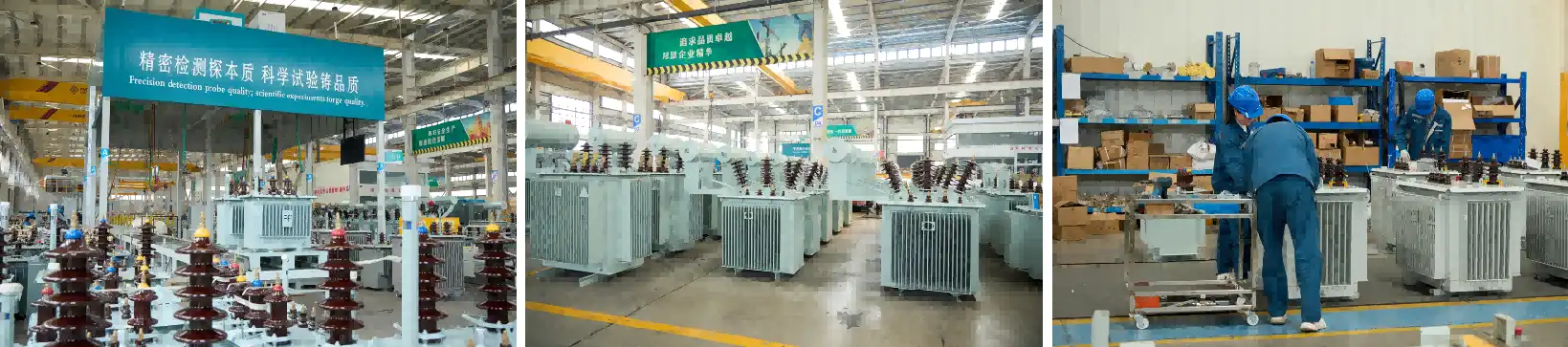
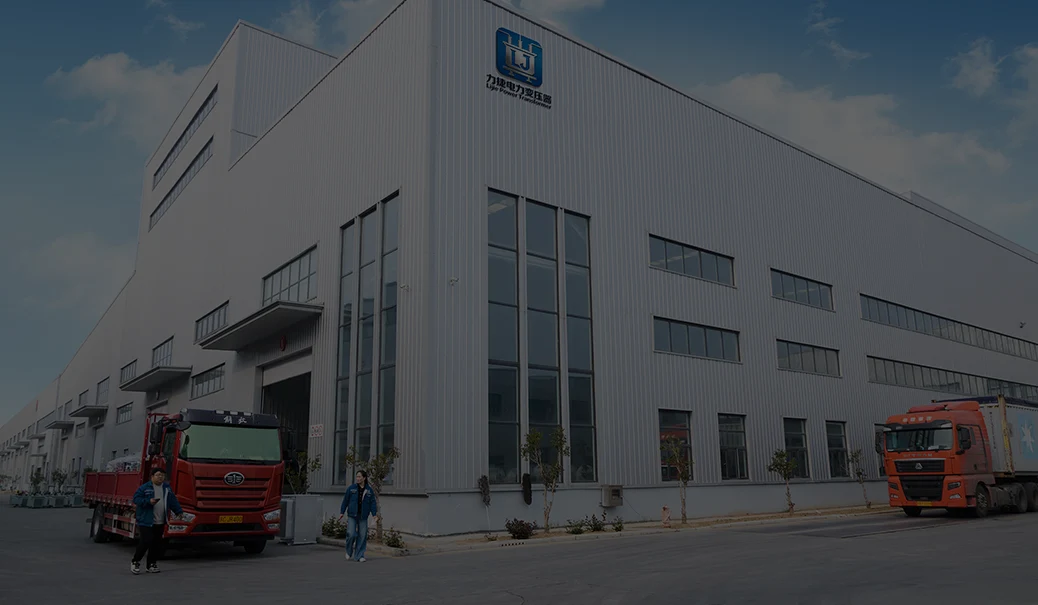
Choosing the right Oil-Immersed Transformer Supplier will determine whether your high-power systems work reliably for decades or have to be shut down for expensive repairs. Lijie Electric Power Technology Group has been making transformers for more than 20 years and has two factories in Xuzhou and Nantong, China, that are a total of 500,000 square meters in size. Ultra-high-voltage transformers with ratings of 500 kV or higher are part of our product line. So are specialized electric furnace transformers, rectifier transformers, and mine transformers that are used by steel plants, green energy projects, and national grid operators around the world.
Our goods have been checked by the National Transformer Quality Supervision and Inspection Center to make sure they meet IEC standards and are certified by ISO 9001:2015, CE, and UL. Over 160 of our 2,000 employees have doctoral or master's degrees. They provide custom solutions and strict quality control, which includes routine tests, type tests, and special tests like dissolved gas analysis and partial discharge measurement on every unit. With more than 5 billion RMB in annual sales and successful installations in Australia, India, Kazakhstan, Egypt, and other places, we have the production scale and technical depth that big infrastructure projects need.
Email our tech team at lijieelectrical@gmail.com to talk about your unique voltage needs, cooling setups, and shipping dates. To help you make your buying decision, we offer factory tours, test reports from a third party, and detailed lifecycle cost analyses. You can trust Lijie Electric to make your Oil-Immersed Transformers because they care about quality, dependability, and customer satisfaction.
1. International Electrotechnical Commission. (2018). Power Transformers – Part 1: General. IEC 60076-1:2011+AMD1:2018.
2. IEEE Power and Energy Society. (2015). IEEE Standard General Requirements for Liquid-Immersed Distribution, Power, and Regulating Transformers. IEEE Std C57.12.00-2015.
3. Heathcote, M. J. (2007). The J&P Transformer Book: A Practical Technology of the Power Transformer (13th ed.). Elsevier Advanced Technology.
4. Cigré Working Group A2.34. (2013). Guide for Transformer Maintenance. Technical Brochure 445, International Council on Large Electric Systems.
5. Cheim, L., Duval, M., & Haider, S. (2012). Combined Dissolved Gas Analysis Techniques for Transformer Fault Diagnosis. IEEE Electrical Insulation Magazine, 28(4), 8-15.
6. Prevost, T. A., & Oommen, T. V. (2006). Cellulose Insulation in Oil-Filled Power Transformers: Part I – History and Development. IEEE Electrical Insulation Magazine, 22(1), 28-35.
YOU MAY LIKE
18%20type%2035KV%20power%20transformer.webp)

10%20type%20epoxy%20resin%20cast%20transformer.webp)
10%20type%2035kV%20transformer.webp)

10%20type%20dry-type%20distribution%20transformer.webp)
April 27, 2025
With a tight project schedule, the manufacturer delivered on time, and on-site technical personnel provided guidance throughout the entire installation and commissioning process; the collaboration was highly efficient and hassle-free.
July 2, 2025
During the preliminary phase, a selection plan was custom-tailored based on the actual site load requirements, resulting in a high degree of parameter compatibility. After-sales support responds within two hours, and ongoing technical support for operation and maintenance is comprehensive; we feel completely confident in a long-term partnership.
November 18, 2025
Deployed as a supporting component for a 35kV grid-connection project at a photovoltaic power station, the equipment operates for an average of 16 hours daily. It demonstrates excellent control over no-load losses, ensures smooth power generation and grid integration, and effectively reduces the station's overall energy consumption.
January 30, 2026
Under the continuous, high-load operating conditions of a factory production line, the equipment maintains stable electrical parameters and exhibits strong overload resistance, thereby guaranteeing an uninterrupted power supply for industrial production.
April 3, 2026
Integrated as a supporting component for a new energy photovoltaic grid-connection system, the manufacturer provided professional technical coordination and timely after-sales support, ensuring seamless adaptation to the specific electrical operating conditions required for grid integration.