April 27, 2025
With a tight project schedule, the manufacturer delivered on time, and on-site technical personnel provided guidance throughout the entire installation and commissioning process; the collaboration was highly efficient and hassle-free.
Jul 6, 2026
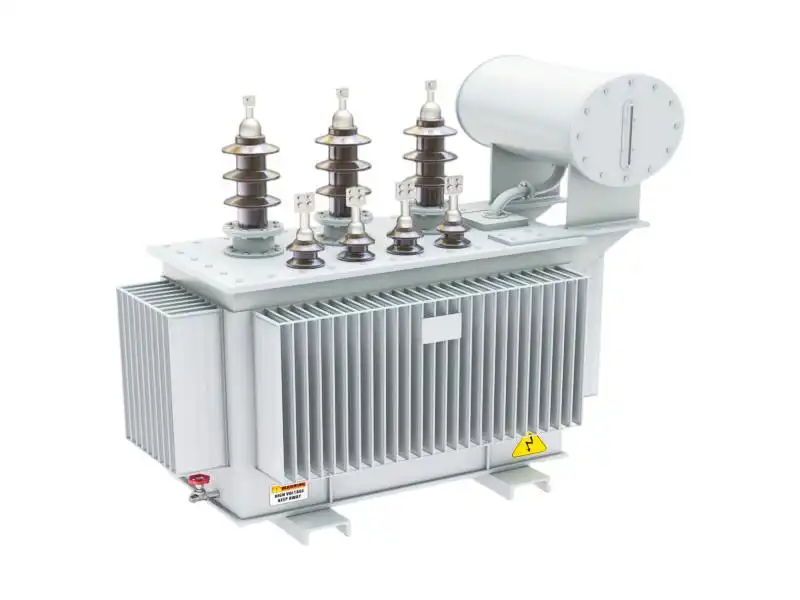
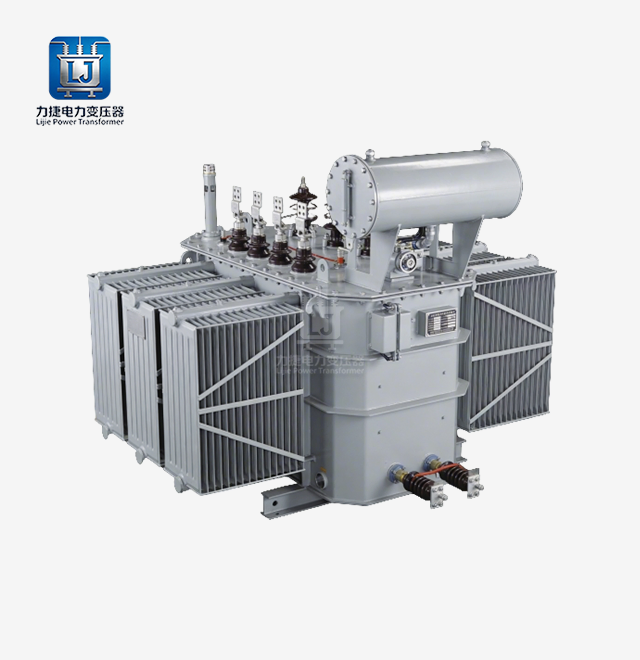
Modern power lines need equipment that is reliable, efficient, and saves money in the long run. The S18 type oil-immersed distribution transformer has become a popular choice because it was designed to meet Tier 1 energy saving standards and work reliably in a wide range of situations. This high-tech transformer has a fully sealed corrugated tank design, high-grade silicon steel cores, and better thermal management than older S13 models, which cuts down on operational losses by 10–20%. Whether it's for integrating green energy, industry, or urban distribution networks, the S18 is a smart investment that meets important buying goals like lowering lifetime costs, following rules, and reducing the need for maintenance.
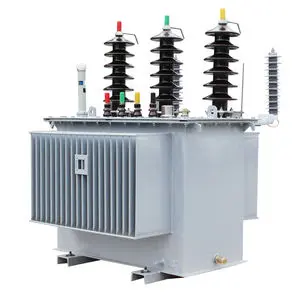
This transformer's technology is the result of decades of engineering work to make it better and help with real-world grid problems. It is built around a complex magnetic core made of cold-rolled grain-oriented silicon steel, which reduces hysteresis and eddy current losses. This choice in design directly leads to lower no-load losses, which is very important when transformers are used continuously for years.
In contrast to usual designs that need separate conservator tanks, the S18 uses a fully sealed curved tank frame. This new idea is useful for more than one reason. The curved walls expand and contract with changes in the oil's volume caused by changes in temperature. This keeps air from touching the oil, which would speed up oil breakdown and moisture absorption otherwise. Using natural convection patterns inside the tank, the oil-immersed self-cooling method (ONAN) moves hot oil toward the curved surfaces, where air in the tank loses heat. This method of passive cooling doesn't need any extra pumps or fans, so it's easier to build and keeps the temperature stable even when it's under constant load.
Mineral shielding oil has two uses because of its dielectric qualities. The oil does more than just cool the engine. It also keeps high-voltage windings from touching grounded tank parts. Standard upkeep tasks like checking for dielectric breakdown voltage and dissolved gases are still done regularly, but because the design is protected, it takes a lot longer between repairs. Most installations don't need to be maintained for 10 to 15 years, and if they are used within their rated parameters, they should last longer than 30 years.
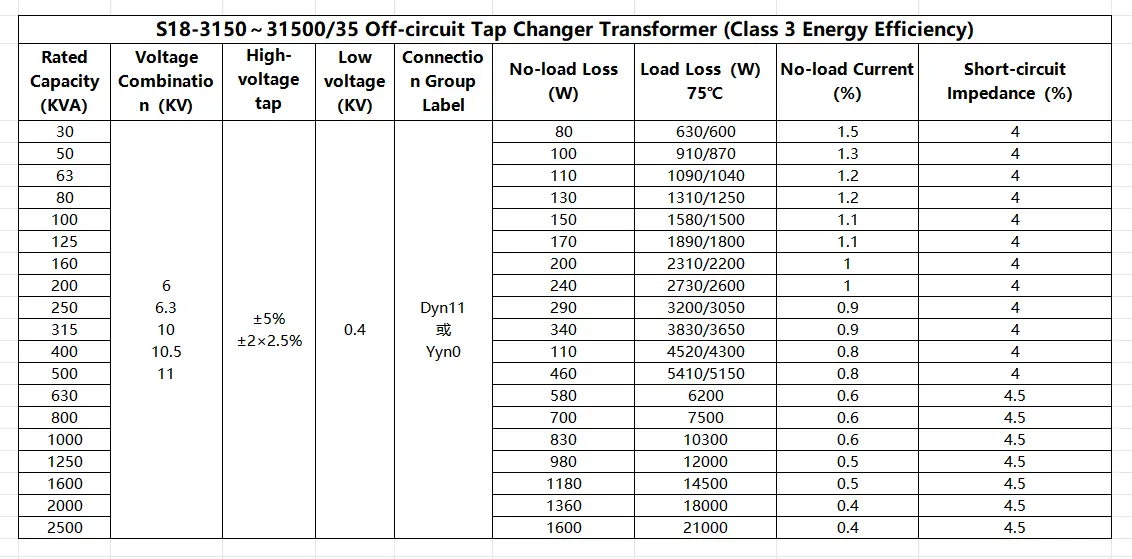
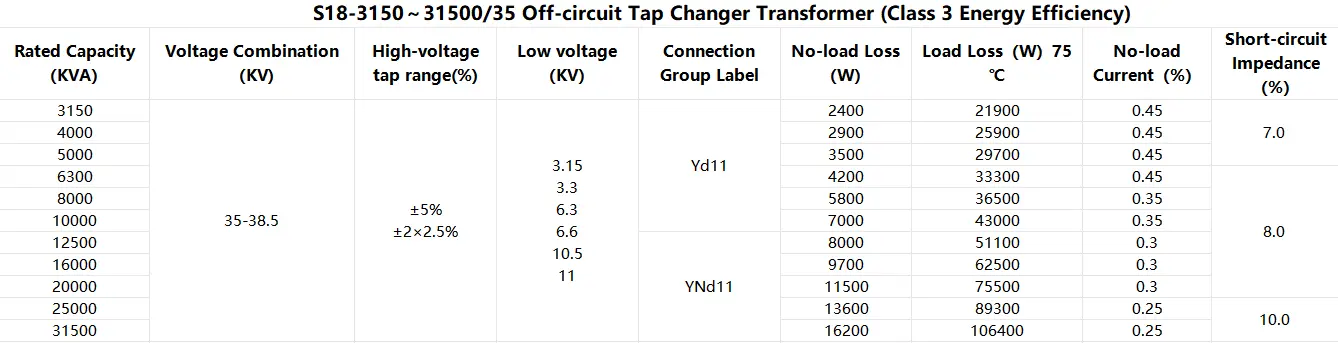
Compared to the S13 series transformers, the S18 has 10–20% less combined losses when the load conditions are the same. This improvement comes from the improved core shape, precise wrapping methods, and lower flux density levels that keep the magnets from getting too saturated. When there is no load on the transformer, which is when they are working for a long time, the S18's losses are much lower than the averages for the industry. Even when the system is fully loaded, the efficiency gains stay the same. This means that the end user will be charged less for energy. Over a normal 25-year service life, these efficiency gaps save a lot of money over time, often more than the difference in the cost of the tools at the start.
This transformer platform, the S18 type oil-immersed distribution transformer, is useful in many areas because it can be used in different ways. Power companies that are modernizing their grids appreciate that it works with both smart grid technology and green energy sources. The transformer can handle different loads without breaking down too soon, which is good for solar farms and wind setups. The corrugated tank design works especially well in places where the weather changes often, such as remote renewable energy sites.
Industrial sites like steel mills, chemical plants, and mines need transformers that can handle heavy loads for long periods of time in tough conditions. The tightly sealed design keeps harmful gases, dust, and damp from getting into the internal parts, which can happen with open-breathing designs. Manufacturing companies with three shifts depend on the S18's temperature stability to keep hotspots from forming during constant job cycles. Mining operations in remote areas require longer maintenance intervals because it's easier to get to these remote sites with specialized service equipment.
When commercial and residential developers install the S18 type oil-immersed distribution transformer in small substations, office buildings, and apartment complexes, they prioritize low noise levels and building efficiency. Magnetostrictive noise is kept below 45dB by the high-pressure core locking and anti-vibration fastening methods. This meets strict noise laws in cities. This operation is quiet, so it can be put closer to places where people are already living without getting complaints or breaking city rules.
When procurement teams look at transformer options, they come across different design philosophies. Each has its own benefits that depend on the application. Knowing these relative strengths helps you make design choices that are in line with the needs of the project and the limitations of the operation.
As you move from S11 to S13, and into the S18 type oil-immersed distribution transformer, the core materials, manufacturing precision, and loss reduction technologies get better and better. Many older installations still use S11 transformers, but they aren't as efficient as they used to be and don't meet the requirements of today's energy laws. Better silicon steel grades and better winding configurations were added to the S13 series, which led to significant loss reductions over the S11 series. The S18 type oil-immersed distribution transformer moves this evolution forward by improving the magnetic circuit even more and using fully sealed tank designs that eliminate the points where oil and air meet.
When you look at the S18's lifecycle costs, its efficiency advantage grows over time. Even though the initial cost may be 15-20% higher than S13 units, the lower no-load and load losses mean that money is saved over time. Detailed total cost of ownership estimates that take into account expected energy rates, discount rates, and operating lifespans always show that buying S18 for new installs is the best option. Utilities that are in charge of thousands of distribution transformers spread out over large service areas save a lot of money when they switch to platforms that use less energy.
Compared with the S18 type oil-immersed distribution transformer, dry transformers that use cast resin or vacuum pressure impregnation are naturally safer in case of fire and don't need to worry about managing oil. Because of these advantages, dry-type units are better for installing inside occupied buildings, especially when fire rules don't allow the use of dangerous liquids. However, dry-type designs usually have higher losses at the same capacity ratings and can't handle too much stress because of temperature issues.
Environmental factors make comparisons more complicated. Oil-immersed transformers need to be thrown away or recycled at some point, but new mineral oils and bio-based options are better for the earth. The protected design of the S18 pretty much removes the chance of oil leaks during regular operation, which was one of the main environmental concerns with older breathing-type designs. Dry-type units don't have any problems with oil, but they might contain insulation materials that need special dumping methods when they're no longer useful.
When buying a generator, you have to balance technical specs, business terms, and concerns about the stability of the supply chain. Acquisition strategies that work take into account both the needs of the current project and the long-term operational goals. They do this by setting up frameworks for ongoing supplier relationships.
The price of a transformer depends on the cost of raw materials, how hard it is to make, how many tests are needed, and the state of the market. Costs are mostly made up of copper and electrical steel, which can go up or down in price, which can have a big effect on quotes and project timelines. Prices are directly related to capacity ratings, with bigger kVA units costing more because they require more materials and labor.
Volume purchasing strategies allow for big savings on purchases of multiple units, which are popular in programs to update power grids or build big industrial parks. Setting up outline deals with chosen providers keeps prices stable over long project phases and ensures that production capacity is allocated during times of high market demand. To make sure they stick to the project budget, procurement professionals should ask for detailed breakdowns that separate the costs of base equipment from those of optional features, transportation, installation supervision, and commissioning services.
Regional rules and regulations require extra certifications. Most sites in North America need to be listed with UL or CSA, while in Europe, they need to have a CE mark that says they follow the relevant EU rules. Understanding the needs of the destination market early on in the procurement process helps avoid costly delays or changes that need to be made during the commissioning phases.
Factory acceptance testing is an important way to check the quality of the goods, including the S18 type oil-immersed distribution transformer, before they are shipped. As part of thorough test methods, regular tests should check the voltage ratio, polarity, coil resistance, and insulator resistance. Type tests should also check the temperature rise, lightning impulse withstand voltage, and short-circuit capability. By watching factory tests, procurement teams can make sure that equipment meets requirements and find any problems that might arise before it is shipped to job sites.
Choosing manufacturing partners is one of the most important buying choices because it sets up ties that last for decades, even after the equipment is no longer in use. When judging a supplier, you should look at their technical skills, track record of quality, and infrastructure for after-sales support.
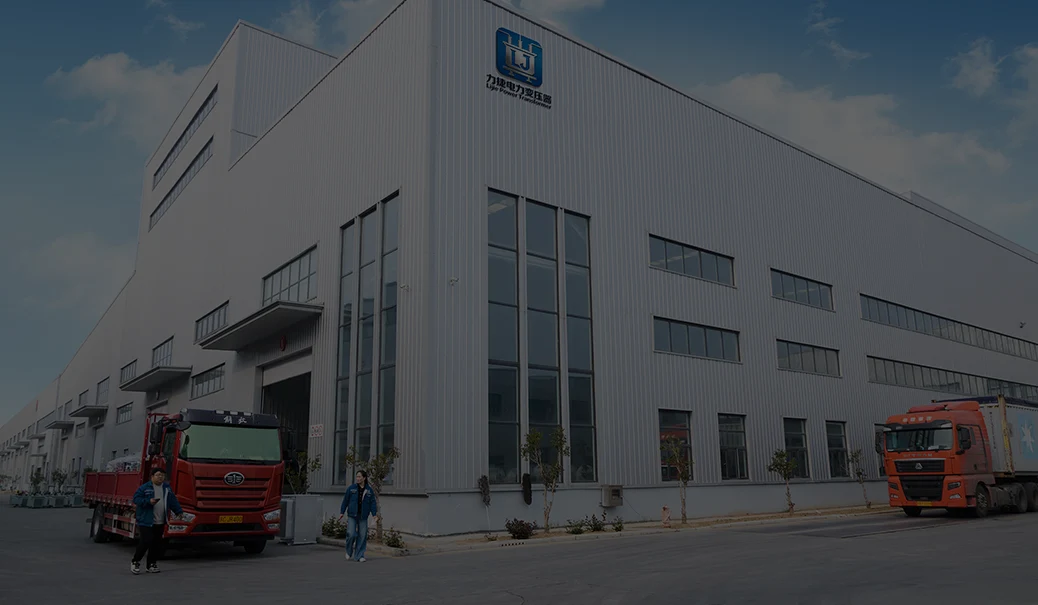
Lijie Electric Power Technology Group is a great example of a manufacturing company because it can do everything from research and development to production. The company has two modern buildings in Xuzhou and Nantong that add up to 500,000 square meters. It employs more than 2,000 people, including 160 engineers with advanced degrees. Because of this level of technical detail, it is possible to make changes to standard catalog products that aren't possible with custom products.
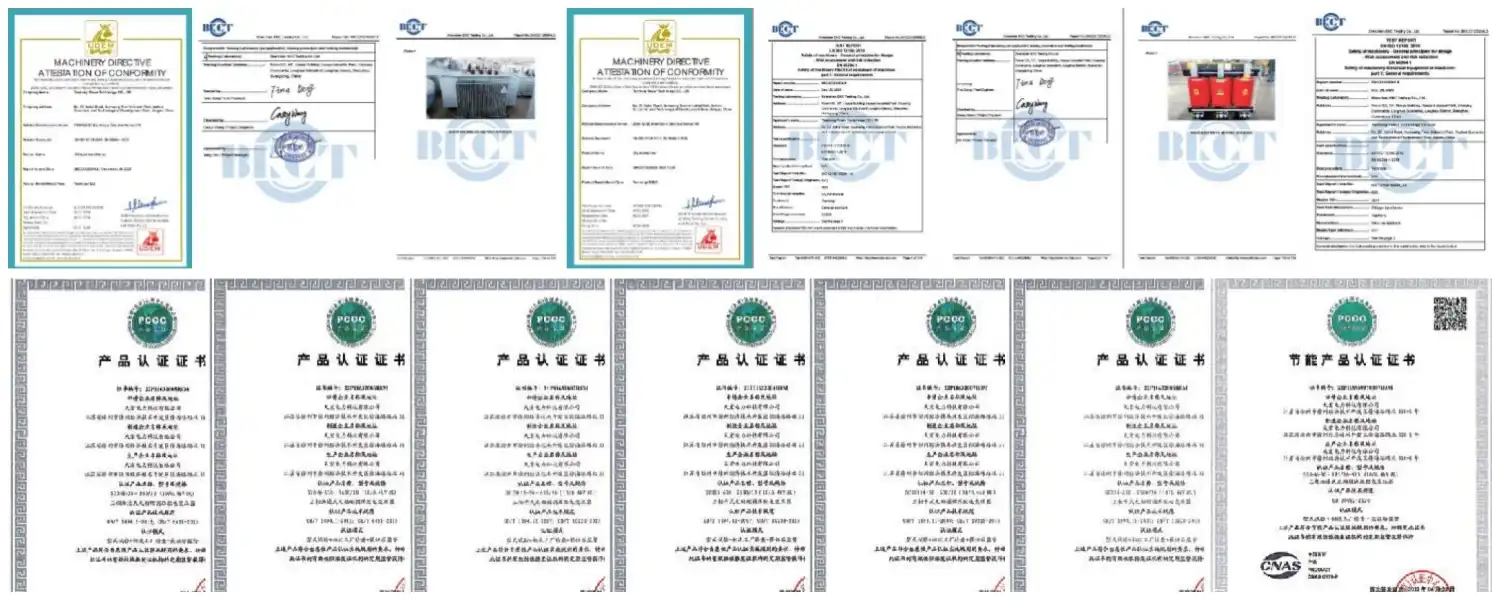
The company makes a wide range of products, from ultra-high-voltage transformers with ratings of 500kV or more to complete distribution equipment for 35kV or less. This range shows how advanced manufacturing is and how quality systems can make equipment that meets a wide range of performance requirements. Being named a National High-Tech Enterprise and a Specialized, Refined, and New "Little Giant" confirms that the government recognizes innovation and market leadership.
In addition to supplying the equipment itself, value-driven makers offer technical advice services to help with the right equipment size, changes for specific applications, and fitting support. Technical help during the testing steps speeds up the project schedule and makes sure that it works at its best right from the start. Established sellers keep extra parts on hand and have field service networks set up to reduce the risk of downtime in the rare event that a component fails and needs to be fixed.
Both parties benefit from long-term framework agreements because they protect prices against market instability and make it easier to plan production based on regular order amounts. Working together leads to ongoing improvement projects involving S18 type oil-immersed distribution transformer, where practical feedback helps drive product improvements that will benefit future installations. Procurement professionals should give more weight to suppliers who show they are committed to a partnership than to transactional sales methods that only focus on completing orders quickly.
The S18 type oil-immersed distribution transformer is an advanced technology that has been used for many years and is now better suited to the needs of current power distribution. With its high energy efficiency, strong construction, and low upkeep needs, it fits right in with buying goals in the utility, industrial, and green energy sectors. The fully sealed corrugated tank design gets rid of the usual ways that oil breaks down and does a great job of keeping heat in, even in tough operating conditions. Full testing and certification make sure that the operation is reliable and meets both international standards and local rules. The S18 is a great value over many decades of service if it comes from a reputable manufacturer with good technical support and after-sales service. Careful consideration of application needs, lifetime costs, and provider abilities allows for sure design choices that improve both short-term project success and long-term operating performance.
The S18 has 10–20% less losses than the S13 models because the core materials and magnetic circuit design have been improved. The fully sealed corrugated tank gets rid of the oil conservators that were in earlier models. This keeps oil and air from coming into contact, which breaks down the oil. This new design makes it possible for maintenance-free operation to last for 10 to 15 years, whereas breathing-type models need repairs more often.
The S18 works great in renewable energy installations because it is thermally stable and can handle the changing loads that come with solar and wind farms. For reliable performance, the sealed construction works well in remote areas with harsh weather and temperature changes. Integration into the current green energy infrastructure is possible because it works with smart grid tracking tools.
Compared to traditional transformers, the sealed design makes maintenance a lot easier. External checks should be done on a regular basis to look for physical damage, the stability of the bushings should be checked, and oil samples should be taken for dissolved gas analysis during planned breaks. Most units don't need any maintenance for the first 10 to 15 years, and if they are used within their rated parameters and in the right environment, they can last for more than 30 years.
Lijie Electric stands ready to support your power distribution projects with world-class S18 transformers engineered for reliability and efficiency. Our manufacturing excellence, proven through ISO 9001, IEC, CE, and UL certifications, ensures equipment meeting the most demanding specifications. With capacity spanning 30-3150kVA and voltage levels suited to diverse applications, we offer customization capabilities tailored to your specific requirements. Our technical team provides comprehensive support from initial specification development through commissioning and beyond, backed by our commitment to GB/T 27922-2021 after-sales service standards. Contact our engineering specialists at lijieelectrical@gmail.com to discuss your project requirements, request detailed technical documentation, or obtain competitive quotations. Discover why procurement professionals across utility, industrial, and renewable energy sectors trust Lijie Electric as their preferred S18 type oil-immersed distribution transformer supplier for projects demanding uncompromising quality and performance.
1. International Electrotechnical Commission, "Power Transformers – Part 1: General," IEC 60076-1:2011, Geneva, Switzerland, 2011.
2. Zhang, W., Liu, H., and Chen, M., "Energy Efficiency Analysis of Oil-Immersed Distribution Transformers Under Modern Grid Conditions," Journal of Electrical Engineering & Technology, vol. 16, no. 3, pp. 1425-1437, 2021.
3. National Standards of the People's Republic of China, "Three-Phase Distribution Transformers Energy Efficiency and Energy Efficiency Grades," GB 20052-2020, Beijing, China, 2020.
4. Institute of Electrical and Electronics Engineers, "IEEE Guide for Loading Mineral-Oil-Immersed Transformers and Step-Voltage Regulators," IEEE Std C57.91-2011, New York, USA, 2012.
5. Kulkarni, S. V. and Khaparde, S. A., "Transformer Engineering: Design, Technology, and Diagnostics," 2nd edition, CRC Press, Boca Raton, Florida, 2013.
6. International Council on Large Electric Systems, "Guide for Transformer Maintenance," CIGRE Technical Brochure 445, Paris, France, 2011.
YOU MAY LIKE
14%20Epoxy%20Resin%20Dry%20Type%20Transformer.webp)




April 27, 2025
With a tight project schedule, the manufacturer delivered on time, and on-site technical personnel provided guidance throughout the entire installation and commissioning process; the collaboration was highly efficient and hassle-free.
July 2, 2025
During the preliminary phase, a selection plan was custom-tailored based on the actual site load requirements, resulting in a high degree of parameter compatibility. After-sales support responds within two hours, and ongoing technical support for operation and maintenance is comprehensive; we feel completely confident in a long-term partnership.
November 18, 2025
Deployed as a supporting component for a 35kV grid-connection project at a photovoltaic power station, the equipment operates for an average of 16 hours daily. It demonstrates excellent control over no-load losses, ensures smooth power generation and grid integration, and effectively reduces the station's overall energy consumption.
January 30, 2026
Under the continuous, high-load operating conditions of a factory production line, the equipment maintains stable electrical parameters and exhibits strong overload resistance, thereby guaranteeing an uninterrupted power supply for industrial production.
April 3, 2026
Integrated as a supporting component for a new energy photovoltaic grid-connection system, the manufacturer provided professional technical coordination and timely after-sales support, ensuring seamless adaptation to the specific electrical operating conditions required for grid integration.