April 27, 2025
With a tight project schedule, the manufacturer delivered on time, and on-site technical personnel provided guidance throughout the entire installation and commissioning process; the collaboration was highly efficient and hassle-free.
Sep 22, 2026
A step-down transformer converts high-voltage alternating current from the utility grid into lower, usable voltage levels that AI servers, cooling systems, and networking equipment can safely consume. Operating on Faraday's Law of electromagnetic induction, the device uses a primary winding with more turns than the secondary winding to achieve this voltage reduction. For AI data centers drawing megawatts of continuous power, this voltage conversion is not optional — it is the foundational mechanism that keeps expensive GPU clusters and storage arrays running without interruption.
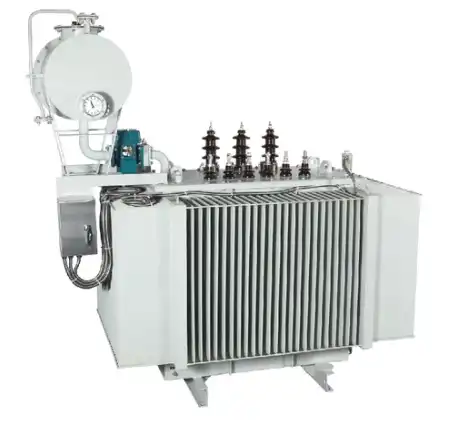
Transmission voltages for power from utility grids are usually between 69kV and 500kV. That number is way too high for any rack of servers. A distribution transformer lowers the voltage, usually from 13.8kV to 480V or 208V, before the power goes into the building's own distribution system. It is the number of turns between the main and secondary windings that determines the change ratio. Core material is very important in this case. Grain-oriented silicon steel (CRGO) reduces hysteresis and eddy current losses, making units that meet IEC 60076 and IEEE C57.12.00 standards more than 98% efficient.
AI workloads don't let you off the hook. A short voltage spike can mess up training runs, damage GPU memory, or cause multiple UPS failures to happen at the same time. A good voltage-reducing transformer has galvanic separation that stops high-frequency noise and transient spikes from getting into the clean power bus. A passive regulator alone can't do this.
Efficient use of energy is just as important when selecting a step-down transformer for data center applications. The U.S. Department of Energy says that data centers used about 200 terawatt-hours of energy in 2022, while AI-driven workloads are rapidly increasing that number. Even a small reduction of 0.3% in transformer core losses over the life of a 50 MVA installation can save significant amounts of money over 25 years. For a step-down transformer, improving core efficiency can therefore have a meaningful impact on long-term operating costs. Lijie Electric makes amorphous alloy core transformers, which have up to 70% lower no-load losses than silicon steel cores. This can provide a clear benefit when evaluating the overall cost of ownership of a step-down transformer.
Engineering teams should know where each technology fits in the power chain before they decide on a buying plan.
Here is a direct comparison of the main choices data center designers have:
The normal two-winding, oil-immersed or dry-type distribution transformer is still the most scalable, easy to maintain, and energy-efficient way for big AI data centers to change their main power source. These benefits directly lead to lower operational risk and known lifetime costs, which are things that procurement managers and project engineers always look at as very important when they are deciding what to buy.
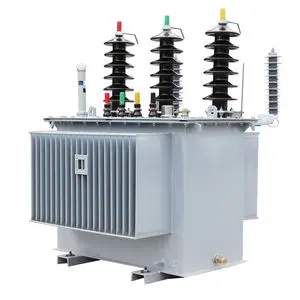
The four things that determine fit for purpose are the voltage level, the KVA/MVA grade, the impedance percentage, and the cooling class. AI data centers usually need units with a power rating of 1,000 kVA to 63,000 kVA, and the impedance values must be carefully chosen to keep the voltage stable within ±5% of the rated voltage.
Standard catalog units work well for many large-scale deployments, but custom designs are often better for AI facilities that have their own bus architectures, non-standard voltage requirements, or limited installation space. An experienced manufacturer can build a step-down transformer to exact specifications, including K-factor ratings, special tap changers, and custom winding configurations. K-factor ratings account for the harmonic heat produced by non-linear server loads, making them an important consideration when selecting a step-down transformer for AI data centers. To meet U.S. regulations and international EPC contract obligations, a step-down transformer should also be supplied with appropriate ISO 9001, IEC, CE, and UL certifications. These requirements help ensure that each step-down transformer meets the necessary performance, safety, and quality standards.
A large AI training site in the Midwest of the United States ordered a group of 35kV dry-type transformers to power 48 GPU boxes with a lot of power. Before the update, changes in voltage during high batch training cycles caused about 12% of nodes to slow down due to heat. After properly rated, low-impedance units with on-load tap changers were installed, voltage deviation at the server bus dropped below ±1.5%, and thermal throttling events dropped to almost zero. This meant that about 8% of computational throughput could be recovered without having to buy any more hardware.
A colocation provider with a 20 MW facility replaced old mineral-oil units with 2,500 kVA amorphous alloy core transformers. The losses when there was no load went down from 4.2 kW per unit to 1.1 kW per unit. Over 430 MWh of energy was saved each year across 14 installed units, which is the same as removing about 60 metric tons of CO2 emissions each year. This result also helped the building meet its ESG reporting obligations.
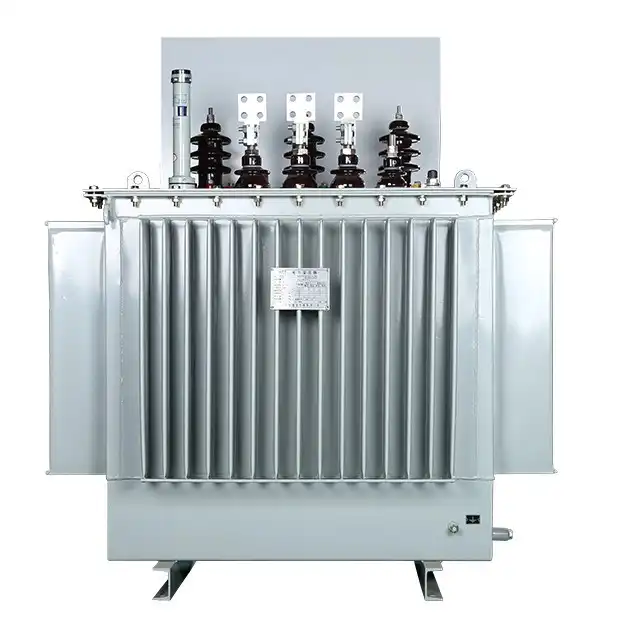
For industrial-grade installations, the standard remains testing the dielectric strength of a step-down transformer once a year. This includes oil breakdown voltage (BDV) tests for step-down transformer units that are submerged in oil. Dissolved Gas Analysis (DGA), which is performed every six months, can identify early signs of insulation degradation in a step-down transformer before problems worsen and cause unexpected power blackouts. IoT-enabled sensors can now continuously monitor the temperature, load current, and moisture levels of windings, providing valuable operating data for each step-down transformer. This data is fed into predictive maintenance tools that can identify potential problems weeks before they lead to equipment failure.
Managing loads is just as important. When you run a generator at more than 80% of its nameplate power all the time, the insulation ages faster. This cuts the service life from 25 to 30 years to well under 15 years. In a dense data center, keeping the ambient temperature below 40°C and making sure there is enough airflow in transformer rooms with balanced phase loads protects both efficiency and life.
At every step of their power chain, AI data centers need voltage conversion that is reliable and works efficiently. A well-designed and properly maintained step-down transformer can protect hardware, reduce wasted energy, and keep systems running continuously for demanding AI workloads. Whether the application requires a standard dry-type step-down transformer or a fully customized oil-immersed solution with K-factor ratings and IoT monitoring compatibility, selecting the appropriate equipment is essential. Choosing the right step-down transformer specification is an important infrastructure decision, not simply a routine purchase.
Yes, lowering core losses with amorphous alloys or optimized silicon steel directly lowers the no-load power draw. This power draw happens 24 hours a day, seven days a week, no matter how much IT work is being done. Over the course of 25 years, these savings add up to a lot.
Of course. It is possible for manufacturers to precisely match server bus voltages and harmonic load profiles with custom turn ratios, tap changer configurations, and K-factor ratings.
A step-down unit lowers the voltage from the grid to the amount needed for the building. The reverse is true for a step-up unit, which is used at power plants to push power onto transmission lines. At the point where utilities connect in a data center, you need to be able to step down.
A well-made unit can last 25 to 30 years with proper thermal management and regular tests. This is mostly because the insulation system ages over time when it is exposed to heat.
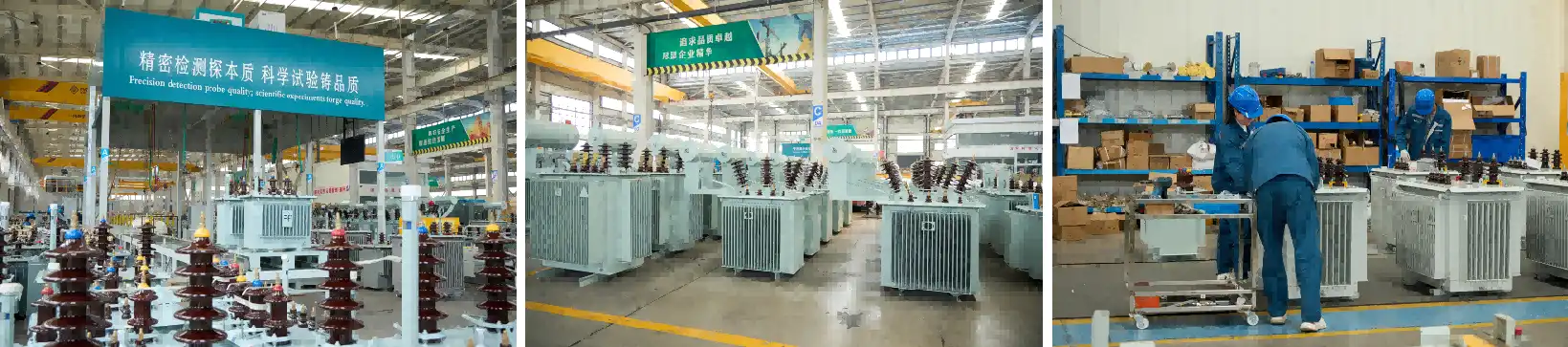
Lijie Electric's step-down transformers include dry-type, oil-immersed, and amorphous alloy core units from 35kV and below up to 500kV. These transformers are approved by ISO 9001, IEC, CE, and UL, which makes them a good choice for U.S. data center projects that need step-down transformers. We deliver unique configurations on time because we have over 160 engineers and 500,000 m² of production space. To get a professional advice, email us at lijieelectrical@gmail.com or go to lijie-electrical.com.
1. U.S. Department of Energy — Data Center Energy Usage Report, 2023.
2. IEEE — IEEE C57.12.00: Standard for General Requirements for Liquid-Immersed Distribution, Power, and Regulating Transformers, 2021.
3. IEC — IEC 60076-1: Power Transformers – General, 2011 (reaffirmed 2021).
4. Lawrence Berkeley National Laboratory — United States Data Center Energy Usage Report, 2016 (updated projections 2022).
5. ASHRAE — Thermal Guidelines for Data Processing Environments, 4th Edition, 2015.
6. Electric Power Research Institute (EPRI) — Power Quality in Commercial Buildings and Data Centers, 2020.
YOU MAY LIKE


13%20type%20epoxy%20resin%20cast%20transformer.webp)
April 27, 2025
With a tight project schedule, the manufacturer delivered on time, and on-site technical personnel provided guidance throughout the entire installation and commissioning process; the collaboration was highly efficient and hassle-free.
July 2, 2025
During the preliminary phase, a selection plan was custom-tailored based on the actual site load requirements, resulting in a high degree of parameter compatibility. After-sales support responds within two hours, and ongoing technical support for operation and maintenance is comprehensive; we feel completely confident in a long-term partnership.
November 18, 2025
Deployed as a supporting component for a 35kV grid-connection project at a photovoltaic power station, the equipment operates for an average of 16 hours daily. It demonstrates excellent control over no-load losses, ensures smooth power generation and grid integration, and effectively reduces the station's overall energy consumption.
January 30, 2026
Under the continuous, high-load operating conditions of a factory production line, the equipment maintains stable electrical parameters and exhibits strong overload resistance, thereby guaranteeing an uninterrupted power supply for industrial production.
April 3, 2026
Integrated as a supporting component for a new energy photovoltaic grid-connection system, the manufacturer provided professional technical coordination and timely after-sales support, ensuring seamless adaptation to the specific electrical operating conditions required for grid integration.