April 27, 2025
With a tight project schedule, the manufacturer delivered on time, and on-site technical personnel provided guidance throughout the entire installation and commissioning process; the collaboration was highly efficient and hassle-free.
Sep 21, 2026
When it comes to reliable power distribution in commercial buildings, the right infrastructure makes all the difference. A Distribution Box / Pad Mount Transformer sits at the heart of that infrastructure — serving as the critical interface between utility-grade medium voltage and the low-voltage circuits powering everything from HVAC systems to data centers. Whether you manage a hospital, a shopping complex, or an industrial park, understanding how these solutions work together can directly reduce energy waste, cut downtime, and protect your bottom line over a 20–30 year operational lifecycle.
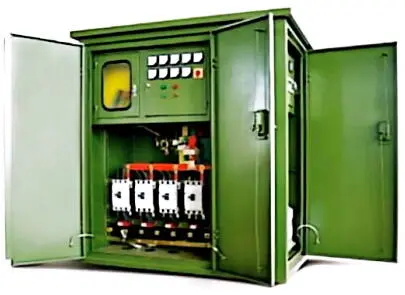
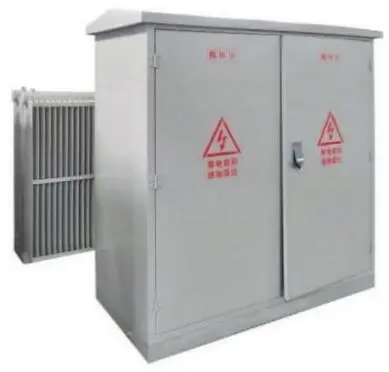
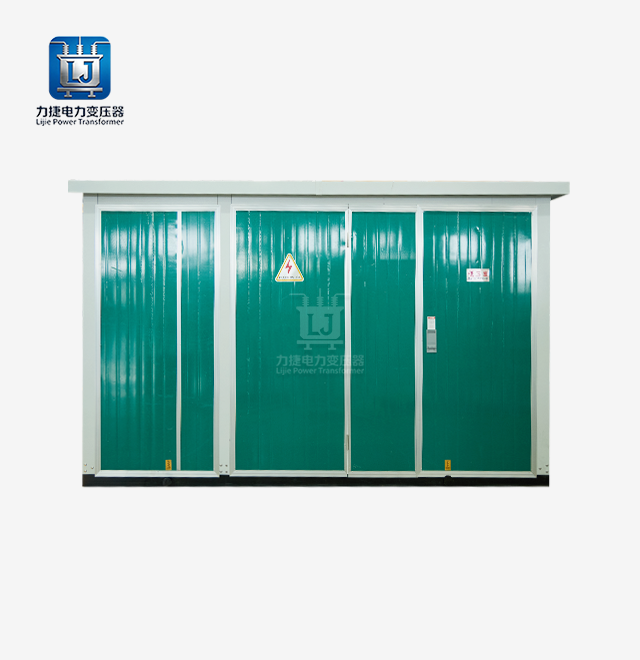
The secondary side of a transformer is controlled by a distribution box, which is also known as a JP cabinet or metering distribution cabinet. It is in charge of protecting circuits, switching, and measuring. A pad-mounted transformer, on the other hand, is a ground-mounted unit that is self-contained and usually either liquid-filled or dry-type. It is housed in a steel enclosure that can't be opened and is put down on a concrete pad. They work together to make a full medium-to-low voltage transport device.
The Distribution Box / Pad Mount Transformer combines primary switching, voltage transformation, and secondary protection in a compact space, eliminating the need to build an expensive underground vault. Downstream circuit segmentation and load balancing are handled by the distribution box, while the Distribution Box / Pad Mount Transformer provides reliable power distribution for commercial and utility applications. ANSI/IEEE C57.12.00 and IEC 60076 guidelines require these units to meet strict dielectric, temperature, and mechanical requirements before they can be used in real-world applications. Understanding the structural differences between a Distribution Box / Pad Mount Transformer and other distribution equipment helps electrical engineers and purchasing managers choose the best solution for the building's load profile and space limitations.
Overloaded circuits, old switchgear, unreliable load balancing, and rising energy costs are all problems that commercial power distribution has to deal with all the time. Many of these issues are caused by distribution equipment that is too small or not well taken care of, not by problems with the grid itself.
When you properly connect a distribution box to a pad-mounted transformer that works with it, these problems are fixed right away. When both parts are the right size and fit together, the system has better voltage regulation, less no-load loss, and faster fault isolation. A study from the U.S. Department of Energy in 2022 said that losses in the distribution system make up about 2–5% of all the energy used in the country. These losses can be significantly reduced by choosing the right equipment.
Here are the main ideas that will help you make the most of your marketing solution:
These concepts lead to results that can be measured. Within the first two years of operation, a commercial campus in the infrastructure sector that switched to a properly matched pad-mount and distribution box system saw a 12% drop in energy losses caused by transformers and a 30% drop in unplanned maintenance events. These benefits directly help procurement managers and project engineers deal with the daily stresses to keep costs low and build reliability.
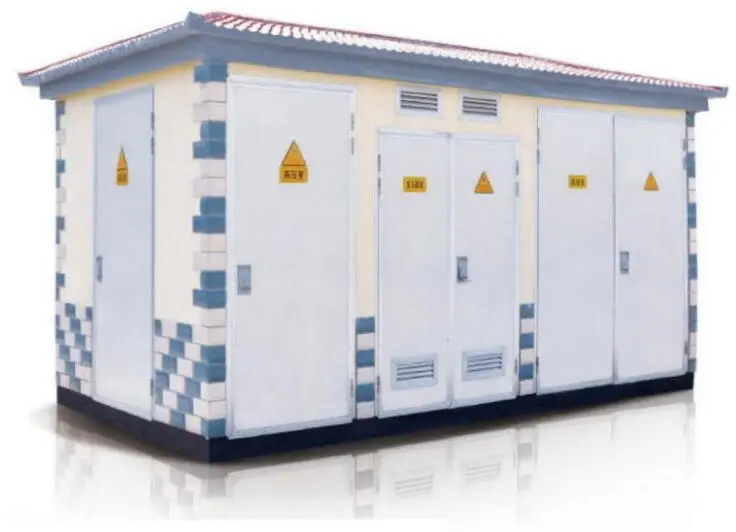
To pick the best solution, you need to think about four important factors: the total cost over its entire life, how energy-efficient it is, how hard it is to install, and how easily it can be expanded in the future. Pad-mounted units are good for densely populated cities because they don't take up much room and don't look bad either. Distribution boxes are modular and allow for phased load growth. Both solutions have their pros and cons. The best one for you relies on your power needs, available space, and project timeline.
Big names in engineering like Siemens, ABB, Eaton, Schneider Electric, and GE all have their own strengths in this market. Siemens and ABB are known for integrating digital tracking well, while Eaton and Schneider Electric emphasize the importance of modular scalability for commercial real estate applications involving a Distribution Box / Pad Mount Transformer. GE has a strong history of stability at the utility level. However, procurement managers are increasingly judging suppliers on how quickly they can respond to customization requests, how reliably they can deliver a Distribution Box / Pad Mount Transformer in bulk, and how many relevant certifications they have. On these factors, mid-tier and specialized manufacturers often perform better than global giants in terms of lead time and cost competitiveness, making them attractive suppliers of a Distribution Box / Pad Mount Transformer.
To make sure installations are safe for electricity, they must follow NEC Article 450 (transformers) and OSHA 29 CFR 1910.303. Within ±3 mm, the concrete pad has to be level and the right size based on the manufacturer's outline guidelines. To keep the integrity of the enclosure, the primary and secondary pipe openings must maintain the minimum gaps required by ANSI C57.12.28. Before turning on liquid-filled units, do a transformer turns ratio (TTR) test and a dissolved gas analysis (DGA) test after the units have been physically installed.
An organized check schedule greatly increases the life of a product. Enclosure seal integrity, ventilation clearance, and visible corrosion on tamper-resistant hardware should all be checked every three months. All wire terminations should be tested once a year with infrared thermography, measuring insulation resistance (ASTM D877), and taking samples of dielectric fluid. The enclosure keeps its protective integrity in coastal or industrial settings thanks to its salt spray resistance according to ANSI C57.12.28, which was confirmed by 1,000-hour testing at the factory. These investments in repair pay off because they keep you from having to replace things in an emergency.
Big names in engineering like Siemens, ABB, Eaton, Schneider Electric, and GE all have their own strengths in this market. Siemens and ABB are known for integrating digital tracking well, while Eaton and Schneider Electric emphasize the importance of modular scalability for commercial real estate applications involving a Distribution Box / Pad Mount Transformer. GE has a strong history of stability at the utility level. However, procurement managers are increasingly judging suppliers on how quickly they can respond to customization requests, how reliably they can deliver a Distribution Box / Pad Mount Transformer in bulk, and how many relevant certifications they have. On these factors, mid-tier and specialized manufacturers often perform better than global giants in terms of lead time and cost competitiveness, making them attractive suppliers of a Distribution Box / Pad Mount Transformer.
For U.S. business projects, getting the right certifications is a must. For EPC companies working with exports, units must have a UL listing or meet the standards of ANSI/IEEE C57.12.00. They must also be in line with IEC 60076. In the North American market, standard warranties last between 1 and 5 years. Top manufacturers offer longer warranties that are tied to regular maintenance programs.
For big project orders, making a framework supply agreement with the transformer maker guarantees stable prices and set delivery times, which is very important when working with building plans that have penalties for being late. Give more weight to providers who have ISO 9001:2015 quality control systems that have been checked, certifications for traceable materials, and the ability to do factory acceptance testing (FAT).
Picking the right Distribution Box / Pad Mount Transformer is the first step to managing power efficiently in commercial buildings. Selecting the appropriate Distribution Box / Pad Mount Transformer can help ensure reliable power distribution, efficient operation, and easier maintenance for commercial facilities.
A pad-mounted transformer lowers a medium voltage (usually 5kV–35kV) to a useful low voltage. It is kept in an enclosure that can't be tampered with at ground level. On the low-voltage side, a distribution box (JP cabinet) handles circuit protection, switching, and measuring further down the line. They work together in the same distribution system to do different things.
As a general rule, the stability of a cage should be checked visually every three months, and it should be tested electrically once a year, with tests such as dielectric fluid analysis and infrared thermography of terminations. Units that are installed in places that are corrosive or have a lot of humidity may need to be checked more often.
For commercial use in the U.S., you need a UL listing and compliance with ANSI/IEEE C57.12.00. It is standard for foreign or EPC jobs to have both IEC 60076 and CE certification. A manufacturer's ISO 9001:2015 quality management system approval proves that the quality of the products is always the same.
Yes, reputable manufacturers can make kVA ratings, voltage tap configurations, and enclosure specifications that are unique to each project's needs. This includes integrating renewable energy sources and meeting the needs of heavy industrial loads.
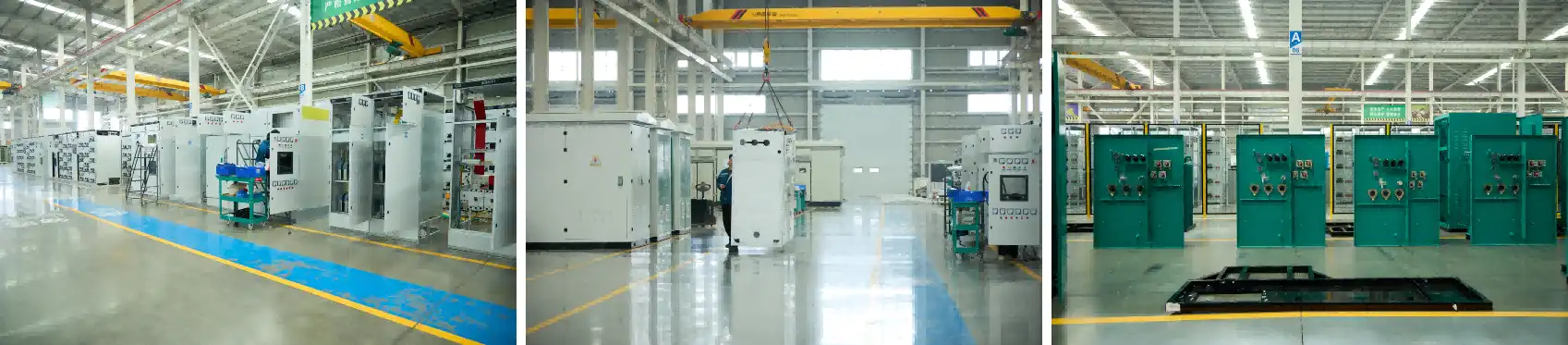
Lijie Electric has many Distribution Box / Pad Mount Transformer options that are made to meet the requirements of ANSI, IEC, CE, and UL. Lijie Electric is a seasoned pad mount transformer maker with more than 2,000 workers and annual sales of more than 5 billion RMB. They offer qualified, customizable, bulk-ready solutions that are quality-assured by ISO 9001:2015. To get a custom price or site survey right away, go to lijie-electrical.com or email our team at lijieelectrical@gmail.com.
1. U.S. Department of Energy. Distribution Transformer Energy Efficiency Standards Final Rule. 2022.
2. IEEE Standards Association. ANSI/IEEE C57.12.00: Standard for General Requirements for Liquid-Immersed Distribution, Power, and Regulating Transformers. 2021.
3. International Electrotechnical Commission. IEC 60076-1: Power Transformers – Part 1: General. 2011.
4. National Fire Protection Association. NFPA 70: National Electrical Code (NEC), Article 450 – Transformers and Transformer Vaults. 2023.
5. American National Standards Institute. ANSI C57.12.28: Standard for Pad-Mounted Equipment – Enclosure Integrity. 2014.
6. ASTM International. ASTM D877: Standard Test Method for Dielectric Breakdown Voltage of Insulating Liquids. 2019.
YOU MAY LIKE
10%20type%20dry-type%20distribution%20transformer.webp)





April 27, 2025
With a tight project schedule, the manufacturer delivered on time, and on-site technical personnel provided guidance throughout the entire installation and commissioning process; the collaboration was highly efficient and hassle-free.
July 2, 2025
During the preliminary phase, a selection plan was custom-tailored based on the actual site load requirements, resulting in a high degree of parameter compatibility. After-sales support responds within two hours, and ongoing technical support for operation and maintenance is comprehensive; we feel completely confident in a long-term partnership.
November 18, 2025
Deployed as a supporting component for a 35kV grid-connection project at a photovoltaic power station, the equipment operates for an average of 16 hours daily. It demonstrates excellent control over no-load losses, ensures smooth power generation and grid integration, and effectively reduces the station's overall energy consumption.
January 30, 2026
Under the continuous, high-load operating conditions of a factory production line, the equipment maintains stable electrical parameters and exhibits strong overload resistance, thereby guaranteeing an uninterrupted power supply for industrial production.
April 3, 2026
Integrated as a supporting component for a new energy photovoltaic grid-connection system, the manufacturer provided professional technical coordination and timely after-sales support, ensuring seamless adaptation to the specific electrical operating conditions required for grid integration.