April 27, 2025
With a tight project schedule, the manufacturer delivered on time, and on-site technical personnel provided guidance throughout the entire installation and commissioning process; the collaboration was highly efficient and hassle-free.
Sep 10, 2026
An HV transformer (high voltage transformer) transfers electrical energy between circuits through electromagnetic induction, operating at voltage levels typically above 36kV—and reaching 800kV or higher in ultra-high voltage applications. In modern power transmission, it steps voltage up at generation sites to reduce I²R transmission losses across long distances, then steps it down for industrial or regional distribution. This core function makes high voltage transformers indispensable to grid stability, renewable energy integration, and industrial power supply reliability.

An HV Transformer is different from regular distribution units because of the voltage range it can handle, how it is insulated, and how it handles heat. Standard low-voltage equipment can't meet the requirements for 110kV, 220kV, or 500kV units because they need to be able to handle Basic Impulse Level (BIL) spikes and keep partial discharge levels below 100 pC at 1.58 Um. Grain-oriented silicon steel is used in the core to keep hysteresis losses as low as possible. High-purity cellulose or synthetic insulation is used in the windings to keep the dielectric integrity over decades of continuous service.
The basic idea behind how it works is simple. A changing current in the main winding creates a magnetic flux that changes over time in the layered core. That flow causes a voltage in the secondary coil that is equal to the number of turns, or N1/N2. Step-up transformers raise the voltage for transmission, while step-down units lower it for distribution to end users. IEC 60076 says that this energy transfer must be more than 99% efficient in modern power transformers. This cuts down on thermal dissipation losses during transmission by a large amount.
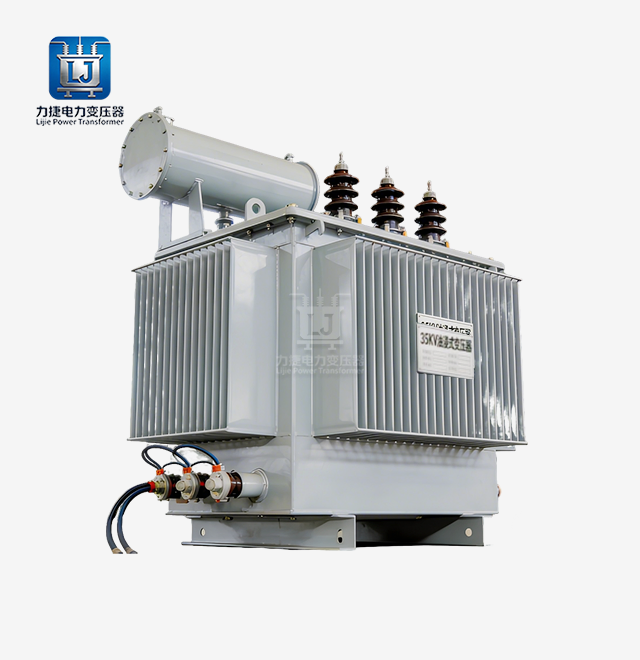
The choice of cooling method has a direct effect on the efficiency of operations. Outdoor substations with oil-immersed units using ONAF (Oil Natural Air Forced) or OFAF (Oil Forced Air Forced) systems can handle higher power levels. On the other hand, dry-type transformers work best in enclosed industrial settings where fire safety is a top concern.

There are three tough settings where HV Transformers are used, and each one has its own specific technical needs.
Here are the main deployment scenarios you should know about:
These three settings show why procurement teams don't usually use a single specification that works for all situations. For each situation, the voltage rating, resistance profile, and cooling setup need to be customized to fit the real-world conditions.
Core losses, which are transformers that don't have any loads on them, make up a big part of their total lifecycle energy costs. According to information released by the China Quality Certification Center (CQC), modern amorphous alloy cores cut no-load losses by as much as 70% compared to older silicon steel designs. When figuring out the total cost of ownership, procurement teams should give this difference in efficiency a lot of thought, especially for units that run all the time at a partial load.
Winding resistance losses, also called load losses, depend on how well the conductor cross-section is optimized and how the winding is shaped. When engineers order special units, they should ask for loss certificates that have been checked against IEC 60076-1 test methods to make sure the factory's claims are true.
HV Transformers work within their design limits as long as they get regular servicing. A preventative repair plan usually has the following items:
Facilities that use DGA monitoring programs have said that they can find problems up to several months before they happen, which greatly reduces the number of unplanned power outages. These maintenance methods directly lead to lower lifecycle costs, which is a very important factor for procurement managers who are in charge of big infrastructure investments.

It's not enough to just compare label scores to find the right power transformer. Electrical experts and procurement managers should look at these things that affect suppliers:
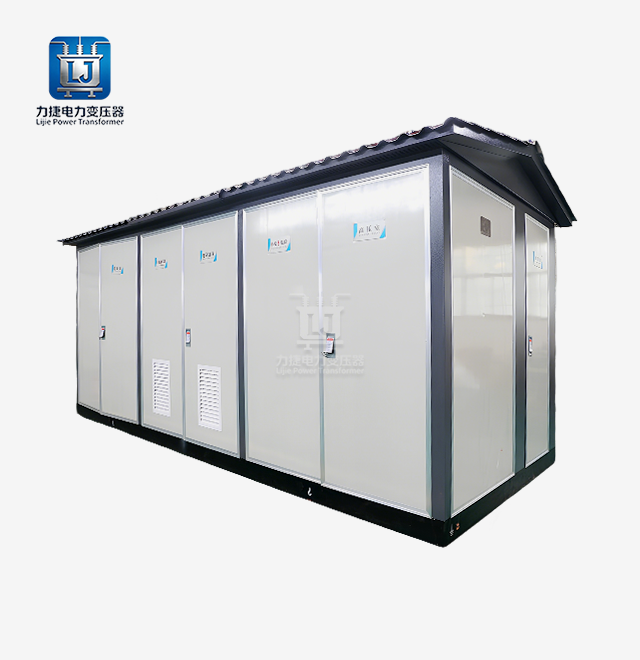
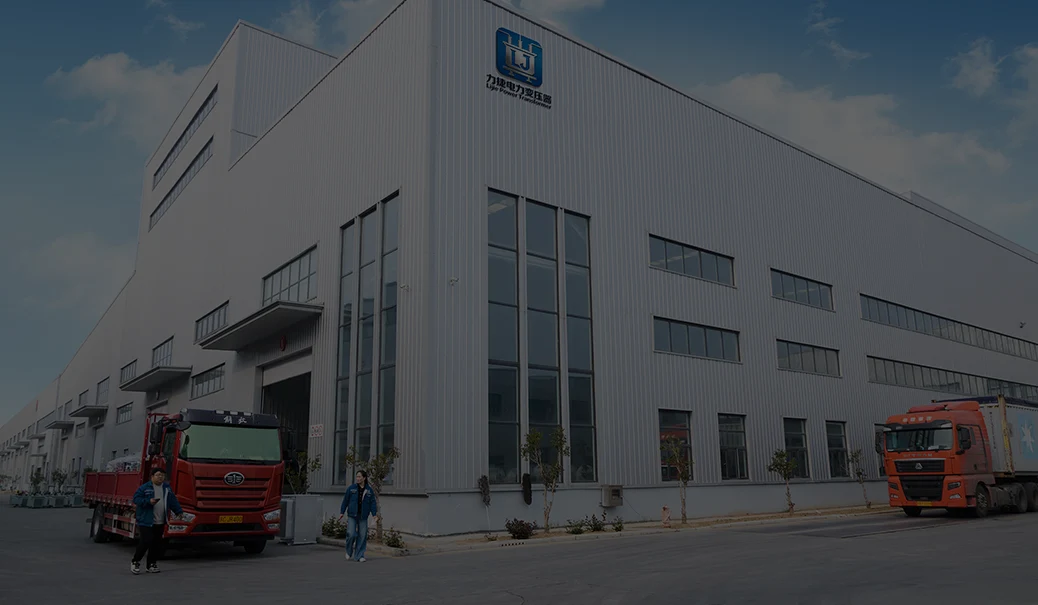
Lijie Electric Power Technology Group makes a wide range of products, including ultrahigh voltage units up to 500kV, distribution transformers from 35kV and below, dry-type transformers, oil-immersed transformers, amorphous alloy transformers, electric furnace transformers, and substations that are already built. At the National Transformer Quality Supervision and Inspection Center, all goods pass regular, type, and special tests. They are also certified by ISO 9001:2015, CE, UL, IEC, CQC, and PCCC. With more than 5 billion RMB in yearly sales and factories that cover 500,000 square meters in Xuzhou and Nantong, the company can handle big project orders and deliver them on time and reliably.
The three most common types of faults in HV Transformer operation are overheating, insulation breakdown, and voltage instability. Overheating is usually caused by a cooling system that isn't working right or that is being overloaded for a long time. Thermal imaging and oil temperature monitoring can find this early on. Insulation breakdown happens slowly and shows up as rising partial discharge numbers or strange DGA results. Unstable voltage is often caused by worn-out tap changers or connections that are too loose on the bushings.
For operational safety, it is important to follow lockout/tagout (LOTO) procedures, NFPA 70E minimum approach distances, and grounding protocols before doing any maintenance. People who work near electrified high-voltage tools need to be properly trained and wear the right safety gear. Manufacturers that offer full warranties and online diagnostic help reduce the risk for running teams that are in charge of old transformer fleets in a measured way.

HV Transformers are the building blocks of reliable power transfer, from large-scale power plants to industrial end-uses. Procurement and engineering teams can make confident, technically sound choices about where to buy things when they understand electromagnetic induction principles, the different types of cooling systems, loss parameters, and certification standards. Over the 10–30 years that these assets are usually used, proactive maintenance and careful evaluation of suppliers lower lifecycle costs and operational risk. The most important choice in any power infrastructure project is still how to match the transformer's specs exactly to the needs of the application. [6]
Most HV Transformers used in transmission systems work between 36kV and 800kV, or even higher in ultrahigh voltage (UHV) situations. 110kV, 220kV, and 500kV are all common power rates. 10kV and 35kV distribution-class units serve industrial parks and city networks.
Best practices in the industry say that insulation resistance should be tested once a year, dissolved gas analysis should be done every six to twelve months, and thermal imaging checks should be done at least once a year. More regular tracking is better for transformers that are subject to heavy cyclic loads, like those that serve electric arc burners.
Dry-type transformers are good for enclosed indoor spaces where fire safety and cheap upkeep are important. They use air or resin insulation. Oil-immersed units can handle higher power densities, cool better for high MVA ratings, and are the most common type of unit used in outdoor substations. The choice relies on where the work will take place, how much space is needed, and safety rules in the area.
Lijie Electric sells all kinds of HV Transformers, from ultrahigh voltage units with 500kV to distribution transformers with 35kV. Their goods are certified by ISO 9001, IEC, CE, UL, and CQC. As a reliable HV Transformer manufacturer serving utilities, renewable energy developers, and industry operators in more than 14 countries, we offer custom designs, the ability to deliver in bulk, and committed support after the sale. To get specs or to talk about your project, email our engineering team at lijieelectrical@gmail.com or go to lijie-electrical.com.

1. IEEE Power & Energy Society. (2020). IEEE C57.12.00: Standard for General Requirements for Liquid-Immersed Distribution, Power, and Regulating Transformers. IEEE. https://standards.ieee.org/ieee/C57.12.00/6842/
2. IEC. (2011). IEC 60076-1: Power Transformers – Part 1: General. International Electrotechnical Commission. https://webstore.iec.ch/publication/590
3. U.S. Department of Energy. (2023). Transformer Energy Efficiency and Loss Reduction. Office of Electricity. https://www.energy.gov/oe/transformer-resilience-and-advanced-components
4. China Quality Certification Centre (CQC). (2022). Energy Efficiency Certification Standards for Distribution Transformers. CQC. https://www.cqc.com.cn/www/english/
5. CIGRE. (2019). Guide for Transformer Maintenance (CIGRE Brochure 761). CIGRE Working Group A2.49. https://www.cigre.org/article/GB/knowledge/technical-brochures/technical_brochures_list
6. National Renewable Energy Laboratory (NREL). (2022). Grid Integration of Large-Scale Renewable Energy: Transformer Infrastructure Requirements. NREL Technical Report. https://www.nrel.gov/grid/power-electronics.html
YOU MAY LIKE
18%20type%20dry-type%20distribution%20transformer.webp)
12%20type%2035kV%20distribution%20transformer.webp)


April 27, 2025
With a tight project schedule, the manufacturer delivered on time, and on-site technical personnel provided guidance throughout the entire installation and commissioning process; the collaboration was highly efficient and hassle-free.
July 2, 2025
During the preliminary phase, a selection plan was custom-tailored based on the actual site load requirements, resulting in a high degree of parameter compatibility. After-sales support responds within two hours, and ongoing technical support for operation and maintenance is comprehensive; we feel completely confident in a long-term partnership.
November 18, 2025
Deployed as a supporting component for a 35kV grid-connection project at a photovoltaic power station, the equipment operates for an average of 16 hours daily. It demonstrates excellent control over no-load losses, ensures smooth power generation and grid integration, and effectively reduces the station's overall energy consumption.
January 30, 2026
Under the continuous, high-load operating conditions of a factory production line, the equipment maintains stable electrical parameters and exhibits strong overload resistance, thereby guaranteeing an uninterrupted power supply for industrial production.
April 3, 2026
Integrated as a supporting component for a new energy photovoltaic grid-connection system, the manufacturer provided professional technical coordination and timely after-sales support, ensuring seamless adaptation to the specific electrical operating conditions required for grid integration.