April 27, 2025
With a tight project schedule, the manufacturer delivered on time, and on-site technical personnel provided guidance throughout the entire installation and commissioning process; the collaboration was highly efficient and hassle-free.
Sep 26, 2026
At the rotor connections, the voltage that wind farms use to make energy are usually between 690V and 1,000V. When power is sent over long distances at such low voltages, a lot of energy is lost because of high current flow and resistance heating (I²R losses). That's why you need a step-up transformer. It raises the voltage at the output to 33kV, 66kV, or even 110kV before sending the power to the grid. This increase in voltage equals a decrease in current, which cuts down on transmission losses and makes it technically and financially possible to send big amounts of green energy. Without this important tool, wind energy can't get to people who need it quickly.
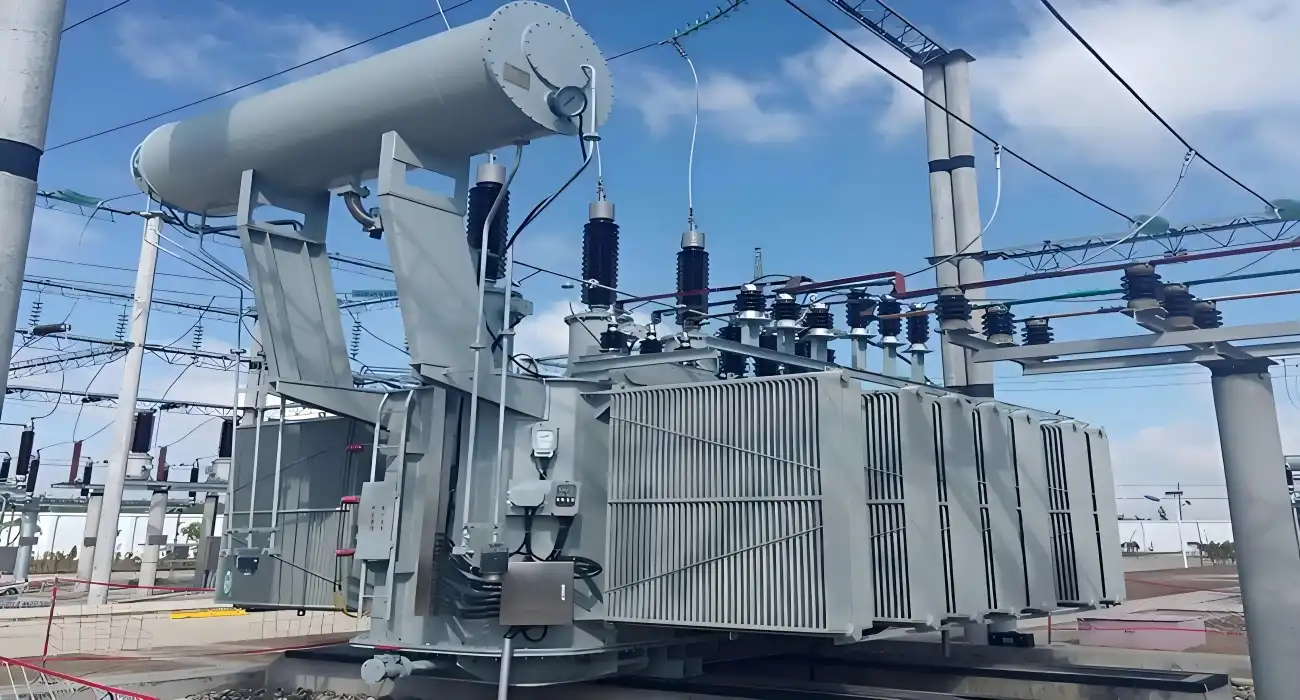
Faraday's Law of Electromagnetic Induction tells us how a step-up transformer works. Through a shared magnetic core, it moves electricity between two windings, with the secondary winding having more turns than the main. This turns ratio is directly shown by the voltage ratio (k > 1). When a turbine gives off 690V AC at a high current, the transformer steps it up to a level that can connect to the grid while the current drops by the same amount. This keeps the power (P = V × I) constant, minus any small losses. Standards set by IEC 60076 and IEEE C57.12.00 say that modern units can be as efficient as 99%.
Wind farms are harsh places to live. At offshore sites, equipment is exposed to humidity, salt spray, and changes in temperature. Onshore sites have to deal with dust, vibrations, and big changes in temperature. To deal with these problems, transformers are made with CRGO cores that reduce hysteresis and eddy current losses, Class F or H insulation systems that are rated for high thermal stability, corrosion-resistant enclosures for use at sea, and ONAN or ONAF cooling configurations that are matched to the load profile. The 25–30 years of operation that project developers are hoping for are directly affected by these engineering choices.
The main technical driver is how well the gearbox works. About 5% of the energy made in the U.S. is lost during transportation and distribution, according to the U.S. Department of Energy. Step-up transformers greatly reduce resistance losses along the long wire runs that are common in utility-scale wind projects. They do this by raising the voltage at the place of production.
Some engineers want to know if autotransformers, voltage boosters, or power inverters can be used instead of dedicated step-up units. There are real problems with each option in this situation. Autotransformers don't have galvanic isolation, which makes them unsafe and makes it hard to manage harmonics. Inverters are good at changing DC to AC, but they're not made to handle the sustained AC voltage rise that is needed at grid interconnection points. Step-up transformers are still the best choice because they offer high efficiency, strong overload tolerance, and stable waveform quality all in one tried-and-true package.
Strategy for maintenance is just as important. Dissolved gas analysis (DGA), infrared thermal imaging, and partial discharge testing are all predictive monitoring tools that can find insulation degradation before it breaks. For important grid-connected assets, DGA testing once a year is thought to be the best way to protect capital investment, increase service life, and improve reliability.
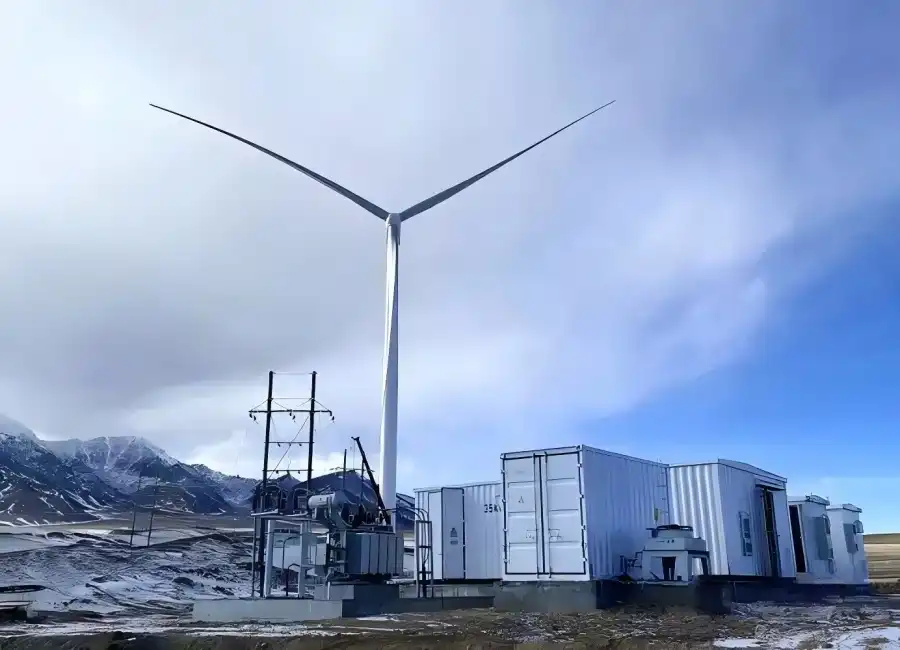
A typical coastal wind farm has a pad-mounted or pole-mounted transformer for each turbine. This transformer has a rating of between 1 MVA and 5 MVA and can step the voltage from 690V to 33kV. The voltage is then raised to 110kV or 220kV for grid input by a larger power transformer at the central substation, which is fed by these individual unit transformers. In two steps, this method balances the cost of the equipment with how well it transmits signals across different site layouts.
Offshore sites make things more difficult. Platforms need small, sealed transformers that can handle the varying output that comes with offshore wind patterns and don't rust. Wind turbines, solar PV arrays, and battery storage are all used together in hybrid renewable energy plants, which need transformers that can change voltage ratios and work with load management systems. In these situations, whether the installation meets both technical and regulatory goals depends on how well the project engineer and the transformer manufacturer work together during the design phase.
To choose the right step-up transformer provider, you need to look at a number of factors that are all linked. Here are the most important factors that expert buying pros look at:
Together, these factors show whether a purchase choice adds long-term value or causes ongoing operating problems. Before you sign a framework agreement, it's a good idea to check each point through supplier audits, reference checks, and third-party test reports.
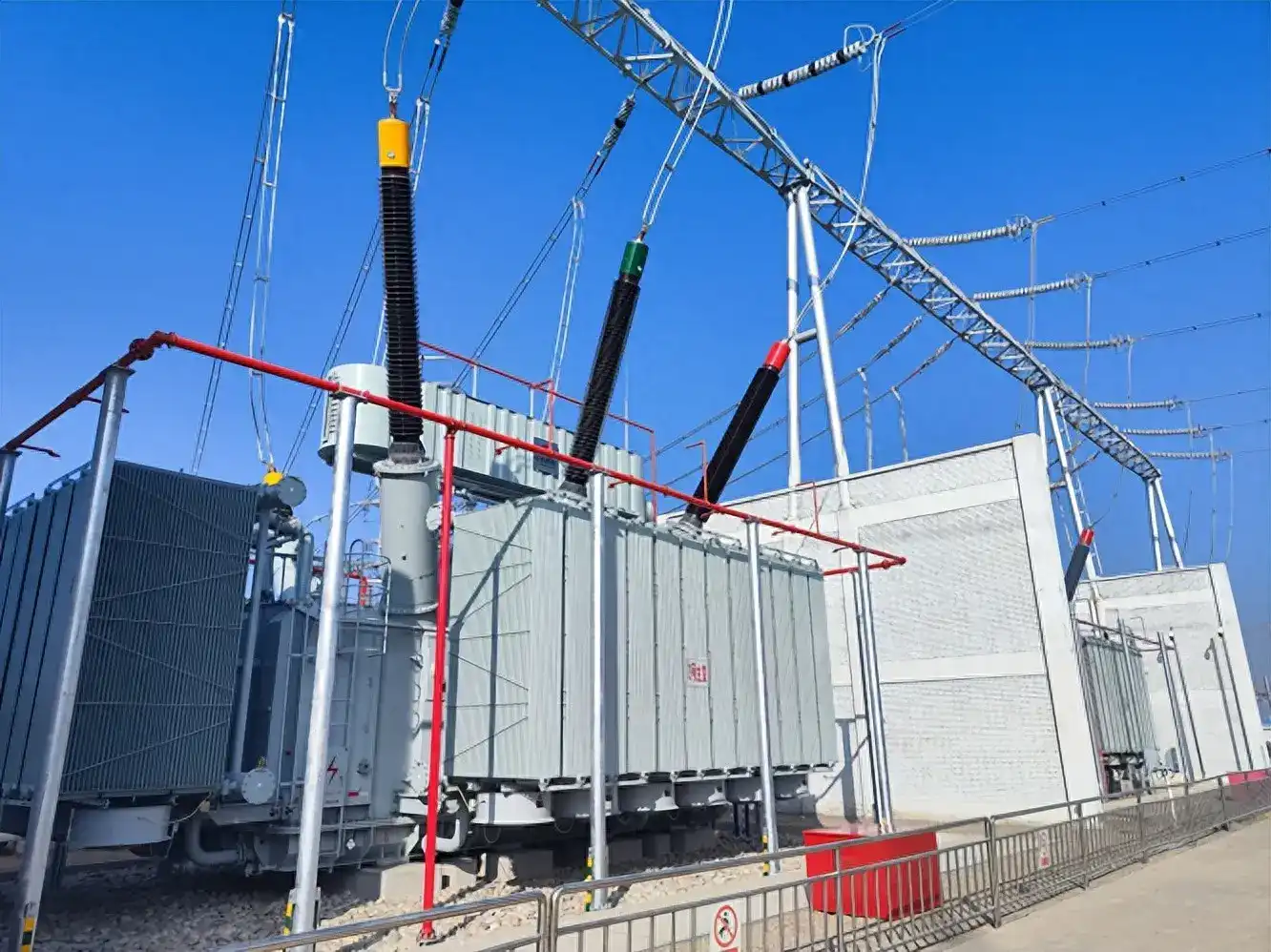
There is a lot of growth in the offshore wind market. By 2030, the U.S. Bureau of Ocean Energy Management thinks that the coasts of the U.S. will have more than 30 GW of offshore wind power. Because of this growth, transformer makers are having to make better, smaller designs. Smart transformers that are connected to the Internet of Things (IoT) now have real-time condition monitoring, load forecasting, and remote diagnostics built in. This cuts down on unplanned downtime and lets data-driven maintenance scheduling happen. New amorphous alloy core materials can cut no-load losses by as much as 70% compared to silicon steel cores. This is a big improvement in efficiency for utility wind projects. Transformers with on-load tap changers (OLTC) that automatically adjust voltage during changing renewable generation cycles are also in high demand because they work with smart grids. When procurement teams plan big wind projects today, they should include grid code compliance and the ability to grow from the start, not as an aside.
Step-up transformers are needed in wind farms because that's how power is sent. Without voltage rise, low-voltage turbine output can't travel efficiently over kilometres of cable. These gadgets keep the power grid stable, cut down on wasted energy, and allow large-scale commercial use of wind power. For decades, procurement pros and project engineers have used the choice of generator and the company that makes it to figure out how much the project will cost. It's not just a technical choice to buy approved, field-proven tools from a reputable maker; it's also a strategic one.
Inverters are optimized for DC-to-AC conversion within individual turbines. At the substation level, sustained AC voltage elevation across large power flows requires the overload tolerance, galvanic isolation, and waveform stability that only a dedicated step-up transformer reliably delivers. Inverters in this role would introduce harmonic distortion and scalability constraints that grid operators typically reject.
Core material quality, insulation class, cooling system design, and ambient operating temperature are the primary efficiency drivers. Grain-oriented silicon steel cores paired with Class F or H insulation and properly sized ONAN or ONAF cooling maintain efficiency above 98.5% even under variable wind generation profiles.
Yes. Hybrid projects often require transformers with adjustable voltage ratios, extended tap ranges, and thermal ratings suited to combined generation profiles. Working directly with the manufacturer during the design phase ensures the unit meets both technical specifications and applicable grid interconnection standards.
Lijie Electric Power Technology Group manufactures certified step-up transformers engineered for utility-scale wind power projects. With annual sales exceeding 5 billion RMB, ISO 9001:2015, CE, UL, and IEC certifications, and a product range spanning 35kV to 500kV and above, we deliver proven solutions backed by over 160 credentialed engineers. As a trusted step-up transformer manufacturer and supplier, we support bulk procurement, custom designs, and long-term service agreements. Contact us at lijieelectrical@gmail.com or visit lijie-electrical.com to request a quote today.
1. International Electrotechnical Commission. IEC 60076: Power Transformers. IEC, 2011.
2. IEEE Standards Association. IEEE C57.12.00: Standard for General Requirements for Liquid-Immersed Distribution, Power, and Regulating Transformers. IEEE, 2021.
3. U.S. Department of Energy. Electricity Explained: Electricity in the United States. Energy Information Administration, 2023.
4. U.S. Bureau of Ocean Energy Management. Offshore Wind Energy. BOEM, 2023.
5. Heier, S. Grid Integration of Wind Energy: Onshore and Offshore Conversion Systems. Wiley, 2014.
6. Kulkarni, S.V., & Khaparde, S.A. Transformer Engineering: Design, Technology, and Diagnostics. CRC Press, 2012.
YOU MAY LIKE


%20H15%20Series%20Oil-immersed%20Amorphous%20Alloy%20Transformer.webp)
%20Dry-type%20Distributing%20Transformer.webp)

11%20type%2035kV%20distribution%20transfo_1778137470754.webp)
April 27, 2025
With a tight project schedule, the manufacturer delivered on time, and on-site technical personnel provided guidance throughout the entire installation and commissioning process; the collaboration was highly efficient and hassle-free.
July 2, 2025
During the preliminary phase, a selection plan was custom-tailored based on the actual site load requirements, resulting in a high degree of parameter compatibility. After-sales support responds within two hours, and ongoing technical support for operation and maintenance is comprehensive; we feel completely confident in a long-term partnership.
November 18, 2025
Deployed as a supporting component for a 35kV grid-connection project at a photovoltaic power station, the equipment operates for an average of 16 hours daily. It demonstrates excellent control over no-load losses, ensures smooth power generation and grid integration, and effectively reduces the station's overall energy consumption.
January 30, 2026
Under the continuous, high-load operating conditions of a factory production line, the equipment maintains stable electrical parameters and exhibits strong overload resistance, thereby guaranteeing an uninterrupted power supply for industrial production.
April 3, 2026
Integrated as a supporting component for a new energy photovoltaic grid-connection system, the manufacturer provided professional technical coordination and timely after-sales support, ensuring seamless adaptation to the specific electrical operating conditions required for grid integration.