April 27, 2025
With a tight project schedule, the manufacturer delivered on time, and on-site technical personnel provided guidance throughout the entire installation and commissioning process; the collaboration was highly efficient and hassle-free.
Aug 4, 2026
The SCZB10 type power transformer is a must-have for industrial projects that need consistently good power and quick setup. This three-phase epoxy resin cast transformer has foil winding construction and on-load tap-changing technology, which lets it automatically regulate voltage without stopping service. These transformers were made for places where the power grid conditions change often, and there are strict fire safety rules. They have a high short-circuit resistance and meet Class 10 loss performance standards. Power utilities, green energy developers, and infrastructure builders around the world need manufacturing centers that can make large quantities of goods quickly and send them.
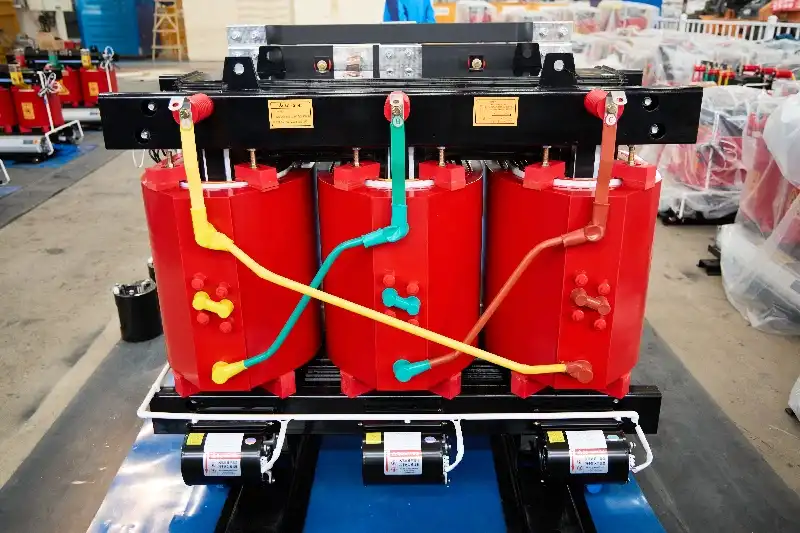
The formal name shows how advanced the engineering is that went into making this equipment. It's easier to understand the model names when you break them down: "S" stands for three-phase configuration, "C" for epoxy resin cast dry-type construction, "Z" for on-load tap-changing capability, "B" for foil winding technology, and "10" for meeting Class 10 loss performance standards according to GB/T 10228-2015. The practical problems that buying managers often face in power distribution networks can be solved by this mix.
With a voltage adjustment range of 10kV ±4×2.5%, the output can be precisely controlled even when the SCZB10 type power transformer is on and fully loaded. This feature keeps facilities from having to shut down for expensive voltage changes, which is a huge benefit for places that use sensitive manufacturing equipment or data centers. The short-circuit resistance changes strategically: it's 4% for units rated 100kVA to 630kVA and 6% for units rated 800kVA and above. This makes fault current restrictions work best across all capacity ranges.
Winding design is a key factor in how long something works. When you wind high-voltage wire around low-voltage foil, you get a very strong mechanical structure that can withstand the electromagnetic forces that happen during short-circuits. The heart is made of cold-rolled grain-oriented silicon steel sheets, which reduce energy loss when the system is not in use and make it more energy efficient overall. Flame-retardant epoxy resin insulation is classified as Grade F or H insulation, which means it can handle high temperatures in harsh industrial settings.
This technology is very helpful for urban business buildings. Installations in the basement can handle sudden changes in power needs from HVAC systems, elevator banks, and stores, all while still following strict fire safety rules. Because it has a small size and can't explode, it can be placed closer to load centers, which means fewer cable runs and worries about voltage drop.
Stable voltage is needed to protect sensitive process equipment in precision manufacturing facilities, such as plants that make semiconductors and lines that make medicines. Grid changes that could damage $1 million worth of equipment are fixed immediately by the on-load control system. This keeps production from stopping and saves money on replacing equipment.
Another great use case is for installing green energy sources in remote areas. Voltage changes naturally in wind and solar farms because the way they generate power depends on the weather. Putting these SCZB10 type power transformers in collecting substations evens out these changes, which keeps the grid stable and protects the power quality for users further down the line. The strong construction can handle the wide range of temperatures and harsh conditions that are usual on remote project sites.
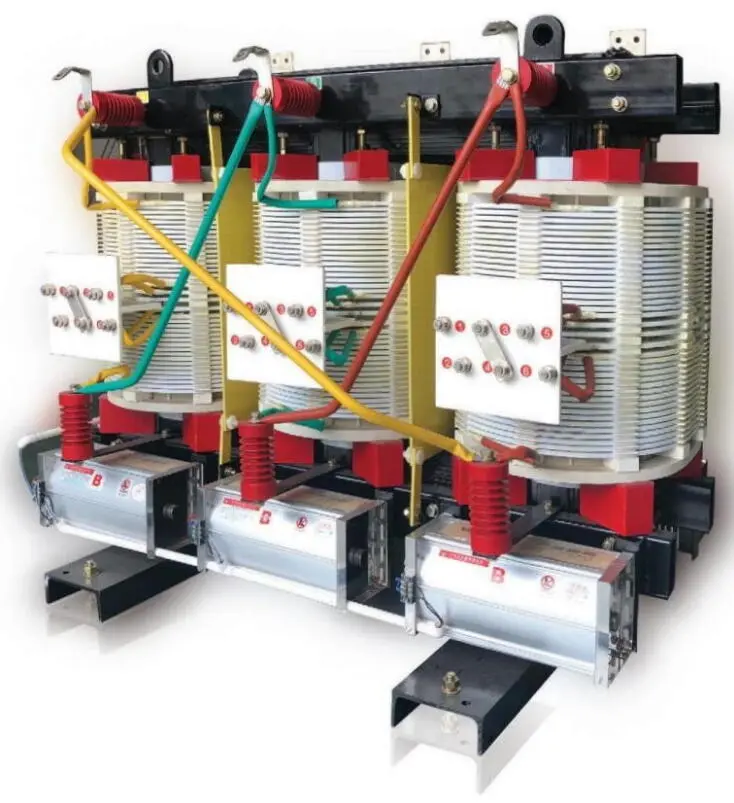
To compare transformer choices, you need to know how the performance of each design compares to others. There is no way to change the on-load tap on the SCZB10 type power transformer model, which is a standard dry-type transformer. Even though it costs less at first, service has to be interrupted to make changes to the voltage, which is a big problem for places that need uninterrupted power quality. The SCZB9 model that came before it has on-load regulation, but it has higher loss levels, which makes the lifetime energy costs higher.
Transformers that are filled with oil cool more efficiently and are usually cheaper for the same capacity ratings. However, they pose fire risks that need special containment systems, which means they can't be put in many cities and residentially nearby areas. Because oil leaks could pollute land and waterways, environmental laws are making it harder and harder to use them. Maintenance tasks include taking oil samples, filtering them, and eventually getting rid of them. Dry-type options don't have these ongoing costs.
The total cost of ownership is more than just the price of the car. The energy economy has a direct effect on the costs of running a business over many years. Compared to past transformer generations, Class 10 loss performance cuts down on lost energy, which saves money on utility bills. Because there are no dangerous insulating fluids, there is no need for specialized fire control systems. This lowers the cost of building infrastructure.
Maintenance needs are much lower for a dry-type building. The main service needs are yearly checks of the cooling fans and the wear on the contacts on the tap changer. These are a lot easier to do than oil analysis methods. Fewer repairs mean less work for workers and fewer service interruptions, which is especially helpful for factories that run nonstop production plans.
When procurement managers sourcing a SCZB10 type power transformer have to balance tight budgets with performance needs, they find that the extra cost for being able to change the load tap pays off in better power quality and more practical freedom. Being able to keep the output voltage fixed even when the grid conditions change protects equipment and processes from problems that can cost a lot more than the transformer itself.
Quality control starts with checking the qualifications of the maker. Getting ISO 9001:2015 approval shows that you use systematic quality management techniques all the way through the production process. Compliance with IEC 60076-11 makes sure that the equipment fits international standards for dry-type power transformers, which makes installation easier in markets around the world. CE and UL approvals show that a product meets safety standards in Europe and North America, which is important for building infrastructure that connects countries.
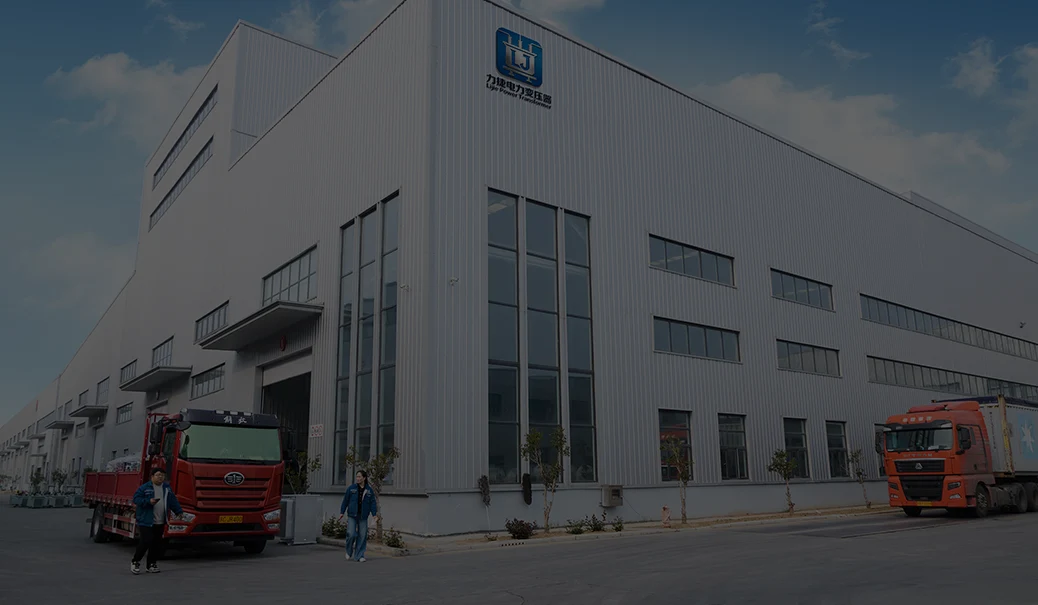
For large jobs, you need sources with a lot of manufacturing ability. Over 500,000 square meters of production space and more than 2,000 employees, including more than 160 engineers, show that the company has the infrastructure it needs for batch production and regular shipping plans. Engineering teams with both graduate and master's degrees show that they can do research and development to make unique solutions that meet the needs of each application.
The ability to do type testing is another important decision factor. Access to national transformer testing centers for regular, type, and special testing methods in-house or through partnerships ensures that the SCZB10 type power transformer is safe before it is shipped. Testing for lightning impulses, temperature rise, and short-circuit withstand all make sure that the equipment will work successfully in real-life situations.
Getting energy efficiency certification from a reputable organization like the China Quality Certification Center proves what you say about performance claims like operating efficiency and loss levels. Getting a product certified by a national electric power center is proof that it meets standards for utility-grade stability. "National High-Tech Enterprise" labels show that a company is constantly coming up with new ideas and improving technology.
Infrastructure for after-sales help is very important for tools that will be used for decades in important tasks. Evaluation systems that are approved to meet the standards for after-sales service in GB/T 27922-2021 show that support procedures have been formalized. Procurement managers who are worried about how long equipment will last can lower their risk by getting warranties that cover more than one year and are backed up by helpful technical support teams.
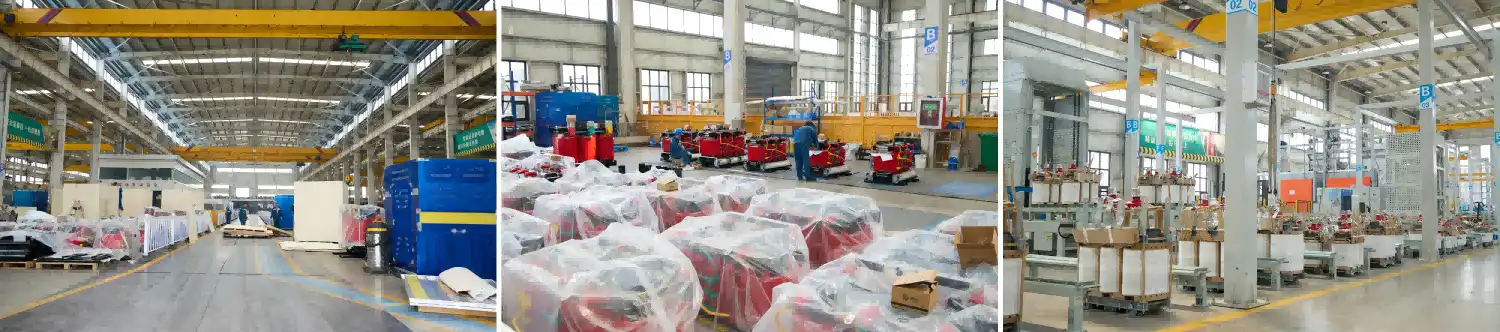
Equipment supply often affects how long a project takes to finish. When manufacturers keep a lot of basic versions in stock, delivery can happen in weeks instead of months. Lead times for custom standards are kept to a minimum by production planning systems that coordinate the processes of buying raw materials, organizing assembly, and inspecting quality.
To negotiate a delivery plan, everyone must be clear about how much production capacity is available and how many orders are currently backlogged. Reputable makers give accurate delivery times that take into account the time it takes to make the product, test it, and ship it. Being able to place rush orders for projects that need to be done quickly shows that the business is flexible, but procurement managers should check to see if speeding up production affects quality control processes.
Another possible delay is the paperwork needed to clear customs. Suppliers who know how to ship SCZB10 type power transformer goods provide full technical specs, test results, and compliance certifications that countries that want to buy them need. This planning speeds up the customs process and lowers the chance that a package will be held up at the border.
Detailed design documents are the first step in good contact with suppliers. Giving clear information about load profiles, ambient working conditions, installation limitations, and legal requirements makes planning and quotes more accurate. When initial specs aren't clear, it's common for equipment not to work with each other or for expensive changes to be requested after production has begun.
Framework deals help businesses that need transformers for a lot of different projects. Setting prices, quality standards, and delivery schedules through long-term supply contracts keeps costs stable and makes sure that customers are treated first during times of high demand. When you commit to buying a lot of something, you can often get better prices and more expert help.
Payment terms that balance the buyer's financial rules with the supplier's cash flow needs make deals go more smoothly. When procuring SCZB10 type power transformer, agreements based on letters of credit or payments at set points in the manufacturing process or quality checks protect both parties and move the project forward.
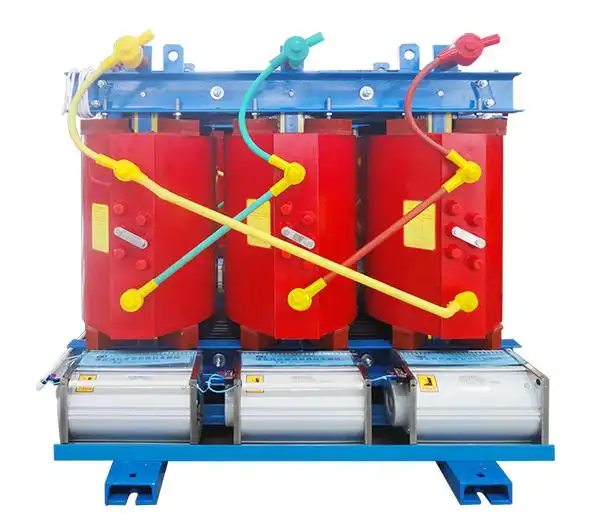
Preventive repair keeps technology working well and extends its life. As part of the annual cleaning process, the winding insulation should be looked at visually for cracks or changes in color that could mean heat stress or water getting in. Cleaning and lubricating bearings are important for keeping cooling system parts, especially fan assemblies in forced-air cooled units, working well at removing heat.
Monitoring temperatures lets you know early on when problems are starting to happen. During operation, thermal imaging and sensors that measure the temperature of the windings find hot spots that could mean that a link is broken or that a certain area is overheating. Temperature data that shows trends over time shows that performance slowly gets worse before it fails completely.
Insulation degradation in an SCZB10 type power transformer is found by partial flow tracking. Online tracking systems keep an eye on discharge activity all the time and let building managers know when insulation is breaking down and needs to be looked into. Taking action against high partial discharge levels stops shielding from breaking down and unexpected power outages before they happen.
Because they move mechanically, on-load tap changer systems need to be checked on a regular basis. Evaluation of contact wear and activity counting helps plan upkeep. According to the manufacturer's instructions, lubricating moving parts will keep the voltage stable for the whole life of the equipment.
Monitoring the load makes the best use of SCZB10 type power transformers and cuts down on energy use. The most efficient way to run transformers is at 50–70% of their stated capacity. This is because losses go up significantly at very low loads and get close to the thermal limits near full capacity. Parallel transformer work is good for places with changing loads because it lets units come online when demand rises.
Optimizing the cooling system cuts down on the amount of energy used. When compared to constant-speed operation, variable-speed fans that adjust to the real temperature needs use less extra power. Making sure there are enough airflow gaps around transformer boxes stops hot air from circulating, which makes cooling systems work harder.
Power quality tracking finds problems on the grid that are hurting how well transformers work. Nonlinear loads cause harmonic distortion, which raises the temperature and lowers the useful capacity. If a building has a lot of variable-frequency drives or rectifier loads, these problems can be fixed by adding harmonic filters or changing to K-rated transformers.
When temperatures go above or below the label values, it means that the system is overloaded, not cooling properly, or electrical problems are starting to form. Insulation damage can be avoided by briefly lowering the load while the root causes are looked into. Overheating that doesn't go away even though there is enough airflow to cool it down suggests internal problems that need the manufacturer's expert help.
Problems with the tap changer system can be seen when voltage control fails. By checking that the control circuit works and looking at the switching contacts, you can tell if there are any electrical or mechanical problems that are stopping the system from working properly. Repairs to complex tap changers usually need specialized mechanical knowledge.
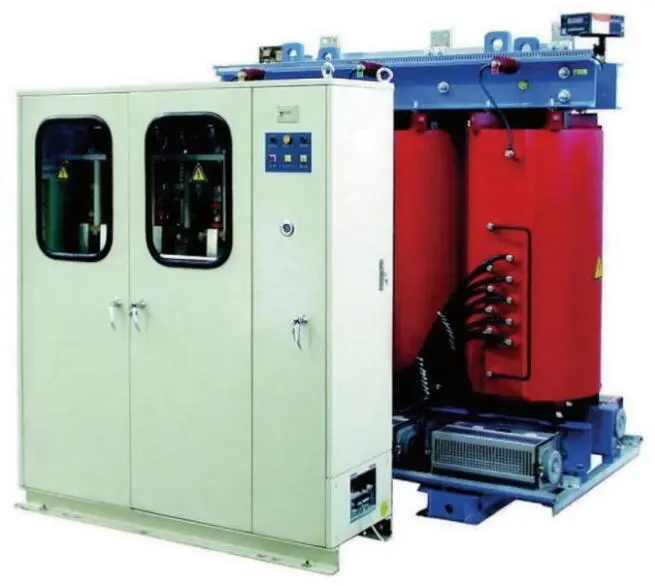
To choose the right cast resin transformer with on-load control, the SCZB10 type power transformer, you have to weigh the technical specs against the needs of the project and the transformer's long-term operating factors. Automatic voltage control, fire-resistant building, and low-loss design all work together to solve important power quality problems in modern businesses and factories. Manufacturing partners with a wide range of certifications, a lot of production capacity, and quick technical help, making it possible to finish projects on time, even when they have to be done quickly. Understanding how to maintain these assets and how to make them work better will make sure they provide consistent service for many years, increasing the return on infrastructure investment.
The on-load tap switch lets you change the voltage by ±4×2.5% at 10kV while the unit is still on and fully loaded. Off-circuit tap changers need to be turned off in order to be adjusted, but this feature lets them compensate for changes in the power grid in real time without stopping power to linked equipment.
Standard capacity ratings with common voltage ratios usually ship between 3 and 6 weeks after an order is confirmed, but this depends on how much material the maker has on hand. Custom specs that need specialized engineering, like odd voltage ratios, higher seismic ratings, or built-in tracking systems, make lead times 8–12 weeks long to allow for design approval and special production processes.
With a dry-type design, there is no need to take oil samples, filter them, or eventually get rid of them. Checks are done once a year to make sure the cooling fan works, the contacts on the tap switch are in good shape, and the insulation can be seen. This easier upkeep plan lowers ongoing service costs and gets rid of the environmental damage risks that come with insulation fluid leaks.
Modern versions have RS485 communication ports that let temperatures in the windings, the position of the tap changer, and the machine's operating state be monitored from afar. This connection lets you use predictive maintenance programs and connect to building or site management systems so that you can keep an eye on all of your tools from one place.
Lijie Electric Power Technology Group is an expert at making SCZB10 type power transformers and has worked with power utilities, green energy projects, and industrial facilities in six countries. Our 500,000-square-meter factories in Xuzhou and Nantong use cutting-edge production tools and strict quality control. They are certified by ISO 9001:2015, IEC, CE, and UL. Engineering teams with an average of more than 160 technical experts create custom solutions that meet the needs of each project while keeping group production efficiency for large-scale infrastructure operations.
Production of more than 5 billion RMB per year shows the scale needed to complete projects reliably within tight deadlines. International shipments are handled and documented correctly by global shipping networks, and full after-sales support (certified to GB/T 27922-2021 standards) offers quick expert help throughout the lifecycle of equipment. When purchasing managers are looking for a reliable SCZB10 type power transformer provider, our manufacturing capacity, technical knowledge, and on-time delivery give us a competitive edge. You can email our engineering team at lijieelectrical@gmail.com or visit lijie-electrical.com to talk about project details and get full technical plans that are made to fit your needs.
1. National Standards Committee. "GB/T 10228-2015: Power Transformers - Technical Parameters and Requirements." China Standards Press, 2015.
2. International Electrotechnical Commission. "IEC 60076-11: Power Transformers - Part 11: Dry-Type Transformers." IEC Publications, 2018.
3. Zhang, Wei, and Liu, Huang. "On-Load Tap Changer Technology in Modern Distribution Networks: Performance and Reliability Analysis." Journal of Electrical Engineering & Technology, vol. 14, no. 3, 2019, pp. 1247-1258.
4. American National Standards Institute. "IEEE C57.12.01: Standard for Liquid-Immersed Distribution, Power, and Regulating Transformers." IEEE Standards Association, 2020.
5. Chen, Ming. "Comparative Life Cycle Cost Analysis of Dry-Type versus Oil-Immersed Power Transformers in Urban Infrastructure." International Journal of Electrical Power & Energy Systems, vol. 118, 2020.
6. European Committee for Electrotechnical Standardization. "EN 50588: Medium Power Transformers 50 Hz with Highest Voltage for Equipment Not Exceeding 36 kV." CENELEC Publications, 2017.
YOU MAY LIKE


H15%20distribution%20transformer.webp)
13%20type%20epoxy%20resin%20cast%20transformer.webp)


April 27, 2025
With a tight project schedule, the manufacturer delivered on time, and on-site technical personnel provided guidance throughout the entire installation and commissioning process; the collaboration was highly efficient and hassle-free.
July 2, 2025
During the preliminary phase, a selection plan was custom-tailored based on the actual site load requirements, resulting in a high degree of parameter compatibility. After-sales support responds within two hours, and ongoing technical support for operation and maintenance is comprehensive; we feel completely confident in a long-term partnership.
November 18, 2025
Deployed as a supporting component for a 35kV grid-connection project at a photovoltaic power station, the equipment operates for an average of 16 hours daily. It demonstrates excellent control over no-load losses, ensures smooth power generation and grid integration, and effectively reduces the station's overall energy consumption.
January 30, 2026
Under the continuous, high-load operating conditions of a factory production line, the equipment maintains stable electrical parameters and exhibits strong overload resistance, thereby guaranteeing an uninterrupted power supply for industrial production.
April 3, 2026
Integrated as a supporting component for a new energy photovoltaic grid-connection system, the manufacturer provided professional technical coordination and timely after-sales support, ensuring seamless adaptation to the specific electrical operating conditions required for grid integration.