April 27, 2025
With a tight project schedule, the manufacturer delivered on time, and on-site technical personnel provided guidance throughout the entire installation and commissioning process; the collaboration was highly efficient and hassle-free.
Jul 29, 2026
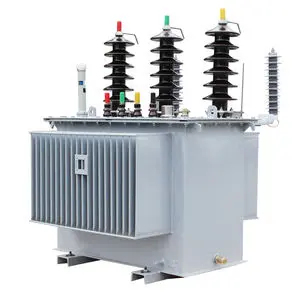
The S11 type 35KV oil-immersed power transformer is an important part of medium-voltage electricity distribution networks. It is used by power companies, factories, renewable energy installations, and building projects. Its main uses are lowering the voltage from 35KV transmission lines to lower distribution levels, powering factories that need stable high-capacity loads, connecting wind and solar farms to the power grid, and making sure that electricity gets delivered reliably in substations in cities and rural areas where space and cooling efficiency are important.
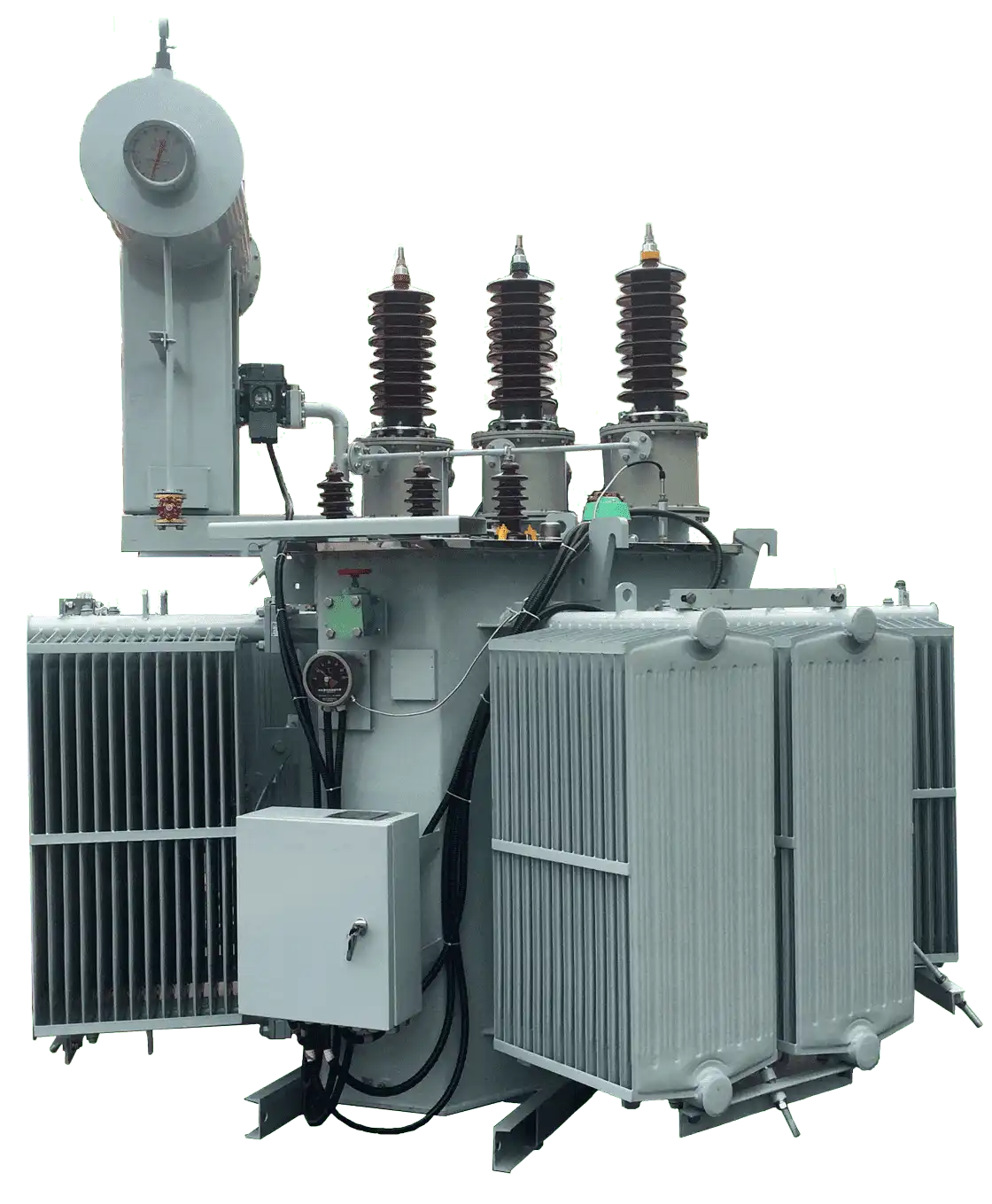
Here at Lijie Electric, we've seen how the way S11 type 35KV oil-immersed power transformers are designed solves real-world problems. The insulation oil does two things: it works as a dielectric shield to keep electricity from breaking down, and it also soaks up heat that is generated during operation. Winding temperatures stay safe because of this natural cooling system. Usually, it keeps temperature spikes below 65K when the load is full.
High-permeability cold-rolled silicon steel sheets are used to build the magnetic core. These sheets are put together using full angled joints and stepped lap methods. This way of building lowers magnetostriction effects, which means that no-load losses are about 25–30% lower than they were with older transformer sets. The grain-oriented steel gets magnetic flux levels of 1.65 to 1.70T, which makes energy flow more efficient and reduces waste heat.
Copper windings without oxygen are wrapped around the core because they conduct electricity better and are more durable when there is a short circuit. The winding design uses smooth corners on the support structures to make an even electric field that keeps stress from building up in one place. Transformers with a rating of more than 12,500kVA have unified internal support plates that keep the axial coil height constant and improve their ability to withstand short circuits.
These transformers show measurable performance benefits and meet GB 20052-2020 Level III energy saving guidelines. Losses when there is no load run from 0.8kW at 630kVA capacity to about 18kW at 10MVA values. Load losses range from 5.5kW to 85kW, which is related to the capacity range. The oil-immersed self-cooling method (ONAN) works only on natural oil circulation, so there is no need for upkeep or energy use connected to pumps.
When heat needs to be removed quickly from a large area, oil-immersed designs work better than dry ones in situations like these. Gas-insulated transformers have small sizes, but they cost a lot more to buy at first. The S11 series strikes a good mix between reliability, cost-effectiveness over its lifetime, and installation freedom. This is something that procurement teams in charge of big projects really like.
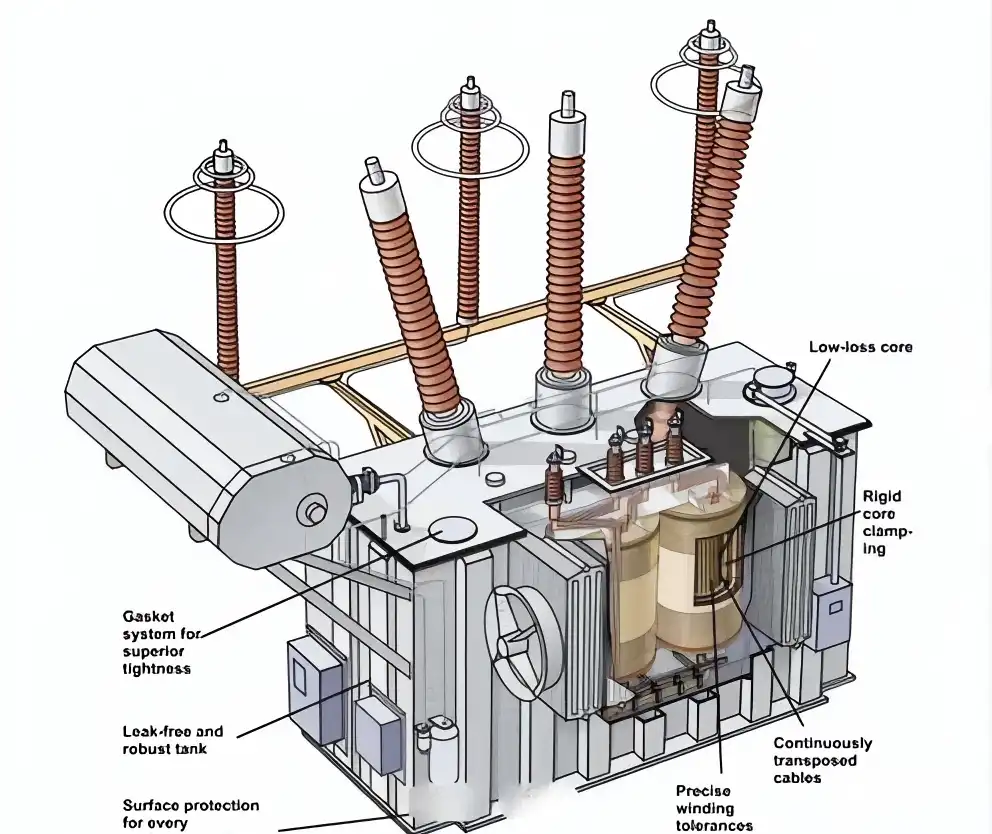
Medium-voltage transformers are important parts of the electrical grid because they connect transmission networks to distribution systems that send power to homes and businesses. Their 35KV voltage rating works perfectly with the regional grid design in many foreign markets, especially where step-down needs link high-voltage lines to city or industrial park networks.
These S11 type 35KV oil-immersed power transformers are used a lot in transmission and distribution networks by national grid owners and area utility companies. For substation use, you need tools that can handle constant loads and short-term faults without breaking down completely. The strong frame structure, which holds the transformer body in place with plate clamps and side beams, keeps it mechanically stable during shipping and earthquakes.
Grid stability is improved by the resistance properties that come with designs that are soaked in oil. A short-circuit resistance of 4% to 8% limits the flow of current naturally when there is a fault. This protects equipment further down the line and makes it easier for safety relays to work together. When building protection plans for networks with complicated topologies, utility engineers like this behaviour because it is easy to predict.
Extremely hard conditions are common in places like steel mills, mines, and chemical processing plants where transformers are used. In these fields, work must go on without interruption, so dependability is the most important factor in choosing a power supplier. This need is met by the S11 series, which has many advanced features that, with proper care, can make it work for more than 30 years.
Transformers with better short-circuit power are helpful for factories that use electric arc furnaces. The stronger support inside the windings keeps them from becoming unstable or deformed when fault currents apply strong mechanical forces. Corrugated oil tank designs can handle changes in temperature while keeping airtight seals that keep inside parts clean from airborne particles.
When they try to connect to power grids, wind farms and solar installations run into their own problems. Transformers at these places have to handle power flowing in both directions, voltage changes caused by variable renewable sources, and being installed in remote areas where upkeep is hard to get to. The fully sealed tank design keeps water out and oil from breaking down, which are important issues in unmanned green energy substations.
With a tap range of ±5% and middle points at ±2.5%, the voltage can be changed to account for changes in line impedance that happen a lot on long remote wires that connect wind farms to transmission networks. Both 50Hz and 60Hz frequency rates give deployment options across various international grid standards, which helps global EPC companies manage renewable portfolios in multiple countries.
More and more, people who are building homes and planning industrial parks want electrical distribution equipment that is small, reliable, and fits in with current architectural styles. The curved tank shape lowers noise levels to 45–55 dB(A), which is below the noise limits set by cities without the need for extra sound barriers. This matter of style concerns when substations are put near residential or business places.
Capacity ranges from 630kVA to 31,500kVA to handle projects that are still being built and will grow over time. Procurement managers like that they can use the same transformer platform for all stages of a project. This makes it easier to keep track of extra parts and train workers on how to use them. It's easier to set up because it comes in both single-phase and three-phase designs.
To reach the 30-year service life that was planned, regular upkeep and checking on the state of the S11 type 35KV oil-immersed power transformer are needed. We've seen that transformers that get regular maintenance always work better than ones that don't. This is because ignored units don't break down early, which would stop activities and raise costs over the life of the machine.
Visual checks should be done every three months to record oil level readings from a pointer-type oil level gauge, which gets rid of the fake readings that come with older gauge designs. The capsule-shaped oil conservator keeps out moisture and air while allowing for heat expansion. Tank seals should be checked by inspectors, who should look for oil leaks around gaskets and weld cracks.
Monitoring the temperature during load cycles shows problems as they start to form before they become major failures. Real-time data is given by winding temperature sensors and oil temperature gauges. Usually, alarms are set when winding temperatures go over 95°C or oil temperatures go over 85°C. By plotting this data against time, you can see patterns of slow degradation that need more research.
An annual dissolved gas analysis (DGA) can find early signs of faults by looking for specific gas fingerprints. Carbon monoxide and carbon dioxide are released when cellulose insulation breaks down thermally, and hydrogen and methane are released when partial discharge happens. Setting up standard DGA profiles during commissioning makes it possible to compare test results in a useful way.
Breakdown voltage testing, which usually needs numbers above 60kV, proves the stability of the dielectric. The amount of moisture should stay below 30 ppm so that the paper protection around the windings doesn't age faster than it should. Acidity levels found through neutralisation number tests show how fast oil is oxidising. Values above 0.5 mgKOH/g mean that the oil needs to be replaced or regenerated.
Gas relay alarms with collection devices make upkeep and fixing easier by taking gas samples for testing in a lab. Sudden gas buildup is often a sign of arcing or heat hotspots, while slow gas buildup is a sign of normal ageing. Differentiating between these situations keeps equipment from being turned off for no reason and makes sure that real problems get fixed quickly.
During setup and regular testing, partial discharge readings find problems with the insulation before they become full dielectric failures. The accuracy of modern tools for finding partial discharge is 10pC at 1.58Um/√3. This can find problems that traditional high-voltage testing methods miss.
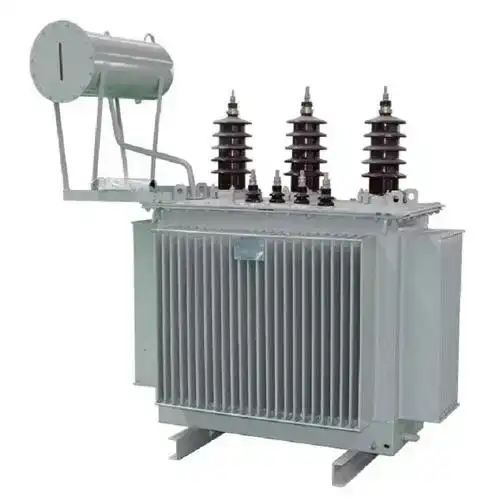
Structured evaluation systems help people make choices about purchases that balance technical needs with budgetary limits. We've helped a lot of clients make this choice, and we know that the best options depend on the specifics of the application and the goals of the company for the S11 type 35KV oil-immersed power transformer.
When choosing a capacity, you need to think about both the current load patterns and the growth that you expect over the transformer's service life. Oversizing by 20–30% leaves room for future growth without having to replace the product too soon. The names of the connection groups—Yyn0 or Dyn11—affect how to ground and reduce harmonics, so they need to be coordinated with the design of the whole system.
Specifications for impedance voltage affect the size of fault currents and how voltage is regulated. Lower resistance values help keep the voltage stable when the load changes, but they also make the fault current stronger. Higher resistance lowers fault currents, but it also causes the voltage to drop more during times of high demand. Matching the resistance to the grades of safety devices makes sure that everything works together without affecting performance.
When looking at possible sources, you need to look at more than just their marketing claims about their manufacturing skills. Verification of production capacity proves the ability to meet project deadlines for big orders. Lijie Electric has two factories in Xuzhou and Nantong. Together, they cover 500,000 square meters, which is enough space for large-scale production that meets the needs of utility and building projects.
Certification files show that you are dedicated to meeting high standards and following the rules. With ISO 9001:2015 quality control approval, you can be sure that the way your products are made is always the same. With IEC, CE, and UL licenses, goods can be sold all over the world without any problems. Lijie Electric keeps these certifications up to date with regular checks and ongoing compliance tracking.
The initial buy price is only one part of the total cost of ownership. Other parts include installation costs, working losses, and upkeep needs over the equipment's lifetime. Designs that use less energy and have smaller losses at no load and load can save a lot of money, especially in situations where transformers are always on, even when there is no load.
Dependability in delivery has a direct effect on project plans and the penalty terms that go with them in EPC contracts. Suppliers with a history of on-time delivery lower the risk of the project. Our ability to manufacture and handle our inventory allows us to speed up delivery when project deadlines are tight. This is made possible by our knowledge of foreign shipping and customs clearance.
Digitalisation, environmental rules, and efforts to modernise the power grid are all pushing the transformer business to change. Keeping up with these changes helps procurement teams make sure that the S11 type 35KV oil-immersed power transformer they choose fits with their long-term business plans.
IoT-enabled sensors built into transformers allow for constant state tracking and strategies for planned maintenance. Data about winding temperatures, oil quality parameters, and partial discharge activity are sent to cloud-based analytics systems in real time. Machine learning algorithms find strange trends that point to problems that are about to happen. This lets repair workers know about the problems before they happen.
Remote tracking cuts down on the need for site visits to check on equipment that is located in different areas. This lowers maintenance costs and speeds up response times. Integration with SCADA systems gives workers full insight into transformer fleets, which helps distribute loads more evenly and extends the life of equipment by making smart operating choices.
Bio-based shielding fluids are being made faster because of regulatory pressure about the environmental effects of mineral oil. Natural ester oils that come from plants are better for fire safety and are completely biodegradable, and they work just as well as regular mineral oils when it comes to insulating properties. These options are better for the climate and won't hurt the efficiency of operations.
Copper windings, silicon steel cores, and insulation oils from old transformers can be reused through recycling programs. Material recovery rates go up when designs are changed to make removal easier, which is in line with the ideas of the circular economy. More and more, procurement specifications include factors for recycling, which rewards makers who use sustainable design practices.
Amorphous metal cores are the next big thing in the economy; they cut no-load losses by an extra 70–80% compared to regular silicon steel. While it is more expensive now, falling material costs may make it easier for more people to use it in situations where the energy savings are worth the higher starting cost. Combining amorphous cores with regular windings in hybrid systems makes the best use of cost-performance choices.
Better closing technologies have gotten rid of the sources of oil leaks that used to make transformers less reliable. Hermetic seals can withstand decades of changing temperatures and mechanical stress thanks to advanced sealing materials and precise machining. With these improvements, less upkeep is needed, and oil spills won't pollute the environment.
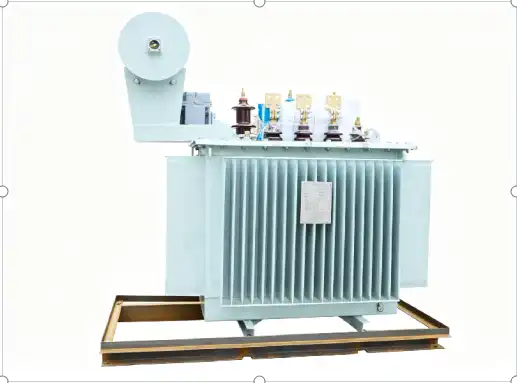
Power companies, factories, green energy projects, and infrastructure growth will all need the S11 type 35KV oil-immersed power transformer for a long time. Its tried-and-true design strikes a good mix between cost-effectiveness, dependability, and speed in a wide range of settings, from grid substations to factories. Knowing what the application needs, the best ways to maintain it, and what the seller can do lets you make smart purchasing decisions that maximise the lifecycle value. Even though smart tracking and environmental improvements are changing the transformer scene, oil-immersed designs will still be the most popular way to distribute medium-voltage electricity for many years to come because they are strong, cool, and reliable.
Oil-immersed systems are better at cooling, which lets them handle more power and be overloaded. Because insulating oil is a dielectric, it makes electrical gaps bigger inside small spaces. When the capacity is more than 2,500kVA, S11 type 35KV oil-immersed power transformers usually have lower lifecycle costs because they are more efficient, which makes up for the higher initial installation costs.
Most installations only need to be tested once a year, but important uses or transformers that are running at unusual temperatures should be tested every three months. Baseline testing should be done on newly commissioned units within six months of turning them on so that standard values can be used for future comparisons.
When operating in places where the temperature is above 40°C, cooling needs to be lowered or improved. Installations above 1,000 meters lower the efficiency of air cooling, which means that capacity needs to be changed. Coastal areas need coatings that are resistant to rust and have a rating of C4 or C5 so they can handle the salty air.
It is possible for the S11 series to work with normal control and safety systems that are used in utility networks. Different grounding setups can be used with the different connection group choices. Impedance specs are the same as standard relay settings, which makes integration easier without having to completely rethink the safety system.
Lijie Electric has been making high-quality transformers for over 20 years and sells them to businesses around the world that need reliable, approved power transfer equipment. The National Transformer Quality Supervision and Inspection Center in China puts our S11 type 35KV oil-immersed power transformers through a lot of tests to make sure they meet IEC, CE, and UL standards, which makes them easier to use around the world. We can produce more than 5 billion RMB a year and have a technical team of more than 160 engineering professionals. We can help with large-scale purchases by offering flexible options with powers ranging from 630kVA to 31,500kVA. Our skilled workers offer helpful technical advice, reasonable prices, and dependable delivery times to make sure your projects stay on track, whether you're in charge of expanding power grids, upgrading industrial facilities, or green energy projects. Email our buying experts at lijieelectrical@gmail.com to talk about your unique needs and get quotes that are tailored to your situation. You can look at our whole product line at lijie-electrical.com and learn why top EPC contractors, utility companies, and industrial makers around the world choose Lijie Electric as their main provider of S11 type 35KV oil-immersed power transformers.
1. International Electrotechnical Commission (2011). Power Transformers - Part 1: General Requirements. IEC 60076-1 Standard.
2. Zhang, Wei & Liu, Jianguo (2019). Analysis of Energy Efficiency Standards for Medium Voltage Oil-Immersed Transformers. Chinese Journal of Electrical Engineering, Vol. 5, No. 3, pp. 45-58.
3. Working Group A2.37 (2015). Transformer Reliability Survey: Interim Report. CIGRE Technical Brochure 642, Paris.
4. Kulkarni, S.V. & Khaparde, S.A. (2017). Transformer Engineering: Design, Technology, and Diagnostics (2nd ed.). CRC Press.
5. IEEE Standards Association (2018). IEEE Guide for Loading Mineral-Oil-Immersed Transformers and Step-Voltage Regulators. IEEE C57.91-2011 (Revision).
6. National Standards of the People's Republic of China (2020). Three-Phase Oil-Immersed Power Transformers - Energy Efficiency Grades and Energy Efficiency Limits. GB 20052-2020.
YOU MAY LIKE


13%20type%20epoxy%20resin%20cast%20transformer.webp)
%20Dry-type%20Distributing%20Transformer.webp)


18%20type%20dry-type%20distribution%20transformer.webp)

April 27, 2025
With a tight project schedule, the manufacturer delivered on time, and on-site technical personnel provided guidance throughout the entire installation and commissioning process; the collaboration was highly efficient and hassle-free.
July 2, 2025
During the preliminary phase, a selection plan was custom-tailored based on the actual site load requirements, resulting in a high degree of parameter compatibility. After-sales support responds within two hours, and ongoing technical support for operation and maintenance is comprehensive; we feel completely confident in a long-term partnership.
November 18, 2025
Deployed as a supporting component for a 35kV grid-connection project at a photovoltaic power station, the equipment operates for an average of 16 hours daily. It demonstrates excellent control over no-load losses, ensures smooth power generation and grid integration, and effectively reduces the station's overall energy consumption.
January 30, 2026
Under the continuous, high-load operating conditions of a factory production line, the equipment maintains stable electrical parameters and exhibits strong overload resistance, thereby guaranteeing an uninterrupted power supply for industrial production.
April 3, 2026
Integrated as a supporting component for a new energy photovoltaic grid-connection system, the manufacturer provided professional technical coordination and timely after-sales support, ensuring seamless adaptation to the specific electrical operating conditions required for grid integration.