April 27, 2025
With a tight project schedule, the manufacturer delivered on time, and on-site technical personnel provided guidance throughout the entire installation and commissioning process; the collaboration was highly efficient and hassle-free.
Jul 17, 2026
The SCBH15 type 35kV three-phase distribution transformer is a big step forward in power distribution technology that uses less energy. It was designed to meet the strict needs of modern utility and industrial infrastructure. This advanced amorphous alloy dry-type transformer combines cutting-edge materials science with tried-and-true electrical engineering principles. It saves energy in a way that has never been seen before and is very reliable even after decades of use. This guide is for procurement managers, electrical engineers, project directors, and supply chain professionals. It gives them all the technical information, procurement strategies, and operational considerations they need to make smart decisions in today's competitive B2B markets. Whether you're updating old grid infrastructure, planning green energy projects, or choosing tools for mission-critical buildings, knowing the SCBH15 platform's unique benefits will help you get the most out of your capital expenditures and long-term costs.
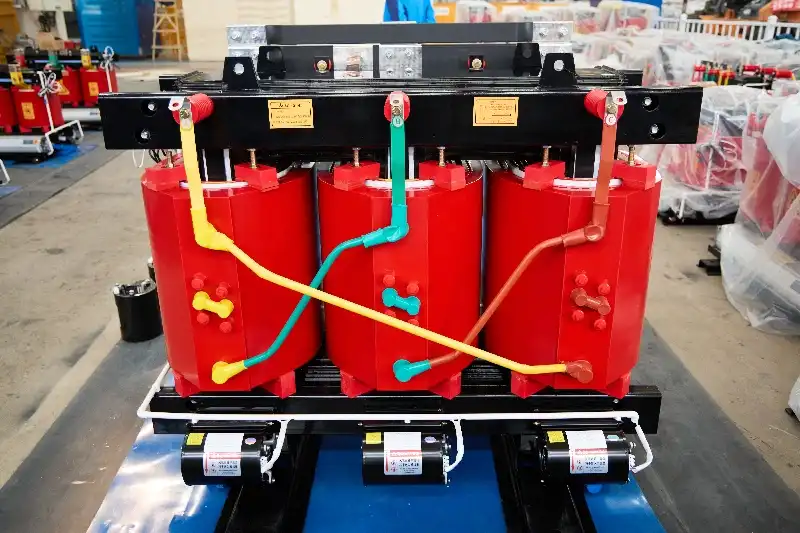
The SCBH15 type 35kV three-phase distribution transformer has an amorphous alloy core and uses epoxy resin vacuum-cast foil winding technology. This is a more advanced way of building that makes it very different from other silicon steel designs. The amorphous alloy ribbon, which is made of metallic glass based on iron, has a disordered atomic structure that is disordered. This makes it much better at reducing magnetic hysteresis losses than crystalline silicon steel. This choice of material allows no-load loss reductions of 70–80% compared to traditional SCB10 series transformers. This directly leads to lower operating costs and lower carbon emissions over the 30-year design life of the equipment. The three-column or five-column core configuration offers great magnetic permeability while advanced vibration-damping mounting systems keep noise levels low.
The vacuum-cast epoxy resin encapsulation process surrounds the windings with a shield that keeps out wetness and dirt. This gets rid of the fire and environmental risks that come with designs that are submerged in oil. This building meets Class F or H insulation standards, and the partial discharge levels are usually less than 10pC. This means that it will work reliably in harsh conditions like high humidity, salt spray, and temperature changes. The transformer meets both national standards (GB/T 22072 and IEC 60076-11) and foreign standards (IEC 60076-11). This means that it can be certified and used in global building projects.
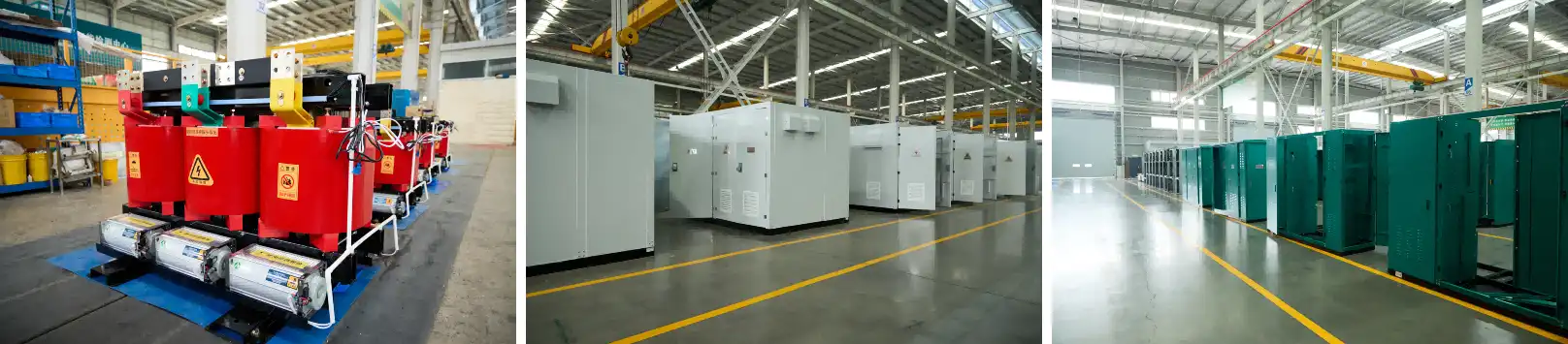
With a main voltage rating of 35kV and a straight step-down capability to 0.4kV distribution levels, the SCBH15 type 35kV three-phase distribution transformer gets rid of the need for middle transformation steps in many situations, making the system simpler and more efficient overall. Power ratings range from 315kVA to 10,000kVA, so they can meet the needs of a wide range of industrial, commercial, and utility loads. The transformer can handle 120% of its maximum load when cooled by forced air. This gives it practical freedom during times of high demand without affecting the insulation's strength or speeding up its ageing.
Even when the motor is running at full speed all the time, the temperature rise stays well within strict limits. This is because the geometry of the cooling ducts controls the temperatures in the windings' hot spots. The strong ability to withstand short-circuits—proven by extensive testing in approved labs—ensures mechanical stability during fault conditions, keeping important infrastructure safe from failures that can spread. These performance traits directly match the procurement priorities of dependability, efficiency, and lowering the cost of maintenance.
When looking at different transformer options, it's important to know how much energy loss really costs for large-scale installations. When compared to the SCBH10 and SCB10 alternatives, the SCBH15 type 35kV three-phase distribution transformer shows real benefits across key performance measures. No-load losses, which are the constant energy use no matter how much is being loaded, are about 0.08% of rated capacity for SCBH15 models, 0.12% for SCBH10 models, and 0.15% for SCB10 models. This difference adds up to big savings on energy costs over a typical 30-year operational period, especially for applications that are connected to the power grid and have high electricity rates.
Similar improvements can be seen in load losses. This is because the SCBH15's improved core materials and optimised winding geometry lower resistive heating when it's in use. Even though the original capital cost was higher, the total cost of ownership is lower because both no-load and load losses are lower. Lifecycle cost analysis regularly shows that investments in SCBH15 in utility and heavy industry settings pay for themselves in three to five years. After that, all the money saved on energy costs goes straight to working budgets.
Even though the SCBH15 type 35kV three-phase distribution transformer has strong benefits for efficiency, people who work in procurement should know about its full performance profile. Due to their magnetostrictive features, amorphous metal cores can make a little more noise that you can hear. Lijie Electric fixes this problem with vibration isolation mounting systems that meet GB/T 1094.10 noise standards. The higher starting cost is due to the use of high-quality materials and complicated production processes that need careful financial modelling to show that the investment is worth it in certain situations.
But because they don't need to be maintained, they don't need to be checked for oil, filtered, or replaced as often as liquid-filled units do. This makes them easier to use and less harmful to the environment. Because they don't catch fire and put out themselves, SCBH15 transformers are the only practical choice for underground installations, high-rise buildings, hospitals, airports, and other places where oil-immersed designs aren't allowed because of fire safety rules.
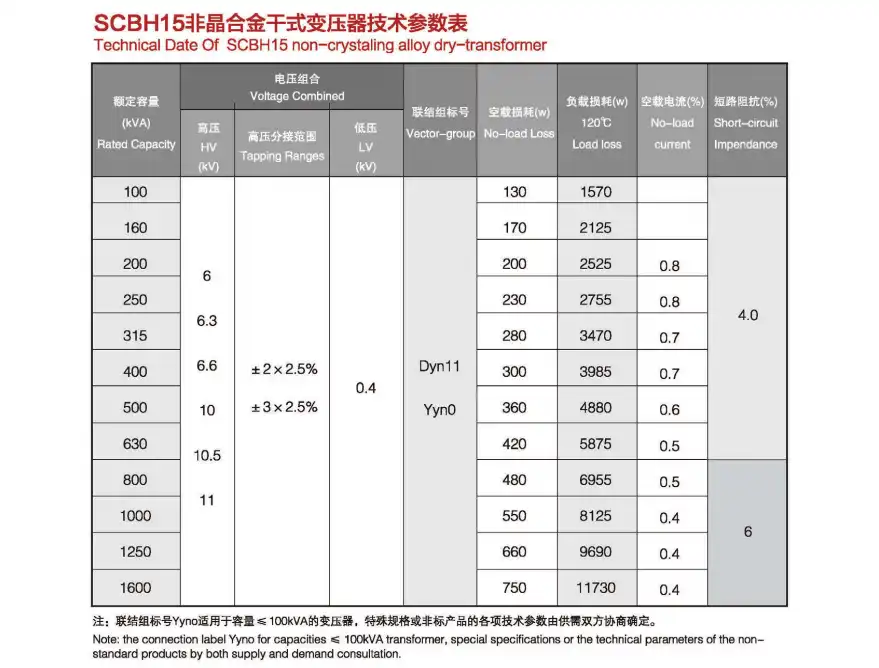
To choose the right SCBH15 manufacturer, you need to do a lot more than just compare prices. When projects need batch consistency across hundreds of units or faster delivery schedules for phased construction programs, manufacturing skills become very important. Lijie Electric has two advanced factories in Xuzhou and Nantong that are each 500,000 square meters. Together, they can make more than 5 billion RMB a year and have more than 160 engineers with doctoral and master's degrees who work there. These engineers are experts in designing transformers and making sure they are of high quality.
Certification badges are important proof of the quality of the production process and the compliance of the product. Look for suppliers that have ISO 9001:2015 quality management certification, IEC 60076 series product approvals, and certifications that are specific to your market, like CE for European markets and UL for North American markets. Lijie Electric has a wide range of certifications that cover all of the major international markets for products such as the SCBH15 type 35kV three-phase distribution transformer. The National Transformer Quality Supervision and Inspection Center and the Wuhan High Voltage Research Institute do thorough tests to back up these certifications.
Knowing what costs make it easier to negotiate and plan your budget. The base price of an SCBH15 type 35kV three-phase distribution transformer is based on its capacity rating, voltage class, and the cost of its core material. Amorphous alloy costs more than regular silicon steel. Usually, customisation needs like unique paint finishes, longer guarantees, built-in tracking systems, or sizes that aren't standard add 10-15% to the base price. When you commit to buying in bulk for framework agreements or big projects, you can get big discounts that could cut unit costs by 15 to 25 percent compared to buying on the spot.
Delivery times depend on the complexity of the specifications and how busy the factory is. Standard catalogue items usually ship within 8 to 12 weeks, while custom-engineered units take 12 to 16 weeks from the time the order is confirmed. The warranty usually lasts for 24 to 36 months from the date of commissioning or 30 months from the date of shipment, whichever comes first. You can negotiate for longer coverage when you place your order. After-sales support features like expert advice, spare parts availability, and field service reaction should be carefully considered, since replacing transformers during unplanned outages can cause major problems and cost a lot of money.

Compared to oil-immersed alternatives, the SCBH15 type 35kV three-phase distribution transformer doesn't need as much maintenance. However, setting up regular inspection schedules makes it more reliable and finds problems before they become major problems. Visual checks should be done every three months to make sure the enclosure is solid, the bushings are in good shape, the terminals are tight, and the cooling system is clean. Every year, thermal imaging surveys look for strange heating patterns that could mean that the connection resistance is going up or the windings are damaged. This lets people take action before it's too late.
Load management techniques have a direct effect on how long a task lasts. The SCBH15 can handle 120% of its rated capacity when it is cooled by forced air, but running at high temperatures for long periods of time above its rated load speeds up insulation ageing. Load tracking systems, which are being built into transformers more and more these days, keep track of real-time thermal conditions and loading patterns. This lets repair plans be more accurate and stops damaging overload events. These methods are in line with the best practices in the industry for managing critical infrastructure. They make equipment last much longer than the normal 30-year design goal.
To follow environmental rules in developed markets like Europe, North America, and others, you need to pay attention to things like electromagnetic interference, noise emissions, and how easily old products can be recycled. The dry-type construction of the SCBH15 type 35kV three-phase distribution transformer eliminates the risks of oil spills polluting the soil and groundwater. This makes the site's decommissioning easier and lowers the company's long-term environmental liability. Noise control measures, such as resilient mounting pads and enclosure acoustic treatments, keep noise levels within the limits that are allowed in residential and business areas.
The amorphous alloy core makeup supports high recycle value at the end of life, with well-known methods for recovering materials in secondary metal markets around the world. As companies make sustainability promises and lifetime environmental impact studies become common practice in building infrastructure, this circular economy factor becomes more important when companies buy things.
Data centers are a great place for SCBH15 technology to be used because the dry-type design makes fire control easier and the ultra-low no-load losses directly lower Power Usage Effectiveness measures. The transformer can go straight from 35kV power networks to 0.4kV facility power, so there is no need for any middle stages of change. This makes the system more efficient and reduces the amount of room needed in buildings that are limited. Because of these strong benefits, SCBH15 units are being used in more and more large telecommunications infrastructure projects.
Underground substations that serve high-rise neighbourhoods, subway systems, and airport terminals must follow strict fire safety rules that don't allow oil-filled equipment. The SCBH15 type 35kV three-phase distribution transformer is the best choice for these tough environments because it is made of flame-resistant epoxy and can put out its own fire. Hospital installations benefit from the transformer's quiet operation and lack of any flammable liquids, which helps keep patients safe and follow the rules. Commercial complexes, shopping centers, and mixed-use projects use the small footprint and flexible installation choices to fit power distribution into buildings that have limited space.
Steel mills, chemical plants, mines, and manufacturing complexes are all examples of heavy industrial facilities that need transformers that can work reliably in a variety of load conditions and rugged environments. The SCBH15 can last for a long time in dirty, corrosive, and high-vibration conditions common in factories because it has a strong short-circuit strength and is resistant to moisture. Energy efficiency has a direct effect on production costs in industries that use a lot of power. This gives them a competitive edge by lowering their extra costs.
The use of renewable energy is a rapidly growing area of application. More and more solar and wind farms are using 35kV collection systems that need to be step-up transformed in order to connect to the grid. The SCBH15's high efficiency cuts down on conversion costs, which means more money from selling electricity. Its oil-free design also keeps the environment safe in remote, environmentally sensitive areas. Projects to bring electricity to rural areas and build industrial parks can benefit from the transformer's dependability and low need for maintenance. This is especially helpful in places with little technical support.
The SCBH15 type 35kV three-phase distribution transformer is a great choice for businesses that care about saving energy, keeping operations running smoothly, and being good to the environment. Its amorphous metal technology cuts energy waste by up to 80% compared to traditional designs. This saves a lot of money over the product's lifetime, making the higher starting cost worth it. The dry-type construction gets rid of fire and environmental risks and lets the system work without any repairs for many years. Partnering with approved makers who have proven technical knowledge, full certifications, and strong after-sales support is key to successful procurement. Purchasing managers and engineering teams can get the most out of infrastructure investments while meeting stricter rules for efficiency and sustainability by understanding the full performance profile and making sure that transformer specifications match application needs.
The higher price is due to the use of higher-quality amorphous alloy core materials and more complex 35kV-class insulation manufacturing methods. But the 70–80% drop in no-load losses usually pays for itself in three to five years through lower energy costs. After that, all the efficiency gains directly lead to lower operating costs for the rest of the service life.
The vacuum-cast epoxy resin covering is very good at keeping out water and salt spray, which makes the SCBH15 type 35kV three-phase distribution transformer a good choice for installations near the coast. The sealed design keeps out dirt and other things that could lower the insulation's effectiveness in oil-immersed designs that are in wet, salty environments.
The SCBH15 qualifies as essentially maintenance-free; it just needs to be looked at visually, scanned with thermal imaging, and its cooling ducts cleaned every so often. This is very different from oil-filled transformers, which need to be tested, filtered, and eventually replaced with new oil. This cuts down on both labour costs and operational complexity.
Amorphous cores can make a little more magnetostrictive noise, but Lijie Electric uses advanced vibration-damping bases and sound casings that keep up with GB/T 1094.10 standards. The noise levels that are already there are low enough for commercial and light industrial settings without any extra steps being taken to reduce them.
The SCBH15 type 35kV three-phase distribution transformer has a planned life of more than 30 years if it is used within its thermal values and load limits. The epoxy resin insulation system stops ageing and environmental damage better than oil-paper insulation, which helps it last longer and work reliably in serious situations for a long time.
Lijie Electric Power Technology Group is a top producer of the SCBH15 type 35kV three-phase distribution transformer. Our 500,000-square-meter production facilities combine advanced technical skills with a history of excellent manufacturing. Our team of more than 160 specialised engineers creates unique solutions that meet the strictest technical requirements. Our ISO 9001, CE, UL, and IEC certifications make sure that our products are legal in all major markets around the world. With more than 5 billion RMB in annual sales and successful deployments on six continents, we know how important it is for large infrastructure projects to have reliable delivery, consistent quality, and quick technical support.
Whether you're looking for equipment for updating the power grid, adding renewable energy, expanding an industrial facility, or building a commercial area, our applications engineering team can help you choose the best transformers for your needs and budget. You can email us at lijieelectrical@gmail.com to talk about your project needs and get thorough technical ideas. Our 30-year design life guarantee and full after-sales service programs will protect your investment for as long as it works.
1. IEEE Standards Association. IEEE Standard for Dry-Type Distribution and Power Transformers. IEEE Std C57.12.01-2020, Institute of Electrical and Electronics Engineers, 2020.
2. International Electrotechnical Commission. Power Transformers – Part 11: Dry-Type Transformers. IEC 60076-11:2018, International Electrotechnical Commission, 2018.
3. National Standardization Administration of China. Amorphous Alloy Iron Core Distribution Transformers. GB/T 22072-2018, Standards Press of China, 2018.
4. Chen, Weijiang, and Liu Hongwei. "Energy Efficiency Analysis of Amorphous Alloy Distribution Transformers in Smart Grid Applications." Electric Power Systems Research, vol. 198, 2021, pp. 107-115.
5. American National Standards Institute. Requirements for Liquid-Immersed Distribution, Power, and Regulating Transformers. ANSI C57.12.00-2015, American National Standards Institute, 2015.
6. Kulkarni, S.V., and S.A. Khaparde. Transformer Engineering: Design, Technology, and Diagnostics. 2nd ed., CRC Press, 2013.
YOU MAY LIKE




14%20Epoxy%20Resin%20Dry%20Type%20Transformer.webp)

April 27, 2025
With a tight project schedule, the manufacturer delivered on time, and on-site technical personnel provided guidance throughout the entire installation and commissioning process; the collaboration was highly efficient and hassle-free.
July 2, 2025
During the preliminary phase, a selection plan was custom-tailored based on the actual site load requirements, resulting in a high degree of parameter compatibility. After-sales support responds within two hours, and ongoing technical support for operation and maintenance is comprehensive; we feel completely confident in a long-term partnership.
November 18, 2025
Deployed as a supporting component for a 35kV grid-connection project at a photovoltaic power station, the equipment operates for an average of 16 hours daily. It demonstrates excellent control over no-load losses, ensures smooth power generation and grid integration, and effectively reduces the station's overall energy consumption.
January 30, 2026
Under the continuous, high-load operating conditions of a factory production line, the equipment maintains stable electrical parameters and exhibits strong overload resistance, thereby guaranteeing an uninterrupted power supply for industrial production.
April 3, 2026
Integrated as a supporting component for a new energy photovoltaic grid-connection system, the manufacturer provided professional technical coordination and timely after-sales support, ensuring seamless adaptation to the specific electrical operating conditions required for grid integration.